 |
 Good Friday
 29 March 2013 | by
Now from the sixth hour darkness fell upon all the land until the ninth hour.
About the ninth hour Jesus cried out with a loud voice, saying, “Eli, Eli, lama sabachthani?” that is, “My God, My God, why have You forsaken Me?” And some of those who were standing there, when they heard it, began saying, “This man is calling for Elijah.” Immediately one of them ran, and taking a sponge, he filled it with sour wine and put it on a reed, and gave Him a drink. But the rest of them said, “Let us see whether Elijah will come to save Him.”
And Jesus cried out again with a loud voice, and yielded up His spirit. And behold, the veil of the temple was torn in two from top to bottom; and the earth shook and the rocks were split. The tombs were opened, and many bodies of the saints who had fallen asleep were raised; and coming out of the tombs after His resurrection they entered the holy city and appeared to many.
Now the centurion, and those who were with him keeping guard over Jesus, when they saw the earthquake and the things that were happening, became very frightened and said, “Truly this was the Son of God!”
A very Blessed and Peace filled Good Friday to all.
Larry W2LJ
Larry Makoski, W2LJ, is a regular contributor to AmateurRadio.com and writes from New Jersey, USA. Contact him at [email protected].
Spotted in VK
If you get the impression that I’m keen on K1JT’s new JT9-1 mode, you’d be right. This morning my signal (25W to an attic dipole) was spotted by Laurie VK3AKA in Australia – the longest distance I’ve been received using JT9-1 yet. A QSO must surely follow.

My signals down under were -18dB. Yes, it seems Laurie is testing some new add-on for WSJT-X that spots to Hamspots with additional info. Exciting stuff! JT9-1 is turning out to be the WSPR QSO mode that many hoped for.
Julian Moss, G4ILO, is a regular contributor to AmateurRadio.com and writes from Cumbria, England. Contact him at [email protected].
What Key Will You Use
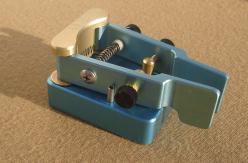
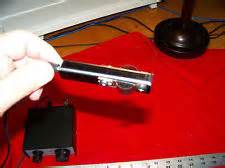
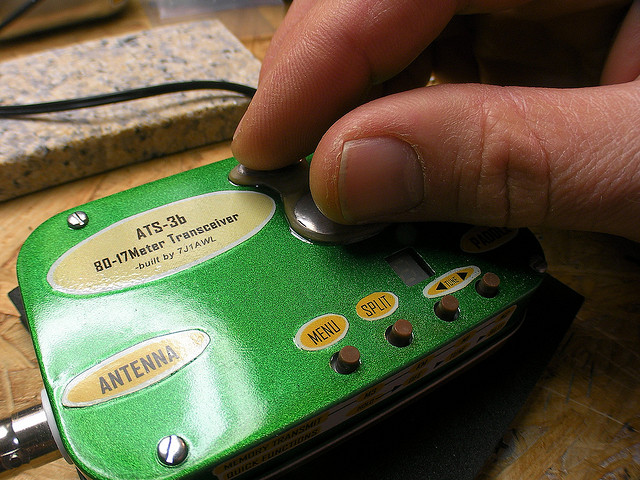

Mike Crownover, AD5A, is a regular contributor to AmateurRadio.com and writes from Texas, USA. Contact him at [email protected].
Hacked off
This is not much to do with radio. But I know that many of you have your own websites and will probably find this of interest.
A couple of days ago I discovered that one of my websites had been hacked. Not G4ILO’s Shack, but the other one which still continues to earn us a little bit despite receiving only the barest maintenence in the last two years.
I opened one of the pages and instead of the expected content a server error message appeared. My first thought was that the hosting company had changed some setting so I fired off an urgent support ticket. They responded saying that some of my files had been “compromised”. Sure enough when I looked at one of the files there was some code I didn’t recognize. This code referred to a file that had been added which was zero length, and that was causing a 500 server error. I deleted the file and every access now caused a 404 “file not found” error. Eventually I found that the .htaccess file had been hacked and some code added which was being executed for every single file access.
The timestamp showed that the .htaccess had been modified a week ago on 19th March. Because of the web browser caching we had not noticed the error messages any earlier. Google had visited the site in that time however, and had received a server error for every page it tried to access. So now the site had dropped out of Google. Thanks a lot, hackers.
Further investigation revealed that the hackers had modified almost every .php file on the server. They had inserted some code at the beginning of every file, apparently meant to disable error reporting. They had inserted some other code into one .php file that was included in every page. However, something in what they had done had the effect of disabling PHP processing with the result that the PHP code was sent to the browser instead of being executed.
To cut a long story short, after trying to repair the hacked files individually, I decided to restore the site from the oldest backup the hosting company held. I had a little bit of luck: the oldest backup was taken on 19th March, the day of the attack, but it had run before the attack occurred so I was able to restore the site with every file as it was originally. A day later and that backup would have gone and I would have been unable to restore the site without a lot of manual work. But the damage had been done as far as Google was concerned.
If you are expecting a lesson to be learned as a result of this story, I don’t have one, other than if you want a quiet life stick to blogging, don’t try to run your own website. If you do, visit your site every day and check for changes.
I have no idea how the hacker managed to gain access to the files on my shared web server. If they did it once they could do it again. I don’t believe that my passwords were compromised as they are randomly-generated, but I changed them anyway. Altogether this episode lasted for several stressful hours – time that I would much rather have spent trying out the latest WSJT-X program.
Julian Moss, G4ILO, is a regular contributor to AmateurRadio.com and writes from Cumbria, England. Contact him at [email protected].
Frustration X2
In honor of Holy Week, I will be charitable and not refer to certain ops the way I might normally be so inclined.
I had two nice rag chews on 40 Meters busted up by inconsiderate ops. The first QSO was with Howard K4LXY. This was a 2X QRP QSO. Howard was using his KX1 and I was using my KX3. We were going at it pretty well until a certain W2 station (I will refrain form posting the suffix, although I certainly made note of it) came on frequency and called CQ right on top of us. Before that, another station came on frequency, but had the decency to “QRL?” and politely moved when he discovered that there was a QSO in progress. Unfortunately, this W2 station didn’t bother with such niceties.
The second QSO was with Hank K1PUG. Hank had answered my CQ, which I sent AFTER listening to the frequency to make sure it wasn’t being used AND after sending a “QRL?” with no response. Our QSO was evolving into a rather nice discussion about the Ten Tec equipment that Hank was using. Again, this chat was going nicely until some digital mode (not familiar with the sound enough to know which mode it was) user came on and just put the complete kibosh on things. For crying out loud, we were on 7.035 MHz. Can’t digital stations stay above 7.060 MHz? It’s bad enough when they practically come down to the Extra portion of the band on contest weekends. Can’t they leave CW ops in peace during a weeknight?
At the risk of sounding like a curmudgeon OF …… back in the 90’s when I was doing A LOT of digital mode work, we made sure to stay above 7.060 MHz on 40 Meters – EVEN during contest weekends. Has civility been completely thrown out the window? Man, I hate sounding like some bitter old man; but now I think I can begin to understand how they get that way.
Anyway, I jumped on over to 30 Meters to escape the madness and worked HC1MD/HC2, Dr. Rick Dorsch in Ecuador. Rick is operating from the Fallaron Dillon Lighthouse through Friday, according to his QRZ page.
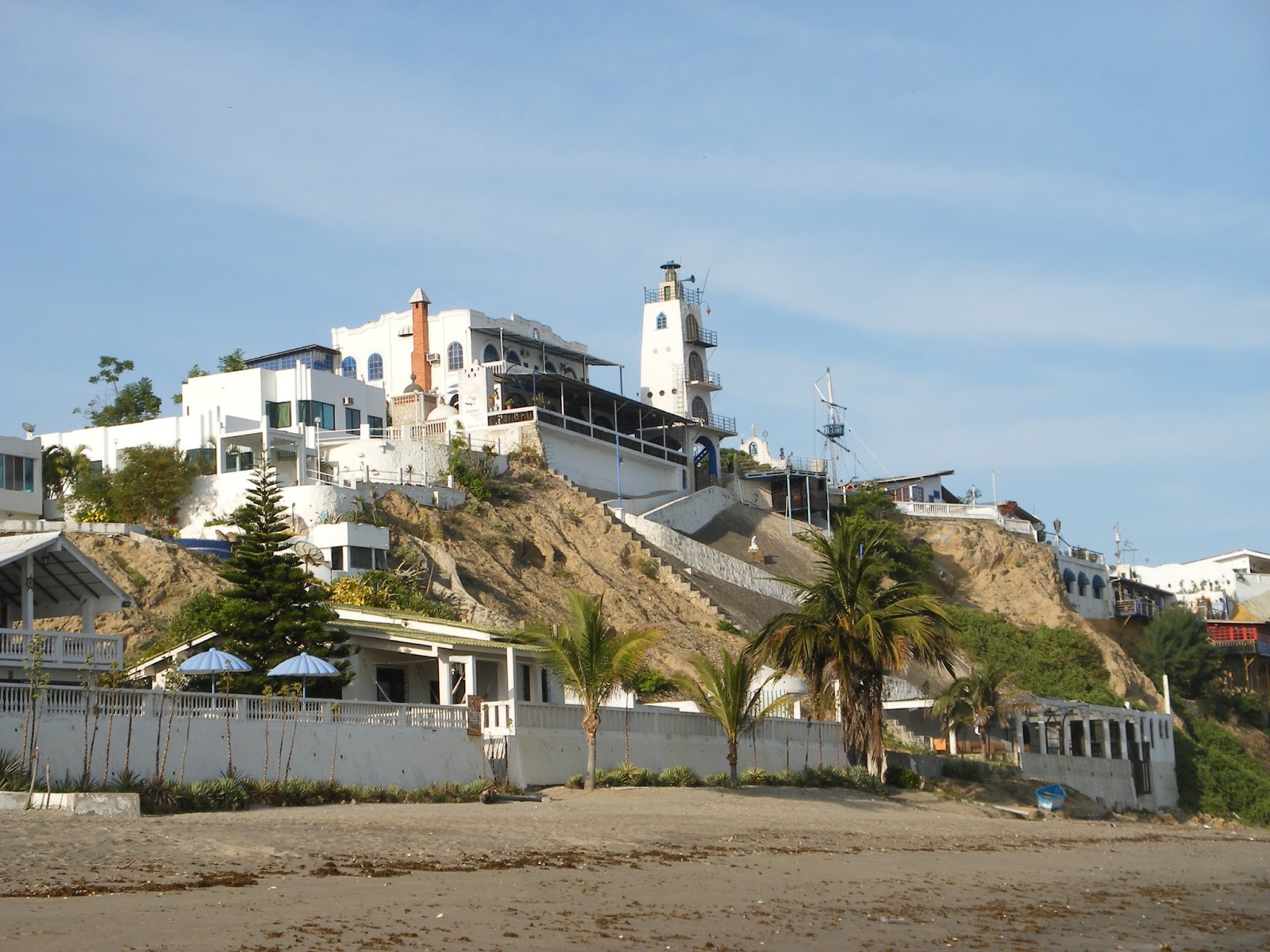
Although Dr. Rick was 599 here, I didn’t know whether or not to expect that I was going to be able to get him with QRP. For some reason, I don’t always have the best of luck working South American stations. I guess maybe my antennas don’t radiate all that well in that direction. But I did indeed, work Dr. Rick with 5 Watts with the 88′ EDZ antenna. According to the QRZ page, Dr. Rick was using a Yaesu FT-857D at 100 Watts to an Outbacker vertical. When I read that after our QSO, I was even more impressed! I wonder if he’s an ear doctor, because he has to have a good pair of ears to have picked me out of the pack!
And so ends my night. Have to turn in so I can get up and go to work tomorrow. But Friday is a day off as it’s Good Friday. The bad news is that W3BBO e-mailed me today to inform me that the Easter Island DXpedition ceased operations today. Another one missed!
72 de Larry W2LJ
QRP – When you care to send the very least!
Larry Makoski, W2LJ, is a regular contributor to AmateurRadio.com and writes from New Jersey, USA. Contact him at [email protected].
AmateurLogic.TV 52: GigaParts Ham Radio Day

AmateurLogic.TV Episode 52 is now available for download.
George visited GigaParts in Huntsville Alabama for Ham Radio Day on March 16th. We take a look at the store and visit with some of the manufacturers reps to find out what’s new. It was a great event at a great ‘Candy Store’.
38:45 of extra ALTV fun!
Download
View in web browser: YouTube
George Thomas, W5JDX, is co-host of AmateurLogic.TV, an original amateur radio video program hosted by George Thomas (W5JDX), Tommy Martin (N5ZNO), Peter Berrett (VK3PB), and Emile Diodene (KE5QKR). Contact him at [email protected].
Handiham World for 27 March 2013
Pat Tice, WA0TDA, is the manager of HANDI-HAM and a regular contributor to AmateurRadio.com. Contact him at [email protected].
 Ham Radio Deluxe |
 W5SWL Electronics |
 Ham Radio Prep |
 KB3IFH QSL Cards  Hip Ham Shirts  HamRadioAuctions HamRadioAuctions Reliance Antennas Reliance Antennas Enigma Shop Enigma Shop |  morseDX  Ni4L Antennas  R&L Electronics R&L Electronics antennas.us antennas.us QRV QRV |
- Matt W1MST, Managing Editor
