 |
 Handiham World for 03 April 2013
 3 April 2013 | by
 Pat Tice, WA0TDA, is the manager of HANDI-HAM and a regular contributor to AmateurRadio.com. Contact him at [email protected].
It’s funny where the mind leads sometimes: Remembering Nose KH6IJ
Over the last couple of days I’ve been playing some 28MHz JT65A in the late afternoon and early evening. The band hasn’t been great but there have been plenty of reports from South America and good to see some other stations too.
I was looking at the PSK Reporter website and the mapping of stations that had heard me and those I’d heard. As I looked at the Pacific Ocean, where I haven’t been heard in the last few days, my mind went back to my first QSO with Hawaii on 28MHz.
It was probably back in the late 1980s or maybe early 1990s. I was living in Cheltenham in a house with a garden around 9 feet wide by 20 feet long. I had a Butternut vertical up (26 feet tall). I had to retreat into the house to get it to an angle such that I could then walk out into the garden and get it to the vertical plane!
At the time I was very active on CW on HF. Late one afternoon, I heard an individual sounding morse signal on the bottom end of 28MHz. It was Nose KH6IJ. Nose was probably the most famous operator from Hawaii at the time and I was thrilled to hear him. Even more thrilled and surprised when he came back to my call. We had a brief QSO – a really nice one.
I doubt I have worked Hawaii on 28MHz from the UK since – I don’t chase these things anymore. But it’s always a thrill to work half way around the world.
Wind forward to this evening. I googled KH6IJ and I found a really fascinating article about him, with lots of facts that I didn’t know before. I hope you enjoy the article as much as I did!
Tim Kirby, G4VXE, is a regular contributor to AmateurRadio.com and writes from Oxfordshire, England. Contact him at [email protected].
Elusive DX on 15m
I checked the JT9 operating frequencies and downloaded a new version of the programmer but I was still seeing the same old calls so I switched to PSK31. 15m seemed quite lively. There were a few JA’s, a couple of stations from China and one from South Korea. Later on I heard a sation in Indonesia. But could I work any of them? Could I heck.
I did manage to make a couple of far eastern contacts: Alexander RD9OA from near Novosibirsk, and Lee BG6CJR from Ningguo in China, but I failed to make any impression on the others. All I got was a couple of QRZs then they called CQ again. Together with the antics of some of the Russian operators – sending their calls over and over and over again so the DX had no chance of hearing anyone else call – it got a bit frustrating. I was running 40W but it didn’t seem to be enough to reach stations I was getting solid copy on. If I didn’t have to go stealth I think I’d be seriously considering a KPA500 at this point! It must be nice to flip a switch and blast over the top!
Some of the Russians seemed to be in a rush. One actually sent PSE SHRT K to me as if trying to have a friendly QSO would keep him from something more important. DX seems to bring out the worst in many operators. Sheesh, it’s only a hobby.
Julian Moss, G4ILO, is a regular contributor to AmateurRadio.com and writes from Cumbria, England. Contact him at [email protected].
LHS Episode #103: Indoorsman Meets Outdoorsman
 Thanks for tuning into Episode #103 of Linux in the Ham Shack. With this episode we welcome in our quasi-permanent replacement for the on-hiatus Richard. Pete, VE2XPL, hails from somewhere near Montreal in Quebec, Canada, and you can read more about him on the About Us page on this very site. In this information-filled installment, Pete and Russ discuss the FCC and other licensing bodies getting interested (perhaps too interested) in VoIP technology. They also talk about several software packages related to running ham radio loggers and an Echolink client under Linux. And then they trudge through a super, super, super, super, super long e-mail from Brad. Thanks, Brad! Keep listening, folks, you’re not going to believe what the next few episodes have in store.
73 de The LHS Guys
Russ Woodman, K5TUX, co-hosts the Linux in the Ham Shack podcast which is available for download in both MP3 and OGG audio format. Contact him at [email protected].
Club 72 QRP Marathon
April marks the beginning of the Club 72 QRP Marathon. This is not a contest, but is a QRP DX operating activity. In a nutshell, it’s basically a friendly competition to see how you can do against other QRPers on a sort of a “miles per Watt” basis.
I had two QRP DX QSOs tonight. One with EA8BVP on 20 Meters, which was a 2X QRP QSO, and one with HR9/WQ7R on 10 Meters, where I was the lone QRP station.
QSOs are permitted on any HF band, 160 through 10 Meters. You can enter your best DX QSO per band, per day for the entire month of April. All the calculations are figured out for you. All you need to enter is the QSO date and time, the calls (yours and the station you worked), the Maidenhead locators for both stations, and the output power of both stations.
So far, out of 16 stations competing, I am in 11th place. I think it’s pretty obvious that the leaders need not fear me. So far, I am the only stateside station competing.
This is more than anything, a personal challenge to get on the air and work as much QRP DX as possible. I have no idea how I will end up, but it will be a fun and interesting journey.
You do not have to be a Club 72 member to participate, but membership is free, so why not look into it. You can simply Google “Club 72 QRP” and you will get the hyperlink to the Website. Normally, I would provide the link for you, but I am typing this on my Android tablet, and providing a link is not as simple a task as it would be were I at my desktop computer.
72 de Larry W2LJ
QRP – When you care to send the very least!
Larry Makoski, W2LJ, is a regular contributor to AmateurRadio.com and writes from New Jersey, USA. Contact him at [email protected].
VE3WDM's QRPower BLOG 2013-04-02 19:16:00
 |
| CT8/PA4N |
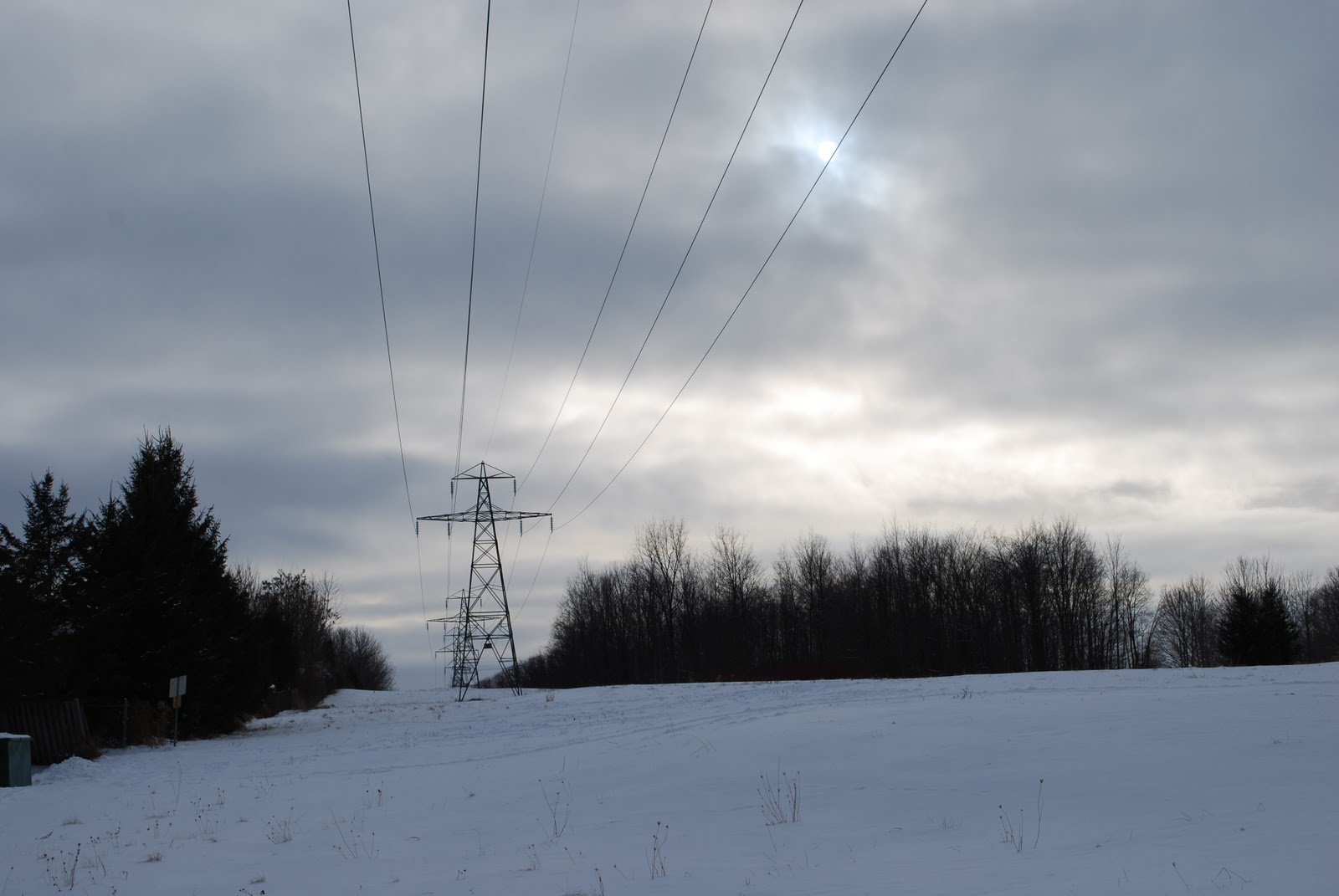 |
| 230KV lines out back |
Mike Weir, VE9KK, is a regular contributor to AmateurRadio.com and writes from New Brunswick, Canada. Contact him at [email protected].
TO7BC Mayotte

A good day today. Not much operating as I had to install a new PC monitor here in the shack and then a new Freetime Freesat receiver down in the living room. It’s one of the new ones with WiFi support so I don’t need to run a network cable down to the living room which all existing boxes have required.
After that I came up to the shack to see if I had installed any new QRM generators. Switched to 10m PSK31 and heard a single solitary station – TO7BC from Mayotte!
I’m not a DXer but this signal on its own in the clear was too much to resist. It took about 15 minutes to break the pileup. I couldn’t hear any other callers so I used XIT to dial in 0.5kHz up and hoped for the best. After a while with no success I decided to go up another 100Hz and he came right back! I must have been the only station who received a 579 report.
I shall check the website later to see if I got in the log. I will also have to find out where Mayotte Island is! I don’t often get to work DXpedition stations so I’m quite pleased with this afternoon’s work. I’ll check for QRM generators another time.
Julian Moss, G4ILO, is a regular contributor to AmateurRadio.com and writes from Cumbria, England. Contact him at [email protected].
 Ham Radio Deluxe |
 W5SWL Electronics |
 Ham Radio Prep |
 KB3IFH QSL Cards  Hip Ham Shirts  HamRadioAuctions HamRadioAuctions Reliance Antennas Reliance Antennas Enigma Shop Enigma Shop |  morseDX  Ni4L Antennas  R&L Electronics R&L Electronics antennas.us antennas.us QRV QRV |
- Matt W1MST, Managing Editor
