 |
 Club 72 QRP Marathon
 2 April 2013 | by
 April marks the beginning of the Club 72 QRP Marathon. This is not a contest, but is a QRP DX operating activity. In a nutshell, it’s basically a friendly competition to see how you can do against other QRPers on a sort of a “miles per Watt” basis.
I had two QRP DX QSOs tonight. One with EA8BVP on 20 Meters, which was a 2X QRP QSO, and one with HR9/WQ7R on 10 Meters, where I was the lone QRP station.
QSOs are permitted on any HF band, 160 through 10 Meters. You can enter your best DX QSO per band, per day for the entire month of April. All the calculations are figured out for you. All you need to enter is the QSO date and time, the calls (yours and the station you worked), the Maidenhead locators for both stations, and the output power of both stations.
So far, out of 16 stations competing, I am in 11th place. I think it’s pretty obvious that the leaders need not fear me. So far, I am the only stateside station competing.
This is more than anything, a personal challenge to get on the air and work as much QRP DX as possible. I have no idea how I will end up, but it will be a fun and interesting journey.
You do not have to be a Club 72 member to participate, but membership is free, so why not look into it. You can simply Google “Club 72 QRP” and you will get the hyperlink to the Website. Normally, I would provide the link for you, but I am typing this on my Android tablet, and providing a link is not as simple a task as it would be were I at my desktop computer.
72 de Larry W2LJ
QRP – When you care to send the very least!
Larry Makoski, W2LJ, is a regular contributor to AmateurRadio.com and writes from New Jersey, USA. Contact him at [email protected].
VE3WDM's QRPower BLOG 2013-04-02 19:16:00
 |
| CT8/PA4N |
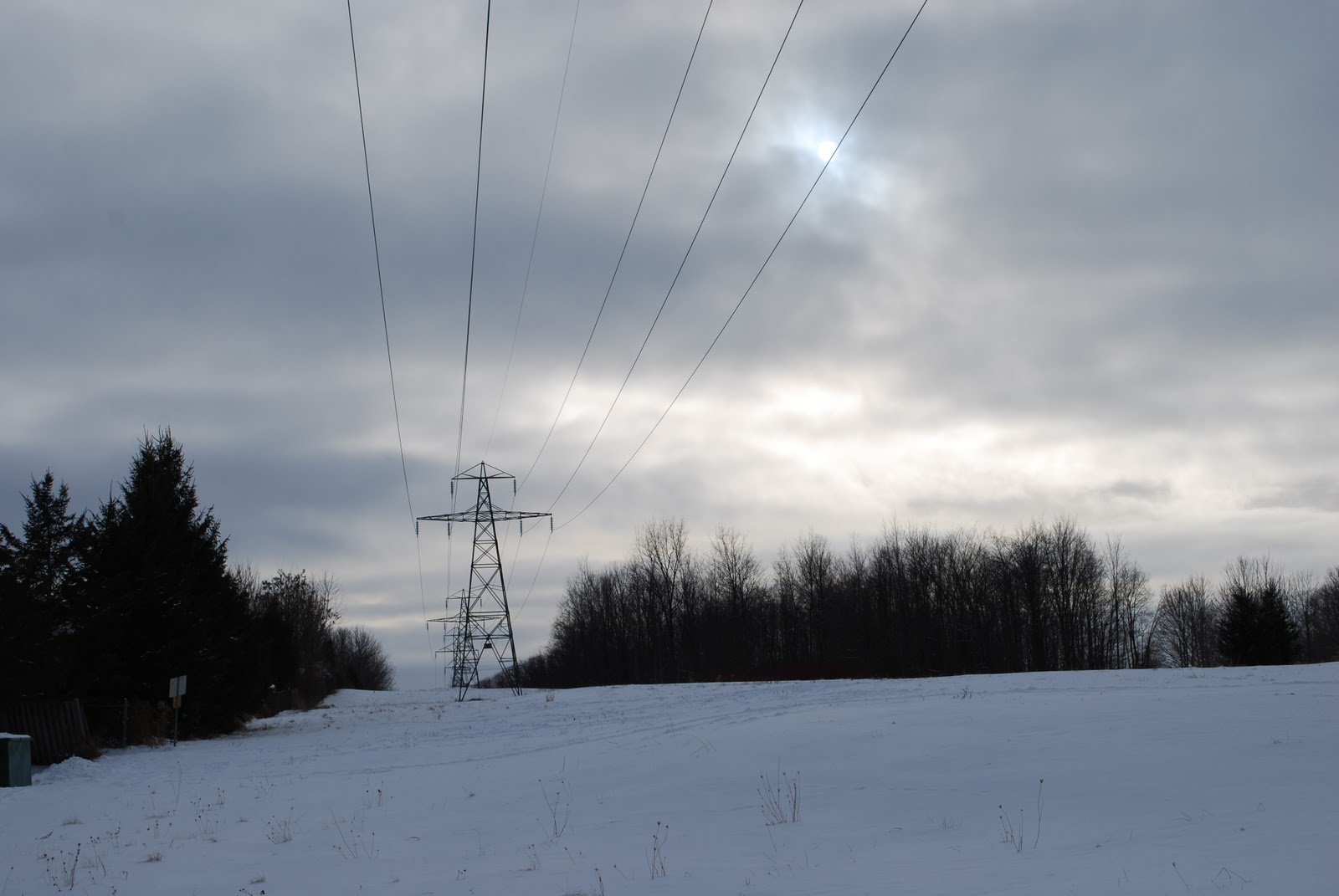 |
| 230KV lines out back |
Mike Weir, VE9KK, is a regular contributor to AmateurRadio.com and writes from New Brunswick, Canada. Contact him at [email protected].
TO7BC Mayotte

A good day today. Not much operating as I had to install a new PC monitor here in the shack and then a new Freetime Freesat receiver down in the living room. It’s one of the new ones with WiFi support so I don’t need to run a network cable down to the living room which all existing boxes have required.
After that I came up to the shack to see if I had installed any new QRM generators. Switched to 10m PSK31 and heard a single solitary station – TO7BC from Mayotte!
I’m not a DXer but this signal on its own in the clear was too much to resist. It took about 15 minutes to break the pileup. I couldn’t hear any other callers so I used XIT to dial in 0.5kHz up and hoped for the best. After a while with no success I decided to go up another 100Hz and he came right back! I must have been the only station who received a 579 report.
I shall check the website later to see if I got in the log. I will also have to find out where Mayotte Island is! I don’t often get to work DXpedition stations so I’m quite pleased with this afternoon’s work. I’ll check for QRM generators another time.
Julian Moss, G4ILO, is a regular contributor to AmateurRadio.com and writes from Cumbria, England. Contact him at [email protected].
Travelling Lighter
So with this thought in mind I saw where LNR has come out with a more "trail friendly" 40/20/10 EFHW antenna, lighter than their current version, total weight, 3.5 oz. So I bought one. As I pondered my efforts to save weight in my pack, I had a thought and it went something like this, "Mike, the thing that you carry on the trail that weighs the most isn't your antenna or even your pack, it's you". I am obsessing on ozs. in my pack and I am more than a few pounds over weight. On average your pack, plus or minus, should be around 16% of our body weight, so by far the largest impact I can have on my total weight is to drop a few pounds myself. Now I will admit, losing weight is not as much fun as buying lighter and more efficient gear, but it will probably have a much more significant impact on the weight I take up the hill..
One thing you will never confuse a hamfest with is a Triathlete convention. We have a hobby that is usually performed sitting down. So having a niche in the hobby that requires us to exercise a little is a good thing. I ran five marathons in the '80's, including the New York Marathon in 1982, so I know what it feels like to be in shape. I don't feel that way now, so I am making a commitment to drop a few pounds.
However, I will still obsess about lighter gear.
Mike Crownover, AD5A, is a regular contributor to AmateurRadio.com and writes from Texas, USA. Contact him at [email protected].
New Yahoo! group for JT9 mode
It was inevitable this would happen: someone has started a Yahoo! group for the JT9 mode. Pity they couldn’t have made it a Google group like the one for JT65A but I guess more hams have Yahoo! accounts than Google accounts.
There was already a fairly quiet WSJT group but this will keep the discussions about using JT9 on HF separate from the rather esoteric MS and EME stuff.
Julian Moss, G4ILO, is a regular contributor to AmateurRadio.com and writes from Cumbria, England. Contact him at [email protected].
New offering from LNR Precision
This appeared on their Facebook page today:
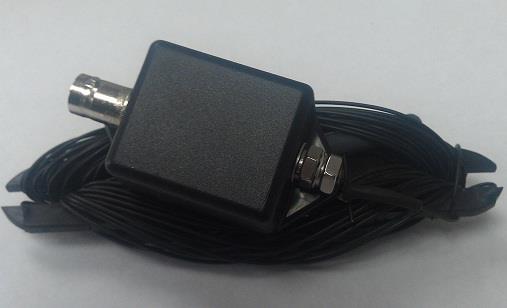
This is the EFT-10/20/40, which is a “Trail Friendly” version of their popular EF-10/20/40MKII antenna. The one shown above comes in at a weight of 3.5 ounces. The EF-10/20/40MKII, which I have, is already no burden to carry. But if you’re one of those guys who are into serious hiking (can you say Appalachian Trail?), where every quarter of an ounce makes a huge difference, then you may want to look into this baby.
I love my EF-10/20/40MKII. I tuned it so that I don’t need to use the KX3’s autotuner. It didn’t take long and only needed a minor adjustment – it was THAT close right out of the package. Using one of these is simplicity in itself – get one end up in a tree, hook the other end to the radio and go to town! And you make contacts – plenty of them.
The LNR Webpage can be found by clicking here.
72 de Larry W2LJ
QRP – When you care to send the very least!
Larry Makoski, W2LJ, is a regular contributor to AmateurRadio.com and writes from New Jersey, USA. Contact him at [email protected].
Richer pickings on PSK
I only managed 4 QSOs in abour as many hours using JT9-1 this morning. I worked LU8EX whom I recognized having made a JT65A contact with him in the past. Hopefully more operators will make the switch from JT65A to JT9-1. At the moment it feels like I’ve worked everybody. I was spotted many times by VK3AMA even when I was running 5 watts. Pity there is no-one else in Oz using the mode yet.

I switched to PSK31 in the afternoon and my QSO rate immediately improved. A nice catch was Luc PR8EP whose QSL card I picture here.
Another good one was Eric HS0ZJK in Phetchaburi, Thailand. He is only the second Thai station I have worked, and both were on 15m.
Julian Moss, G4ILO, is a regular contributor to AmateurRadio.com and writes from Cumbria, England. Contact him at [email protected].
 Ham Radio Deluxe |
 W5SWL Electronics |
 Ham Radio Prep |
 KB3IFH QSL Cards  Hip Ham Shirts  HamRadioAuctions HamRadioAuctions Reliance Antennas Reliance Antennas Enigma Shop Enigma Shop |  morseDX  Ni4L Antennas  R&L Electronics R&L Electronics antennas.us antennas.us QRV QRV |
- Matt W1MST, Managing Editor
