 |
 AmateurLogic.TV 53: The Making of AmateurLogic
 11 April 2013 | by
AmateurLogic.TV Episode 53 is now available for download.
George answers the question ‘Can you work PSK31 on the Raspberry Pi’.
We bring you a behind the scenes view of ‘The Making of AmateurLogic.TV’.
Peter visits the Canberra Deep Space Communication Complex and gets a special tour just for our viewers.
Plus we announce our exciting Field Day Giveaway Contest with great gear from Icom, GigaParts, MFJ and Heil Sound. More details at amateurlogic.tv/contest.
1:02:24 of ALTV goodness.
Download
View in web browser: YouTube
George Thomas, W5JDX, is co-host of AmateurLogic.TV, an original amateur radio video program hosted by George Thomas (W5JDX), Tommy Martin (N5ZNO), Peter Berrett (VK3PB), and Emile Diodene (KE5QKR). Contact him at [email protected].
Bunch o’ stuff
There’s a bunch of stuff I wanted to cover today.
The first is totally unrelated to Ham Radio; but I found it fascinating. Today, the Congressional Medal of Honor was awarded posthumously to Fr. Emil Kapaun, a Catholic priest and Army Chaplain who courageously served our country in WWII and the Korean Conflict. He died a POW at the hands of the Chinese in North Korea. The story of how he conducted himself as a POW and as a leader of men is, to use an overused word, awesome (in the truest sense of the word). After finishing reading the eight part story, all I could think of was “Wow!”. Follow this link for the story about the humble, brave and holy man : http://www.kansas.com/kapaun/
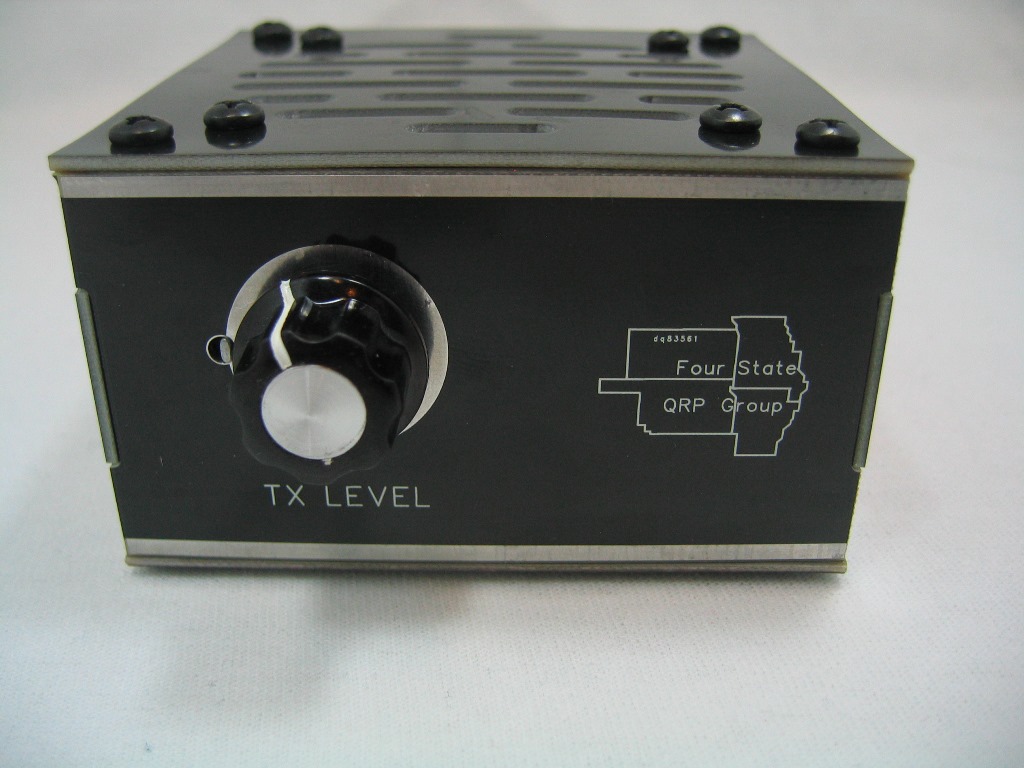
Secondly – this comes from the “I ordered me one” department. The Four State QRP Group introduced a new kit today. I immediately ordered one. It’s called the “Force Link” but is spelled 4S-Link. It is an interface between your radio and computer for the digital modes. All you need in one totally complete kit for $40. You can’t beat that with a stick!
Larry Makoski, W2LJ, is a regular contributor to AmateurRadio.com and writes from New Jersey, USA. Contact him at [email protected].
Harold’s JA7HJ tower was not your average tower

Harold’s 30′ JA7HJ tower (Click to enlarge)
I meet some very interesting people in radio circles. My friend Harold Johnson (W4ZCB) is undoubtedly one of them.
Last year at my local ham radio/DXer club meeting, members were asked to bring photos of shacks and rigs, and describe our evolution as ham radio operators. In the series of photos that arrived at the following meeting, one in particular stood out: Harold Johnson’s radio tower in post-war Japan.
Johnson’s tower stood almost thirty feet tall and supported a 20 meter Yagi which you can see in the above photo. Johnson, who at the time operated under the callsign JA7HJ, also had a little ham shack built. The shack materials–including the tower, Johnson recalls–cost him “three bottles of Scotch for the army quartermaster…I paid the Japanese builder $15 or $20 for the complete enchilada.” This tower was built entirely of wood: the vertical members were 2′ x 4’s, the slats were 1′ x 3’s.
Of course, the tower didn’t have a mechanical rotor; instead, Johnson climbed inside the tower, lifted the wooden boom, rotated it manually, and placed it back on the uprights.
When asked how he powered his station, Johnson pointed to the wheeled generator in front of the radio shack in the photo. “The generator was called a B6B–it produced 24, 120, 240, and 480 volts, and was rated 10 kW.” When I asked how he managed to procure the generator, he replied that he “borrowed it from the flight line, which was about 300 feet away.”
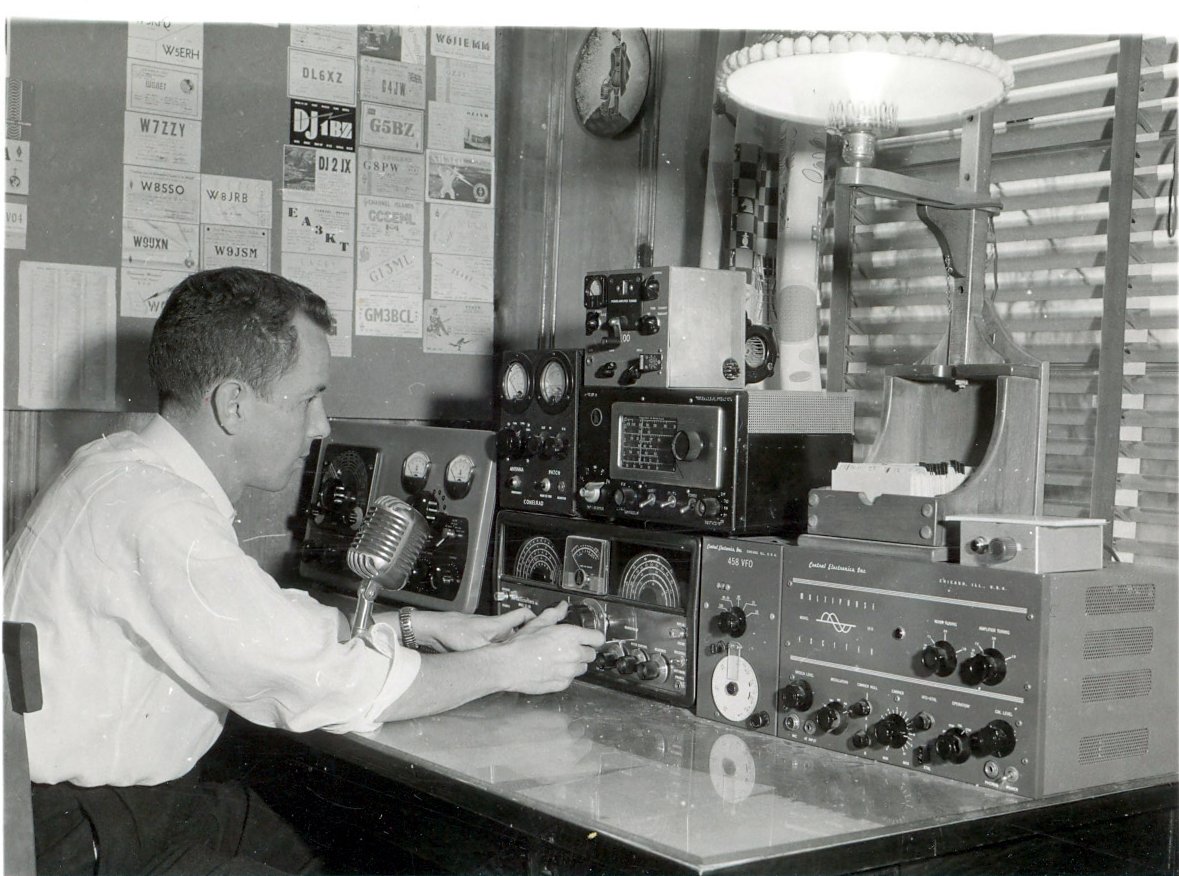
Johnson’s Nashville, TN shack, circa 1955/56. (Click to enlarge)
I always enjoy hearing personal histories in radio and I didn’t doubt for a moment that Harold Johnson’s would be intriguing, so I asked if he’d tell us how his interest in radio began. So, here’s Johnson’s story in his own words:
As a preteen, (and poor as a church mouse during our previous
Depression), I would visit my aunt and uncle in the summer, likely due to the fact that they were farmers and had food to eat. They owned an old Philco radio that had shortwave bands and I was intrigued with the phone amateurs on the 80 and 20 meter bands. Often, I could hear both sides of the conversation, after I found out that they were on various different frequencies, being crystal controlled back then! My…How times have changed.In high school, I found another afficianado, and can recall melting “Woods metal” in boiling water and floating a piece of Galena on it until it returned to a solid and [thus] made my own crystal set. WWII had started by then, and I would listen to the ground-to-air communications between ships in Lake Michigan and pilots taking off and landing on them. Great DX, perhaps 10 miles away.
In 1943, I had graduated from high school and joined the US Army Air Corps. Went through training and was still in training (…to be a pilot until they counted airplanes and pilots and decided they had enough of each […so instead] turned me into a B-29 gunner). The war was over whilst [I was] still in training and I “retired” in November 1945. Went home and found my high school sweetheart, married, went back to school to finish my education and started the Johnson family. Still married, and
to the same girl. What a sweetheart to have put up with me all these years. [No kidding, Harold!]Went back in the US Air Force in 1949, this time became a pilot, and just in time to go to Korea for a year. However, during training, had to learn the Morse and if you learned to 13 WPM, you had a free hour and didn’t have to attend class. That overcame my obstacle to amateur radio, and I took the exams in 1950 and became W9PJO. Our rules at that time were that you had to hold a “class B” ticket for a year before you could take the “class A” exams. That year I spent in Korea and Japan and managed to obtain my first foreign call, JA7HJ.
Returning home to wife and by that time two children, I took the class A exams and became W4ZCB. I decided that I enjoyed flying, (at least most of the time), and decided to make it a career. The ensuing years, I was always on and in the air, and usually spent the winters in Alaska and the summers in the Canal Zone, anything to practice how to be miserable. Lebanon in 1958, Vietnam in 1968 and by 1969 decided that I should start doing something else before my luck ran out.
During my last 4 years of service I flew an Army four star around the world four times. Fortunately he was Ted Conway, W4EII, and we mutually enjoyed operating under a couple dozen different call signs from a lot of exotic (and several not so exotic) places. Had G5AHB back when the 5 was reserved for foreign nationals. We were good friends after we both retired (on the same day; I always liked to say that he couldn’t stand to serve without me) until his death in 1990.
I started a small company manufacturing electronic test equipment for public utilities; spent the next 20 years doing that (and enjoying a much more stable life with family and radio.) Managed to work all the countries (entities these days) there are, win a few contests from a contest station I built and operated for 10 years. (80, 40, and 20 in the front room, 15 in one bedroom and since 160 and 10 were seldom open at the same time, they shared the other bedroom. To change bands, you just changed chairs. Five big towers and Yagis, a VERY high maintenance hobby in the lightning prone state of Florida. (Let’s not mention hurricanes!)
Retired again to the beautiful mountains of North Carolina in 1986. A much more modest station these days, but active on all the HF bands. I really enjoy building homebrew radios and maintaining daily schedules with friends worldwide. Can be found daily on 21.203 with G3XJP and often joined by other builders of the magnificent PicaStar transceiver designed by him. Sixty-three years a ham, still enjoying it. It’s guided my careers and interests. What a wonderful hobby!

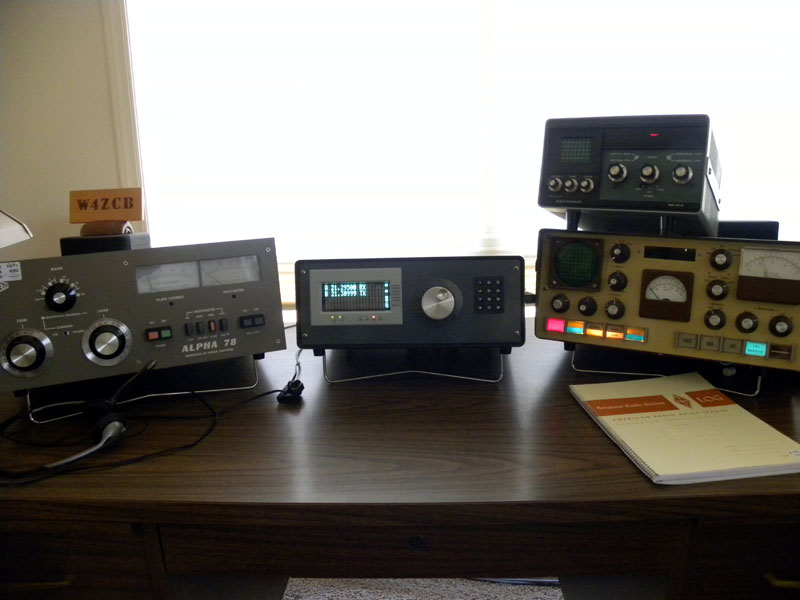
W4ZCB’s shack today is based around his home brew SDR transceiver, the PicaStar. (Click to enlarge)
Over the past few years, I’ve gotten to know Harold Johnson; I must say, he has to be one of the very few hams I know who knows the inner workings of tube/valve radios as well as he does the highest tech radios on the market, a rare talent indeed. If you’re trying to learn a bit more about the BC-348 series of radios and trying to diagnose a problem with it, Johnson’s your guy. If you’re trying to build an SDR from scratch, he’s also your guy. And clearly, if you want to hear a fascinating account of a life influenced by radio, this is most definitely your guy.
Thanks, Harold, for letting me share your story!
Check out Harold Johnson’s website by clicking here.
Tom Witherspoon, K4SWL, is a regular contributor to AmateurRadio.com and writes from North Carolina, USA. Contact him at [email protected].
Nick N1IC – How to Save Ham Radio – 5 Part Series (Part 1)
When I was sitting back remembering how Ham – Amateur – Radio changed my life the other day it is a pretty remarkable story. I think my story is for another time but thinking about it made me want to sit back and give back to the hobby that I love so much and has done so much for me.
The best way I thought today was to think of ways we could work together and Save Ham Radio together. I of course am in no way saying I have all the ideas or answers and I would love to hear from others but I thought I would start with my opinions.
Ham Radio isn’t dead for sure: http://www.foxnews.com/tech/2011/11/17/radio-days-are-back-ham-radio-licenses-at-all-time-high/
But are we doing all we could to promote Ham Radio to a generation that loves technology. They are glued to their tables and smartphones – they love to text and communicate. I bet – with the right motivation and experiences many of them would be interested in Ham Radio.
Over the next few weeks I am going to sit down and provide the roadmap that I have followed to help give exposure to others on radio, the safety and emergency communications aspect and the pure fun of building something new.
My first part of this series is on Sharing Ham Radio News with others:
Part One of Series –
http://nicktoday.com/nick-n1ic-how-to-save-ham-radio-5-part-series/
Nick Palomba, N1IC, is a regular contributor to AmateurRadio.com and writes from Florida, USA. Contact him at [email protected].
W(h)ither JT65A?
I was looking at all the stuff in my ham software folder and thought about deleting JT65-HF. I no longer see the point in continuing to use JT65A when an alternative exists which uses the same messages and takes the same amount of time but is more sensitive and much narrower. The fact that this alternative has come along at the same time as W6CQZ, the author of JT65-HF, has stated that he can no longer develop it seems to me very fortuitous.
Okay, there are still a lot more stations to work with JT65A but that is surely only temporary. Like Tim, G4VXE I can see activity switching from JT65A to JT9-1 over time and JT65A activity on HF withering away from lack of use. JT65A has been a lot of fun but it can also be frustrating when you can’t find space to operate within it’s 2kHz or when a very strong signal stops the software from decoding anything. JT9-1 has people using too much power too, but the decoder seems more robust and a lot more stations can concurrently use the same bandwidth. It just seems an all round better solution.
I expressed this opinion in one of the Yahoo! groups this morning and several people replied to disagree with me. As one person put it “if I am half way to WAS (worked all states) using JT65A then I am not going to stop using it until I have finished it.”
To me, I can see no reason to continue using a mode once a better alternative exists, which is why I have no interest at all in using RTTY, for which there are several superior alternatives. The idea of making contacts just to put a tick in a box in a matrix ordered by band, mode and prefix/country/state makes me quite depressed. I will use JT9 until something even better comes along, after which I will lose interest in it just as I have lost interest in JT65A.
Julian Moss, G4ILO, is a regular contributor to AmateurRadio.com and writes from Cumbria, England. Contact him at [email protected].
JT9 first impressions
Since the breakthrough last week in getting WSJT-X to work by switching the output audio device to ‘Direct-X’ I have been quite active on the mode, mostly on 14MHz. Incidentally, it appears that the ‘Direct-X’ isn’t necessary for all systems. Dave G4FRE reported that it worked fine without for him – I’m guessing it is something specific to my configuration.
Results so far have been good and I have been amazed to receive reports from the other side of the world at the 5W power level or less. Last night, was a nice example – as I worked K0KC and W8BB at around 2130z, it was great to get a report from VK2AJF via the PSK Reporter website.
The new WSJT-X release has a pleasing interface – I like the way Band Activity is split out from the details of the QSO you are having.
This is a good mode and overtime I can see activity switching from JT65 to JT9-1.
Tim Kirby, G4VXE, is a regular contributor to AmateurRadio.com and writes from Oxfordshire, England. Contact him at [email protected].
Back to the Radio/ A Little QRP DX
There are some battles you want to pick and others that are best left alone while operating QRP. VK9CZ was spotted on a couple of bands, but that pileup was hopeless. There was a spot for JT1CS on 15 meters. I called several times before I had him in the clear, "de AD5A"....."?"....."de AD5A", "QRZ de JT1CS....". So, he can't hear me. I give up on that fight and I moved up the band a couple of KC's and call another JT, but like the first, no joy. So maybe tonight I will be shut out. Not the first time on QRP.
Next I see a spot for 5W0M on 15m CW, probably a higher probablity of a QSO so I move up the band and call. After about 10 or 15 calls I get in the log. Okay I'm feeling powerful now. Next a spot for D2AA on 20m CW. I wasn't optimistic as the signal had a lot of QSB, but I thought I wiould give him a try. After a few calls, I had him in the clear and he came back to my call. Two new QRP DXCC countries, not a bad evening after all. Then, as I was documenting my acheivements with this post, a spot for 5T0JL came up on 17m. I stopped typing to try for a QSO. If you have ever worked Jean, you know he sends CW at 40+ wpm , which is the top of my range. In fact at that speed I can only copy by ear, I can't write that fast. He also tends to have longer than normal QSO's, not just 599. So after 4 or 5 QSO's and through a decent pile-up, he pulled out my call. He gave me a 579 report. Not bad.
While I use a gain antenna, a log periodic at 55 feet, I'm a long way from big gun status. I am continually surprised at what can be worked with QRP.
These QSO's move my QRP country count to 136. Nice progress in recent weeks and a very satifying DX session on the KX3.
Mike Crownover, AD5A, is a regular contributor to AmateurRadio.com and writes from Texas, USA. Contact him at [email protected].
 Ham Radio Deluxe |
 W5SWL Electronics |
 Ham Radio Prep |
 KB3IFH QSL Cards  Hip Ham Shirts  HamRadioAuctions HamRadioAuctions Reliance Antennas Reliance Antennas Enigma Shop Enigma Shop |  morseDX  Ni4L Antennas  R&L Electronics R&L Electronics antennas.us antennas.us QRV QRV |
- Matt W1MST, Managing Editor
