 |
 Your first rig
 2 May 2013 | by
 Bob KK4DPN commented on my X1M review, and in addition to asking some questions about the issues I’ve had on some of the bands he states: I’m looking to get into HF and this seems like a good thing to start out with, just to get a feel for it.

The Rocketeer, flickr
As a relatively new Ham myself, I went through what I have started to refer to as the standard Technician progression, or STP. As a newly licensed Tech, I purchased an inexpensive HT. Then, as I got a taste of being able to talk to people, but constant bad-signal reports, I got a mobile antenna for the HT. More repeaters were now within my range, but I was still getting bad signal reports. Next, came a mobile VHF rig, followed by a dual band one. On the HF side, I purchased a 10 Meter mobile, and then a vintage Atlas 210X (as a General).
So many new Hams go through this same progression. There’s a reluctance for some of us to invest $300 in equipment for a new hobby, until we play a bit. For those of us that fit the hobby well, the HTs give us a taste of something better. It’s the same with the HF side. I bought the 10 Meter mobile used for about $100, because it was the only band I could use with my license. Once I had some success with that (my first contact was trans-Atlantic!), I was motivated to get my General ticket.
I’ve mentioned before too, that I like to write about the frugal side of Ham Radio. This is mostly because at this point in my life, I have collected several dependents and obligations that take priority, and partly because, I’m Frugal! (There, I said it). KD2 CHE is the same way with her sewing though.
Thinking along these lines, I’d like to explain why I bought an old Atlas 210X as my first multi-band HF rig. After reading about them, it seemed like a good combination of size, power, cost, and ease-of-use. A good working 210X can go for less than $200, and has a pretty small footprint. Output is 200 Watts PEP (120 on 10M) on sideband. People universally complain about the CW performance, but for now, I’m not using CW. I’ve logged contacts all over Eastern, and Western Europe on the thing, as well as South America, and Western US. Operation is VERY simple, and pretty forgiving of someone with little antenna tuning experience.
My recommendations for an HF rig for a new ham, who doesn’t want to spend a ton of dollars are as follows:
- Don’t buy a QRP rig as your first rig. QRP operation requires some skill, and can be frustrating if you’re just looking to rag-chew, or even just log some interesting stations. Wait until you have a more powerful rig first, and get a little more familiar with HF. I think a QRP rig as your first rig may give you a bad taste of what it’s all about. Don’t get me wrong though. The challenge of QRP is great fun. I guess the analogy is that it would be like going off on a wilderness survival weekend as a first camping trip.
- Go with a decent used rig. There’s lots of great rigs in the $300-500 range at hamfests. If you have some friends with more experience, ask around for recommendations, and look at the eHam reviews. Plan on spending a little extra for a tune-up, and accessories (like a good antenna tuner). 100 Watts will get you started with enough power to talk all over the world. My record so far is Namibia from Long Island.
- If you really want a new rig, there are a few sub-$1000 rigs that get decent reviews. The Alinco DX-SR8T can be picked up for just over $500 from several of the online Ham retailers. The Icom IC-718 runs in the low to mid $700 range, and the Yaesu FT-857D is in the mid $800 range.
- You CAN go even lower than $300 as I did, but your choices are limited. In my case, I have a rig that doesn’t do the WARC bands, and is missing quite a few features that even the lowest priced radios have. I love the simplicity of it though. I can see continuing to use it even after I get something more sophisticated.
As more and more people discover this old pastime, I hope they discover all of the aspects of it. Next for me is digital modes. I’m really looking forward to getting that up and running on the Xiegu X1M, and a Raspberry Pi. More to follow…
Neil Goldstein, W2NDG, is a regular contributor to AmateurRadio.com and writes from New York, USA. Contact him at [email protected].
Poor conditons but still worked a few…………..

The next (and final) station I contacted was EA4DRV, being pumped from my last 1 watt contact I tried working this Spanish station with 1 watt. It didn't work out as well and the contact was made eventually with 3 watts. After this contact it was time to flip the switch once again and move on to making lunches, arranging morning work clothes and all that other fun stuff. It goes to show you that even when the propagation is in the dumpers contacts are still there to be had!
Mike Weir, VE9KK, is a regular contributor to AmateurRadio.com and writes from New Brunswick, Canada. Contact him at [email protected].
Wrist Rocket Redeux
I needed to re-spool the fishing reel on my antenna launcher.

My first version used a plastic tent peg as a platform. The sling shot was held in place by a bolt and nut going into the handle from the bottom. This ultimately proved to be a weak point as the plastic handle of the sling shot broke over time from the stress at that point.
So when I bought new fishing line, I also bought another 8 inch corner brace.
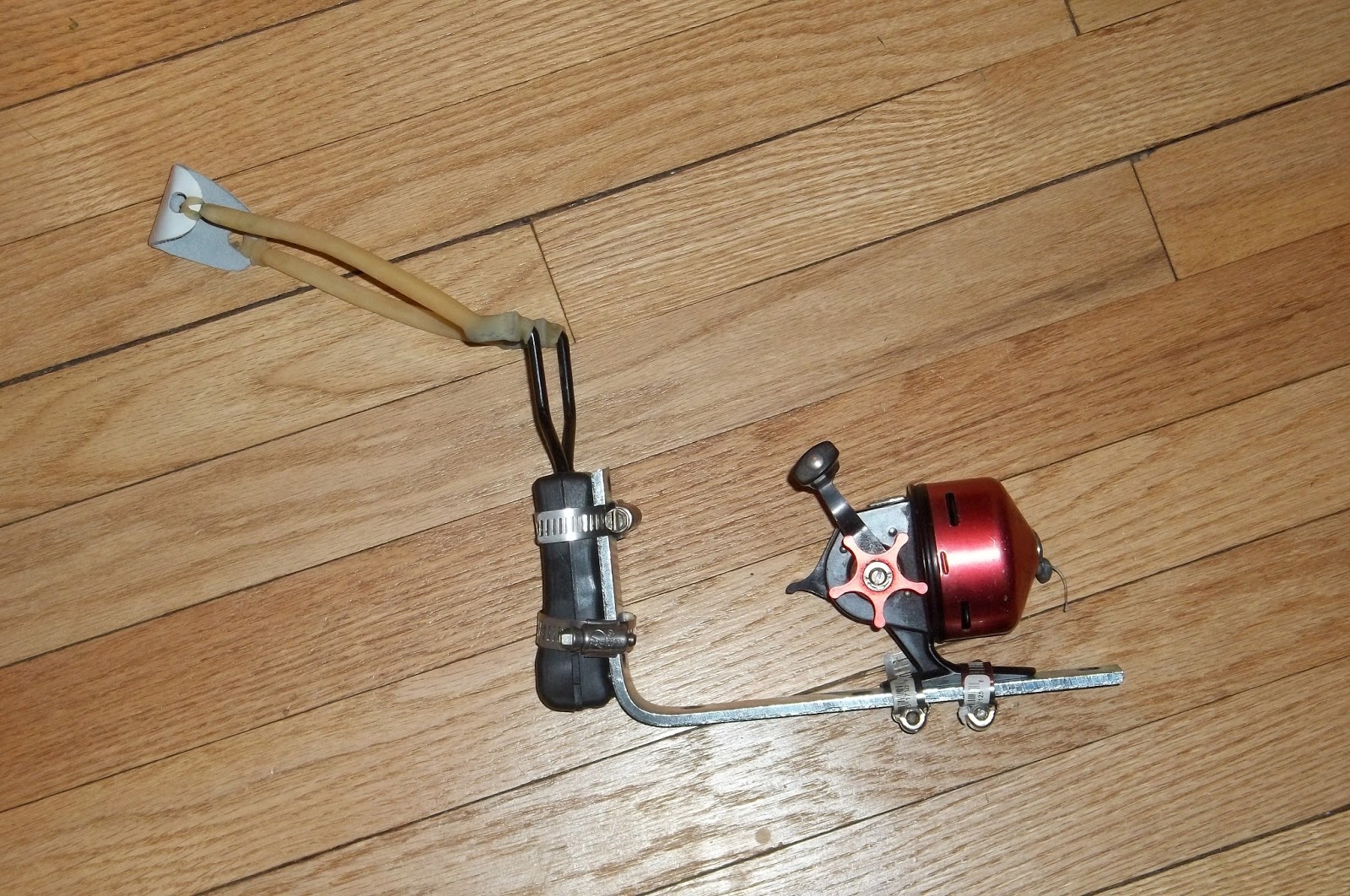
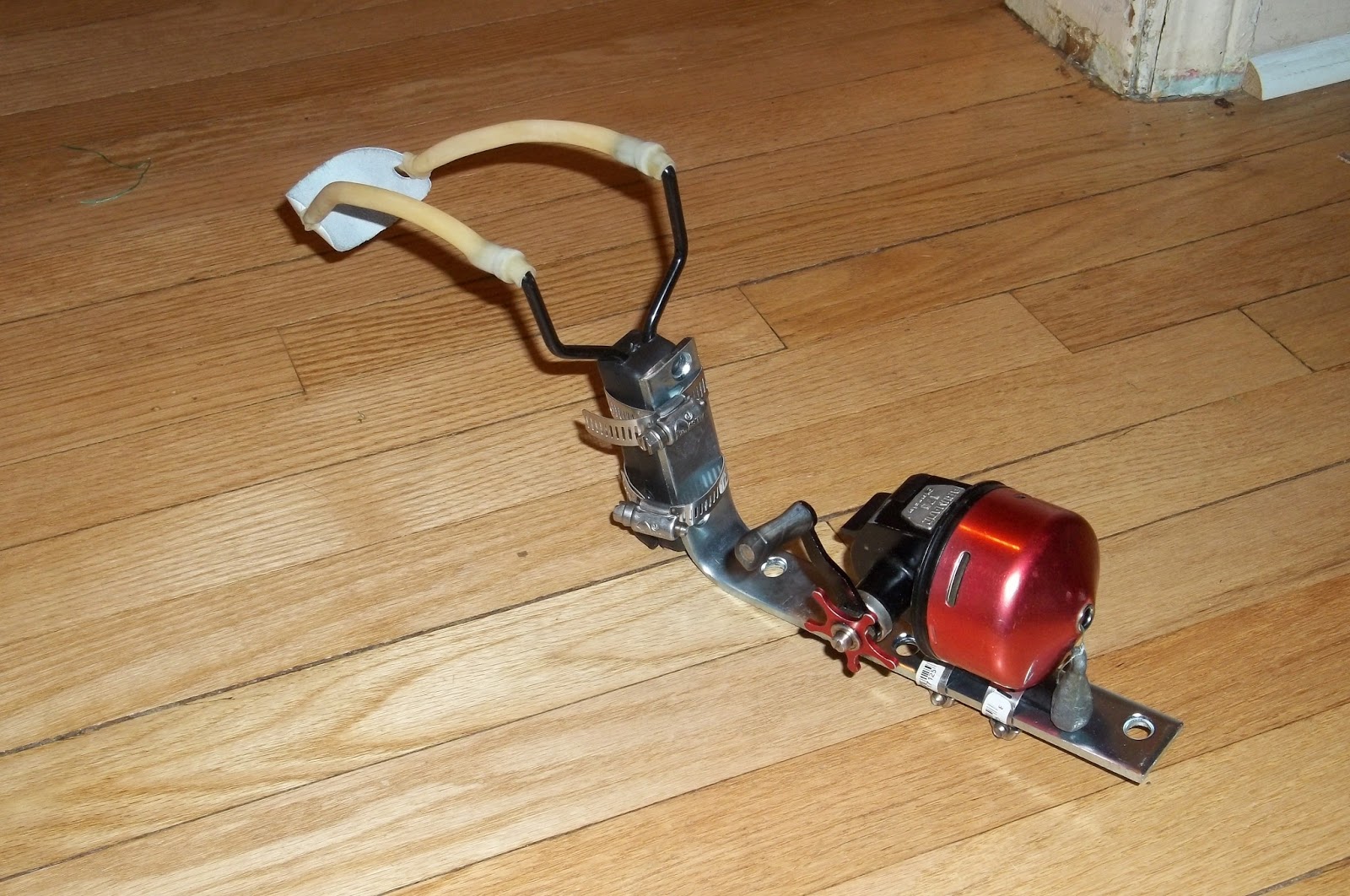
I’ve been practicing in the park and I’ve been getting my 1 ounce fishing weight to get over branches 50 – 60 feet high with no problems. I have discovered one thing, though. My fishing weights (not the one in the photos) are painted bright yellow. I think I am going to re-paint them with a very bright orange paint. The yellow ones are a bit hard to notice when they fall onto the grass amid a bunch of dandelions!
72 de Larry W2LJ
QRP – When you care to send the very least!
Larry Makoski, W2LJ, is a regular contributor to AmateurRadio.com and writes from New Jersey, USA. Contact him at [email protected].
Eagle add ons
These may not be a surprise to you but the popular electrical CAD package, Eagle, has add ons plugins, scripts or whatever they are technically called. Most of these would probably be really useful if I ever knew what I was doing but one stands out. Its called Eagle-up.
Eagle-up takes the PCB as you’ve laid it out and puts it into the equally popular 3D CAD programme Google Sketch up. The plugin allows you to see the PCB in 3 dimensions and allows you to add components from the extensive library or draw out your own. The end result is a potential a photo realistic rendering of what you have just designed. I’m using it to place the various parts on so I can design a case to fit the MSFduino. I want to laser cut an acrylic case and Sketchup let’s you export to an svg file by, you’ve guessed it, a plugin.
A bit of useful information to share if that’s your kind of thing.
Alex Hill, G7KSE, is a regular contributor to AmateurRadio.com and writes from Cumbria, UK. Contact him at [email protected].
Handiham World for 01 May 2013
Pat Tice, WA0TDA, is the manager of HANDI-HAM and a regular contributor to AmateurRadio.com. Contact him at [email protected].
Project: KI6J SOTA Tuner
With that in mind and a need to build something I opted for the KI6J SOTA Tuner as part of my back up antenna system. I haven't built anything in a few years and wanted to get back in the groove on melting a little solder, so I ordered the kit from Stu. Relatively speaking it is an easy kit to build. You do get the pleasure of winding a small transformer and toroid. However if that scares you as a new builder this is a great kit to learn on.
This kit is designed for use by portable QRP operations needing a lightweight, easy to deploy antenna system. Using this tuner, a portable station needs no ground radials and little or no feed line to achieve excellent results. The tuner matches the impedance of end fed, half wavelength (EFHW) wires on 40m -15m and contains a built in SWR indicator. The tuner is designed for durability and reliability of operation and handles QRP power levels, 5W CW and 10W PEP SSB.
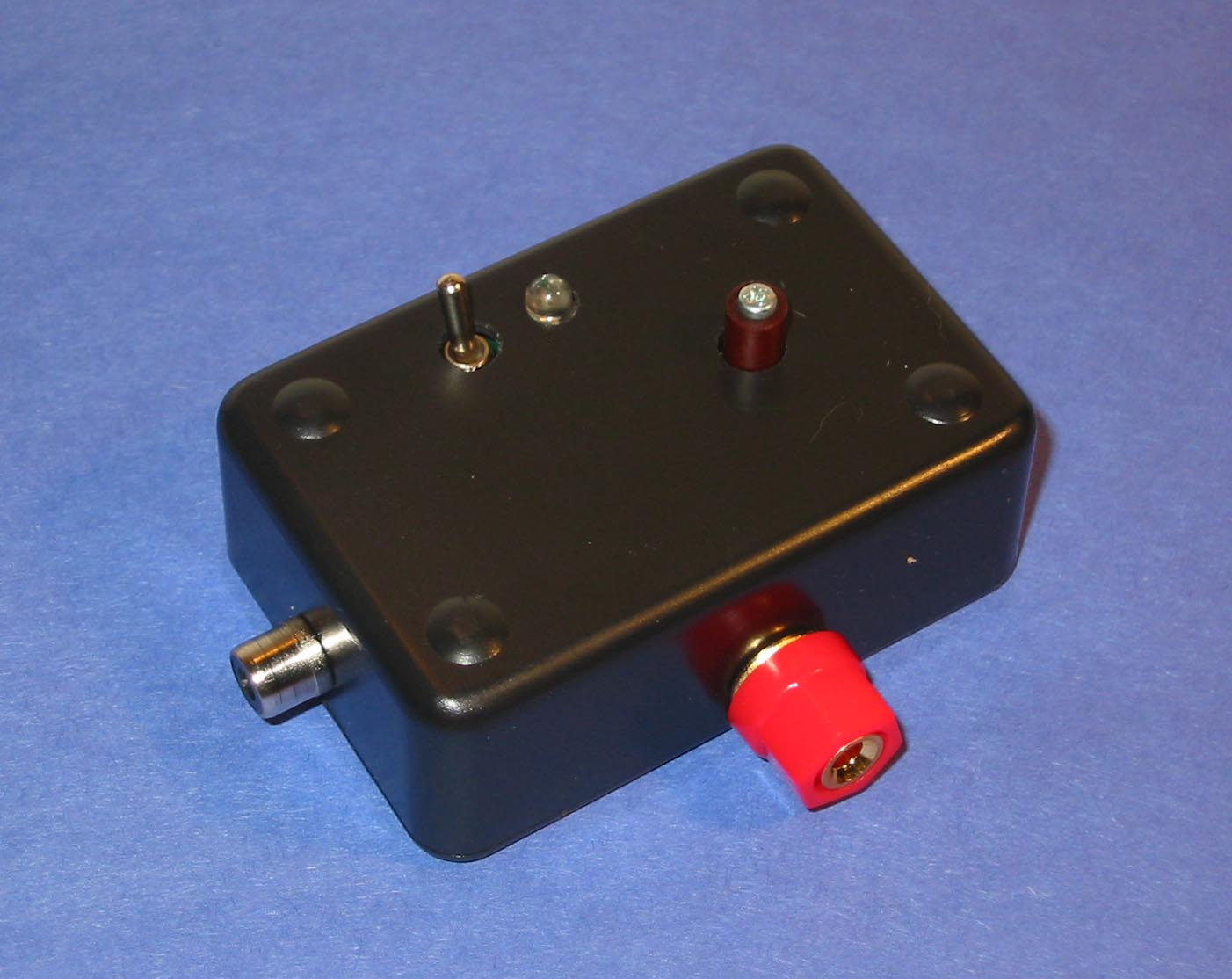
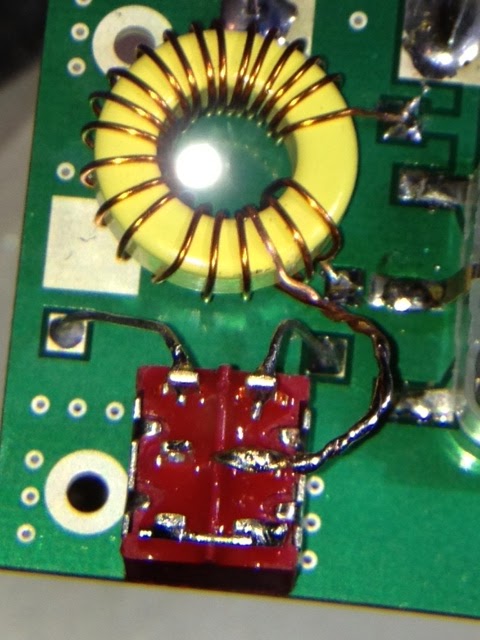
The kit is available at: http://betterqrp.com/
Mike Crownover, AD5A, is a regular contributor to AmateurRadio.com and writes from Texas, USA. Contact him at [email protected].
Spring is here!
Testing a new build of WSJTX for K1JT I hopped on to 10m and was surprised to see a strong signal. It soon revealed itself to be SM6NZV who gave me a +8dB report on my 5 watts.
This reminded me that it is May 1 today, the start of Spring and usually also the start of the Sporadic-E season. I tuned around on 6m and heard a couple of weak stations on my dipole, also a couple of stronger GMs working stations I could not hear.
I thought about installing the SDR-4+ as a panadapter for the K3 which had been one of the things I had intended to use it for. But something was amiss and I didn’t have control of the receiver’s frequency. I think the settings had got hosed, probably when I was playing around with using a USB DVB dongle as an SDR. I have no idea how to get it working again and I started getting stressed about it so I decided to abandon the idea.
SDRs are not for me, or at least not those that use a PC for a user interface. Windows is just too fragile, though if Linux is any better it’s only because there are fewer things to install on it in the first place!
Instead I will set up scanning on the K3 to scan a section of the 6m band. I always forget how to do this so I had to dig out the manual. Load the start frequency into VFO A and the end frequency in VFOB, make sure the mode and frequency are what you want and store it in a memory. I used memory 6 for 6m scanning.
To start a scan you just recall memory 6 (M>V, 6) and press and hold SCAN. I’ll probably forget that sequence of button presses as well so I looked up the CAT commands in the K3 Programmers Reference (SWT23;SWT29;SWH41;) and stored it in a KComm shortcut. I’ll probably make one for 2m as well though the chances of hearing any 2m Es up here are slim indeed. Last year I don’t think here was a single opening that extended this far north on 2m.
Julian Moss, G4ILO, is a regular contributor to AmateurRadio.com and writes from Cumbria, England. Contact him at [email protected].
 Ham Radio Deluxe |
 W5SWL Electronics |
 Ham Radio Prep |
 KB3IFH QSL Cards  Hip Ham Shirts  HamRadioAuctions HamRadioAuctions Reliance Antennas Reliance Antennas Enigma Shop Enigma Shop |  morseDX  Ni4L Antennas  R&L Electronics R&L Electronics antennas.us antennas.us QRV QRV |
- Matt W1MST, Managing Editor
