 |
 ICQ Podcast S06 E09 – International Amateur / Ham Radio Beacon Project (5 May 2013)
 5 May 2013 | by
 Series Six Episode Nine of the ICQ Podcast has been released. News Stories include :-
- The P5 Project
- RILGES East Sussex Repeater Group
- New Amateur Radio Club for Bath
- New QRSS/WSPR ham radio kit
- Free WARD certificate
- South African Hams to get 472 kHz license
- ZB2TEN beacon is now fully operational
- Ham Radio 50 MHz operation in New Zealand
- MB7IDA - Danbury Echolink frequency change
- Taxi drivers fined for using GPS Jammers
- Norfolk Island
- Isle of Skye activation
- Queen's Award for Wood & Douglas
Leslie Butterfields (G0CIB) joins us to discuss International Amateur / Ham Radio Beacon Project plus Austalian report from Ed Durrant (VK2JI) and our new north American correspondent Frank Howell (K4FMH)
Colin Butler, M6BOY, is the host of the ICQ Podcast, a weekly radio show about Amateur Radio. Contact him at [email protected].
ICQ Podcast S06 E09 – International Amateur / Ham Radio Beacon Project (5 May 2013)
Series Six Episode Nine of the ICQ Podcast has been released. News Stories include :-
- The P5 Project
- RILGES East Sussex Repeater Group
- New Amateur Radio Club for Bath
- New QRSS/WSPR ham radio kit
- Free WARD certificate
- South African Hams to get 472 kHz license
- ZB2TEN beacon is now fully operational
- Ham Radio 50 MHz operation in New Zealand
- MB7IDA - Danbury Echolink frequency change
- Taxi drivers fined for using GPS Jammers
- Norfolk Island
- Isle of Skye activation
- Queen's Award for Wood & Douglas
Leslie Butterfields (G0CIB) joins us to discuss International Amateur / Ham Radio Beacon Project plus Austalian report from Ed Durrant (VK2JI) and our new north American correspondent Frank Howell (K4FMH)
Colin Butler, M6BOY, is the host of the ICQ Podcast, a weekly radio show about Amateur Radio. Contact him at [email protected].
Series Six Episode Nine – International Amateur / Ham Radio Beacon Project
Series Six Episode Nine of the ICQ Amateur / Ham Radio Podcast has been released. The latest news, Leslie Butterfields (G0CIB) joins us to discuss International Amateur / Ham Radio Beacon Project plus Austalian report from Ed Durrant (VK2JI) and our new north American correspondent Frank Howell (K4FMH)

- The P5 Project
- RILGES East Sussex Repeater Group
- New Amateur Radio Club for Bath
- New QRSS/WSPR ham radio kit
- Free WARD certificate
- South African Hams to get 472 kHz license
- ZB2TEN beacon is now fully operational
- Ham Radio 50 MHz operation in New Zealand
- MB7IDA - Danbury Echolink frequency change
- Taxi drivers fined for using GPS Jammers
- Norfolk Island
- Isle of Skye activation
- Queen's Award for Wood & Douglas

Colin Butler, M6BOY, is the host of the ICQ Podcast, a weekly radio show about Amateur Radio. Contact him at [email protected].
Busy Day
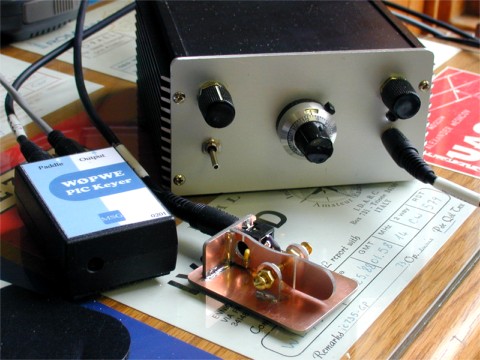
Beautiful day again here in New Jersey – but extremely busy! Lots of chores, lots of running around and I didn’t get everything accomplished that I wanted to. But even at the end of a busy day, it’s nice to step back, take a breath and spend a few minutes engaged in “The World’s Greatest Hobby”.

This was nice as it ended up being an actual QSO. As it turns out, it ended up being a K3 to K3 QSO! I was at 5 Watts and Mario was at 100 Watts. We gave each other 579 reports. I was on the Butternut while Mario was on his Hy Gain vertical – so it was a K3/vertical to K3/vertical QSO. We exchanged weather information as a matter of course; and again, I was surprised that New Jersey was just a bit warmer than Pesaro. Of course, I’m the typical American who assumes it’s always warmer on the Mediterranean than it is here!
Larry Makoski, W2LJ, is a regular contributor to AmateurRadio.com and writes from New Jersey, USA. Contact him at [email protected].
QRP TTF 2013 Contest Point Giver Report!
Last weekend was a fun one for me. I had an open day following a morning commitment, and then I was free to operate in the QRP TTF event. I had originally planned to strike out to a nearby trailhead for the extra multiplier but a hastily planned meeting nixed that plan. So I operated from the park area by Lake Fredrica in our housing development. It is my favorite spot due to the nicely spaced tall pines and open area to a sandy beach on the lake. The lake is spring fed and one of the clearest natural lakes in the area despite being surrounded by civilization. It is also a nice quiet RF location free of most appliance generated noise that is so common these days.
Being a dedicated Contest Point Giver, I set out to give some points to the serious ops among us. What a treat to casually listen, and try to improve my cw copying speed by listening to all the exchanges going on during events like this one. I love the fact that the SOTA gang was included and there were a few Florida QSO Party ops on 20m where I spend most of my time. It was also Polar Bear QRP monthly outing time and I got to Grrrrrr to several of my fellow Polar Bear ops. Thanks and an extra long Grrrr to Larry W2LJ, Perry N5PJ, Barry N1EU, and John N0EVH and hope I did not miss any other PB’s.

My view of the lake K4UPG
In the end, I had a fun day. Seems the bands were not solid, but I’ve gotten used to that in this current solar cycle. I kept hearing the same stations over and over. Now and then a new call would appear but most of the time they disappeared before I could work them with my Sierra at 2.4 watts. Even with my jumper dipole up at 45 feet I suspect my signal isn’t always loud enough to attract much attention. So I search and pounce and enjoy reading the mail and waiting to pounce. I did collect 14 different states and give myself a bit of multiplier for that fortunate turn of events.
Nothing like spending time outdoors doing something that I love. I especially appreciate my fellow QRP ops and the fun we have making QSO’s with limited power and gear.
CU on the air!
72,
Kelly K4UPG
Kelly McClelland, K4UPG, is a regular contributor to AmateurRadio.com and writes from Florida, USA. Contact him at [email protected].
A new dual band multimode radio for 50 and 70MHz: Noble Radio NR6N4
Earlier in the week, via the Southgate Amateur Radio feed, I saw details of a rig I’d heard rumoured for some time – a dual band 50 and 70MHz multimode. The manufacturer is a new name, Noble Radio.

Technical specs, provided by the Noble Radio website are as follows:
1. RECEIVER SPECIFICATIONS
Frequency Coverage: 4M: 69.9 MHz to 70.5 MHz
6M: 50.0 MHz to 52.0 MHz
Modes: SSB (USB & LSB) and CW
Circuit Type:
Downconverting Design
Dual Converesion: 1st IF: 10.7 MHz 2nd IF: 25 kHz
Sideband elimination using phasing techniques with digitally generated Quadrature carriers and Image Reject Mixers preceeded by 15 kHz crystal roofing filters
Ultimate receiver bandwidth set by adjustable SCAF filters (two 8th order filters used. One for High Cut and one for Low cut)
Sensitivity: MDS = -130 dbm
Dynamic Range Figures:
Blocking: 110 db
IMD (3rd Order) = 95 db
Selectivity:
500 Hz to 4 kHz adjustable with the SCAF filters
Ultimate attenuation of filters are 55db or better
2. TRANSMITTER SPECIFICATIONS
Frequency Coverage: 4M: 69.9 MHz to 70.5 MHz
6M: 50.0 MHz to 52.0 MHz
Modes: SSB (USB & LSB) and CW
OUTPUT POWER: 20 Watts CW or PEP SSB
SCAF Filters can be used to tailor SSB Transmit audio.
3. GENERAL SPECIFICATIONS
SYNTHESIZER: DDS/PLL synthesizer with 10 Hz minimum step size. Tuning rate is variable depending on the Tuning Knob speed (Variable Speed Tuning – VST)
MEMORIES: 10 Memories per band
ANTENNA IMPEDANCE: 50 ohms unbalanced
SUPPLY VOLTAGE: 11.5 to 14 Volts Regulated DC (Negative Ground) at approximately 3.6 Amps at full output power.
DIMENSIONS: 8 in (203 mm)W x 12 in (305 mm) D- including knob and heatsink x 3.75 in (95 mm) H – including feet
WEIGHT: Approximately 4 lbs (1.8 kg)
4. SPECIAL FEATURES
The NR-6N4 has the capability of being controlled by a standard PC type keyboard that plugs into a rear connector. Once a keyboard is interfaced to the radio, it can be used to directly enter a frequency, skip directly to various functions by a single press of a function key without having to navigate the menus from the front panel buttons as well as being used to send CW via the keyboard. There is also a built in keyer function that operates with a standard keyer paddle for CW operation with or without a keyboard connection.
The low level 10.7 MHz IF signal is also brought out to a rear connector so that it may be used for panadapter or SDR applications.
* All specifications in this document may be subject to change without notice or obligation
No details of availability are provided as yet – no doubt the CE approval hoops will have to be jumped through.
This is sure to be a popular rig. A commercial 70MHz multimode has been long awaited. The fact that it is a dual bander including 50MHz will no doubt add interest, although I guess the majority of people that want 50MHz radios probably have one. Is the power level right? 20W is certainly useful – though 50W would be better still for tropo contacts, I feel. Hopefully datamodes interfacing (JT65A/JT6M/JT9 etc) will be straightforward – I haven’t yet seen a photo of the back of the rig!
Exciting news for 50 and 70MHz enthusiasts!
Tim Kirby, G4VXE, is a regular contributor to AmateurRadio.com and writes from Oxfordshire, England. Contact him at [email protected].
The Updated Incomplete List of Ham Radio iPhone Apps
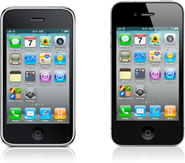 It is about time I updated one of my more popular posts, The Incomplete List of Ham Radio iPhone Apps from 2011. This was a challenging task back then and has gotten more difficult as the number of ham radio apps for the iPhone has greatly expanded. Still, I will give it a shot and appreciate your feedback to make the list better. I am only evaluating iPhone apps, not iPad apps, since I don’t use an iPad.
In general, I will focus on free or low cost (less than $5) apps that I am actively using.
From the Simple Utility Category:
Maidenhead Converter (Author: Donald Hays, Cost: Free) Handy app that displays your grid locator, uses maps and does lat/lon to grid locator conversions.
Ham Radio Handbook (Author: Antonis Miliarakis Cost: Free) This app provides some basic ham radio info: Q Signals, Country Prefixes, Band Plans and RST signal reporting.
UTC Time (Author: Michael Wells, Cost: Free) A simple app that displays UTC time and local time.
Ham I Am (Author: Storke Brothers, Cost: Free) A handy app that covers some basic amateur radio reference material (Phonetic alphabet, Q Signals, Ham Jargon, Morse Code, RST System, etc.) Although I find the name to be silly, I like the app!
There are quite a few good apps for looking up amateur radio callsigns.
CallBook (Author: Dog Park Software, Cost: $1.99) Simple ham radio callbook lookup with map display.
Call Sign Lookup (Author: Technivations, Cost: $0.99) Another simple ham radio callsign lookup with map display.
CallSigns (Author: David Fleming W4SMT, Cost: $1.99) This is my favorite ham radio callsign lookup. The features are not much different than the others I have listed but the graphics are nicer and the user interface a little cleaner. I am sure this is mostly personal preference.
There are a few repeater directory apps out there:
iHAM Repeater Database (Author: Garry Gerossie, Cost: $4.99) Geolocation repeater directory. This seems to work well.
RepeaterBook (Author: ZBM2 Software, Cost: Free) I’ve only used this one a bit but it seems to work well and its free.
If you are an EchoLink user, then you’ll want this app:
EchoLink (Author: Synergenics, Cost: Free) The EchoLink app for the iPhone.
There are quite a few APRS apps out there. I tend to use these as my needs are pretty simple….just track me, baby!
iBCNU (Author: Luceon, Cost: $1.99) The first APRS app I was able to get running. It just turned on and worked. It integrates the aprs.fi mapping into the app, so it is easy to use. I recommend this one for most casual APRS users.
Ham Tracker (Author: Kram, Cost: $2.99) APRS app, works OK, uses external maps such as Google and aprs.fi. “Share” feature allows you to send an SMS or email with your location information.
Satellite tracking is another useful app for a smartphone:
ISS Lite (Author: Craig Vosburgh, Cost: Free) A free satellite tracking app for just the International Space Station. It has annoying ads but its free.
ProSat Satellite Tracker (Author: Craig Vosburgh, Cost: $9.99) This app is by the same author as ISS Lite, but is the full-featured “pro” version. Although it is a pricey compared to other apps, I recommend it.
For Summits On The Air (SOTA) activity, there are a few apps:
Pocket SOTA (Author: Pignology, Cost: Free) A free app for finding SOTA summits, checking spots and accessing other information.
SOTA Goat (Author: Rockwell Schrock, Cost: $4.99) This is a great app for SOTA activity. It works better when offline than Pocket SOTA (which often happens when you are activating a summit).
For Technician License training, I like the HamRadioSchool.com app. (OK, I am biased here as I contribute to that web site.)
HamRadioSchool (Author: Peak Programming, Cost: $2.99) There are a lot of Technician practice exams out there but this is the best one, especially if you use the HamRadioSchool license book. They also just released the General practice exam, too.
For a mobile logbook:
HamLog (Author: Pignology, Cost: $0.99) I am not too keen on the idea of keeping a log on an iPhone, but it does come in handy once in a while. More importantly, HamLog includes a bunch of handy tools including UTC Clock, Callsign Lookup, Prefix list, Band Plans, Grid Calculator, Solar Data, SOTA Watch, Q Signals and much more.
Well, that’s my list. Any other suggestions?
Bob Witte, KØNR, is a regular contributor to AmateurRadio.com and writes from Colorado, USA. Contact him at [email protected].
 Ham Radio Deluxe |
 W5SWL Electronics |
 Ham Radio Prep |
 KB3IFH QSL Cards  Hip Ham Shirts  HamRadioAuctions HamRadioAuctions Reliance Antennas Reliance Antennas Enigma Shop Enigma Shop |  morseDX  Ni4L Antennas  R&L Electronics R&L Electronics antennas.us antennas.us QRV QRV |
- Matt W1MST, Managing Editor
