 |
 Field Trip
 20 May 2013 | by
 So a few days ago, my son AB5EB, invited me on a backpacking trip with he and my two grandsons, Reid, KF5GYE and Boogie, KF5GYD, ages, 10 and 12 respectively. Well, of course I could go. Our destination was Lost Maples State Park in the Texas Hill Country. What a beautiful spot. We would hike 4 miles to one of the high points in the park, ~2,300 ft. elev., making a 550 vertical climb and camp for the night. The last 330 feet of the climb come in the last quarter mile of the hike, so it's pretty pedestrian until that point.
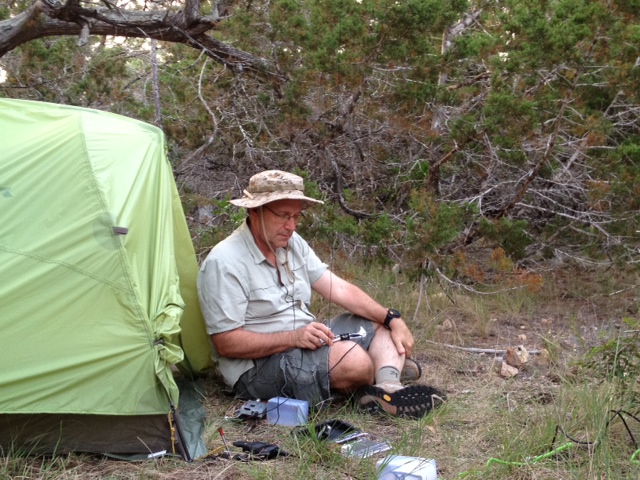
From the backpacking perspective, I planned pretty well. A lightweight MSR Nook tent served me well, however, my old 20 degree sleeping bag and Thermarest pad need updating, lighter versions exist. My titanium alcohol cook stove and titanium cook pot worked great. One omission, I didn't bring any thing to sit on, so I need to get a Thermarest chair set-up that allows me to make a seat out of my sleeping pad, sitting on the ground gets old. I used to have one, but I have no idea where it is. One lesson that I haved learned when carrying everything you need on your back is to dual purpose your gear as much as you can. An example, for eating, I carry a plastic spoon and a coffee cup. If I don't eat the backpacking meal from the bag, I use the coffee cup to eat from and I have very little clean up. While I didn't bring a trekking pole on this trip, I could easily use one to mount the 13' pole on, after I figure out the adaptor issue. A trekking pole also works well as a base for the Buddi-stick vertical.
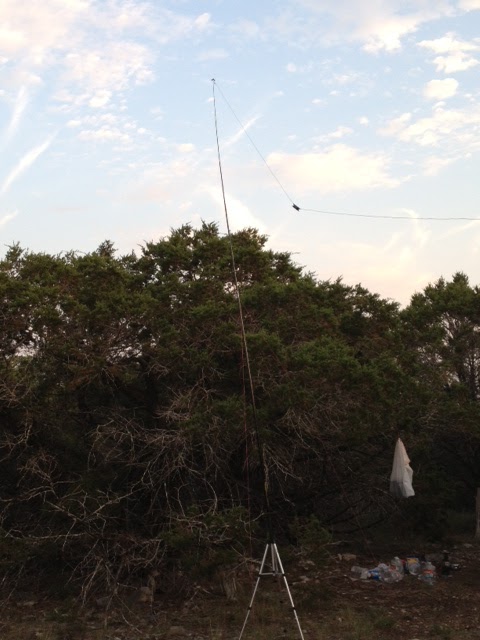
I would also say the radio set up worked as well. My main goal was to test the new 13' telescoping pole that I bought from SOTA Beams. I like this pole because it is much easier to pack in a backpack and it fits easily into a suitcase. Of course it's only 13'. I set it up on the $10 tripod that I use with my AlexLoop, that gives it another 4 feet or so. Both the telescoping pole and small tripod slide easily into the slot behind the sidepockets on most backpacks.
Mike Crownover, AD5A, is a regular contributor to AmateurRadio.com and writes from Texas, USA. Contact him at [email protected].
Show Notes #104
Episode #104 Audio (Listen Now):
Introduction:
- Pete is back on the show along with Russ
Announcements:
- Hamvention 2013 is happening May 17-19, 2013 in Dayton, Ohio. LHS reached the donation goal and thus will be in the Hara Arena. Thanks to Sierra Radio Systems for their incredibly generous donation that put us over the top. We will be talking with George from Sierra and Nick from Pignology in Episode #105. It’s a show you DO NOT want to miss.
- Bill, KA9WKA, has announced that he is also going to be on hiatus for a while. Therefore, we now have an opening for a show notes taker and keeper of all knowledge! If you’d like to be that person, please send us an e-mail or get in touch with Pete or I in the IRC channel.
- Website that lists known Linux Events.
- http://answers.oreilly.com/topic/3507-list-of-known-linuxfest-events/
Topics:
- We have a pre-recorded interview with Steve Nichols, G0KYA (also AB8ZV) the Author of STEALTH ANTENNAS an RSGB publication.
- http://g0kya.blogspot.com
- http://www.infotechcomms.co.uk
- HF Propagation Report Podcast
- Factors in HF Propagation
- Sunspots
- Flares
- CMEs
- Propagations changes over daily and monthly bases
- Solar Cycle 24 and its progress
- HF Propagation programs
- HamCap (Windows 32-bit)http://www.dxatlas.com/hamcap
- VOACAP (Linux, MacOS X, Windows)http://www.voacap.com
Feedback:
- Topic for short discussion: How is Ham Radio Free and Open Source?
- http://www.linuxjournal.com/ham (2010)
- http://www.linuxjournal.com/content/open-source-ham-%E2%80%93-free-range-chicken (2009)
- Both articles are more of a teaser for Linux Journal’s HAM section.
- Pro arguments:
- Home-brew your own
- Communications open worldwide
- No need for outside infrastructure
- Con arguments:
- Need a license from “The Man” to operate
- Many restrictions (band plan, op procedures, etc)
- Not Free, as in beer (license, equip, etc)
- Therefore, is it the ‘YANG’ to Linux’s ‘YING’?
- Due to the length of the interview with Steve Nichols, feedback will be moved to after the interview in Episode #105.
Contact Info:
- Contact Russ at [email protected] or [email protected].
- Listen to the live stream every other Tuesday at 8:00pm Central time. Check the LHS web site for dates.
- Leave us a voice mail at 1-909-LHS-SHOW (1-909-547-7469), or record an introduction to the podcast.
- Sign up for the LHS mailing list.
- LHS merchandise is available at the Merch link on Web site. Check out the Badgerwear or buy one of the other LHS-branded items at PrintFection.com/lhs or Cafe Press. Thanks!
- Thanks to Dave from Gamma Leonis for the theme music.
Music:
- “Alive” by Bright September
- “So Called a Hero” by Bright September
- http://www.brightseptember.com
Russ Woodman, K5TUX, co-hosts the Linux in the Ham Shack podcast which is available for download in both MP3 and OGG audio format. Contact him at [email protected].
Interesting day
It rained ALL day, for the most part. Not really heavy, but a good soaking Spring rain. Just what I need to get the grass growing again after I mowed it Friday night!
I started the day with a nice rag chew with Joe W2KJ. I always get a kick out of working Joe. He’s an outstanding QRPer; and it’s always a pleasure to chat with him. But I really get kick out of the W2KJ to W2LJ thing – our calls being one letter apart.
This afternoon, I worked VQ975FOC/MM. If he was in the Chagos Islands, where the call sign is from, that would have been quite the QSO at 9,366 miles away. But as he was signing /MM, Jim could have been just about anywhere on the face of the earth. Shortly after working him, I got a tweet from Chris KQ2RP. He was intermittently trying to work the same station in between shack cleaning chores. When Chris heard the VQ9 come back to me, he redoubled his efforts and got him in his log, also. You know what they say, “QRPers of a feather, flock together.” Cool, Chris, I’m glad you worked him too.
I worked VP5/W5CW down in the Turks and Caicos on 20 Meters. I have worked Dave several times over the years in the big DX contests. I guess he’s down in the islands getting ready for the CQ WPX Contest, which is next weekend.
I also got a new DXCC entity in the QRP log today. By working CP4BT, I worked Bolivia with QRP for the first time. I’ve worked that country several times over the years, but it was always QRO in the past. This time it was with 5 Watts. I am going to have to go through my log and see how many that brings me up to via QRP. I think it might be somewhere close to 130 now.
I finished the day by giving out points in the monthly Run For The Bacon. It seems pickings were sparse this month; and that might be no surprise. I am willing to wager that a lot of my fellow piggies were returning home from Dayton today and were just too tired to hunt for bacon!
72 de Larry W2LJ
QRP – When you care to send the very least!
Larry Makoski, W2LJ, is a regular contributor to AmateurRadio.com and writes from New Jersey, USA. Contact him at [email protected].
Portable QRP = planning and adaptability
 |
| Last years shot of my planned location for today |
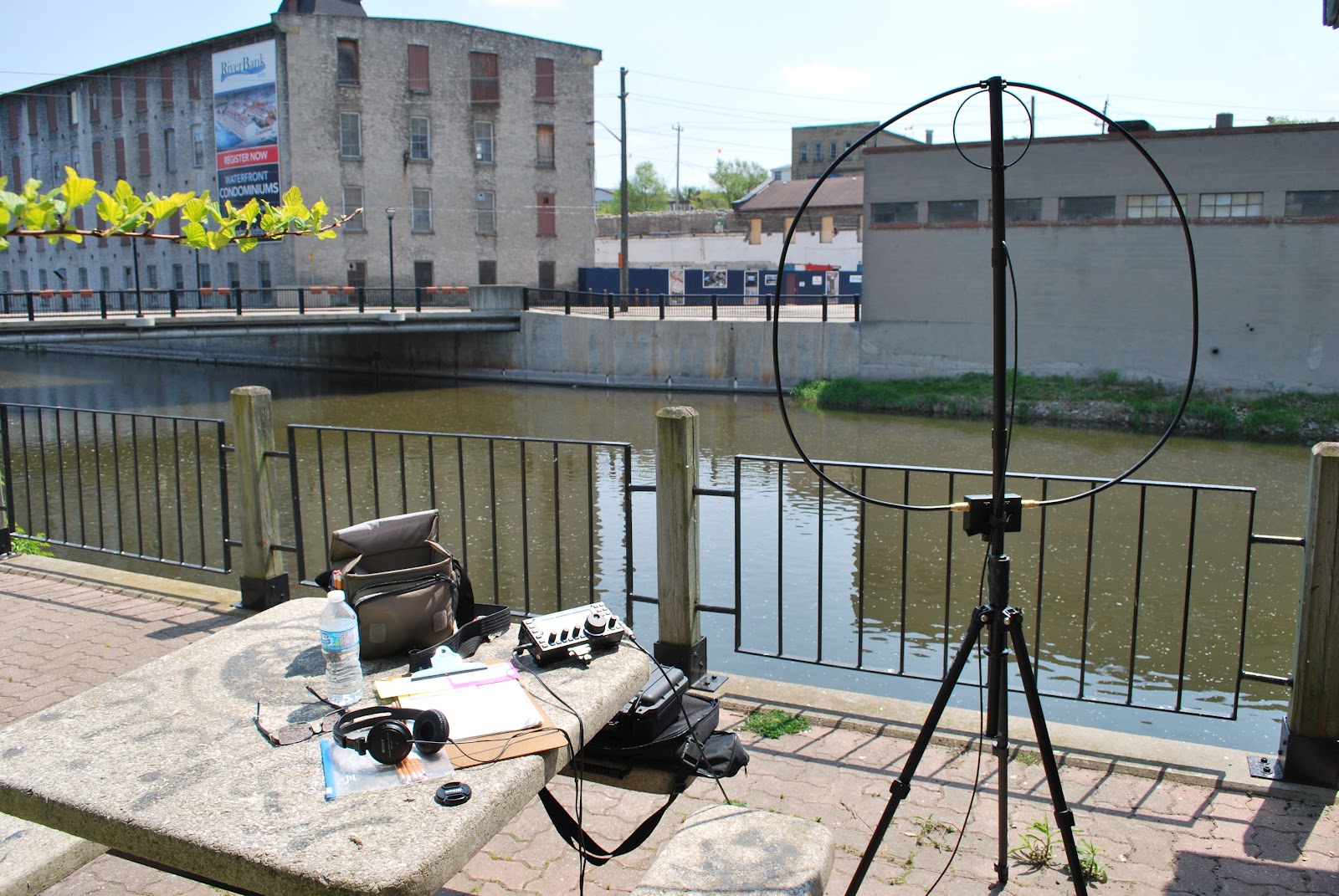 |
| New setup in town |
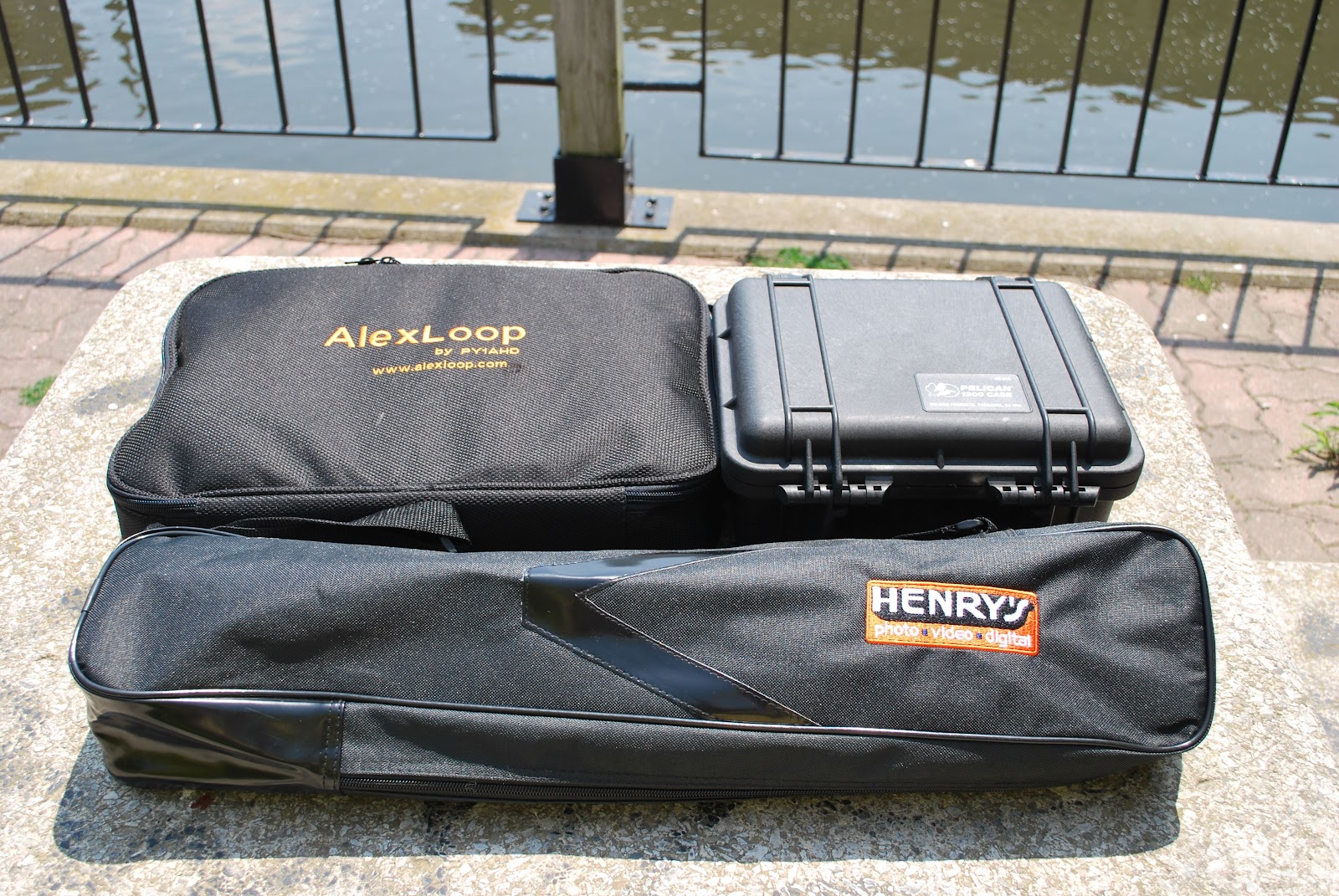 |
| All packed up. |
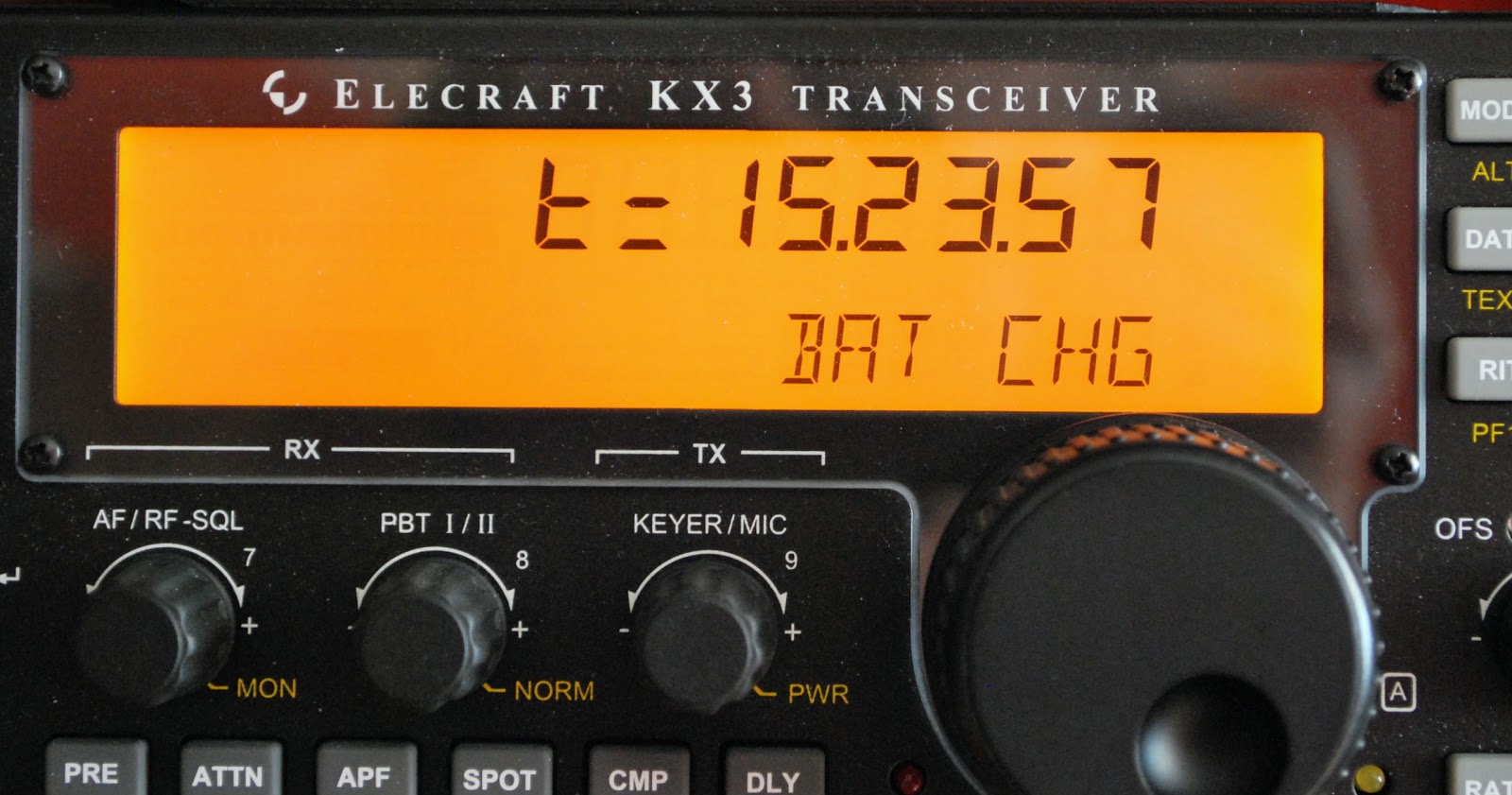 |
| KX3 charging |
Mike Weir, VE9KK, is a regular contributor to AmateurRadio.com and writes from New Brunswick, Canada. Contact him at [email protected].
Raspberry Pi camera, OS updates and DSTAR
Last week I noticed that the Raspberry Pi camera was available. At the princely sum of £20 including VAT, I ordered one from CPC It arrived very quickly but I didn’t have time to do anything with it until yesterday.
The camera is a PCB on the end of a ribbon cable – all very simple. I found the following instructions on the CPC site for installing the camera. OS and firmware updates are required to the Pi in order to use the camera. I followed the instructions through and didn’t encounter any problems, although somehow I managed to download the wrong script for the rpi-update (in the end, I used the procedure here https://github.com/Hexxeh/rpi-update)
I did have to take the Pi out of its’ case in order to connect the camera – and I have seen some correspondence which suggests that a case which accomodates the camera might not be far away.
Getting the camera going was fine, although this is where the CPC instructions fell down. They mention software on the Pi called raspicam. I tried running it, only to find that the software wasn’t there. Initial reaction was that I’d messed up, but actually no, the software had been renamed and you need to look for raspistill and raspivid
I found the easiest way to attach the camera to something to hold it still was BluTack although trying to make that work on an odd angle, pointing the camera out of the window was a little frustrating!
Picture quality was good. It struck me that you could easily use the Pi and the camera for a shack webcam.
My other Raspberry Pi is dedicated to running my DSTAR gateway. I thought that I would upgrade the OS in the same way today, although I’ve not upgraded the firmware as I didn’t want to use the camera on that machine (doubtless there are other improvements). The upgrade procedure took over 2 hours.
I also took the opportunity to upgrade Jonathan, G4KLX’s DVAPNode and Gateway software to the latest version. First time I brought the system up, the processor went to 100% and stayed there and I wondered what I had done! However, after a rather inelegant shutdown, involving removing the power – and bringing the system back up everything seemed to be working as it should, once again.
Proving it, I had a really nice DSTAR QSO with Horacio LU1BJW in Buenos Aires. I understand that DSTAR is not everyone’s cup of tea, but it does enable some very interesting QSOs to be made.
Tim Kirby, G4VXE, is a regular contributor to AmateurRadio.com and writes from Oxfordshire, England. Contact him at [email protected].
A nice audio report
I just finished a contact with a very loud Austrian station, OE3DIA on 10 metres, who took time out while working a string of stations to give me a complimentary audio report, quite unsolicited. It’s good when that happens! The comment was “Very nice audio cutting through the QRM” I was using the K3 at 80 watts and the mike was one of those Heil mikes with the dual insert, set to “narrow”. The K3 transmit audio equalisation is factory standard, in other words flat.
As it happens I had just been doing some audio comparisons between the KX3 and the FT-817. There has been a thread going on the KX3 Yahoo group started by a disenchanted American ham who claims that the FT-817 has punchier audio than the KX3. It’s rubbish, to put it politely. The KX3 has a built-in speech compressor, while my 817 has an RF processor made by Joachim, DF4ZS (more details on my FT-817 page) built into the microphone. Without it there is just no comparison.
I recorded some audio clips so you can hear for yourself:
- FT-817 with standard microphone, no compression
- FT-817 with standard microphone and DF4ZS compressor
- KX3 with MH3 microphone, mic gain and compression both set to 30
There is a bit of distortion on those clips which was not noticeable when listening on the radio. I think I might have a problem with my sound card.
I’m not sure if the difference are that noticeable in those clips, but when you look at the needle of the power meter the KX3 certainly has the more punchy signal.
Both the FT-817 and the KX3 were running off 13.8V and set to 5 watts output. I couldn’t compare them on battery power as I don’t have the charger board for the KX3 and the external battery pack (10xAA NiMH cells) I intended to use appears to be past it and the KX3 kept cutting out on voice peaks.
Julian Moss, G4ILO, is a regular contributor to AmateurRadio.com and writes from Cumbria, England. Contact him at [email protected].
ICQ Podcast S06 E10 – Squelch Systems (19 May 2013)
Series Six Episode Ten of the ICQ Podcast has been released. News Stories include :-
- British Amateur Radio Lighthouse Society Change
- Help Hurricane Net Control Stations
- Cambodia and possible Myanmar op
- VK9 now SOTA classified
- New 24 GHz EME world record
- South Africa allocates two 5 MHz channels
- VO-52 satellite completes eight years in orbit
- VK hams invited to use VI 103 WIA
- Raising the public profile of Amateur Radio
- Isle of Man special callsign
- SSB using a Raspberry Pi
- HamTV from the International Space Station
North American report from Frank Howell (K4FMH) and Martin Butler (M1MRB & W9ICQ) discusses Squelch Systems
Colin Butler, M6BOY, is the host of the ICQ Podcast, a weekly radio show about Amateur Radio. Contact him at [email protected].
 Ham Radio Deluxe |
 W5SWL Electronics |
 Ham Radio Prep |
 KB3IFH QSL Cards  Hip Ham Shirts  HamRadioAuctions HamRadioAuctions Reliance Antennas Reliance Antennas Enigma Shop Enigma Shop |  morseDX  Ni4L Antennas  R&L Electronics R&L Electronics antennas.us antennas.us QRV QRV |
- Matt W1MST, Managing Editor
