 |
 On Vacation
 5 June 2013 | by
 I am currently in the NE and am scheduled to try to activate a few summits in Thursday - Saturday in New Hampshire and Vermont, however the weather forecast doesn't look favorable. I will probably give it a try anyway. I am accompanied by my two grandsons, KF5GYD and KF5GYE, who have their general tickets. They are 11 and 13 respectively, so I will have factor them into the weather equation.
When I return, I will try to document these exploits more completely.
Mike Crownover, AD5A, is a regular contributor to AmateurRadio.com and writes from Texas, USA. Contact him at [email protected].
LHS Episode #107: Sorry for Party Bedrocking
 This is the first episode to be recorded since Hamvention back in mid-May. Russ gives his thoughts on the event and tells everyone about the contest that was held there, and also the new one that is being held for all of our listeners. Please get your entries in. You don't want to miss out on winning a Beaglebone Black! An interesting new Linux project that Russ heard about, called Bedrock Linux, came to his attention at Hamvention. The hosts interview the lead developer in the main segment of the program. On top of that, they discuss topics from milk shakes to retirement, announce the show's most famous listener to date and bring back The Badger. You don't want to miss any of this goodness.
73 de The LHS Guys
Russ Woodman, K5TUX, co-hosts the Linux in the Ham Shack podcast which is available for download in both MP3 and OGG audio format. Contact him at [email protected].
Struggle for a new one
I worked a new DXCC entity via QRP tonight, and it was a workout. The funny thing is, the actual distance? Not so much. This one was a Caribbean Island. And from the East Coast, the islands of the Caribbean are usually not very hard at all.
But conditions on 17 Meters tonight were soupy. The QSB was rolling in and out. My quarry was 599 one second and about 569 the next. But I finally got FJ/K5WE in the log, and worked Saint Barhtelemy for the first time, using QRP power to boot.
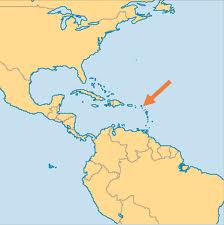
If you look at the map, your first reaction is probably the same as mine. No big deal, right? I mean I’ve worked just about every single island down that way, many of them lots of times over. We’re talking just a couple of thousand miles – really no big deal even for QRP. But the pileup was busy and the QSX frequency kept moving. Once I was able to establish the pattern, it didn’t take long. But because of the QSB, I couldn’t hear a lot of the stations that FJ/K5WE was working, so it made establishing that pattern just a little bit tougher.

Like I said before, once I was actually able to hear a few of the stations and was able to figure out where FJ/K5WE was listening, I just tweaked my transmit frequency a touch higher and just kept calling until he worked his way up and just kind of fell into my lap.
Conditions are probably just “meh” – definitely not the greatest. The sunspot number is down to under 100 and the A index is up there. Not as bad as it was a few days ago, but still not great. The few Russian stations that I was able to hear were all warbly as if the signals were experiencing polar flutter. CO8LY was louder than all get out as was H70ORO. I was surprised that FJ/K5WE wasn’t stronger, considering that Eduardo CO8LY was so strong. Could be an antenna situation, not sure what K5WE is using down there on his tropical get away.
72 de Larry W2LJ
QRP – When you care to send the very least!
Larry Makoski, W2LJ, is a regular contributor to AmateurRadio.com and writes from New Jersey, USA. Contact him at [email protected].
Tornado Alley in Oklahoma
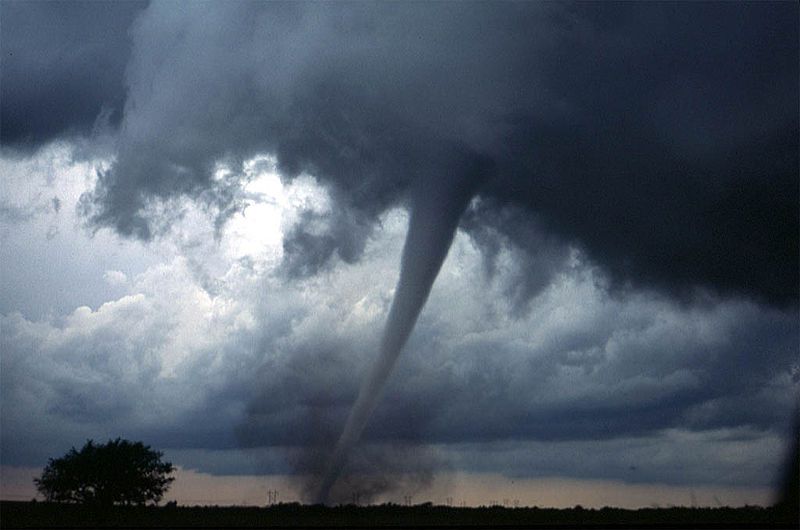
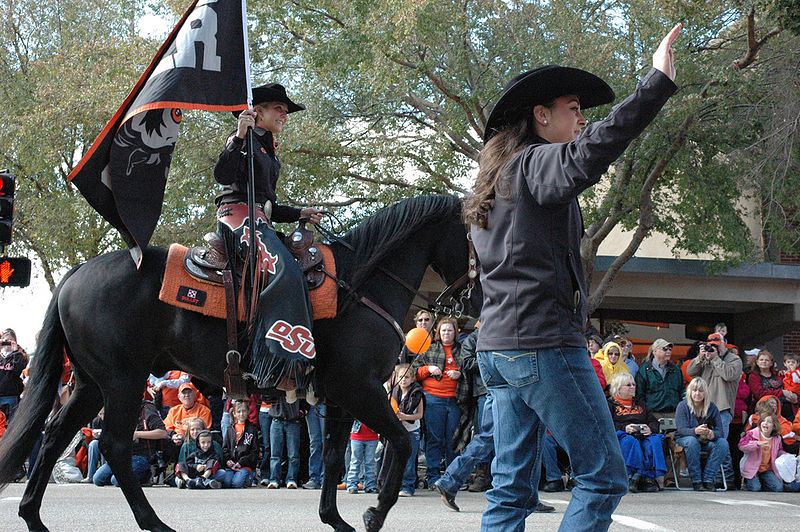
Moore Oklahoma has been “hit” twice in the last several years and there’s been catastrophic loss of both life and property on both occasions. Although this is only the very beginning of the summer season, the Oklahoma area seems to be a succession of raging storms. The quick QSO last night was just a “handshake”, in radio terms, but it certainly made me think of how fortunate I am to live in a sheltered valley here in West Virginia.
The beginning of the “tornado” season, along with the “hurricane season” in the Gulf Coast is just arriving now. I hope and pray this season is a mild one; but all indicators seem to point in the other direction.
On the DX log:
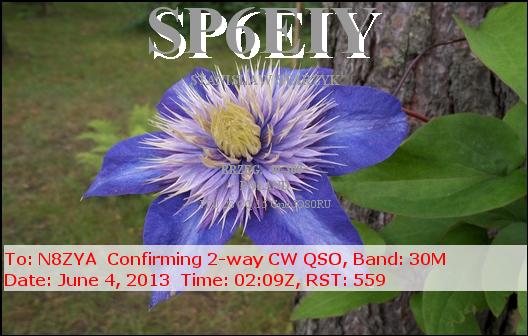
My “awakening hour” was around 1PM again last night and I continued my daily DX QSO’s with stations in in the Ukraine, UR0VQ, the Netherlands PA4VHF, Poland SP6EIY and EA6NB in the Baleric Islands of Spain.
John Smithson, Jr., N8ZYA, is a regular contributor to AmateurRadio.com and writes from West Virginia, USA. Contact him at [email protected].
A new review
I have just added a review of the Nevada WH3080 Solar weather station to my G4ILO’s Shack website.
The website gets a lot more visitors than the blog so I will be adding new content over the coming months.
Julian Moss, G4ILO, is a regular contributor to AmateurRadio.com and writes from Cumbria, England. Contact him at [email protected].
LZ1534GWS in Bulgaria

The bands continue to puzzle me. I thought yesterday might be the last of my string on daily DX contacts. I was hearing next to nothing on the 30 meter band, or any others for that matter. I worked a “local” station on 17 meters who was running 700 watts. I think it’s probably the ultimate “short band” contact, and then he disappeared into the noise within a couple of minutes.
I can’t explain it, but I’ve always had a good path into Bulgaria. I’ve worked this country 12 times now. This particular “special event station” (LZ1534GWS) marks my fourth contact in this special series. This station is honoring the Bulgarian Saint Martyr Georgi Sofiskski.
Last night was no different from the other 8 weeks of back pain I’ve been experiencing for the last two months. I hobbled into the radio room around 1:30 am this time, and as I waited for the pain to ease up in my leg, I worked IK2DAD in Italy. I’m nearly certain that surgery is going to be my only cure for this disruptive and depressive malady. My next doctor appointment is on June 28th, when I will have a test to determine if the nerve has been permanently damaged. I also have an appointment with a physical therapist on the same day. I’ve pretty well accepted the fact that my hiking days are over; but I would be overjoyed if I could get back on the bicycle.
The additional contact into Bulgaria last night marks my 132nd day of working at least one DX station every day. (those are days when I’m at home here in Charleston)
As always, I particularly enjoyed adding the QRP @ 3 W in the “remarks section” of the “spot”. I can’t help but “crow” about the advantages knowing and using the CW mode compared to the SSB mode.
Working the “marine stations” with the SSB mode, got me less than a thousand miles. I make contacts regularly at 5,000 miles with Morse code. The difference is like night and day.
John Smithson, Jr., N8ZYA, is a regular contributor to AmateurRadio.com and writes from West Virginia, USA. Contact him at [email protected].
Times R a changing
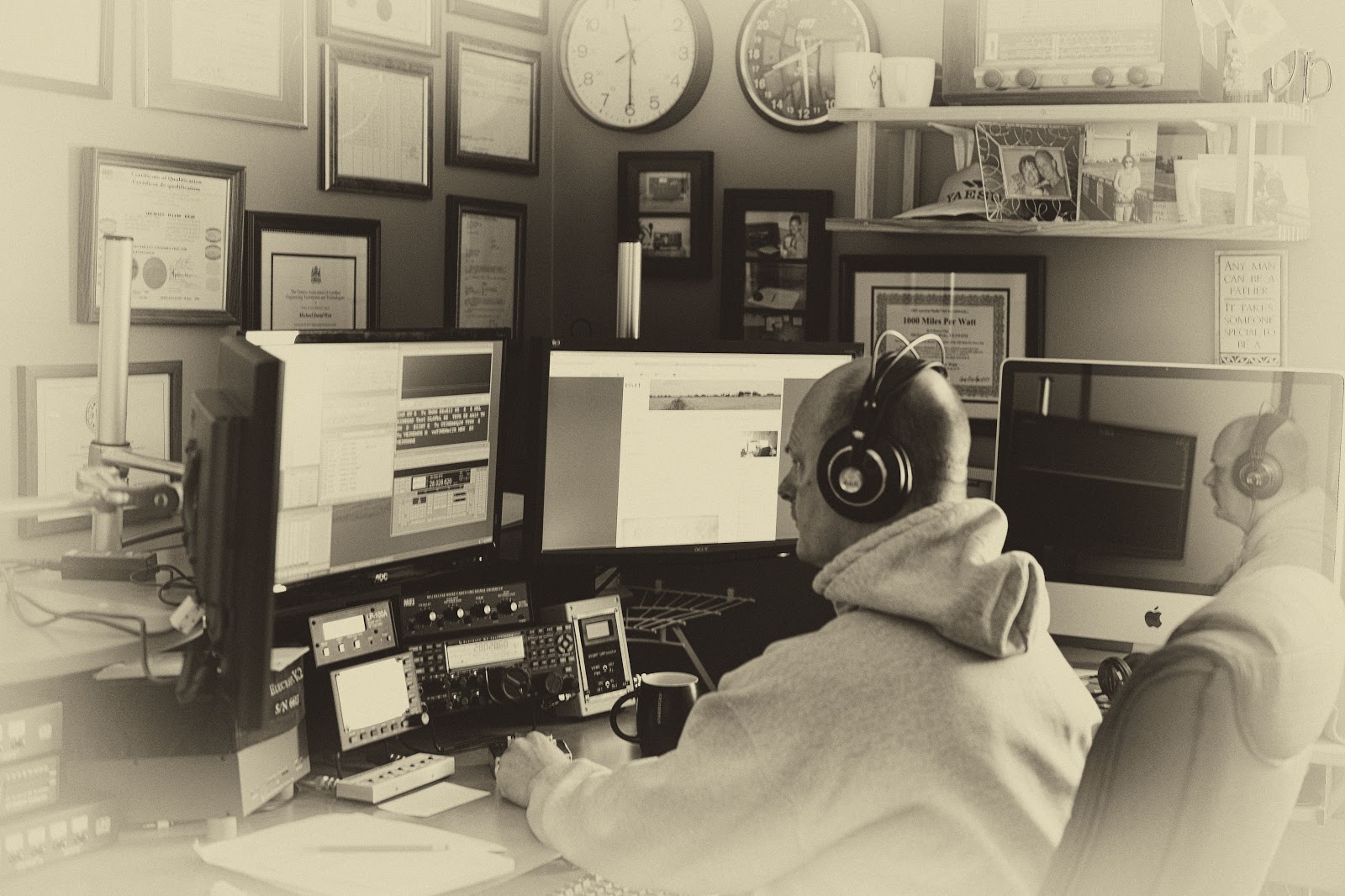
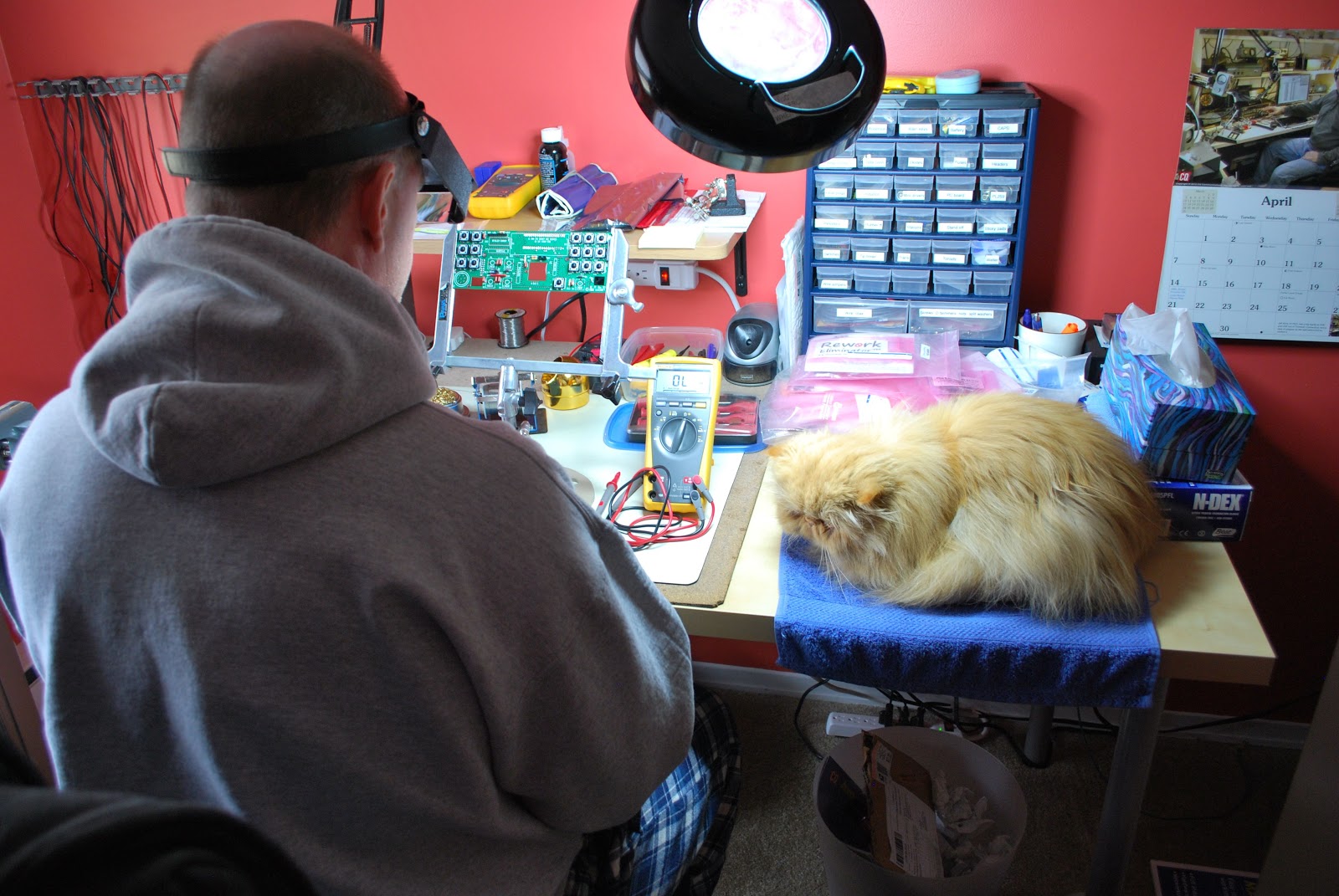 |
| Back to the K2 build |
Mike Weir, VE9KK, is a regular contributor to AmateurRadio.com and writes from New Brunswick, Canada. Contact him at [email protected].
 Ham Radio Deluxe |
 W5SWL Electronics |
 Ham Radio Prep |
 KB3IFH QSL Cards  Hip Ham Shirts  HamRadioAuctions HamRadioAuctions Reliance Antennas Reliance Antennas Enigma Shop Enigma Shop |  morseDX  Ni4L Antennas  R&L Electronics R&L Electronics antennas.us antennas.us QRV QRV |
- Matt W1MST, Managing Editor
