 |
 LHS Episode #108: Mumble in the Jungle
 11 June 2013 | by
  Hello and welcome to the first episode to be released on schedule in quite some time! It looks like our contest to award a Beaglebone Black to some lucky listener is going well. Make sure to get your entries in before 10:00pm Central on June 16th, either by becoming a member or completing the thought "I deserve a Beaglebone Black because..." on our voice line at 1-909-LHS-SHOW (547-7469). The drawing will be held during our live recording of Episode #109 on June 18th.
In this installment, your hosts travel the world of Linux and Ham Radio, discussing the latest release of ArchLinux, hurricane and disaster preparedness, the free-software Mumble project, computers in education and more. We even have voice feed back from Lord D, addressing a philosophical topic discussed in Episode #101. Sit down with a drink and get comfortable. This episode will make you think--we hope.
73 de The LHS Guys
Russ Woodman, K5TUX, co-hosts the Linux in the Ham Shack podcast which is available for download in both MP3 and OGG audio format. Contact him at [email protected].
New GB3WGI 144MHz transatlantic beacon goes live with G2FKZ legacy funding
It was good to receive the following press release from John, G4BAO this morning – excellent news!
The GB3WGI Transatlantic 144MHz beacon went live at 1600 GMT on the 4th of June in time for the peak of the 2013 Sporadic E season. The beacon runs 100 Watts EIRP in CW and JT65b modes on 144.487MHz and is located in the West of Northern Ireland (IO64bl). The plan is to apply for an increase in EIRP in due course.
The beacon’s function is to provide an early warning of 144MHz Transatlantic propagation on the Europe to USA path as a complement to the existing 144MHz Transatlantic beacon network in the USA which provides alerts on the USA to Europe path. It also aims to encourage participation in the IRTS Brendan Trophy and to further study the propagation path using weak signal digital modes (WSJT) developed by Nobel Laureate Professor Joe Taylor K1JT. It is hoped that the project will benefit amateurs interested in 144MHz long distance weak signal working as well as those generally interested in digital modes, and could provide the first real evidence of transatlantic propagation from the US to North West Europe. Current 144MHz European transatlantic beacons are much further to the South and/or East in Cornwall, France and the Azores. GB3WGI has a clear sea takeoff to the eastern seaboard of the USA.
The beacon was supported by a number of amateur donations including The City of Belfast Radio Amateur Society, but the major donation of £500 was made by the RSGB Propagation Studies Committee from the legacy left by the late Charlie Newton G2FKZ. The bulk of this went on the beacon, the remainder to fund beacon driver development for future beacons. Charlie Newton, wrote the definitive book on radio auroras, and was acknowledged as one of the leading experts on the topic of VHF propagation. He was for many years a leading light in the Radio Society of Great Britain (RSGB) Propagation Studies Committee.
Acknowledgements also go to Brian WA1ZMS who inspired the concept of GB3WGI, Andy G4JNT who designed and built the driver, Powabeam Antennas and The DX Shop who supplied parts for the antenna system, to James G3RUH who provided a GPSDO reference, to Murray G6JYB for Ofcom liaison, to John GI4BWM and Dave GI4SNA and of course to beacon keeper and site manager Gordon Curry GI6ATZ who really drove the project through to completion.
John Worsnop G4BAO 7th June 2013
Tim Kirby, G4VXE, is a regular contributor to AmateurRadio.com and writes from Oxfordshire, England. Contact him at [email protected].
Show Notes #107
- Linux in the Ham Shack is having a contest! We will be giving away a Beaglebone Black. (http://www.digikey.com/product-highlights/us/en/texas-instruments-beagleboard/685#beagleboneNext) If you are currently a subscriber at the monthly or yearly levels, you are already entered and need not do a thing. If you are not a subscriber, you have 2 choices: #1 is you become a subscriber at the monthly or yearly rate or, #2 is you can call the LHS voice line (1-909-547-7469) and complete this thought: “I deserve a Beaglebone Black because…” Your answers can be as serious or ludicrous as you like. Please include a call sign, if you have one, and an e-mail address or phone number in your voice mail so we can let you know if you’ve won and find out where to ship your snazzy new Beaglebone Black. All entries must be received by 10:00pm Central Time on June 16th. The drawing will be done during the live recording of episode #109 on June 18th. Good luck!
- Ray Manzarek, the founding member of The Doors, Dies at age 74. Manzarek died Monday in Rosenheim, Germany, surrounded by his family. The musician’s manager, Tom Vitorino, confirmed Manzarek died after being stricken with bile duct cancer. The Doors have sold more than 100 million record
- Linux in the Ham Shack has a most famous listener: Adam Curry, the Podfather himself. His ham radio call sign is KF5SLN, and this is the coolest thing that has ever happened to LHS. He does the No Agenda podcast with John C. Dvorak.
- The guys reminisce about Dayton Hamvention 2013. A big thanks go to all who stopped by the LHS booth. A big thank you goes to the mystery Robin Hood who robbed his wallet to give to the poor podcasters from Linux in the Ham Shack. There was a raffle for a Pignology Piglet from Sierra Radio Systems. Russ got the piglet at a reduced price and gave it away. Thanks go to George (KJ6VU) and Nick (N3WG) for the reduced price and for other work that they have done for Linux in the Ham Shack.
- Interview with Daniel Thau, lead developer of Bedrock Linux
Mini-Topics:
- Python for kids tutorials
- Why You Should Not Retire. Retiring decreases your physical and mental heath. This is due to a decrease in social interaction which proves an age old saying: if you don’t use it, you loose it.
- LHS Members:
- Hy C. W2HY
- Twitter Followers:
- @W3RKN
- Facebook followers/likes:
- Doug D.
- Dieter B.
- E-mail from John, G7VRI
- Blog Post from KE8P (http://ke8p.us)
- Web Comment from Josh, KK4LGZ
- Web Comment from Adam, KF5SLN (“The Podfather”)
- Thanks to our monthly donors
- Thanks to all of our listeners (live & via podcast)
Contact Info:
- Contact Russ at [email protected] or [email protected].
- Listen to the live stream every other Tuesday at 8:00pm Central time. Check the LHS web site for dates.
- Leave us a voice mail at 1-909-LHS-SHOW (547-7469), or record an introduction to the podcast.
- Sign up for the LHS mailing list.
- LHS merchandise is available at the Merch link on Web site. Check out the Badgerwear or buy one of the other LHS-branded items at PrintFection or CafePress. Thanks!
- Thanks to Dave from Gamma Leonis for the theme music.
Music:
- Music: “Tramp” by Kassy Key & the Raindoggs, courtesy of Jamendo.
- Music: “The Sun Is Shining” by Boxing Fox from the album The Shepherd Hates Us, courtesy of Jamendo.
Russ Woodman, K5TUX, co-hosts the Linux in the Ham Shack podcast which is available for download in both MP3 and OGG audio format. Contact him at [email protected].
Four SOTA Summit Activation’s in W1
W1/HA-009 Mount Monadnock (4 pts) June 6, 2013, New Hampshire
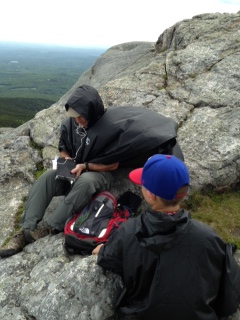
This is a tough 4 pointer. With over 2,000 feet of prominence I under estimated the mountain and made a few mistakes as well. First I counted on my grandson to carry the Buddi-stick, he forgot it and I didn't double check. Thankfully I had an EFHW with me, but only a 13 foot pole to run it from. There are no trees on the summit. Accordingly I think my signal suffered a little. It was very windy and cool on the summit and relatively crowded, which ultimately shortened our stay. I used an FT-817 on this activation because the original plan was for my two grandsons, KF5GYD and KF5GYE to operate some SSB, however conditions were marginal for CW, so we weren't able to execute that part of the plan.
The trail up is one granite rock after another. I had envisioned a wide, sodden trail to the summit, but that is not the case, lots of scrambling up granite slopes on a trail that goes straight up. For those familiar with the mountain, we took the White Dot Trail up, the more direct, and the White Cross Trail down. Coming down is tough because its like descending on a path of uneven steps and no real opportunity to enjoy the downhill slope and some relatively steep pitches down granite slabs. Two hours up and 1.5hrs down. I was able to make 7 QSO's from here (it only takes 4 QSO's to qualify for the points). I did work G4ELZ and S58AL to spice up the day.
W1/AM-381 Mount Agamenticus (1 pt) June 7, 2013, Maine
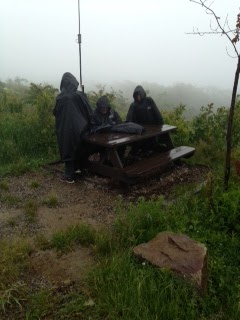
The morning dawned with steady rain and the forecast called for more. Not a good day for a hike. We decided to travel to the southern coast of Maine. A quick check of the SOTA database revealed a drive-up one pointer, Mt. Agamenticus. Easy, right. Wrong. My grandsons and I set up, after the ceremonial climb up the last few feet, on a picnic table in the blowing rain and zero visibility. Let's get four quick QSO's and get out of here. What I didn't know was that the A-index was 34 and the K was 4. Over an hour later I made the fourth QSO, way too much work for one point. This day was our 38th anniversary and Boogies 11th birthday.
W1/GM-003 Equinox Mountain (8 pts) June 8, 2013 Vermont
Equinox Mountain is near the town of Manchester, VT. It is an 8 Pointer, with a road to the top. I decided to make the most of my remaining time in the region and a drive up would save some time and give me a shot at getting another summit in. There is a toll road to the top and there is actually a functioning monastery on the mountain. Again visibility was near zero on the summit and misting rain. I first set- up with the vertical and had some success but it was noisy as conditions still weren't very good, so I was able to get some height on the EFHW, lashing my telescopic pole to the balcony of the visitor center on the summit, and made a few more QSO's finishing with 10. I started with the FT-817, but finished with my MTR which I discovered has a better receiver in noisy conditions. No real DX from here, NS7P from Oregon was my most distant contact.
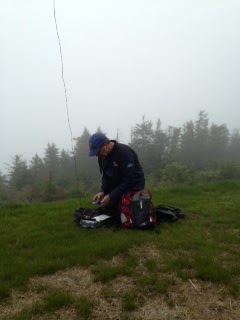
Mount Snow is a ski mountain with a lift most of the way up the mountain leaving a relative short but steep hike to the summit. The question was whether I could get the QSO's I needed in the time I had. We arrived at the mountain at 3:00 and the lift closed at 4:00. We summited at 3:25, set up the vertical with one grandson holding the trekking pole mounted vertical, the other holding my battery and me with the MTR, micro key and log and we were on the air by 3:30. DJ5AV was the first in the log and CT1BQH followed a couple of minutes later. By 3:40 I had 6 QSO's in the log. A quick tear down and back to the lift by 3:55. Made it. This one was the most satisfying, six points I didn't think I would get.
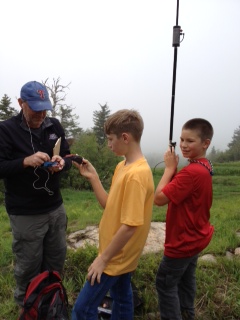
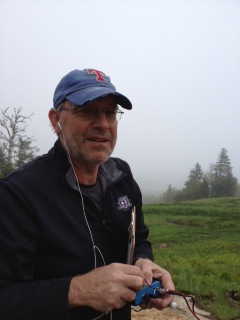

Mike Crownover, AD5A, is a regular contributor to AmateurRadio.com and writes from Texas, USA. Contact him at [email protected].
9K2MU on 20 meters this evening
 |
| One day my call will be in the confirmation box |
Mike Weir, VE9KK, is a regular contributor to AmateurRadio.com and writes from New Brunswick, Canada. Contact him at [email protected].
Cosmetic K2 Upgrade
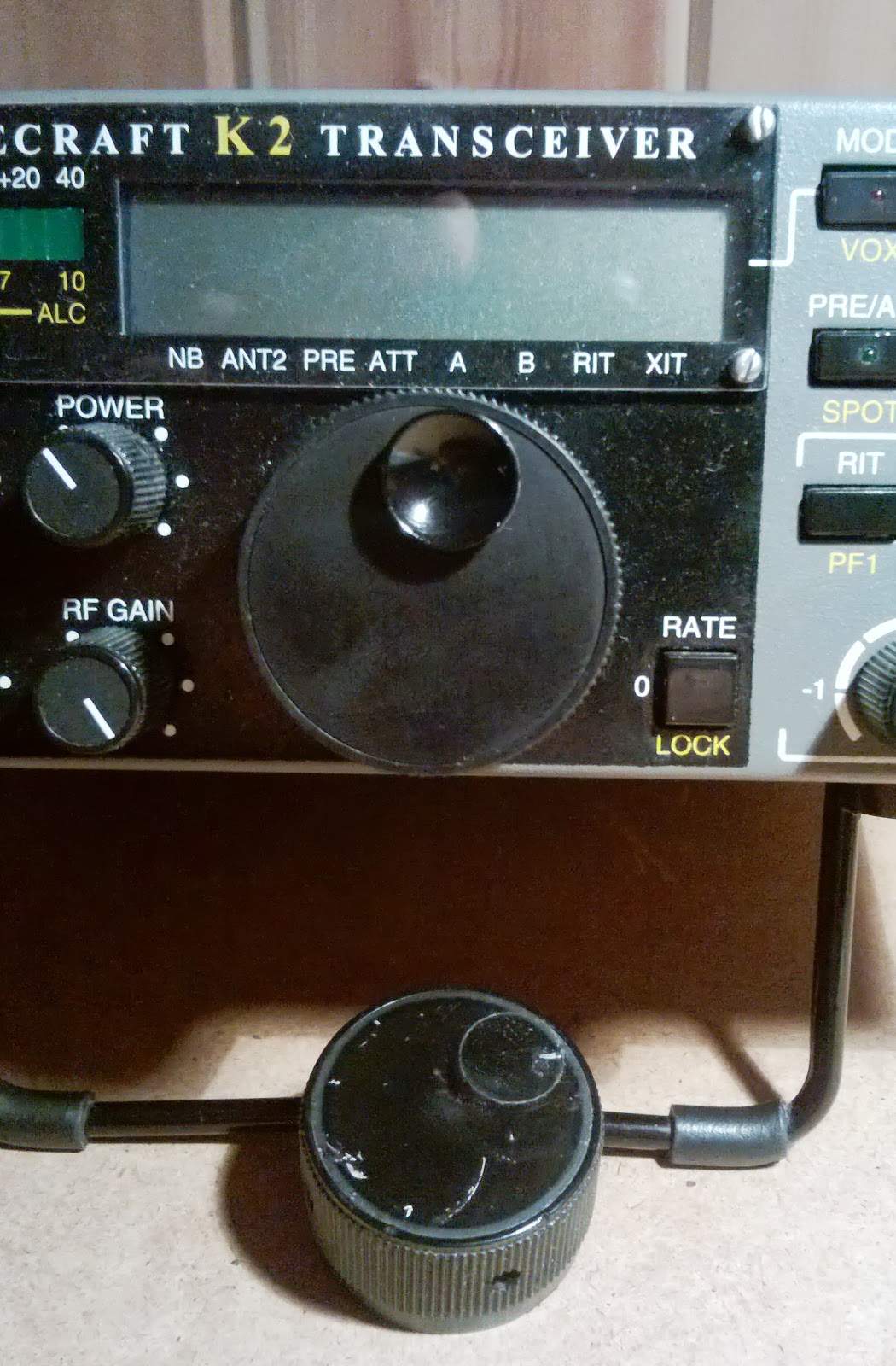
My Elecraft K2 which is now more than 11 years old (serial #2198) has served me well, even earning me QRP DXCC (100 countries with 5 Watts) some years ago. It is still cosmetically in mint condition, except for that single item which sticks out like a sore thumb: The tuning knob.
This became very clear to me a couple of months ago when LA8OKA’s and my K2 were displayed side by side at our stand at Oslo Maker Faire. His is less than two years old, serial #7224, and they were similar except for the scratches in the faceplate of my tuning knob. If I am allowed to generalize from my knob only, it seems as if the faceplate had poor quality paint and has been replaced by a better quality version over the years.
Anyway I ordered a new one and paid the price which at present is $30.37 plus shipping. The difference is really striking and I feel like I have a new K2 now, well worth the price! The K2 now serves as my second rig, and I think it has many years of good service still to come.
Related posts:
Sverre Holm, LA3ZA, is a regular contributor to AmateurRadio.com and writes from Norway. Contact him at [email protected].
A dongle for the FT-817
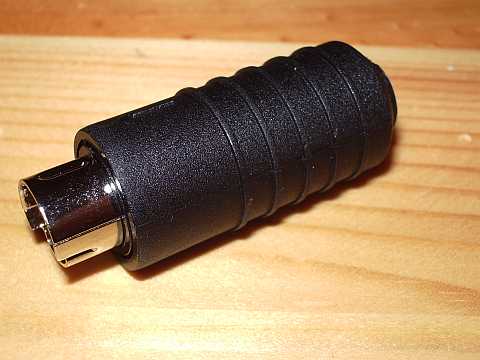
If you have used a Yaesu FT-817 on SSB you’ll have probably been annoyed by the lack of a TUNE button to generate a steady carrier for antenna tuning. You usually have to press the MODE button a few times to select FM or PKT, use PTT to send a carrier, then change mode back to USB or LSB. It isn’t one of life’s greater annoyances, but it’s a nuisance all the same, especially if you use an antenna like the AlexLoop which needs retuning every time you change frequency.
A couple of weeks ago I received a letter from one of my blog readers, John G4HUK, enclosing a Quick-Tune Dongle that he makes for the Yaesu FT-817, FT-857 and FT-897 rigs. It’s a neat little gadget that plugs into the ACC port on the back of the radio. What it does is let you generate a tuning signal in SSB mode by double-clicking the microphone PTT. Simple but effective! It won’t be so useful for home users who have a CAT cable plugged into their ACC port already, but for SOTA operators and other exponents of outdoor radio (apart from CW operators who can just hold the key down) it could be a godsend.
 |
| The Quick Tune Dongle installed on the back of the FT-817 |
The dongle didn’t work for me at first until I set the baud rate of my FT-817’s ACC port to 9600. This is explained in the ‘manual’. The instructions also explain how you can reconfigure the dongle to change the way it works. By default it will use PKT mode to generate the tuning carrier and ignore double-clicks made in any mode other than USB and LSB, which I think will suit most people.
I think it is an ingenious little gadget which you can get from HUK Electronics for £15.95 + postage. Here’s a video of the dongle in action.
Julian Moss, G4ILO, is a regular contributor to AmateurRadio.com and writes from Cumbria, England. Contact him at [email protected].
 Ham Radio Deluxe |
 W5SWL Electronics |
 Ham Radio Prep |
 KB3IFH QSL Cards  Hip Ham Shirts  HamRadioAuctions HamRadioAuctions Reliance Antennas Reliance Antennas Enigma Shop Enigma Shop |  morseDX  Ni4L Antennas  R&L Electronics R&L Electronics antennas.us antennas.us QRV QRV |
- Matt W1MST, Managing Editor
