 |
 Setting up for some morning radio time
 14 June 2013 | by
 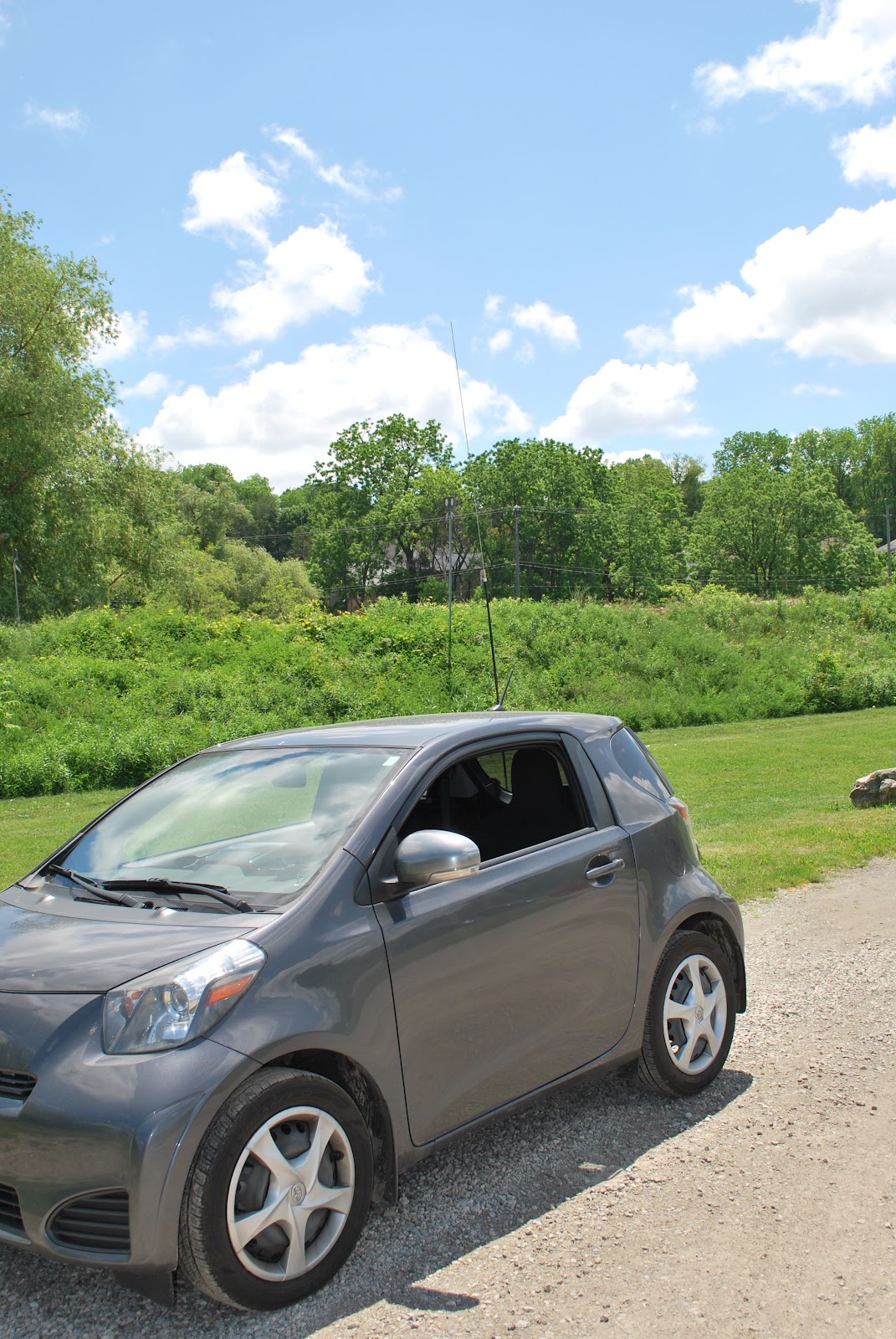 |
| The car with the mono band 30m whip |
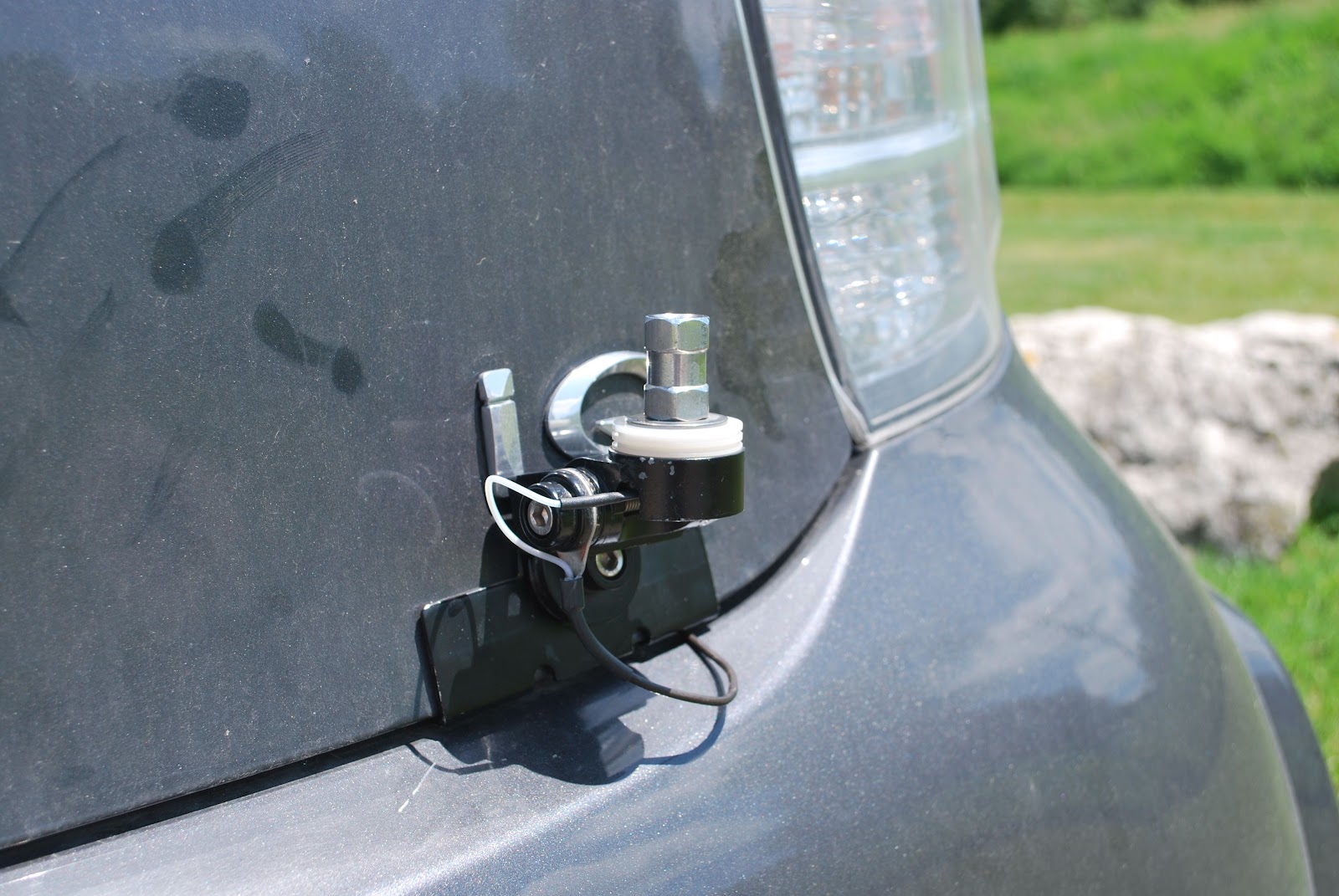 |
| The mount |
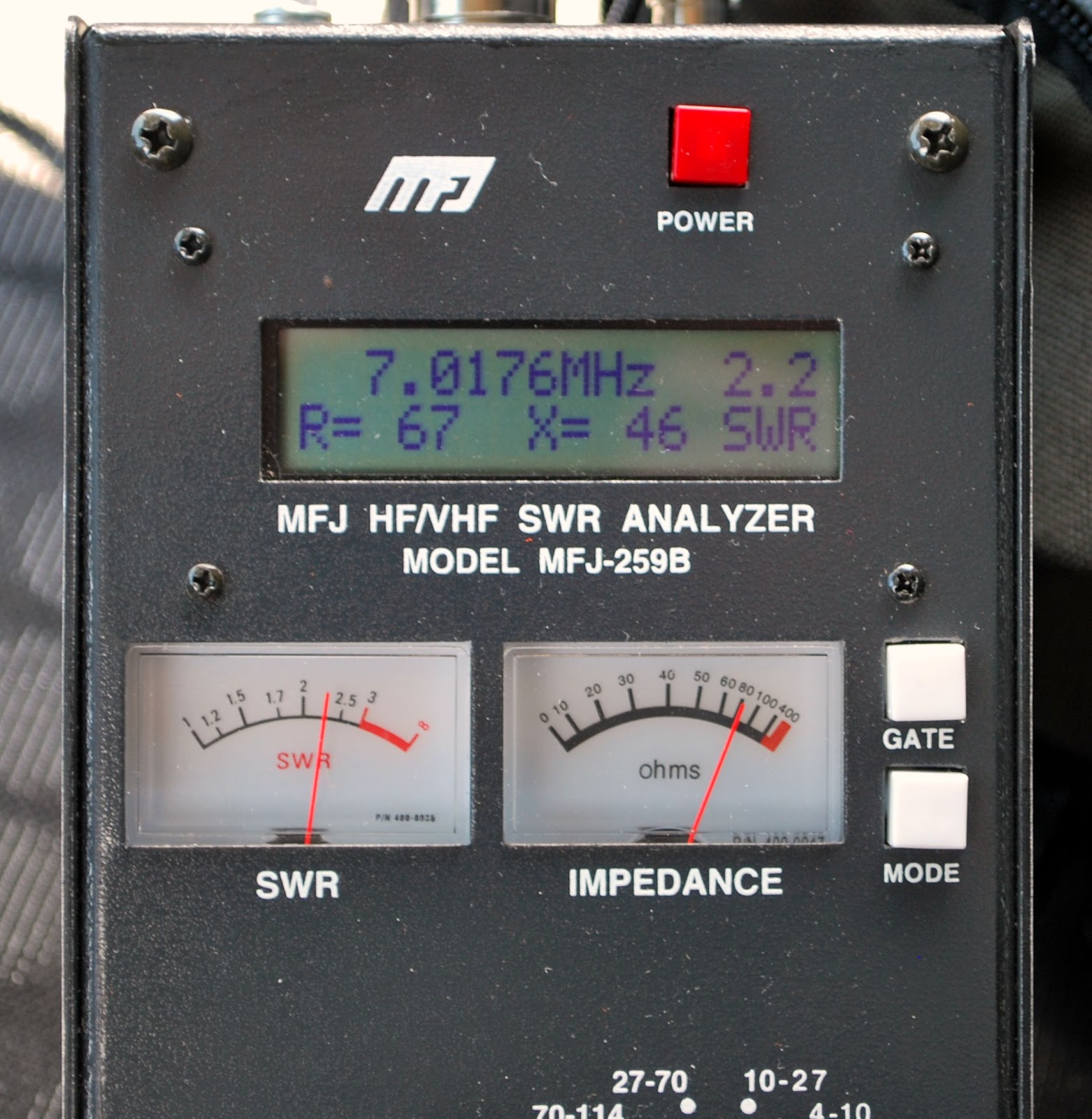 |
| Final SWR on 40m |
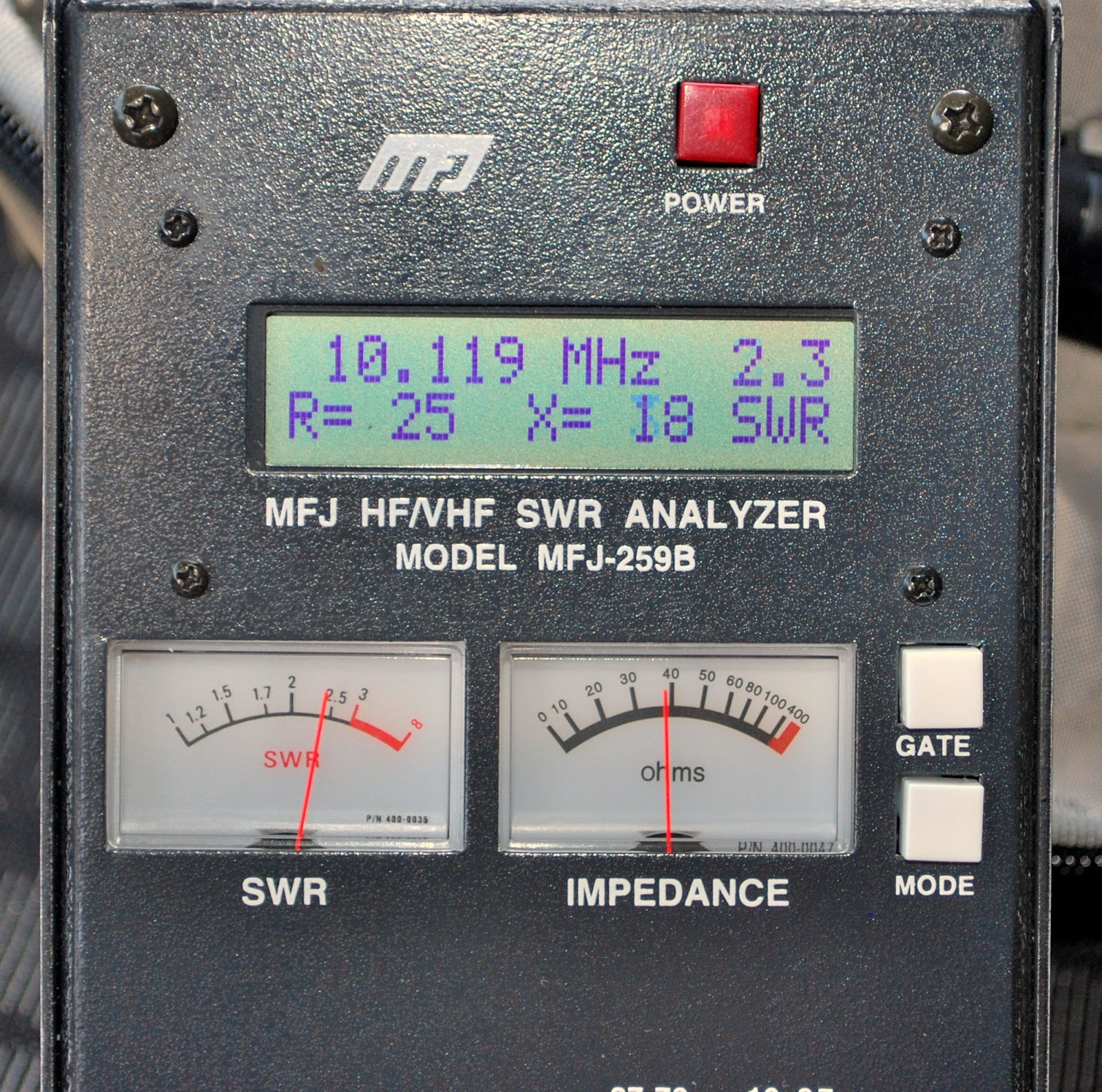 |
| Final SWR on 30m |
Mike Weir, VE9KK, is a regular contributor to AmateurRadio.com and writes from New Brunswick, Canada. Contact him at [email protected].
Skeeters and Bees, oh my!
I have been getting a lot of e-mails about the Flight of the Bumblebees, which is understandable, as I managed it two years ago. However, just a reminder, I am NOT managing it this year. FOBB belongs to the Adventure Radio Society and falls under the province of Rich Fisher KI6SN.

Rich is a VERY busy man! He edits and is largely responsible for a lot of the content of WorldRadio and CQ VHF. So in between running around with his hair on fire trying to meet the deadlines for two very popular publications, he also manages FOBB and the monthly Spartan Sprints. That is a lot to have on your plate!
I would ask for you all to be as patient as possible. The new edition of QST came out, and sure enough, FOBB is listed in “The Contest Corral” as occurring on July 28th, the last one of July. I am sure that within the next few weeks (if not sooner), Rich will be making an announcement about FOBB on QRP-L. My advice to you all is keep your eyes peeled and your stingers sharp.
Speaking of Summer time outdoor QRP operating events – please make sure to keep two others in mind! The first being “SYBO – Scorch Your Butt Off”, which is being sponsored by Rem K6BBQ. This is scheduled for Saturday, July 20th. This is a semi-inaugural event as SYBO is Rem’s current edition of the Bubba event, which went by the wayside. For all the details, please visit Rem’s SYBO Website by clicking on the contest name in this paragraph.
The second event, of course, is the NJQRP Skeeter Hunt. The Skeeter Hunt will be held on the second Sunday of August – which is the 11th, this year. You can sign up for a Skeeter number by sending me an e-mail at [email protected]. When you request a Skeeter number, please include your name, call and the state from which you plan to operate. This years theme is “Bodies of Water” and you can earn bonus points by operating close to a body of water, whether that be a lake, pond, river, brook, ocean, etc. Rules can be found at the hyperlink above.
Now, the reason that I am bringing up the Skeeter Hunt is that I received an e-mail from someone who informed me in that correspondence that it was his third request for a Skeeter number! I checked my spam folder and I never found the two initial Skeeter number requests, and that has me a bit concerned. If you have requested a Skeeter number and haven’t gotten one – it’s not because I have put you on “ignore”. It’s because I haven’t received your request. I try my best to respond to all requests as quickly as possible – certainly within 24 hours.
So as a backup – here are three ways to request a number, in order of preference on my part. If number 1 doesn’t work, try number 2, and then finally number 3. I’ll get you a Skeeter number if I have to come out to your house and deliver it personally!
Number 1 – send an e-mail to [email protected]
Number 2 – send an e-mail to [email protected] (sometimes the ARRL reports funky things about that arrl.net domain thingy)
Number 3 – Leave a comment on any blog post. Since comments are on moderation to avoid spam, I have to manually review each one – so that should be a safe “last fallback”.

Last year, we had 123 people sign up for Skeeter numbers, and as of today, number 67 was assigned. I would like to top last year’s total if at all possible. Last year over 50 log summaries were sent in and I would like to exceed that, also. The top five scores and the high score for each state/province got a nifty certificate last year, and that will be repeated this year. And this year, SSB has been added as a category for those of you who prefer not to pound brass. So there’s truly something for everyone – no reason not to come out, join us and have a blast!
72 de Larry W2LJ
QRP – When you care to send the very least!
Larry Makoski, W2LJ, is a regular contributor to AmateurRadio.com and writes from New Jersey, USA. Contact him at [email protected].
Antenna expansion
I know when summer is here when I have to keep on tweaking the tuning of my MFJ magnetic loop antenna throughout the day. Having an antenna farm in the attic (or loft as it is more commonly called over here) protects the antennas from the depredations of the elements but it does subject them to extremes of temperature during the summer months. As the loft warms up during the morning the metal of the magnetic loop expands. Because the magnetic loop is a very sharply tuned antenna this has an effect on the SWR. I don’t know what the temperature in the loft reaches on a sunny day but I wouldn’t want to go up there.
I’m not talking about a small change. I may tune the antenna to achieve a 1.2:1 SWR first thing in the morning and by lunchtime it can have increased to 2:1 or more. This wouldn’t be so noticeable if I was moving around the bands retuning as I go. But I use the magnetic loop for my 30m APRS station which stays on 10.1473MHz all day and every day. (It does a jolly good job there, by the way.) If I don’t pop into the shack now and again and give the antenna a quick tune I could be subjecting the transceiver to a higher SWR than is good for it.
The magnetic loop is the only antenna I have that will cover 30m, so I don’t have any alternative for my APRS system. This need for retuning affects all the bands I can use the loop on, not just 30m.
I suppose my multiband dipole also expands and contracts with temperature, but because the tuning is broader the effect on the SWR is less noticeable. Outdoor antennas have their tuning affected by rain or ice, of course, so I’m not alone in having to put up with weather effects on my antennas.
Julian Moss, G4ILO, is a regular contributor to AmateurRadio.com and writes from Cumbria, England. Contact him at [email protected].
Field Day Generic Public Service Announcement
Generic Ham Radio Field Day PSA
Talent: Jim Davis W2JKD
Running Time: 26 Seconds
144 Days of DX
I worked CO8LY in Cuba this evening for my 144th day of daily DX contacts. Cuba is such a short distance from here (1,325 miles) ; it’s become embarrassingly easy to work this country. Tonight marks the 24th time I’ve worked Cuba and the 10th I’ve worked this particular station. I’ve been dropping my power down to one watt occasionally just for the fun of it…..
I’ve become somewhat lax on my blog entries lately, but here are the basic facts for the last several days:
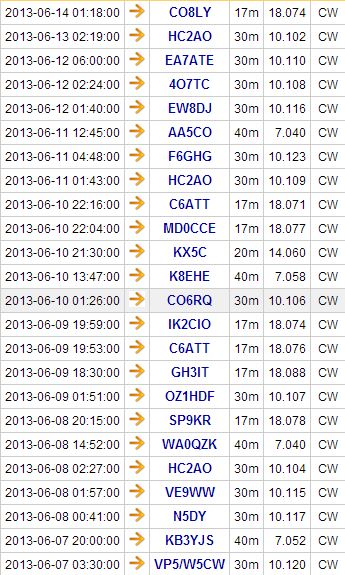
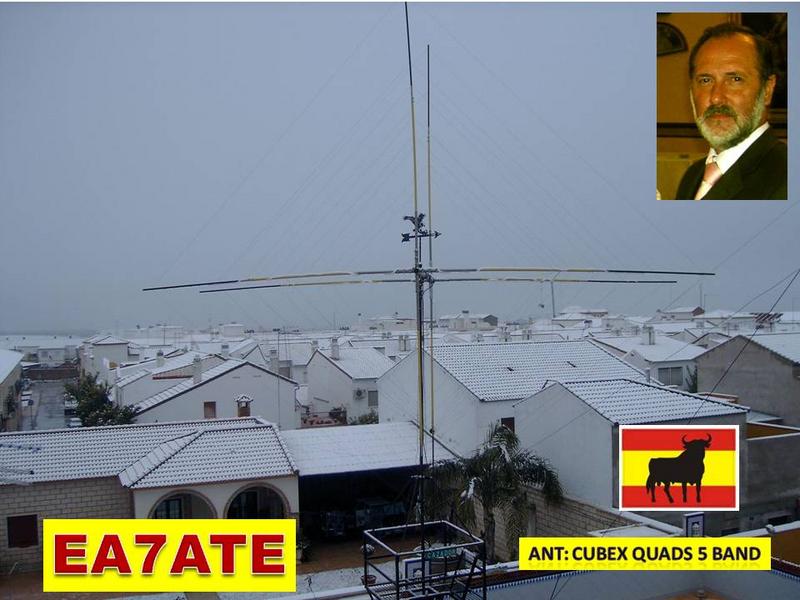
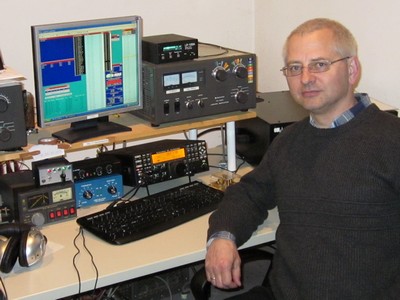
There’s several short distance contacts here. The Caribbean area is a gold mine for me. I’ve worked Bermuda several times, and also Ecuador. A surprising and difficult contact was EA7ATE in Spain. I got a nice e-mail from him and expect a card soon.

John Smithson, Jr., N8ZYA, is a regular contributor to AmateurRadio.com and writes from West Virginia, USA. Contact him at [email protected].
Minimalist Radio: A Lesson in Efficiency
Recently I took a trip to Santa Fe, NM. I had never been to Santa Fe and had heard what a great place it was so my wife and I wanted to experience the city for ourselves. Also there are some nice SOTA summits in the area that I wanted to tackle having become a SOTA addict. In my brief planning for the trip I contacted Fred, KT5X, who lives there to ask his advice on what summits might be doable for a relatively fit flatlander. Fred offered not only his advice but also his willingness to serve as a guide on the first summit. Eventually he recruited John, K1JD, a recently transplanted Santa Fe resident to come along. It was this trip that I learned what minimalism is all about.
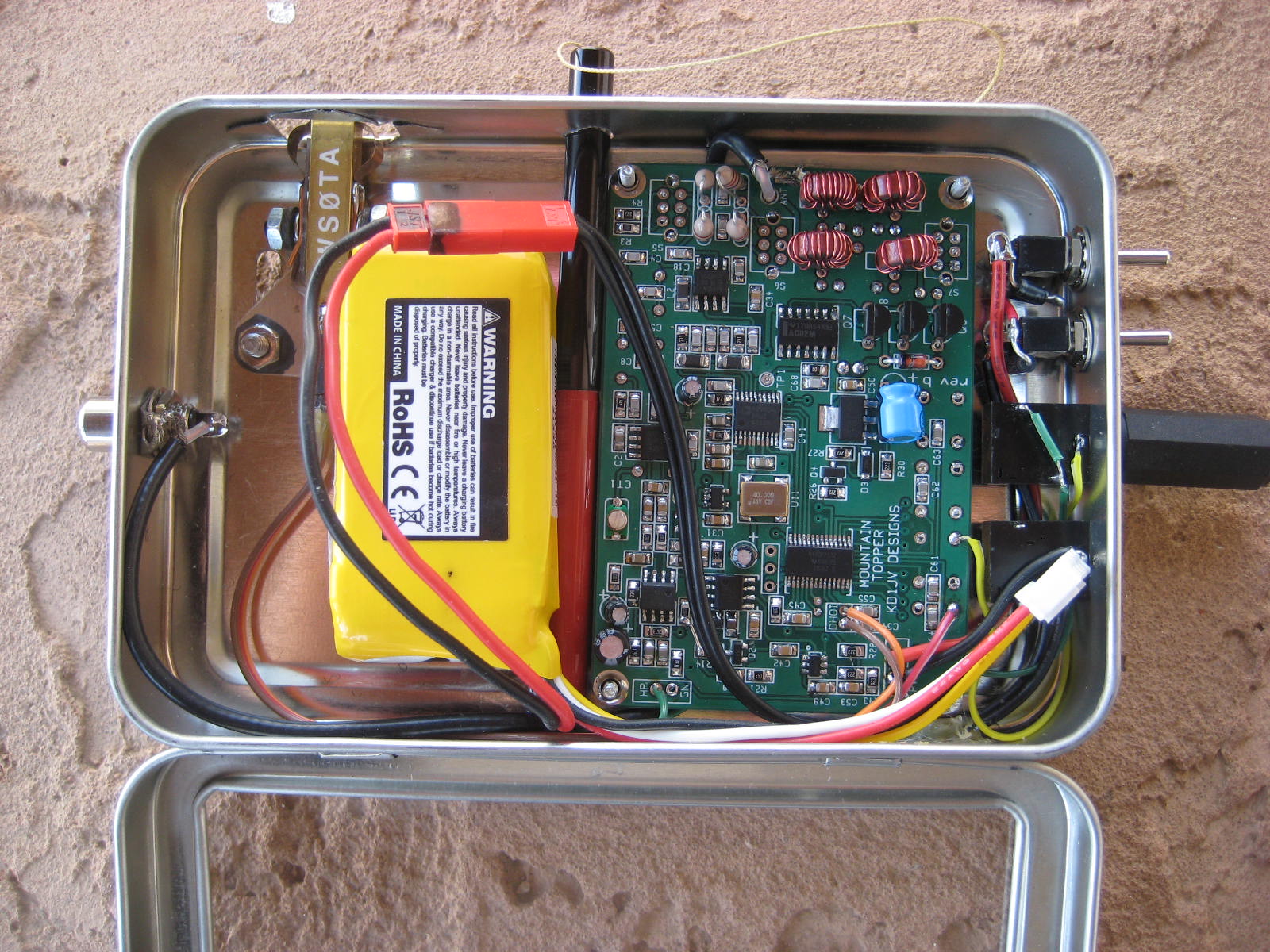
I had a normal size day pack filled to brim with redundant equipment, two radios (ATS-4B, MTR), two antennas (vertical, EFHW), you get the picture, redundant but not a huge load. I will defend some of the redundancy in that I have limited time and don't want to miss an opportunity to activate a summit because of some equipment failure. Fred shows up with basically a camal back water pack that has a front pocket on it. A small carbon fiber pole that collapses down to 21" and extends to 21 feet, a resonant antenna and a home brew enclosure for his MTR that contains a key, power supply, logging pen and serves as an operating desk to log QSO's with. Fred's total set up is around 1.5 lbs. The MTR Board is designed fit in an Altoids tin to give a perspective on the size of the enclosure.
Mike Crownover, AD5A, is a regular contributor to AmateurRadio.com and writes from Texas, USA. Contact him at [email protected].
It was one of those CQs you don’t expect to be answered… (and trouble in the FT8900 PA)
If you’re a VHF/UHF enthusiast, you’ll know what I mean when I say that there are CQs you make, which you don’t expect to be answered.
And so it was last night, around 2030 local time as I was driving back from the gym to home. I knew that 50MHz had been lively earlier on the evening as I heard a CT station on FM as I drove up from the station. As I drove out of the gym, I could hear a local QSO (local to Italy, that is, with no callsigns) fading up and down on 50.500.
I wondered if the band was still open – so as I drove out along the main road, I tried a CQ call on 51.510 – completely expecting silence to be the only reply. But there was a signal – which completely caught me by surprise with its’ strength – but I didn’t have the volume set right. I thought it was a local and asked for a repeat. It was EA2DVT!
Although Alejandro was obviously having some problems copying me, we were able to have a nice QSO as I drove home. A real surprise and pleasure!
The FT8900 seems to have a bit of an intermittent fault though. A few times recently, I have had reports of interference on the audio. Baz, G8DOR thought it was something to do with the PA. The issue seems to be temperature related and only seems to happen for a short time. The suggestion seems to be that there might be a dry joint somewhere in the PA. It will be interesting to see if it occurs on both sides of the radio (the FT8900 having two distinct radios in it) – at the moment, I’ve been using the right hand side. I’ll switch it over to the left and see if that changes things.
Tim Kirby, G4VXE, is a regular contributor to AmateurRadio.com and writes from Oxfordshire, England. Contact him at [email protected].
 Ham Radio Deluxe |
 W5SWL Electronics |
 Ham Radio Prep |
 KB3IFH QSL Cards  Hip Ham Shirts  HamRadioAuctions HamRadioAuctions Reliance Antennas Reliance Antennas Enigma Shop Enigma Shop |  morseDX  Ni4L Antennas  R&L Electronics R&L Electronics antennas.us antennas.us QRV QRV |
- Matt W1MST, Managing Editor
