 |
 LHS Episode #109: Having a Field Day
 19 June 2013 | by
 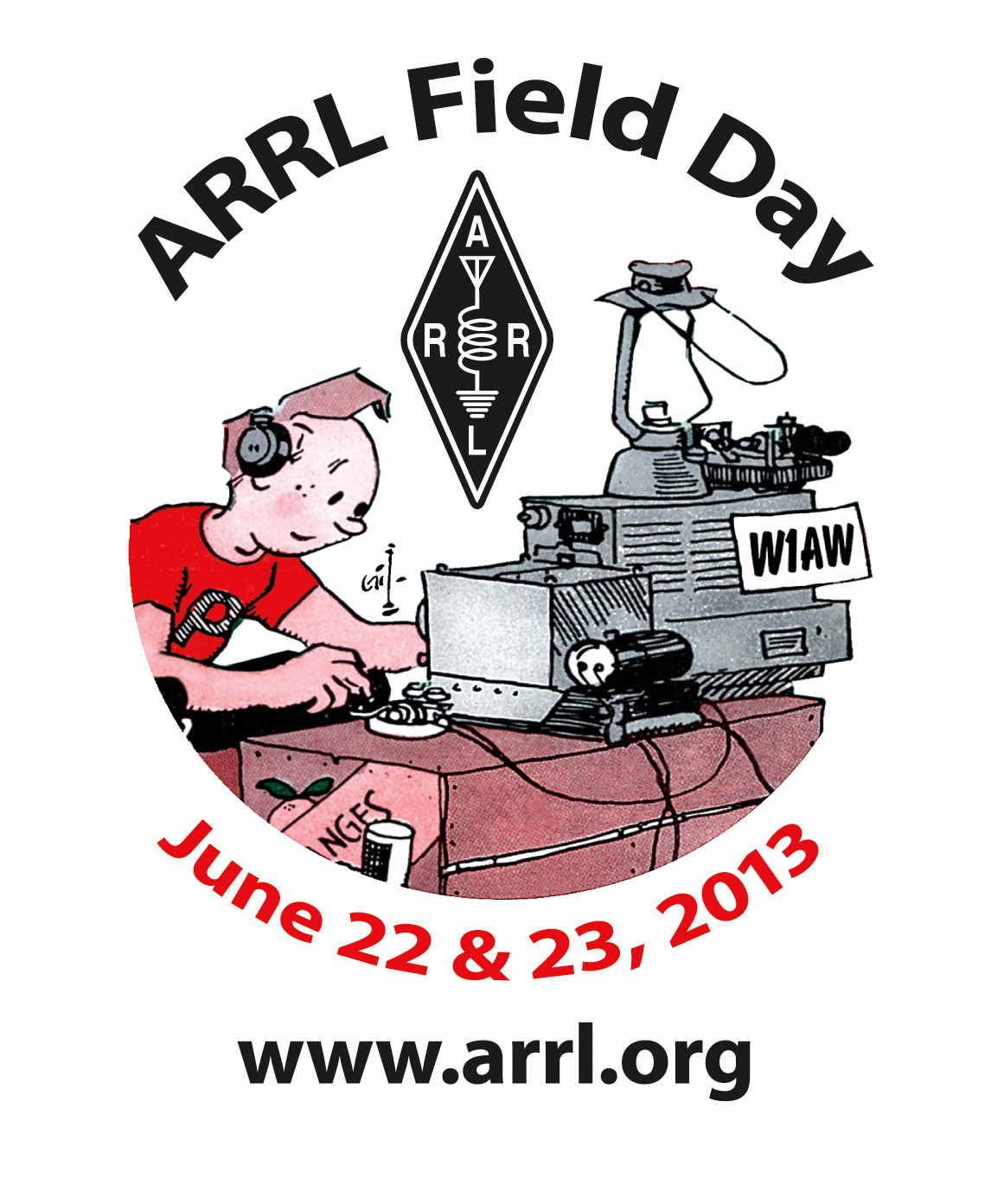 Hello, dear listener! Welcome to Episode #109 of Linux in the Ham Shack. This episode is being released a bit early because there is time sensitive material included, and we wanted to make sure it was available to everyone before the ARRL Field Day weekend, June 22-23, 2013.
Also included along with our thoughts on Field Day are our thoughts on Electronic Design Automation, Manjaro Linux and some introspection and extrospection on the art of podcasting. We would like to warn everyone in advance that this episode of LHS may include language that some listeners might find objectionable or not suitable for young children. We don't plan on making this a habit, but due to the strong feelings involved and the importance of the topic being discussed, we did not feel censorship was appropriate.
We hope you enjoy this installment and look forward to your continued listenership. Also, don't forget to check out the Contests page for info on how you can still win a Beaglebone Black!
73 de The LHS Guys
Russ Woodman, K5TUX, co-hosts the Linux in the Ham Shack podcast which is available for download in both MP3 and OGG audio format. Contact him at [email protected].
Operation successful.
My operation to remove my gall bladder was successful. Now I’m supposed to take it easy and avoid strenuous activity for a few months. No more five mile walks for a bit. It looks as if I will be logging more time in front of the computer and radio for a while.
The operation to migrate this blog to a new generation Blogger template has also been completed. Comments are now working again, but I’m not happy with the header graphic. I had to go with what I could make given my absence of artistic skills, rather than what I would like to have done. So there may well be some more changes in that area to come.
I had hoped to use a smart looking template from a free templates site. But at first I couldn’t find how to load it into Blogger. So I started off with one of the standard Blogger templates. As I was customising that I accidentally stumbled across the option to load a template from an XML file. Working in Blogger is like being in a maze, remembering seeing the tool I wanted but going round in circles until I located it again.
The problem with the custom template was that I found it contained some things I didn’t want, and the Blogger visual design tools didn’t allow me to remove them. It would probably have been necessary to edit the XML, but that is a step beyond my expertise. So in the end I went back to the modified Blogger template. I’m happy with the layout now, and commenting works again which was the reason I was forced to change. In fact I now have Google+ commenting which if you haven’t tried it is much better. But I’d still like to find something more radio-themed for the header graphic.
Julian Moss, G4ILO, is a regular contributor to AmateurRadio.com and writes from Cumbria, England. Contact him at [email protected].
I don’t think so
In my e-mail box was a special announcement from Elecraft. Today they announced they were taking orders for the KXPA100 amplifier for the KX3, and the KXAT100, the auto tuner for the amp.
The amp is $700 and the tuner is another $300.
At this point, I don’t think these are in the cards for me, for a couple of reasons.
1) Price – I just don’t have an extra thousand bucks laying around. Of course, I could always part ways with something, like my K3, but I’m not too crazy with that idea. I bought it soon after my Mom passed, so it holds a lot of sentimental value.
2) Practicality – I like the idea of having two rigs. My K3 and my KX3 are mutual backups. If something were to happen to one, I still have the other. If I were to sell the K3 in order purchase the KXPA100 and the KXAT100, I would no longer have a backup. I also like having a main station rig and a dedicated portable rig.
3) Personal – I need to be happy with what I have and not always be on the lookout for “more”. I am very fortunate to have what I already own, and while it may be less than some, it’s still a lot more than even others. I need to enjoy what I have and get off the “consumer hamster wheel” of always wanting more.
72 de Larry W2LJ
QRP – When you care to send the very least!
Larry Makoski, W2LJ, is a regular contributor to AmateurRadio.com and writes from New Jersey, USA. Contact him at [email protected].
Revitalized Jamesburg dish Now Sending Texts to…aliens?
The once famous Jamesburg dish (wikipedia link), located in Carmel Valley, California, was restored and used by hams to do EME experiments and events after its prime mission to capture and relay communications from Apollo 11, Tiananmen Square, and Intelsat came to an end.
 |
| The massive 30m wide by 100ft tall Jamesburg Dish |
A private company calling themselves Jamesburg Earth Station Technologies, LLC bought the site. This company spawned another, called Lone Signal, LLC. The executives come from diverse backgrounds — entrepreneurs, fashion design, and hospitality execs — along with a team of PhDs and engineers. No hams that I know of, though.
Anyway, the idea behind LoneSignal is to allow people to send texts and photos to star systems with potentially habitable planets. The current one is pointed at Gliese 526, a red giant star 17.6 light years away that’s believed to have a planet inside it’s habitable zone.
The first text is free, but the rest are about $1 a piece. You can buy bulk credits for a discount.
The 30m wide Jamesburg dish will be using a 2KW C-Band transmitter (6700-6875MHz) and will send the coded texts in CW and FM formats. Interestingly, in the FCC-OET Program Description, they’ll be using an Icom ID-1 to modulate the FM signal. I’m sure the aliens are going to have a tough time demodulating D-STAR. 😀
Their experimental license application is located here.
Using some quick math, the dish should provide about 64 dB of gain, and with 2 kW input, that translates into an EIRP of 5,931,547,041 watts.
That’s 6 gigawatts.
TL:DR: In 17.6 years, the Gileseans may get my CQ. I hope they QSL via the bureau.
Sterling Coffey, NØSSC, is a regular contributor to AmateurRadio.com. He is ARRL Youth Editor and an electrical engineering student at Missouri S&T. Contact him at [email protected].
6m PSK
I don’t often look for PSK warbles on 6m but am glad I did this evening. Obviously others were looking for someone as well I1YTO and I ended up having a brief QSO before he faded away again, up to 599 then down to nowt in a matter of seconds. Nice whilst it lasted
Alex Hill, G7KSE, is a regular contributor to AmateurRadio.com and writes from Cumbria, UK. Contact him at [email protected].
Time to put the K2 package up for sale.

KIO2 AUX I/O module
KAT2 ATU
KBT2 (purchased 10/10/2011 installed spring of 2012)
KNB2 Noise blanker
73cnc.com machined weighted vfo knob
VFO knob with tuning dimple as a spare knob
All manuals for the above options and K2
EC2 enclosure with
KAT100-1 ATU
K102 host control Aux I/O
KPA100 100 watt amp
All interconnecting cables between K2, EC2 and PC.
Additional items
K6XX visible LED tuning indicator ( it has not been installed but it’s the complete kit ready to go)
A&A Engineering 1 amp smart charger for the KBT2 keeps the battery topped up and ready to go.
At this point I am trying to come up with a fair price for all the above.
Mike Weir, VE9KK, is a regular contributor to AmateurRadio.com and writes from New Brunswick, Canada. Contact him at [email protected].
Japan– DX # 87

I was hearing Japan stations all weekend, and tried to work several without success, until, on Sunday evening around sunset, I found JA7NVF on the 15 meter band. It might not have been a difficult catch using normal power and a normal outside antenna; but with 3 watts of power and an “indoor” 50 ft piece of “random wire” for an antenna, it was a challenge. At least the first time…..
The “first” contact was difficult but about an hour later, the “second” contact was a “piece of cake”. I was not hearing any response to his calls, from anyone, and did it “just because I could”. This time it was a 599 contact. I happily added my QRP @ 3 W, this time, to the ending of the exchange
I’m extremely happy with this new DX station in the log book. (#87)
Although Japan is only 6,331 miles from me, (I’ve worked 7,500 miles twice) I never expected to work this part of Asia. I rarely hear them on the air. I’m assuming he was pointed towards California, and I was lucky enough to catch the “second bounce” towards the East coast. He (JA7NVF) isn’t operating with a normal “beam”, he uses something ” Special “, and it works very well.

Naomi lives in the city of Towada Aomori near Lake Towada . He’s an electrical engineer who has been with the Army Corp of Engineers at the Misasa Air Force Base for 22 years.
Naomi’s antenna farm is several miles north of his home and near the air field where the first “non-stop” flight across the Pacific Ocean was achieved on Oct. 3rd, 1931. The pilots Clyde Pangborn and Hugh Herndon flew a “modified” aircraft from Japan to the coast of Washington. The airplane was called Miss Veedol .
I’ve always found those early flights in small planes to be especially interesting. This flight is a milestone since it barely made it off the ground due to extra fuel, and also, out of necessity, the “landing gear” was “jettisoned” soon after takeoff. Yes, you read that correctly; it was intentionally “dropped” off the aircraft to reduce drag and increase mileage. However, it wasn’t intentional when the landing struts didn’t “fall off”. There was only “one way” to correct this issue. Herndon climbed “outside” the aircraft (in mid-flight) and manually “dropped it”. At the very beginning of the flight planning, they had intentionally decided to “crash land” the aircraft in the State of Washington.
They did; and managed to walk away from the wreckage. Most of the damage was done to the propeller and as any good pilot will tell you—” any landing you walk away from is a good landing”.
How’s that for guts?
I also worked another couple of good stations yesterday: CO2IR in Cuba (mailbox below) and ZW7REF in Brazil.


John Smithson, Jr., N8ZYA, is a regular contributor to AmateurRadio.com and writes from West Virginia, USA. Contact him at [email protected].
 Ham Radio Deluxe |
 W5SWL Electronics |
 Ham Radio Prep |
 KB3IFH QSL Cards  Hip Ham Shirts  HamRadioAuctions HamRadioAuctions Reliance Antennas Reliance Antennas Enigma Shop Enigma Shop |  morseDX  Ni4L Antennas  R&L Electronics R&L Electronics antennas.us antennas.us QRV QRV |
- Matt W1MST, Managing Editor
