Archive for the ‘Uncategorized’ Category
 World Wide Radio Operators Foundation, Inc.
 April 17th, 2010 |
  Author:
  Vision. Leadership. Commitment.
World Wide Radio Operators Foundation, Inc. is a non-profit organization, “Dedicated to improving the skills of amateur radio operators around the world, utilizing education, competition, advancement of technology and scientific research, promoting international friendship and goodwill, and preparing them to better serve society in times of communication need.”
Board of Directors.
- Doug Grant, K1DG, Chair, Founding Director.
- John Dorr, K1AR, Vice Chair, Founding Director.
- Ralph Bowen, N5RZ, Treasurer, Founding Director.
- Tom Lee, K8AZ, Secretary, Founding Director.
- Mark Beckwith, N5OT, Founding Director.
- Bob Cox, K3EST, Founding Director.
- Tim Duffy, K3LR, Founding Director.
Believe in your signal.
See Also.
Radio-Sport dot Net | Formation of New Contest Operators Group Announced At 2010 Visalia DX Convention.

Is This The End Of Ham Radio As We Know It?
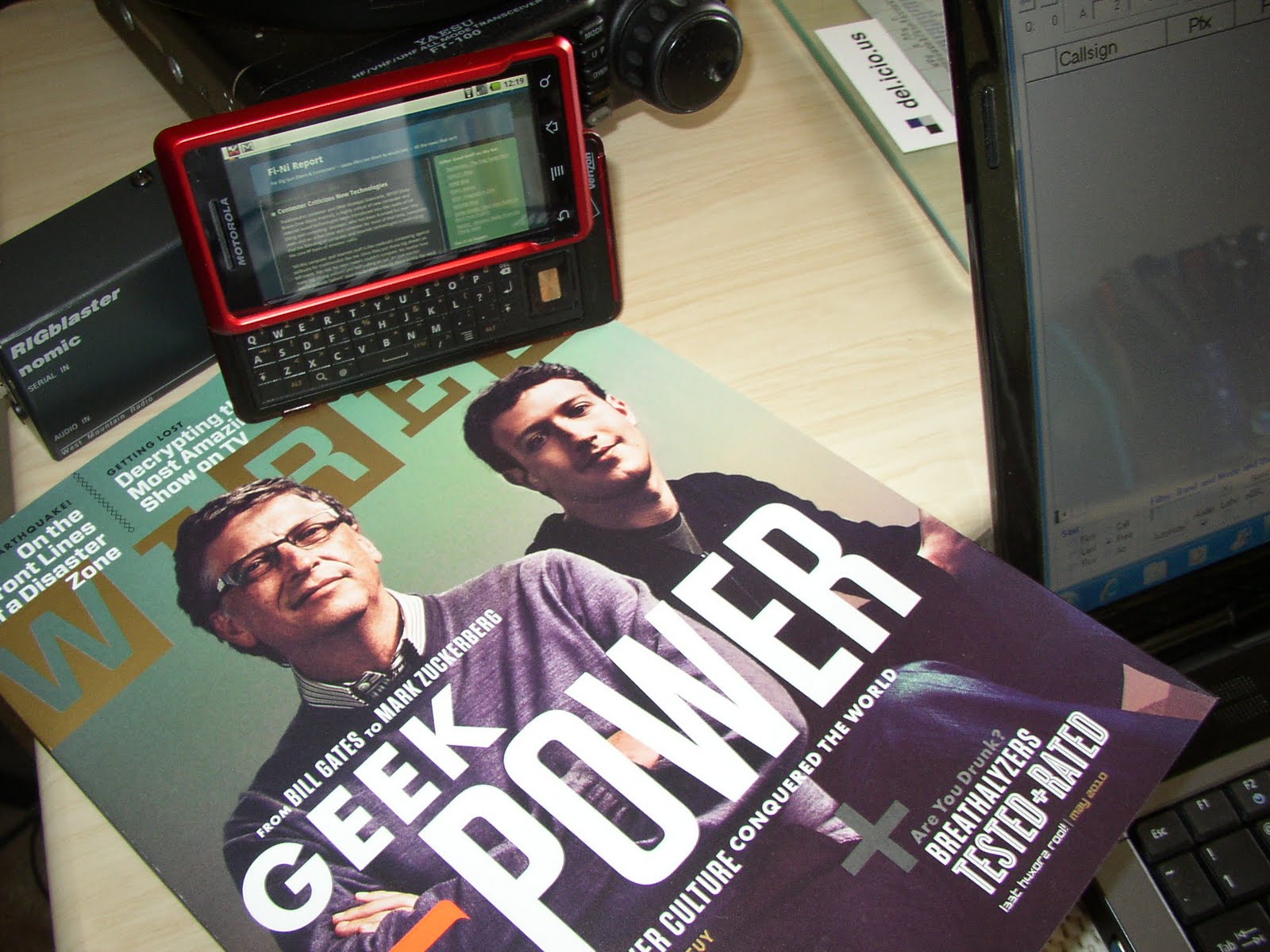 I applaud Pete Smith, N4ZR, Rick Walker, K4TD, Felipe Ceglia, PY1NB, and Nick Sinanis, F5VIH for their innovation — Reverse Beacon Network (RBN) Telnet Feed combines data output of all current RBN Skimmer receivers at no-charge for ham radio operators world wide.
Is this the end of ham radio as we know it?
Certainly, not.
Boomer And Millennial.
I’m a late Baby Boomer born in 1964 at the tail end of my generation. Some say, we are the silent cohort, our voices eclipsed by earlier Boomers and the later Millenials. However, what is not recognized; we witnessed and actively participated in all the infant technologies that are now beginning to mature.
I played Atari with its read only memory cartridges. I have dialed both a rotary and touch tone phone. I watched wireless television succumb to cable when Home Box Office was a big deal on the block. We used push button remotes tethered to a cable before the ubiquity of wireless remotes. Remember, when someone actually switched channels on an analog dial?
I pushed eight track cassettes into players before cassette tapes ruled one’s Sony walkman. I participated in the battle of beta and VHS for dominance in delivering home entertainment; renting a movie was a big deal. Today, format competition continues as Blu-Ray wrestles for market share against that of DVD.
Change is not a big deal for the silent cohort or those thereafter, perhaps, it is expected, sometimes begrudgingly, sometimes with fascination.
Disruption.
However, even beyond the CQ Contest Digest discussion, a chasm exists between keeping ham radio in its purist form and technological progress. I hear those who are steadfastly resolved that ham radio is nearing an apocalypse — robots will soon replace humans in RadioSport?
I’d like to know, how many still spin their dial, looking for a DXCC counter given the near efficiency of spotting networks? Can one with a reasonable commitment to occupation and family afford such a time consuming luxury? Retirees need not answer that question.
The same is said, dial tone replaced rotary, compact disc replaced VHS, and liquid crystal displays replaced cathode ray tubes. What happened to auto-patch? Essentially, at the end of the day, it is digital change and the anxiety that follows the disruption of long established comfort zones.
Conclusion.
The Reverse Beacon Network Telnet Feed is not the end of ham radio. It is technological progression perhaps at the level of software and digital signal processing. I did not immediately leap to the idea that it is the symbolic end of RadioSport, rather, RBN is the result of hard work by a group of men who care about the longevity of ham radio.
RBN is a beginning and not the end.
See Also.
Fi-Ni Report : Contester Criticizes New Technologies.

Over-The-Air QSLing
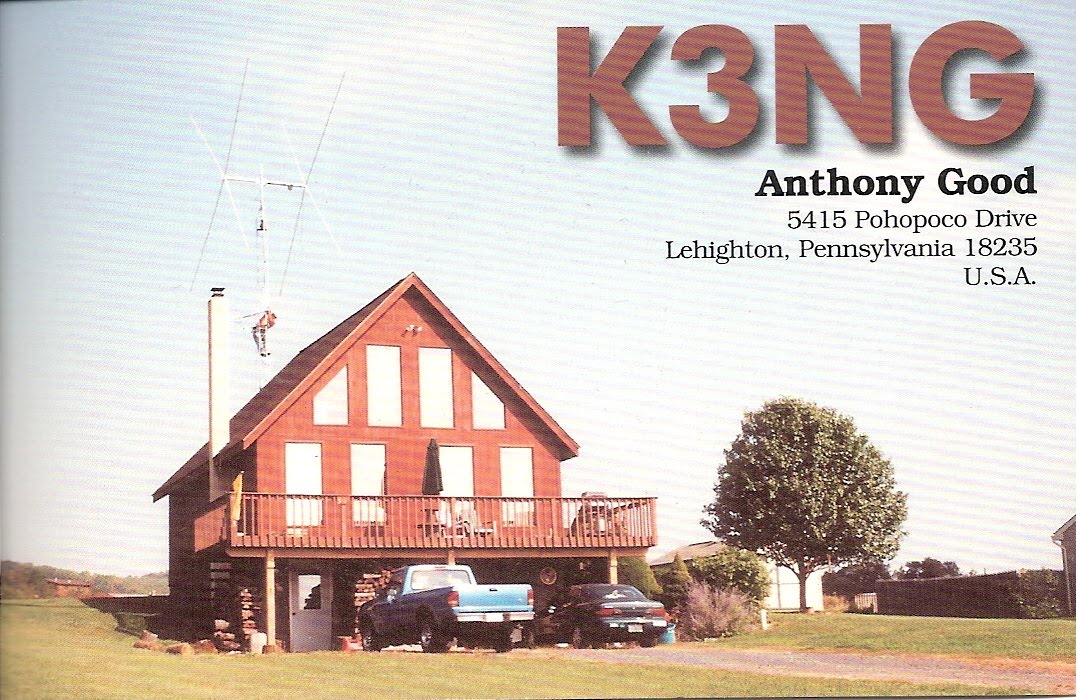
I love the KISS approach VA7VV has created, where you can just go to his site and print out a QSL card. I intend to take a similar approach soon, though not as "self-serve" as VA7VV has done, but migrating to a PDF format where I'll just email a QSL card to anyone who requests one.
But I was thinking the other day, why not just do over-the-air QSLing? With public/private key encryption it's easy to take some text or data and create a key that can be used to authenticate the information back to the originator. There could be a program or website to generate keys on the fly. I'm wondering if a key could be shaved down to maybe 10 alphanumeric characters that could be exchanged over the air like: "Here ya go Bob, here's yer QSL key: Gulf Delta Charlie One Foxtrot Zed Five Nine Yankee Three.... Good DX and 73!" You record that in your log and if someone wants to authenticate it back to the station, they can grab his public key off of the 'zed or at ARRL and plug it into the program or a website. I'm not sure how many bits the encryption would have to be decreased to to make the QSL key exchanged over the air short enough or make the encryption a reasonable enough level to prevent most forgeries.
Ah....maybe it's more trouble than it's worth and I should stick with emailing QSLs...

Scrubbed out
One of the greatest uses of WSPR is to get accurate, real-world comparative reports on antennas. When comparing antennas in the past I have used two computers and two radios on two different frequencies using the same power and manually set the WSPR programs to both transmit on the next cycle so that they send their beacon signals simultaneously. During the transmission I set both programs back to “no transmit”. This way I get directly comparable reports from both antennas at the same time and I don’t have to worry about one transmission being received and reported by the other system.
Now, this is no longer possible. The WSPRnet website has implemented a “data scrubber” which will filter out invalid spots including bad calls (bogus decodes), bad timestamps, wrong band reports and duplicate reports. The latter are apparently the most common type of error, accounting for 1.7% of spots. I wasn’t aware this was that common, though it can happen due to reciprocal mixing in the receiver or the computer sound card. But one result of this is that you can no longer intentionally transmit two beacons at the same time using the same call, locator and power level, because if you do all but the strongest report will be filtered out.
I think this is an ill thought out move that will result in deleting valid spots just because they can’t be distinguished from invalid ones. The WSPR software does report the transmit frequency being used by each instance of the software so it should be possible in some cases to determine whether duplicate spots in the same timeslot are genuine or not. This won’t help those using hardware based WSPR transmitters that don’t connect to the website though.

Safety mania
 Troubled car maker Toyota has suspended sales of its Lexus GX 460 worldwide after the US consumer magazine Consumer Reports claimed that the vehicle could roll over.
“When pushed to its limits on our track’s handling course, the rear of the GX we bought slid out until the vehicle was almost sideways before the electronic stability control system was able to regain control,” the magazine claims. “We believe that in real-world driving, that situation could lead to a roll-over accident, which could cause serious injury or death.”
Let me get this straight. If you drive like an idiot, the vehicle is supposed to prevent you from suffering the consequences of your stupidity?
I think the nanny state safety obsession in the western world has got totally out of hand. I don’t know how we put the genie back in the bottle (or even whether the population as a whole feels the same way and would want to) but any political party that would repeal the health and safety legislation, outlaw the compensation culture and put the emphasis back on common sense, personal responsibility and the need to prove criminal negligence in order to win a claim in the event of an accident would get my vote.

3830 Claimed Scores | 2010 Georgia QSO Party (GaQP) | Low Power
 In State Multi Single.
- WE4S | 478 CWdgQ | 284 SSB | 51 CWdgMult | 46 SSBMult | 20hrs | 120,280 Points [TCG].
- W4LHS | 235 SSB | 51 SSBMult | 12,012 Points [Coastal Amateur Radio].
- N4YT | 182 SSB | 37 SSBMult | 8hrs41mins | 6,734 [SECC].
n = 3 scores submitted in this category.
In State Single Operator.
- WF4W | 545 CWdgQ | 52 CWdgMult | 16hrs25mins | 56,680 Points [ACG].
- NA4BW | 227 CWdgQ | 145 SSB | 43 CWdgM | 36 SSBMult | 6hrs35mins | 47,321 Points [SECC].
- N4DU | 419 CWdgQ | 47 CWdgMult | 8hrs5mins | 39,386 Points [SECC].
n = 10 scores submitted in this category.
Out of State Single Operator.
- N2CU | 159 CWdgQ | 57 SSB | 91 CWdgMult | 30 SSBMult | 9hrs | 45,375 Points [Western NY DX Association].
- KB3LIX | 137 CWdgQ | 56 SSB | 87 CWdgMult | 37 SSBMult | 40,920 Points [Allegheny Valley Radio Club].
- N2AA | 180 Qs | 105 CWdgMult | 14hrs | 37,800 Points.
n = 36 scores submitted in this category.
Congratulations Tom, N2CU for leading the Western New York DX Association to the GaQP club banner position for the year.
73 from the shack relaxation zone.

3830 Claimed Scores | 2010 Gagarin DX | Low Power
Single Operator All Band.
- Z35F (BALE) | 505 Qs | 40 Mults | 119,200 Points.
- UA4ALI | 614 Qs | 55 Qs | 16 Hrs | 96,360 Points.
- SQ6NTE | 149 Qs | 29 Mults | 26,564 Points.
- N2WN | 54 Qs | 14 Mults | 756 Points [TCG].
n = 4 scores submitted in this category.
Successful franchise building is an exercise in persistence, patience, imagination, and creativity. What lead to the success of World Wide DX, WPX, and International DX RadioSport events?
Contest on.














