Archive for the ‘Uncategorized’ Category
 Amateur radio as a gateway to a career in engineering?
 May 6th, 2015 |
  Author:
 See http://www.kb6nu.com/is-amateur-radio-still-a-gateway-to-electrical-engineering/ .
At one time, amateur radio was a good gateway into an engineering career, but I have real doubts this is true today. In my younger days, when I started as a professional radio engineer nearly everyone who was any good was a radio amateur. When I left 7 years ago, I was the only person doing any amateur radio building over my lunch break. The magic is no longer there. In fact people are embarrassed to admit they are radio amateurs. We need to find what connects with the younger generation or the future of our hobby is at great risk.
I think I have mentioned on my blog before that when interviewing potential RF design engineers with good honours degrees I was appalled to find that most knew nothing about radio. I knew more as a schoolboy. This is a sad indictment of our times. It was not that I was good (I was not) but the quality of good engineers was not there any more. There was little intrinsic interest in radio – if it was in the course they might know about it. As youngsters, we were excited about radio! Where is that spark today?

QRP Kits reopens
That font of all knowledge Steve G1KQH reports:
“Hendricks QRP Kits http://www.qrpkits.com has re-opened for business under its new proprietors, James Bennett and Kathy Long of Pacific Antenna. James writes:“We are excited to resume operations as of May 1 providing Hendricks QRP Kits and in the very near future, we will be bringing back the entire Pacific Antenna line of antenna kits and parts. We very much appreciate the patience that has been shown as we worked through this transition and we look forward to serving the QRP community. 73 James and Kathy”

Heathkit?
 Some of you might remember me talking about the return of Heathkit.
There has been a lot of mystery surrounding the status of Heathkit, as they popped up a couple of years ago and announced that they were returning. There was a survey posted online for a long time asking people what they wanted to see from a new Heathkit. The new Heathkit management hosted a Q and A session on Reddit speaking more about their plans to return. Then, nothing. No announcements, no news. There was brief mention in December when the folks at Adafruit (a company that supports the MAKER community) were briefly in touch with the new Heathkit, and were told that things are still progressing, and there will be no information on what the products will be until they are ready. All through this, I have been skeptical, as many people would be, since we have heard this story before.
Now, there are changes over at Heathkit.com. They are clearly gearing up for products, and support. They have even started an eBay store where they are selling parts, and some classic equipment.
Cross your fingers.
–Neil W2NDG
Sixbox QRP rig for 6m
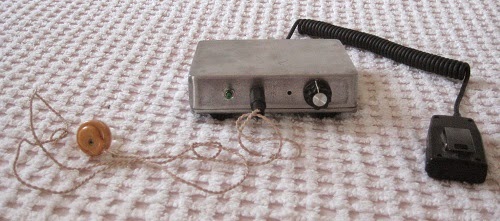 |
| Sixbox 6m AM rig – a simple design |
Several years ago I designed and built a derivative of my 2m Fredbox but for 6m AM. The same basic design would easily translate to a 10m version. Both bands could be useful for cross-town natters, especially when both 10m and 6m behave like VHF bands, which is in the quieter sun years and at night on 10m. The Sixbox is simple and certainly capable of further development.
Treat the design as a starting point. A 10m version of the RX has copied transatlantic USA AM stations well, but this is NOT a rig for DX use. It is better suited to cross-town/inter-village natters.

HF or VHF?
Depending on the solar cycle, and how good it is, both 10m and 6m can behave quite differently. Sometimes 10m is a true HF band with good worldwide DX possibilities. In better years, even 6m can support F2 worldwide propagation. However, for a lot of the solar cycle both 10m and 6m behave like VHF bands. This means Es can be an effective mode on both bands especially in the spring and summer months. Other modes like tropo can also be used on 10m and 6m. Both bands can be used for local natters on any mode.
At the moment we are in a transition period. On better days 10m is still good for worldwide DX but as time progresses, it will behave more and more like a VHF band with long periods of quiet. Especially as we move to more VHF conditions modes like WSPR become even more useful: short DX openings can be detected with WSPR. Leaving a simple WSPR rig running can be so useful and take very little power.
As I have mentioned before, I have worked real 10m N-S DX (11000+ km) on QRP SSB even in the quietest of sunspot years. WSPR is considerably better than SSB, requiring far less power and can be used unattended running in the background. I tend to run 10m and 6m WSPR most days and monitor WSPRnet on a different PC in the lounge. It takes just seconds to go into the shack and make any adjustments needed. It means, whilst running WSPR, you can do other things.

Kanga Products
See http://www.kanga-products.co.uk/. Although I have to admit that I have not used this supplier or its sister site in the USA, they seem to have a useful range of kits and products in stock. If you are after QRP or QRSS frequency crystals, then these are at a decent price. I have no idea how well priced their other items like solder are compared with other suppliers.
As I have said before, these suppliers could soon disappear if they do not get enough trade. The competition from China is fierce indeed and many very good bargains may be had on eBay. I wish Kanga well.

The Spectrum Monitor — May, 2015

Stories you’ll find in our May, 2015 issue:
DIY: The Home-Brewer’s Primer
By Richard Fisher KI6SN
Building transmitters, shortwave receivers, antennas and station accessories is an art dating to the late 19th Century—the earliest days of radio. Almost every radio operator of the era was a builder, because commercially made radio gear was either nonexistent or, at the least, quite expensive. The term “home-brewer,” those who toiled at the workbench in order to tune in shortwave or get on the ham bands, would become a badge of honor and part of the lexicon of amateur radio. Home-brewing radio equipment is as vital to today’s radio amateurs as ever!
The Newcomers Net: Bringing together Newbies and Old-Timers
By Robert Gulley AK3Q
Like so many things in life, amateur radio is caught just as much as it is taught. Elmers (amateur radio mentors) and Newcomers really do feed off of each other, and excitement tends to generate more excitement. Whether it is trying new things or rediscovering long-lost passions, both newbies and old-timers alike grow from their shared experiences. Robert writes about the second anniversary of The Newcomers and Elmers Net, a weekly, on-air meeting of the OH-KY-IN Amateur Radio Society, geared toward pairing newcomers to the hobby with Elmers willing to offer them advice and the benefit of their experience. What they’ve done can be applied nationwide.
Digitally Speaking: Digital Voice on 220 MHz?
By Cory GB Sickles WA3UVV
Our amateur radio allocation at 222-225 MHz is among those that have been left out of the “Digital Voice Club.” As this is a band exclusive to the Americas, manufacturers are less inclined to invest in producing gear than for UHF. Currency fluctuations and lowered levels of interest limit the potential payoff for commercially produced gear. Cory ponders the question, “What will it take to get digital voice on 220 MHz?”
Southern Amateur Radio Hospitality: N4H and WA4USN Special Event Station
By Ron Walsh VE3GO
Canadian TSM Maritime Monitoring columnist, Ron Walsh, encounters “southern hospitality amateur radio” when he signs up to help man WA4USN aboard the US Navy battleship, the USS North Carolina, based in Wilmington, North Carolina and N4H near the site in South Carolina where the Civil War-era submarine, H. L. Hunley, sank after having been the first such vessel to sink another ship, the USS Housatonic, in battle. Ron had the opportunity to study US Naval history and operate two special event stations during his annual southern winter holiday.
TSM Reviews: TitanSDR
By Thomas Witherspoon K4SWL
After discovering the power of software-defined radios (SDRs) a few years ago, Thomas has been hooked, and now does 95 percent of his home listening and monitoring via various SDRs in his collection. In this issue he turns his attention to a newly released military-grade SDR called the TitanSDR. He’s impressed with its performance, but will this super-sophisticated SDR live up to its military budget price tag?
Scanning America By Dan Veenaman
Allentown, PA, FCC Field Offices and Dayton
Federal Wavelengths By Chris Parris
GAO Report on CBP Radio System Problems
Utility Planet By Hugh Stegman NV6H
U.S. Veterans Department Signs HF Contract
Digital HF: Intercept and Analyze By Mike Chace-Ortiz AB1TZ/G6DHU
Decoding Russian MFA and Intelligence Signals
HF Utility Logs By Mike Chace-Ortiz and Hugh Stegman
Amateur Radio Insights By Kirk Kleinschmidt NT0Z
A Tale of Antennas and Instrumentation
Radio 101 By Ken Reitz KS4ZR
Training your Replacement
Radio Propagation By Tomas Hood NW7US
Sporadic-E—The Magical Summertime Sizzle
The World of Shortwave Listening
By Jeff White, General Manager WRMI and Chairman HFCC
Shortwave Broadcasters Descend Upon Oman: The A15 High Frequency Coordination Conference in Muscat
The Shortwave Listener By Fred Waterer
Monitoring International News via Shortwave
Amateur Radio Astronomy By Stan Nelson KB5VL
Detecting Meteor Activity with Digital TV Carriers
The Longwave Zone By Kevin O’Hern Carey WB2QMY
More on Natural Radio
Adventures in Radio Restoration By Rich Post KB8TAD
Powering the “Real McCoy” 75 watt Novice transmitter
The Broadcast Tower By Doug Smith W9WI
The Big Get-Together
Antenna Connections By Dan Farber AC0LW
Houston, We have a Downlink: Spacecraft Antennas
The Spectrum Monitor is available in PDF format which can be read on any desktop, laptop, iPad®, Kindle® Fire, or other device capable of opening a PDF file. Annual subscription (12 issues, beginning with the January 2015 issue) is $24. Individual monthly issues are available for $3 each.













