Archive for the ‘qrp’ Category
 Shifting the focus…….
 February 9th, 2014 |
  Author: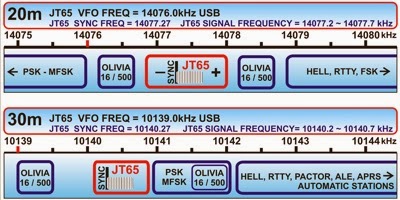
The last time I was in digi land PSK31 was the ground breaking mode and I have come to understand by many of the blogs I read there are some new modes in town!! PSK is still around but it too has changed. There is also now SIM31 and 63, JT65, Olivia and the list goes on, I have been out of digital for some time now and am not sure what all is out there. What I am looking for is something that uses a narrow bandwidth, (most digi modes do) only requiring low power, would be great to have a "conversation mode" and not signal reports and goodbye and not a mode that takes forever for exchanges as I have heard about some digi modes. Having said all that one thing I can remember about the digi modes is they can be lot of "fun" to setup with your rig and PC! BUT that is all part of the fun I guess. So you digi fans out there help me out with some suggestions as to an HF low power narrow bandwidth digi mode I can scramble my brains with. Oh and if it helps the bands I have available are 10-40m and the rigs I have are the Elecraft K3 and KX3.
FT5ZM with QRP
All major expeditions are chaotic in the first days. Panic sets in as days go by and contacts aren't made, logs aren't posted, propagation doesn't cooperate and on and on. It is a very predictable pattern. However there is also a predictable pattern in the last days of a major expedition and that's comments on the reflector of, "finally made it", "on 14.023 begging", "working simplex", " worked with a wire", "worked first call", "worked mobile!!!" and finally, "worked QRP". An so that time has arrived for the FT5ZM expedition.
I can't say enough about the quality of this team and their operating plan. Amsterdam is antipodal to my QTH and yet these guys have been workable on most bands, I have worked them on six bands using my battleship sized station and yes, I worked them yesterday QRP with my FT-817 on 20m. Over 2,000 miles per watt! It's ironic, but there is power in QRP. There was a small pile-up, relatively speaking, covering 2-3 KC's but my 5 watt signal travelled almost exactly half way around to the world to be copied by a station almost 12,000 miles away. Very cool.
The QRP contact was the first good news of the day, the second was a bonus. The common grayline/shared darkness with FT5 and my QTH in W5 is about 30 minutes. Yesterday around 0028z, with still some faint sunlight, the FT5ZM signal came out of the mud on 3.523 listening up 2. I use only an inverted L on 80m at about 55 feet at its apex, so we aren't talking about a superior antenna. Their signal was in the 339 - 449 range. Very light copy, but solid. I was excited just to copy them. I am usually confident when I jump in a pile-up, but not this one, figuring the east coast would drown me out. However on about the fourth call I could hear faintly but solidly, AD5A 599, I went back, de AD5A 599 599 bk.......AD5A 599 599. Oh no, he didn't hear me come back.....de AD5A 599 599 599 bk.......AD5A 599 TU UP.....Yesssss! An unexpected bonus and a short victory dance and another short one when the QSO was verified in the online log today.
There are so many ways to enjoy radio and yesterday was another fun day in this wonderful hobby of ours.
I can't say enough about the quality of this team and their operating plan. Amsterdam is antipodal to my QTH and yet these guys have been workable on most bands, I have worked them on six bands using my battleship sized station and yes, I worked them yesterday QRP with my FT-817 on 20m. Over 2,000 miles per watt! It's ironic, but there is power in QRP. There was a small pile-up, relatively speaking, covering 2-3 KC's but my 5 watt signal travelled almost exactly half way around to the world to be copied by a station almost 12,000 miles away. Very cool.
The QRP contact was the first good news of the day, the second was a bonus. The common grayline/shared darkness with FT5 and my QTH in W5 is about 30 minutes. Yesterday around 0028z, with still some faint sunlight, the FT5ZM signal came out of the mud on 3.523 listening up 2. I use only an inverted L on 80m at about 55 feet at its apex, so we aren't talking about a superior antenna. Their signal was in the 339 - 449 range. Very light copy, but solid. I was excited just to copy them. I am usually confident when I jump in a pile-up, but not this one, figuring the east coast would drown me out. However on about the fourth call I could hear faintly but solidly, AD5A 599, I went back, de AD5A 599 599 bk.......AD5A 599 599. Oh no, he didn't hear me come back.....de AD5A 599 599 599 bk.......AD5A 599 TU UP.....Yesssss! An unexpected bonus and a short victory dance and another short one when the QSO was verified in the online log today.
There are so many ways to enjoy radio and yesterday was another fun day in this wonderful hobby of ours.
QRP Go pack. Again.
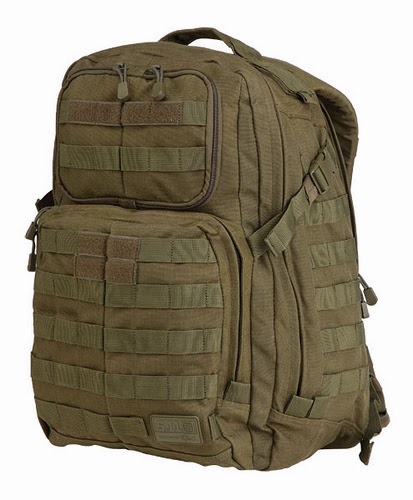
It’s a constant theme on this blog – the frequent updates of my QRP go Pack. Well I’ve reached a point where I think I’m happy with the current configuration. My pack differs to many I’ve seen on YouTube. I include more than just the radio equipment. I also include some basic tools and items that make for a comfortable set up when I’m out portable. The ability to make a wind break, or even a shelter and also to be able to have a warm drink means that in actual fact I can stay out portable for quite some considerable time.
Have a look at my latest configuration of my pack. This I have decided is the autumn winter configuration. I have already started thinking about what I would remove and add for a summertime set up.
MFJ 1788 loop contacts
QRP/SOTA Fun Without Climbing A Mountain
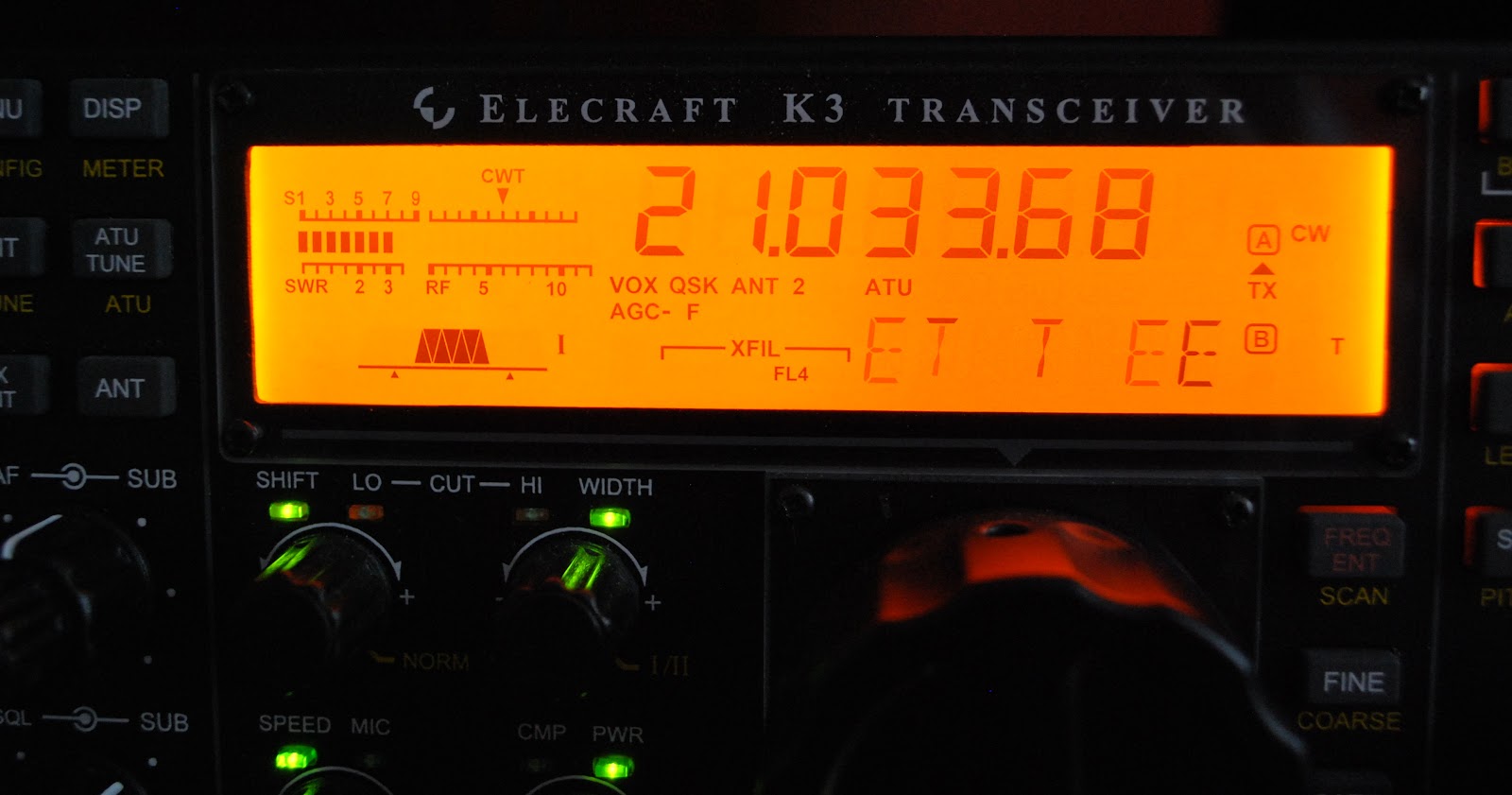
Rather than activating summits, I spent the weekend at my small ranch near Rocksprings, TX. I have a nice QRO station there with 107 foot Rohn 55 Tower, a Log Periodic, 40 Meter beam and wires on low bands. I can work a lot of stuff from there. However, I had a plan this weekend to test a few antenna configurations for my QRP operations from SOTA summits.
So I set up my operating position just as I would on a summit. I was testing one of the SOTA beams EFHW antenna with counterpoise and a homebrew 29 ft. wire. I brought along two tuners including Hi-Tee Tuner from SOTAbeams and a recently acquired Hendricks SLT+ 80m-10m end fed half wave tuner.
The SOTAbeams combo was my first configuration. I put the antenna over a limb about 15ft. up and let it slope down to another limb about 7 feet up and then down to the radio. The antenna wire terminated into a 4mm plug that prevented me from running through the eyelets of my pole. I plugged the wire into the tuner (which will only take a 4mm plug, there is no binding post) as well as the counter poise. The antenna tuned nicely and I had QSO with a station in Arizona. As I finished that QSO I tuned across the SOTA frequencies and heard W0CCA calling CQ SOTA from a summit in Arizona on 20m. Cool, now could I work him with this set-up? I usually don't have to wait long in a pile-up but for this QSO I would have to. I was tempted to run over to the QRO shack and make the contact to ensure I got the points since he was on a 10 pointer, however I resisted the temptation. My faith in QRP was rewarded, Cap finally heard me and gave me a 229. Cool.
So now I set-up the simple 29 ft. wire. Since it didn't have the banana plug on it, the Hi-Tee Tuner was useless, so I set up on the SLT+. I was able to use my pole this time, so the wire was higher off the ground in an inverted L configuration. By that time KX0R was calling CQ SOTA on 20m from a summit in Colorado. Evidently the pile-up had run it's course because I got him on the first call. So my little tuned wires had netted 12 SOTA chaser points. I am regularly amazed by QRP, how much you can do with a few watts and some wire.
A great day of QRP/SOTA fun.
So I set up my operating position just as I would on a summit. I was testing one of the SOTA beams EFHW antenna with counterpoise and a homebrew 29 ft. wire. I brought along two tuners including Hi-Tee Tuner from SOTAbeams and a recently acquired Hendricks SLT+ 80m-10m end fed half wave tuner.
The SOTAbeams combo was my first configuration. I put the antenna over a limb about 15ft. up and let it slope down to another limb about 7 feet up and then down to the radio. The antenna wire terminated into a 4mm plug that prevented me from running through the eyelets of my pole. I plugged the wire into the tuner (which will only take a 4mm plug, there is no binding post) as well as the counter poise. The antenna tuned nicely and I had QSO with a station in Arizona. As I finished that QSO I tuned across the SOTA frequencies and heard W0CCA calling CQ SOTA from a summit in Arizona on 20m. Cool, now could I work him with this set-up? I usually don't have to wait long in a pile-up but for this QSO I would have to. I was tempted to run over to the QRO shack and make the contact to ensure I got the points since he was on a 10 pointer, however I resisted the temptation. My faith in QRP was rewarded, Cap finally heard me and gave me a 229. Cool.
So now I set-up the simple 29 ft. wire. Since it didn't have the banana plug on it, the Hi-Tee Tuner was useless, so I set up on the SLT+. I was able to use my pole this time, so the wire was higher off the ground in an inverted L configuration. By that time KX0R was calling CQ SOTA on 20m from a summit in Colorado. Evidently the pile-up had run it's course because I got him on the first call. So my little tuned wires had netted 12 SOTA chaser points. I am regularly amazed by QRP, how much you can do with a few watts and some wire.
A great day of QRP/SOTA fun.
More Battery Power for the FT-817
I occasionally use the Yaesu FT-817nd on my SOTA expeditions if I want to use higher bands on the activation or for some odd reason want to operate SSB:-). I actually prefer it to the KX3 simply because it is less bulky and it performs well in the field. One of the concerns I have with taking the 817 is; should I take an external power supply since the internal, rechargable, battery can have a relatively short life span. This is due to the power required to operate the 817 versus smaller, CW only radios. I was looking for a higher capacity battery made for the 817 and came across an interesting offering on EBay. The link is http://www.ebay.com/itm/3000mAh-Polymer-Lithium-Battery-pack-back-door-holder-Yaesu-FT-817-ND-radio-/331093734430?pt=US_Radio_Comm_Antennas&hash=item4d16b9741e#ht_4797wt_706
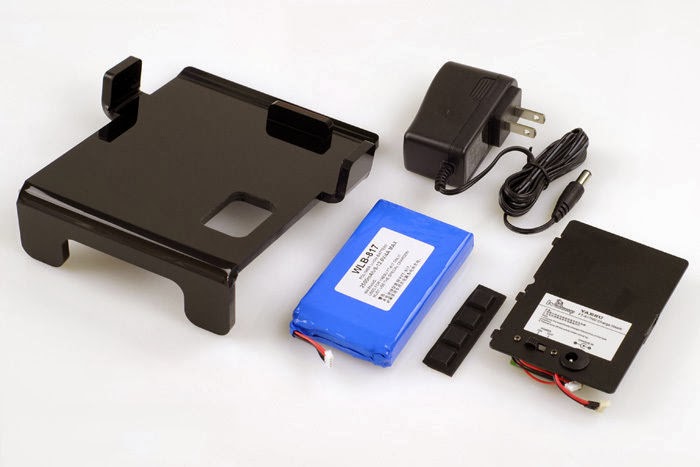 The product is a 3000mAh LiPo battery that fits the 817, a replacement for the battery door that allows the battery to be charged by an external charger (included) and a nice stand for the radio. (The battery that comes with the 817 is 1400mAh) All this for $89. Now, it is a product made in China, so it is tough to determine quality, (that's also true for certain US producers as well). I ordered the package and will test it to see if it is as advertised. W4RT offers a similar product but it's priced at $150.00 and the battery is a NiMH.
I have no commercial interest in this product, but it seems worth the money if it delivers as advertised.
I have no commercial interest in this product, but it seems worth the money if it delivers as advertised.
Pico Paddle
A few months back I ordered a Pico Paddle from Palm Radio. It is very small paddle, weighing only 12 grams by itself or 27 grams with the magnetic quick mount. The paddle is extremely well engineered and comes in a nice travel case with two quick mounts and cable. I have recently been using the paddle on my SOTA expeditions and have found it to be a very good paddle to have in the field. There are a few oddities about the paddle that are worth talking about, but overall it is a very well made, functional paddle.
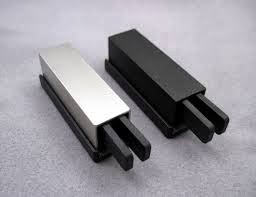
The cable used to interface with your rig is a little unique, in that it is a 2.5mm - 3.5mm and it is reversed with the tip being the dah. So it is a little different than the typical set up. If you are using the paddle with an FT-817 or a KX-3 or similar commercial transceiver, a simple adjustment in the menu will fix the reversed cable issue. If you are left handed, then it's perfect. The problem comes if you use the Pico paddle on a home-brew radio that doesn't have the ability to adjust the dits and dahs. You can do you own fix by cutting and reversing the wires and I suppose if you are using the paddle at a home station this would be sufficient, but the cable wires are thin and the solder job doesn't hold up well with portable use. There is a pre-made reverse wired cable available from MTechnologies that is a much better alternative.
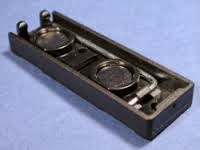
One nice feature of the paddle is the quick mount. It a very strong magnet that allows you to mount the key on the radio. In the field this is a nice feature and prevents you from having to hold a small paddle and log at the same time. I recently used it in combination with my MTR on a SOTA trip and I really liked the way the radio and paddle were integrated.
Pico Paddle
Magnetic Quick Mount
The cable used to interface with your rig is a little unique, in that it is a 2.5mm - 3.5mm and it is reversed with the tip being the dah. So it is a little different than the typical set up. If you are using the paddle with an FT-817 or a KX-3 or similar commercial transceiver, a simple adjustment in the menu will fix the reversed cable issue. If you are left handed, then it's perfect. The problem comes if you use the Pico paddle on a home-brew radio that doesn't have the ability to adjust the dits and dahs. You can do you own fix by cutting and reversing the wires and I suppose if you are using the paddle at a home station this would be sufficient, but the cable wires are thin and the solder job doesn't hold up well with portable use. There is a pre-made reverse wired cable available from MTechnologies that is a much better alternative.
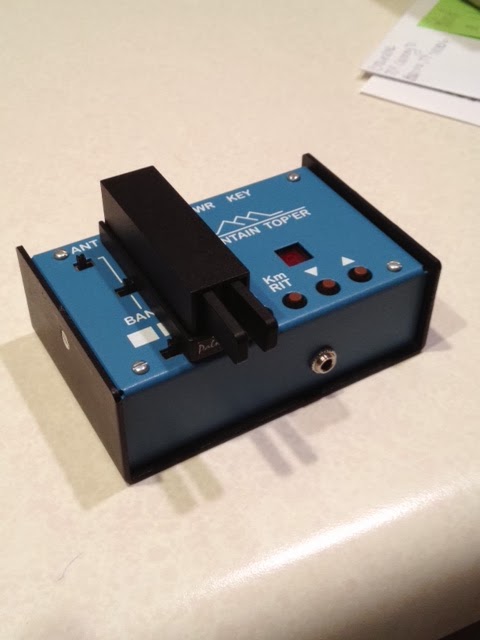
One nice feature of the paddle is the quick mount. It a very strong magnet that allows you to mount the key on the radio. In the field this is a nice feature and prevents you from having to hold a small paddle and log at the same time. I recently used it in combination with my MTR on a SOTA trip and I really liked the way the radio and paddle were integrated.
Pico Paddle Mounted on MTR w/magnetic quick mount
Another nice feature of the Pico is that the paddles retract into the housing when not in use. I'm always in search of an efficient, light portable solution for SOTA Operations. These set-up works very well.
I have no financial interest in this product, I'm just sharing my experience with it. If you Google it you will find the dealers who carry it.













