Archive for the ‘ham radio’ Category
 What’s a Country?
 November 19th, 2011 |
  Author:
  Recently on Google Plus there was a discussion of what qualifies as a separate country in the amateur radio world. The confusion point was that Alaska was showing up in logging software as a “country”. It turns out is is both a country and a state.
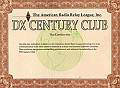
The generally accepted countries list is established by the DXCC award. Actually, the correct term is entities, not countries, but in normal conversation people seem to use countries. DXCC stands for DX Century Club, with the minimum award being 100 (Century) countries.
Back to the issue of Alaska — it clearly is one of the 50 United States, so you’ll need to work it to achieve Worked All States (WAS). It is geographically separated from the lower 48 states, so it is also considered a separate country. The same is true for Hawaii — counts as a state and a country.
To find out what counts as a country, you need to study the DXCC Country List. A peek at this list reveals that these US possessions are all considered separate countries for DXCC purposes:
K,W,N, AA-AK# United States of America
KG4# Guantanamo Bay
KH0# Mariana Is.
KH1# Baker & Howland Is.
KH2#* Guam
KH3#* Johnston I.
KH4# Midway I.
KH5# Palmyra & Jarvis Is.
KH5K# Kingman Reef
KH6,7#* Hawaii
KH7K# Kure I.
KH8#* American Samoa
KH8#* Swains I.
KH9# Wake I.
KL,AL,NL, WL#* Alaska
KP1# Navassa I.
KP2#* Virgin Is.
KP3,4#* Puerto Rico
KP5# Desecheo I.
So there are 19 countries, just inside US territory.
The DXCC Rules that define a country are complex, a mix of geographical and political considerations. I won’t even try to explain it here. Be aware that as the political boundaries change, countries can be added or deleted from the list.
73, Bob K0NR
Electronics Learning Lab
I haven’t posted in a while because I’ve needed to get caught up since the antenna-project, and whatever time I have had for ham radio I’ve spent on the air! It’s been a blast, too — lately the DX has been like low-hanging fruit. I’ve especially enjoyed DX on 40m. But my son and I started something this week that is too good to keep to myself, so here I am blogging again.
My good friend and brother in Christ, Scott Paulson, spoke highly of Radio Shack’s “Electronics Learning Lab.” As a signalman for BNSF Railway he is constantly going off to school to learn about electronics, and the Electronics Learning Lab is required for his classes. (By the way, guess what one of their textbooks is? The ARRL Handbook!) So this week I dropped by Radio Shack, took a look, and promptly bought the thing to add to my son’s homeschool curriculum.
 My son and I both love the Electronics Learning Lab! I have to admit that I’m going to be learning right alongside him. All of this stuff I’ve studied, of course, or I wouldn’t have my ham radio license. But with this breadboard-work I’m applying the stuff I’ve learned, some of it for the first time. And there’s nothing like fiddling with a circuit on a breadboard, swapping out this resistor for that, this capacitor for that, etc. to get an intuitive grasp of this stuff. Flipping through the workbooks to see what’s in store for us, I began to think that maybe, just maybe, I might actually be able to design some basic circuits myself instead of just building them from kits. (For crying out loud, that’s a skill Amateur Extra’s are supposed to have!)
The Electronics Learning Lab comes with two workbooks that guide you through over 200 projects:


Click on each manual to view the PDF at radioshack.com.
Just as Scott told me, “It’s like painting by number.” We only started on it yesterday, yet this morning I found my son working on the next project all by himself, so comfortable was he with the directions in the workbook. I jumped in so I could learn, too. After he finished today’s project we wanted to keep going, but exercised self-control and put it away until next time.
As a homeschooling father and as an Elmer I’d pay double what Radio Shack is asking for this kit. And no, I don’t work for Radio Shack, nor do any of my friends or relatives, nor do I get one red cent from them for lauding one of their products. Whatever your age, if you want to graduate from kit-building to circuit-design, this seems like a good way to take a step in that direction.

Antonio following the workbook.

Antonio breadboarding with the Electronics Learning Lab.


Handiham World for 09 November 2011
Welcome to Handiham World.

Photo: Pat, WA0TDA, poses in front of the Honda Driving Simulator at the Mazda car rental agency in Chitose, Japan. Note the Handiham baseball cap! In Japan one drives on the left side of the road.
[email protected]
Handiham Manager

This Spewed Out of the Internet #20
 There’s lots of information spewing forth from the interwebznet. Here are a few items of interest.
The amateur radio community is buzzing with excitement from the excellent propagation on the HF bands during the CQ Worldwide DX Contest last weekend. For example, see the radio-sport.net post or my post.
One of our local Boy Scouts passed his Technician exam on the Saturday before the contest, showed up in the FCC database on Friday and was working DX on 10 Meters on Saturday. He managed to snag some good ones, including Australia.
The ARRL is reporting that Logbook of the World is having trouble keeping up with the influx of radio logs. Although it would be nice if they could put a little more compute horsepower on the system, I think it is great that LoTW is seeing this kind of volume.
The Interstate Highway Rest Area Society is making a pitch to encourage hams to monitor 146.52 MHz when mobile. I usually try to do this and every once in a while I will stumble onto a great QSO that way. This group is also promoting ham radio activation of highway rest areas. Yes, really, it is not a hoax.
73, Bob K0NR
Reflecting Upon a 33-year-old Written Logbook, Now Completed
 A couple days ago I made my last entry in the logbook I’ve been using for 33 years. The log has grown up with me and is a bit battered, much like its owner. The first entry I made was on 9/10/78, back when I was a 10-year-old Novice with the call KAØCEM.
It’s a trip down memory lane to page through this logbook, not only to read the entries and the notes I made about changes in my equipment and QTH, but even to see how my handwriting changed over the years. But it’s full now, so it is time to start another logbook.

The first page of my logbook when I was KAØCEM.
I happen to have a nice, new logbook just waiting for the next hand-written entry. Somewhere along the line I acquired it and it’s been on my shelf waiting for the day my first logbook filled up. But now I’m not so sure I want to use it. Things are different now. Back in the day we relied exclusively on QSL cards to confirm our contacts, but now some folks rely on the Logbook of the World — as a courtesy to them I started entering my contacts there this year. But double-logging is as prone to error as it is time-consuming. And as much as I love the nostalgia of the hand-written log, I have to admit that logbook in Ham Radio Deluxe is mighty slick.
So I’ve ordered the chips to upgrade my Kenwood TS-440S, a CAT cable to hook it up to my computer, and from now on it’s a computerized logbook for me.
But one thing is nagging me. There are unanticipated consequences of “progress” like this. For instance, this computerized logbook has a window with constantly-updated DX spots. Nice, huh? But with this instantaneous feedback-loop that we’ve created, it has become harder and harder to have meaningful QSOs with DX stations — as soon as one is spotted there’s a massive pile-up that turns subsequent QSOs into rapid-fire exchanges that consist of nothing more than NØIP 599 TU.
I’m glad my ol’ logbook ended with a better QSO than that. I called CQ DX on 20m and LU1MA responded from Argentina. We didn’t exactly have a ragchew, but at least it lasted for six whole minutes. The second I signed off with him, though, a horde descended upon him like a swarm of thirsty mosquitoes.
I don’t remember that ever happening in the old days, even though there were more CW operators on the air back then. Back at the peak of the third-to-last sunspot cycle I had DX QSOs that routinely lasted 10-15 minutes, sometimes longer. That wasn’t because my CW was slow. Back then I was around 20 WPM; now I’m down to 15 WPM (it’s coming back, though!). It was simply different back then, and I would say it was better. I loved how the DX stations used to call me DR TODD; I’d hear it from more than one country, but never from the USA. We talked with each other back then, no matter how far away the DX station was.
So I’m not sure I’ll keep that DX spot window open in my new computerized logbook. I’m not even sure I’ll enter pile-ups all that much. I’ve learned how to do it, but it’s tedious and not nearly as rewarding as the contacts I used to have with these DX stations. Maybe I’ll call CQ DX more often and hope the fellow on the other end is willing to spend a few more minutes in QSO than he’s used to.
But when I do, he’ll go into my computer. Along with the old days, my written logbook is a thing of the past.


Lessons Learned During Antenna Construction
I learned a few lessons — the hard way — while building this New Carolina Windom. At risk of making myself look like an idiot I’ll share some of them with you here so that you can learn from my mistakes.
You might wonder how a guy who has been a ham for 33 years could be so ignorant about some of these things, but understand that up until this project I had never even put up an outdoor antenna on my own. My dad was the one who did all this when I was a kid. When I became a homeowner, all my antennas were indoor, stealthy antennas located in my attic — a whole different ballgame. That doesn’t work in my current house, so for the first time I’ve had to build up an outdoor antenna-system.
Anyhow, here they are (in no particular order):
- Drilling holes in masts: Use a titanium bit. It’s worth the money! I used lesser bits at first, to my frustration. Titanium bits cut through aluminum like a hot knife through soft butter, and they make short work of steel, too. If you’re drilling anywhere but in a workshop, make sure you put down newspaper or something to catch the metal shavings; metal shavings do not contribute to a “barefoot lawn!” Also, build a good jig if you’re drilling all the way through the mast. The jig I built did a good job of holding the mast in place but next time I’ll improve it with a guide that ensures top-dead-center and (in lieu of a drill-press) perfectly perpendicular drilling.
- Cutting & handling antenna wire: Be generous when cutting the legs of your antenna. I thought I was generous, but when it came time to make my final adjustment (after SWR testing) I could have used just a few more inches than the extra 15″ I had allowed myself on the long leg of my New Carolina Windom. And when handling 14 AWG copperweld, watch out for kinks! As hard as I tried, I came mighty close more than once to putting a bad kink in that unwieldy stuff.
- Erecting masts: Use a level to make sure the mast is vertical. I know, DUH! I did use a level when I put the tripods up, but when it came time to put the masts in I had forgotten to bring it up on the roof with me. It was just too tempting to pop them in without checking to see that they were perfectly vertical. I found out the hard way that a mast can be tilted quite a bit and still look perfect when peering up its length!
- Working safely on the roof: Use a safety-line. The first time I went up on my roof I was surprised at how much steeper it was than the one I used to scramble around as a kid. Frankly I was scared stiff up there, especially with this bum leg of mine. I’ve heard there are safety harnesses out there, but I couldn’t find one. So what I did was to throw a safety-line over the roof and tie it off to something stout. That at least gave me some added security on the side of the roof opposite the attach-point. Just make sure your rope is strong and your knots are good!
- Soldering wire on the roof: Buy or borrow a butane soldering iron. I found out the hard way that even a 100 watt soldering gun is useless at the end of a long extension cord. It worked fine for soldering lugs onto the end of my 14 AWG copperweld, but not for soldering the same wire twisted onto itself. And a regular propane torch is definitely not the right tool for the job (I know, I tried!). Also, you might want a drop-cloth up there. By the time I was done with the job using a propane torch (you should have seen it — it was pretty comical), I had more than one solder-drip on the shingles.
- Waterproofing coaxial connectors: Use coax-seal or self-amalgamating tape. As I mentioned in my earlier post on this subject, I at first just used electrical tape to wrap my coaxial connectors. After being persuaded by several kind hams who posted comments on that post, I ordered some coax-seal. It’s a good thing I did; I am grateful to those hams for their good advice. When the shipment arrived, I went up on the roof to discover one of my nice pretty tape-jobs already coming apart at the seams after less than two weeks! By the way I found out that five feet of 1/2″ coax-seal is good for only three connections, at least the way I wrapped them.
- Using pulleys: Use big enough rope. The first time I hoisted my antenna the rope was too small; it quickly jumped off the pulley and got jammed between the pulley and the housing. Fortunately I got it free. I swapped out the thin rope for something much stouter, and now it will never get stuck. (By the way, I’ve read one ham’s advice not to use pulleys at all but ceramic egg-insulators instead; there’s nothing for the rope to get stuck on and they’re durable enough that he’s been using one as a pulley for 20 years.)
- Allowing for radials: Build in an attach-point for radials at the base of your RF choke if you’re building a New Carolina Windom. Only after my antenna was complete did I read about the benefits of adding radials to this antenna. There is no good way that I can think of for me to connect radials directly to the coaxial connection. Next time I build an RF choke I’ll provide some lugs (or a plate or something) on one end for this purpose.
- Testing SWR: Make sure you hoist your antenna all the way up before testing its performance. I tried testing my antenna before climbing up on the roof — my son held the mast upright and I tied the legs of the antenna off as high as I could to nearby trees, but the SWR was just too high on 40 meters due to the proximity of the antenna to the ground.
- Throwing lines: If you have trouble throwing a line, try a heavier weight at the end. I now know that throwing lines is an art. At various points in this project I experimented with a sling-shot, potato-gun, and throwing by hand. Each of these techniques has its place. At one point the best way for us to get a line where we wanted it to go was by simply whirling a weight and letting it fly — but only after we figured out that we needed a good heavy weight at the end. At first I used just a few ounces of metal, but it kept getting hung up in the branches we were penetrating. Once we switched to a pop bottle full of water, it worked on the first try.
- Pounding ground rods: Put your connectors on the ground rod before pounding it all the way in, if they’re the kind of connectors you have to slip on over the top of the ground rod. By the time I was done pounding in my 8-foot ground rod, the top was so flattened out I couldn’t get the one-piece connector over the top. (An angle-grinder solved the problem; I cut off the top and slipped the connector on.)
No doubt some of these lessons I’ve only partially learned (and maybe some of them I haven’t learned well at all). If you have any better suggestions, or if you have some of your own hard-won lessons you’d like to add, fire away. If we can learn from each other here, maybe we won’t have to learn quite as many lessons the hard way!


Another Great HF Slacker Weekend
 I had previously admitted to being an HF slacker…that is, I only really enjoy the high frequency bands when the DX is loud and plentiful on 15 and 10 Meters. For almost a half decade, I’ve listened to the True HF Enthusiasts say things like “move to the lower bands when the solar activity is weak.” Fortunately, things are starting to change.
This weekend was the CQ Worldwide DX Contest (SSB) and the propagation was outstanding on the higher bands. I heard some people say that 10 Meters was never this good before but I suspect their memories may be faulty. But make no mistake, conditions were really awesome. Here’s a report from radio-sport.net.
I was up at our cabin in the mountains, running the FT-950′s 100 watts into a trap dipole at about 30 feet. Clearly, this is not your Big Gun Station but I was able to make 177 contacts, operating most of Saturday and a few hours on Sunday. Mostly, I was just chasing DX and trying to pick up a few new countries. I have to admit that my memory had a little rust problem concerning international call sign prefixes (where is C5A anyway?) but the N1MM software helped me out.
In the end, I did contact a dozen or so new countries, ranging from Mongolia to Croatia. I sure hope these guys upload their logs to Logbook of the World. I really don’t want to be chasing down those QSL cards manually. As I said, I am an HF Slacker.
73, Bob K0NR













