Archive for the ‘antennas’ Category
 TTF = FUN
 April 27th, 2013 |
  Author:
 It’s just about 11:00 PM and the day is almost done. It was a busy one! After this blog post is finished, then I am finished too! I will head upstairs to hit the sack.
The day started off with a visit to the Doctor’s office. Nothing serious, just some blood work as my cholesterol was just a tad on the high side when I saw him last autumn, He wanted a follow up visit in six months, and today was the day. Before I left however, my lawn mower repair guy called and said my mower was fixed and ready to pick up. That was good news; but I really wasn’t expecting it until Monday.
After getting my arm stuck at the Dr’s office, I came home for a quick lunch. Then I packed up the car with my radio gear and went to pick up the mower. On the way home, I headed off to Thomas Edison Memorial Park for a few hours of QRPTTFing. I was surprised when I got there. This what the memorial tower usually looks like:
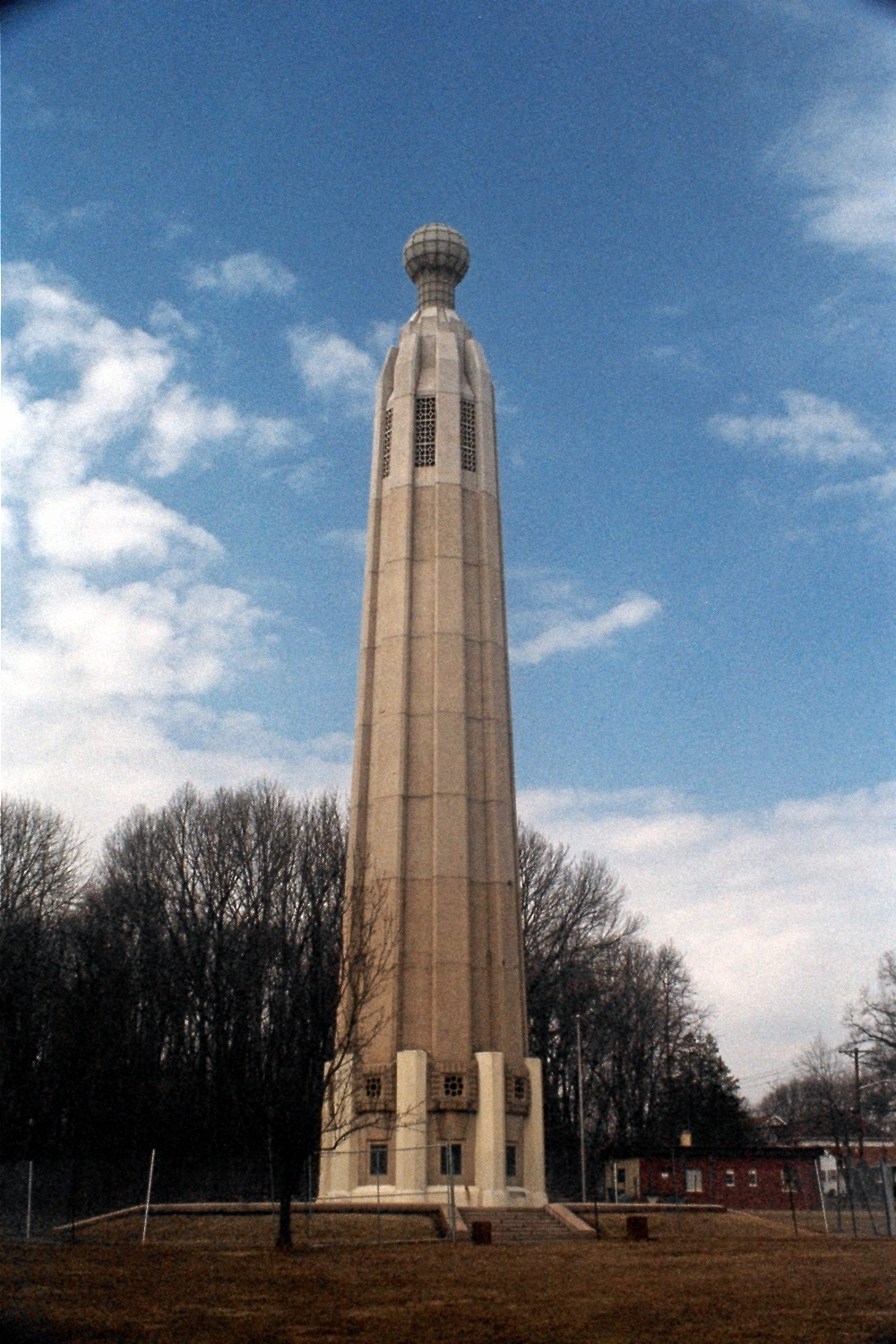
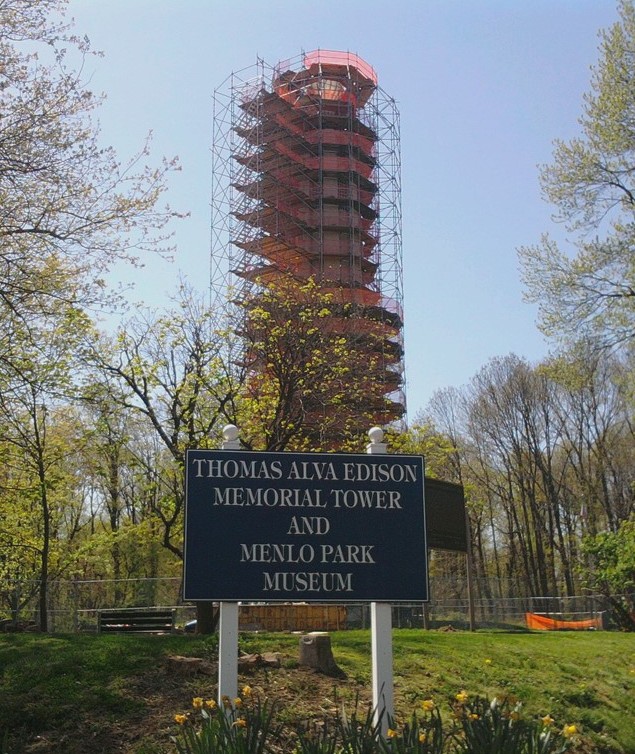
My surprise was that I knew the tower was being refurbished. But for some reason, I thought all the work had been completed. It turns out that so far, only the accompanying museum has been refurbished. This is what the tower currently looks like. It should be finished sometime later this year or perhaps early 2014.

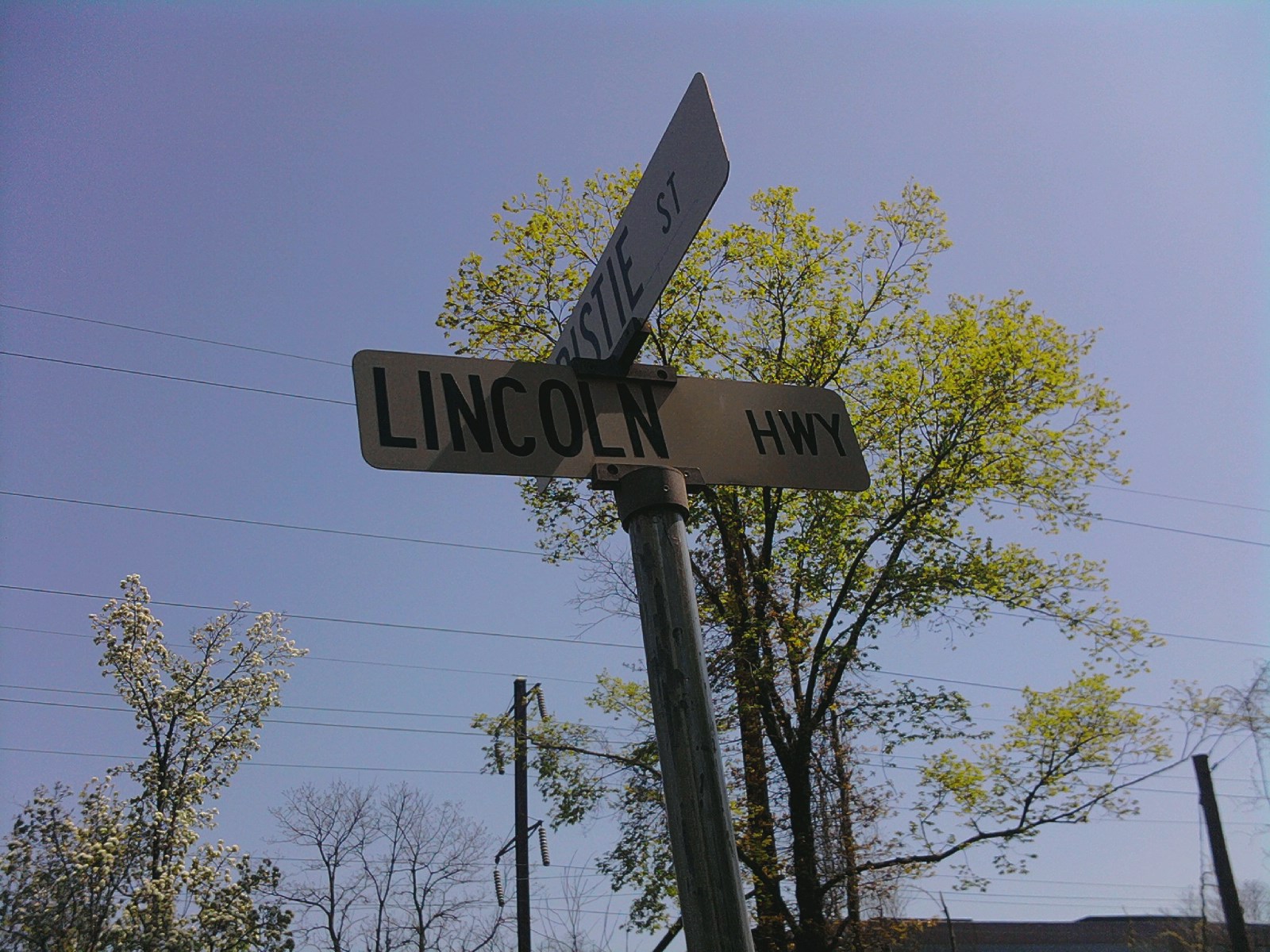
And in accordance with the QRPTTF theme for 2013, I was only a block away from NJ Route 27, which is officially part of the Lincoln Highway, America’s first intercontinental highway – definitely an historic trail.
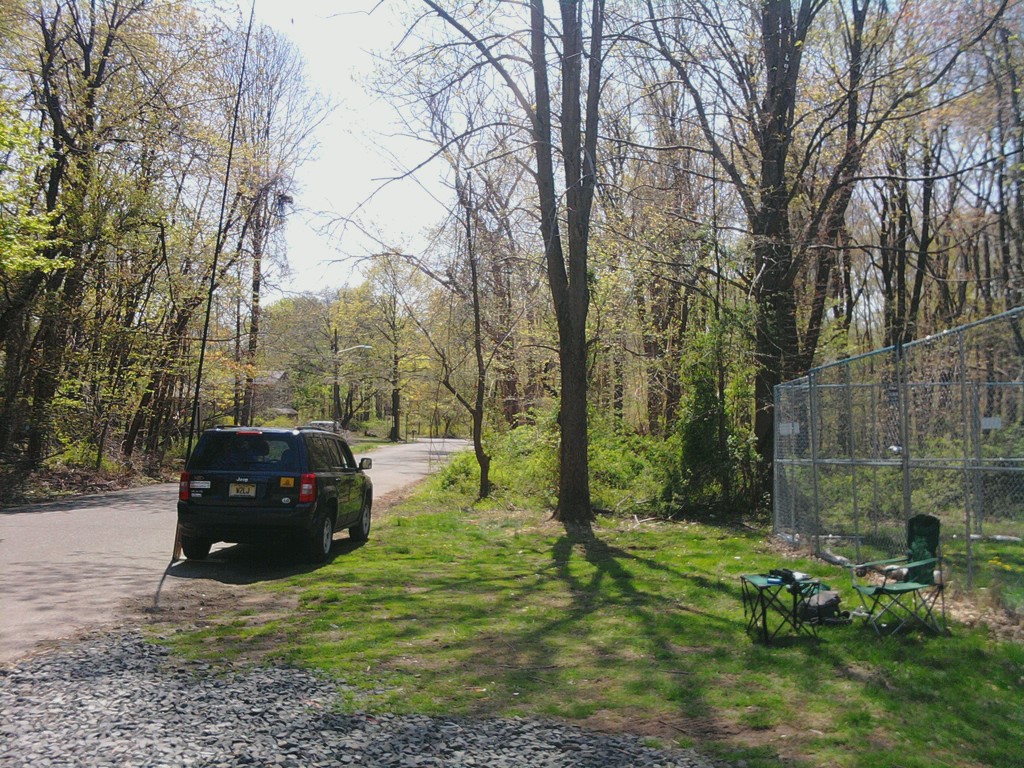
Almost there, but not just yet.
OK – so here’s the deal. I mentioned that I wanted to come up with a drive-on support that will allow me to use my Jackite pole as a support for wire antennas for portable non-hike type ops. What I used to use, when I had my Buddipole, was a 4 foot plank of oak. I bought a threaded piece of 2″ pipe and a pipe flange. I secured the pipe flange into the plank with screws. When I got to a suitable spot, I would drive onto the plank, screw the pipe into the flange and drop the painter’s pole that I was using as a mast into the pipe. Viola’ – instant Buddipole support!
The problem is the Jackite pole is a way bigger diameter than the painter’s pole – 2 3/4″ in diameter compared to less that 2″ in diameter for the painter’s pole. The biggest diameter iron pipe that Home Depot had in small, pre-cut, pre-threaded pieces was 2″. Not gonna work.
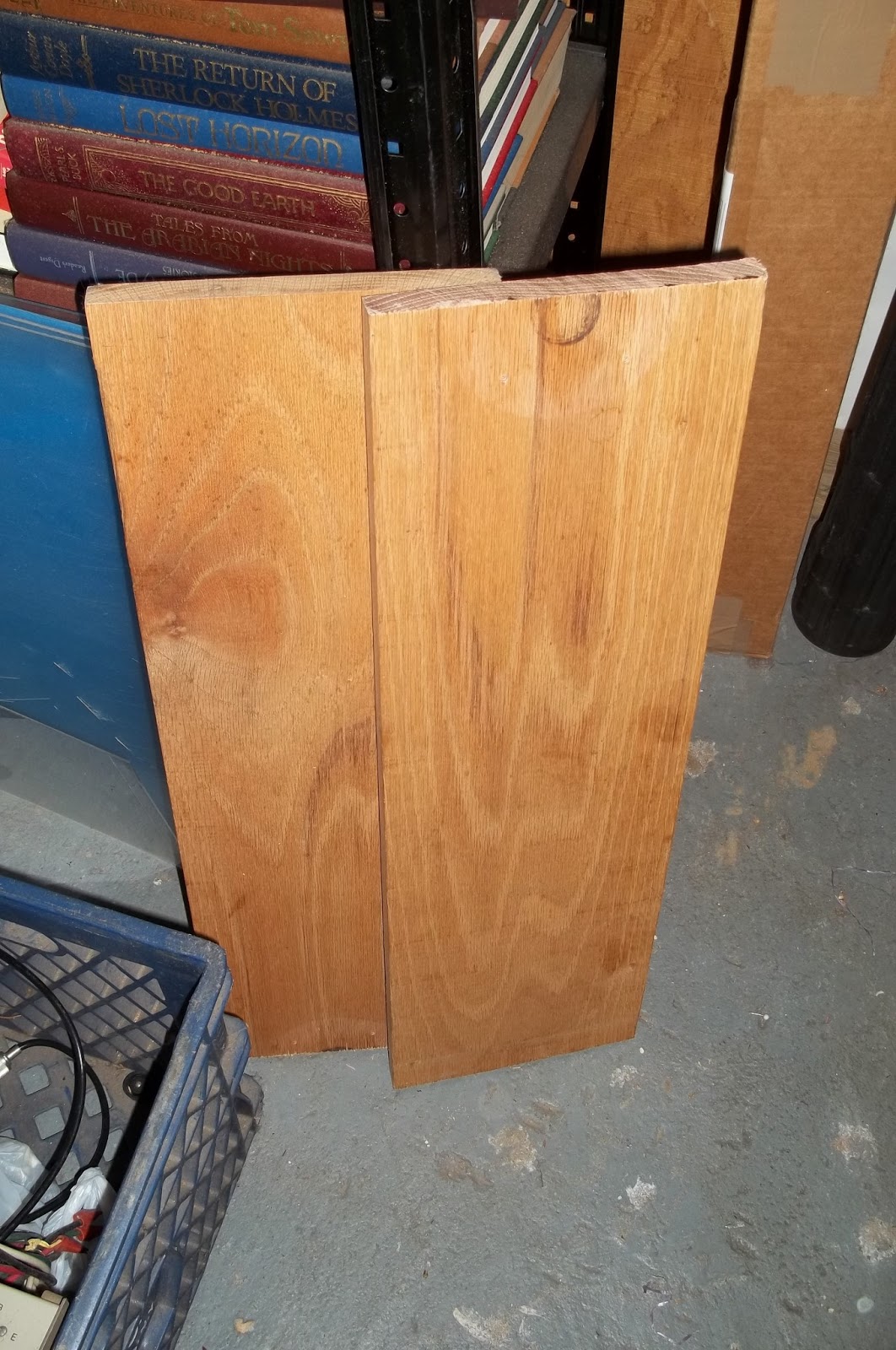
So I took my 4 foot plank of oak and cut it into two, more or less equal sized pieces.
Then using hinges, I reverted it back into a single 4 foot plank. Seems silly doesn’t it, at first hearing?
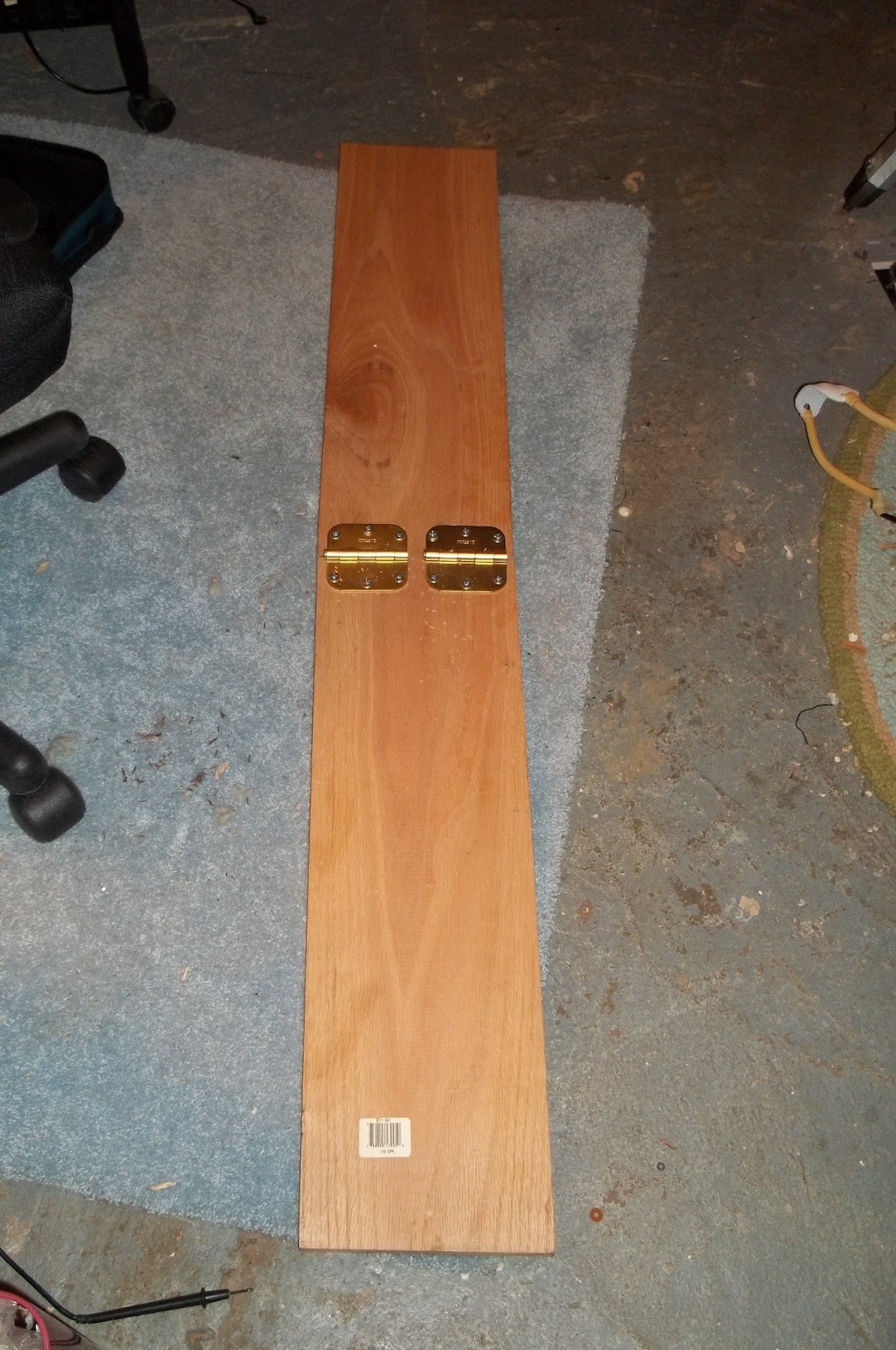
Ahhhhh …. but there’s a method to my madness, because now I have a vertical section as well as a horizontal section.
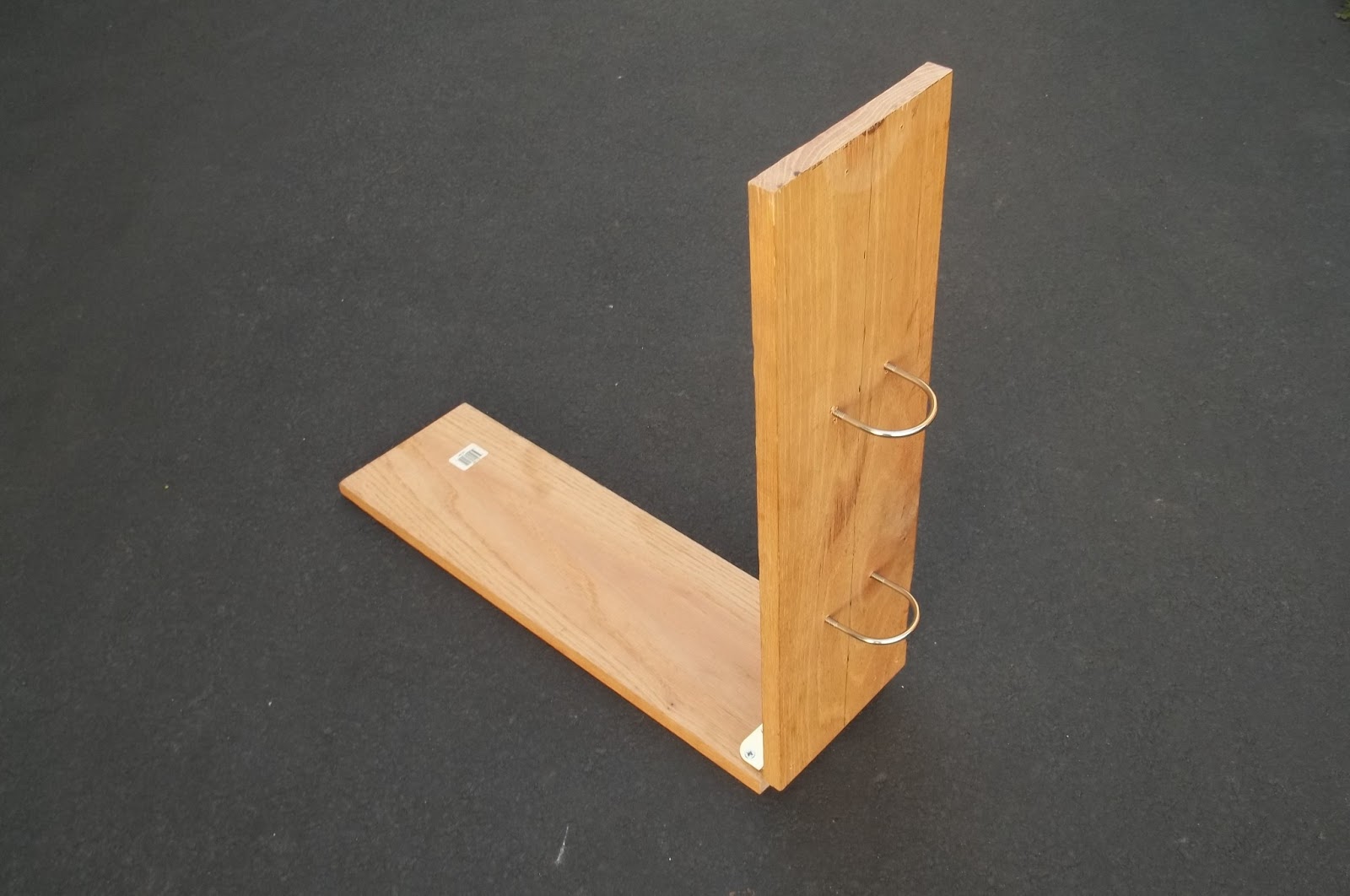
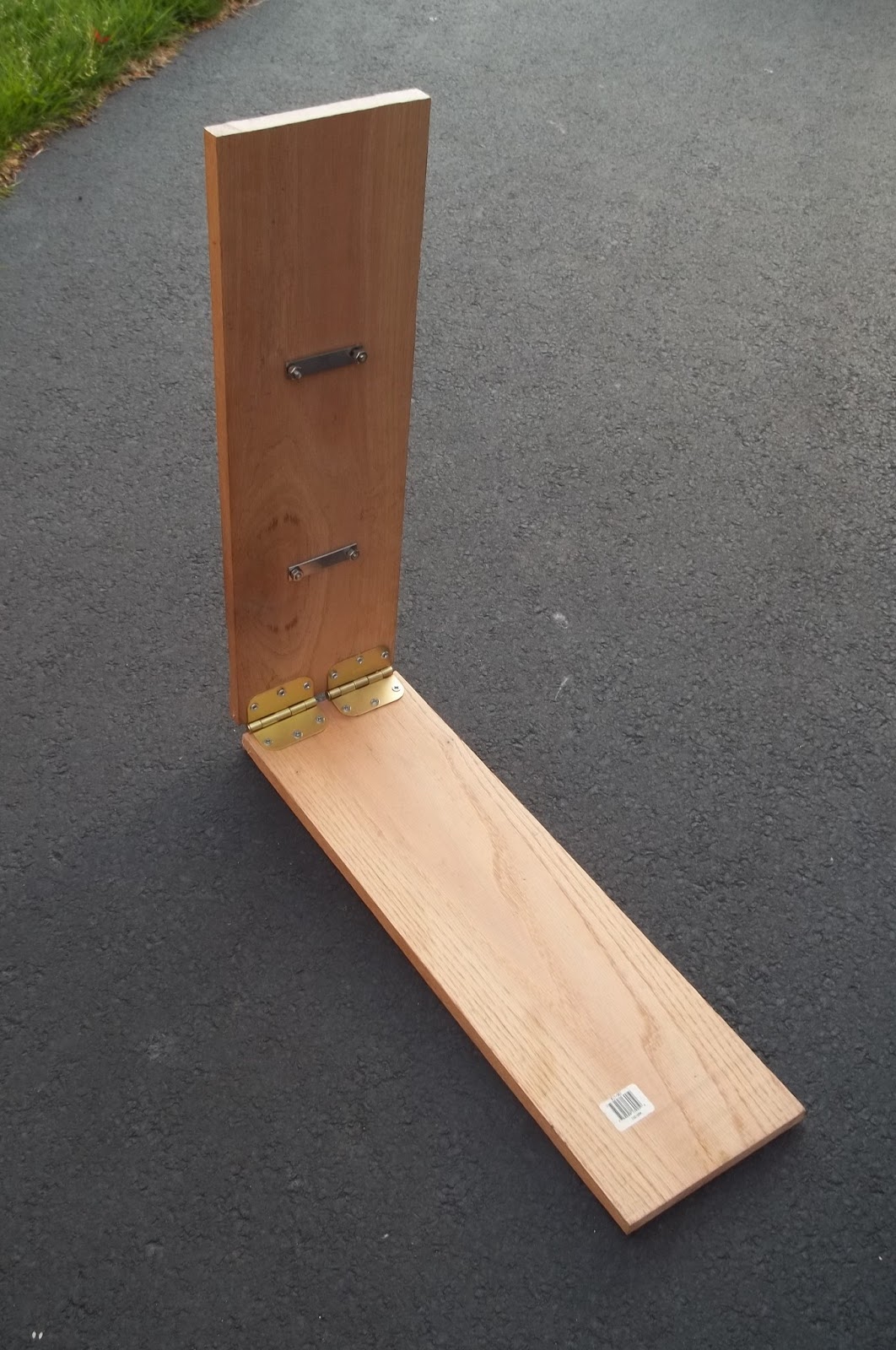
I added two “U” bolts to hold the Jackite pole. And here’s what it looks like “in action”.
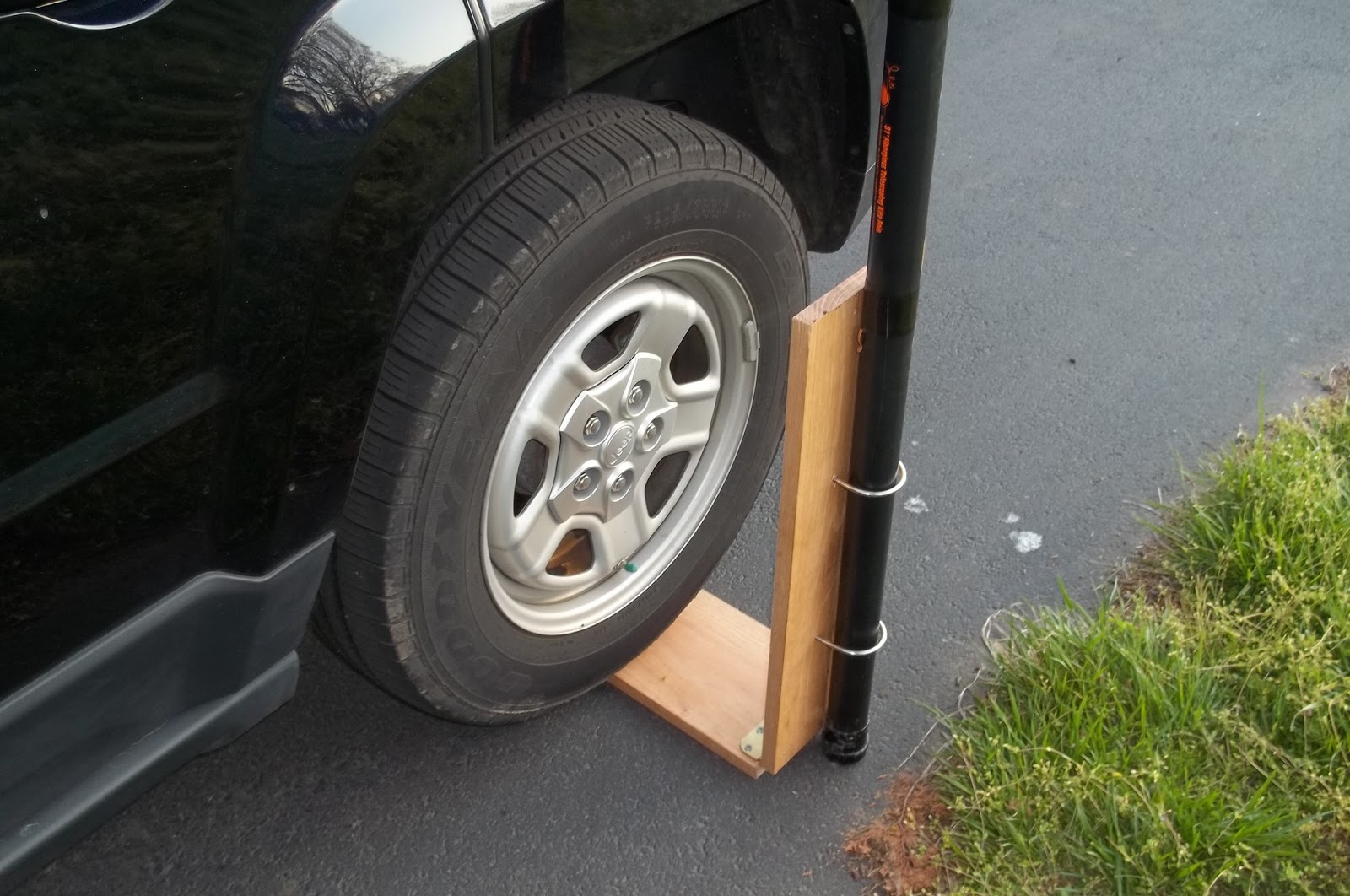
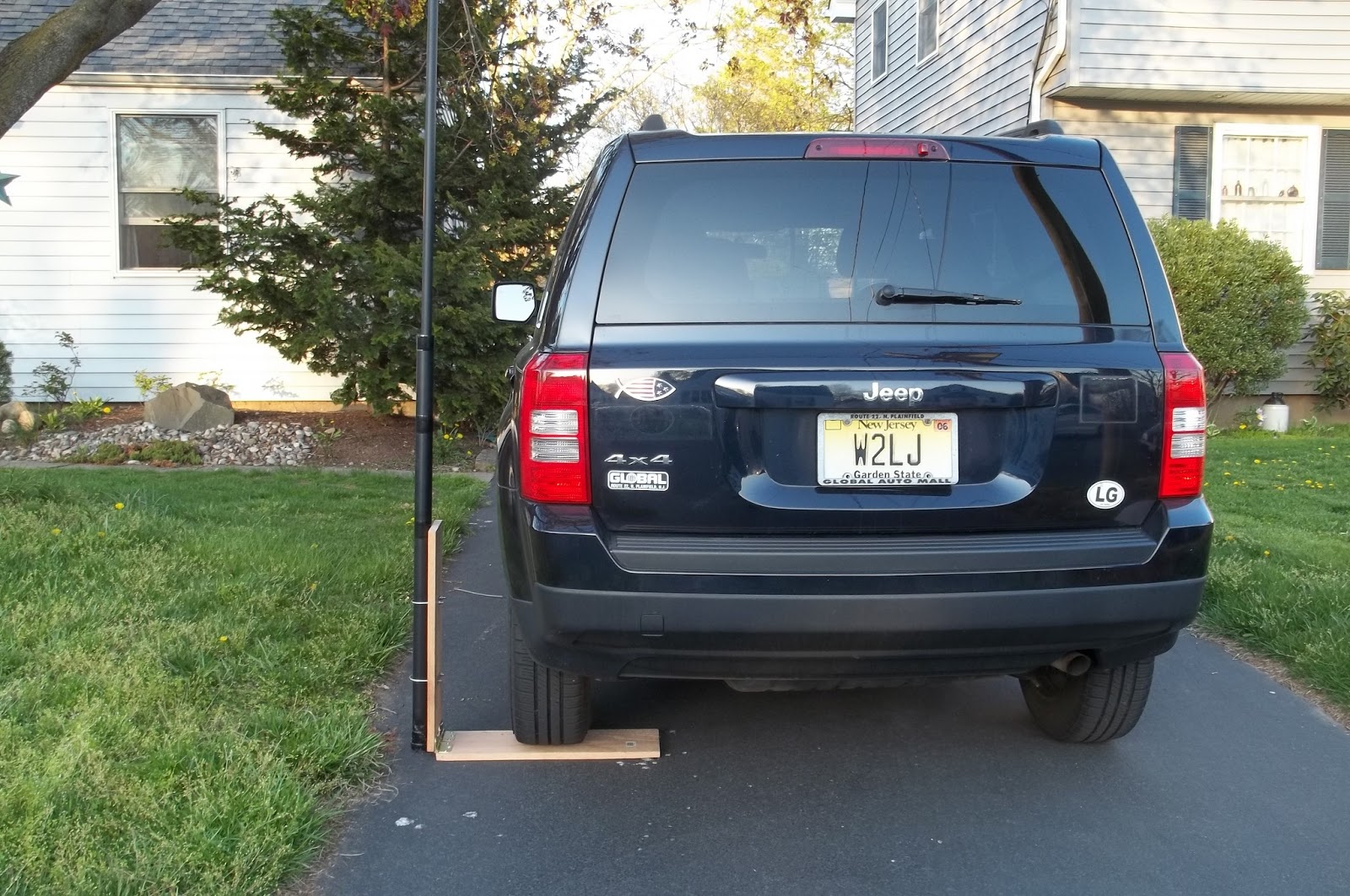
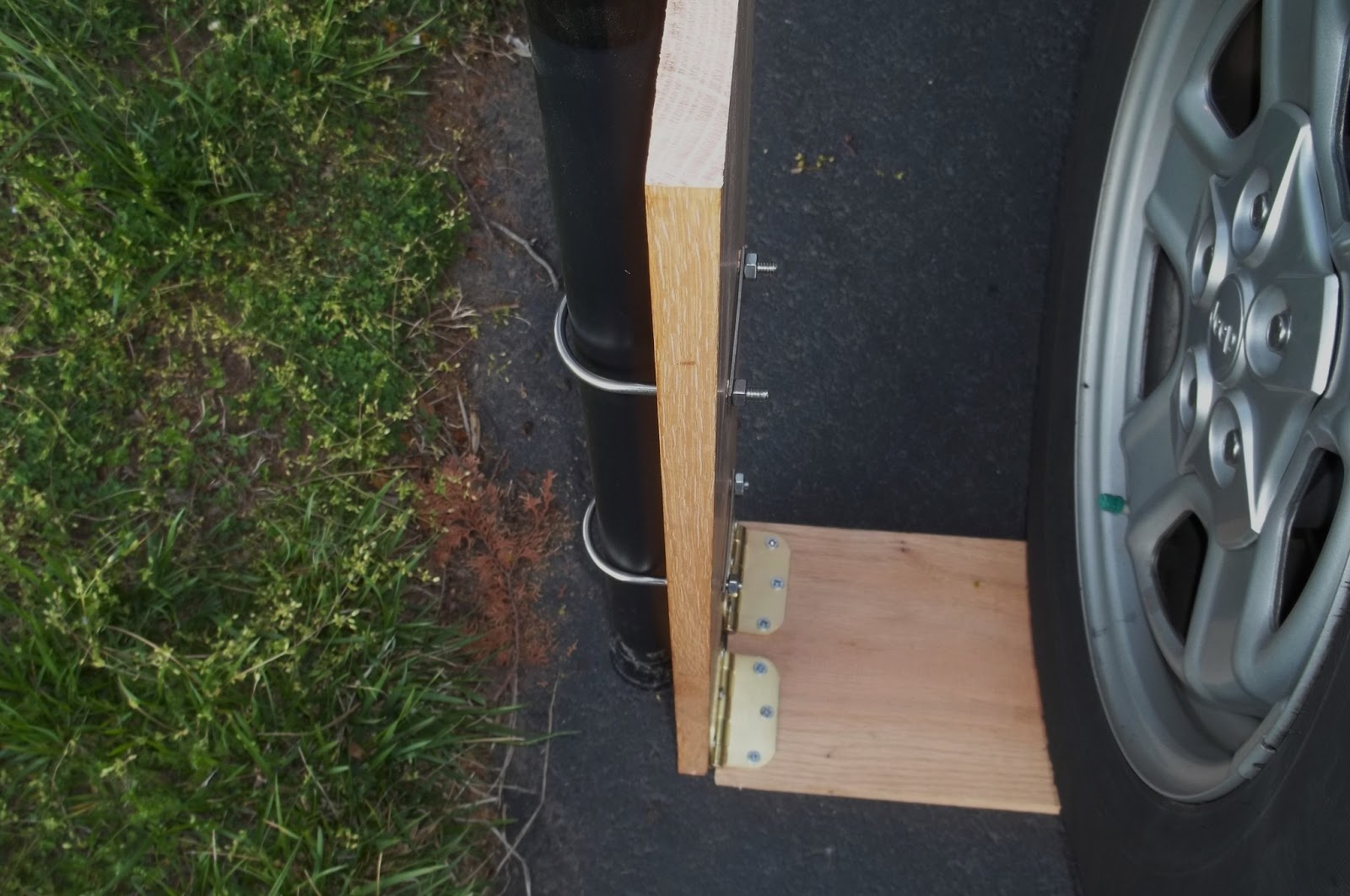
Two things remain to be done. First, I want to replace the hex nuts on the “U” bolts with wing nuts. This will make it easier to tighten and loosen in the field. Secondly, I need some sort of “support strut” between the horizontal and vertical components. I am not sure what to use. A strut like you would find in an old style attache case or an equipment case would be ideal; but I don’t know where you’d even go about buying case parts. The only other thing that I can think of is buying a piece of aluminum stock and fashioning my own custom “strut”. Anchor it on one member with a screw and allow it to swing, and cut or file a “hook” into the other end and let that come to rest on a screw inserted into the other member.
I don’t want to take a chance that a gust of wind could catch this and then either blow it back onto the Jeep or even worse, out to the side (taking radios and equipment with it!).
The easy answer is to just screw a shelf bracket in place. But that would make this thing a permanent “L”. Right now it folds down onto itself, forming a nice 2 foot long piece that fits in the back of the Jeep quite nicely, not taking up a lot of space. I definitely want this to fold for easy storage, but yet be strong and stable enough when deployed so that there will be no worries.
Any ideas?
72 de Larry W2LJ
QRP – When you care to send the very least!
A few things
Two things pointed out to me by Bob W3BBO, who directed me to the “ARRL Contest Update” e-mail, which I had just kind of glossed over without reading properly:

Multi-Band 4 Foot Magnetic Loop with Gamma Match

4 Foot Diameter Magnetic Loop In Operation
As my mag loop projects progress, I’m learning a lot about building them and using them. This antenna works on 17, 20, and 30 meters, with the best bandwidth on 20 meters. The bandwidth on 17 and 30 is quite small but usable. There is a 20 KHz bandwidth on 20 meters. I used a vacuum capacitor to build this particular loop for 100 watt operation. The air capacitors are good for QRP but will arc over using much power over QRP levels.

4 Foot Magnetic Loop Antenna with Gamma Match
This photo was taken before I trimmed the Gamma Match.
I didn’t know how long the Gamma Match should be, so I made it long enough to allow for trimming after the match to 50 Ohms was made.
This is the first mag loop that I made with a Gamma match. I like this match better than the usual Faraday feed loop that is featured in my previous mag loop antennas. Matching is easy and building the Gamma match is not difficult. I’m planning to build other smaller loops that will also feature the Gamma match. The smaller loops will target 10, 12, and 15 meters. Loop size determines which band its best suited too. Although it is possible to get more bands on one loop, the bandwidth is small and the tuning ‘dip’ is very sharp. I found it better to limit the number of bands in favor of wider bandwidth and antenna efficiency.
Please look up my previous posts for more details on parts and plans.

Here is a good close up of the clamp.
(Before Trimming)
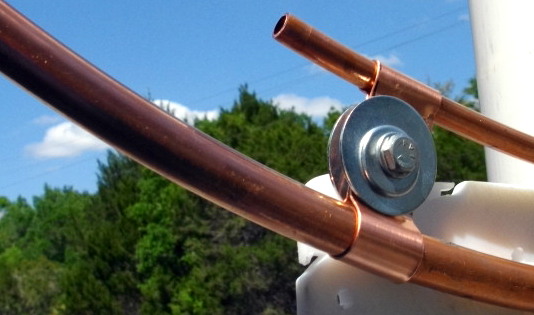
Gamma Match After Trimming. This enables a 50 Ohm Match for all three bands.

Gamma Match on the left, PL 259 in the center and, Tuning Aid Stick (PVC) pipe , on the right.
The vacuum capacitor is ‘tuned’ by twisting the PVC pipe that is attacked to it with a cotter pin.
Tuning the cap to the ‘loudest noise’ on the air will put you in the ball park for operating.
You can also use an antenna analyzer if you want to know the exact SWR, and RR of the antenna.
Tuning with a radio attached is fast and easy.

Making the clamp for the Gamma Match

Soldering The Back Plate and PL 259

Removing The Oxidation Before Soldering
The main loop is 5/8 inch, soft copper tubing.

Close Up of PL 259 to Gamma Match Joint
The center of the PL 259 had a #10 solid copper wire inserted and soldered in place.
The Gamma match is 3/8 inch soft copper tubing.
This part of the job was done with a soldering iron, the rest was done with a plumbers torch.

Handy ‘third hand’. A clamp to hold the Gamma match in place while I soldered it.
My town was going to hire a ‘Mad Scientist’ but it couldn’t afford one, so they settled for a ham radio operator instead. Me!
73 de AA1IK
Ernest Gregoire
A very good night
And if I wasn’t so tired, I’d probably stay on the air for a little longer; but alas, I am just about ready to call it a day. As soon as I finish this post, I will turn in.
I have read and heard reports of the big flare that occurred, and how we’re supposed to get hit tomorrow with potentially huge geomagnetic disruptions.. Main stream media news outlets are saying that we might see aurora tomorrow night, even here in NJ. If that is true, then tomorrow’s HF conditions will probably be, how shall we say, less than optimal?
But tonight was a good night. 20 and 30 Meters were exceptional. On 20 Meters, I worked E74UB in Bosnia-Herzegovina, LZ1QI in Bulgaria, TF3JB in Iceland (with 2.5 Watts!), and the topper – the prize for the night A71CM in Qatar. I have never worked Qatar before, ever -and to get him in the log with 5 Watts had me doing the happy dance.
On 30 Meters, I actually had two honest-to-goodness QSOs with Lin G4DZE in England and Viorel YO6LV in Romania. When you can have a civil QSO with more details that RST and TU, it’s always special. Special thanks to Lin and Viorel for that. I also worked SP6EIY in Poland and UY5BA in the Ukraine.
40 Meters was a little tougher, but I managed to work H70ORO, a special event station down in Nicaraguan to finish out the evening.
For the record, all tonight’s QSOs were completed with the KX3, using the HF9V on 20 Meters and the 88′ EDZ on 30 and 40 Meters.
I am making so many typos here that it’s ridiculous – thank God for spell check!
72 de Larry W2LJ
QRP – When you care to send the very least!
Harold’s JA7HJ tower was not your average tower

Harold’s 30′ JA7HJ tower (Click to enlarge)
I meet some very interesting people in radio circles. My friend Harold Johnson (W4ZCB) is undoubtedly one of them.
Last year at my local ham radio/DXer club meeting, members were asked to bring photos of shacks and rigs, and describe our evolution as ham radio operators. In the series of photos that arrived at the following meeting, one in particular stood out: Harold Johnson’s radio tower in post-war Japan.
Johnson’s tower stood almost thirty feet tall and supported a 20 meter Yagi which you can see in the above photo. Johnson, who at the time operated under the callsign JA7HJ, also had a little ham shack built. The shack materials–including the tower, Johnson recalls–cost him “three bottles of Scotch for the army quartermaster…I paid the Japanese builder $15 or $20 for the complete enchilada.” This tower was built entirely of wood: the vertical members were 2′ x 4’s, the slats were 1′ x 3’s.
Of course, the tower didn’t have a mechanical rotor; instead, Johnson climbed inside the tower, lifted the wooden boom, rotated it manually, and placed it back on the uprights.
When asked how he powered his station, Johnson pointed to the wheeled generator in front of the radio shack in the photo. “The generator was called a B6B–it produced 24, 120, 240, and 480 volts, and was rated 10 kW.” When I asked how he managed to procure the generator, he replied that he “borrowed it from the flight line, which was about 300 feet away.”
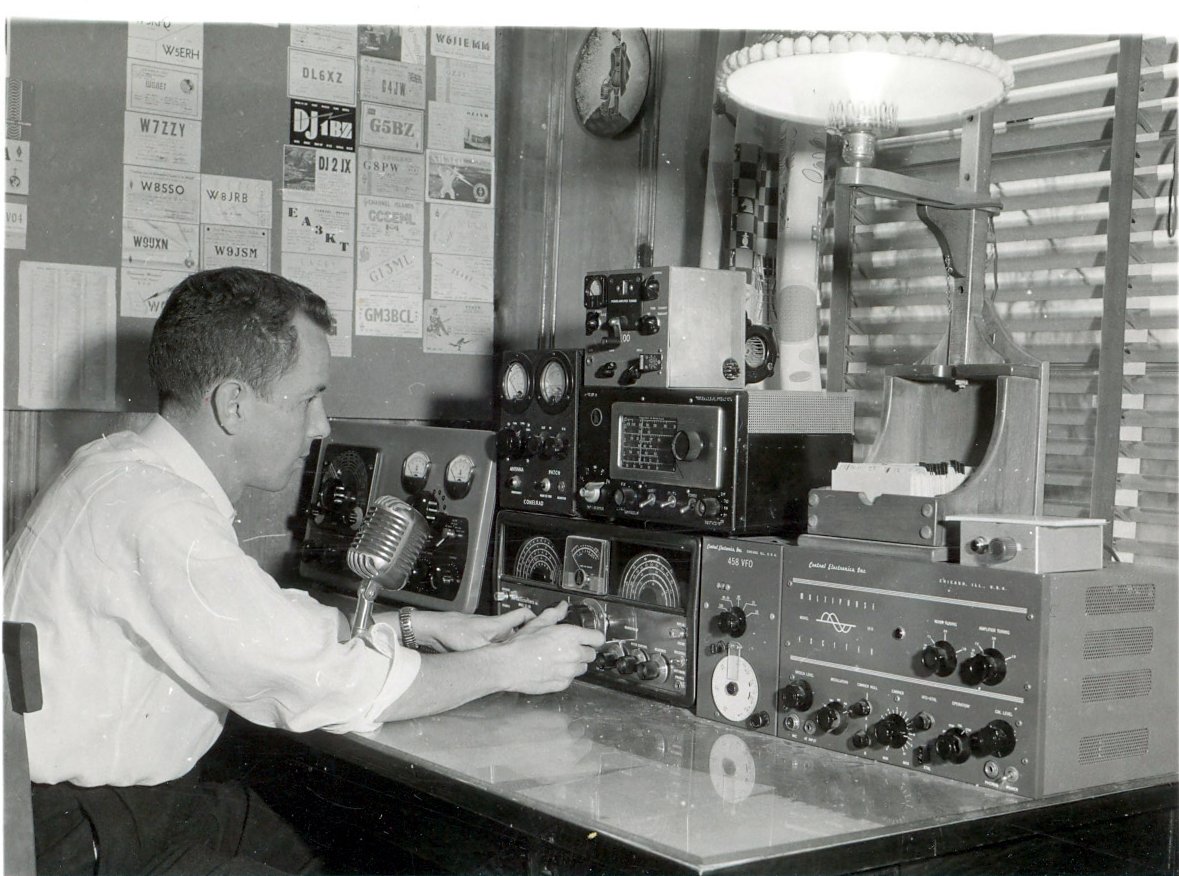
Johnson’s Nashville, TN shack, circa 1955/56. (Click to enlarge)
I always enjoy hearing personal histories in radio and I didn’t doubt for a moment that Harold Johnson’s would be intriguing, so I asked if he’d tell us how his interest in radio began. So, here’s Johnson’s story in his own words:
As a preteen, (and poor as a church mouse during our previous
Depression), I would visit my aunt and uncle in the summer, likely due to the fact that they were farmers and had food to eat. They owned an old Philco radio that had shortwave bands and I was intrigued with the phone amateurs on the 80 and 20 meter bands. Often, I could hear both sides of the conversation, after I found out that they were on various different frequencies, being crystal controlled back then! My…How times have changed.In high school, I found another afficianado, and can recall melting “Woods metal” in boiling water and floating a piece of Galena on it until it returned to a solid and [thus] made my own crystal set. WWII had started by then, and I would listen to the ground-to-air communications between ships in Lake Michigan and pilots taking off and landing on them. Great DX, perhaps 10 miles away.
In 1943, I had graduated from high school and joined the US Army Air Corps. Went through training and was still in training (…to be a pilot until they counted airplanes and pilots and decided they had enough of each […so instead] turned me into a B-29 gunner). The war was over whilst [I was] still in training and I “retired” in November 1945. Went home and found my high school sweetheart, married, went back to school to finish my education and started the Johnson family. Still married, and
to the same girl. What a sweetheart to have put up with me all these years. [No kidding, Harold!]Went back in the US Air Force in 1949, this time became a pilot, and just in time to go to Korea for a year. However, during training, had to learn the Morse and if you learned to 13 WPM, you had a free hour and didn’t have to attend class. That overcame my obstacle to amateur radio, and I took the exams in 1950 and became W9PJO. Our rules at that time were that you had to hold a “class B” ticket for a year before you could take the “class A” exams. That year I spent in Korea and Japan and managed to obtain my first foreign call, JA7HJ.
Returning home to wife and by that time two children, I took the class A exams and became W4ZCB. I decided that I enjoyed flying, (at least most of the time), and decided to make it a career. The ensuing years, I was always on and in the air, and usually spent the winters in Alaska and the summers in the Canal Zone, anything to practice how to be miserable. Lebanon in 1958, Vietnam in 1968 and by 1969 decided that I should start doing something else before my luck ran out.
During my last 4 years of service I flew an Army four star around the world four times. Fortunately he was Ted Conway, W4EII, and we mutually enjoyed operating under a couple dozen different call signs from a lot of exotic (and several not so exotic) places. Had G5AHB back when the 5 was reserved for foreign nationals. We were good friends after we both retired (on the same day; I always liked to say that he couldn’t stand to serve without me) until his death in 1990.
I started a small company manufacturing electronic test equipment for public utilities; spent the next 20 years doing that (and enjoying a much more stable life with family and radio.) Managed to work all the countries (entities these days) there are, win a few contests from a contest station I built and operated for 10 years. (80, 40, and 20 in the front room, 15 in one bedroom and since 160 and 10 were seldom open at the same time, they shared the other bedroom. To change bands, you just changed chairs. Five big towers and Yagis, a VERY high maintenance hobby in the lightning prone state of Florida. (Let’s not mention hurricanes!)
Retired again to the beautiful mountains of North Carolina in 1986. A much more modest station these days, but active on all the HF bands. I really enjoy building homebrew radios and maintaining daily schedules with friends worldwide. Can be found daily on 21.203 with G3XJP and often joined by other builders of the magnificent PicaStar transceiver designed by him. Sixty-three years a ham, still enjoying it. It’s guided my careers and interests. What a wonderful hobby!

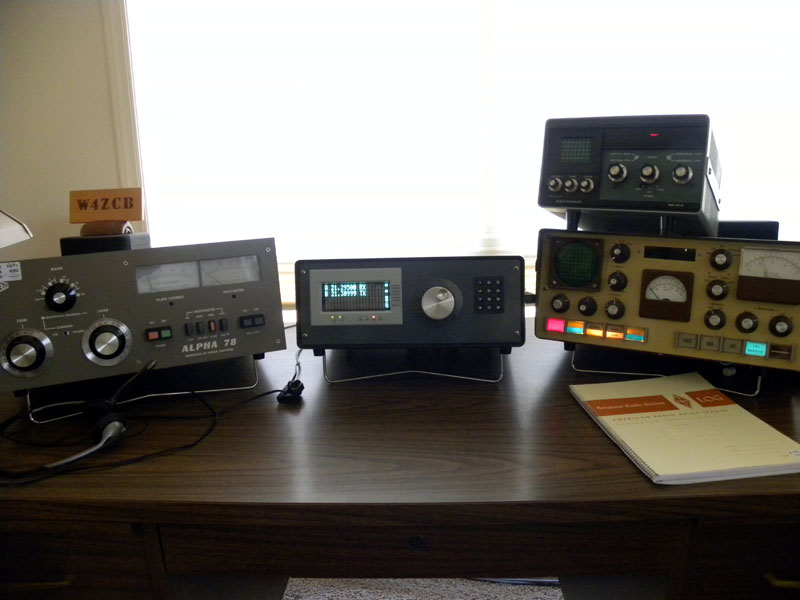
W4ZCB’s shack today is based around his home brew SDR transceiver, the PicaStar. (Click to enlarge)
Over the past few years, I’ve gotten to know Harold Johnson; I must say, he has to be one of the very few hams I know who knows the inner workings of tube/valve radios as well as he does the highest tech radios on the market, a rare talent indeed. If you’re trying to learn a bit more about the BC-348 series of radios and trying to diagnose a problem with it, Johnson’s your guy. If you’re trying to build an SDR from scratch, he’s also your guy. And clearly, if you want to hear a fascinating account of a life influenced by radio, this is most definitely your guy.
Thanks, Harold, for letting me share your story!
Check out Harold Johnson’s website by clicking here.













