Author Archive
 Tuggle-Style LF Regens
 September 5th, 2014 |
 Author:
 If the name sounds familiar, you may recognize it from reading about the DX crystal radios that Mike Tuggle has created over the past several years. Some might even say that his state-of-the-art and very elegant "Lyonodyne 17" crystal radio re-kindled the modern day interest in crystal radio DXing, once the mainstay of all radio adventures.
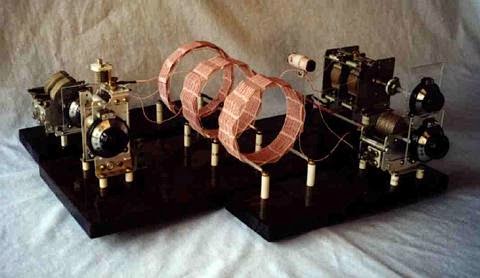 |
| Mike Tuggle's Lyonodyne 17 Crystal DX Tuner |
I'm not sure what sparked Mike's interest in building regens but it may go back several years to the "1AD" contest sponsored by the Birmingham Crystal Radio Group. This was a DX contest challenge that allowed a receiver to use only "1 Active Device", as explained in the rules:
"Only one active device is allowed to be counted to get the 1AD bonus points. The device can be a bipolar, FET, tunnel diode or tube (triode, tetrode, pentode, or heptode), but only one device may be used. If a tube envelope has more than one tube in it, use only one of those active devices to be counted as a 1AD. Crystal sets may be used if one active device is added either inboard or outboard. Totally passive crystal sets are not allowed. In the active set, any number of diodes (either solid state or tube diodes) may be used; however, a tunnel diode or similar active device counts as the 1AD for the contest.
The use of integrated circuits can be interesting in that one IC can be used to build a full superhet. The use of an IC means that the set will not qualify for the 1AD nor for the 2AD bonus points."The challenge was too hard to resist for many and the contest was popular for several years running. Some of the inventive entries for individual years may be seen here. The contest logbooks also make for interesting reading and demonstrate the capability of some of these simple radios.
Although the contest has not been run for the past few years, there is still much interest and discussion of "1AD" radios on Dave Schmarder's "RadioBoard" forum.
Mike's LF tuner is a prime example as he uses it daily and continues to post some amazing DX to the Yahoo "ndblist" Group. His furthest ndb catch in North America with the regen has been "YY" in Mont Joli, Quebec.
Now, "YY" is a good catch for me, from B.C., but Mike is listening from Kaneohe, Hawaii !
You can read about Mike's original design here, while his latest version shown below, incorporates a dedicated LF antenna tuner.
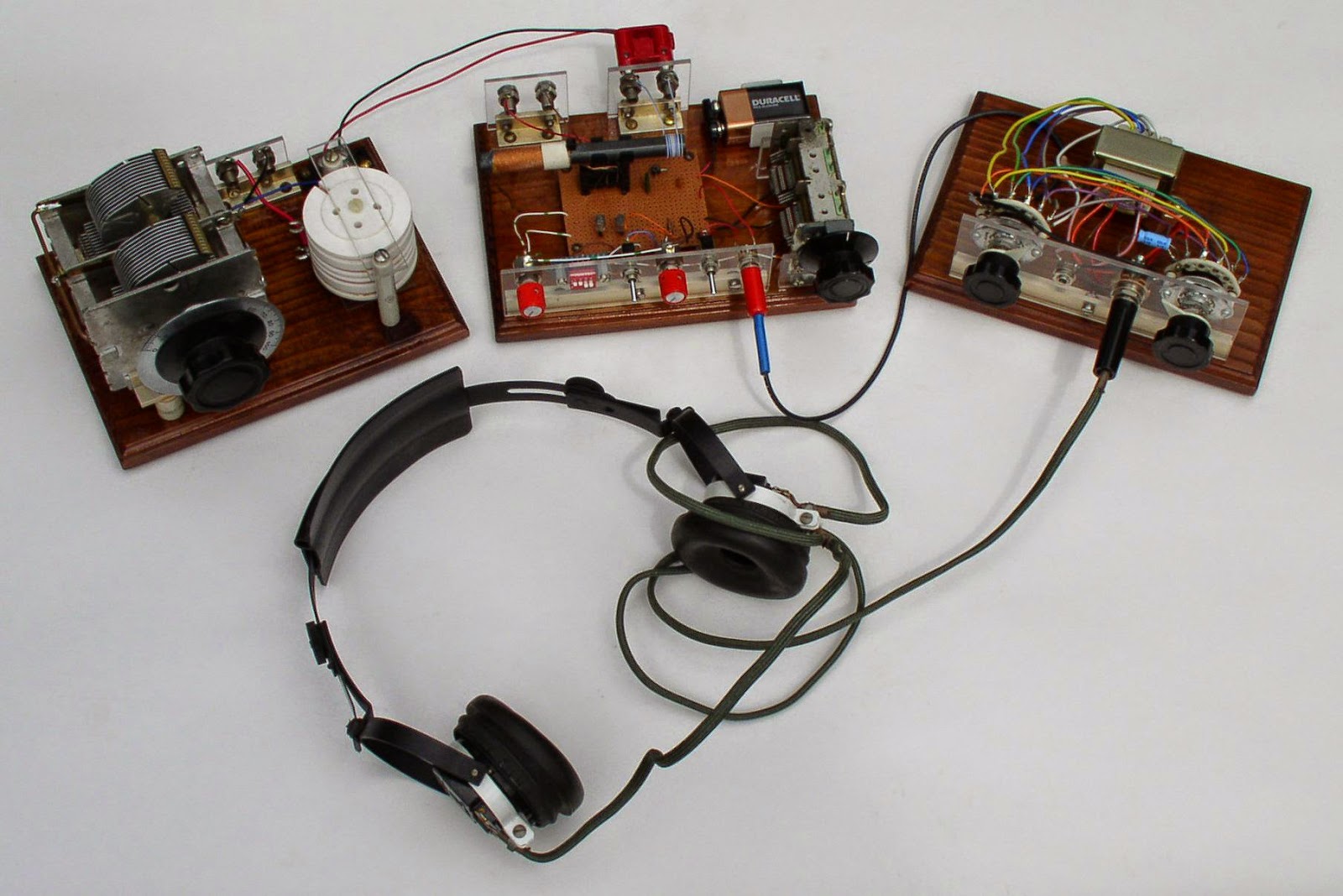 |
| LF Regen (Courtesy Mike Tuggle) |
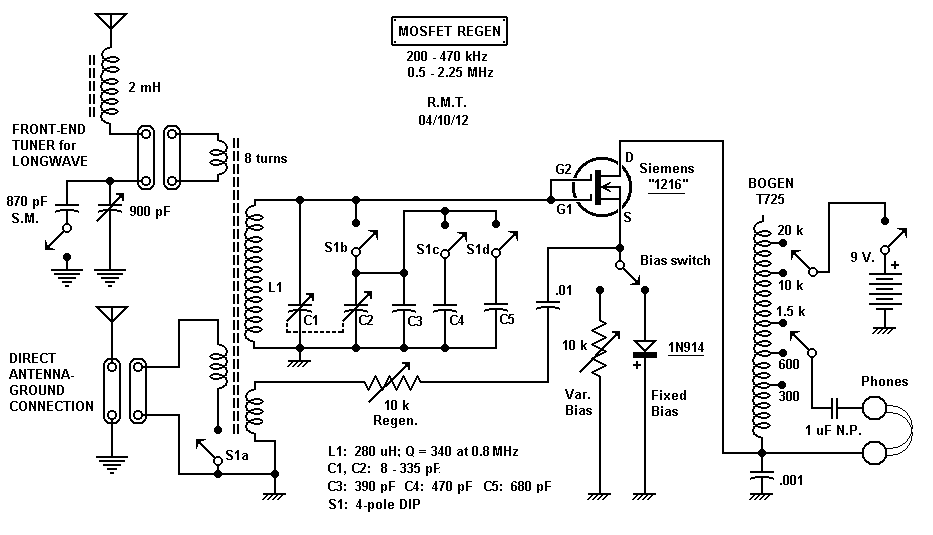 |
| LF Regen Schematic (courtesy Mike Tuggle) |
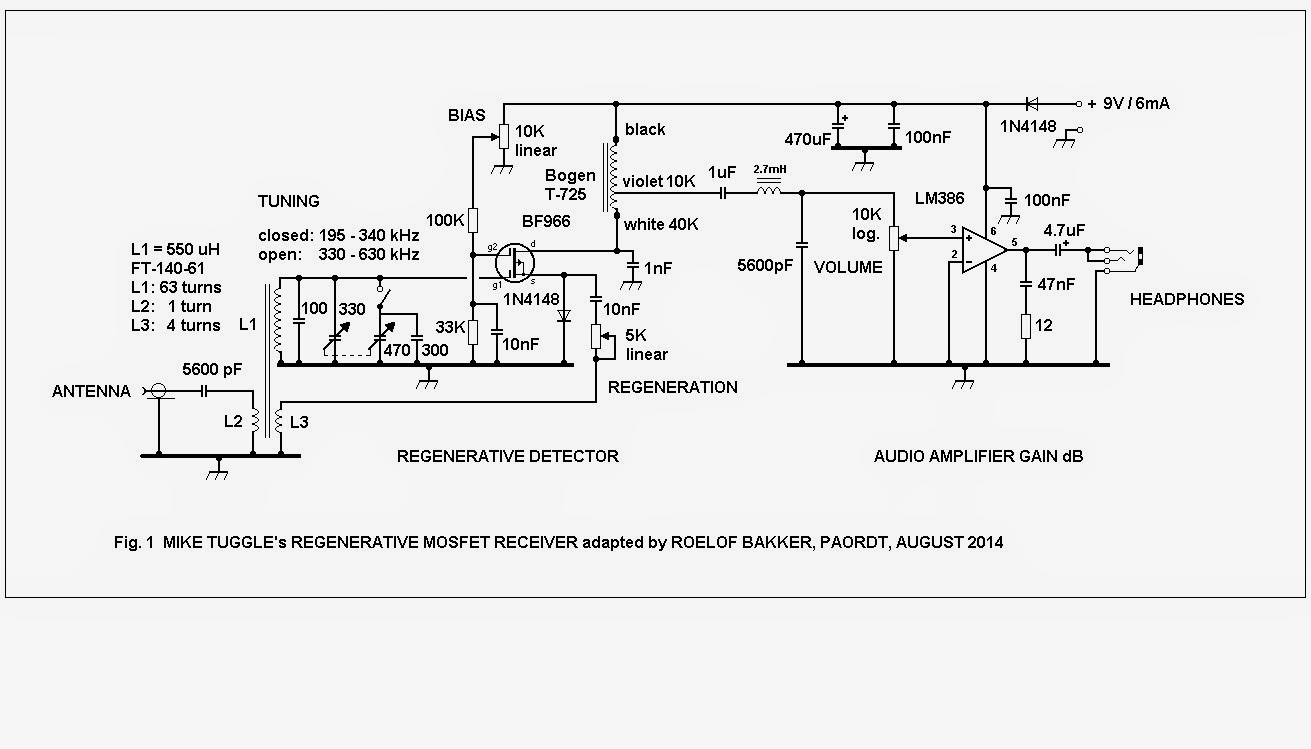 |
| Courtesy: Roelof Bakker, PAØRDT |
Roelof has also published a nice write-up describing the project which sparked a lot of "must build" discussion within the group.....even enough to make Mike get out his soldering iron and build the European-version!
As old and as simple as they are, regenerative receivers still hold much fascination amongst radio builders and dollar-for-dollar are amazingly good performers, especially on LF.
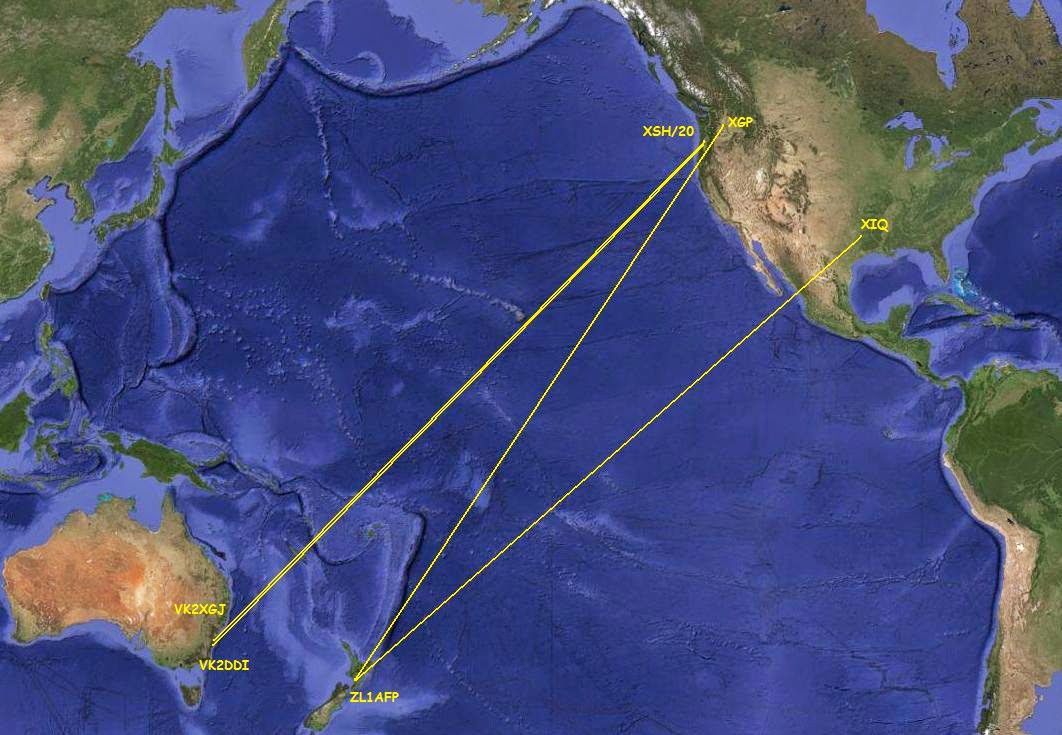
630m Trans-Pacific Path Heats Up!
 |
| Courtesy: https://maps.google.ca/ |
Once again, John ("XIQ"), was heard on the other end....not in Australia but in New Zealand, by Con (ZL2AFP) listening in residential Wellington. Con also caught signals from Larry, W7IUV, in central Washington state, operating on 630m as WH2XGP. Not to be left out of the action, Rudy, N6LF, running as WD2XSH/20 made it down to both VK2XGJ and VK2DDI before the sun came up south of Eugene, Oregon.
Larry, W7IUV ("XGP"), was running a true backyard-size antenna system...just a 34' loaded vertical with a sloping zig-zag top loading wire. His small wire radial system covers a 16' x 25' patch. His homebrew amplifier, constructed almost exclusively from salvaged computer parts, uses 8 switching MOSFETs in push-pull / parallel running in the rare linear mode! The fascinating description of his amplifier's design and construction can be found at the W7IUV website. With the small vertical, estimated erp is ~ 10 watts.
Larry's station should be inspirational for anyone who thinks they need huge antennas to be successful on 630m!
Rudy, N6LF ("XSH/20"), runs around 20Weirp to a large top-loaded vertical. The center (radiator) pole is almost 100' high while the top-loading support poles are 80'. Full details of Rudy's fine system, along with much more about 630m, may be found at the Antennas By N6LF website.
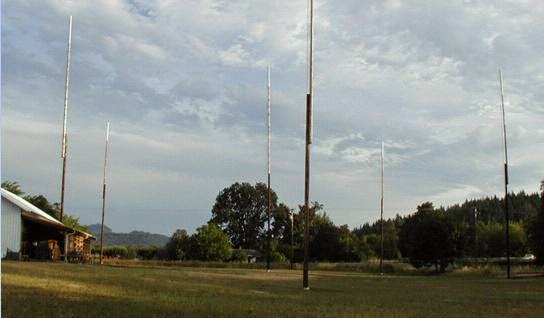 |
| N6LF/WD2XSH/20 630m Top-Loaded Vertical |
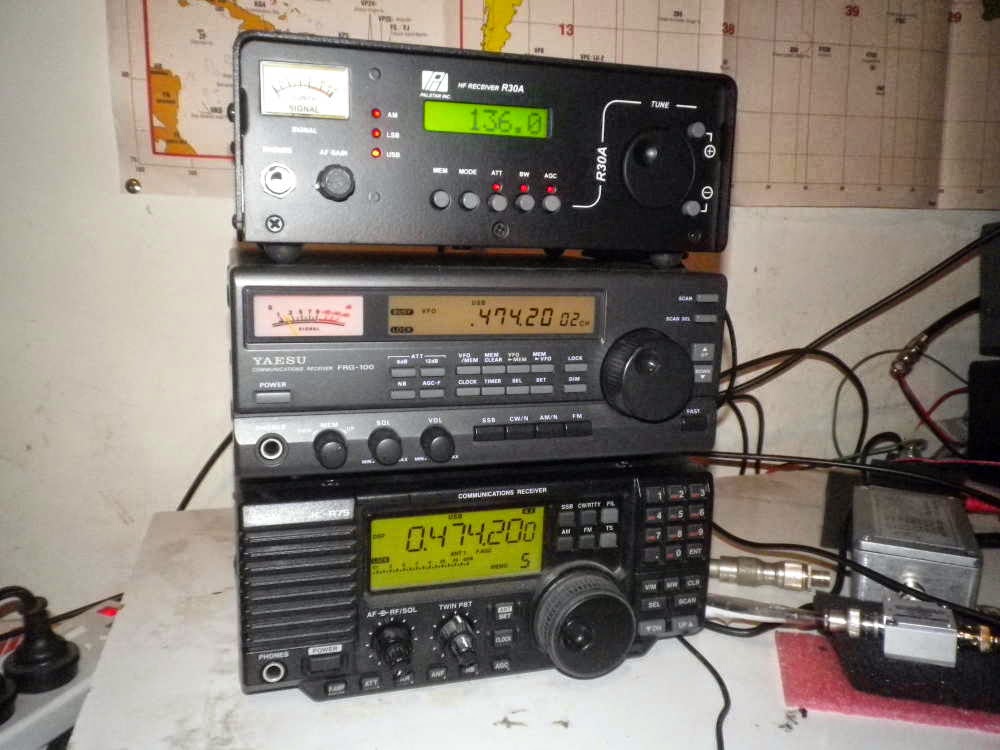 |
| LF RX Stack at VK2XGJ |
Hopefully conditions will continue to provide more long-haul reports in the coming weeks.
In the meantime, remember that Canadian amateurs now have free access to the 630m band, but much more activity is needed...VE6, VE5, VE4, VE3, VE2...who will be the first on 630m in those provinces? It's time to start melting solder and stringing antennas before winter arrives!
High-Flying Hams

My 'wow-meter' was recently pegged when learning the details of some noteworthy amateur radio activities. Two of these events described the astounding results of "floater balloon" activity.
One such device was launched in mid-July from Victoria state, Australia, by VK3YT, Andy Nguyen. His balloon was given the callsign of VK3YT-8, as it carried amateur radio tracking gear capable of transmitting its location and other data via APRS packets.
The small balloon travelled across the South Pacific and reached the coast of South America in less than a week! From what I can determine, it was last heard from on July 21st....29,000' above central Brazil and heading for the Atlantic Ocean at 69MPH where, I presume, balloon #8 met its demise.

It looks like Andy has just launched VK3YT-12 whose predicted path may be viewed here.
Although Andy's systems are very sophisticated, they are based on small 'Party Foil' balloons carrying small antennas and around a 12 gram, 10mw electronic payload.
 |
| VK3YT-11 Last heard from off the Brisbane coast |
Tracking is via VHF APRS packet dumps (some even going via the ISS) and telemetry data via THOR16 or OLIVIA digital modes. Some use rechargeable batteries while others seem to be completely solar powered. Unfortunately I am dreadfully ignorant when it comes to APRS and many of the new digital modes. There is very little detailed information on Andy's onboard hardware, all of which seems to be homebrew.
Many of the balloons appear to float in wide circles a few hundred miles from their release points while others are immediately pushed northwards and out to sea....some quickly reaching New Zealand. Balloon #8 has been the biggest success to date.
You can follow VK3YT's pico progress from balloon #1 to the present, via the VK3YT Blog....what a wonderful example of amateur radio experimental fun!
*****
On the other side of the world, another ardent pico-ballooner is Leo Bodnar, MØXER, who has been launching similar small balloons from near London.
Leo's first payload, B-1, was released in June, 2013 and reached an altitude of almost 36,000 before bursting and returning to earth where it was successfully recovered.
 |
| MØXER launches B-1 |

Launched July 12, 2013, the homemade plastic balloon took off like a rocket, circumnavigating the entire globe in 19 days and passing within 9km of the North Pole and almost overflying the launch site on it's second trip! A few minutes before today's posting, the balloon (at 40,000') has just overflown Murmansk and is now over the Barent Sea, heading northeast at 52MPH. Progress can be tracked from here. He has now had three balloons circumnavigate the globe, with the last two losing contact on their second round as they approached Japan.
Personally I find these results astounding and am so impressed with the sophisticated systems that these very knowledgeable amateurs have been able to pack into such a small payload.
You can follow the interesting progress of Leo's work at his Balloon Flights website.
One thing I am not totally clear about is the actual onboard hardware....is everything scratch-built or are they using readily available modules? I suspect the former in which case I would love to see details of the actual circuitry being employed. As well, there seems to be a variety of different telemetry systems being used with some preferring to store packets until within range of a suitable download link while others rely on amateurs around the world to track, record and decode the digital beacon information...all fascinating stuff.
Kudos to Leo and Andy and all of the others for such well-executed and interesting radio projects. There seems to be a growing worldwide interest in amateur radio balloon projects and a search of the web has provided enough bedtime-reading for weeks. One thing for certain is that all of these fellows are very...very...digital-savvy which likely lets me out of the picture.
Maybe there are some nice low-tech balloon ideas for folks like me, floating around out there!
630m Trans-Pacific WSPR
 |
| Courtesy: https://www.google.com/maps/ |
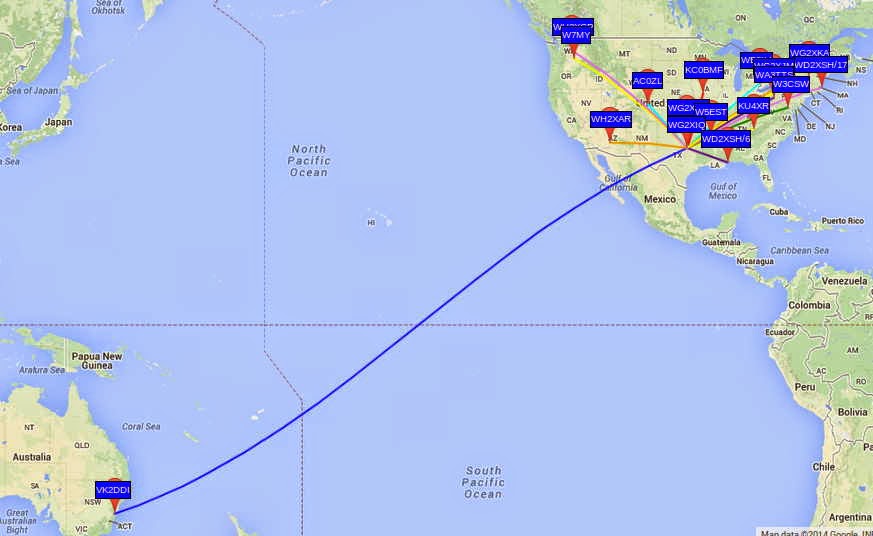
This is particularly noteworthy in view of the relatively low power used for John's beacon....around 200W. With the typical backyard antennas being used at these frequencies, efficiencies are very low and John's actual ERP is less than 5W. The transpacific reception of John's signal by VK2DDI confirms what most LF'ers already know....that small suburban lot amateur installations can have positive results on 630m without the need for huge antenna systems.
The WG2XIQ beacon was operating in the WSPR mode, which has become very popular amongst 630m experimenters as well as those just interested in listening-in. WSPR is not a QSO mode but strictly a one-way 'beacon' mode. Although two stations may each spot each other, it is not considered to be a valid two-way QSO. A check of evening WSPR activity will often reveal dozens of stations actively spotting what they are hearing.
Like most LF stations, John's is mostly homebrew.
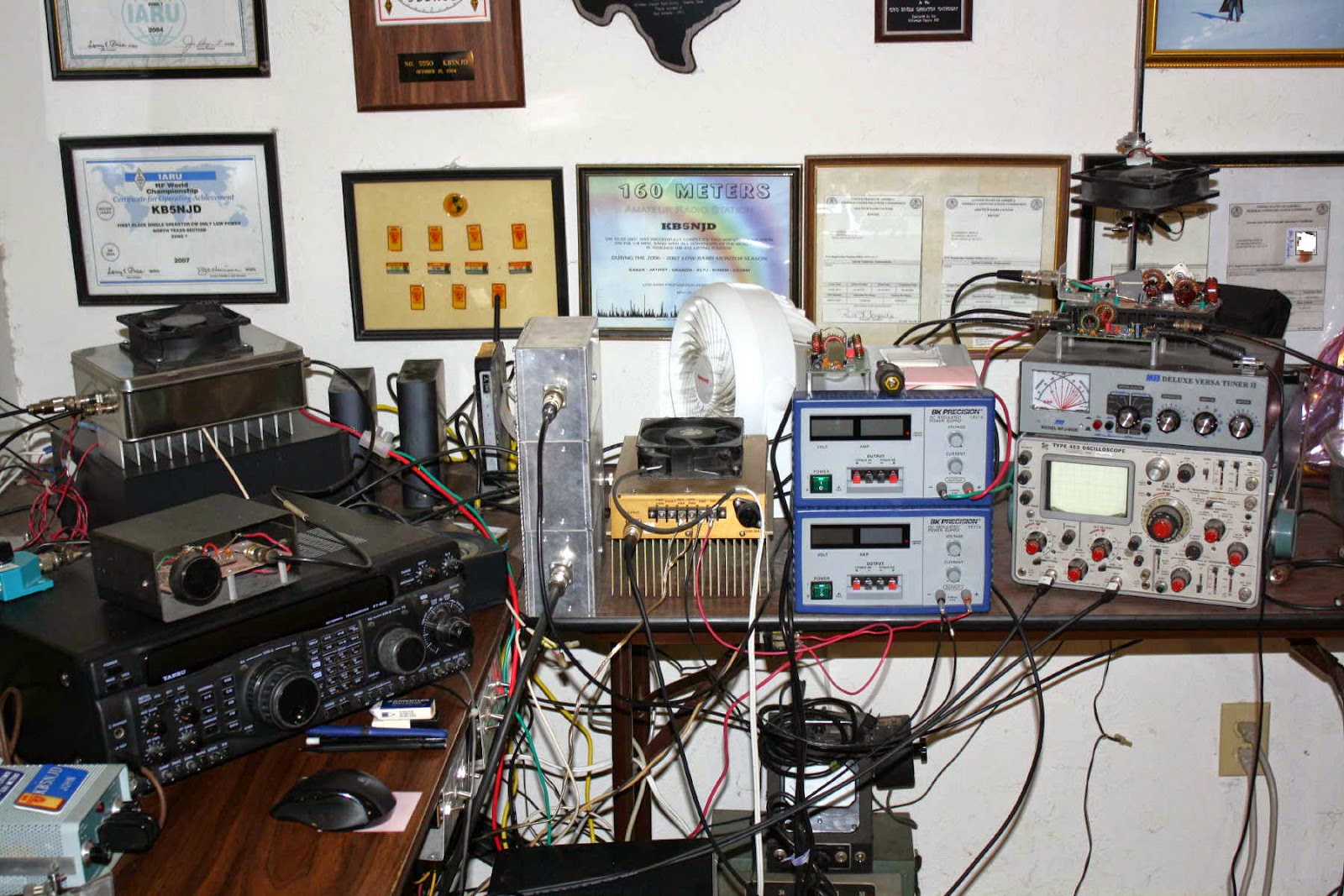 |
| WG2XIQ/KB5NJD |
I'll let him describe the details:
"I have a few ways of making RF in the shack. I can do CW with a very nice waveform using the GW3UEP VFO/Driver coupled with a GW3UEP 100w amp with waveform shaping. The other way is via the MF Solutions transmit downconverter, developed by John Molnar, WA3ETD/WG2XKA. I have two of those boards, one is a backup. I use a GPSDO for the LO and use that signal to drive two parallel GW3UEP amps with max power at 125 watts each. The W1VD Ø degree hybrid combiner brings them together in phase for close to somewhere between 200 and 250 watts TPO depending on how hard I drive and how close I match the TX levels entering the combiner. I filter the output with the W1VD KW LPF that was built by Dave Robinson G4FRE (ex WW2R). I power the amps with a pair of BK Precision 30V 6Amp variable power supplies (variable current limit threshold also). Scope match is used to resonate and match the the impedance. IF Rig on 630m is typically a Yaesu FT920. These days RX antennas are the VE7SL multiturn loop or the TX vertical, both of which have their own merits depending on the conditions at the time."
 |
| John's 630m Vertical |
"Antenna is an 80 foot asymmetric T-top marconi with 100 foot and 200 foot legs....radial system is almost 3 miles of radials connected via various busses. 26 ground rods around the property. I monitor current in the shack and sample via a Bauer current transformer from an AM BC ATU."
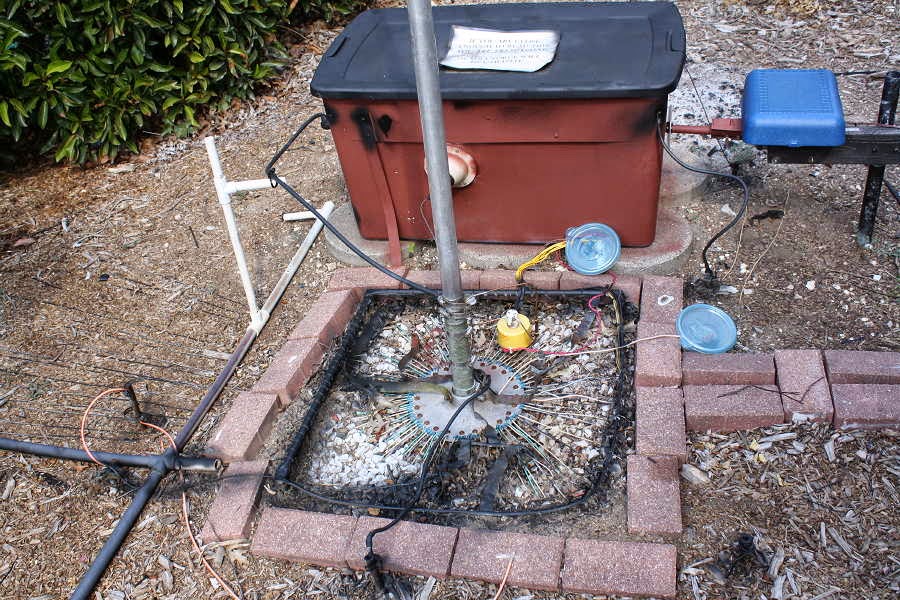 |
| 630m Radial System |
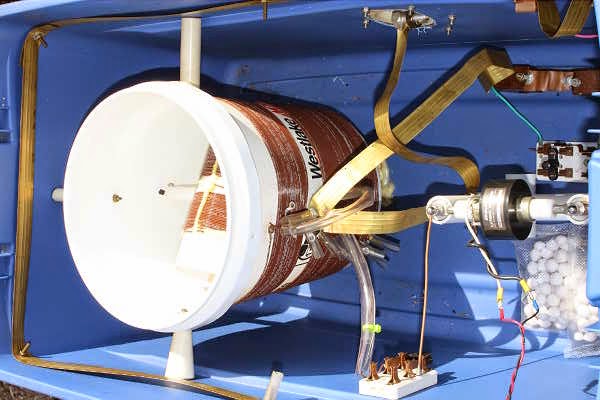 |
| 630m Antenna Loading Coil & Variometer |
John's system does indeed work well...just last year at this time, his 630m signals were copied by KL7L near Anchorage, Alaska.
Of course, equal credit must be given to VK2DDI for having a system good enough to hear John's signal all the way down on Berry Mountain, New South Wales, Australia! It is there that David has set up a fine LF station, 500m above and overlooking the Tasman Sea...an ideal location for weak-signal LF work.
 | ||||
| VK2DDI - Berry Mountain, NSW |
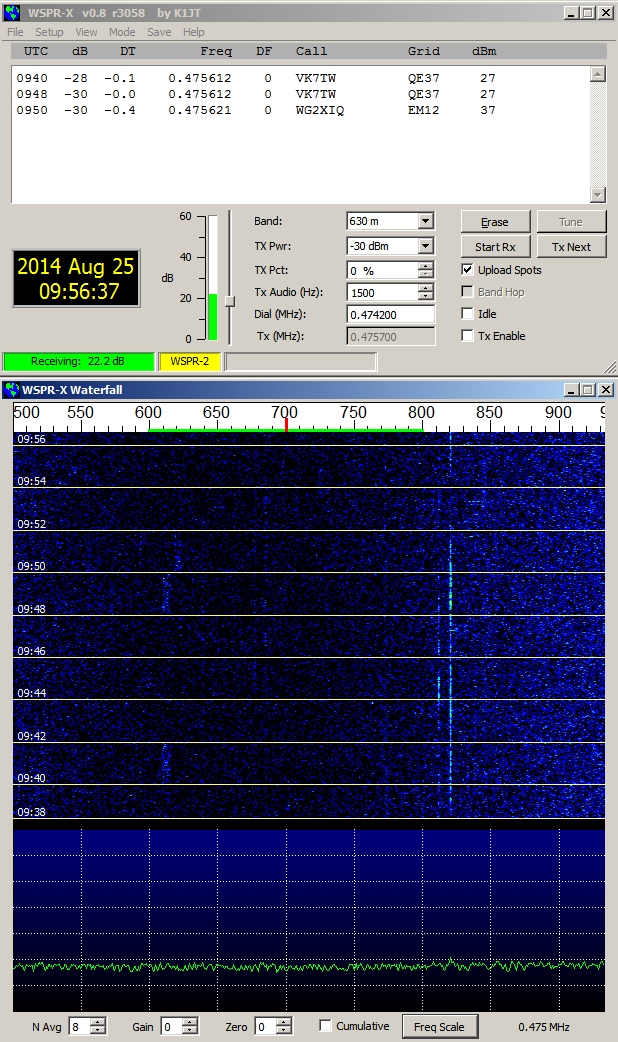 | ||
| WG2XIQ Signal As Heard in VK |
David also runs the Berry Mountain Grabber, providing other VK and ZL experimenters a handy way of checking their system progress or propagation conditions.
If you have been doing any WSPR work on HF, you might be surprised at what you can hear down on 630m, even without a dedicated antenna for that band. Surprisingly good results can often be had with a non-resonant antenna as the signal to noise ratio can often be better even though signals may sound weaker. Give it a try and spot what you hear!
If you are interested in learning how to receive WSPR, here is a nice tutorial by ZS6SGM.
Should you be interested in knowing more about obtaining a Part 5 licence to transmit on 630m, John will happily guide you through the process. He can be contacted via email or you can find him hanging-out most nights on the ON4KST kHz (2000-630m) chat page.
To keep on top of what is happening or who is on-the-air, most LF'ers rely on three sources:
- the RSGB LF Group reflector
- the Lowfer list
- the LWCA Message Board
Alaska’s NDBs Awaken!
 |
| Courtesy: http://www.alaskacooling.com |
This past weekend saw another of the monthly "Co-ordinated Listening Event" (CLE) activities sponsored by the Yahoo ndblist Group and organized by Brian Keyte, G3SIA. This is a group of dedicated low frequency NDB DXers that enjoy hunting down new catches as well as keeping track of NDB activity in general. These low powered beacons make excellent propagation indicators and are always a good measure of one's LF receive capability.
As often happens, the monthly events seem to coincide with poor propagation periods for some unexplainable reason, as was the case once again. As well as the generally poor propagation, North America was plagued with high levels of lightning activity making any weak signals very difficult to hear through the steady din of QRN.
In spite of the poor conditions, two nice catches from Alaska (ELF and TNC) heralded the fast receding midnight-sun in the 49th state and the start of another Alaskan NDB DX season!
The NDB at Cold Bay is 'ELF' and transmits on 341kHz. Cold Bay is located on the Alaskan Peninsula, at the top of the Aleutian chain.
 |
| Courtesy: http://pics3.city-data.com |
Built as a military airfield in WWII, Cold Bay's traffic is now mostly cargo and its long runway serves as an emergency 'alternate' for flights in the north Pacific.
A search of Google Maps shows the NDB itself is located several miles north of the airport and appears to use a large vertical and an extensive ground system. With the transmitter power listed as 1000W, ELF makes an excellent target for DXers looking for their first Alaskan NDB.
 |
| Source: https://maps.google.ca |
 |
| Source: https://maps.google.ca |
Like 'ELF', the antenna appears to be a vertical but possibly of smaller size.
 |
| Source: https://maps.google.ca |
For ELF, listen on 342.030kHz or 339.968kHz. The carrier will be on 341.0kHz.
For TNC, listen on 348.034kHz or 345.968kHz. The carrier will be on 347.0kHz.
For a list of all active NDB's in Alaska, complete with accurate frequency-spotting information, visit the beacon-reporting RNA website. Put 'AK' in the 'States' window and pick 'All Results' in the 'Show' window. There are presently at least 60 or more NDBs known to be operational in Alaska.
As mentioned before, please exercise caution should you decide to jump-in...chasing NDBs can quickly become addictive as anyone in the 'ndblist' Yahoo Group will tell you.
On the other hand...Alaska is waiting!
‘CQ Crossband’ – 630m
 |
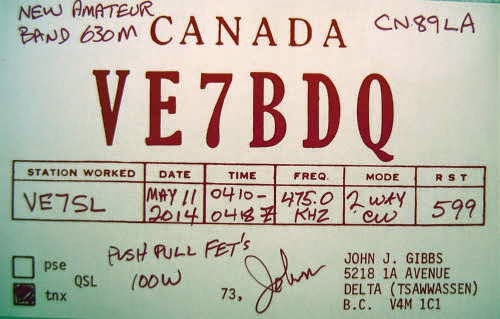
| First 630m contacts |
In early May, VE7BDQ (John) was my first contact on our new 630m amateur band! Soon after, I had QSO #2, with VA7JX (Jack), on Vancouver Island. So far there appears to be only one other station in Canada on the band... VO1NA in Newfoundland!
Where are the rest of the Canadians? It's not too late to be the 1st VE6, VE5, VE4, VE3, VE2 or VE1 on the new band!
Hopefully there will be more stations active before the winter DX season gets underway!
In an attempt to keep my own interest level up as well as trying to get the word out to others about our new band, I've completed crossband contacts with three other VE stations. Two of the contacts were on Vancouver Island....VE7DAY (John) in Campbell River and VA7FC (Perry) in Courtenay. The third station was VE6TA (Grant), near Edmonton, Alberta. A fourth crossband contact was completed when I worked W7WKR (Dick) near Lake Chelan in Washington state. John, VE7BDQ, also completed crossband contacts with VE6TA and W7WKR giving those two stations a 'VE7 two-fer'.


Both John and I would love to do a lot more crossband work, especially with stations in the U.S.A. who presently cannot transmit on the band but may still be very much interested in 630m. A recent overnight beaconing session at 25 watts output clearly indicated that under fairly normal conditions and with a good receiving system on 630m, my normal speed CW signal can cover a wide geographic area during the hours of darkness. Having up to 500 watts of power available for CW, my signals should have good coverage to all of the western and central states at this time of the year.
Such crossband type contacts are perfectly legal between any and all stations in the "amateur radio service" and at one time, this was the only mode available between Europe and North America on the 50MHz band, as this tantalizing review of Cycle 19's amazing propagation explains.
If anyone, anywhere (both U.S. or VE), would be interested in attempting a crossband CW QSO, I would love to try! Please contact me via the comments section below or via e- mail.
I would also be interested in hearing from any Canadians who are planning to get on the new band as I am trying to keep track on my website's LF page.
On Making Nanowaves – Part 6
After several weeks of reading, planning and homebrewing, both the transmitter and the receiver boxes were finally finished....at both ends of the path!
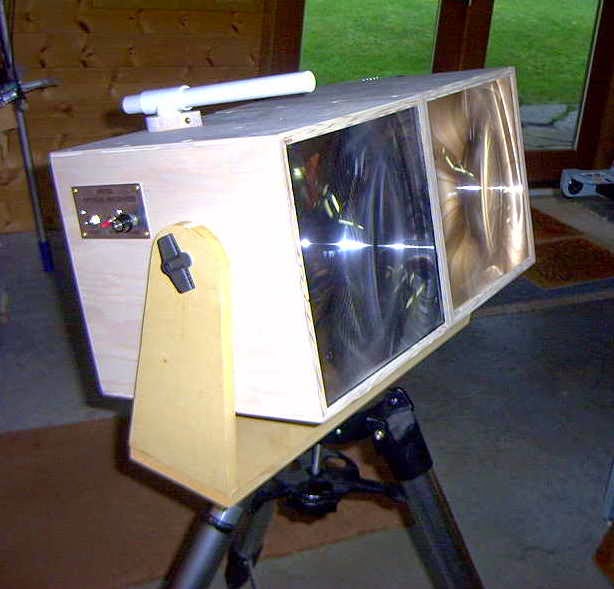
After the transmitter and the receiver had been accurately focused (the receiver's photodiode at the fresnel's focal point and the transmitter's secondary lens properly positioned) both enclosures were screwed together and mounted on a tripod.
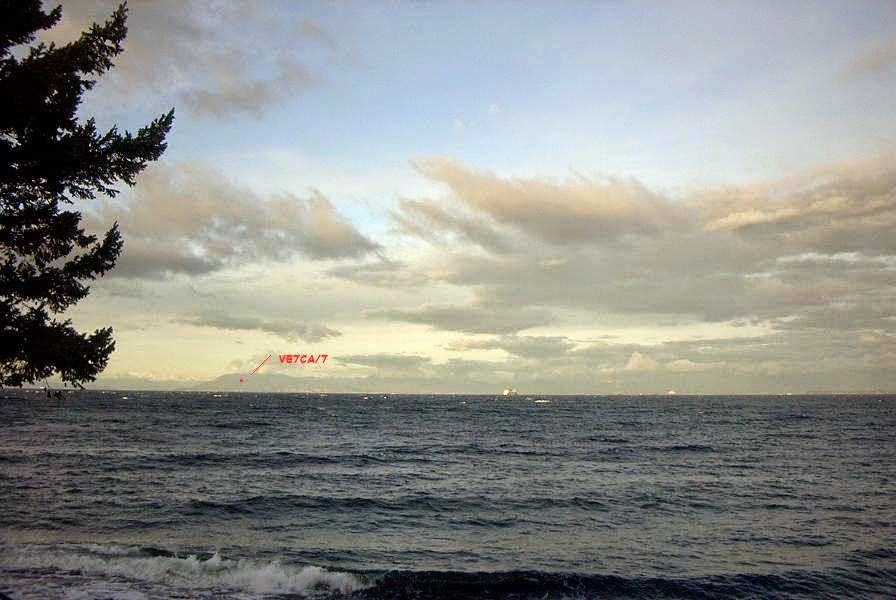
Markus, VE7CA, had checked-out a suitable location not far from his home QTH on the road to one of the local ski-hills. This gave him an unobstructed view to my location on Mayne Island, about 54km to the southwest. I had planned to set up in my front yard, about 15' above sea level and on the eastern shoreline with a direct shot to Markus.
Even though we were using LEDs rather than lasers, I still felt somewhat uneasy as our path crossed directly over the runways at Vancouver International (around the path midpoint) as well as the main ferry lane between Vancouver Island and the B.C. mainland. Considering the distances involved, I probably need not have worried as the light, although bright, would cause no physical harm other than possible momentary distraction or curiosity. If one of the ferries had been approaching the path, I had planned to shut down until it had passed as it would have been hard to convince authorities that the light really was not a laser, before they carted me away!
After waiting for the usual winter B.C. rain to subside, we finally had a promising evening shaping up, although somewhat cold. Markus, accompanied by Jim, VE7BKX, loaded his vehicle and headed for the mountains. With neither of us having 2m portable radios, we somewhat guiltily reverted to cellphones to announce setting-up status.
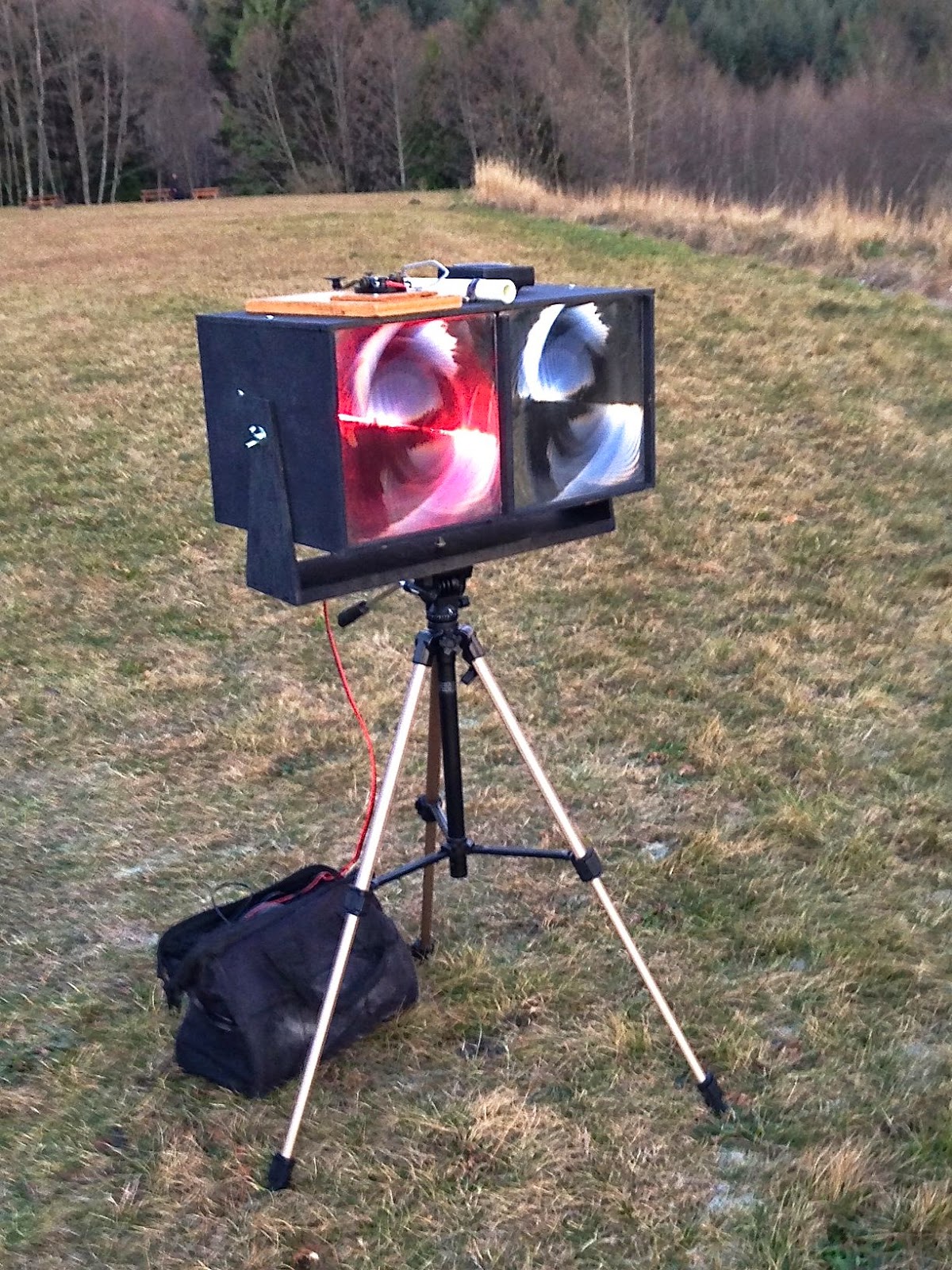 |
| VE7CA/7 |
Almost immediately I heard his beacon signal although there was no visible sign of his light.
Before final alignment I made a quick recording of his signal.
Neither if us had any real idea of what type of signal strength to expect and we were both very surprised to hear how strong the signals were. Once we had both aligned and our lights were now visible, we switched to CW mode and proceeded to work each other in typical QSO mode.
Hear is a recording of Markus sending my RST report.
Signal reports as well as grid squares were exchanged just to make everything 'official'. We then settled into a nice twenty-minute ragchew until the cold winter air took its toll on our fingers forcing us both to close down and pack up for the night.
Markus grabbed a short cellphone video from his end which shows the still fairly bright twilight skies and the LED signal source:
Earlier, John (VE7BDQ) had made the decision to not build a transmitter as he preferred not to go portable. Both of us were interested in pursuing a possible non-line-of-sight (NLOS) path by using either 'cloudbounce' or 'clear-air scattering' which would allow John to set up in his backyard. The path between us is much shorter than the VE7CA/7 path as can be seen in the map below:
 |
| Courtesy: https://maps.google.ca/ |
For one-way beaconing, I plan to add a more accurate crystal-controlled tone module so that my CW signal's frequency is precisely known and can be watched for in the very narrow bandwidth window of Argo or Spectran over a given period of time. Even at these slower speeds, QSOs exchanging the minimum required information can still be made relatively quickly. Hopefully any reception at all of my signal at John's location will excite him into building a transmitter as well. Completing a two-way contact using the NLOS mode would be a very interesting challenge.
In the meantime, Markus and I have been seeking out possible new locations for his remote work, using "HeyWhat'sThat Path Profiler" web site. This site quickly indicates the distance and headings between any two points and draws a geographic contour of the path showing any obstructions.
 |
| Courtesy: http://www.heywhatsthat.com/profiler.html |
Markus hopes to get out to one such favourable location in the Fraser Valley mountains, before the weather turns nasty once again.
If there is anyone in the Vancouver lower mainland region that might be interested in building a lightwave station to join us in the fun, please do not hesitate to make contact with any of us...we would love to hear from you!
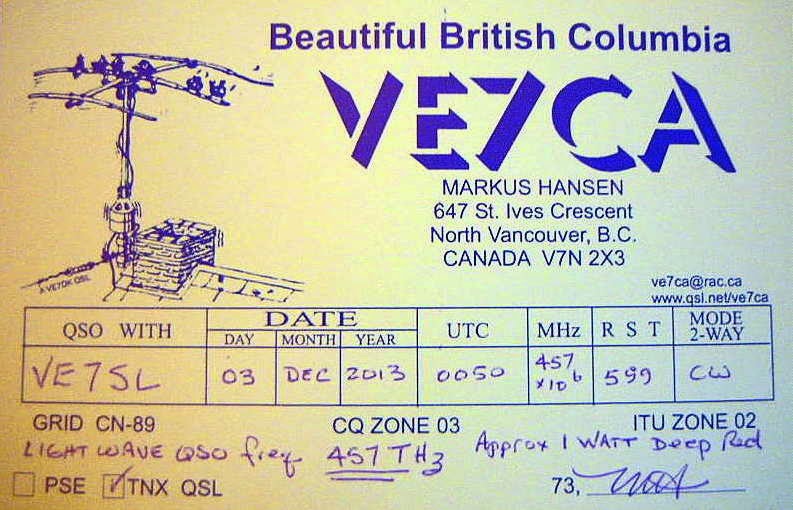
If you are a member of the Radio Amateur's of Canada (RAC) and receive their 'TCA' journal, please watch for our upcoming article in September's issue..."A West Coast Lightwave Project".