Author Archive
 The Magic Lives
 January 8th, 2015 |
 Author:
 With the Bz component of the Interplanetary Magnetic Field turning southwards yesterday, an unexpected incoming stream from the sun was able to interact more intensely with the earth's magentic field , producing some fairly active auroral conditions overnight. The 'K' index numbers rose as high as '7'...a rare event, indicating a major disturbance. By dawn, much of the activity was winding down and the ensuing F2 MUF spike was not far behind.
I hope that you were one of the alert 6m operators (not me sadly) able to take advantage of the quick F2 lift. Several stations on the east coast were worked or heard in Europe (EA8, EA7, EA3, IK5, CT1, G3, EI4) while in the afternoon, lucky band-watchers found several loud KH6's to work.
 |
| Courtesy: http://www.on4kst.com/index.php |
The 6m prop map reveals the unexpected level of mid-winter activity....as of Wednesday evening, the Bz is still pointing south and the K has risen to level 4.
What might Thursday bring?
The Sun, QRM and CLE189
 |
| Courtesy: http://www.solen.info/solar/ |
The cause of the poor propagation was a continual coronal hole stream, from a very large area in the sun's southern regions, as shown here. Now it appears that Coronal Hole 649, in the north, is about to swing into a geoeffective position, and take over the task of disrupting propagation.
CLE189 covered the range of 275-425KHz, with the objective of logging at least one beacon (preferrably the farthest one) on each available channel (150 in total). There are a number of channels that have no NDBs as well as many that get completely clobbered by 1 Kw DGPS (digital QRM) navigation signals along the coasts and the Great Lakes. Additionaly, I was fighting the new noisemaker in my neighborhood, which has yet to be eliminated.
 Here is a screen shot of my Perseus receiver, showing the crud being generated...every 60Hz and never constant...drifting in and out of the desired passband continually. The only way to hear signals was to wait until there was a short hole created by the drifters going by. I will be happy when this is issue is finally resolved.
My log shows 111 stations in total, a surprising number, considering the poor propagation and the QRM. If anything, this demonstrates just what a superb receiver the Perseus SDR is:
29 01:26 275 HIN 1053 Whitney - Chadron Muni Apt, NE, USA
31 13:00 277 ACE 1344 Kachemak - Homer Apt, ALS
31 15:00 278 1U 521 Masset Municipal Apt, BC, CAN
31 15:00 280 GYZ 1005 Camp Guernsey - Guernsey, WY, USA
31 15:00 281 CRN 1510 Cairn Mtn - Sparrevohn LRRS, ALS
31 15:00 283 DUT 1867 Dutch Harbor - Unalaska Apt, ALS
29 09:00 284 QD 1014 The Pas Municipal Apt, MB, CAN
31 04:00 286 EKS 600 Ennis - Big Sky Apt, MT, USA
29 09:00 287 ZWG 1168 Winnipeg, MB, CAN
29 09:00 290 YYF 171 Penticton, BC, CAN
29 09:00 292 ZET 518 Devon - Edmonton IAP, AB, CAN
29 09:00 293 MB 18 Mill Bay - Sidney, BC, CAN
29 09:00 295 8C 537 Fairview Municipal Apt, AB, CAN
31 15:00 296 LGD 349 La Grande, OR, USA
29 09:00 299 TV 417 Turner Valley, AB, CAN
29 09:00 300 YIV 1272 Island Lake Apt, MB, CAN
29 09:00 302 QW 705 North Battleford, SK, CAN
29 09:00 304 FH 485 Mc Leod (Whitecourt), AB, CAN
29 09:00 305 YQ 1362 Churchill / Eastern Creek, MB, CAN
29 06:00 308 ZZD 515 Calmar (Edmonton Intl Apt), AB, CAN
29 08:00 311 9Y 421 Pincher Creek, AB, CAN
29 08:00 312 UNT 173 Naramata, BC, CAN
31 08:00 317 VC 873 La Ronge, SK, CAN
29 12:00 320 YQF 469 Red Deer - Penhold, AB, CAN
29 12:00 323 HJH 1393 Hebron Municipal Apt, NE, USA
31 06:00 325 YJQ 312 Bella Bella (Campbell Island), BC, CAN
29 12:00 326 DC 131 Princeton Municipal Apt, BC, CAN
29 07:00 328 YTL 1465 Big Trout Lake, ON, CAN
29 12:00 329 YEK 1414 Arviat, NU, CAN
02 09:00 330 2A 1147 South Indian Lake Apt, MB, CAN
29 13:00 332 POA 2681 Pahoa - Hawaii Island, HWA
29 09:00 333 STI 540 'Sturgeon' Mountain Home, ID, USA
29 09:00 334 YER 1560 Fort Severn, ON, CAN
29 09:00 335 YLD 1813 Chapleau - Devon, ON, CAN
29 12:00 336 LF 1167 La Salle, MB, CAN
29 09:00 337 7D 956 Hudson Bay, SK, CAN
29 08:00 338 RYN 1316 Ryan Field Apt - Tucson, AZ, USA
29 09:00 339 6X 1237 York Landing, MB, CAN
29 09:00 340 YY 2452 Mont Joli, QC, CAN
31 15:00 341 ELF 1710 Elfee - Cold Bay, ALS
29 12:00 342 PFT 1232 Piney - Pinecreek Border Apt, MN, USA
29 12:00 343 YZH 571 Slave Lake Municipal Apt, AB, CAN
29 14:00 344 FCH 857 Chandler - Fresno, CA, USA
29 09:00 346 YXL 1401 Sioux Lookout Municipal Apt, ON, CAN
29 09:00 347 PA 814 Prince Albert, SK, CAN
29 12:00 348 MNC 112 'Mason Co' Shelton, WA, USA
29 09:00 349 GW 1999 'Teock' Greenwood, MS, USA
29 08:00 350 RG 1604 GALLY - Oklahoma City, OK, USA
31 08:00 351 YKQ 1948 Waskaganish, QC, CAN
29 09:00 353 LLD 2684 Lanai - Lanai Island, HWA
29 09:00 355 YWP 1572 Webequie, ON, CAN
29 09:00 356 ZF 995 Yellowknife, NT, CAN
29 09:00 358 SIT 750 Sitka - Biorka Island, ALS
29 09:00 359 SDY 879 Sidney, MT, USA
29 09:00 360 SW 1267 'Roadd' Warroad, MN, USA
29 09:00 361 E3 630 Wabasca, AB, CAN
29 09:00 362 YZS 1807 Coral Harbour, NU, CAN
29 09:00 364 4D 735 Helmet, BC, CAN
29 09:00 365 HQG 1362 Hugoton Municipal Apt, KS, USA
29 07:00 366 YMW 2179 Maniwaki, QC, CAN
29 09:00 367 R5 1038 Pukatawagan Apt, MB, CAN
02 10:00 368 PNM 1402 Princeton Municipal Apt, MN, USA
29 13:00 370 YBV 1169 Berens River Apt, MB, CAN
29 09:00 371 GW 1946 Jarpik - Kuujjuarapik, QC, CAN
29 09:00 372 ZPA 824 Glass (Prince Albert), SK, CAN
29 09:00 373 TF 1191 ARUBA - Pueblo Mem Apt, CO, USA
29 13:00 374 LV 776 REIGA - Livermore, CA, USA
29 09:00 375 BM 1163 Balmoral, MB, CAN
29 09:00 376 YAG 1345 Fort Frances, ON, CAN
29 09:00 377 EHA 1350 Elkhart - Morton County Apt, KS, USA
29 12:00 378 OT 381 EMIRE - North Bend, OR, USA
29 09:00 379 YBE 945 Uranium City, SK, CAN
29 09:00 380 OEL 1297 Oakley Municipal Apt, KS, USA
29 09:00 382 YPL 1461 Pickle Lake, ON, CAN
29 09:00 383 CNP 1146 Chappell, NE, USA
29 09:00 384 3F 792 Ile-a-la-crosse, SK, CAN
29 15:00 385 EHM 1693 Cape Newenham LRRS Apt, ALS
29 09:00 386 HAU 558 Hauser - Helena, MT, USA
02 09:00 387 CAV 1473 Clarion, IA, USA
29 08:00 388 AM 2596 'Picny' Tampa, FL, USA
29 13:00 389 CSB 1275 Harry Strunk - Cambridge Muni, NE, USA
29 10:00 390 HBT 1620 Borland - Sand Point Apt, ALS
29 09:00 391 DDP 3772 Dorado - Vega Baja, PTR
29 12:00 392 XVG 1344 Longville, MN, USA
29 09:00 393 BR 2101 'Depoo' Brownsville, TX, USA
29 09:00 394 RWO 1333 Woody Island - Kodiak, ALS
29 09:00 395 ULS 1342 Ulysses Apt, KS, USA
29 09:00 396 YPH 1923 Inukjuak Apt, QC, CAN
29 09:00 397 ZSS 760 Yellowhead (Saskatoon), SK, CAN
29 09:00 398 3D 965 Cumberland House, SK, CAN
29 09:00 399 ZHD 1371 'Thunder' Dryden, ON, CAN
29 09:00 400 FN 1071 COLLN - Fort Collins, CO, USA
29 09:00 400 CKN 1220 Crookston, MN, USA
29 09:00 401 YPO 1644 Peawanuck Apt, ON, CAN
29 09:00 402 L4 888 Nipawin, SK, CAN
29 13:00 403 AZC 971 Colorado City Municipal Apt, AZ, USA
29 15:00 404 GCR 1185 Glacier River - Cordova Apt, ALS
29 14:00 405 2K 538 Camrose, AB, CAN
29 09:00 406 YLJ 725 Meadow Lake, SK, CAN
29 08:00 407 CO 1157 PETEY - Fountain, CO, USA
29 09:00 408 MW 221 PELLY - Moses Lake, WA, USA
29 10:00 408 JDM 1270 Wheatfield - Colby, KS, USA
29 12:00 410 GDV 860 Glendive - Dawson Comm Apt, MT, USA
29 09:00 412 1W 996 Sandy Bay, SK, CAN
29 12:00 413 YHD 1361 Dryden Regional, ON, CAN
29 09:00 414 GRN 1094 Gordon, NE, USA
29 09:00 415 CBC 3129 Cayman Brac - West End, CYM
29 09:00 417 IY 1508 CHUKK - Floyd, IA, USA
29 09:00 419 RYS 1975 Detroit / Grosse Ile, MI, USA
29 09:00 420 FQ 1422 MONTZ - East Chain, MN, USA
29 09:00 421 VLY 1721 McKenney, TX, USA
Once again, the 10' x 20' loop was employed for the entire affair, surviving two bad wind storms during the listening event.
House Number Four
 It seems that if I'm not chasing down noisy power poles or hunting for drifting wireless headsets, both of which have tried their best to tax my 6m reception this past year, I spend several hours each year chasing down delinquent noise generators!
I spent yesterday afternoon searching the neighbourhood for the source of an annoying and disruptive 120Hz hum. Testing my patience for about a week now, the AC buzz has been ripping-into my usually quiet LF reception, disrupting efforts to participate in the latest CLE (189) listening event. Although conditions have been poor, as usually occurs during these events, the signal-shrouding AC hum has made the event a real struggle.
I had been hoping that, whatever the source of the suddenly-appearing interference was, it would disappear as quickly as it had arrived. I had first noticed it several weeks ago, but it would always go off around bedtime and often was not there at all in the evenings...but the past week it has been there 24/7.
Yesterday I had finally had enough and with Sony 2010 in hand, along with its built-in ferrite bar antenna, I tuned the radio to 630m and started walking around the neighbourhood.
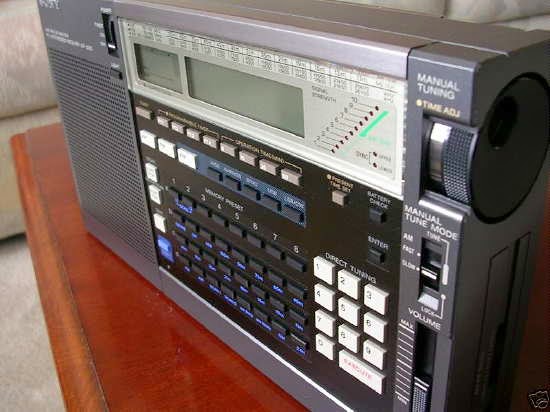
The first thing I noticed was that the signal was being propagated along the overhead powerlines and it was difficult to get a direction of the true source...all nulls pointed to the closest line. Walking to the north, the signal gradually became weaker and reversing direction to the south produced an ever-increasing AC hum...progress! I eventually found a corner where the QRN peaked, and walking in all directions from that point saw the noise diminish...getting warmer!
There were four possible homes here that could be the cause of the problem. I spoke with three of the four homeowners, all of whom seemed genuinely concerned about the source. They all let me into their homes and, with radio in hand, look for the source of the (by now) loud buzz. None of the three homes seemed to furnish the nasty noisemaker.
House number four was unoccupied but was, I was told, up until about a week ago. Venturing on to the property, the S9 buzz started to climb and by the time I had reached the porch, the Sony was on the verge of self-implosion...getting very hot now! A knock on the door confirmed that nobody was home but...behind the curtain, there it was...a floor lamp was turned ON!!
With the source now located I could now breath a little easier but unfortunately could not hear any quieter. Hopefully the owners, who go back and forth to the mainland frequently, will return soon and that LF will once again sound as it should.
 What could be screwed into that floor lamp? I'm betting on a poor-quality or about-to-fail CFL bulb.
The one on the left is the actual bulb that I removed from a crawlspace, about four years ago, three houses away. It had been creating the same sort of buzz, only louder, as it was much closer. It was not emitting any light whatsoever yet continued to generate noise as well as present a real fire hazard. The house occupants had left it switched 'on' in order to discourage the local otter population from making a winter home in their crawlspace. Somewhere along the line the bulb had failed and started generating large amounts of AC hum.
This one was tough to find, as even several blocks away, it was very loud. It seems that power lines make wonderful LF antennas. I had to make a map showing signal strengths at many locations to find the source... my neighbours have since given me a key to their house, just in case it happens again!
So...what do you think is in house number four?
New Year’s Eve Magic
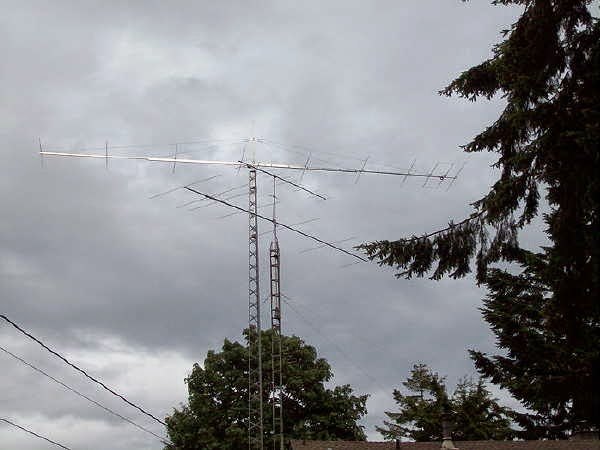 |
| 9el LFA at VE7DAY |
During the last solar rotation, flux values rose to near-Cycle highs and quickly plummeted, along with any hope of finding that six-meter Holy Grail...long-haul F2 propagation. Many six meter ops quickly found other things to do.
One person that didn't stop watching, and never does, was John - VE7DAY, in Campbell River, B.C., on Vancouver Island. John is VE7's iron man of 6m and spends almost 100% of his radio time seeking the magic.
For the past few winters, John has pointed his beam towards the south Pacific at around sunset, and called CQ from the VE7 black hole....on Tuesday evening he was justly rewarded.
At 00:50 UTC on the 31st, John's CQ was answered by Roger, ZL3RC in Christchurch, on New Zealand's South Island...12,021km from Campbell River.
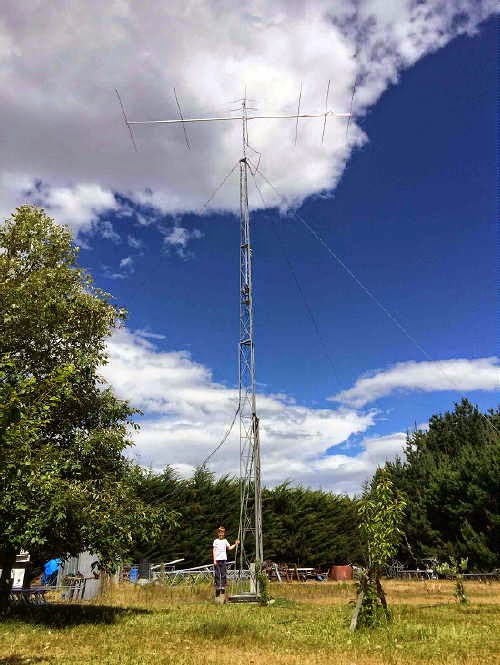 |
| 6el Yagi at ZL3RC |
One minute later, John worked Chris, ZL2DX, in Martinborough, on the North Island.
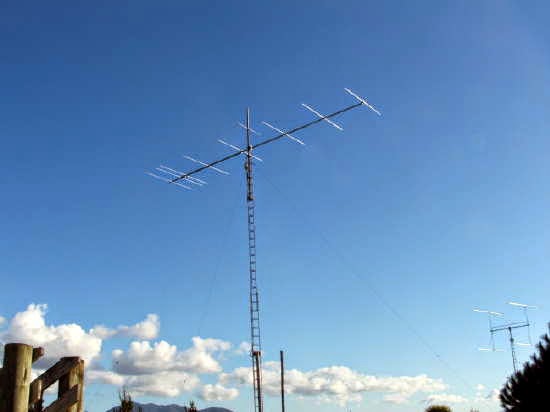 |
| 8el Yagi at ZL2DX |
At 0111 UTC, John completed the hat-trick by working Paul, ZL4PW, in Oamaru, back on the South Island.
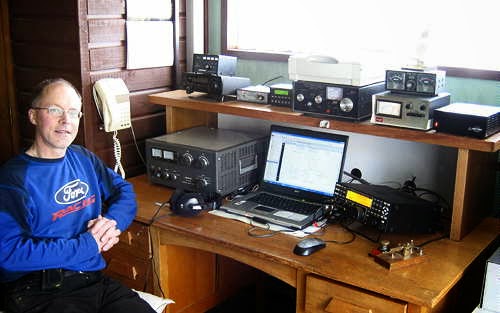 |
| Paul, ZL4PW / 7el at 7m |
"Decades ago, many DXers believed that Argentina was the world DX hot spot. DXers and contesters seemed to do the best down there. When I was in Brazil, one of the places I lived in was the state of Mato Grosso do Sul, PT9-land. It was only about an hour-and-a-half's drive to the Paraguay border, so conditions there were pretty near like those in Argentina, which was also nearby. I ran 100 watts to a vertical wire taped to a bamboo rod... and thought my QTH must have been included in the hot spot area.
I think now we are becoming aware of another hot spot, this one being in North America on Vancouver Island. I'm speaking, of course, of the your QTH, John! You seem to be doing quite well from that location. Keep it up!!
I see you worked clear down to ZL4. I'm envious. I've been looking for a ZL4 contact for a long time. Today when the band was open to ZL, I was on the road returning from Tacoma. Well, I'm glad you were able to work that great DX.
I will change the Distance Scoreboard to indicate the new records you established today. Congrats!
73, Paul K7CW"
With the present dismal solar flux and low solar activity, it is not likely that these contacts were via the F2 mode, but you wouldn't know it from the size of John's signal, recorded by ZL3RC. Being in the middle of our secondary sporadic-E season, north of the equator and at the peak of the major Es season down-under, I think a better candidate is an Es-link from both sides into the Trans Equatorial afternoon 'bubble'....certainly Es from both ends into whatever is happening in the ionospheric cauldron at the equator!
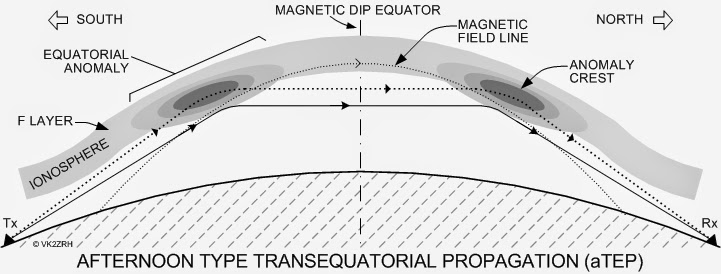
All four stations were running high power and big antennas, and with a little help from the seasonal E, it all seems to have come together nicely.

Congrats to all involved, and especially John, as all of the other 6m ops in this part of the country, including myself, were asleep at the switch it seems!
VK4EBP’s NLOS Lightwave Experiments – Part 3
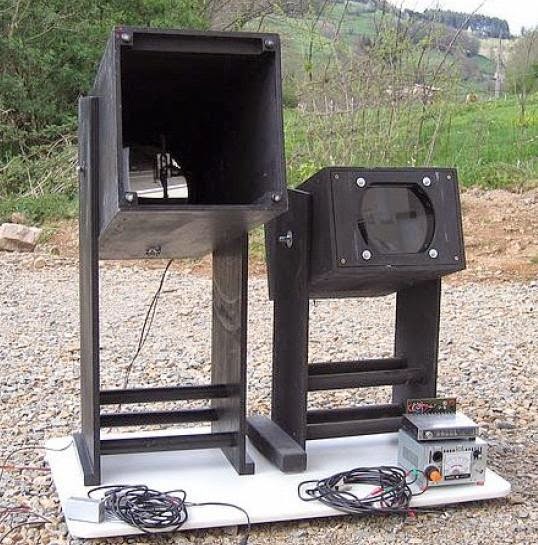 |
| F1AVY's Cloudbounce System |
"Returning to Steve's questions and our general discourse:
..is it (the RX) fairly small and portable...and lensless?
I do have a lens in the RX I now prefer to use - although it happens to be a convex lens from a tabletop magnifier - about 7x12cm giving me a narrow reception beam and a fair bit of gain compared with naked photodiode. There seems to be a general agreement that increasing the size of receiving aperture will capture more light and is the best way to greater gain.
Here I need to qualify gain requirements for my particular applications. I am currently exploring relatively short-distance NLOS paths in urban environments with abundant QRM from city and suburban lights, and this already limits my gain requirements. I developed my own qualitative test of satisfactory sensitivity - by pointing my receiver at individual stars in the sky. If I can hear them twinkle (yes they do twinkle!!!) then I am generally satisfied with the project.
On cloudy nights, pointing the RX into the clouds brings an interesting combination of mains harmonics and general hash from neon lights, clicking pulses from aeroplane lights, sweeping sounds from airport and marine lighthouses. In an environment like this, going to extreme lengths as one would do for very long-range cloudbounce or LOS comms in dark and secluded areas is simply not required and uneconomical. I initially did invest time and money in large receiving boxes with the best components there are, only to find that, unless I moved out into the bush, I could not take a real advantage of the improved performance, and did equally well with smaller and more wieldy portable designs.
"Is the idea, when talking about NLOS, to light up as much sky as possible...and that is why no focusing lenses are employed? Would a focused emitter, as produced by the typical Fresnel lens light box, produce too narrow a beam than desired? It would seem likely that with precise aiming combined with the gain to be had by utilizing fresnels (for example), would produce longer paths??"
There are several separate issues there. One is the implied requirement for a large Fresnel lens in order to obtain a narrow beam. First, how narrow is narrow enough? If we can be satisfied with say +- 5 degrees then there are more wieldy solutions available - most of the high power LEDs now have clip-on small spot lenses awailable separately - usually from third-party manufacturers. These were unheard of until recently. Standard-sized LEDs are available with very narrow radiation pattern, e.g. the SFH4550 at barely +-3 degrees. And one would expect an array of 200+ of them to behave quite like our stacked Yagis, many times over! Hence narrow beam is quite possible even without an external lens.
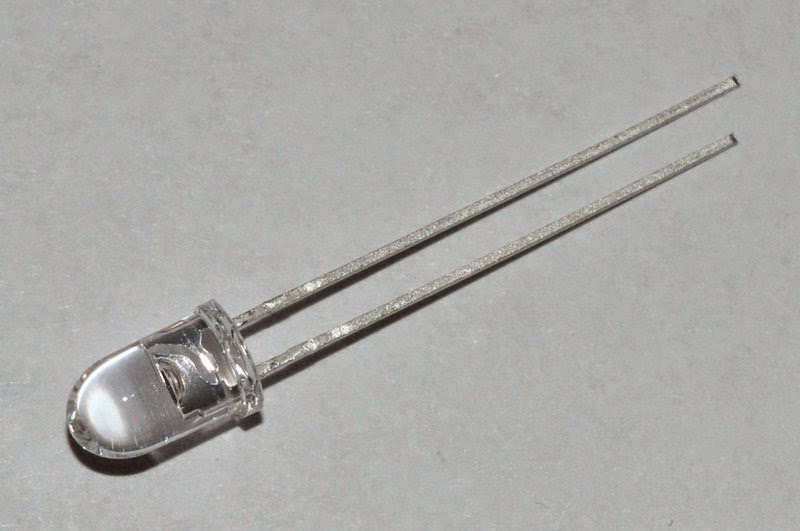 |
| Osram SFH4550 IR LED |
Of course the extremely narrow beams that one would prefer for LOS DX comms would be next to impossible to align in NLOS situation. (Invisible infrared is not a problem in LOS as it can be easily supplemented with e.g. a plain strobe light for alignment purposes.) I find my +-3 degrees array (with similar +-3 deg aperture at receiving end) hard enough to align over the horizon, and it is probably the limit of how narrow one can go to remain practicable in NLOS.
"to light up as much sky as possible..."
It is possible that cloudbounce and obstruction-bounce will develop into separate NLOS techniques, along with atmospheric scatter. Of course one can think of all of these in some topographies.
I had some success in inter-suburban cloudbounce with high beam elevations at both ends - 30 to 60 degrees. Also with 45 degrees or less elevation with TX and RX about 1km apart side by side and pointing at the same cloud in the distance. Power used around 10-20W, beamwidth +-5 to 10 degrees, red and infrared with similar results (including 950nm). The received signal was just strong enough for telegraphy or qrss, but never near enough for any type of voice modulation. Results were affected by the height of cloud cover necessitating frequent elevation adjustment, and an additional liaison channel on VHF. Signals disappeared entirely as soon as the clouds started producing rain.
I never got any usable results with clear night sky and the TX and (imaginary) RX beams crossing each other at similar elevations. Only at very close distances - the best signals being received with blue and infrared. Presumably Rayleigh scatter with blue. (This raises the possibility of usable atmospheric scatter with UV?)
Only recently I commenced preliminary tests with close-to-ground, low-elevation NLOS and immediately the infrared proved itself to be a clear winner with quite reliable and repetitive results. (Needless to say the signal strengths are marginal compared with direct LOS over similar distance.) Intuitively, one would suspect general scatter and bouncing of nearby objects being the main sources of some of the energy reaching over the horizon, with some contribution perhaps of atmospheric/dust/aerosol scatter.
This adds an additional dimension to your question.. to light up as many objects around the TX(or around RX, or around the obstruction) as possible, or send the focused beam as far as possible? I guess it will very much depend on topography. I can imagine a situation where I would prefer to use a broad floodlight rather than a focused beam - e.g. to illuminate as many as possible of the surrounding tall buildings if transmitting from a ground floor apartment. Or from the foot of a mountain. An opposite rule would apply if it is the receiver that is just behind an obstruction - here a focused TX beam and a broad RX aperture might prove advantageous. And where the main obstruction is midway between TX and TX than the usual narrow-beam configuration would apply at both ends. I think it might be worth trying an infrared TX with interchangeable lenses, and same for the RX...
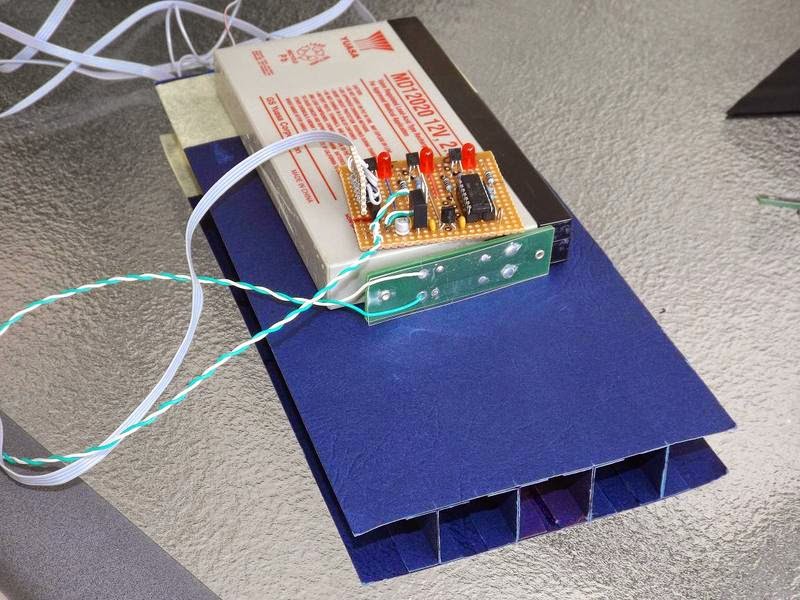
The portable TRX image shows the general view. Most of the electronics is contained in a plastic box and includes an SLA battery, the RX audio bandpass filter, power amp and speaker, and most of the PWM AM TX circuitry except the final LED driver. The DIN socket provides connection to external RX front end TX output drivers and LEDs, usually held together on a tripod. The header socket is for the external microphone connection, and there are switches for power and speaker and a headphone jack. The crudely made corflute box beside it is the RX front end with lens, photodiode and preamp.
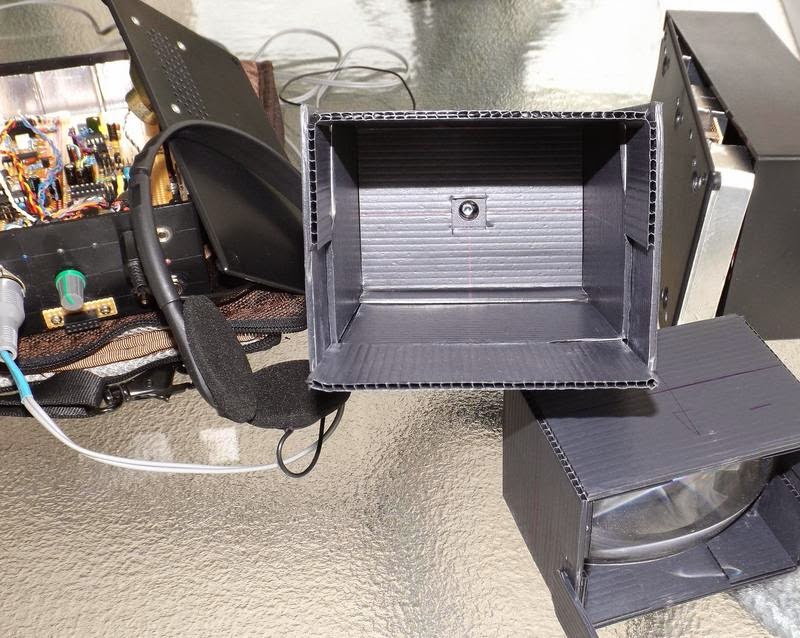
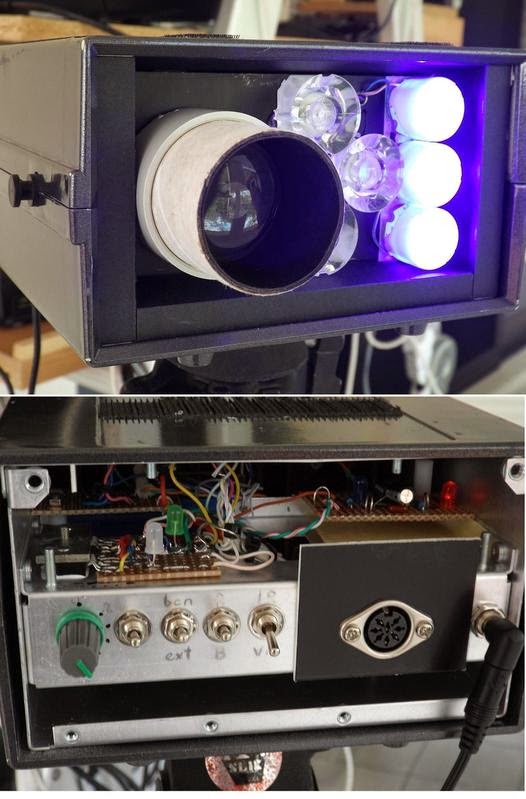
The RX detail 01 shows the business end of the photodiode, and the separate lens box (slides in and out for focus adjustment). Detail 02 shows the preamp with interchangeable photodiode modules - SFH213 for visible to 850nm, and the SFH213-FA for 850nm and below.
Multi-wavelength TX 01 (front and back image) includes several groups of fat LEDs (red, blue and 850nm) with matching lenses providing approx. +-5 degrees apertures. Also the PWM driver on 2x CAT4101 in parallel, external high current power connection, intensity control, and a PICAXE-controlled strobe or audio callsign/frequency sweep beacon.The whole assembly connects to the TRX control box (above) and can provide power to it, draw power from it, or have both DC sources in parallel.Enclosure includes a photo tripod mount on the bottom plate, and velcro strips on top to hold the RX front end.
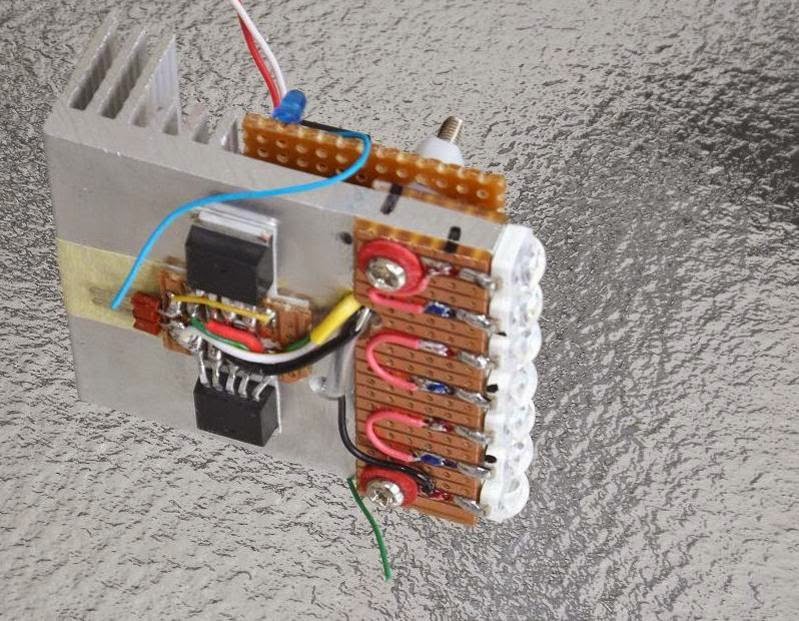
Pocket-sized 10W IR TX is a small holiday project and still work in progress. The 7x LEDs are 2W each SFH4783 with an intrinsically narrow beam of +-10 degrees - quite appreciable for a naked LED of this size and possibly obviating the need for external optics in some applications. My usual CAT4101 drivers are included and capable of providing 2A at 50% duty cycle. Another Picaxe beacon is on the other side of the heatsink, and the voice modulator is still in progress.
The low-power multi-wavelength TX is another one day project, built to compare relative performances of 850 and 950nm IR. Three almost identical beams of red, 850 and 950 are transmitted in sequence with approx 100mA PWM running each diode. Unique CW ID has been coded for each wavelength.
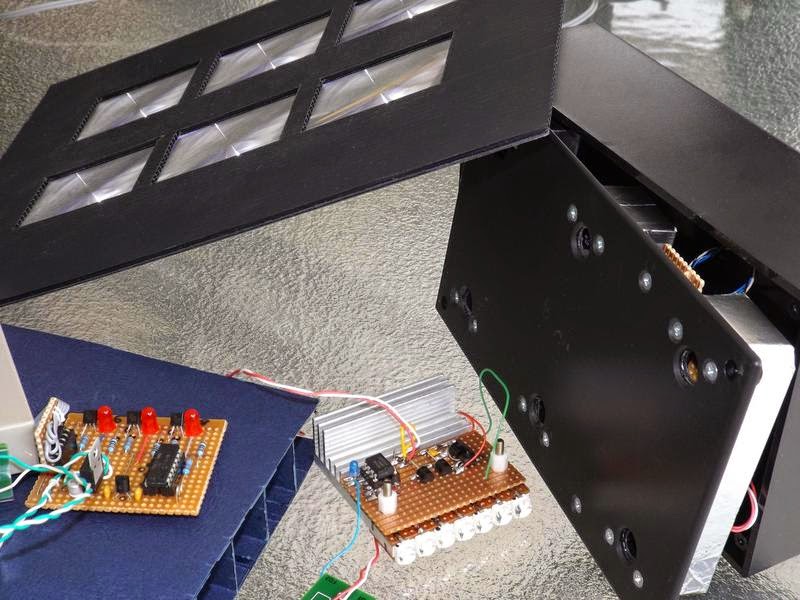
6x SFH213 photodiode with individual preamps - quite a respectable low noise, high sensitivity front-end that works very well without external optics (SFH213 have a +-10 deg intrinsic apertures). A matching array of small fresnel lenses has been built and tested for narrow-beam reception, but a permanent box is yet to be added.. Some of the other gadgets seen in the foreground."
As mentioned earlier, Jan's experiments with NLOS signals utilizing IR is of particular interest to myself as I would like to continue experiments with VE7CA, on the other side of Georgia Strait...hopefully with Markus not having to move to a LOS position, but simply aiming across the Strait in a direct path, from his yard. Using Argo and QRSS3 mode, it will be interesting to see if any signals can be recovered from the cloud bottoms on some overnight runs.
More information on NLOS work may be found on the Australian Optical DX Group in Yahoo Groups as well as in the UK Nanowave Group....why is it that these two countries have so much homebrew fun??,,,and don't forget Clint's (KA7OEI) superb Optical Communications / Moduulated Light pages!
VK4EBP’s NLOS Lightwave Experiments – Part 2
 |
| Courtesy: http://www.ledsmagazine.com |
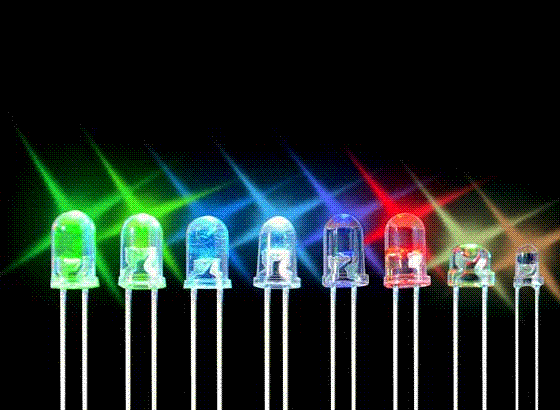
"Visible LEDs and optics: Some of my favourites include the LZ1 and LZ4 series from LedEngin used with matching spot lenses, or thick condenser lenses from old visual projectors. Also various Golden Dragon varieties with matching small plastic spot lenses. Average beam divergence with either configuration is about +-4 degrees. (Happy to provide detailed parts numbers.)
Infrared LEDs: Here we have a some good products from Vishay (TSHG series), with narrow beam (some go down to +-2 degrees) in the standard 5mm packages and max current of 100mA.
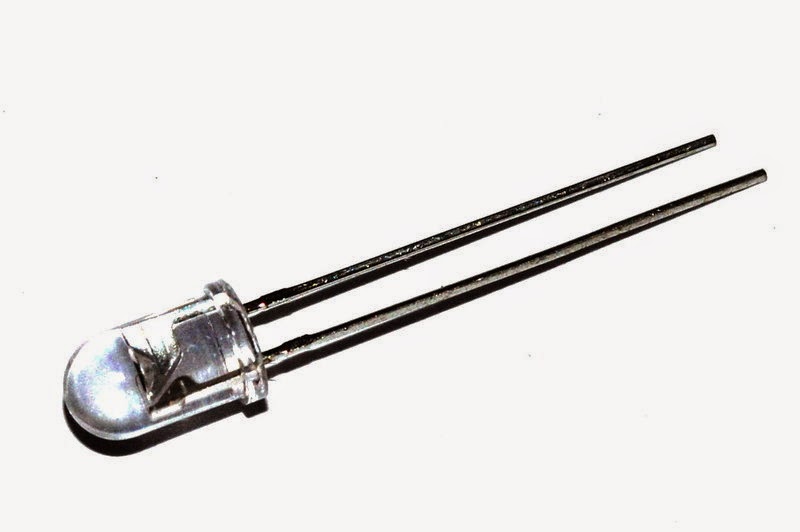
They can make nice pencil-beam arrays in combined series/parallel with 200 or more LEDS and no optics required, at less than 40c per LED. Lots of soldering though :). For the 950nm range (not extensively tested yet) the Vishay TSAL range of LEDs will do nicely.
LED drivers: I found a very neat IC to PWM-drive the LEDs at up to 1A - the CAT4101 from ON Semiconductors.
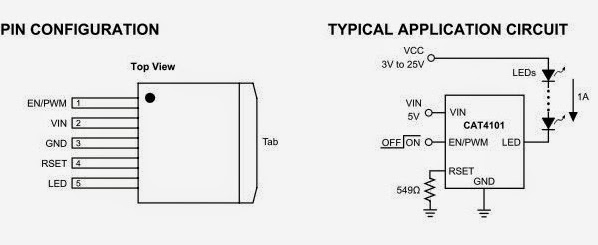
Usually have two in parallel for a peak of 2A at 50% duty cycle, giving me 1A average to drive the LED string.
At the reciving end I am now using a preamp loosely based on Clint's no-feedback design with some hum filtering and other post minor post-processing feeding to an audio amp, or to SpectrumLab."
"...tonight I am trying to compare 830nm against 940nm on a 600m short NLOS path. For this, I have just built a small TX with two "naked" LEDs - TSAL6100 (940nm) and TSHG8200 (830nm). Both have identical shapes of their radiation patterns with +-10 degrees. Each mounted inside of a square cross-section black cardboard tube side by side to ultimately give them a very uniform square beam of approx +-4 degrees. Each driven with 440Hz square wave at 100mA with unique morse identifier for each.
There is a third visible LED as well with its own cardboard collimator and morse ID, to serve as aiming tool and a kind of reference.
The purpose is to see whether 940nm would offer additional advantages in NLOS situations, due perhaps to better/different reflection, scatter, refraction or whatever physical processes might be involved.
An additional advantage might be removing my setup further away from visible light pollution. With the growing popularity of LED lighting in both household and the industry we are having a chance of less and less infrared pollution from traditional incandescent or similar sources - and making light comms more practical in urban environments - all with a simple IR filter at the receiving end.
Tonight's tests were not as productive as anticipated, but somewhat educational nevertheless. First of all the receiving location I picked on the map suffered from severe QRM from sodium street lights. I picked strongly all my "big" IR transmitters, but the visible and the "naked" ones were lost in the QRM, if present at all. I returned home, pointed the 150mW TX into nearby bushland and went for a walk. The red light reception vanished immediately after loosing sight of TX, followed quickly by the 940nm with the 830nm persisting the longest up to perhaps 100m - with the beam fired parallel to ground from upper storey into the crowns of the trees. Reception required pointing the receiver slightly up, intersecting the TX beam somewhere in the tree branches.
Briefly - I confirmed what I already knew: - IR is far superior to visible for NLOS work - indeed visible light is of no use.
- Low elevations and scatter from ground objects is superior to high beam elevations.
A new observation (that I would like to confirm) is that 900+nm is not worth bothering about. It is known that 950nm suffers from greater scatter in atmospheric particles than 850, but this proved to be more of a hindrance than help in NLOS work.
Another practical observation is that the 950nm version of the common SFH213 photodiode (SFH213-FA) works very well in receiving 850nm whilst filtering out lots of the visible pollution (well, perhaps except the sodium lamps!).
I started tonight's session before sunset and got very good NLOS reception of my large IR TXs - in what could be described as quite a bright twilight. (I carry two plug-in front-end modules each with one of the two photodiodes and the input FET.)
Another holiday project - a pocket-sized 10W TX! I found new IR LEDs - SFH4783 - rated at 2W, barely 1.65V of Vf, and intrinsically narrow angle of +-10 degrees. This means no optics, and up to seven of them in series on a small heatsink can be run from a 12V SLA battery.
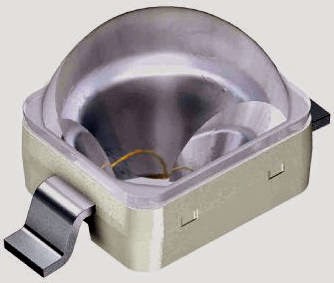 |
| Osram SFH4783 |
This reminds me of yet another observation - out of my several large 850nm TXs the best performers are the naked narrow-angle multiple LED arrays - and the one containing 3 high power broad-beam LEDs with spot optics performing the worst. Well the lenses are designed for visible LEDs and I have no guarantee that the material refraction angles and loses are acceptable in the IR range...
Returning to Steve's questions and our general discourse:
..is it (the RX) fairly small and portable...and lensless? (cont'd)...
VK4EBP’s NLOS Lightwave Experiments – Part 1
Jan's posting was chalk-full of useful "hands-on" information and was just what I needed to hear and led to some extensive and interesting conversation, well worth passing on to others. I could summarize Jan's work in point form but I think it is more interesting to let Jan describe it himself.
"Finally some success with over-the-horizon light. Briefly - several transmitters of several watts each were fired
simultaneously with the beams aimed at the tops of nearby trees, each
transmitter sending unique combination of tones (direct AM).
 |
| Osram SFH213-FA |
plastic lens approx. 7x12cm. Receiver was aimed towards the TX site and
pointed just over the horizon.
Aural reception of 850nm infrared signals was very good. There was no
trace of TX signals in visible or near-visible spectrum. Signal quality on
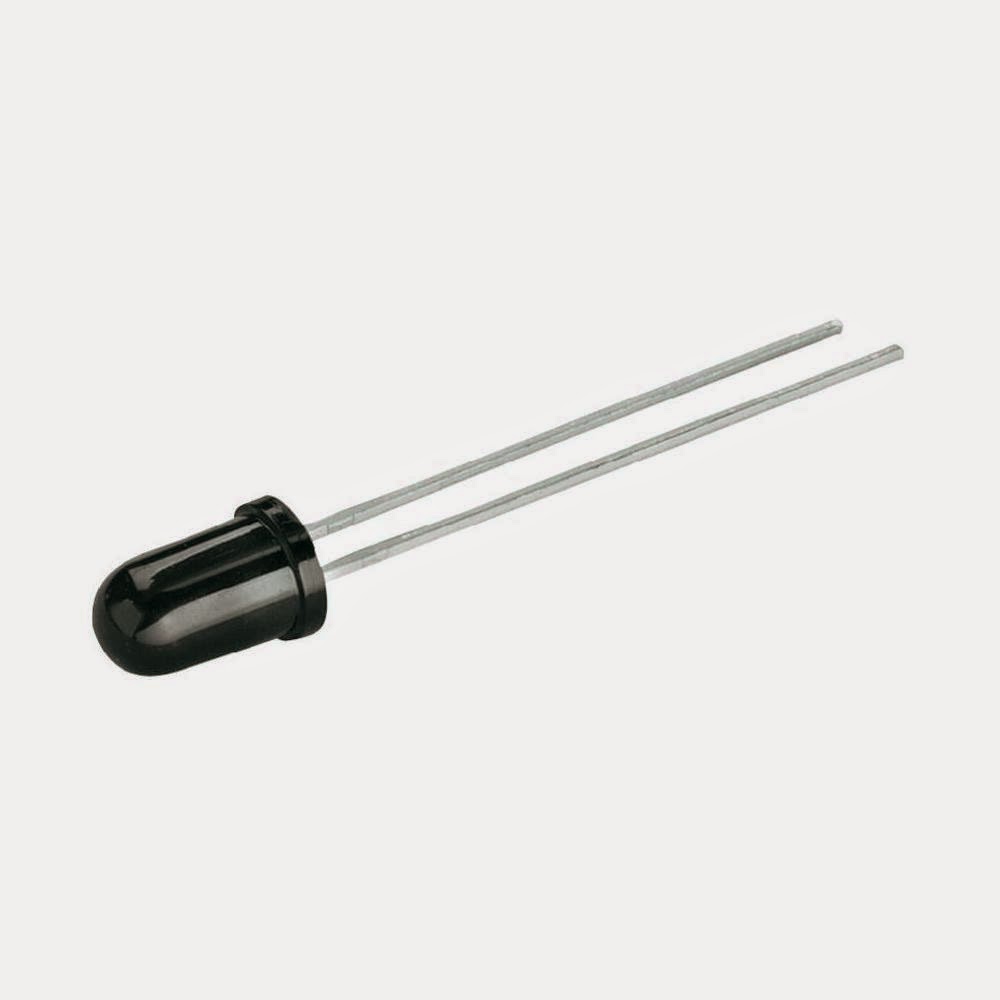
850nm was further improved with an infrared-filtered photodiode (SFH213FA, 950nm peak) which provided some attenuation of suburban lights QRM.
My earlier series of experiments over the years was aimed at achieving NLOS short-range communications in a light-polluted metropolitan
environment. I had limited successes with high-elevation cloudbounce over
several km distance using both red and infrared. Very poor results with
high-elevation scatter in clear air, with blue light appearing the best,
and green and yellow the worst for the purpose. More recent tests
suggested that low elevations with infrared light offer a reliable link,
and today's results seem to confirm that.
More to follow! 10km test tomorrow night. 73 de Jan vk4ebp"
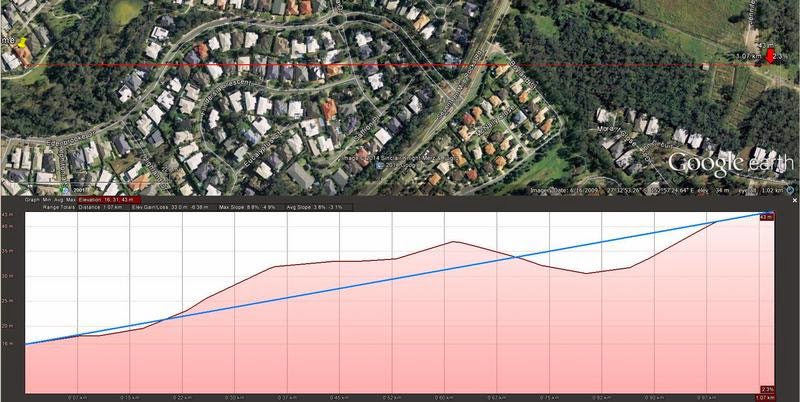
Jan has been testing several different TX emitters / wavelengths, simultaneously, each with a different CW identifier. His path started with a 1km hop through his local residential neighbourhood, with significant obstructions shown below. Later the path was stretched to 10km. His observations involving IR were particularly helpful:
 |
| 1km NLOS Path |
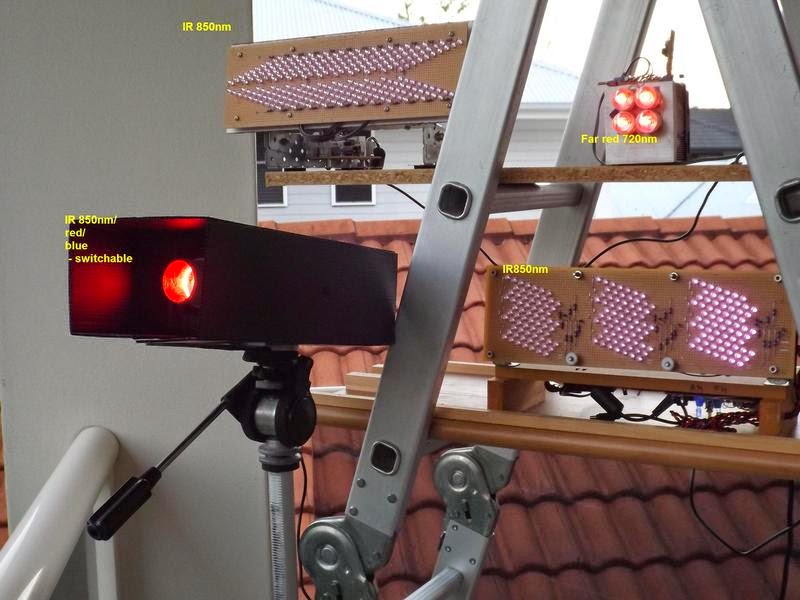
deep red 10W with condenser lens, 3x1W Golden Dragon 850nm IR LED with
+-4deg spot lenses, and 3x 4W LZ1 blue with +-5 deg spot lenses. Manually
switchable by my very patient family members on request via walkie talkie
from the receiving site. The two multi-LED arrays are approx 10W each in
total, one containing a multitude of +-3 deg SFH4550, and the other
+-10deg some other LEDs - do not remember after many years since building it. The small heatsink block contains 4x LZ1 far red, run at about 8W
total."
"At the NLOS location 1km away I was able to copy all the 850nm TXs and
none of the visible/borderline ones.Last night I tried 10km distance.
The topography is theoretically line-of-sight, but isolated from the receiving site by a thick bushland in nearby park. I was firing the transmitters about 3 degrees above what
would be line of sight, thus having about half the beam into the air and
another half scattered in the tree tops near the TX site.
I was able to weakly copy only one of the transmitters - the array of 200 or so of the +-3deg IR LEDs. At the moment I am not certain whether it was from atmospheric or tree scatter.
From earlier tests I observed that IR penetrates very well into the bushland, long after the visible beams were lost both visually and electronically. Similarly, it seems to propagate well into suburban
streets. Presumably the longer wavelength is "seeing" rough surfaces like tree trunks and brick walls as actually shiny and reflecting...."
".... a bit more about my transmitters. (cont'd....)