Author Archive
 Stealthy Roof Mast
 May 23rd, 2015 |
  Author:
  |
| courtesy: https://openclipart.org/ |
This time it's his stealthy mast to support some small VHF utility antennas. If you're interested in a simple stealthy mast for the roof-top, you may find some worthwhile hints here. His system would make a very nice stealthy support for a PAØRDT mini-whip which would put your antenna well above the house and its associated noise fields ... have a look.
Hunting For NDBs In CLE194
It's CLE time once again! For you low-frequency buffs, another challenge awaits. This month's frequency range covers the high end, 385.0 - 399.9 kHz. A list of all of the North American targets in this range can be found in the RNA database, while targets for European DXers will be found here... specify the frequency range wanted and check 'show all results'.
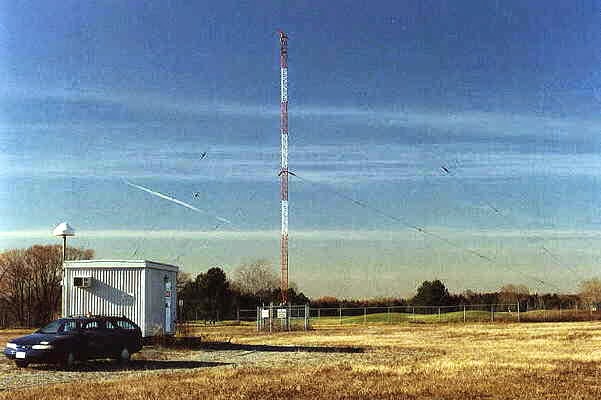
An excellent target for North Americans is little 'OO' on 390kHz. It gets out well at just 7.5watts and was heard here on Mayne Island earlier this year.
From CLE coordinator Brian Keyte (G3SIA) comes the following reminder:
Hi all,
Have you tried one of our Co-ordinated Listening Events yet?
CLEs are NOT contests - they allow us to share the same listening
challenge and in the process to learn more about our great hobby.
Short logs or long ones, everyone who enjoys taking part is a winner!
Since early in 2001 over 250 different NDB List members have taken
part in a CLE for the first time - and over four in every five came back
for more.
Fourteen members have come back over 100 times, 44 over 50 times.
End of the Commercial!
Our 194th CLE is almost here:
Days: Friday 22 May - Monday 25 May
Times: Start and end at midday LOCAL TIME
Range: 385.0 - 399.9 kHz
Just log all the NDBs that you can identify with their nominal (listed)
frequencies in the range - it includes 385 kHz, but not 400 kHz -
plus any UNIDs that you come across there.
Please send your CLE log in a plain text email if possible (not in
an attachment) and to the List, not direct to me.
Show on each line of your log:
# The Date (e.g. 2015-05-dd or just the day-of-the-month, dd)
# The Time in UTC (the day changes at 00:00 UTC).
# kHz - the beacon's nominal published frequency, if known.
# The Call Ident.
Show those main items FIRST - any other details such as location,
distance, offsets, etc., go LATER in the same line (or in footnotes).
Please always include your own location and brief details of the
equipment that you were using.
It is important to put 'CLE194' at the start of the email subject.
If you send any interim logs, please also send a 'Final' (complete)
log showing all your loggings for the event.
I will send the usual 'Any More Logs?' email at about 1700 UTC on
Tuesday so that you can check that your log has been found OK.
It is a good idea to meet that deadline if you can, but make sure that
your log has arrived on the list by 0800 UTC on Wednesday at the
very latest. The combined results should be completed on that day.
You can find full information by going to the CLE Information Page
http://www.ndblist.info/cle.htm It also has a link to the seeklists
for this Event at REU/RNA/RWW.
Good listening
Brian
----------------------------------------------------------
From: Brian Keyte G3SIA ndbcle'at'gmail.com
Location: Surrey, SE England (CLE co-ordinator)
----------------------------------------------------------
( If you would like to listen remotely you could use any one remote
receiver, such as http://websdr.ewi.utwente.nl:8901/ for your
loggings, stating its location and owner and with their permission
if required. A remote listener may NOT also use another receiver,
local or remote, to make further loggings for the same CLE )
 |
| OO-390 kHz courtesy: ve3gop.com |
It's CLE time once again! For you low-frequency buffs, another challenge awaits. This month's frequency range covers the high end, 385.0 - 399.9 kHz. A list of all of the North American targets in this range can be found in the RNA database, while targets for European DXers will be found here... specify the frequency range wanted and check 'show all results'.
An excellent target for North Americans is little 'OO' on 390kHz. It gets out well at just 7.5watts and was heard here on Mayne Island earlier this year.
From CLE coordinator Brian Keyte (G3SIA) comes the following reminder:
Hi all,
Have you tried one of our Co-ordinated Listening Events yet?
CLEs are NOT contests - they allow us to share the same listening
challenge and in the process to learn more about our great hobby.
Short logs or long ones, everyone who enjoys taking part is a winner!
Since early in 2001 over 250 different NDB List members have taken
part in a CLE for the first time - and over four in every five came back
for more.
Fourteen members have come back over 100 times, 44 over 50 times.
End of the Commercial!
Our 194th CLE is almost here:
Days: Friday 22 May - Monday 25 May
Times: Start and end at midday LOCAL TIME
Range: 385.0 - 399.9 kHz
Just log all the NDBs that you can identify with their nominal (listed)
frequencies in the range - it includes 385 kHz, but not 400 kHz -
plus any UNIDs that you come across there.
Please send your CLE log in a plain text email if possible (not in
an attachment) and to the List, not direct to me.
Show on each line of your log:
# The Date (e.g. 2015-05-dd or just the day-of-the-month, dd)
# The Time in UTC (the day changes at 00:00 UTC).
# kHz - the beacon's nominal published frequency, if known.
# The Call Ident.
Show those main items FIRST - any other details such as location,
distance, offsets, etc., go LATER in the same line (or in footnotes).
Please always include your own location and brief details of the
equipment that you were using.
It is important to put 'CLE194' at the start of the email subject.
If you send any interim logs, please also send a 'Final' (complete)
log showing all your loggings for the event.
I will send the usual 'Any More Logs?' email at about 1700 UTC on
Tuesday so that you can check that your log has been found OK.
It is a good idea to meet that deadline if you can, but make sure that
your log has arrived on the list by 0800 UTC on Wednesday at the
very latest. The combined results should be completed on that day.
You can find full information by going to the CLE Information Page
http://www.ndblist.info/cle.htm It also has a link to the seeklists
for this Event at REU/RNA/RWW.
Good listening
Brian
----------------------------------------------------------
From: Brian Keyte G3SIA ndbcle'at'gmail.com
Location: Surrey, SE England (CLE co-ordinator)
----------------------------------------------------------
( If you would like to listen remotely you could use any one remote
receiver, such as http://websdr.ewi.utwente.nl:8901/ for your
loggings, stating its location and owner and with their permission
if required. A remote listener may NOT also use another receiver,
local or remote, to make further loggings for the same CLE )
These listening events serve several purposes. They:
- determine, worldwide, which beacons are actually in service and on-the-air so the online database can be kept up-to-date
- determine, worldwide, which beacons are out-of-service or have gone silent since the last CLE covering this range
- will indicate the state of propagation conditions at the various participant locations
- will give you an indication of how well your LF/MF receiving system is working
- give participants a fun yet challenging activity to keep their listening skills honed
Final details can be found at the NDB List website, and worldwide results, for every participant, will be posted there a few days after the event. If you are a member of the ndblist Group, results will also be e-mailed and posted there.
The very active Yahoo ndblist Group is a great place to learn more about the 'Art of NDB DXing' or to meet other listeners in your region. There is a lot of good information available there and new members are always very welcome.
If you are contemplating getting started on 630m, listening for NDBs is an excellent way to test out your receive capabilities as there are several NDBs located near this part of the spectrum.
You need not be an ndblist member to participate in the CLEs and all reports, no matter how small, are of much value to the organizers. 'First-time' logs are always VERY welcome!
Reports may be sent to the ndblist or e-mailed to either myself or CLE co- ordinator, Brian Keyte (G3SIA), whose address appears above.
Please...do give the CLE a try....then let us know what NDB's can be heard from your location! Your report can then be added to the worldwide database to help keep it up-to-date.
Inexpensive Kit From China
 |
| courtesy: http://www.banggood.com/ |
A recent posting to the GQRP Yahoo Group brought my attention to another inexpensive offering from China. This time it's Bangood's complete "Pixie" type 40m QRP transceiver for the incredible sum of $4.16 (U.S.)! The price includes all components, a nicely silk-screened PCB and free shipping. One really wonders how it is possible to make any profit with such an offering but it obviously is. However, all may not be what it seems. One purchaser, IK1ZYW (Paolo) who built the kit, described his findings in a recent blog posting of his building experience.
In spite of the problems noted above (with some now corrected), the kit still seems a bargain, if one takes the necessary care with construction.
Playing with QRP can often provide ham radio's best "fun for the money" as DX- capable transmitters can often be built for just a few dollars. I vividly recall the fun I had one winter while pursuing the first-ever Tuna Tin W.A.S. endeavour on 7040kHz.
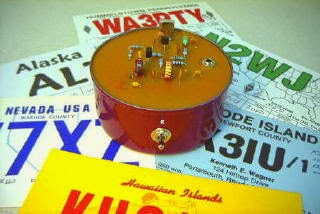
I made many new friends on 7040 that winter and every weekend many of them would listen-in or call to see how my progress was going. The highlight of the adventure was late one Saturday night when I had three New England stations all answer the same CQ ... what amazing fun for a handful of parts at less than $10 ... not including the cost of a can of Tuna!
The little Pixie kit offered above has a power level fully capable of W.A.S. on 40m and with the decrease in solar conditions, 40m will just keep improving. If you purchase and build one of these kits, please let us know how your experience went. The 'interesting' construction notes may be found here.
Using Remote SDR’s
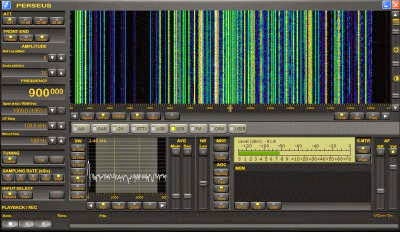 A recent post to Yahoo's Perseus SDR Group posed some interesting questions.
Lasse, SM5GLC, operates an online remote Perseus and made the following comments:
Over the past few weeks/months I have see some "power-users" on my Perseus server... and my plan was to dissect the server log to investigate the usage percentage of my server... and found that already in May the log is 240 kb and growing fast. It seems impossible to analzye by hand.
Now I do notice one user, not too far away (only some 200 miles or so), seems to spend 2-3 hours per day using my server. Mostly just use all allotted time and then get back on asap. I know my antenna is nothing to write home about and the performance is mediocre if any... so this makes me wonder. What on earth do this user do with all the time??
Do others see similar behaviour??
By browsing the log it seems most, user time,70-80 per cent, are from Russia. Most others stay only for a very short period of time, up to a few minutes.
Has anyone tried to hack a script that would automatize the log analysis??
A few Q's that I do have are:
Is the server abused by some?
What is the optimal allowed time? and then the drop-out time?
What usage load would be best to shoot for??
Don, VE6JY, a long-time remote owner added:
I notice similar patterns here. Obviously some are listening to a single frequency for the entire time, others stop by for a few seconds to see if a certain target is being propagated. And then some just tune around and see what there is to hear and see. And I'm sure some fall asleep until it times out. These are all things I have done when I am using the remote side. One thing we need to remember, an antenna that is mediocre to one person may be a window to the world for someone living in the urban noise jungle. And consider this - if there were enough remotes to choose from, scattered all over the globe, even a poor antenna would cover their locals and fill in the gap. Unfortunately, the number of remotes seem to be dwindling, esp here in N AM. Maybe summer coming and lightning season but still, even this winter, choices were fairly meagre.
I'm not too concerned about the usage aspect - it's not a big drain on my internet and I see enough different names, many of whom I know personally who use it so I think most get a fair chance to see if whatever signal they're looking for makes it to my part of Alberta. Both of mine are set to 62 mins on with the minimum 2 minute reconnect time.
The only "abuse" if it really is, I see sometimes is from the amateur radio side, people wanting to hear a station better in order to work a rare one or have an unfair advantage in a contest. What does annoy me is users who can't be bothered to put in their proper name or callsign or even a lat/long. And then there's a few servers that get the lat/long wrong or reversed so they wind up in a rare portion of the world and for a moment we all get excited!!
Both operators raise some interesting questions!
If you have used a remote SDR or do so with some regularity, how did you find the experience? What types of things did you listen or look for? How much time would you typically spend on the site? What do you think the limits on time should be?
I have used a remote once or twice in the past, to listen for my Tri-Tet-Ten's chirpy, low power signal, and found it very useful but I've never used one for general listening.
What are your experiences?
FCC Closures – Bad timing
 |
| courtesy: http://en.wikipedia.org/ |
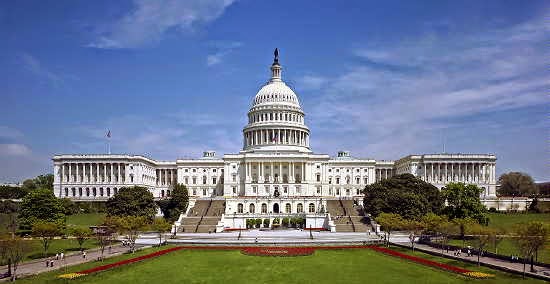
Complainants range from broadcasters and the cellular wireless industry to agencies relying heavily on communications such as police and fire agencies. Many of them are worried that interference cases will fall by the wayside with the FCC not able to keep up with mitigation issues.
One seemingly odd complaint of the broadcast industry was the effects that the closures would have on the agency's ability to track down pirate broadcasters! Surely that is not a huge issue in the grand scheme of things? Responding to this odd complaint, the new FCC enforcement chief, Travis Leblanc, issued a strange policy statement saying that he would take a "new" approach when it came to pirates by doing what is needed to keep pirates from even getting on-the-air in the first place! No details of this puzzling solution were forthcoming.
It would seem to me that most public broadcasters would be delighted at the thought of having less FCC oversight. At a time when more and more broadcasters appear to be "forgetting" to switch to nighttime power levels (lower) or to change antenna patterns, surely the FCC downsizing will lead to even more rogue behaviour.
Amateurs relying on any help in mitigating local interference issues, power line noise and complaints from neighbours will also be swept-away in the downsizing.
Unless more funding from Congress is forthcoming, it appears that the closures may really happen. Radio World reports that some of the affected industries are discussing potentially lobbying Congress to keep the field offices open but it appears the focus is on getting the agency to do things more efficiently and opponents argue that the FCC was able to run their offices under last year's budget.
It will be interesting to see how it all plays out but if the closures go ahead, it won't be good for any of us ... unless of course, you're a pirate.
Armed Forces Crossband Opportunities
 |
| Courtesy: http://swldx.us/blog/ |
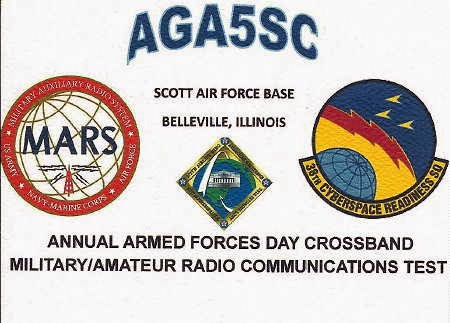
Each station has a slightly different operating schedule and full details of operating times and crossband frequencies can be downloaded from here.
In addition to the usual SSB / CW modes, this year will see several digital modes such as MT63, AMTOR FEC, as well as two new modes ... MIL-STD and ALE.
The needed MIL-STD (Serial PSK) software can be downloaded for free from MS-DMT software.
The activity gives hams and SWL's the chance to exercise their technical and operating skills. All stations will provide a special QSL for contacts made or for reports of reception.
Join the fun and gather some unique wallpaper at the same time ... not many hams have a QSL from 'WAR' on the wall!
A 49m Bandscan
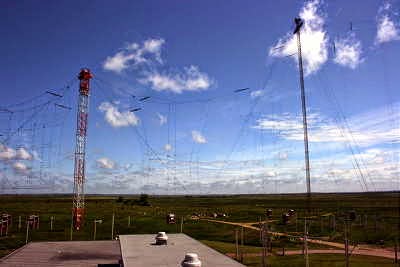
As indicated in an earlier blog, a planned scan of the 49m band was made a few nights ago ... one at 0400Z (10PM local) and another at 1200Z (5AM local). Both had a decidedly different flavor. Frankly I was surprised at the number of broadcasters and especially the number from Asia, China mainly, heard in the morning scan. One information source I found indicates that most of the strong shortwave signals from China are more designed for jamming than for program content.
My initial impression was that many of the more interesting low power targets from Central / South America and Africa may be a thing of the past but I may be wrong. The 'news' page, of the World Wide DX Club, seems to indicate that there are still lots of juicy targets out there if you are willing to put in the time to look for them, as many seem interested in doing. There also seems to be a larger variety of DX targets available in the higher bands such as 25m and 31m.
For the most part, these broadcasters don't fool around with QRP, and their signals are pretty dominant. Conditions of late have not favored Europe or Africa so there may be more activity from these regions than I think.
The following stations were logged with the Perseus SDR along and the 10'x20' loop / Wellbrook preamp, looping E-W, at 0400Z:
5810 EWTN (inSpan) Vandiver, Alabama 500kw
5830 WTWW (rel) Lebanon, TN 100kw
5850 Sun Power Radio (RMI) Okeechobee, FL 100kw
5890 WWCR (rel) Nashville, TN 100kw
5910 NHK Radio Japan Issoudun, France 100kw
5920 WHRI (rel) s/off Cypress Creek, SC 250kw
5920 Radio Romania Galbeni 300kw
5935 WWCR (rel) Nashville, TN 100kw
5970 Radio Italia (in Portuguese) Belo Horizonte, Brazil 10kw
5980 Channel Africa s/off Meyerton, SA 250kw
5985 NHK World Radio Japan (in Span) Okeechobee, FL 100kw
6000 Radio Habana Cuba Titan Quivican 250kw
6020 Radio Gaucha s/off Porto Alegre, Brazil 10kw
6030 Radio Marti Greenville, NC 250kw
6040 Radio RB2 (in Portuguese) Curibata, PR 10kw
6050 unid / weak
6060 Radio Habana Cuba La Habana 100kw
6070 CFRX Toronto, ON 1kw
6090 Caribbean Beacon (rel) Anguilla 100kw
6125 Deutsche Welle s/off Manama, Bahrain 250kw
6160 CKZU Vancouver, BC 500w
6165 Radio Habana Cuba La Habana 100kw
6175 Voice of Vietnam Cypress Creek, SC 250kw
6180 Radio Nacional Brazilia Brasilia 250kw
6185 XEPPM Radio Educacion Mexico City 1kw
These stations were logged at 1200Z, using the same system:
5830 WTWW Tennessee 250kw
5875 BBC Nakhon Sawan (Thailand) 250kw
5915 China Radio Int'l Hohhot 100kw
5925 Voice of Vietnam 2 Hanoi 50kw
5935 PBS Xizang Lhasa-Baiding 100kw //6110
5955 China Radio Int'l Beijing 150kw
5970 PBS Gannan Hezuo 15kw
5975 CNR 8 Beijing 100kw
5985 Myanmar Radio Yangon 25kw
5990 unid China Radio Int'l same interval sig as 5915
5995 Taiwan Xing Xing Kuanyin sign-on 10kw
6000 CNR 1 Beijing 100kw
6003 VOH Korea (S) 100kw
6015 KBS Hanminjok Bangsung 1 Hwaseong (S. Korea) 100kw
6020 weak / poss Radio Victoria Lima with time pips 3kw
6030 CNR 1 Beijing 100kw
6040 weak w/eastern music/ poss Air Jeypore India 50kw
6050 weak / poss RTM Malaysia 10kw
6055 weak w/continuous music / unid
6060 Radio Argentina Exterior General Pacheco 100kw
6065 CNR 2 Beijing 150kw
6070 Voice of Korea / in Japanese Kanggye 10kw
6080 PBS Hulun Buir Hailar (Mongolia) 10kw
6090 NHK World Radio Japan Ibaragi-Koga-Yamata 300kw
6095 KBS World Radio Kimjae (S.Korea) 250kw
6100 Radio Serbia Bijeljina 250kw
6105 Radio Taiwan Int'l Kouhu 100kw
6110 Voice of America / chinese Udon Thani (Thailand) 250kw
6110 PBS Xizang Lhasa-Baiding 100kw //5935
6115 Voice of Strait Fuzhou (PRC) 50kw
6125 CNR 1 Beijing 100kw
6155 CNR 2 Beijing 150kw
6160 CKZU Vancouver 500w / relay CBU AM
6165 Voice of Vietnam 4 Hanoi 50kw
6175 CNR 1 Beijing 100kw
6180 CNR unid but time pips match other CNRs
6180 Radio Taiwan Woofferton 250kw
6195 BBC Kranji (Singapore) 125kw
6200 Voice of Jinling Manjing (Singapore) 100kw
6280.14 Unid with music / poss SOH Xi Wang Zhi Sheng Tanshui (Taiwan) 100 watts
6365 Hand sent keyer CW with callups 7CJ 7CB 7FB QTC into nr/ltr groups
6389 similar to above but nr/ltr groups
6400 Pyongyang Kanggye (N. Korea) 50kw
6501 USCG NMO Honolulu with wx bdcst
6518 Voice of the People Kyonggi-do-Koyang (S. Korea) 50kw
6518 N. Korean jammer Kujang 250kw
6600 Voice of the People Kyonggi-do-Koyang (S. Korea) 50kw
6600 N. Korean jammer Kujang 250kw
6679 Honolulu Radio w/ aviation Volmet
6754 Trenton Volmet wx bdcst
The number of broadcasters using remote sites is also surprising. It seems that the relaying of program content for others is big business and for many countries, much cheaper than running their own 250kw stations.
Some links that I have found very useful for identifying SW BC stations:
http://www.geocities.jp/binewsjp/ic/bia15.txt
http://www.short-wave.info/
http://www.shortwaveschedule.com/













