Author Archive
 Chasing NDB’s In The Haida Gwaii
 December 18th, 2015 |
  Author:
Over the past two weeks, I have spent some time reviewing several Perseus SDR recordings sent to me by Walter Salminaw in Victoria, B.C.
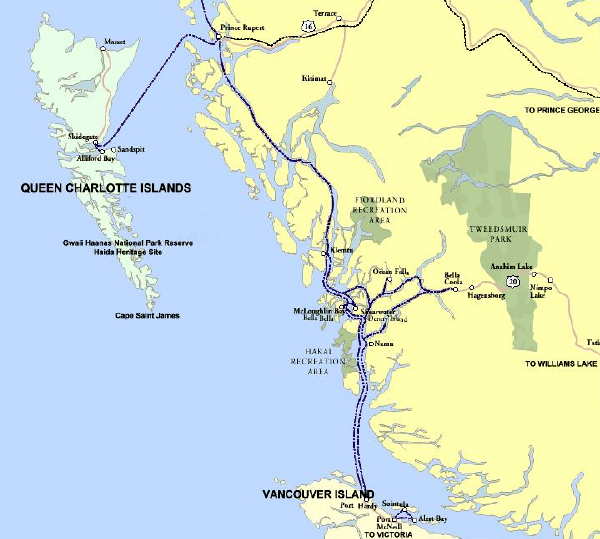
Walter is a hard core, mainly BCB DXer, who has a winterized vacation home in the remote Haida Gwaii Archipelago region of north west British Columbia, formerly known as the Queen Charlotte Islands.
He has built several permanent antennas, including loops and various beverages, mainly favoring Asia, the Pacific and over-the-pole. Some of his BCB recordings reveal mind-numbing signals from all parts of Asia ... not S9, but S9+++ and simply amazing.
I had asked Walter for some of his files that covered the NDB band, during periods of good propagation, so that I might be able to determine if my selected list of Alaskan beacons were actually on-the-air or not. There are several NDBs in Alaska that seem to be active, according to FAA information, but have never been heard by NDB DXers. Using Walt's recordings, along with his NW-pointed beverage, allowed my to have a deep listen into Alaska and finally get some answers.
It was exciting to tune through the very quiet band, from a northern perspective, and to hear many of the more 'difficult' (normally weak here) Alaskan targets at S9 levels. Unfortunately, going through my list of suspects, turned-up no sign of activity from any of them and explains why I have never been able to hear them from here! Like so many regions around the world, it seems that the once huge network of Alaskan NDBs is quickly being phased out up there as well.
An unexpected side benefit of going through Walt's files, turned up several instances of beacons in the Canadian north, that had been reported shut down, several years ago. It was surprising to hear them still as active as ever. Additionally, one NDB in Alaska, unheard here for two years and thought to be gone for some time, was found to be still happily keying away.
I've sent these findings to the RNA database for updating ... but it would have been nice to hear some of my long-sought after Alaskan 'ghosts', which seem likely to have been off-the-air for several years.
I would like to thank Walter for taking the time to share his Perseus files with me and for his unexpected contribution to the RNA database. Here are a few of the log's highlights:
DD UTC kHz Call mi New Location
--------------------------------------------------------------------------------------------------
22 14:07 214 DA Dawson, YT, CAN ... RNA shows QRT as of 2008 ...0 deg bev best
22 14:07 214 DA Dawson, YT, CAN ... RNA shows QRT as of 2008 ...0 deg bev best
22 14:07 236 JB 'Laberge' Whitehorse, YT, CAN ... RNA shows QRT in 2011 ... 0 deg bev
22 14:07 245 CB Cambridge Bay, NU, CAN ... 0 deg bev best but betterr on ALA on 19th
22 14:07 245 CB Cambridge Bay, NU, CAN ... 0 deg bev best but betterr on ALA on 19th
22 05:35 266 GH Fort Good Hope, YT, CAN ... RNA shows QRT in 2006 ... 0 deg bev
22 05:35 269 ZW Teslin, YT, CAN ... RNA show QRT early 2015 ... 0 deg bev
22 14:07 277 YLC Kimmirut, NU, CAN ... 0 deg bev
22 05:35 284 YOC Old Crow, YT, CAN ... only heard in AK, YT and Scandinavia ... 0 deg bev
22 14:07 287 WJ Deline, NT, CAN ... RNA shows QRT as of 2011 ... 0 deg bev
22 05:35 290 YYH Taloyoak, NU, CAN ... 0 deg bev
22 05:35 326 VQ Norman Wells, NT, CAN ... RNA shows QRT as of 2012 ... 0 deg bev
22 05:35 338 YPX Puvirnituq, QC, CAN ... the only PQ heard on your files ... 0 deg bev
22 14:57 346 N9 Tumbler Ridge Municipal Apt, BC, CAN ... RNA shows QRT as of 2014 ... nw bog
22 05:35 350 RB Resolute Bay, NU, CAN ... 0 deg bev
21 13:56 352 RG Nikau - Rarotonga IAP, CKS ... nw bog
19 13:47 359 NDJ Bucholz AAF - Kwajalein, MHL ... nw bog but ALA NE/SW best
21 13:56 360 OX Iwo Jima, VOI ... nw bog
22 05:35 362 YZS Coral Harbour, NU, CAN ... 0 deg bev
22 05:35 378 UX Hall Beach, NU, CAN ... 0 deg bev
22 05:35 417 GBH Galbraith Lake, ALS ... RNA shows QRT as of 2013 ... 0 deg bev
--------------------------------------------------------------------------------------------------
--------------------------------------------------------------------------------------------------
 |
| courtesy: http://www.noaa.gov/ |
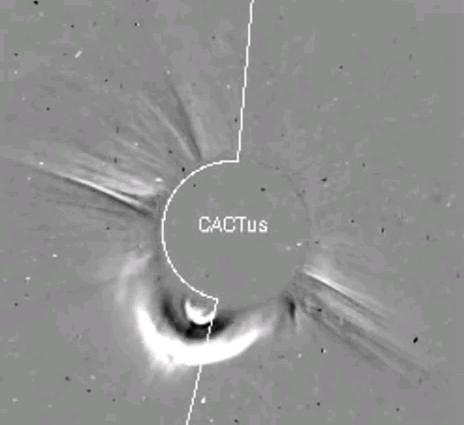
In the meantime, it looks like our planet is due for two more CME hits later tonight or early Saturday morning and the relatively quiet conditions of the past few nights will likely be badly disturbed on LF for the next few days ... something that has been happening far too much this winter as it seems that most of the prime time DX season has been one continual blast from the sun after another.
’29 BK QSO Party – Night #2
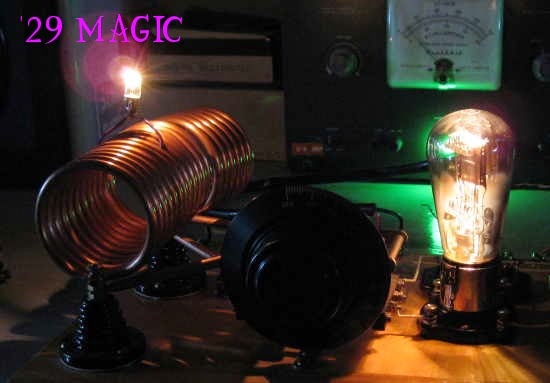
Weekend #2 for the 1929 Bruce Kelley QSO Party found propagation even poorer than the first weekend.
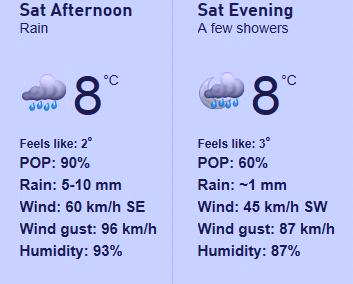
With the 'K' index rising to level 4 along with the arrival of high speed solar winds, it was an uphill battle once again. And as usual, the terrestrial winds were relentless at 60-90km/h here for the entire event ... the worst winds I have experienced during any previous BK's.
The new MOPA did not suffer from the same level of frequency jumping as my previously used Hartley or TNT oscillators but the high winds were still able to cause some melodic pulling of the oscillator. Apparently there is still enough trickle-down coupling from the PA to the oscillator when high winds cause sudden shifts in impedance or resonance of the antenna ... but generally I was much happier with the new BK transmitter.
This year's BK QSO total was the lowest I have had, with just 29 QSO's. A few more were added on Saturday night as well as early Sunday morning, including one QSO on topband.
KK7UV, Steve in Montana, can always be counted on for a clean-sweep and working him on 160m completed that task again this year. Steve's extensive fall antenna work has really payed off as his '29 signal was always impressive up this way. His 160m Hartley signal was a solid 579.
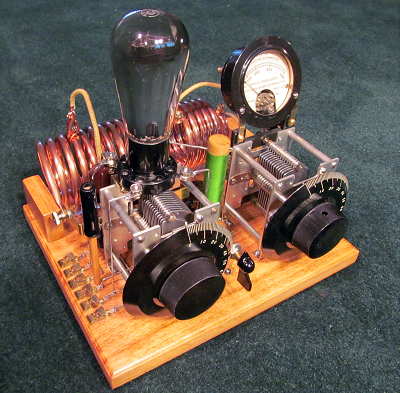 |
| KK7UV - Hull Hartley |
Hats off to Bill, K4JYS in North Carolina, as once again his signal seemed to be the one most consistently heard here, on both 40m and 80m. Bill runs a single-wire off-center fed Hertz at 40', as described in December 1929 QST and it seems to work very well.
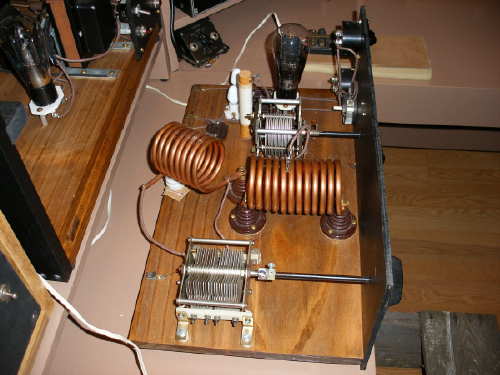 |
| K4JYS - 210 Hartley |
George, N3GJ in Pennsylvania was worked along with Larry, W2LB in New York. Larry's 5W Hartley signal was an amazing 559 and solid copy. His breadboard '29 rig is proof that it doesn't have to be pretty to do the job and join the fun!
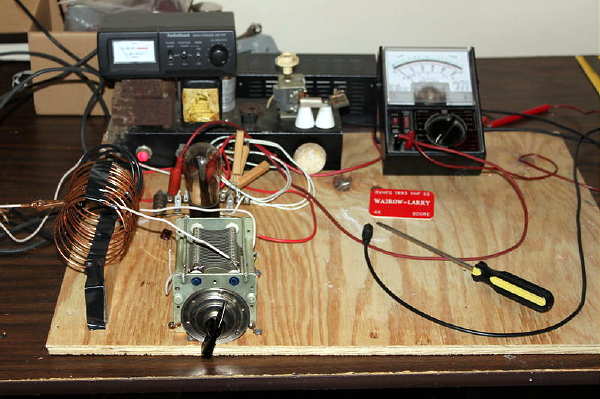 |
| W2LB - 227 5W Hartley |
Another one of the night's highlights was working Lou, VE3AWA, on 80m, who I had missed the previous weekend. So far, Lou and I have never failed to work each other on 80m but it was looking rather dire until his signal suddenly popped-up shortly before 8PM, keeping our record intact.
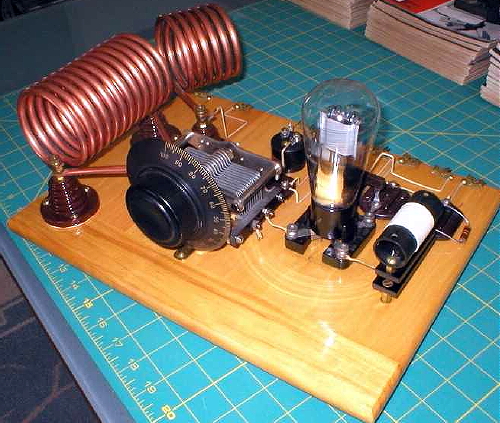 |
| VE3AWA - 210 TNT |
These stations were worked on weekend #2 ... Hartley oscillators having the edge once again.
40m
W7LNG TNT 10w OR
W8KGI MOPA 10w NM
N2BE Hartley 10w NJ
W2LB Hartley 5w NY
80m
VE3AWA TNT 10w ON
N3GJ Hartley 9w PA
W2LB Hartley 5w NY
KØKP Hartley 10w MN
KØKCY MOPA 10w MN
160m
KK7UV Hartley 10w MT
Please do consider putting something together for next year's BK Party as more new activity, particularly from the western side of the continent, is always wonderful to see and adds much more excitement to the party.
You might find the three-part 'Building '29 Style' links on the right sidebar of some interest should you be planning on joining the fun and ... if you are looking for help, you will find many '29 ops willing to do what they can to get you BK-ready on Yahoo's AWAGroup. Everyone would love to work you next year!

Hooked Early
 |
| courtesy: http://www.arrl.org/ |
I still have a vivid memory of the day I discovered (and bought) my first QST magazine. It was in February, 1959, and I had recently turned 11 years of age.
It seems I was doomed from a very tender age and, as it turned out, there was little hope of recovery.
It was a Friday night and I had gone with my parents, as we did every Friday night following dinner, to the Eaton's department store in downtown Vancouver.
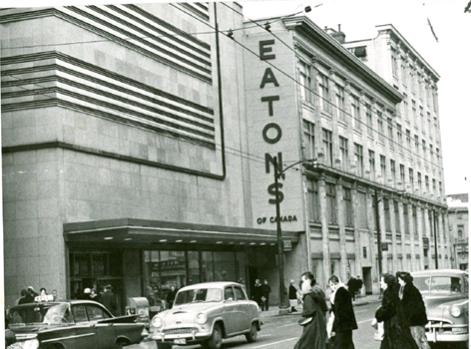 |
| courtesy: http://www.thespec.com/ |
I recall debating to spend my small allowance on the costlier QST (55 cents) or the cheaper (40 cents) Popular Electronics. I found the technical-looking cover too overpowering, bit-the-bullet, and shelled-out for the QST ... that extra 15 cents forever sealing my fate.
As I sat in the back seat of the car (a '53 Chevy Sedan), waiting for my parents to finish their grocery shopping, I browsed through the QST. In truth, I understood very little but was particularly captivated with the station photographs in Rod Newkirk's "How's DX" column. One photograph in particular has remained in my memory through all these years, that of a young-looking "HS1JN" at the operating position from his exotic location in Thailand, along with Newkirk's equally enchanting description ... powerful stuff for a young mind eager to soak-up all of this new 'radio' stuff.
 |
| courtesy: http://www.arrl.org/ |
A recent internet search turned up snippets of information about the young Naval Researcher, Jamnong Saowanna, now SK, who eventually rose to the rank of Captain in the Thai Navy and was later instrumental in legitimizing amateur radio in Thailand. Apparently, back then, ham radio in Thailand had been unsanctioned and not officially approved by the government. HS1JN's original QSL also shows up, in the collection of K8CX, shown below.
 |
| courtesy: http://hamgallery.com/qsl/ |
Note that it's the same card shown taped to the front panel of HS1JN's homebrew transmitter in 1959. The K8CX card, for a 15m CW QSO with W6FMK in 1969, shows that OM Jamnong was by then running 500 watts along with a Collins KWM-2 ... quite a step up, but not nearly as alluring as his 'homespun 40-watt sender' and Hallicrafters S-40 receiver.
After absorbing as much as I could from my single copy of QST, I began making weekly visits to the downtown library via bus, every Saturday morning, as it was there that I discovered I could peruse their huge bound collection of QST magazines, and borrow the latest issues, just for the asking! As well, they had a stockpile of colorfully-covered Radio Amateur Handbooks that spanned the past two decades ... it couldn't get any better.
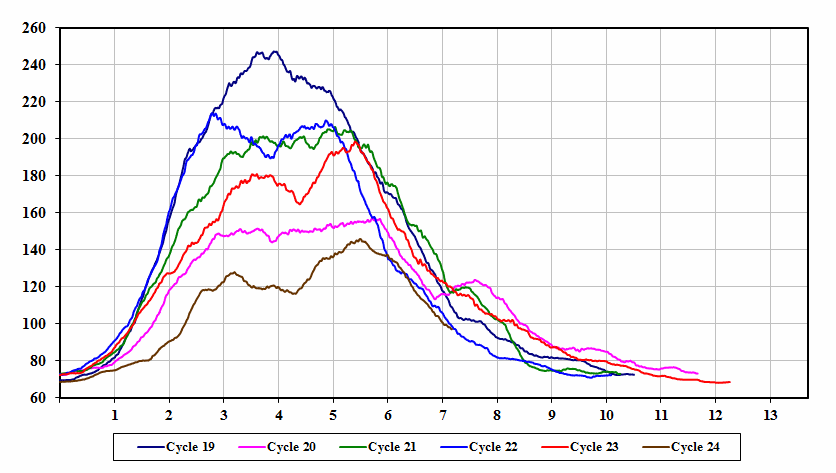
It was at this time that I changed my listening interests from the international shortwave broadcasters and began listening to hams on my old General Electric tombstone, particularly on 20m phone on weekend nights, as the band would be open all night long ... monster Cycle 19 had just peaked and propagation was nothing short of amazing.
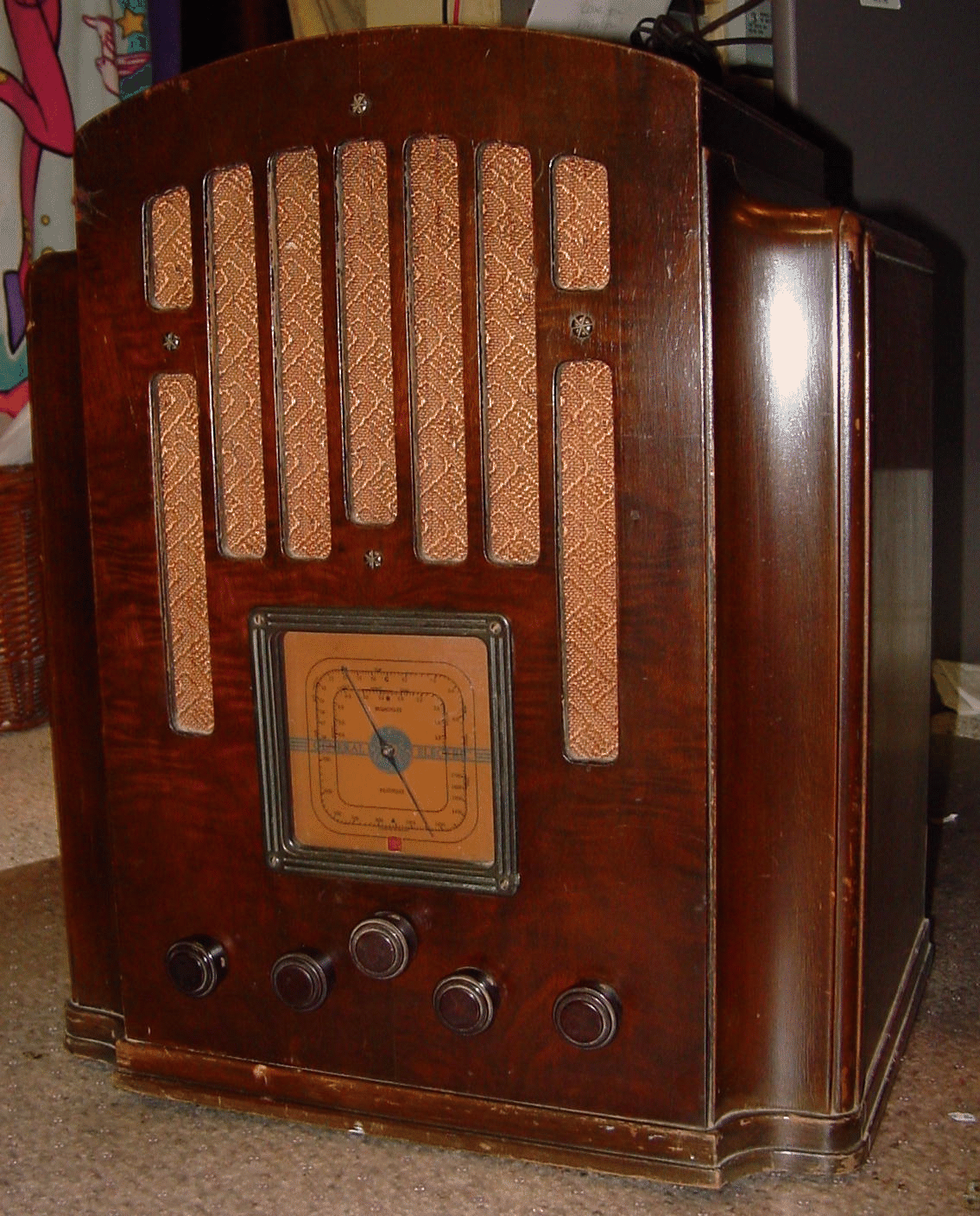
Between the February QST and the old GE, I never really had a chance.
Solar Cycle Trends and The Gleissberg Cycle
 |
| courtesy: http://sdo.gsfc.nasa.gov/data/ |
This month's Sky & Telescope magazine mentions an interesting study presented in a press release from the International Astronomical Union's 29th General Assembly held this past summer.
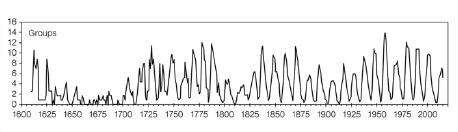
Frederic Clette (Royal Observatory of Belgium) and colleagues analyzed the past 400 years of sunspot records and found that the (previously believed) upward trend in solar activity is really a calibration error. They found instead, that solar activity has been relatively stable since the 1700s.
The IAU's summer press release goes on to say ...
" The Sunspot Number, the longest scientific experiment still ongoing, is a crucial tool used to study the solar dynamo, space weather and climate change. It has now been recalibrated and shows a consistent history of solar activity over the past few centuries. The new record has no significant long-term upward trend in solar activity since 1700, as was previously indicated. This suggests that rising global temperatures since the industrial revolution cannot be attributed to increased solar activity.
The results ... make it difficult to explain the observed changes in the climate that started in the 18th century and extended through the industrial revolution to the 20th century as being significantly influenced by natural solar trends.
The apparent upward trend of solar activity between the 18th century and the late 20th century has now been identified as a major calibration error in the Group Sunspot Number. Now that this error has been corrected, solar activity appears to have remained relatively stable since the 1700s
The newly corrected sunspot numbers now provide a homogeneous record of solar activity dating back some 400 years. Existing climate evolution models will need to be reevaluated given this entirely new picture of the long-term evolution of solar activity. This work will stimulate new studies both in solar physics (solar cycle modelling and predictions) and climatology, and can be used to unlock tens of millennia of solar records encoded in cosmogenic nuclides found in ice cores and tree rings. This could reveal more clearly the role the Sun plays in climate change over much longer timescales. "
 |
| courtesy: World Data Center - SILSO |
I found this graph particularly interesting with regards to long-term affects on propagation as it illustrates the upcoming predicted Gleissberg Cycle, the 'cycle within the Cycle' ... a period of several weak 11-year cycles in a row and lasting from 80-90 years ... great news for low-frequency fans but not so good for 6m diehards.
Maybe we'll get one more humdinger before it arrives!
’29 BK QSO Party – Night #1
 |
| Harold - KB0ROB |
This past Friday night's wonderful propagation during the ARRL 160m CW Contest, pretty much went into the dumper for Saturday night's 1929 Bruce Kelley QSO Party, sponsored by the Antique Wireless Association.
In spite of the auroral-like conditions, with the K-index reaching level '5', the melodic tones from many of the old (and new) clunkers could be heard pounding out their annual 'CQ AWA' invitations.
Among my 19 contacts (8 on 40m and 11 80m), the highlight of the night was working W2ICE/1 in Maine on both 40 and 80m. In reality, this was Paul, N1BUG, operating Bruce Kelley's original 10 watt TNT, which rose to almost S9 levels on 40m, once the sun had set. The Kelley transmitter is moved to various locations each year, a new AWA tradition.
As well, Larry (NE1S), also in Maine, was worked on 40m with his 10W TNT.
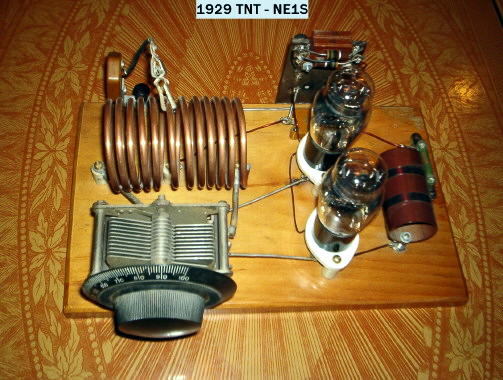
A new station for my '29 logbook was George (N3GJ), in Pennsylvania. George was managing 8 watts input to his version of a 1929 TNT.
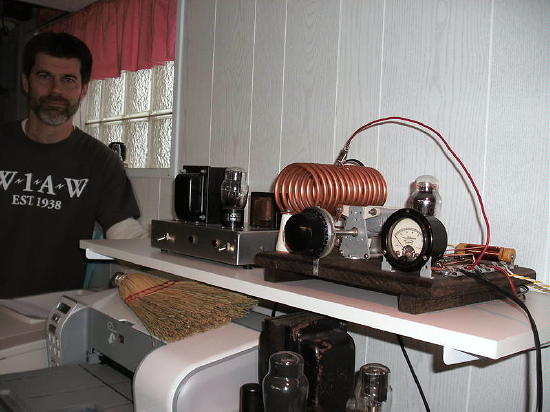
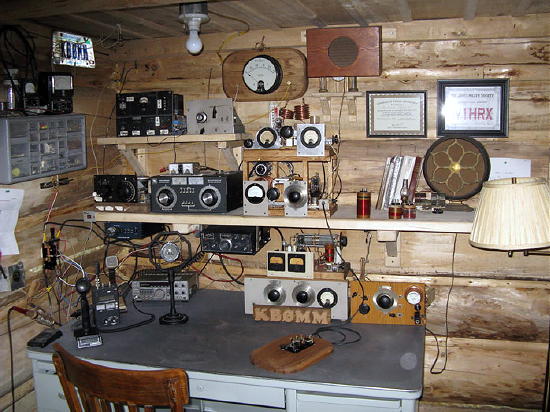
When I first tuned-in, several years ago, to hear what these 1929 signals sounded like, two of the best sounding signals were coming from KBØROB (Harold), shown at the top, and KBØMM (Burt), both in Minnesota. I could hardly believe they were using era-appropriate rigs as their signals sounded as good as many modern rigs. Thankfully nothing has changed, as these two stations continue to hand out 'MN' using their well-built 'MOPA'-style time machines.
Scott, WA9WFA, the BK score-keeper in charge of logs, faded up briefly with his fine-looking Colpitts.
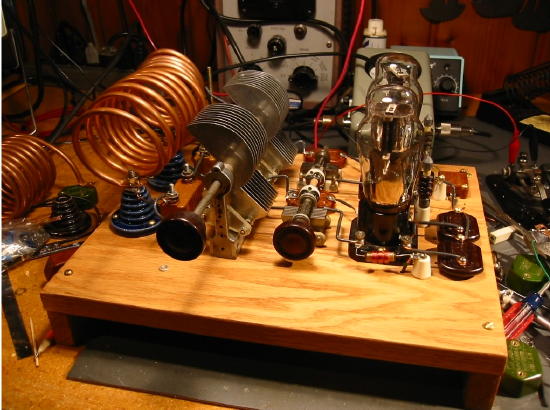
Here is a list of the '29ers worked so far, along with their rig style and DC power inputs.
40m
KK7UV Hartley 10w MT
W2ICE/1 TNT 10w ME
NE1S TNT 10w ME
VE7BDQ Colpitts 8w BC
K7SF Hartley 10w OR
K4JYS Hartley 10w NC
WB2AWQ Hartley 10w NV
N3GJ TNT 8w PA
80m
KBØMM MOPA 8w MN
KBØROB MOPA 9w MN
W7LNG TNT 7w OR
K4JYS Hartley 10w NC
W2ICE/1 TNT 10w ME
WA9WFA Colpitts 20w MN
KK7UV Hartley 10w MT
W9TFC Hartley 10w WI
N2BE Hartley 10w NJ
KIØDB MOPA 10w MN
WØLGU MOPA 10w MN
As you can see, 'Hartley' construction takes a slight edge. Vintage 'handbooks' and magazine articles from the era, have always promoted the TNT as the best 'beginners' rig but in reality, the Hartley is much easier to build and to get working with a good-sounding signal. The TNT requires some finicky tweaking of the grid coil in order to have an equally stable-sounding note.
I'm happy to report that in spite of the very high winds (as usual), my new MOPA's tone remained virtually unmoving ... for the most part! This was its first real workout and after my first QSO on 80m, my frequency began making large jumps and suddenly sounding very unstable, along with fluctuations in power output. My initial thought was that one of the old original mica caps was starting to breakdown.
After disconnecting one lead of each capacitor (one at a time) and temporarily clipping in a modern substitute, I was no further ahead. I had originally isolated the frequency instability to the amplifier stage and there was only one thing left ... the amplifier's grid-leak resistor. It appeared to be slowly failing, by increasing resistance in jumps. The 12K resistor was now measuring ten times that value and quickly rising. A new 12K, temporarily clipped in place, cured the problem but it had cost me over an hour of operating time ... probably the best prop of the night as by the time I got back on the band, signals were weak and auroral-sounding.
Hopefully the bands will have mended themselves by next Saturday night, allowing some of the smaller eastern stations to make it back to the west coast for some memorable '29 'transcons'.
ARRL 160 CW / ’29 QSO Party
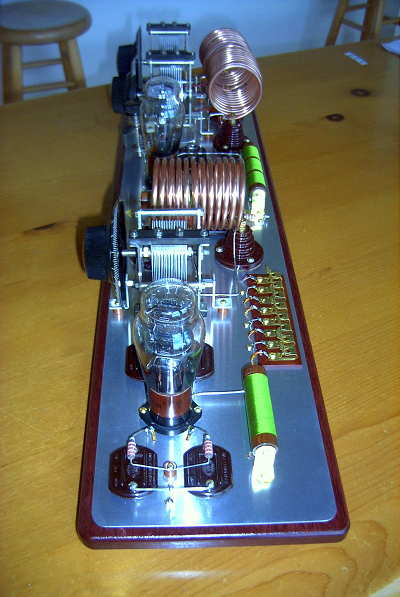 |
| '29 MOPA |
I spent about five hours last night in the ARRL 160 CW contest, working 321 stations in 74 sections. Conditions were excellent, with my 150W sustaining long runs and big pileups. It reminded me very much of the old F2 days on 6m, running huge pileups of JA's. Unfortunately I'll not be able to continue tonight because of the conflict with the '29 QSO Party.
In reality, I may not be in that one either, as right on schedule the winds have picked up once again, with gusts to 83 km/h predicted throughout the day ... I'll be lucky if the power stays on for the QSO Party tonight. As well as doing their best to blow my antennas around and make my already shaky '29 signal sound even worse, these high winds all too often result in long power outages here in the Southern Gulf Islands ... my fingers are crossed, as they are every year at this time.
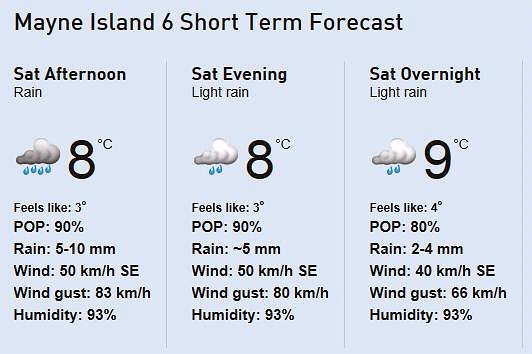 |
| courtesy: http://www.theweathernetwork.com/weather/canada/british-columbia/mayne-island-6 |
If I'm lucky enough to still have power, this will be the inauguration of my newly-constructed MOPA '29 rig ... a two-tube, Master Oscillator Power Amplifier. This rig will be much more 'wind-proof' than my previous mainstays, a single-tube TNT or the Hull Hartley. Both of these self-excited oscillators sound overly 'melodic' when directly coupled to an antenna swinging, or more often, blowing like crazy, in the wind.
If you ever wondered what the ham bands may have sounded like back in 1929, have a listen this Saturday as well as next Saturday night. You will hear some amazingly good signals being generated by these '29 state-of-the-art transmitters as well as some pretty awful sounding ones. It was the pretty awful-sounding ones that led to the crackdown for amateur radio in 1929 as hams were forced to clean up their act or suffer the consequences.
Activity will gather around 3550-3580 kHz and 7100-7125 kHz ... the second weekend will see some meet on the very low end of 160m for an hour, probably around 0400z. I hope some of you will be joining the fun as well, with your newly-constructed 'old' rig!
CLE 200 Results
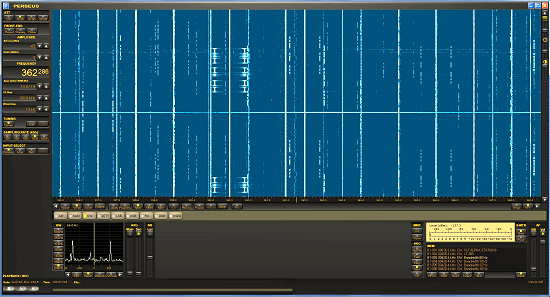
The CLE 200 event this past weekend once again delivered mediocre propagation on all three evenings. In spite of Sunday night's G1-class geomagnetic storm and high K values, Sunday's overnight period proved to be the best of the weekend's generally 'below average' conditions ... this is the time of the year that LF propagation is usually at its best. Thankfully, there are still several months ahead that could offer some really great mid-winter prop.
The following NDBs were logged using the Perseus SDR along with my LF inverted L, resonated at 300kHz:
28 09:00 335 CC Concord, CA, USA
28 09:00 335 CVP Helena, MT, USA
28 08:00 335 YUT Repulse Bay, NU, CAN
28 06:00 335 YLD Chapleau, ON, CAN
28 09:00 336 LF La Salle, MB, CAN
28 13:00 337 FF Fergus Falls, MN, USA
28 09:00 337 7D Hudson Bay, SK, CAN
28 12:00 338 CMQ Campbell Lake, ALS
28 09:00 338 ZU Whitecourt, AB, CAN
28 12:00 338 RYN Tucson, AZ, USA
30 08:00 338 SHL Sheldon, IA, USA
28 07:00 338 TU Tulsa, OK, USA
28 12:00 338 YPX Puvirnituq, QC, CAN
28 12:00 338 K Port Angeles, WA, USA
28 10:00 339 6X York Landing, MB, CAN
28 10:00 339 MKR Glasgow, MT, USA
29 06:00 340 YY Mont Joli, QC, CAN
28 13:00 341 ELF Cold Bay, ALS
28 10:00 341 OIN Oberlin, KS, USA
29 06:00 341 YYU Kapuskasing, ON, CAN
28 09:00 341 DB Burwash, YT, CAN
28 09:00 342 PFT Pinecreek, MN, USA
28 09:00 343 YZH Slave Lake, AB, CAN
28 09:00 344 YOP Rainbow Lake, AB, CAN
28 09:00 344 XX Abbotsford, BC, CAN
28 09:00 344 FCH Fresno, CA, USA
28 09:00 344 BKU Baker, MT, USA
28 09:00 344 POY Powell, WY, USA
30 08:00 345 GF Grand Forks, ND, USA
30 08:00 346 OLT Soldotna, ALS
28 09:00 346 YXL Sioux Lookout, ON, CAN
28 15:00 347 TNC Tin City, ALS
28 13:30 347 DJN Delta Junction, ALS
28 06:00 347 LEN Leeny, ID, USA
28 15:00 347 SBX Shelby, MT, USA
30 08:00 347 YK Yankton, SD, USA
28 09:00 347 PA Prince Albert, SK, CAN
30 08:00 348 MC Mason City, IA, USA
28 07:00 348 MNC Shelton, WA, USA