Author Archive
 Digital Revolution Or Evolution?
 June 3rd, 2017 |
  Author:
  |
| courtesy: KD0WTE |
A recent reflector posting tended to confirm a rather intriguing trend that I have also been noticing over the past few years.
The poster lamented the fact that he often found very few or even no CW / SSB signals on the HF bands while at the same time seeing lots of activity throughout the digital portion of the bands.
It does seem like there is far less CW and phone activity on the HF bands now, than there was a few years ago and there is no question that digital activity has soared. Whether it's RTTY, PSK31, JT65, WSPR, JT9 or others, these digital signals are always prominent and, band plan or not, are slowly migrating further in the band as activity increases ... but is this the reason for the decline of traditional modes?
The digital weak-signal modes make these extremely popular for a number of reasons. Nowadays, many amateurs are living in antenna-restricted communities and are forced to develop smaller, lower and less effective stealthy antenna systems if they wish to get on the air and make contacts. Most of these modes perform well with minimal amounts of power and are capable of hearing well into the noise ... and unless you live out in the country, with well-separated neighbours, we all know that noise is increasing at horrific levels almost everywhere. These two factors alone might well explain much of the growth in digital activity.
Licencing requirements have also been slowly evolving and today, getting a ticket is much easier than it was several decades ago ... and in many cases, without the requirements of knowing anything about CW. Every month, North Americans see a large number of new amateurs, many with no code skills and possibly not much interest in acquiring them. From my own local observations, most of these new amateurs usually head straight to FM on the VHF/UHF bands and have little knowledge of or interest in HF radio. These factors must also play into the demise of activity on the traditional HF modes as well.
We also shouldn't overlook the influence that Old Sol is having on our HF bands as well. Solar Cycle 24 (begun in 2008) has been one of the poorest on record and continues to generate month after month of terribly poor HF propagation. As a young SWL who listened in Cycle 19, (the largest on record), I can vouch for the relationship between HF activity and good propagation. Those were amazing days, when 20 and 15m would stay open all night long ... even 10m would often still be open with F2 propagation at midnight towards VK and ZL! Everyday, month after month, the bands were simply bulging with activity, from end to end ... high solar flux numbers bring high activity numbers and we are now experiencing the downside effects of what happens when the sun dreadfully underperforms. The only exception to band-bulging activity today seems to be limited to major contest weekends only. Where these people go the rest of the time is a mystery.
There are surely other reasons as well for the gradual decline of traditional-mode HF activity, including the fact that the general ham population is getting older. Large numbers of stations are simply 'going away' as interest or opportunity declines and as more of the aging traditional-mode ops go 'SK'. I know of several hams that have just given-up because of insurmountable increases in their local noise floors. Our new and usually younger hams, have largely grown up in the 'digital age' and for those that do find themselves exploring the HF bands without CW skills, might logically settle into the digital modes first.
Things are changing quickly, of that there is no doubt. Last summer, on 50mHz, I noticed a large increase in the number of dedicated CW operators moving to JT65 and JT9 during openings and this summer has already seen another huge migration from one mode to the other.
Although this year's Sporadic-E season is just getting started, I have already heard many more countries on JT65 than I have on the traditional modes (Japan, Philippines, China, Formosa, Alaska, Venezuela, Cuba, Brazil). Yesterday I listened to a PY calling CQ on CW for some length, with no takers, while it seemed most of the usual west coast ops were watching the digital band. I fear that many good QSO possibilities will be lost as more stations switch to the much slower digital modes ... on 6m, many of the openings last for a very short time making CW or SSB the quickest way to complete a contact. The other problem I notice this summer is that there are several JT sub-modes and it is often difficult or impossible to figure out which mode is being used let alone having the time to switch to the other mode before signals are gone ... perhaps a case of having too much of a 'good thing'? Hopefully one mode will emerge as the '6m standard' so all are on the same page.
What will be the long-term outcome of these changes remains to be seen but I suspect we'll see more and more of our HF CW and SSB spectrum space gradually shrinking to make room for more digital activity, likely to become the dominant modes eventually.
As a life-time, almost exclusive CW operator since age 15, I find this somewhat disheartening but must admit that over the past few years, I have found my own level of weak-signal digital activity increasing by leaps and bounds. These are powerful, capable modes and offer amateurs new and exciting challenges from VLF to nanowaves. Are they as exciting as my much-loved CW? Ask me in a couple of years!
Digital Revolution Or Evolution?
|
| courtesy: KD0WTE |
A recent reflector posting tended to confirm a rather intriguing trend that I have also been noticing over the past few years.
The poster lamented the fact that he often found very few or even no CW / SSB signals on the HF bands while at the same time seeing lots of activity throughout the digital portion of the bands.
It does seem like there is far less CW and phone activity on the HF bands now, than there was a few years ago and there is no question that digital activity has soared. Whether it's RTTY, PSK31, JT65, WSPR, JT9 or others, these digital signals are always prominent and, band plan or not, are slowly migrating further in the band as activity increases ... but is this the reason for the decline of traditional modes?
The digital weak-signal modes make these extremely popular for a number of reasons. Nowadays, many amateurs are living in antenna-restricted communities and are forced to develop smaller, lower and less effective stealthy antenna systems if they wish to get on the air and make contacts. Most of these modes perform well with minimal amounts of power and are capable of hearing well into the noise ... and unless you live out in the country, with well-separated neighbours, we all know that noise is increasing at horrific levels almost everywhere. These two factors alone might well explain much of the growth in digital activity.
Licencing requirements have also been slowly evolving and today, getting a ticket is much easier than it was several decades ago ... and in many cases, without the requirements of knowing anything about CW. Every month, North Americans see a large number of new amateurs, many with no code skills and possibly not much interest in acquiring them. From my own local observations, most of these new amateurs usually head straight to FM on the VHF/UHF bands and have little knowledge of or interest in HF radio. These factors must also play into the demise of activity on the traditional HF modes as well.
We also shouldn't overlook the influence that Old Sol is having on our HF bands as well. Solar Cycle 24 (begun in 2008) has been one of the poorest on record and continues to generate month after month of terribly poor HF propagation. As a young SWL who listened in Cycle 19, (the largest on record), I can vouch for the relationship between HF activity and good propagation. Those were amazing days, when 20 and 15m would stay open all night long ... even 10m would often still be open with F2 propagation at midnight towards VK and ZL! Everyday, month after month, the bands were simply bulging with activity, from end to end ... high solar flux numbers bring high activity numbers and we are now experiencing the downside effects of what happens when the sun dreadfully underperforms. The only exception to band-bulging activity today seems to be limited to major contest weekends only. Where these people go the rest of the time is a mystery.
There are surely other reasons as well for the gradual decline of traditional-mode HF activity, including the fact that the general ham population is getting older. Large numbers of stations are simply 'going away' as interest or opportunity declines and as more of the aging traditional-mode ops go 'SK'. I know of several hams that have just given-up because of insurmountable increases in their local noise floors. Our new and usually younger hams, have largely grown up in the 'digital age' and for those that do find themselves exploring the HF bands without CW skills, might logically settle into the digital modes first.
Things are changing quickly, of that there is no doubt. Last summer, on 50MHz, I noticed a large increase in the number of dedicated CW operators moving to JT65 and JT9 during openings and this summer has already seen another huge migration from one mode to the other.
Although this year's Sporadic-E season is just getting started, I have already heard many more countries on JT65 than I have on the traditional modes (Japan, Philippines, China, Formosa, Alaska, Venezuela, Cuba, Brazil). Yesterday I listened to a PY calling CQ on CW for some length, with no takers, while it seemed most of the usual west coast ops were watching the digital band. I fear that many good QSO possibilities will be lost as more stations switch to the much slower digital modes ... on 6m, many of the openings last for a very short time making CW or SSB the quickest way to complete a contact. The other problem I notice this summer is that there are several JT sub-modes and it is often difficult or impossible to figure out which mode is being used let alone having the time to switch to the other mode before signals are gone ... perhaps a case of having too much of a 'good thing'? Hopefully one mode will emerge as the '6m standard' so all are on the same page.
What will be the long-term outcome of these changes remains to be seen but I suspect we'll see more and more of our HF CW and SSB spectrum space gradually shrinking to make room for more digital activity, likely to become the dominant modes eventually.
As a life-time, almost exclusive CW operator since age 15, I find this somewhat disheartening but must admit that over the past few years, I have found my own level of weak-signal digital activity increasing by leaps and bounds. These are powerful, capable modes and offer amateurs new and exciting challenges from VLF to nanowaves. Are they as exciting as my much-loved CW? Ask me in a couple of years!
CLE 219 Results
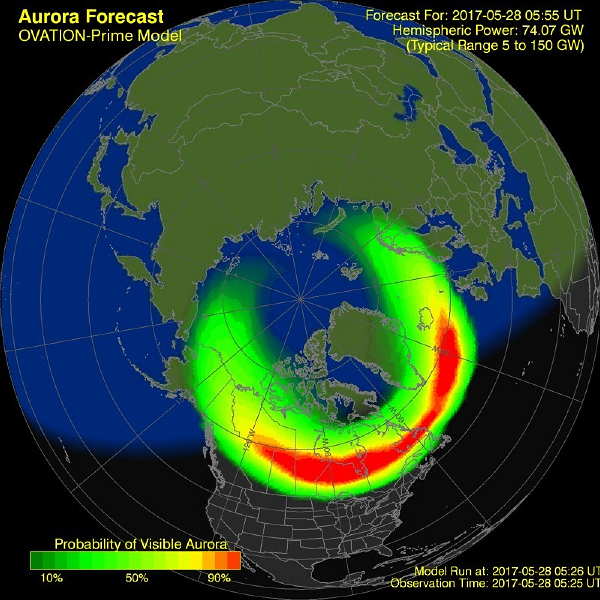
As originally feared, MF conditions took a nasty beating this weekend during the monthly CLE .
It's really amazing how closely synced to terrible conditions the CLE's have become ... perhaps we need to offset our monthly activity by staging the next one in two weeks to see if we break out of sync with the Sun's regular 27-day rotation of coronal hole streaming.
Friday night was the best, much better than most other regions in North America from what I could tell as the geomagnetic storm had not yet struck ... but most others suffered from severe thunderstorm noise further to the south and east of BC.
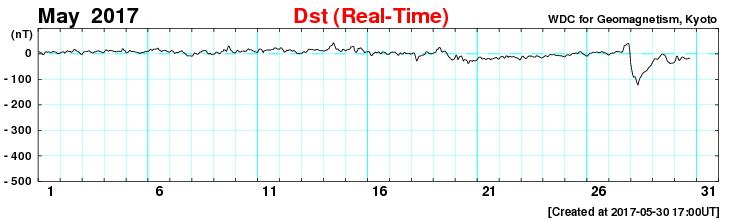
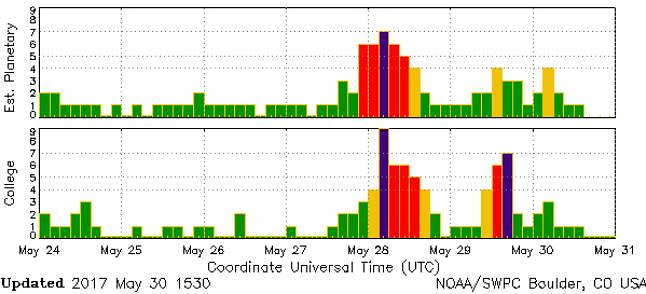
Once the geomagnetic storm was underway, the DST quickly tanked and both Saturday and Sunday nights saw a shroud of absorption thrown over the NDB band, at times making me wonder if I even had an antenna connected to the receiver. I haven't seen such poor conditions on MF in several years.
 | ||
| courtesy: http://wdc.kugi.kyoto-u.ac.jp/ |
 |
| courtesy: http://www.noaa.gov/ |
Fortunately, the following stations were heard on Friday night, before the storm, using my Perseus SDR and LF / MF inverted-L resonated to ~350 kHz:
27 06:00 350.0 SWU Sweden - Id Falls, ID, USA
27 11:00 350.0 RG Oklahoma City, OK, USA
27 05:00 350.0 NY Enderby, BC, CAN
27 08:00 351.0 YKQ Waskaganish, QC, CAN
27 06:00 353.0 RNT Renton, WA, USA
27 06:00 353.0 PG Portage La Prairie, MB, CAN
27 12:30 353.0 LLD Lanai Island, HWA
27 06:00 353.0 IN Ericsburg, MN, USA
27 11:00 353.0 DI Dickinson, ND, USA
27 11:00 353.0 AL Dixie, WA, USA
27 06:00 356.0 ZXE Saskatoon, SK, CAN
27 10:00 356.0 ZF Yellowknife, NT, CAN
27 11:00 356.0 PND Portland, OR, USA
27 05:00 356.0 ON Penticton, BC, CAN
27 11:00 356.0 MEF Medford, OR, USA
27 10:00 358.0 SIT Sitka, ALS
27 10:00 359.0 YQZ Quesnel, BC, CAN
27 10:00 359.0 YAZ Tofino, BC, CAN
27 10:00 359.0 SDY Sidney, MT, USA
27 06:00 359.0 BO Ustick, ID, USA
27 08:00 362.0 RPX Roundup, MT, USA
27 08:00 362.0 BF Seattle, WA, USA
27 10:00 362.0 6T Foremost, AB, CAN
27 10:00 365.0 MA Mayo, YT, CAN
27 05:00 365.0 DPY Deer Park, WA, USA
27 06:00 365.0 AA Harwood, MN, USA
27 07:00 366.0 YMW Maniwaki, QC, CAN
27 11:00 368.0 ZP Sandspit, BC, CAN
27 10:00 368.0 VX Dafoe, SK, CAN
27 11:00 368.0 SX Skookum - Cranbrook, BC, CAN
CLE 219 Results
As originally feared, MF conditions took a nasty beating this weekend during the monthly CLE .
It's really amazing how closely synced to terrible conditions the CLE's have become ... perhaps we need to offset our monthly activity by staging the next one in two weeks to see if we break out of sync with the Sun's regular 27-day rotation of coronal hole streaming.
Friday night was the best, much better than most other regions in North America from what I could tell as the geomagnetic storm had not yet struck ... but most others suffered from severe thunderstorm noise further to the south and east of BC.
Once the geomagnetic storm was underway, the DST quickly tanked and both Saturday and Sunday nights saw a shroud of absorption thrown over the NDB band, at times making me wonder if I even had an antenna connected to the receiver. I haven't seen such poor conditions on MF in several years.
| ||
| courtesy: http://wdc.kugi.kyoto-u.ac.jp/ |
|
| courtesy: http://www.noaa.gov/ |
Fortunately, the following stations were heard on Friday night, before the storm, using my Perseus SDR and LF / MF inverted-L resonated to ~350 kHz:
27 06:00 350.0 SWU Sweden - Id Falls, ID, USA
27 11:00 350.0 RG Oklahoma City, OK, USA
27 05:00 350.0 NY Enderby, BC, CAN
27 08:00 351.0 YKQ Waskaganish, QC, CAN
27 06:00 353.0 RNT Renton, WA, USA
27 06:00 353.0 PG Portage La Prairie, MB, CAN
27 12:30 353.0 LLD Lanai Island, HWA
27 06:00 353.0 IN Ericsburg, MN, USA
27 11:00 353.0 DI Dickinson, ND, USA
27 11:00 353.0 AL Dixie, WA, USA
27 06:00 356.0 ZXE Saskatoon, SK, CAN
27 10:00 356.0 ZF Yellowknife, NT, CAN
27 11:00 356.0 PND Portland, OR, USA
27 05:00 356.0 ON Penticton, BC, CAN
27 11:00 356.0 MEF Medford, OR, USA
27 10:00 358.0 SIT Sitka, ALS
27 10:00 359.0 YQZ Quesnel, BC, CAN
27 10:00 359.0 YAZ Tofino, BC, CAN
27 10:00 359.0 SDY Sidney, MT, USA
27 06:00 359.0 BO Ustick, ID, USA
27 08:00 362.0 RPX Roundup, MT, USA
27 08:00 362.0 BF Seattle, WA, USA
27 10:00 362.0 6T Foremost, AB, CAN
27 10:00 365.0 MA Mayo, YT, CAN
27 05:00 365.0 DPY Deer Park, WA, USA
27 06:00 365.0 AA Harwood, MN, USA
27 07:00 366.0 YMW Maniwaki, QC, CAN
27 11:00 368.0 ZP Sandspit, BC, CAN
27 10:00 368.0 VX Dafoe, SK, CAN
27 11:00 368.0 SX Skookum - Cranbrook, BC, CAN
Hunting For NDBs In CLE 219
 |
| YMW-366 Maniwaki, QC courtesy: VE3GOP |
This coming weekend will see another CLE challenge. This time the hunting grounds will be: 350.0 - 369.9 kHz.
For those unfamiliar with this monthly activity, a 'CLE' is a 'Co-ordinated Listening Event', as NDB DXers around the world focus their listening time on one small slice of the NDB spectrum.
A nice challenge in this one is to hear the Maniwaki NDB, 'YMW', on 366 kHz. It's a 500-watter and is well heard, having been logged from Europe to Hawaii and is a good propagation indicator for listeners in western North America. Look for 'YMW' on 344.401 kHz.
I see a forecast of a possible CME impact sometime Friday, right on schedule for the CLE event! Sometimes these help but usually not. At this time of the year it's usually not the propagation causing problems but rather, the lightning activity and its associated QRN. A good place to check lightning activity in realtime is at the Blitzortung website.
When tuning for NDBs, put your receiver in the CW mode and listen for the NDB's CW identifier, repeated every few seconds. With your receiver in the CW mode, listen for U.S. NDB identifiers approximately 1 kHz higher or lower than the published transmitted frequency since these beacons are tone-modulated with a 1020 Hz tone approximately.
For example, 'AA' in Fargo, MN, transmits on 365 kHz and its upper sideband CW identifier is tuned at 366.025 kHz while its lower sideband CW ident can be tuned at 363.946 kHz. Its USB tone is actually 1025 Hz while its LSB tone is 1054 Hz.
Often, one sideband will be much stronger than the other so if you don't hear the first one, try listening on the other sideband.
Canadian NDBs normally have an USB tone only, usually very close to 400 Hz. They also have a long dash (keydown) following the CW identifier.
All NDBs heard in North America will be listed in the RNA database (updated daily) while those heard in Europe may be found in the REU database. Beacons heard outside of these regions will be found in the RWW database.
From CLE organizer Brian Keyte, G3SIA, comes the usual 'heads-up':
Our 219th Co-ordinated Listening Event is almost here.
Can new 'listening eventers' join in too? YES, PLEASE! I'm always
pleased to help first-time CLE logs through the harvester program.
Days: Friday 26 May - Monday 29 May
Times: Start and End at midday, your LOCAL time
Range: 350.0 - 369.9 kHz
Please log all the NDBs you can identify that are listed in this range (it
includes 350 kHz but not 370) plus any UNIDs that you come across there.
You can find full information to help you, including seeklists made from
RNA/REU/RWW, at the CLE page http://www.ndblist.info/cle.htm
Please send your 'Final' CLE log to the List, if possible as a plain text
email and not in an attachment, with 'CLE219' at the start of its title.
Please show the following main items FIRST on EVERY line of your log: The full Date (e.g. 2017-05-26) or just the day number (e.g. 26)
and UTC (the day changes at 00:00 UTC).
# kHz - the beacon's nominal published frequency, if you know it.
# The Call Ident.
Optional details such as Location and Distance go LATER in the same line.
If you measure LSB/USB offsets and cycle times they are useful too.
Please always include details of your own location and brief details of the
receiver, aerial(s) and any recording equipment you were using, etc.
I will send the usual 'Any More Logs?' email at about 17:00 UTC on Tuesday
so you can check that your log has been found OK.
Do make sure that your log has arrived at the very latest by 08:00 UTC on
Wednesday 31 May. I hope to make all the combined results on that day.
Good listening
Brian
----------------------------------------------------------
From: Brian Keyte G3SIA ndbcle'at'gmail.com
Location: Surrey, SE England (CLE co-ordinator)
----------------------------------------------------------
(Reminder: If you wish you can use a remote receiver for your loggings,
stating its location and owner - with their permission if required.
Sometimes a listener has local problems and can only take part that way.
A remote listener may NOT also use another receiver, whether local or
remote, to obtain further loggings for the same CLE).
These listening events serve several purposes. They:
- determine, worldwide, which beacons are actually in service and on-the-air so the online database can be kept up-to-date
- determine, worldwide, which beacons are out-of-service or have gone silent since the last CLE covering this range
- will indicate the state of propagation conditions at the various participant locations
- will give you an indication of how well your LF/MF receiving system is working
- give participants a fun yet challenging activity to keep their listening skills honed
Final details can be found at the NDB List website, and worldwide results, for every participant, will be posted there a few days after the event. If you are a member of the ndblist Group, results will also be e-mailed and posted there.
The very active Yahoo ndblist Group is a great place to learn more about the 'Art of NDB DXing' or to meet other listeners in your region. It's also a good place to submit your CLE log! There is a lot of good information available there and new members are always very welcome. As well, you can follow the results of other CLE participants from night to night as propagation is always an active topic of discussion.
If you are contemplating getting started on 630m, listening for NDBs is an excellent way to test out your receive capabilities as there are several NDBs located near this part of the spectrum.
You need not be an ndblist member to participate in the CLEs and all reports, no matter how small, are of much value to the organizers.
'First-time' logs are always VERY welcome!
Reports may be sent to the ndblist or e-mailed to either myself or CLE co-ordinator, Brian Keyte (G3SIA), whose address appears above.
Please ... give the CLE a try ... then let us know what NDB's can be heard from your location! Your report can then be added to the worldwide database to help keep it up-to-date.
Good hunting!
__._,_.___
Hunting For NDBs In CLE 219
|
| YMW-366 Maniwaki, QC courtesy: VE3GOP |
This coming weekend will see another CLE challenge. This time the hunting grounds will be: 350.0 - 369.9 kHz.
For those unfamiliar with this monthly activity, a 'CLE' is a 'Co-ordinated Listening Event', as NDB DXers around the world focus their listening time on one small slice of the NDB spectrum.
A nice challenge in this one is to hear the Maniwaki NDB, 'YMW', on 366 kHz. It's a 500-watter and is well heard, having been logged from Europe to Hawaii and is a good propagation indicator for listeners in western North America. Look for 'YMW' on 344.401 kHz.
I see a forecast of a possible CME impact sometime Friday, right on schedule for the CLE event! Sometimes these help but usually not. At this time of the year it's usually not the propagation causing problems but rather, the lightning activity and its associated QRN. A good place to check lightning activity in realtime is at the Blitzortung website.
When tuning for NDBs, put your receiver in the CW mode and listen for the NDB's CW identifier, repeated every few seconds. With your receiver in the CW mode, listen for U.S. NDB identifiers approximately 1 kHz higher or lower than the published transmitted frequency since these beacons are tone-modulated with a 1020 Hz tone approximately.
For example, 'AA' in Fargo, MN, transmits on 365 kHz and its upper sideband CW identifier is tuned at 366.025 kHz while its lower sideband CW ident can be tuned at 363.946 kHz. Its USB tone is actually 1025 Hz while its LSB tone is 1054 Hz.
Often, one sideband will be much stronger than the other so if you don't hear the first one, try listening on the other sideband.
Canadian NDBs normally have an USB tone only, usually very close to 400 Hz. They also have a long dash (keydown) following the CW identifier.
All NDBs heard in North America will be listed in the RNA database (updated daily) while those heard in Europe may be found in the REU database. Beacons heard outside of these regions will be found in the RWW database.
From CLE organizer Brian Keyte, G3SIA, comes the usual 'heads-up':
Our 219th Co-ordinated Listening Event is almost here.
Can new 'listening eventers' join in too? YES, PLEASE! I'm always
pleased to help first-time CLE logs through the harvester program.
Days: Friday 26 May - Monday 29 May
Times: Start and End at midday, your LOCAL time
Range: 350.0 - 369.9 kHz
Please log all the NDBs you can identify that are listed in this range (it
includes 350 kHz but not 370) plus any UNIDs that you come across there.
You can find full information to help you, including seeklists made from
RNA/REU/RWW, at the CLE page http://www.ndblist.info/cle.htm
Please send your 'Final' CLE log to the List, if possible as a plain text
email and not in an attachment, with 'CLE219' at the start of its title.
Please show the following main items FIRST on EVERY line of your log: The full Date (e.g. 2017-05-26) or just the day number (e.g. 26)
and UTC (the day changes at 00:00 UTC).
# kHz - the beacon's nominal published frequency, if you know it.
# The Call Ident.
Optional details such as Location and Distance go LATER in the same line.
If you measure LSB/USB offsets and cycle times they are useful too.
Please always include details of your own location and brief details of the
receiver, aerial(s) and any recording equipment you were using, etc.
I will send the usual 'Any More Logs?' email at about 17:00 UTC on Tuesday
so you can check that your log has been found OK.
Do make sure that your log has arrived at the very latest by 08:00 UTC on
Wednesday 31 May. I hope to make all the combined results on that day.
Good listening
Brian
----------------------------------------------------------
From: Brian Keyte G3SIA ndbcle'at'gmail.com
Location: Surrey, SE England (CLE co-ordinator)
----------------------------------------------------------
(Reminder: If you wish you can use a remote receiver for your loggings,
stating its location and owner - with their permission if required.
Sometimes a listener has local problems and can only take part that way.
A remote listener may NOT also use another receiver, whether local or
remote, to obtain further loggings for the same CLE).
These listening events serve several purposes. They:
- determine, worldwide, which beacons are actually in service and on-the-air so the online database can be kept up-to-date
- determine, worldwide, which beacons are out-of-service or have gone silent since the last CLE covering this range
- will indicate the state of propagation conditions at the various participant locations
- will give you an indication of how well your LF/MF receiving system is working
- give participants a fun yet challenging activity to keep their listening skills honed
Final details can be found at the NDB List website, and worldwide results, for every participant, will be posted there a few days after the event. If you are a member of the ndblist Group, results will also be e-mailed and posted there.
The very active Yahoo ndblist Group is a great place to learn more about the 'Art of NDB DXing' or to meet other listeners in your region. It's also a good place to submit your CLE log! There is a lot of good information available there and new members are always very welcome. As well, you can follow the results of other CLE participants from night to night as propagation is always an active topic of discussion.
If you are contemplating getting started on 630m, listening for NDBs is an excellent way to test out your receive capabilities as there are several NDBs located near this part of the spectrum.
You need not be an ndblist member to participate in the CLEs and all reports, no matter how small, are of much value to the organizers.
'First-time' logs are always VERY welcome!
Reports may be sent to the ndblist or e-mailed to either myself or CLE co-ordinator, Brian Keyte (G3SIA), whose address appears above.
Please ... give the CLE a try ... then let us know what NDB's can be heard from your location! Your report can then be added to the worldwide database to help keep it up-to-date.
Good hunting!
__._,_.___
MFJ-1026 Noise Canceller Tests At VA7MM
 |
| courtesy: www.mfjenterprises.com/ |
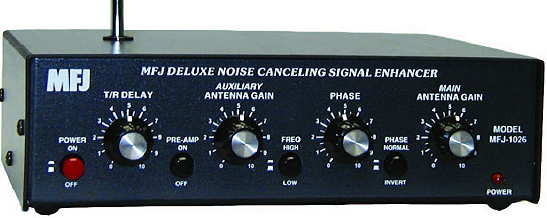
Mark, VA7MM, has been testing out his newly-acquired MFJ-1026 Noise Canceller and has provided several videos of the noise canceller in action.
Like so many other hams, Mark's suburban location has seen a gradually rising noise floor and the noise heard in this video is from an off-site location within his local neighbourhood, located about 400m away.
The noise canceller requires a separate 'noise antenna' in order to cancel any noise on the main receiving antenna and for all of the tests shown below, Mark's noise antenna was a Cushcraft R-7 vertical while using an Icom IC-7600 transceiver for listening.
Test 1 shows the noise canceller being used while listening to a broadcast station on 6.0 MHz:
Test 2 shows the canceller's effect on raw noise while viewing in Spectran:
Test 3 shows the canceller's effect on a 40m CW signal:
Test 4 shows the effect of just the IC-7600's noise blanker on the offending noise:
Mark's comments:
Living in the noise cloud one must resort to special measures to use affected portions of spectrum. I recently purchased an MFJ-1026 noise canceller and have been testing the unit and have attached videos demonstrating the unit’s performance. You will see examples of raw noise, SW broadcast and 40 m CW signals with the unit being switched in and out. Also for comparison is the noise blanker in the IC-7600 failing to eliminate the same noise.
Conclusions:
- the unit is able to eliminate noise in most instances when adjusted properly
- the noise sense antenna is critical and several different switchable noise sense antennas may be required for good performance
- setting up on AM mode with Spectran helps with fine adjustment
- it outperforms the radio’s noise blanker in all cases tested
With proper tuning and set up, it looks like the MFJ-1026 can make a worthwhile improvement in unwanted noise reduction. Mark will also be testing and comparing a Timewave ANC-4 Noise Canceller with the MFJ and any videos received will be published here.













