Author Archive
 Hunting Foxes With QRP
 December 15th, 2018 |
  Author:
For those of us that enjoy CW as well as QRP operating, the Winter QRP Fox Hunt nights make for an exciting combination of both interests.
The QRP Fox Hunt is an operating event during which low power (QRP) stations or "Hounds", attempt to make contact with specific QRP stations designated as "The Fox".
Spanning a twenty week period from November to April, each week sees two Fox Hunt events ... one on Tuesday evening and another on Thursday evening. The Tuesday night event sees the Hounds go hunting on 40m, while on Thursdays, the move to 80m, for an even greater challenge.
For each evening, there are two assigned 'Fox stations', usually one in the east and one in the west. The object of the hunt is for the hounds (you and I) to find and work the fox ... both foxes if you can, as bagging both is the ultimate goal. This all sounds pretty easy except for the fact that all foxes and all hounds are limited to 5W output or less, and therein lies the fun! If you have never heard a pileup of QRP stations, it is worth tuning in just to listen ... a multi-station cacophony of QRP signals, all around 559 or weaker ... it's not your typical kilowatt-laden ear crushing pileup!
The 40m foxes will be found between 7030 and 7050, while the ones on 80m will be between 3550 and 3570 kHz. Most foxes make a habit of working split, usually listening 'up 1', so once you find the pileup, the fox is easier to locate.
The hunts begin at 0200Z and run until 0329Z ... early evening here on the west coast and mid-evening out east.
Complete rules and a 'Fox Hunt Primer' may be found on the QRP Fox Hunt home page here. For discussion of the individual events and soapbox comments, join the QFox ioGroup site here or join the chat in Facebook's QFox QRP Foxhunt Group.
If you're in search of some challenging week-night operating fun, you may just find what you are looking for with the bi-weekly QRP Fox Hunts. Working both foxes is not as easy as it might sound and is an excellent test for your antenna system and of your CW operating skills. Come and join the fun this coming Tuesday ... no special hunting permits required!
630m … The New ‘Magic Band’?

The 'magic band' has always been associated with 50 MHz and its amazing propagation ... usually unpredictable and often without logical explanation. This past summer saw an explosion of digital FT8 activity on 6m which has, for me (and for others I suspect), eliminated almost all of the enjoyment I have found every year on this band.
With so much of the previous CW and phone activity now gone to FT8, the 'feel' of the band is just not what it once was. What I find puzzling is that so many have embraced this weak signal mode yet most of the two-way QSOs seem to be made between stations that can easily hear each other ... often at the very strong levels produced by 6m sporadic-E!
With FT8's inability to chat about antennas, rigs, propagation, locations or simply to exchange names, for me the magic has gone. Being able to hear signals build, fade up and down, or to experience the sudden arrival of bone-crushing signals from the east coast where none had existed moments earlier, is all part of what attracted me to 6m decades ago. I spent only a few hours on the band last summer, working a number of JA stations on FT8. No particular sense of satisfaction was garnered ... working a JA opening on CW is just way more exciting!
For many, the arrival of FT8 to the magic band has opened a whole new world and from seeing so many unfamiliar call signs on 6m this summer, it seems that FT8 has brought a lot of newcomers to the band. Unlike the JAs' worked every summer on CW, almost all of the FT8 JAs' sent their QSL immediately, with almost all excitingly indicating "1st VE" ... so this has to be a good thing! I suspect, that unless the level of conventional-mode activity returns to previous levels on 6m (highly unlikely), my interest in 50MHz will slowly wane or vanish altogether ... but thankfully, there's still magic to be found elsewhere on the ham bands!
As solar Cycle 24 draws down into its final months, the deep lows that were experienced at the end of Cycle 23 are starting to develop once again. For the past few weeks, propagation below the broadcast band has been the best it has been since the previous solar quieting.
Being just below the bottom edge of the broadcast band, 630m (472-479 kHz) has seen some of the benefits of the recent round of stagnant geomagnetic activity.
While some transcontinental QSOs are regularly being made on CW, most contacts are being completed using the weak signal JT9 QSO mode. Contacts can often be completed just as the sun begins to set and staying up into the wee hours to catch east coast DX is not a requirement. Over the past few weeks my 'states worked' total has climbed to 30 and with a couple of holdouts, the QSLs have been steadily arriving.
 |
| My 630m states worked, shown in red. Map courtesy: https://mapchart.net/ |
Last month's arrivals, in spite of the Canada Post delivery disruptions, are shown below.

The recent great propagation on 630m is well-demonstrated by last Saturday night's activity. For the previous two evenings, my JT9 CQ's (as well as QSOs) were being decoded for hours at a time by Rolf, LA2XPA in Norway. He was also hearing Larry, W7IUV, located a few hundred miles to my southwest, on the other side of the Cascade mountains in Washington state. Both of our signals would fade and trade places in Norway but often reaching audible CW levels! The problem was that neither myself or Larry could see any of Rolf's replies to us ... disappointing to us and frustrating for Rolf.
After an hour of trying, I asked Rolf (via the ON4KST LF chat page) what he was using for a receive antenna. It turned out that his secret weapon was a 1000' beverage pointed this way ... no wonder he was hearing so well. Larry, who was using a shorter, easterly pointing BOG (Beverage On Ground) for 630m receive, commented that he also had a 1000' beverage pointed toward Europe but it was optimized for 160m and doubted that it would work on 630. Just to make sure, he plugged it into a second receiver and soon indicated that he 'might' have seen a weak JT9 trace on the waterfall, close to Rolf's frequency.
One minute later Larry's comment was just "wow!" and the following minute he explained what had occurred. It seems that the 'possible weak trace' had suddenly skyrocketed to a -16db signal ... right at the edge of audibility! Larry and Rolf quickly exchanged signal reports and "RRs" as the first Europe-West Coast 630m QSO went into the history books ... 'wow' indeed!
Rolf reported that at his end, Larry's already good signal suddenly shot up to -5db, an easily copied CW level, before fading away for the night. Larry was pretty shocked at how quickly this strong short enhancement had occurred and we all hoped that the oft observed 'spotlight' propagation seen on 630 would move further west to VE7 ... but for now, it was not to be.
Earlier in the evening I had commented to Larry about some previous quirky 630m propagation and had suggested to him that it was probably just due to "the magic of radio" ... to which he politely dismissed with "sorry no magic, just hard work and dumb luck". Looks like he was right on both accounts, but after Saturday's excitement I think he may now believe in a little magic as well!
Manhattan Style
After blogging for over four years now, I've covered a lot of topics that have piqued my interest in the ham radio world. I'm going to (once in awhile) select some previous blogs for reposting since they are every bit as valid as they were a few years ago and many new readers will have never found them without going way back! This one is from June, 2014.
****************************
I haven't yet decided to rebuild the little 630m CW transmitter using Manhattan style or the newer Muppet style being promoted by Chuck, K7QO.
The Muppet style seems to be PCB without holes, with parts being mounted on the copper pads directly. Like Manhattan or Ugly construction, changing components is very convenient. I pretty much split final construction methods between Manhattan style or dedicated PCB.
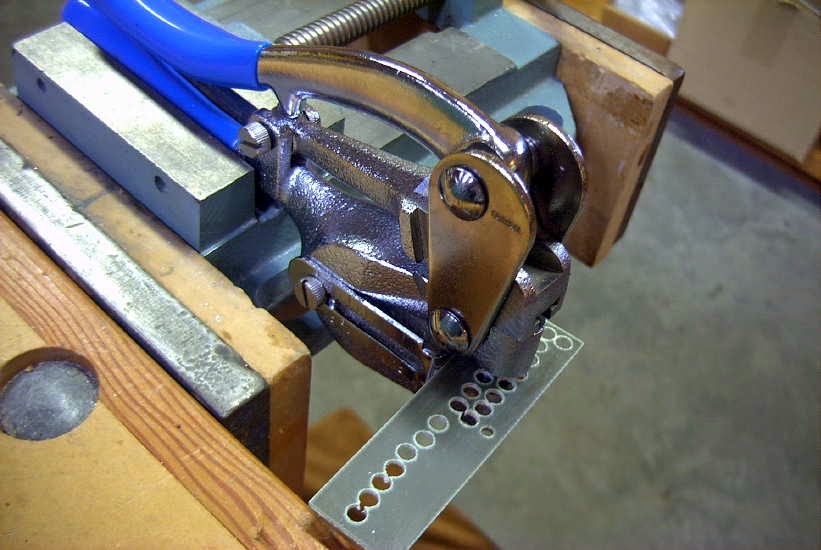
I recently ran low on the pads used for Manhattan and made another pile of various sizes. For those interested in using this style, it's pretty quick and easy to manufacture a good stock of your own pads using a simple hand punch.

These punches are widely available on e-Bay or possibly at your local hardware outlet or craft store. They come with various sized dies but I have only found myself using two sizes, 5/32 and 3/16. The punches have a small point at the center which I filed off so not to create a dimple in the punched pad.
.jpg)
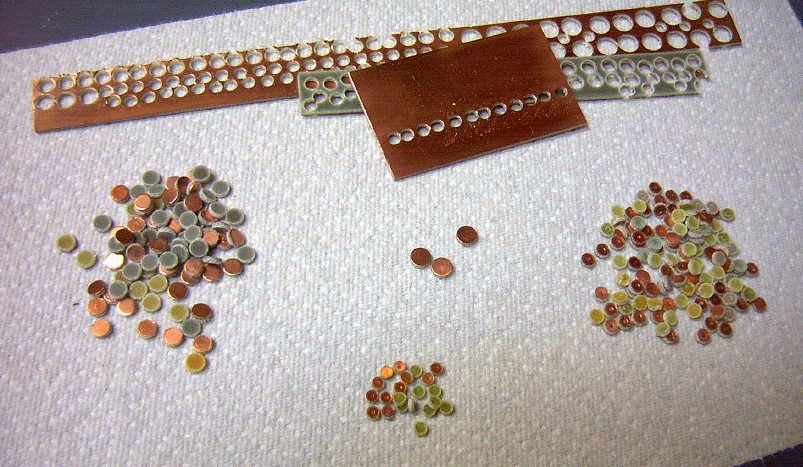
It's also advisable to scuff sand the bottom of the PCB strip as well as to shine up the copper side with some light steel wool before punching any pads. They will eventually be glued to the circuit's PCB copper surface using a small dab of CA ("super glue") glue and the slight scuffing beforehand will ensure that the pads stay put. My usual technique is to place a tiny dab of glue with a toothpick at the spot where the pad will go. I then pick up the pad using an X-acto knife, spearing the pad's copper side and then pressing it down on the glue spot. CA cures quickly once it is oxygen-starved so pressing down on the pad for a few seconds is usually all that is needed. Any time I have run into trouble it was because I used too much glue....just a small dab is needed.
There are many good tutorials on Manhattan-style construction to be found on the internet as well as some super examples of what can be accomplished using this method as a "final" version technique.
For me, one of Manhattan's strongest selling points is that even though final part values may have been fleshed out during a rough build, parts can still easily be changed, added or even removed without a lot of fuss....unlike a PCB....but Muppet does look interesting!
I haven't yet decided to rebuild the little 630m CW transmitter using Manhattan style or the newer Muppet style being promoted by Chuck, K7QO.
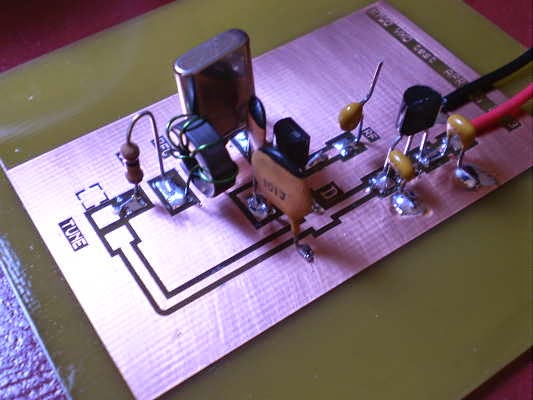 |
| K7QO Muppet Style |
I recently ran low on the pads used for Manhattan and made another pile of various sizes. For those interested in using this style, it's pretty quick and easy to manufacture a good stock of your own pads using a simple hand punch.
These punches are widely available on e-Bay or possibly at your local hardware outlet or craft store. They come with various sized dies but I have only found myself using two sizes, 5/32 and 3/16. The punches have a small point at the center which I filed off so not to create a dimple in the punched pad.
It's also advisable to scuff sand the bottom of the PCB strip as well as to shine up the copper side with some light steel wool before punching any pads. They will eventually be glued to the circuit's PCB copper surface using a small dab of CA ("super glue") glue and the slight scuffing beforehand will ensure that the pads stay put. My usual technique is to place a tiny dab of glue with a toothpick at the spot where the pad will go. I then pick up the pad using an X-acto knife, spearing the pad's copper side and then pressing it down on the glue spot. CA cures quickly once it is oxygen-starved so pressing down on the pad for a few seconds is usually all that is needed. Any time I have run into trouble it was because I used too much glue....just a small dab is needed.
 |
| VE7SL Lowfer Tx |
For me, one of Manhattan's strongest selling points is that even though final part values may have been fleshed out during a rough build, parts can still easily be changed, added or even removed without a lot of fuss....unlike a PCB....but Muppet does look interesting!
Hunting For NDBs In CLE238
 |
| PTD - 400 kHz Potsdam, NY |
This coming weekend will see another monthly CLE challenge. This time the hunting grounds will be 400.0 - 419.9 kHz.
For those unfamiliar with this monthly activity, a 'CLE' is a 'Co-ordinated Listening Event', as NDB DXers around the world focus their listening time on one small slice of the NDB spectrum.
A nice challenge in this one is to hear PTD on 400kHz located in Potsdam, New York. It's a 25-watter but is rarely logged out west. I have heard it only once, back in January, 2010. Listen for its USB CW identifier (with your receiver in the CW mode) on 401.010 and its LSB ID on 398.984 kHz.
MF propagation this past week has been very good and signals in this frequency range should be propagating well if things stay undisturbed for the weekend.
When tuning for NDBs, put your receiver in the CW mode and listen for the NDB's CW identifier, repeated every few seconds. Listen for U.S. NDB identifiers approximately 1 kHz higher or lower than the published transmitted frequency since these beacons are modulated with a 1020 Hz tone approximately.
For example, 'AA' near Fargo, ND, transmits on 365 kHz and its upper sideband CW identifier is tuned at 366.025 kHz while its lower sideband CW ident can be tuned at 363.946 kHz. Its USB tone is actually 1025 Hz while its LSB tone is 1054 Hz.
Often, one sideband will be much stronger than the other so if you don't hear the first one, try listening on the other sideband.
Canadian NDBs normally have an USB tone only, usually very close to 400 Hz. They also have a long dash (keydown) following the CW identifier.
All NDBs heard in North America will be listed in the RNA database (updated daily) while those heard in Europe may be found in the REU database. Beacons heard outside of these regions will be found in the RWW database.
From CLE organizer Brian Keyte, G3SIA, come details via the The NDB List Group:
Hi all,
Our 238th coordinated listening event starts on Friday.
This frequency range is not packed with signals for any of us, but
the current excellent conditions should give us some nice surprises.
Do join in, even if you only have an hour or so to spare over the weekend.
Days: Friday 23 Nov - Monday 26 Nov 2018
Times: Start and end at midday your LOCAL time
Range: 400 - 419.9 kHz
(Apologies to Listeners ‘down under’ - not much to listen for in this range
at summer time. Could listen via a remote receiver instead? See below)
Just log all the NDBs that you can identify with nominal (listed)
frequencies in the range - it includes 400 kHz, but not 420 kHz -
plus any UNIDs that you come across there.
Please send your final log to the List (no attachments and ideally
in a plain text email) with ‘FINAL CLE238’ in its title.
Show on each line:
# The Date (e.g. '2018-11-23' etc. or just '23' )
# The Time in UTC (the day changes at 00:00 UTC).
# kHz - the nominal published frequency, if known.
# The Call Ident.
Please show those main items FIRST. Other optional details such
as Location and Distance go LATER in the same line.
As always, of course, tell us your own location and brief details
of the equipment that you were using during the Event.
We will send the usual 'Any More Logs?' email at about 18:00 UTC
on Tuesday so that you can check that your log has been found OK.
Do make sure that your log has arrived on the List by 09:00 UTC
on Wednesday 28 November at the very latest.
The combined results should then be completed within a day or two.
You can find full details about current and past CLEs from the CLE page
http://www.ndblist.info/cle.htm It includes access to CLE238 seeklists
for your part of the World, prepared from the previous loggings in Rxx.
Good listening - enjoy the CLE.
Brian and Joachim
---------------------------------------------------------------
From: Brian Keyte G3SIA ndbcle'at'gmail.com
Location: Surrey, SE England (CLE coordinator)
---------------------------------------------------------------
(If you would like to listen remotely you could use any one remote
receiver for your loggings, stating its location and owner and with their
permission if required. A remote listener may NOT also use another
receiver, local or remote, to make further loggings for the same CLE)
These listening events serve several purposes. They:
The NDB List Group is a great place to learn more about the 'Art of NDB DXing' or to meet other listeners in your region. There is a lot of good information available there and new members are always very welcome. As well, you can follow the results of other CLE participants from night to night as propagation is always an active topic of discussion.
You need not be an NDB List member to participate in the CLEs and all reports, no matter how small, are of much value to the organizers.
Remember - 'First-time' logs are always VERY welcome!
Reports may be sent to the NDB List Group or e-mailed to CLE co-ordinator, Brian Keyte (G3SIA), whose address appears above. If you are a member of the group, all final results will also be e-mailed and posted there.
Please ... give the CLE a try ... then let us know what NDB's can be heard from your location! Your report can then be added to the worldwide database to help keep it up-to-date.
Have fun and good hunting!
- determine, worldwide, which beacons are actually in service and on-the-air so the online database can be kept up-to-date
- determine, worldwide, which beacons are out-of-service or have gone silent since the last CLE covering this range
- will indicate the state of propagation conditions at the various participant locations
- will give you an indication of how well your LF/MF receiving system is working
- give participants a fun yet challenging activity to keep their listening skills honed
The NDB List Group is a great place to learn more about the 'Art of NDB DXing' or to meet other listeners in your region. There is a lot of good information available there and new members are always very welcome. As well, you can follow the results of other CLE participants from night to night as propagation is always an active topic of discussion.
You need not be an NDB List member to participate in the CLEs and all reports, no matter how small, are of much value to the organizers.
Remember - 'First-time' logs are always VERY welcome!
Reports may be sent to the NDB List Group or e-mailed to CLE co-ordinator, Brian Keyte (G3SIA), whose address appears above. If you are a member of the group, all final results will also be e-mailed and posted there.
Please ... give the CLE a try ... then let us know what NDB's can be heard from your location! Your report can then be added to the worldwide database to help keep it up-to-date.
Have fun and good hunting!
Here Comes The ’29 QSO Party!
 |
| courtesy: Lou, VE3AWA |
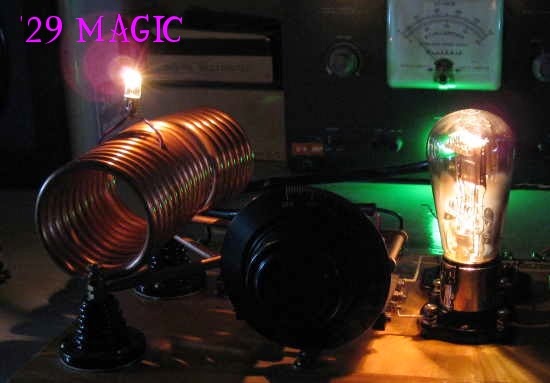
This Saturday night as well as the next will be the annual Bruce Kelley 1929 QSO Party, otherwise known as the '1929 BK'.
Only transmitters that are 'era-appropriate' are allowed to be used. More specifically, transmitters must employ tubes that were available in 1929 or earlier, and transmitters must be self-excited. No crystals allowed! Crystals were new and largely unaffordable for most hams back in the depression days.
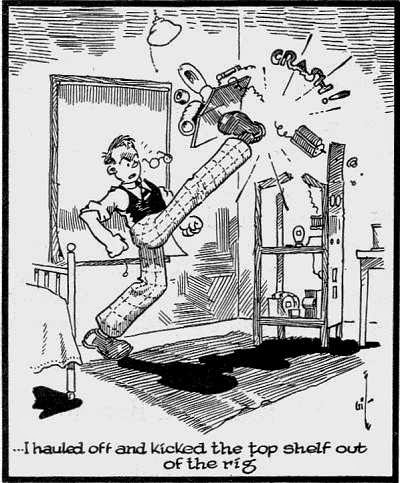
The year of 1929 marked a real turning point in amateur radio as governments finally cracked-down on things such as frequency stability, out of band operations and re-alignment of call districts. In short, hams were henceforth required to behave themselves and to clean up their signals and methods of operation.
 |
| courtesy: http://www.arrl.org/ |
If you tune across the CW bands during the next two Saturday nights, you will have the rare opportunity to hear exactly what the bands must have sounded like back in the early '30s'.
For the most part you will hear single-tube Hartley, Colpitts or TNT oscillators along with a few two-tube MOPAs thrown in. Many of them will suffer the same problems encountered by the boys of '29 ... chirp, drift, buzzy notes and frequency instability from antennas swaying in the wind.
Again this year, signals should be a little louder as well, since the previous long-time power limitation of 10W input has been increased to 25W.
The MOPAs will sound much better but some surprisingly nice-sounding signals can be heard coming from properly tuned and optimised single-tube oscillators. I recall being blown away by the lovely sounding signal I heard from such a rig when first tuning into the BK activity several years ago, only to learn that it was a self-excited Hartley using 1/4" copper tubing for the oscillator tank circuit!
The '29 watering-hole on 80m will be around 3550-3580 kilocycles (be careful not to confuse this with kilohertz!) while the early afternoon to post-sunset 40m activity will be found from 7100-7125 kc. There may even be a few on the very low end of 160m. Although many of these transmitter styles were used on 20m and higher, BK rule-makers have wisely decided not to inflict these sounds on the present populace as it would likely keep the 'Official Observers' busy for several days writing pink-slips.
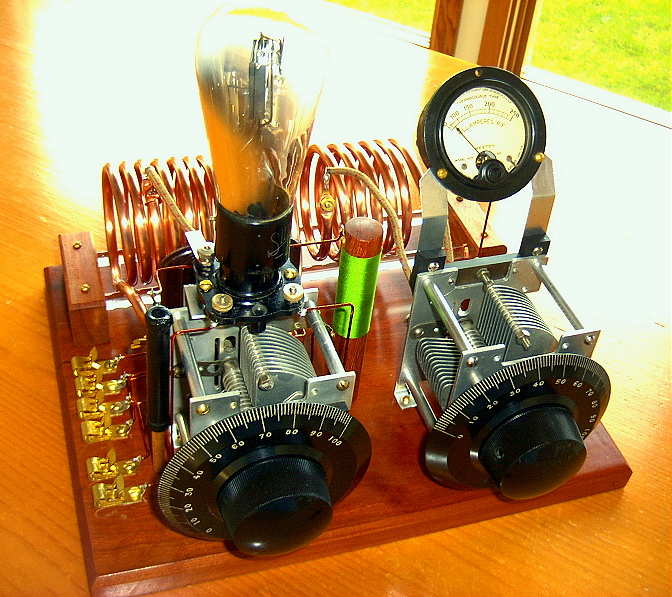
This year I will leave the MOPA on the shelf and set up my Hull Hartley as I haven't used it since building the MOPA a few years ago. If it's very windy (almost assured), the Hartley will really sound like 1929!
 |
| My own Hull Hartley |
You can learn more about amateur radio happenings leading up to and following the 1929 crackdown in my earlier series of 'Why '29' blogs here:
Part 2
Part 3
Part 4
Those wishing to put something together for next year's event can find everything needed here:
Building '29-Style - Part 1
Building '29-Style - Part 2
Let's hope for good conditions for this event as the last few years have been adversely affected by geomagnetic storming. Poor propagation or not, I guarantee there will be plenty of '29ers busy calling 'CQ AWA' on the low bands.
Complete BK details are available here.
CLE237 Results
 Last weekend's CLE237 was truly a workout. Not only was the format challenging, hunting for different grid square fields, but propagation was superb ... a vast departure from the normal CLE propagation-curse!
This combination resulted in many daytime hours spent reviewing three nights of Perseus recordings, the downside of being able to sleep all night rather than staying up until 0300 while listening live!
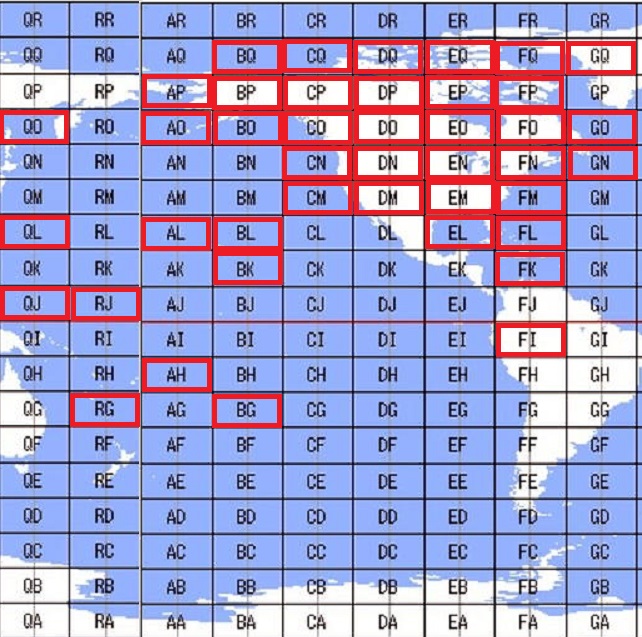
All told, 118 NDBs in 41 different grid fields were logged. Of these 118 stations, 12 were 'new catches'. After DXing NDBs since 1985, new catches are getting harder and harder to find but last week's great conditions were the best heard here in several years.
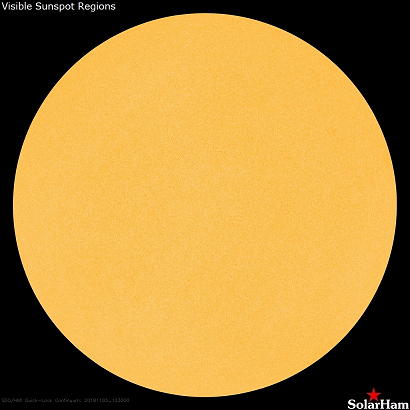 |
| Today's quiet Sun! |
With a very quiet Sun for a couple of weeks now, these great MF conditions are what many have been waiting for since the last solar low many years ago ... propagation below the broadcast band can be truly remarkable when these quiet conditions continue for many weeks at a time.
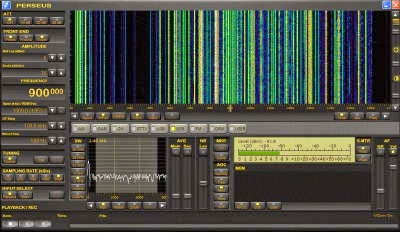
Here are a few interesting CLE catches as recorded on the Perseus SDR.
NDBs QY (Sydney, Nova Scotia), YBB (Pelly Bay, Nunavut)and 3Z (Russell, Manitoba) all sharing 263kHz within a few Hz of each other.
My full CLE237 log is shown below. As usual, a Perseus SDR and an 'inverted-L' (resonated to 300kHz) was used for the activity.
AH
28 13:30 403 TUT Pago Pago, SMA
AL
28 13:30 400 MDY Midway, MDW
AO
27 12:30 283 DUT Dutch Harbor, ALS
27 12:30 341 ELF Cold Bay, ALS
27 12:30 385 EHM Cape Newenham, ALS
27 12:30 390 HBT Borland, ALS
AP
27 06:00 263 OAY Norton Bay, ALS
27 13:30 275 CZF Cape Romanzof, ALS
27 13:00 325 BVK Buckland, ALS
27 13:30 347 TNC Tin City, ALS
27 13:00 356 HHM Kotzebue, ALS
BG
27 13:30 352 RG Rarotonga, CKS
BK
27 13:30 332 POA Pahoa, HWA
BL
27 14:00 353 LLD Lanai, HWA
BO
27 12:00 277 ACE Kachemak, ALS
27 12:00 355 AUB King Salmon, ALS
27 12:00 394 RWO Kodiak, ALS
27 12:00 411 ILI Iliamna, ALS
27 12:00 429 BTS Dillingham, ALS
BP
27 12:00 212 CGL Juneau, ALS
27 13:00 257 CUN Fairbanks, ALS
27 12:00 346 OLT Soldotna, ALS
27 12:30 347 DJN Delta Junction, ALS
27 12:00 350 VTR McGrath, ALS
BQ
27 13:00 376 PVQ Deadhorse, ALS
CN
27 06:00 378 AP Mayne Island, BC, CAN (MY NEAREST)
27 12:00 266 SLE Salem, OR, USA
27 07:00 356 PND Portland, OR, USA
27 06:00 356 MEF Medford, OR, USA
27 06:00 404 MOG Montegue, CA, USA
CM
27 07:00 203 TCY Tracy, CA, USA
29 04:00 385 MR Pacific Grove, CA, USA
CO
27 12:00 266 ICK Annette Island, ALS
27 12:00 358 SIT Sitka, ALS
27 12:00 396 CMJ Ketchikan, ALS27 12:00 414 IME Sitka, ALS
27 12:00 529 SQM Sumner Strait, ALS
CP
27 13:30 222 WY Wrigley, NT, CAN
27 11:30 254 EV Inuvik, NT, CAN
27 14:00 284 YOC Old Crow, YT, CAN27 08:00 380 YUB Tuktoyaktuk, NT, CAN
27 12:00 392 ZFN Tulita, NT, CAN
CQ
29 06:00 321 YSY Sachs Harbour, NT, CAN
DM
27 08:30 242 EL El Paso, TX, USA
27 10:00 278 CEP Ruidoso, NM, USA
27 06:00 326 MA Midland, TX, USA
27 12:00 338 RYN Tucson, AZ, USA27 13:00 341 OIN Oberlin, KS, USA
DN
27 09:00 233 BR Brandon, MB, CAN
27 09:00 275 HIN Chadron, NE, USA
27 09:00 383 CNP Chappell, NE, USA
27 09:00 400 FN Fort Collins, CO, USA
27 09:00 414 GRN Gordon, NE, USA
DP
27 08:00 207 PY Fort Chipewyan, AB, CAN
27 08:00 212 BY Beechy, SK, CAN
27 08:00 219 ZRS Regina, SK, CAN
27 08:00 221 QU Grande Prairie, AB, CAN
27 08:00 230 VG Vermilion, AB, CAN
DQ
27 08:30 361 HI Holman, NT, CAN
EL
27 06:00 260 MTH Marathon, FL, USA
27 10:00 269 AR New Iberia, LA, USA
27 10:00 329 HMA Hondo, TX, USA
27 06:00 332 FIS Key West, FL, USA
EM
27 07:00 263 CVM Alton, IL, USA27 07:00 332 IC Wichita, KS, USA
27 07:00 335 BV Batesville, AR, USA
27 07:00 338 UMP Indianapolis, IN, USA
27 07:00 349 GW Greenwood, MS, USA
EN
27 12:00 257 JYR York, NE, USA
27 06:00 329 PMV Plattsmouth, NE, USA
27 06:00 360 SW Warroad, MN, USA
27 08:00 368 VIQ Neillsville, WI, USA
27 09:00 368 PNM Princeton, MN, USA
EO
27 07:00 212 YGX Gillam, MB, CAN
27 08:00 216 YFA Fort Albany, ON, CAN
27 08:00 218 RL Red Lake, ON, CAN
27 08:00 224 MO Moosonee, ON, CAN
27 08:00 258 ZSJ Sandy Lake, ON, CAN
EP
27 06:00 224 BK Baker Lake, NU, CAN
27 09:00 241 YGT Igloolik, NU, CAN
27 08:00 263 YBB Kugaaruk, NU, CAN
27 10:00 329 YEK Arviat, NU, CAN
27 10:00 335 YUT Repulse Bay, NU, CAN
EQ
27 04:00 365 YGZ Grise Fiord, NU, CAN
FI
27 05:00 365 PAL Palma, EQA
FK
28 05:00 369 ZDX Saint Johns, ATG
27 06:00 391 DDP Vega Baja, PTR
27 05:00 415 CBC Cayman Brac, CYM
FL
27 09:00 376 ZIN Matthew Town, BAHFM
29 05:00 198 DIW Dixon, NC, USA
FN
27 08:00 289 YLQ La Tuque, QC, CAN
27 08:00 373 YXK Rimouski, QC, CAN
27 05:00 392 ML Charlevoix, QC, CAN27 05:00 407 ZHU Montreal, QC, CAN
27 07:00 516 YWA Petawawa, ON, CAN
FO
27 10:00 208 YSK Sanikiluaq, NU, CAN
27 18:37 323 KR Schefferville, QC, CAN
27 10:00 351 YKQ Waskaganish, QC, CAN
27 10:00 390 VP Kuujjuaq, QC, CAN
27 08:00 396 YPH Inukjuak, QC, CAN
FP
27 09:00 277 YLC Kimmirut, NU, CAN
27 10:00 338 YPX Puvirnituq, QC, CAN
28 10:00 358 YKG Kangiqsujuaq, QC, CAN
FQ
29 07:00 256 YCY Clyde River, NU, CAN
GN
27 10:00 263 QY Sydney, NS, CAN
27 08:00 280 QX Gander, NL, CAN
27 08:00 350 DF Deer Lake, NL, CAN
GO
28 08:00 220 BX Lourdes de Blanc, QC, CAN
28 08:30 281 CA Cartwright, NL, CAN
28 10:00 396 JC Rigolet, NL, CAN
GQ
28 06:00 399 UP Upernavik, GRL
QJ
27 12:00 366 PNI Pohnpei Island, FSM
QL
27 13:00 343 ML Minami Tori Shima, MTS
27 12:00 360 OX Iwo Jima, VOI
QO
28 13:30 437 OG Okha, RSE
RG
27 12:30 260 NF Norfolk Island, NFK
RJ
27 12:00 316 MAJ Majuro Atoll, MHL
27 12:00 393 UKS Kosrae, FSM
As always, complete CLE results (worldwide) can be viewed in detail here.
All-in-all, an exhausting but delightful weekend of listening and great propagation ... so many signals to hear ... welcome to solar-low!
Hunting NDBs In CLE237
CLE 237 will be held this coming weekend and will be somewhat different than normal.
'CLE's are 'Co-ordinated Listening Events, and NDB DXers around the world focus their listening time on one small slice of the NDB spectrum ... but this one is a little different.
This event has been organized around the Maidenhead Locator system and will challenge hunters to log beacons based upon the beacon's FIELD designation. Listeners should seek to log a maximum of five NDBs in each GRID FIELD.
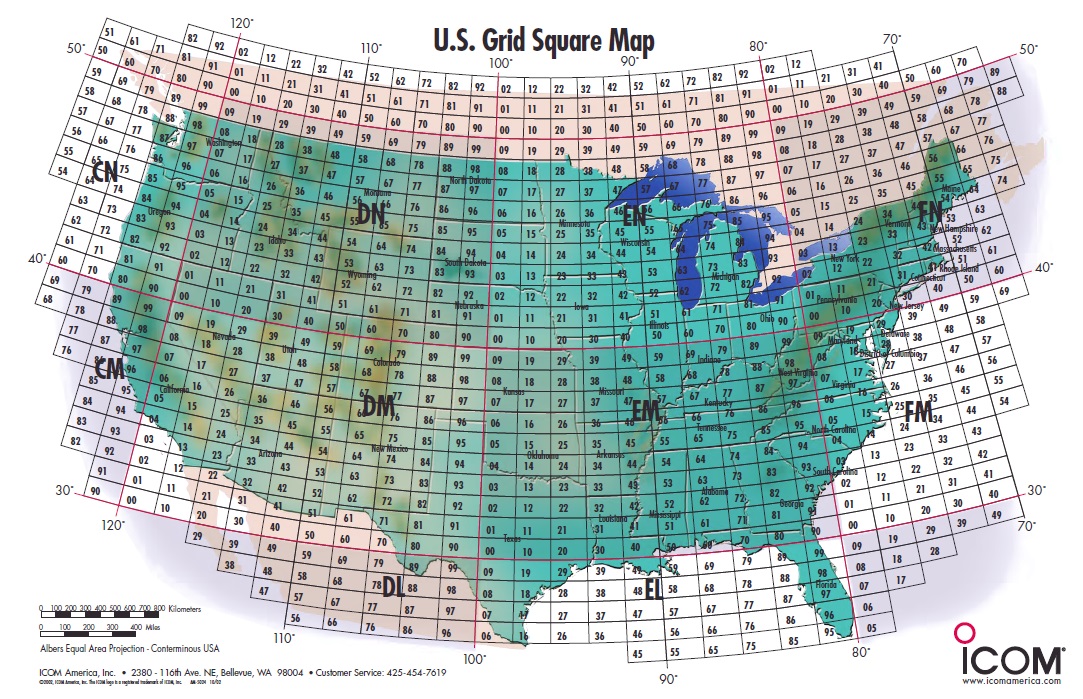
The grid field is actually the first two letters of the grid locator, such as 'CN', 'FN', 'DM' etc., as seen in the map above. Each field itself is divided into 100 GRID SQUARES, but individual grid squares are not relevant for this CLE ... only the fields.
Most amateurs that operate on the VHF bands are very familiar with the 'grid square locator' system and many VHF operating awards and events are focused on working different grid squares. This may all be a new adventure for many non-VHF DXers but it does present a whole new way of keeping track of your catches.
I have always kept track of the grid square locator for all NDB signals that I hear and often find that a signal being heard from one particular square will lead to other beacons being heard (often new catches) from adjacent squares, while propagation is spotlighting that region ... it often pays to keep a grid square map handy while you search the band!
If you are not familiar with the grid square system, it's all pretty simple and this CLE only focuses on the largest part of the system, the FIELD. The first thing you should do is determine your own grid FIELD location, which, for North America, can be found very easily from the map above or anywhere in the world on K7FRY's locator map.
When tuning for NDBs, put your receiver in the CW mode and listen for the NDB's CW identifier, repeated every few seconds. Listen for U.S. NDB identifiers approximately 1 kHz higher or lower than the published transmitted frequency since these beacons are modulated with a 1020 Hz tone approximately.
For example, 'AA' near Fargo, ND, transmits on 365 kHz and its upper sideband CW identifier is tuned at 366.025 kHz while its lower sideband CW ident can be tuned at 363.946 kHz. Its USB tone is actually 1025 Hz while its LSB tone is 1054 Hz.
Often, one sideband will be much stronger than the other so if you don't hear the first one, try listening on the other sideband.
Canadian NDBs normally have an USB tone only, usually very close to 400 Hz. They also have a long dash (keydown) following the CW identifier.
All NDBs heard in North America will be listed in the RNA database (updated daily) while those heard in Europe may be found in the REU database. Beacons heard outside of these regions will be found in the RWW database.
From CLE organizer Brian Keyte:
===============================================
Here are the Final Details for this weekend's DX Listening Event.
We'll be listening for NDBs in as many Locator FIELDS as we can.
Fields are the first 2 letters of the 6 character locators ('Grid Square').
Days: Friday 26th October – Monday 29th October
Times: Midday on Friday to Midday on Monday, your LOCAL* time
*(NB Many of us will be changing our house clocks this weekend.
UTC time, shown in our logs, continues unaffected by that)
QRG: Normal LF/MF frequencies 190 - 1740 kHz
Target: UP TO 5 NORMAL NDBs IN EACH LOCATOR FIELD (see below)
(not DGPS, NAVTEX, Amateur or UNIDs)
Please also log YOUR NEAREST ACTIVE NDB - it will probably be one of
the five in your own Field.
A World map of all the locator Fields is attached. You can see, for
example, that Field IO includes most of the British Isles.
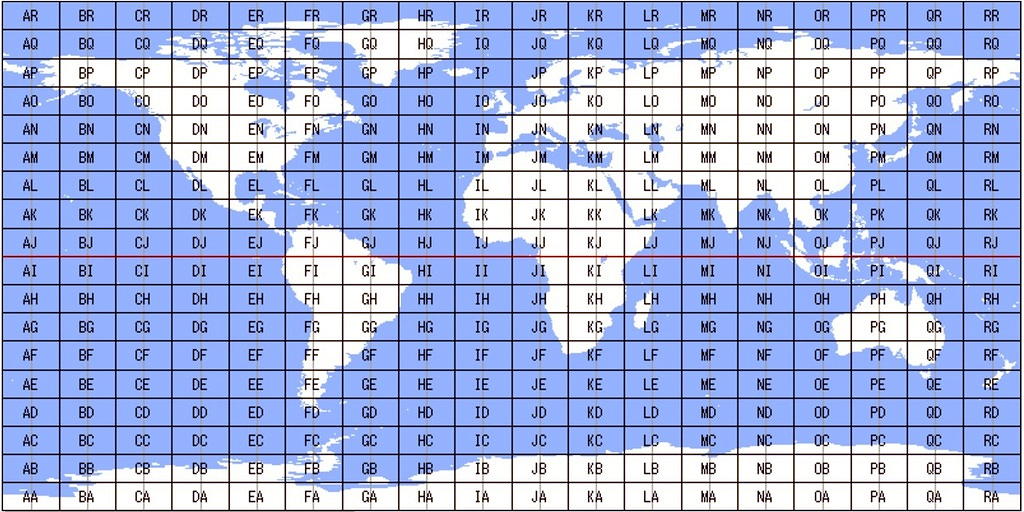 |
| (click map to expand) |
Please post your CLE log to the List in a plain text email if possible,
with 'CLE237' at the start of its title and showing on each log line:
The full Date ( e.g. 2018-10-26, etc., or just the day number 26 )
UTC (The day changes at 00:00 UTC).
kHz - the NDB's nominal published frequency
The Call Ident.
As always, put those FOUR MAIN ITEMS FIRST on each log line, with
any other optional details such as location and distance LATER in the
same line.
There is no need to show the locator Fields (the harvester program
will work out all of them and the nearest NDB you logged).
Your log will be easier to read if you leave a blank separator line
between the groups of up to 5 lines for each Field.
If you wish, you could add the 2-letter Field ident (NOTHING ELSE)
at the start of each separator line.
Any UNIDs that you come across will also be of interest - in a separate
part of your log please.
If you send interim logs, please make sure that you also send a 'FINAL'
log showing ALL your loggings for the CLE.
We will send the usual 'Any More Logs?' email to NDB List at about
18:00 UTC on Tuesday so you can check that your log has been found OK.
Do make sure that your Final log has arrived on the list by 09:00 UTC
on Wednesday 31st October at the very latest.
Joachim and I hope to complete the combined results within two days.
PLANNING YOUR LISTENING
It will really help you to plan your listening if you go to the excellent
Rxx Database https://www.classaxe.com/dx/ndb/reu
(Replace the 'reu' by 'rna' if you are in North America, 'rww' elsewhere)
THE KEY PLACE to start entering details of what you want is
'Signal Locations - GSQs'.
Put a 2-letter FIELD id in that box to see all the NDBs in that Field that
have been logged from your part of the World (i.e. EU or NA or other).
You could alter the resulting list in lots of different ways:
Select 'Only active' (bottom right)
Enter your own Country or State in 'Heard Here'
Select a specific listener (yourself?) in 'Logged by' – BUT you might missa beacon that you haven’t heard so far
Add extra locator Field(s) in the 'GSQs' box, separated by blanks
- In ANY of the above, you can select 'Map' instead of 'List' (top right)
Add your own full locator (6 characters) in the 'Distance - From GSQ' box to see the distances and bearings from your location.
In 'Sort By' (bottom line) select GSQ
Getting cleverer (!) you could use the wild card _ (an underscore) to see details of all Fields with the same column of Longitude or row of Latitude
e.g. I_ selects all of locator column I (0 to 20 degrees west), _O would give all of row O (50 to 60 degrees north).
Good Listening
73 Brian
---------------------------------------------------------------------
From: Brian Keyte G3SIA ndbcle'at'gmail.com
Location: Surrey, SE England (CLE coordinator)
---------------------------------------------------------------------
(As usual a handful of us may choose to listen via a remote receiver
with permission if required - its own location will be their temporary
home Field).
A remote listener may NOT also use another receiver, whether local
or remote, to obtain further loggings for the same CLE.
===================================================
These listening events serve several purposes. They:
The Yahoo ndblist Group has been moved to Groups.io and The NDB List Group will now be found there! The very active group is a great place to learn more about the 'Art of NDB DXing' or to meet other listeners in your region. There is a lot of good information available there and new members are always very welcome. As well, you can follow the results of other CLE participants from night to night as propagation is always an active topic of discussion. Joining the group also makes it much easier to post your logs!
You need not be an NDB List member to participate in the CLEs and all reports, no matter how small, are of much value to the organizers.
Remember - 'First-time' logs are always VERY welcome!
Reports may be sent to the NDB List Group or e-mailed to CLE co-ordinator, Brian Keyte (G3SIA), whose address appears above. If you are a member of the group, all final results will also be e-mailed and posted there.
Please ... give the CLE a try ... then let us know what NDB's can be heard from your location! Your report can then be added to the worldwide database to help keep it up-to-date.
Have fun and good hunting!
- determine, worldwide, which beacons are actually in service and on-the-air so the online database can be kept up-to-date
- determine, worldwide, which beacons are out-of-service or have gone silent since the last CLE covering this range
- will indicate the state of propagation conditions at the various participant locations
- will give you an indication of how well your LF/MF receiving system is working
- give participants a fun yet challenging activity to keep their listening skills honed
The Yahoo ndblist Group has been moved to Groups.io and The NDB List Group will now be found there! The very active group is a great place to learn more about the 'Art of NDB DXing' or to meet other listeners in your region. There is a lot of good information available there and new members are always very welcome. As well, you can follow the results of other CLE participants from night to night as propagation is always an active topic of discussion. Joining the group also makes it much easier to post your logs!
You need not be an NDB List member to participate in the CLEs and all reports, no matter how small, are of much value to the organizers.
Remember - 'First-time' logs are always VERY welcome!
Reports may be sent to the NDB List Group or e-mailed to CLE co-ordinator, Brian Keyte (G3SIA), whose address appears above. If you are a member of the group, all final results will also be e-mailed and posted there.
Please ... give the CLE a try ... then let us know what NDB's can be heard from your location! Your report can then be added to the worldwide database to help keep it up-to-date.
Have fun and good hunting!













