Author Archive
 ARRL DX 2013 – Illustrated
 February 19th, 2013 |
  Author: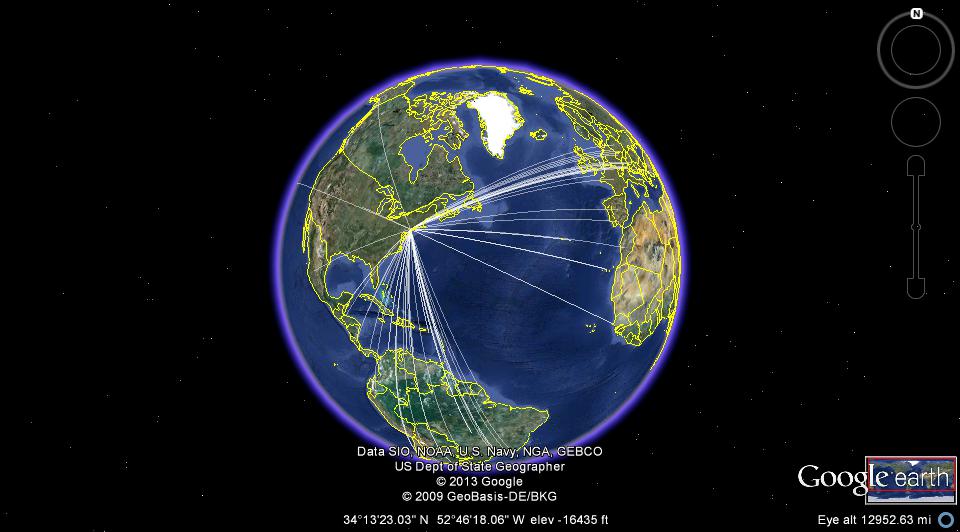
Google Earth is so cool!
72 de Larry W2LJ
QRP – When you care to send the very least!
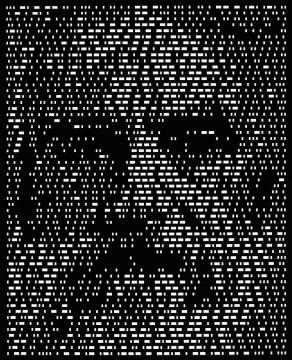
Mr. Morse
72 de Larry W2LJ
QRP – When you care to send the very least!
Bands still relatively busy
I guess that a few folks who went places to operate for the ARRL DX Contest have stayed on a few days at their respective “vacation” spots. On the air today, I was hearing a lot of the call signs that I heard in the Caribbean from over the weekend. You would think that having completed major DX contest that these folks would be kicking back on the beach, soaking up the sun and sipping a cool libation from a coconut shell (complete with little umbrella, of course!).
I worked a couple of them; but the station that intrigued me the most was GM100RSGB, the Centennial Special Event Station for the RSGB from Scotland. At 1914 UTC, they were loud into New Jersey on 20 Meters, and I was able to work them with 5 Watts very easily. According to QRZ.com, this is what their QSL looks like:

Shack pictures
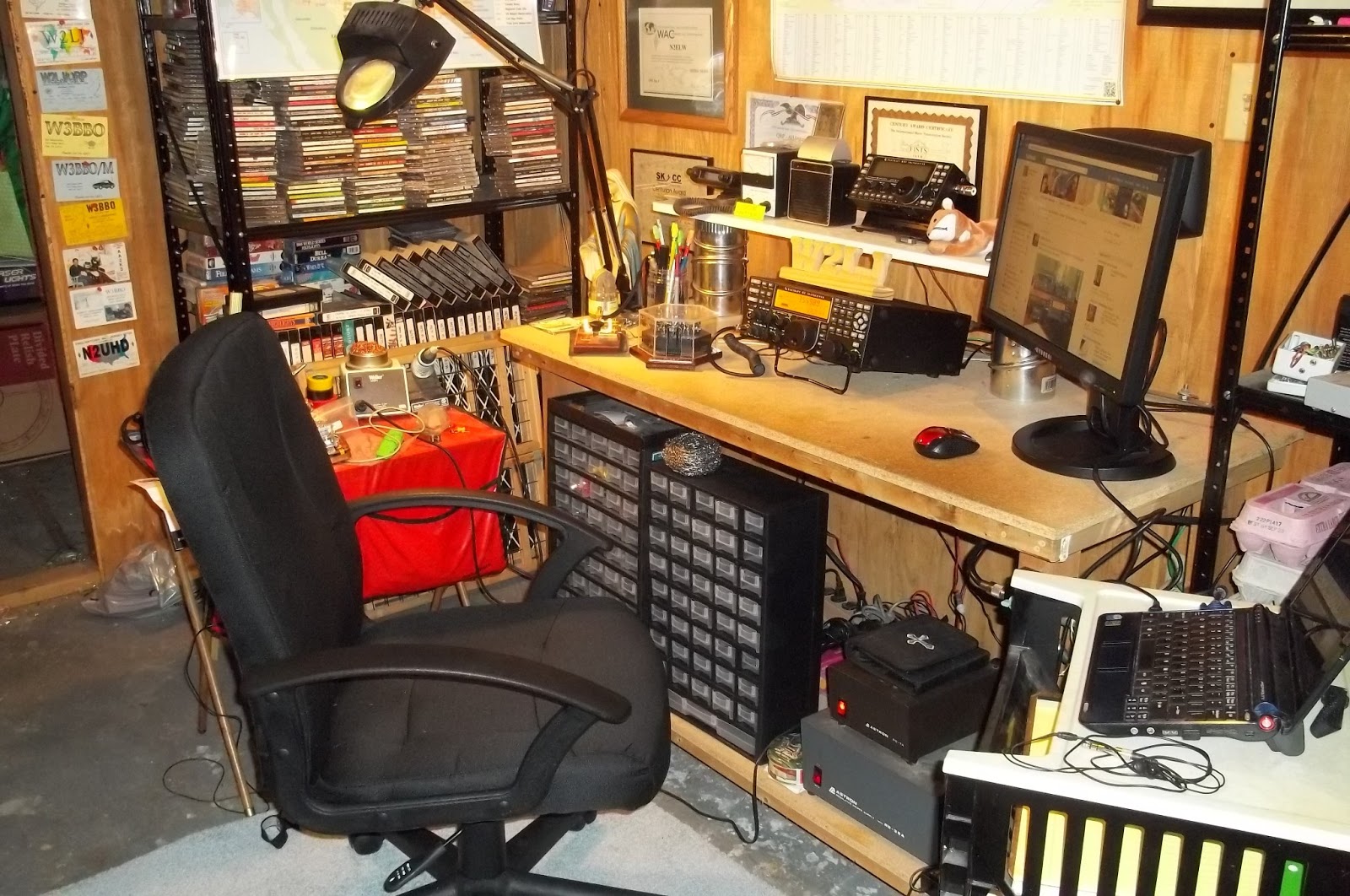
Overview photo showing the new chair. I also shifted everything on the bench top to the left. I picked up a used 19″ flat screen monitor for $40 from eBay. I put that at the right end of the bench top. The tiny screen of the Netbook was giving me a hard time due to the age/eyes thing.
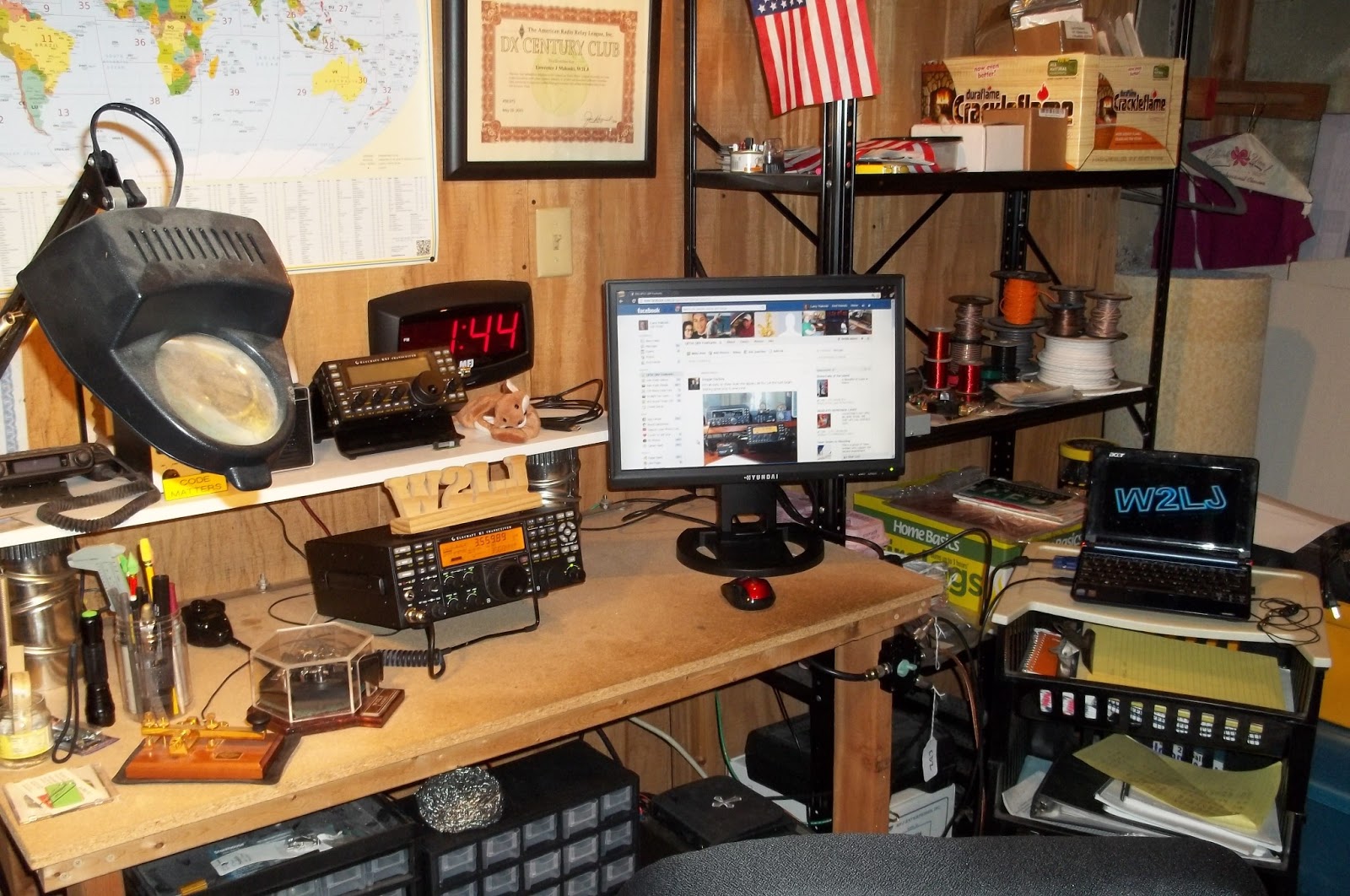
Kind of a “View from the Operator’s Position” kind of shot.
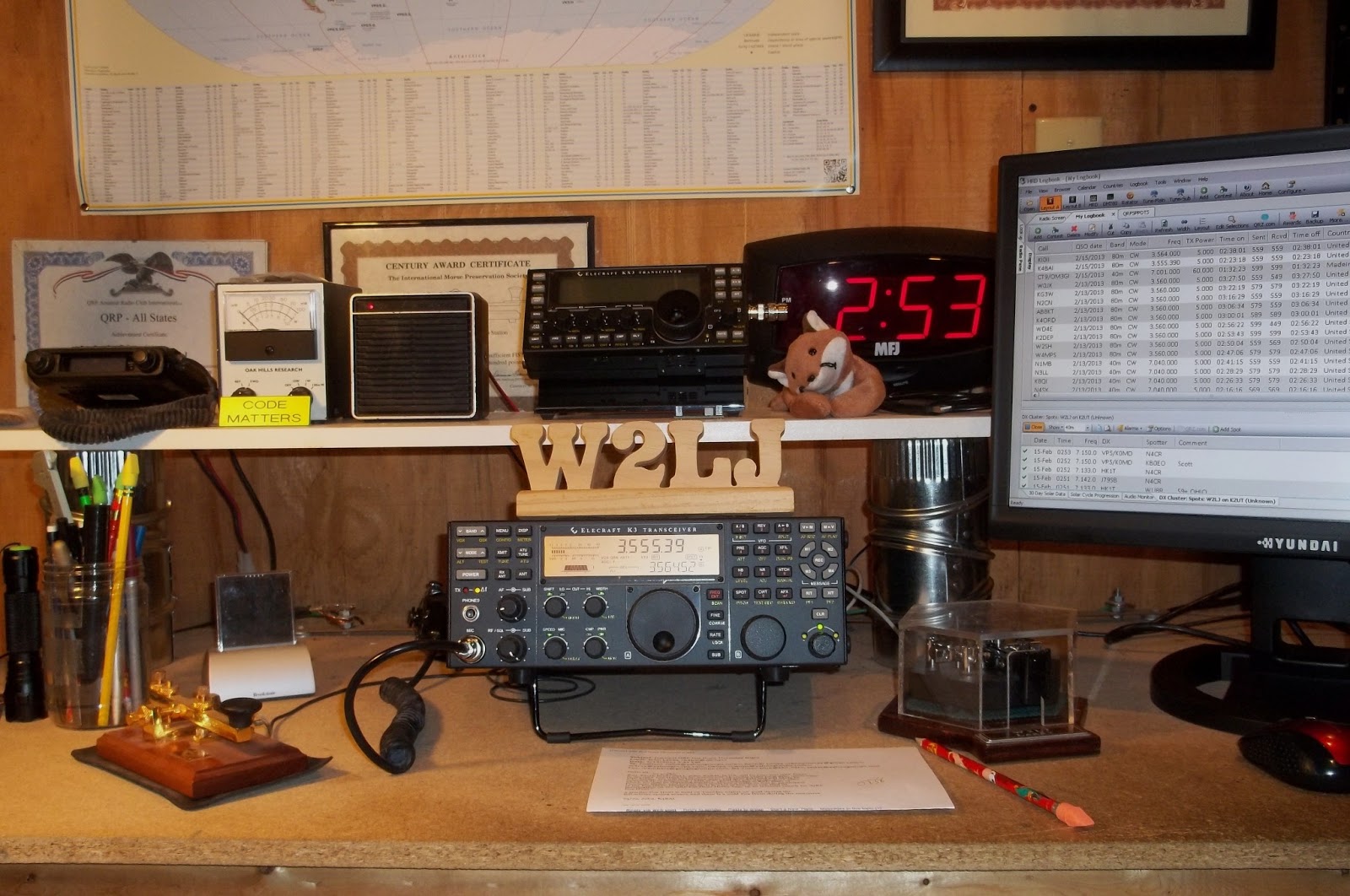
Frontal view – K3 in front, KX3 right above. Elecraft Hex Key to the right, SKCC Straight Key to the left. HRD is running on the new monitor. To the immediate right of the KX3 is a Fox Hunt “mascot” Ty stuffed animal. To the left of the KX3 is my Radio Shack amplified speaker for the K3, my OHR WM1 Watt meter. All the way to the left is a Yaesu 2 Meter radio (for those rare times that I get on 2 Meters).
Bottom line is that it’s still a basement shack in an unfinished basement. No wall to wall carpeting, finished ceilings or fancy paneling on the walls. But it is where I spend a lot of time, so at least it’s pretty neat and clean, now.
72 de Larry W2LJ
QRP – When you care to send the very least!
100th NAQCC Sprint
I spent couple of hours last night playing in the NAQCC Sprint. It was the 100th Sprint held since the founding of the club back in 2004. It was good to hear familiar friends and new calls come back to me last night.
My score?
Pitiful.
19 QSOs with 13 S/P/Cs worked – my total score didn’t even break the 1,000 point mark, only 988 total points at the end.
Not sure why I didn’t do better, but if I could blame one thing, I’d have to say probably a lack of practice. A few years back, I used to get into every QRP Sprint I could. NAQCC, ARS Spartan Sprint, RFTB every blessed month as well as all the miscellaneous QRP-ARCI and FISTS events. I would routinely make 30 – 40 contacts in the same amount of time. Nothing has gotten worse, equipment wise, in fact it’s gotten better. I still have the Butternut, the G5RV got switched out for the 88′ EDZ and I even added the W3EDP. The antenna and rig quality have definitely increased.
What hasn’t gotten better has been the time spent behind the rig. I am doing much better getting behind the key this year compared to last year (heck, the past two years!), but I don’t get on nearly as much as I did when I was heavily involved in the sprints a few years ago. My rustiness shows.
No one to blame, but myself. I just have to get back on the horse and back in practice.
73 de Larry W2LJ
QRP – When you care to send the very least!
Long post – two things
First – an announcement from Doug Hendricks KI6DS about a new Steve Weber design kit offering from Hendrick’s QRP Kits:
I am pleased to announce that Steve Weber, KD1JV, has designed another new kit for Hendricks QRP Kits. The kit will be on sale for the first time Friday and Saturday at the Yuma Hamfest.
Here are the specs for the rig:
~10 PEP @ 13.8V
0.2 uV receiver sensitivity
5 pole crystal ladder filter for selectivity
325 or 175 kHz tuning range, selectable at build
Coarse and Fine tuning controls
8 ohm – 500 mW speaker output
SSB, CW, and, “TUNE” mode
50mA Rx current (with optional Digital Dial)
Inexpensive electret microphone input
All through hole construction
Professional silk screened and solder masked pcb
Full aluminum chassis w/bail, cutout for optional digital dial
Small size, 6″ x 4″ x 1.5″
Assembled weight, w/dd: 330g./11.6 oz.
13.8 @ 2A, min. recommended power supply
Your first question might be why did they name it the “Survivor”. Well that comes from several years ago when Jim Cates and I were running Norcal. Many people have asked me what my favorite Norcal kit was, and they were usually surprised when I told them it was the Epiphyte. The Epiphyte was a ssb transceiver that was designed by the late Derry Spittle, VE7QK. It was a marvelous design, and worked fabulously. Several people were able to work all 50 states with it, and Vern Wright probably worked well over 100 countries with his. I kept a daily schedule with Derry and Vern for over 9 months, never missing a day of making contact. So? We were using dipoles up about 30 feet, and Derry, Vern and I were all running Epiphytes with 5 Watts of power!! Derry was in Vancouver, BC, and Vern and I were in California.
The only problem with Derry’s design was that the parts were basically obsolete when he finished the design. He use a Murata filter that is no longer available, and neither is the round 8 pin driver IC. Norcal kitted 100 of them, and I was finally able to find the filters on my trip to England. The 100 kits were sold out almost overnight, and there was a clamor for more. But we just could not source the filter, and we were never able to do another run. George Dobbs did do a smaller run for the G-QRP Club, which also sold out very quickly. I have always wanted someone to design a radio similar to the Epiphyte, but using parts that are available. I wanted it simple, easy to build, yet capable of making reliable contacts on 75 meters. Last year at Dayton, Steve Weber and I were talking, and I asked him to design a modern version with the Epiphyte as the model, but using parts that I could source. Steve agreed and the Survivor is the result.
Now how did we come up with that name? Derry used to take his Epiphyte with him whenever he went on camping trips in the back woods of British Columbia. In fact, one time he used it to get rescued. Derry would take a 130 ft. dipole made out of magnet wire and RG 174. He would string the dipole on bushes, about 3 or 4 feet above the ground. He ran the short length of coax into his tent, and used that setup to check into a British Columbia SSB net at 8:00 every evening when he was out. The setup was a perfect NVIS system and Derry had reliable contacts out to about 200 miles. He often said that the Epiphyte was what gave him the confidence that he could survive any situation in the woods, because it worked so well. So to honor Derry, and to illustrate one of the great uses for the rig, we called it the Survivor.
Ham radio has been used many, many times for rescue. But 2 meters doesn’t always reach a repeater in the woods. Many hams want to talk with their wives back home while they are hunting or camping, but many of the wives don’t know CW. The Survivor is the perfect rig for taking camping. With a battery, simple dipole antenna or end fed half wave only 4 feet off the ground, reliable communications with SSB are available.
We also think that groups and clubs that like to build will find this a perfect club project. Hams love to talk and hams love to build. Think about how much fun a round table of locals will be with radios that you build yourself. It is a great way to get club members involved and motivated to operate. The kit is only $100 for the basic radio. Accessories include digital readout for $35 and an electret microphone kit for $15. But, if you buy the combo together, radio, digital readout and microphone, you save $10 as it is available for $140. The kit will be available on Hendricks QRP Kits web page at www.qrpkits.com on Sunday, Feb. 17th. The rig is easy to build and align. In fact the only test equipment needed is a volt ohm meter and a dummy load. Doesn’t get any easier than that. The kit is complete with everything needed to build. Case, commercial quality pc board, all through hole parts in the radio (the digital dial has surface mount parts but is easily built) and an online manual so you can see what you are getting into.
If you attend the Yuma Hamfest this weekend, you will get a sneak peak at this radio. We will have them available for sale. Hope to see you there at the Hendricks QRP Kits booth. 72, Doug
Steve posted these photos on Facebook earlier today:
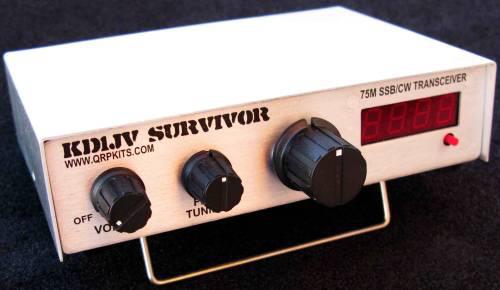
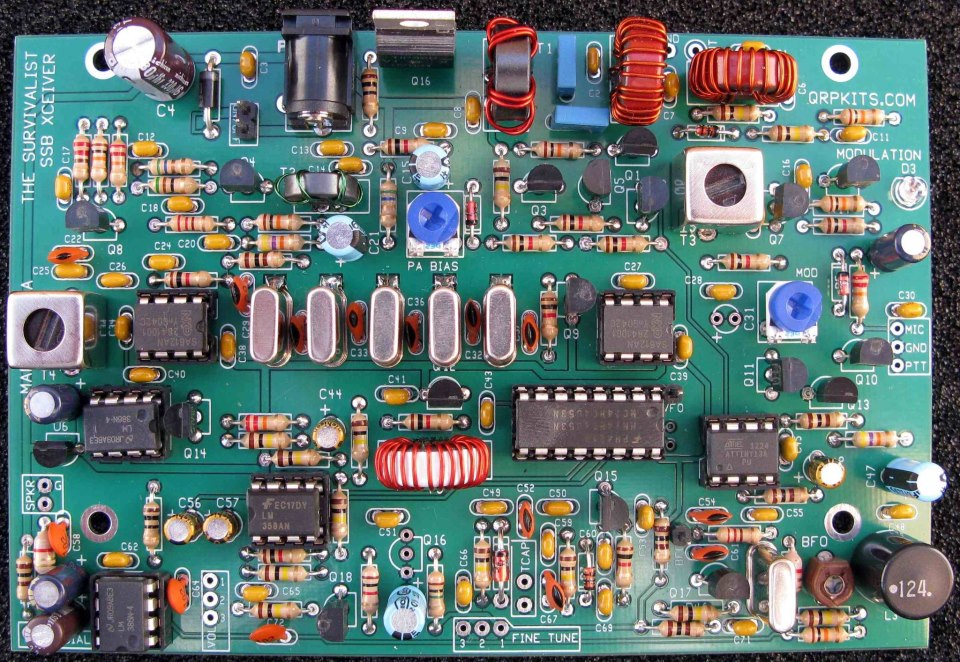
Looks like another fantastic offering from Doug Hendricks and Steve Weber. We are so fortunate to have gentlemen like these continuing to supply us QRPers with fine fare.
Post – Part II – ARRL DX Contest (CW) coming up this weekend
This coming weekend is the ARRL DX Contest. For you contesters, this one is the “Big GranDaddy” of them all. I am willing to lay down some heard earned cash that ALL the “Non-WARC” bands will be active this weekend, abuzz with all kinds of signals from all over the world.
So, what’s a non-contester to do? Well, you can go to the WARC bands (i.e 30, 17, 12 Meters) and rag chew to your heart’s content. You can go up to the phone portions of the band and give SSB QRP a whirl. You can stay off the radio altogether – take in a play, read a good book (I have several suggestions, if you’re so inclined), go to a movie, a museum, go visit your wife’s family, shovel snow, paint the bathroom, clean out the attic or garage, etc, etc, etc.
Or …… you can get creative.
Use the chance to begin, work on, or finish DXCC (QRP or not, that’s up to you). This contest has such an easy exchange, it’s ridiculous! W/VE stations – signal report and state or province. DX Stations – signal report and power. No name, rank or serial number – how easy can it be?
If you’re brand new to DXCC but are not into contesting, you can still easily (and I mean easily) walk away with a quarter or more of your DXCC award achieved within a single weekend. If you’re really dedicated and conditions are good, it’s NOT unheard of to actually accomplish DXCC (even QRP DXCC) in a single weekend. Just listen around and cherry pick the stations that are in the countries that you need. This is also a good opportunity to hunt for Alaska and Hawaii if you need those two for WAS.
For QRPers, a contest like this can be like Manna from Heaven. There are a ton of “Big Gun” stations on the air from all over the globe, with monstrous Yagis on top of stratospheric towers, just waiting to pick your QRP signal out of the aether. This is truly one of the two or three great QRP DXCC opportunites that presents itself throughout the year.
Is DXCC a “been there, done that” thing for you? Not interested in working towards DXCC Honor Roll? There’s still a bunch of exciting opportunities out there for you.
Turn down your power even lower – see how far you can work on 1 Watt or less. This is a great way to earn a cool looking “Miles Per Watt” certificate for your shack. I did something similar a couple years ago, I turned down my power from 5 Watts to 2 Watts and I was amazed that it didn’t seem to have made much of a difference at all. I was working foreign countries left and right, as easily with 2 Watts as I had been with 5 Watts. I’ll bet you’ll be amazed at how much you’ll be able to snare by even going QRPp, in the milliWatt neighborhood. Personally, I’m playing around with the idea of seeing how many countries I can work using 900 mW.
Or, you can use the contest as a vehicle towards earning other, neat looking certificates to wall paper your shack. Here are some good Websites with links to all kinds of good information about earning DX operating awards.
DX Awards in general
http://www.qsl.net/va3rj/awards_dx.html
QRP awards
http://www.dxawards.com/DXAwardDir/QRP.htm
If your CW speed isn’t the greatest, don’t get discouraged. I am going to tell you right here and now, the CW sent for roughly the first 12 hours or so of the contest will probably make your head swim. Speeds approaching 40 WPM are not rare at all. Can you say, “buzz saw”? Towards Saturday evening and all day Sunday, CW speeds will approach what the rest of us mere mortals can handle. The latter part of Sunday is THE best time for QRPers. Point hungry super contest stations will be more likely to listen for weak signals that they might have otherwise ignored or glossed over. This is a good time for QRPers.
Finally, if you get on the air and you’re totally blown away by the ARRL DX Contest; but still want to give QRP contesting a try, you’re still in luck. After the big contest is over on Sunday, the Flying Pigs February Run for the Bacon is this Sunday night. This is a small and friendly two hour QRP sprint that is a very fun event. Comparing it to the ARRL DX Contest, it as far as the East is from the West. But it is a blast and all are welcome – and most, if not all QRPers will be more than happy to QRS for you, if needed.
Above all – have fun!
72 de Larry W2LJ
QRP – When you care to send the very least!
From the sublime
to the not so sublime.
I had a very nice QSO with Eric AC8LJ tonight on 40 Meters. Eric was running QRP from Charleston, WV – a newly built K1 at 5 Watts to a dipole up about 45 feet. His signal was superb and by the way, he is friends with fellow blogger and good friend John N8ZYA who also hails from Charleston.
The best thing about the QSO with Eric was his fist – it was fantastic. His sending was top notch and made for an easy QSO. The QSB was getting to us as the band changed; and I am so sorry that it was. I hated for the QSO to end.
But end it did, and after it did, as I was entering the QSO information into my log, I was listening to another station call CQ just a few Hz up the band. He had a superb signal also, but I hesitated to call him.
As Joan Rivers was famous for saying …….. “Can we talk?”
I didn’t answer the station a few Hz up, because just from his CQ, I could tell that it would have been painful. Look, I’m just another “Joe Ham” like the rest of you guys; I’m not a “CW Snob”, but I have learned a few things in my 35 years of being on the air. Can I share a couple of things?
First off – don’t send “CQ” endlessly. Right now as I type this K1ON is sending a CQ on 60 Meters. His sending is just a skosh above my comfort zone; but it is superb. Three CQs followed by “de” and then his call sign twice. He is repeating this series once and then listening before starting again.
CQ CQ CQ de K1ON K1ON
CQ CQ CQ de K1ON K1ON
Now THAT’S the hallmark of a Ham who knows what he’s doing.
You don’t need to call CQ ten or twenty times before sending your call! It’s not serving any useful purpose and in fact, it’s maddening. And please use “de” in between CQ and your call sign. I don’t remember any big announcement saying that we were going to drop it. Besides, if you can call CQ umpteen times, do you really think you’re saving a lot of time by dropping the “de”?
Secondly, the Real Estate folk are famous for saying “Location, location, location”. I think the CW folk need their own mantra. Can I suggest one? How about “Spacing, spacing, spacing”?
Send at a speed that is comfortable for you. And don’t rush it! Let it flow, like a lazy river or fine wine.
Seriously, do you want to get on the air and have me torture your ears with
CQCQCQCQCQCQCQCQCQCQCQCQCQCQdeW2LJW2LJW2LJW2LJ over and over and over?
Or even worse,
W3EDPDEW2LJTUURRSTIS599QTHISSOUTHPLAINFIELD,NJNAMEISLARRYHWCPY?BTU (as I gasp for air at the end!)
I don’t think so.
Take your time and take a breath! Nobody likes to read run on sentences and no one wants to have to decode run on, gibberish CW. If you find yourself calling CQ endlessly, and you know your antenna working because RBN has spotters showing you at 100dB, it just might be your sending.
Listen to yourself, critically – you’ll be doing yourself a favor.
Hey, I know myself that there are times when my arthritis kicks in big time and I sound like I have dyslexia of the fingers. That’s when I have to face facts and slow my own sending speed down by 5 WPM or so. It’s not the end of the world.
Sending good CW is a good thing; but it takes practice. Don’t get discouraged. Take your time to do it right and I promise, the speed will increase as time goes on.
72 de Larry W2LJ
QRP – When you care to send the very least!













