Author Archive
 2013 QRP To The Field Pre-Announcement
 March 3rd, 2013 |
  Author:
 From Paul NA5N on QRP-L:
“Head’s Up” – Initial announcement:
The 2013 QRP TO THE FIELD will be held on SATURDAY, APRIL 27, 2013
QRP TO THE FIELD is the annual “get out of the house and operate somewhere from the field” QRP event and contest. It is also the annual event for QRP-L, as this is where it is exclusively administered.
PROBLEMS:
1. Our solar maximum is very disappointing, making contacts more difficult
than should be expected at this point in the solar cycle.
2. #1 above discourages many QRPers from participating
3. #1 and #2 means fewer stations to work for our efforts.
4. We have new hams and new QRPers joining our ranks all the time, both
CW and SSB, with various skills wanting to get on the air.
PROPOSED CHANGES:
SOTA (Summits on the Air). Last year, we joined forces with SOTA for plenty of new stations to work and a new measure of fun (with those strange exchanges!). We will join forces again with SOTA for the increased on-the-air activity for us both. Most SOTA stations are QRP. SOTA does not have an organized annual event; QRPTTF can serve as their annual special event, as well as ours, for increased activity.
THEME: QRPTTF has always been unique by having a “theme” each year. Last year it was SOTA and summits. This was last year only. The different themes for QRPTTF will continue … though, I haven’t figured out YET what this year’s theme will be. Ideas welcome. I wasn’t expecting to live past the Mayan Calendar thingie!
CW vs. SSB: For years, I have been asked to add an SSB category to QRPTTF. There are few organized events for SSB QRPers, and many QRP-L members are SSB QRPers. We also have plenty of new QRP hams who are SSB only. Many SOTA stations also find SSB more convenient from those mountain tops.
Therefore, I have decided to add SSB to QRPTTF this year to those who prefer SSB or are no-code QRPers.
I NEED YOUR HELP.
It’s been years (like decades) since I’ve had an SSB QSO on HF. I know nothing about it, what frequencies are REALLY used, etc. I need someone who is willing to serve as the Contest Manager for the SSB side of QRPTTF and accept the summary sheets. Results can be published on your website, or of course, my existing site http://www.zianet.com/qrp/ Please contact me privately if you are interested.
Again, I see QRPTTF (and the Zombie Shuffle) as events for the QRP-L community and our new SOTA friends. I am always interested in your comments or thoughts on the above to bring more fun and enjoyment to the majority of us. Hopefully, adding SSB will be one.
There are yet no rules for this year’s QRPTTF (not much different than in the past). I will wait until I have a volunteer SSB Contest Manager before finalizing this year’s rules and get some feedback from SOTA on their preferred SSB protocols. But basically, get on the air, work stations, have fun. The rest are just details!
72, Paul NA5N
Socorro, NM
http://www.zianet.com/qrp/
72 de Larry W2LJ
QRP – When you care to send the very least!
Kit building
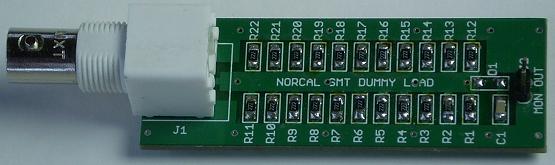
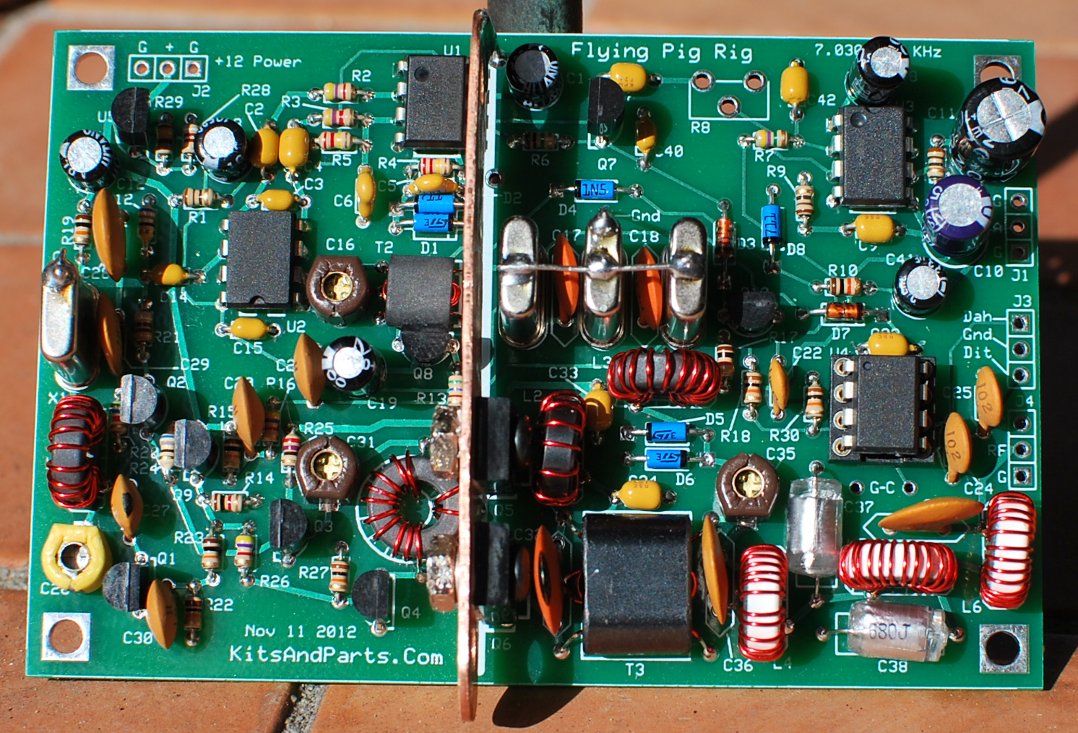
While listening to the bands this evening, I finished my NorCal QRP Dummy Load kit that I purchased a few years ago.
100 years ago
Last night, I received an e-mail from Bob W3BBO about an item he saw in The County Hunter News. The article was written by Bob Voss N4CD, and it concerned a book written 100 years ago, entitled “Bert Wilson, Wireless Operator“. The book has been made available through Project Gutenberg.
Pile up behavior
I was in the basement, cutting up some cardboard boxes for the recycling pickup tomorrow. To dispel the quiet and to have something to listen to, I turned the radio on.
I worked K6K/MM on 17 Meters. My friend Bob W3BBO worked them last night on 20 Meters and let me know that these folks are the DXpedition that is heading to Clipperton. I worked Clipperton back in 2000; but that was with 75 Watts (QRO). I will try again; but QRP this time (of course).
From there, I tuned up into the SSB portion of 20 Meters. I figured I would listen to either some guys chewing the rag, or some guys working DX. I ended up listening to guys try and work some DX. To be honest with you, I don’t even know who or where the station was. He was working simplex and the pile up was not huge; but he wasn’t calling CQ, either. He had enough stations to handle.
Why do people insist on calling a DX station when they can’t adequately hear him? I ask this, because there were guys throwing out their calls, while the DX station was still in QSO with the previous station!
It seems to me, that if you can’t hear the DX station well enough to know that he’s still talking and hasn’t finished …… what makes you think that you’ll hear him come back to you? Do these folks think that propagation is going to magically improve so that a 2X contact can be made?
I’m not getting just on the SSB guys. It’s no better on the CW side – heck, it’s no better in the QRP Fox Hunts! I can’t tell you how many times guys just keep throwing out their call signs over, and over and over until you want to tear your hair out. Call signs being spewed out when the Fox is in the middle of making a contact with someone else.
If you can’t hear THAT, why even bother to try to work them? Unless you can hear him well enough to respond to you, it seems to me that you’re just setting yourself up to be thought of as a Lid by your peers.
That old saying holds true – “You can’t work ’em if you can’t hear ’em.” But maybe we should also add, “You shouldn’t try to work ’em if you can’t hear ’em!”
Just sayin’
72 de Larry W2LJ
QRP – When you care to send the very least!
Drop me a line
I spent the evening conversing with Ed, KN9V on 40 Meters. Ed sent me an e-mail a few weeks back, asking him if I would meet him on the air for some real live CW practice. We tried earlier this week, but the propagation gods were against us. Tonight we had a much better go.
Ed feels that he’s a little rusty, but it was evident that he’s really doing fine. We were about 559 both ways, and we were able to enjoy a QSO for just about an hour. A little QSB and QRM made it interesting, but it was a very nice QSO.
I hope to meet Ed on the air again soon.
If you feel your Morse Code needs a little work and that you need a CW buddy, then send me an e-mail at [email protected].
Time permitting, I’d love to make a sked with you and work with you on the air. Now that the KPA3 amp is installed in my K3, I can turn on the afterburners so that you wouldn’t have to strain to hear me. Although, if you’re so inclined as to want to attempt a 2X QRP QSO, you wouldn’t get any arguments from me! I am comfortable sending anywhere between 5 to about 23 WPM, and I can go on any band from 160 to 6 Meters.
I am available most weeknights, and would be glad to hear from you.
72 de Larry W2LJ
QRP – When you care to send the very least!
Sunspots
A huge sunspot has formed on the sun – big enough to make the “regular” news.
http://www.weather.com/news/science/massive-sunspot-forms-20130220
So, as an Amateur Radio operator you’ve heard about sunspots, you’ve read about sunspots, you may have even prayed for sunspots ……. but what do you KNOW about sunspots?
I have perused the Internet and have come across several articles by our own Paul Harden, NA5N of Very Large Array (and Zombie Shuffle) fame. He’s our authority on things of the sun. I have found the best of his words and are pasting them here for your edification:
From Paul Harden NA5N, some solar weather basics:
We all know the sun goes through a solar cycle about every 11 years. During the minimun, or QUIET SUN, there are few sunspots, the solar flux is very low ( less than100), which means the sun’s ionizing radiation is quite low. As a result, our upper atmosphere, where the E and F layers reside, are not well ionized. This means the E and F layers do not reflect HF radio waves very well … and most of your signals will pass right on through to space to be picked up by Jodie Foster in the sequel to “Contact.” One measure of how well ionized our E and F layers are is the MUF, or Maximum Usable Frequency. During the quiet sun, the MUF is often below 15-18MHz. This is why 15M and 10M are “dead” during the quiet sun, except for local (line-of-sight) communications.
However, during the solar maximum or ACTIVE SUN, there are many sunspots, the solar flux is high, and this highly ionizes our ionosphere. This in turn means our E and F layers become very reflective to HF signals. Virtually all the power hitting the E and F layers will be reflected back to Earth and Jodie Foster will hear nothing out in space. This high reflectivity causes the MUF to rise, often to above 30MHz. And when this occurs, 10M will be open all day long to support global communications by using “skip propagation” … in that your signals are skipping (or being reflected) off the ionosphere back to earth.
SOLAR FLUX (SF) is a number that attempts to describe the total power output of the sun at radio wavelengths, which in turn helps describe the total ionizing power delivered to our ionosphere. The higher the SF, the more ionization, and the more reflective our ionosphere is to HF.
An SF of less than 100 is fairly poor propagation, the MUF will be lower than 15MHz. An SF of more than 150 is fairly good propagation, the MUF will be greater than 25MHz
A general rule of the thumb is 10M is open when the solar flux is greater than 150.
IONIZATION. The solar radiation reaching the Earth contains IONIZING radiation. This means the incoming solar radiation can rip electrons away from the oxygen molecules high in our atmosphere. So now you have all these “free electrons” roaming around that makes the upper atmosphere (or ionosphere) more dense. Now the mass or weight doesn’t change, it’s just denser. This density causes your RF signal to not pass onto space. In the real case, your RF signal strikes all these free electrons, and that is what reflects them back to earth … DURING DAYLIGHT HOURS when ionization occurs.
This is why the higher bands, such as 15M and 10M, are open (that is, signals being reflected back to earth) during the DAYLIGHT HOURS, but these same bands go dead (no reflective propagation) nearly as soon as the sun sets – because the sun’s ionizing radiation goes away.
This is also why these same bands tend to be completely dead during the quiet sun, because there is insufficient ionizing radiation to cause ionization for reflection. This is a phenomenon of the active sun, the period we are well into right now. And, during a quiet sun, the ionization can be so low, that the MUF drops below 14MHz at night, which is why even 20M can go dead at night. During an active sun, the MUF almost always remains above 15MHz even at night, which is why 20M often becomes a ’round-the-clock band during the active sun.
So what about 40M? Truth is, the solar cycle has virtually no effect on 40M or below. Propagation on 40M remains pretty much the same during the active sun as it does the quiet sun, because the MUF seldom drops below 10MHz. This is why 40M is the main nighttime band, year in and year out. Even with low ionization, the very long wavelengths of the lower frequencies will be reflected by the ionosphere. This would be like rolling a basketball through the popcorn balls … while the high frequency RF (the marbles) pass through pretty easy, certainly the low frequencies (basketball) would not. Quiet sun or active sun.
The active sun DOES effect 40M in that absorption to RF can be very good to very bad, or very high noise levels from geomagnetic storms … both due to solar flare activity that occurs only during an active sun. A large solar flare sends an extra dose of ionizing radiation to the Earth. This can raise the MUF to very high frequencies (greater than 100MHz), but this radiation can also penetrate far into our atmosphere to ionize the lower D-layer. RF signals must pass through the D-layer on their way to the upper E and F layers, where the reflection occurs. The more ionized the D-layer is, the more collisions that will take place with your RF signal, absorbing or attenuating some of its power. Thus, high absorption to HF signals can occur during and after a solar flare. Your poor little QRP signals just vanish on their way to the E and F layers!
80M signals are almost always highly or fully attenuated by the D-layer, and what “propagation” that occurs on 80M is actually by the signals traveling across the Earth’s surface, or “ground wave” propagation. The wave front is confined between the Earth’s surface and the D-layer, which causes attenuation to the power as it travels along the ground, skims the D-layer, and propagates through the dense atmosphere near the surface. This is why QRP on 80M is challenging at best since the absorption rates are fairly high – day and night, quiet sun or active.
The other major effect to HF propagation during the active sun is geomagnetic storms. Very briefly, this is caused by a shock wave from a solar flare hitting the Earth’s magnetic field, causing it to compress and wiggle for awhile. And while it’s wiggling, it’s generating huge electrical currents, which in turn creates gobs of noise on HF.
…BAND…. THE QUIET SUN………. / ……….THE ACTIVE SUN
——————————————————————–
….80M…. Seldom has skip propagation…..Seldom has skip propagation
….40M…. Open around the clock……………..Open around the clock
….30M…. Open daylight hours………………….Open around the clock
….20M…. Open daylight hours………………….Open around the clock (usually)
….15M…. Dead – no skip propagation……….Open – daylight hours only
….10M…. Dead – no skip propagation……….Open – daylight hours only
——————————————————————–
See also – http://www.gqrp.com/SOLAR_HO.pdf This link explains the A and K Indices and other phenomena associated with solar weather. It also contains other pertinent links to other valuable solar weather sites.
Thank you, Paul!
So to recap (and this is a very general nutshell, and in W2LJ’s words)
High Solar Flux and sunspot numbers = increased ionization of the ionosphere = good propagation = happy Hams.
Keep in mind that giant sunspots can be too much of a good thing, though, causing geomagnetic disturbances and solar flares which can muck everything up.
High A and K Index values = higher noise level on the bands and higher chance for signal absorption and a lowering of the MUF = bad propagation = sad Hams.
In the end, like everything else in nature, it’s all a fine balance.
72 de Larry W2LJ
QRP – When you care to send the very least!
QRP Operating Events
So you say you’re not into the “Big Gun” contests; because as a QRPer, you feel like a fish out of water. What’s a QRPer to do?
Fortunately, there are a bunch of operating events (contests, if you will) that were designed just with you in mind. Some of these are annual events, some are monthly, some are seasonal. Here are some good ones that I can think of right off the top of my head:
Monthly ARS Spartan Sprint – this occurs on the first Monday of every month – this is a two hour sprint that runs from 9:00 to 11:00 PM Eastern time (you can do the math for your time zone). Sponsored by the Adventure Radio Society, there are two divisions – the Tubby and Skinny Divisions. The divisions are determined by the weight of the equipment you are using. The goal is to use as small and light and portable a station as you can manage – although that’s not a requirement to participate. Information about these Sprints can be found here.
Flying Pigs Run For the Bacon – this sprint occurs on the third Sunday of every month. Another two hour sprint that again, runs from 9:00 to 11:00 PM Eastern time. This is a very friendly, low pressure sprint where slow speed coders are welcome. You don’t need to be a member of the Flying Pigs to participate; but it’s fun to have a Piggie number to exchange instead of just the “standard” 5W designation. Besides, it’s free to join – the club’s motto? “No dues, no rules, just have fun!” Further information can be found here.
NAQCC Monthly Sprint – these sprints are rapidly gaining in popularity. The North American QRP CW Club was founded by Tom Mitchell WY3H and John Shannon K3WWP. They recently just held their 100th sprint since the club was founded and close to 200 logs were submitted after all was said and done. That amount of logs has to rival even the bigger QRP ARCI contests, I’ll wager. You have to pay attention to the days on these sprints however, because they alternate monthly between Tuesday and Wednesday evenings. And the contest time is a bit different also – 8:30 to 10:30 Easter time. Membership in the NAQCC is also free and more info can be yours, here.
Of course the QRP Amateur Radio Club International sponsors a whole bunch of contests and sprints throughout the year. There are Spring and Fall QSO Parties and events such as the Hoot Owl Sprint, QRP Field Day, the HF Grid Square Sprint, Fireside Sprint, etc. QRP ARCI is a fine organization and they publish a tremendous magazine called “QRP Quarterly”. More information about these operating events can be found here.
Then there are also the seasonal, primarily outdoor sprints such as the recently completed Freeze Your Buns Off, and others such as QRP To The Field, QRP Afield, Flight of the Bumblebees, (and my favorite) the NJQRP Skeeter Hunt. You can Google any of those for further information.
The NJQRP Skeeter Hunt will be held again this August. The sprint will be have an SSB category for 2013, so those of you who are not into CW can also join in on the fun. There will be a theme and bonus points awarded for home brewing something specifically for the event; but those details haven’t been ironed out yet. A general contest announcement will be made near the beginning of May, and Skeeter numbers can be applied for as of May 1st.
Lastly, there are also “miscellaneous” indoor QRP operating events that are held each year, that are not sponsored by major clubs. The one that comes to mind immediately, for example, is the Zombie Shuffle which is run by Paul Hardin NA5N and his wife Jan N0QT. This is usually held the weekend before Halloween and is a ton of fun.
There are also the Winter and Summer QRP Fox hunts. If you like the thrill of navigating your way through a QRP pile up, then these are for you. The Winter season runs from November to March. There are two hunts each week, usually on Tuesday and Thursday evenings. One is on 80 Meters and the other is on 40 Meters. During the Summer, the hunts are on 20 Meters and past practice is that they have been held on Thursday evenings. Details here.
If you want to build up your log totals, hone your operating skills and have a ton of fun in the process, take some time to investigate what I’ve mentioned here. If you’ve never tried any of these before, get your feet wet and join in. You’ll be an Old Pro in no time!
72 de Larry W2LJ
QRP – When you care to send the very least!













