Author Archive
 The Secret Storm Approaching CW Contesting…
 August 28th, 2021 |
  Author:
 As a small child, my grandmother and mother both watched several “soap operas,” including the Secret Storm. The opening of Secret Storm showed violent waves crashing on the shoals, something I’d never seen being raised in Middle Georgia. My grandmother especially used to flinch and react to the plot-line drama there, something that I took note of even if to laugh to myself as a small boy.
The underlying theme was there was undetected turbulence in the offing, denied by those benefiting from things staying put as they are and have been. But all were impacted none the less when the waves of change ultimately pounded the rocks where many sailors during the great sailing days of yore and asleep at the wheel ran aground .
The Secret Storm has been one of my go-to metaphors for periods of rapid change. This is where social institutions are altered because of changing demographics among the individuals who participate in the organizations making up the institution itself. This is certainly one of those times in amateur radio!
A demographic storm is approaching CW contesting in the ARRL Sweepstakes Contests.
It may be a rapid change in all CW and Phone contests. Those in power in the institution don’t see the coming storm of demography because it’s slow-acting…until it’s not…and more immediate fish are there to fry. One can see “secret storms” in various times and places. Some get attention. Others do not.
But this “storm” is largely secret for at least two reasons. Until this path-breaking study of the best available data, no one has reported on the generational patterns of major contest participation. Many hams have speculated on it but there has been no systematic empirical data until now. Another is that those who are the most successful in today’s contest formats, as well as those who govern them, tend to take a blind-eye toward anything negative or indicative of change to the “only positive contesting spoken here” ideology. Read the relevant amateur radio magazines objectively for the evidence.
But the facts describing this demographic storm are undeniable. Here is why.
The problem and the solutions are challenging but the latter is more so because it takes group decision-making in opposition to vested interests to make it happen.
Frank K4FMH
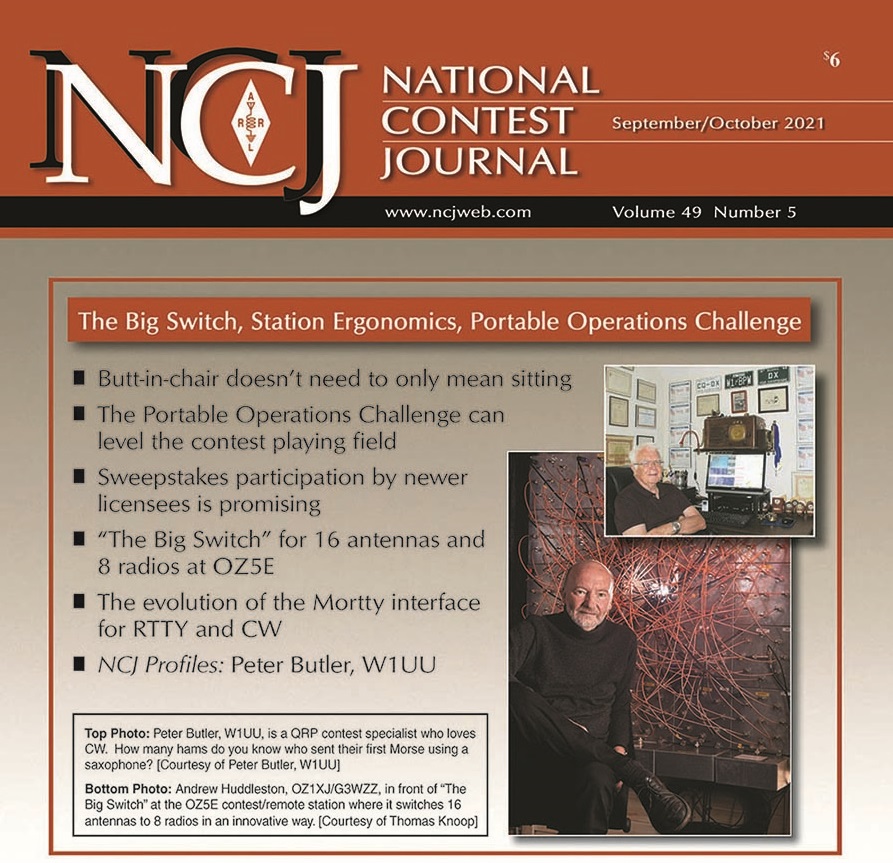
This post excerpts from the full technical version of a study that I completed in collaboration with Dr. Scott Wright K0MD, past Editor of the ARRL’s National Contesting Journal. Scott is the lead author on a popular article drawn from this study that appears in the September-October 2021 issue of the NCJ. It does not go into great detail on the data or analysis but as a social scientist, I believe that a full exposure of methods, data and analysis is always warranted. A PDF version of that report is published on NCJWeb.com as well as on my companion website under my Hamography (made-up word) section in the Studies tab.
The paper, “Generational Change in ARRL Contesting: The Pending Demographic Cliff Ahead,” by Frank Howell, PhD K4FMH and Scott Wright, MD K0MD is the first study (of which we are aware) that has measures of the age of contesters for a broad period of time in a major contest program. Moreover, the year licensed is used to measure the experience in amateur radio based upon license tenure. Georeferencing each call sign to the administrative location places each one in a geographic context which further illustrates who, when and where ARRL Sweepstakes participants are.
The radio sport of contesting is one of the top activities for ham operators [1]. The annual ARRL
Sweepstakes contests in CW and Phone have broad appeal as contests and the numbers of participants
has been increasing each year. Clearly, from an engagement viewpoint, it is one of the great success
stories of the League. So, why are there hams within our fold who express concern about the potential
for declining participation in contests like Sweepstakes? Why are there some alarmists among us who
believe ham radio contesting may face a cliff with regard to drop-offs in participation? We hope this
article will answer those concerns and clarify opportunities for the contesting community to “right the
ship before it takes on too much water,” so to speak. The problem and the solutions are challenging but the latter is more so because it takes group decision-making in opposition to vested interests to make it happen.
Our analysis is based upon entries into the ARRL Sweepstakes contest, a popular contest among ham
radio hobbyists in North America. The ARRL made available to us the participant entry data from the
years 2000, 2005, 2011, 2015 and 2020 for a series of analyses designed to create opportunities for the
contesting community to grow the ranks of contesters.
We discovered that Sweepstakes participants over the past two decades were from all over the world
but mainly in the United States with a much smaller number from Canada. Figure 1 is a map of CW
and Phone participants for the years 2000, 2005, 2011, 2015 and 2020 all combined within each
transmission mode. [2] They are concentrated around metropolitan areas but especially in the
Northeastern corridor, the West Coast, the Midwestern Rust Belt cities, and Florida. The Los Angeles,
San Francisco and Seattle areas tend to be concentration zones as well as Chicago, Minneapolis and
Detroit in the Midwest. The spatial patterns for CW and Phone participation are very similar with some
tendency for CW participants to be in more rural areas. So Sweepstakes participants tend to be like
most Americans, residing most in and around large cities with some outside of those metropolitan
areas. That’s great, right?
As the well-known sports announcer, Lee Corso, says: not so fast! The demographic processes shaping Sweepstakes participation, and perhaps most all long-standing contests, portend the potential for dramatic change to come in the next decade or so.
Frank K4FMH

We report the first results of a new study of Sweepstakes log submissions over the 2000-2020 period with age-matched data from ARRL Membership files and other enhancements by the authors. Using a number of data analytic procedures, we identify key generational changes in contest participation patterns that have not been previously identified. They paint a concerning picture for the attraction of new blood into the radio sport of
contesting. But first, let’s look at Sweepstakes participation itself for the past 20 years.
The growth in contest participants seems very clear from the numbers that the League compiles from
the log submissions. Figure 2 lists numbers of logs successfully submitted by year and mode. From
each five-year gap, the rates are positive and robust. For CW, the annualized growth rates of growth are
from about 4-5 percent over each gap while Phone’s annual rates of growth range from 4-7 percent,
with more participation in Phone sweepstakes from both absolute participation numbers and percentage
growth. These are positive but modest growth rates.

These results clearly suggest that the Sweepstakes participation is growing and includes hams from all around the U.S. and a noteworthy number outside the country, especially in nearby Canada. But like the sailor who ignores the dark clouds in the distance, there is a demographic storm on the horizon.
Frank K4FMH
Generational Patterns of Participation in the Sweepstakes Contests
The ARRL kindly provided birth year for all of the call signs in the Sweepstakes Contests data where age information was available. [3] We used this information in our enhanced dataset to examine the age distributions for each year and also added actuarial life expectancy data from the U.S. Social Security Administration to each birth year (see Note 5 below). This gives us a unique perspective on not only the age patterns of these contesting hams but their likely remaining years until reaching Silent Key status. Each log call sign was also georeferenced to license address.
Some age demography theory here is necessary for interpreting the results. If the age structure of contest participation is such that new hams are being regularly drawn into the radio sport in sufficient numbers to replace those aging hams who exit, the shape of the distribution from 2000 until 2020 would remain almost identical. That is, amateurs from more recent generations would enter as older participants become physically or mentally unable to engage in the necessary “butt in chair” activities for major contests, or have relocated their housing into situations where participation in radio contesting is not possible. However, if the age distribution continues to shift upward from 2000 until 2020, then newer generation newcomers are not keeping up in replacing with those from earlier periods who are eventually leaving the contesting scene. Or, it could be a mixture of these two opposing scenarios. The empirical answer from these data is surprisingly clear.
We present a histogram of the age distribution for Sweepstakes participants in each observed contest
year by mode in Figure 3. The median age over all contests and modes is 60 years. We insert this
median into each distribution to give a fixed target through which to visualize trends in the respective
age distributions over time. The results are striking, especially for CW participants. The bulk of the age
distribution lies to the left (younger) side of the median in 2000 for each contest mode. But with each
successive five-year snapshot, it moves like a caterpillar’s crawl to the right (older) of the age 60
median. It reached a tipping point in 2011 with the middle bulk of participants being around the age of
60. By 2020, a clear majority of participants are above the median bar (older) but slightly more so for
CW participants.

This picture suggests that the needed demographic replacement is not occurring as the Sweepstakes contesting participant pool is aging to the point where we need to examine carefully what is the demographic profile of newcomers and those exiting. Moreover, what is the life expectancy of those continuing to participate in the ARRL’s premier contesting program? We step through results addressing these issues from this dataset.
This picture suggests that the needed demographic replacement is not occurring as the Sweepstakes contesting participant pool is aging to the point where we need to examine carefully what is the demographic profile of newcomers and those exiting.
Frank K4FMH
Some key indicators of demographic change are in Figure 4. The row labeled Continuation is the percent of call signs from the previous year (e.g., 2000) that matched the call sign logs submitted in the next contest observation (e.g., 2005). This tells us which individual call signs continue from five-year observation to the next observed contest. Only a third to a half of the call signs in a given year appear again in the next contest some five years later. This applies to both CW and Phone contests. However, the Phone contest continuation percentages are systematically smaller, never reaching 50 percent. It’s clear that readers should recognize that Sweepstakes participants, especially those in Phone, are not the same operators but they do tend to reflect the same generation, collectively moving in some lock-step through the past two decades of the Sweepstakes. This suggests that Sweepstakes contesting is culturally rooted to one or more generations rather than a single collectivity of specific hams.
This suggests that Sweepstakes contesting is culturally rooted to one or more generations rather than a single collectivity of specific hams.
Frank K4FMH

The average age has moved upward over the past two decades some 15 years from 51 to 67 among CW contesters. Phone participants are slightly younger on average but they too have moved from 50 to 64 over this twenty-year period. Now a key element of this demographic mix is the age at licensure, created from the “check year” field in the required Sweepstakes log compared to the birth year. Phone participants tended to be licensed in their mid-twenties while CW contesters were in their late teens. These are averages, of course, and vary somewhat. We include the standard deviation under the mean score to better illustrate this variation. But this aids in our understanding of the tenure of being licensed. Participants in the CW Contest over the years have been licensed longer than similar Phone participants. They are culturally rooted in the era of amateur radio where they entered the hobby at a young age and may indeed reflect an earlier generation of ham radio in cultural beliefs about the hobby. In both cases, the vast preponderance of participating hams (88.9%) was born in the Traditionalist (pre-1945) or Baby Boomer (1945-1964) generations.
Demographic Sources of Newcomers and Exits from Contesting
Having described the dominant generational character of Sweepstakes participants, we remind the reader that these are not the same set of individual hams to participate year-in and year-out (e.g., 50% or less continuity). But what age demography are those who enter contesting? When did newcomers become licensed? How about those who get enthusiastic about amateur radio later in life? These factors are what will drive contesting into the future over the next 10-15 years. They are the drivers of the demographic storm brewing, especially for CW contesting, and will continue to significantly shape the size and nature of contesting.
To address these questions, we enhance the Sweepstakes dataset to compute measures of exits and newcomers into each five-year observation window. Because it can be complicated to just describe this data creation in just words, we rely on the diagram in Figure 5. From left-to-right, the years of data we obtained from the ARRL represent whether a specific call sign was in a contest for that year or not. [4] If a call was in 2000, for instance, and it was not in 2005, then we count that as an exit case for the 2000-2005 interval. If that call was also in 2005, then we consider that a continuation (as shown in Figure 2). If a call was not in 2000 but was in 2005, then we consider that a newcomer. These were computed separately for the CW and Phone Contests. We also recognize that we are not able to link call signs used in each contest to previously used call signs so this aspect of our analysis is a weakness.

But taking into account that we do not have each and every single year’s log data, this method could have a call sign that was in 2000-2004 but just missed 2005 and still be counted as an exit. The same thing could conversely be the case for newcomer. But to counteract this random absence case, we computed long-term exits and entrants. As the red box on the left designates, if a call sign was in either 2000 or 2005 but was not in any of the remaining contest files, we counted that as a long-term exit. Accordingly, if a call sign was in 2015 or 2020 but not an any previous contests, we count that as a long-term newcomer. These may be more reliable but longer-term indicators of the ebb-and-flow of Sweepstakes Contest participation than the 5-year measurements.
The short-term exits for CW and Phone are shown in Figure 6. There is a greater exodus during the 2000 to 2011 decade and is dominated by the Traditionalists and Baby Boomer generations. Some exits are prominent by Generation X members during the second decade of observation. Note that the number of those leaving this contest program declines over time, suggesting that it may indeed be age-related health issues rather than changes in interest. While exits exacerbate the generational problem, Figure 7 contains data on newcomers, where replenishment of those leaving may be found. But here is what may be a surprising result. Newcomers tend not to come from later generations but from the wellspring of the Baby Boomers and their preceding generation. And while this is true for both contest modes, there is a nominally greater increase of Generation Xers and some token Millennials arriving in the Phone contest logs in the last five years. This trend is a potential strategy for the contesting community to grow participation in sweepstakes especially via the Phone contest.


The long-term exits and newcomers are described in Figure 8. In the CW Contest, long-term entrants are almost wholly from the Baby Boomer generation. While the small presence of other generations is observed, they pale by comparison to both long-term newcomers and exits by this generation.

Another potential source of new blood into radio sport are what the first author termed, “late-in-life hams,” in his NCJ article series on Aging and Contesting. These are middle-aged adults who become licensed and engage in the hobby. Using the definition cited in the NCJ articles (see note 1), we computed late-in-life-hams using the age variable as license age being 40 or above. Out of the 12,663 logs with matched age data, a total of 1,655 (13%) were classified as late-in-life hams. While this is a small number in absolute terms, to what extent do they represent newcomers to the Sweepstakes? Figure 9 provides an answer.

The bar chart shows that there is an increasing number of hams licensed later in life joining each contest year. Well over 100 were present in each year since 2000 in the Phone Sweepstakes but less for CW. This is a clear differential in late-in-life hams favoring Phone over CW. In the past decade, this difference has become larger with over 250 such hams taking up Sweepstakes Phone entry as compared to no more than 100 in CW. Thus, late-comers to ham radio and Sweepstakes contest participation migrate to Phone much more than CW. These observations suggest that the phone Sweepstakes are a perfect entry way into HF contesting for newer licensees who want to try contesting by participating in a domestic event that fosters success with modest antennas (wires, verticals) and lower power (100 watts). It is an opportunity for all contesting clubs to find and invite such newer licensees to join Sweepstakes 2021 and beyond to experience the thrill and passion of HF contesting. This suggestion is made even more crucial to long-term contesting sustainability given the next trend we uncovered.
…late-comers to ham radio and Sweepstakes contest participation migrate to Phone much more than CW.
Frank K4FMH
Life Expectancy and the Demographics Facing Sweepstakes
Our final analysis involves the estimated life expectancy of Sweepstakes participants, using the U.S. Social Security Administration’s actuarial data for average predicted remaining life by age. [5] Some basic explanations of these data are warranted before proceeding. The predicted remaining life is the average and there is variation around that mean score (standard deviation is thought to be between 8 and 15 years, depending upon the time period referenced. See Note 5.). So, these are population characteristics and individuals (hams) will vary on length of time with regard to becoming Silent Key around this average score. Regardless, taken in aggregate, these projections are likely critical for understanding the cliff that HF contesting is about to experience.
If we think of the expected remaining years of life at a given age as a battery where “years of life” is a charge, we can examine patterns of life expectancy as being above or below the expected “charge” until reaching depletion (Silent Key status), whether SK status reflects relocation to a living situation where operations cannot occur or ultimately through death of a given individual. The presented data will underestimate the age when physical or mental infirmity precludes active contesting. We constructed a set of histograms similar to the age distribution by year and contest mode (Figure 3). Instead of age, we substituted remaining life expectancy computed as the difference of life expectancy and age. Instead of the median life expectancy, we inserted a vertical line at zero which reflects the average remaining life expected, trading on the remaining battery charge metaphor. Figure 10 contains graphic representation for each Sweepstakes year and contest mode.
…future participation in the CW Sweepstakes would fade out within a decade or two based upon these data unless younger hams enter the CW sector of radio sport.
Frank K4FMH

The positive results are that all but one time-to-expected-SK status is on the right side of zero (or positive). If newcomers to the Sweepstakes contest program averaged the age distribution in this participation pool, there would be a supply “re-charge” (replenishment of SK contesters with newer contesters with life expectancies of several decades) that would sustain it for over two decades or so. The clear and dramatic exception is in the CW contest where fully one-half of the 2020 participants have used half of their expected remaining time until SK status. This does not take into account physical or mental impairments that would take hams out of the contesting participation pool. Thus, future participation in the CW Sweepstakes would fade out within a decade or two based upon these data unless younger hams enter the CW sector of radio sport.
What Do These Results Mean for the Sweepstakes and Other Contests?
The current participation numbers for the Sweepstakes contests look good, even promising future extended growth, if we only take the raw counts of submitted logs into consideration. This is exciting for those of us who are long-term contesters as well as the ARRL contest itself. However, there is more to what we have observed. The loss rate of contesters leaving the ARRL Sweepstakes contest is high and reflects the aging demographics of our hobby, as well as the lack of adequate replenishment of newer, younger contesters.
The current participation numbers for the Sweepstakes contests look good, even promising future extended growth, if we only take the raw counts of submitted logs into consideration…Because of these demographic patterns, it appears to be a culturally-situated issue riding a demographic storm…it is not too late to reverse these trends and interrupt the aging-related decline that is happening…
Frank K4FMH
Because of these demographic patterns, it appears to be a culturally-situated issue riding a demographic storm. If it were just promoting the Sweepstakes contests to other age groups, the activity would be attractive by itself. However, note the maximum continuity rates never reaching more than 50 percent across each five-year period. Yet, it was almost one-half of the second year’s participants that were also from the Baby Boomer (or perhaps Traditionalists) generation, not Gen-Xers or Millennials. Certainly not Post-Millennials which could be counted on two hands. This is strong evidence that Sweepstakes contesting as we know it is a cultural practice that appeals to those born before 1965 and, while nominally growing among Gen-Xers, does not attract younger participants thus far.
That said, we also recognize that it is not too late to reverse these trends and interrupt the aging-related decline that is happening in contesting and that will soon result in dramatic reductions in numbers of participants. Sweepstakes, especially Phone Sweepstakes, attracts new participants from among those recently licensed, regardless of their generational age. Growth in Sweepstakes is not occurring from a new hobbyist “teenage” demographic, which is how many of us entered ham radio. There are plenty of data describing how ham radio does not have the same allure today as it did in the 1950’s-1970’s. We cannot undo cultural trends and changes in new technology. We can however create new marketing/recruitment strategies to welcome adults of all ages into the hobby, and to encourage them to give contesting a try. Phone Sweepstakes is one such ‘gateway’ to contesting it seems. The data already point to that, and it is an observation that suggests ways for the contest clubs throughout North America to target and draw in new participants.
Our data analysis reveals several indisputable facts. First, Sweepstakes participation remains popular despite the folklore that it is not growing, although that annual growth is small. Second, the participants in Sweepstakes are typically experienced ham operators who have been licensed for many decades. Third, the number of younger generation hams (under age 40) has not contributed to any measurable change in Sweepstakes participation. Fourth, there are newer licensees (not necessarily younger in age) who are participating in Sweepstakes and largely contributing to its growth. Fifth, Sweepstakes has ‘curb appeal’ to newer licensees, especially Phone Sweepstakes.
These observations suggest several pathways forward to sustain contesting, enrich the hobby and replace our senior contesters who are becoming SK’s.
Contesters and contesting clubs can create new marketing/recruitment strategies to welcome adults of all ages into the hobby, and to encourage them to give contesting a try. Phone Sweepstakes is one such ‘gateway’ to contesting. Contest sponsors, like the ARRL, can ensure that any changes in the rules of Sweepstakes should reflect changes that encourage rather than discourage new participants. The ARRL might consider creating some awards which target exclusively newer entrants into Sweepstakes, like a ‘rookie category’ but without the culturally offensive stigma of calling a middle-aged adult a ‘rookie’. (We suggest using Newcomer instead.) The Contest Advisory Committee may want to critically evaluate the Sweepstakes data and offer additional innovative ways to attract more participants.
Finally, these data suggest that there are plenty of new hams in the hobby but not enough contesters. Local, regional and national contest clubs must re-evaluate outreach strategies and meeting formats to attract, mentor and retain new contesters within our ranks. Individual contesters can also contribute to contest growth. We can dispel the popular myth that a successful contest station requires multiple towers, Yagi stacks, vertical arrays and teams of operators. There is a role for these sophisticated, team-based contesters. They often lead through innovation and performance, stimulating the rest of us to pick it up a notch or two. But there are plenty of ways that individual contesters can enjoy the hobby and be successful, whether through modest stations at their home, through mobile contesting or even portable activities like the SOTA, POTA, the Portable Operations Challenge and others.
The first author has published an exposition of the first Fox Mike Hotel Portable Operations Challenge in the September-October issue of the National Contesting Journal. An international Steering Committee leads this effort to offer a clear and distinctive change in amateur radio sport, from focusing on gear to competitive strategy to win without segregating participants into ever-smaller categories of contestants..
We can dispel the popular myth that a successful contest station requires multiple towers, Yagi stacks, vertical arrays and teams of operators.
Scott K0MD
It is also important to acknowledge the impact the housing transitions from a home without antenna restrictions to a property with severe restrictions is likely impacting participation, especially later in life for those who wish to continue as contesters. It is imperative that we acknowledge this reality and work to create opportunities to contest via remote stations or through shared club stations, such as exists in The Villages in central Florida. The ham radio hobby has always been about innovation and response to challenges. The challenges we face in contesting are no different. The demographic “cliff” we observe and describe with contesting need not be a self-fulfilling prophecy. But it will take the social capital of making collective decisions for the betterment of the social good to make this happen.
‘the ability of people to work together for common purposes in groups and organizations…Social capital can be defined simply as the existence of a certain set of informal values or norms shared among members of a group that permit cooperation among them’
Francis Fukuyama (1995) Trust : the social virtues and the creation of prosperity.
The first author gave an analysis of the dire need for “social capital” on the part of ARRL and other contesting organizations in his first Social Circuits column, “Lemmings Over a Demographic Cliff? Tradition and Change Are Terrible Bedfellows.” The following excerpt quotation from the ending adequately summarizes the policy issues that this path-breaking study of the generational change in ARRL Sweepstakes Contesting data identifies (emphasis is new):
It is often attributed to the social thinker August Comte to have said, Demography is Destiny. But it does not have to be so. It does require taking the blinders off of tradition and evaluate it for what it is today and what it means for the future. This almost always requires those in power to make such decisions to forsake their own vested interests in favor of change. Like the famous Lemmings advertisement by Apple, not everyone has to walk off this demographic cliff. We just have to take the blinders of tradition off our eyes, wake up, act for the common good, and smell the demographic coffee. Because it’s brewing…
Frank K4FMH
So the secret storm on the horizon of the next 10–15 years in contesting is not longer so secret. No action may be taken by relevant leaders but that’s up to readers to insist that progressive acts be initiated to attract younger and late-in-life amateur radio operators to different types of contesting than the style in place for several decades. What will you do to ensure that this happens?
Notes:
1. Frank M. Howell. “Aging and Radiosport — Part 1” National Contest Journal, July/August, pp. 3-8.
2. With the approval of ARRL CEO David Minster NA2AA, these data were kindly supplied by Bart Jahnke, Radio Sport and Field Services Manager, at ARRL Headquarters. He handled follow-up questions in a very timely manner and our thanks are expressed here.
3. A total of 12,873 birth years were supplied for the 15,390 logs sent to us by the ARRL. This resulted in 2,517 (or 16.4%) not having age data. We examined patterns of missing age data against several key variables that are independent of age: US call vs international, year of contest, absence of year contests by mode, mode over all years, state location, precedent category, long-term exits and entries, and total number of CW and Phone contests. All except long-term phone entry were statistically significant. But examining the cross-tabulations, the percent difference in any category was about 5 percent of the cases. We do not see these differences as substantially reducing our ability to generalize age patterns to the full Sweepstakes dataset used in this study.
4. We recognize that call signs can and do change. While georeferencing each log record, we took note of this potential by examining the log entity (person, club, etc.). It did not appear to be very prevalent enough to warrant concern by us.
5. See https://www.ssa.gov/oact/STATS/table4c6.html. We used these data to construct expectated (mean) life span and compared it to current age in the contest year to compute remaining life expectancy. Our narrative discusses the standard deviation around this average life expectancy. See, for instance, this article by Edwards at https://www.ncbi.nlm.nih.gov/pmc/articles/PMC3285408/ which suggests that 15 years is a good approximation. Others, such as Hennington (https://www.actuaries.digital/2020/08/12/standard-deviation-around-life-expectancy-is-eight-years-what-this-means-for-retirees/) suggest that 8 years is a better current estimate.
This jig is up. In fact, it’s about to be put to the test…
We hams often resort to the common claim to choke the “life” out of RFI on feed-lines or other wire carrying electrical current in our shack environment (and nearby) by using ferrite materials in various forms. So it’s just a reflex action to buy those ferrites to install or to make chokes. Wind-em tight. A lot. Pour on the ferrite beads. If one is good, five should be better, especially if they’re cheap. And we like cheap. Right?
Hardly! That jig can be terribly misleading, expensive or, heaven-forbid, make noise worse! That’s a jig that needs to be up.
We do it without knowing because of the genuflection to the folklore of the hobby. Without putting a meter to it to more fully understand just what the ferrite(s) we install are doing. And what we want them to do. But that is the dominant behavioral pattern of many ham operators. Add K4FMH to the list of guilty parties.
It is much easier with that handy-dandy NanoVNA that you got for not much money. IF you know how. Yes, you could read Dunsmore, Witte or Bonaguide & Jarvis. And you should. Or, have someone give you a more practical tutorial. That may well lead you to study the Masters of the VNA as shown below. As Lord Kelvin once said something like: it ain’t science if you ain’t measuring it. Sort of.
Definition of the jig is up: —used to say that a dishonest plan or activity has been discovered and will not be allowed to continue.
Merriam-Webster
It was an honor to get to do a sneak-peek at one of this weekend’s QSO Today Virtual Ham Expo talks on this very subject. Mark Smith N6MTS is giving a talk entitled, Measuring Common Mode Chokes Using a NanoVNA, at 8:00 AM – 9:00 AM: 1500 UTC, 15.08.2021. This talk is worth the price of admission alone if you work HF!
I found it highly engaging, practical, informative, and he’s got the plans to build a test jig (get my title now?) to measure your own chokes before just “hoping” they will do the trick. Mark plans to post those on the Ham Radio Workbench podcast website soon. There are a lot of what look to be great talks scheduled for this weekend. But I know this is one of them because I got the chance to see it already and to share comments with N6MTS.
After you watch Mark’s talk, take a look at one or more of the online NanoVNA groups I am a member of which are listed below. Very helpful and (most always) nice members. Then take a look at Bob Witte’s book if you’re not familiar with it. It’s the preferred gateway drug to the ones by Bonaguide & Jarvis then Dunsmore. Measurement is addictive. And there’s no Twelve Instrument path for withdrawal.
Cited Books:
The VNA Applications Handbook by Gregory Bonaguide and Neil Jarvis.
Handbook of Microwave Component Measurements: with Advanced VNA Techniques 2nd Edition by Joel P. Dunsmore.
Spectrum and Network Measurements, 2nd Edition by Robert Witte.
Online groups on NanoVNAs:
Take This Command and Shove It…
While he may have been channeling his inner Nashville self, those are the exact words KJ4VU used to describe his tool to facilitate use of the Elgato Streak Deck in your ham shack. Telling attendees at last Saturday’s Cycle 25 Tribe Zoom meeting about his macro.exe software tool, George KJ4VU aptly described the engineering design of his latest tool for the Stream Deck. The reference was to sending a command out of the serial port, in case you were wondering.
“macro.exe allows the user to send serial control commands to radios and other station accessories in
multiple data formats, baud rates, destination addresses and com ports. Commands are triggered by
invoking the program and sending a set of parameters on the command line. A command can be simple
individual command like set my radio to CW mode or it can trigger a sequence of commands called
macros.“
OK. So how’s this different than the famous Hello, World! thing in most programming languages? Actually, it may be a big deal.
One of the steps along the way to organizing the Stream Deck’s built-in functions to automate amateur radio software is to engage the existing software that controls rig devices on the PC. He’s building out some of the CAT commands for Icom and Yaesu radios initially as shown on his blog page.
The structure of the macro.exe program is to take conventionally stated options to the program as illustrated below, as taken from the PDF guide by George.
When the mac program is invoked, the parameters on the command line are parsed and executed.
Command line options include:
-t Define data format type
-p Com port number
-b Baud rate
-d Device address
-m Macro name
-c Command string to be sent
-w Wait for x seconds
In most cases, not all parameters are used. Some parameters have default values if they are left off and
default values are loaded from the macro.env configuration file.
Most experienced computer users will follow this flow and control lingo easily. There’s a lot more here for stacking multiple commands to, say, set up a given rig for CW operation with one button and so forth.
Those who like turning knobs, winnowing down through stacked menus (Yaesu lovers: I’m talking to you, lol!), and generally playing Mr. Fixit while operating their radios won’t be interested in automating mundane tasks so they can focus on direct operation fun. That’s ok. There is a big tent in amateur radio. But for those who do want to automate things (like making sure your amp is on the right band when that DX entity pops up on your monitor and you’re too excited to notice), you might follow George’s blog at the Ham Radio Workbench website.
From there, you too can just take this command and shove it...out of the serial port!
Button, Button. Who’s Got the Button? George KJ6VU Does. And So Can You!
Managing your ham radio station has become increasingly complex, to say the least. We have more complex transceivers with so many features that Computer Aided Transceivers (CAT) are the norm in many circles. With this, both computer-based logging of QSOs with CAT control makes a PC de rigueur for many, many hams.
But therein lies the details. Or the Devil, if you prefer. Multiple operating systems (OSes) make the choice of PC platform an additional challenge, especially if the PC in question has non-amateur radio uses too. Heck, I have two Dell Precision 1700 workstations in my ham shack. And another Dell Precision 7910 there in my office for “normal” work. The two in my shack run Windows 10 while the one on my desk where I’m writing this uses Linux. Throw in my iPad and iPhone with my wife’s Macbook Pro and you have the not unusual computer sausage that comprises a middle class household. (There is another Dell PC out in my workbench room off of the garage, running Windows 10 and several more doing other things, like monitoring a GPSDO.) Then, there are two laptops, one a Lenovo Thinkpad X1 Carbon for personal writing and another Thinkpad T420s for portable ham radio use. Both are Windows 10 machines. I would like to use any of them—except my wife’s Macbook—to access either of the two shack PCs to check on things when I’m out of the shack. Remote access ramps up the relative complexity. But hopefully you get the emerging point. It gets complicated.
There have been several attempts to “automate” shack management. Some expensive. Some relatively cheap. But all involving relative increases in the Zen of Motorcycle Maintenance…er, fooling with settings until they’re “just right” and so forth. This has been done in bespoke terms, even by KJ6VU. On his blog, George has built a cool set of buttons in a portable palm-sized case-of-buttons that automates multi-stroke menu choices on his new Icom IC-705 (see below). This stack of four PCBs is another ingenius invention by George as he’s done time and again on the Ham Radio Workbench podcast. But it is largely tied to a specific radio and menu system although it could be later modded to fit another rig. But what if we didn’t have to have a box of buttons like this tied to a specific radio or set of menu buttons? What if we could, like a dry-erase marker board, wipe it clean if we sell or replace the radio and insert another set of controls? And, if we wanted to automate several radios in our shack or in our portable stations? Or…well, you get the point.

But there’s a development that is largely the brainchild of George KJ6VU, co-host of the highly popular Ham Radio Workbench podcast, that could indeed streamline a lot of these operations. All at the push of a button! He already has a lot of them for his shack. But you can too. Here’s how.
Take a look below, first at the interface of the Elgato Stream Deck and the buttons themselves. Note that Stream Deck software is directly available on Windows and Mac via Elgato’s website and on Linux at this website. In addition, there is a smartphone app for iOS and Android. Plus Elgato has a key creator to make custom icons for the buttons. While there are other commercial products that do similar things like the Elgato product, Stream Deck may well be the most mature and accessible product in its class.
So the Streak Deck comes in different sizes and the one above is the large (“XL”) version. There are a few more from Elgato and a mobile app. What is potentially revolutionary is that it is customizable using modifications of stock “profiles” from an existing repository, Moreover, there is a published API which is amenable to several common programming languages or no programming per se at all.
The profile creator/editor has an interface that is usable to the non-programmer. As shown below from the Elgato website, the user interface emulates the Streak Deck device on your desk attached via USB to your PC. You can select, modify and design graphic with text icons that are then represented on each button. Some actions are drag-and-drop. Animations via GIF are also usable (e.g., beam rotor is turning). A button can do a specific action or open up a “deck” of other related buttons (e.g., here are my Kenwood TS-590SG controls). So for each physical button on your Stream Deck, you can define a specific action for that button and give it a meaningful graphic that will be displayed on the button itself. No labels to make. No removing them to change their function. None of that. At all. (You might feel the need to wipe it off if you love Cheetos…)

To more fully illustrate the architecture of how the Stream Deck works, here’s a slide from Tim Pringle’s blog. The Stream Deck uses a Profile that can be selected on-the-fly if desired. But the management software uses “chunks” of programs called Plugins to do certain things, such as integrate external software on the PC or elsewhere into the button definitions in the Profile in use. It uses JSON file formats to communicate with Plugins. This could give hams who are knowledgeable of JSON and use it already in their operations could only need modifications to work with Stream Deck.

I’ll leave it to Elgato to give you further details in the video below but I’ll then weigh in on an amateur radio group project that’s beginning to emerge that could take ham radio to another level of automation. That’s where you come in. Or not. Either way, it’s a group sharing effort.
George KJ6VU has already created a “profile” for his ham radio shack. He’s very keen on automating his antenna switching to rigs, bands, and so forth. That’s not unusual. But he can add new rigs’ CAT commands with a minimum of effort. Such as the FT-857D he’s recently acquired to go with his Flex 6400. He uses the 857D mostly on CW, for intance, so just touching a button to set up the 857D to CW mode, say 40M band, and switching the right antenna to it is just that: ONE touch of a customized button that he created using the Profile Software plus a software program on his PC.
What if there was a collective effort to share Stream Deck profiles of CAT and other command-sets for the popular transceivers and other devices used by ham operators? What if a few hams with Javascript or C++ talent wrote some plugins for the Stream Deck device and shared them? And, what if hams had open access to them and made the type of improvements and potential innovations with them such as creating hooks to other software platforms like Node-Red? There is already a Stream Deck plugin that provides the basic link to a Node-Red server in the unofficial general repository for Stream Deck Plugins. Check out Mike Walker’s presentation on Node-Red on Youtube, linked below.
Several hams, George KJ6VU, Rod VA3ON, Michael VA3MW and I (K4FMH) are at the start of assembling a ham radio-oriented repository of such Stream Deck profiles, probably on GitHub. Stay tuned to the Ham Radio Workbench Podcast for details as well as the Cycle 25 Tribe’s Youtube Channel. I’ll announce details here on this blog as they materialize.
Mike VA3MW and George KJ6VU gave a recent talk on station automation that is shown below. It lays out a paradigm for station control that coincides with George’s early thoughts of the Stream Deck thinking expressed here. But the contribution of just a few third-party programmers who have built plugins that create bridges to both the Windows and others OS environments as well as independent machines like a Node-Red server (Raspberry Pi even), just sets the stage for the near future’s work. Here are some initial thought experiments for you.
How should your Stream Deck control box be organized?
If you’re a CW Op mostly, would a button that opens a stack of other related buttons (think deck of cards) that are all related to your station organization to operate CW mode be useful? How about one for CW, one for SSB and one for digital? How about one for “there’s lightning approaching” that shuts down stuff and sets other things to ground. How about, I’m leaving for a trip and here’s a button to organize things for remote access?
What is needed is a clear community discussion of how to meld the behavior of hams in their shack with their usual and customary control settings. And, to give some near range Blue Sky thoughts to how this concept can be grown for the least “cost” in terms of time and effort. That’s where community contributions are usually the most valuable.
Interested in getting involved? KJ6VU, VA3ON and I are good on QRZed. Drop us a line. This can really move the management of amateur radio shack’s forward over the next few months. It just takes the building of a community of interested hams who wish to help make it happen, each contributing just a little bit but in strategic ways. Stay tuned…
Don’t touch that dial…just touch a button!
THE LOST BLUE COLLAR SCHOLARS
We get all sentimental about the ARRL Founder, Hiram Percy Maxim. We probably should. But he’s only the titular leader of what became the amateur radio movement in the United States back in the early 1900’s. Did you know he didn’t found the ARRL by himself? Yea, and Joe Namath was not the only quarterback that the New York Jets drafted in 1965 either. Can you name the Heisman Trophy winner whom the Jets also drafted that year? Well, I taught a graduate course on the sociology of sport so I got a head start on you, perhaps. There was a co-founder of the American Radio Relay League. And there were many other early hams that gave life to this amazing hobby! I call them the Blue Collar Scholars who made the blue lightning pass the spark gap and set the foundation for ham radio to become what it is today.
It is also important for us to understand the blue collar scholars and pioneers in that movement as much as it is the role of Mr. Maxim. We may never know who the original ham operator was or if there was a single first op. And where was that movement birthed? It’s often said (and I did in a couple of books I wrote) that time cannot be fully understood without a consideration of space. Historians and geographers make very good bedfellows! So where in the world was Waldo…uh, the first ham operators?
I’ve been digging into that ever since a club in my state claimed to be the “oldest” one in Mississippi. Since they said in a brochure to have been started in 1949, I really doubted that this was an accurate statement. I checked into the first experimental licenses given through online libraries containing what was then the Federal Radio Commission records. Mississippi A&M (Now MSU) and the University of Mississippi each had one and a club to go with it. So those darn historical facts get in the way of perfectly good bragging sometimes. That memory gave me the intellectual itch to examine what we can know about the earliest hams in the U.S.
We can get a firm glimpse of who those early ham operators were by looking at FCC and ARRL records. The first Blue Book published by the FCC was in 1909. And, when Mr. Maxim and his co-conspirator founded the League, they published Issue 1 of the modest magazine, QST. In it, they also published a list of amateur operators with call “letters” (signs). Gosh, where were these people located in the United States? Where was Maxim living at the time? He died in Colorado and is buried in Maryland. But did he light the “spark” (pun intended) to the spark gap in his neck of the woods? Was it a widely spreading thing due to the newfangled “radio” (they had to invent a name for it) being in the newspapers from coast to coast and in other continents?
It is written here that Maxim may have spent some of this life on Third Street near Smith Street in Brooklyn NY. Today that might carry him right by the Ugly Baby Takeout and the Hannah Senesh Community Day School (see map excerpt):

Over at my companion website, foxmikehotel.com, I’ve posted a reasonable set of answers to these questions. And, an interactive map to see not only where the earliest record of licensed hams (that I could find thus far) were located and just how big were their coils? Some of them are noted to be KW in their capacity. (I wonder if those were in California, giving an historical grounding to that contemporary phrase, California Kilowatt!) I’ve looked at all of them and just wonder what things were like back then when they were learning to communicate through the ether, the first wireless capacity being developed by the grass roots efforts of both kids and grown ups.

They weren’t all boys and men (see, among others, here). Miss Kathleen Parkin was on the cover of The Electrical Experimenter magazine. She was called “youngest successful female applicant for a radio license ever examined by the Government at that time,” or as The Mary Sue blog says, “Parkin began her hobby at age five with her brother, and was the first woman in California to pass the first-class radio license.” They labeled her “a total badass.” I don’t disagree. One bit. She and her own “apparatus” is shown on the right. She started the itch for radio at age five with her brother. She was reportedly the “first and youngest successful female applicant for a radio license ever examined by the Government at that time.”
There is a graphic on the home page at foxmikehotel.com with a link to the page with a fuller story under the Maps tab. It’s called The Lost Tribes of U.S. Radio Amateurs. Were any in your area where you live today? Are you perhaps related to any of the original license holders? Isn’t it as important to know who some of these lost tribe members were, the ones who persevered into the night experiencing the propagation vagaries that we now predict (well, try to) with software? Without them, Maxim may just be known as the guy who developed a gun silencer and a few mufflers for the motorized horse.
I may continue to look at this, adding additional years to track and estimate the diffusion of this most important innovation of the last century. But for now, give the interactive map a go. You can reach me at my email for thoughts or suggestions. I’m good on QRZed.
UK Regulator Ofcom Releases Ham Licenses By Age: Compares Favorably with US Estimates
In response to a Freedom of Information Act, the United Kingdom amateur radio license regulator, Ofcom, has released counts of ham licenses by age group (see here). The ICQ Podcast covered this story in this week’s episode. They are simple counts but I’ve taken them and added UK population data for comparison. Using a graph from my recent NCJ article on aging in American radiosport, I also make general comparisons to the US ham population. How does the UK compare to the US in terms of the age distribution relative to the overall population? Are hams becoming more elderly? Is there an influx of younger people into amateur radio in these two countries? The results are concerning to anyone interested in the long term viability of amateur radio in either country.

The bar chart shows the three UK license classes—Foundation, Intermediate, and Full—with the corresponding total UK population by age group. These categories are what the Ofcom report contains so I was unable to reconfigure it for other groupings. The purple total population bar in comparison to any of the ham licenses illustrates the “aging” of the British ham population. This is especially the cast for Full licenses. As the age group enters mid-life (post-50), the imbalance becomes clear and gets more imbalanced as age increases.

The second bar chart is from my NCJ article on US hams. The ARRL membership data are proxies for the US FCC ULS license database. (The FCC stopped collecting birth year some decade or so ago.) The tan bar is the total population from the Census Bureau. The green bar is from an ARRL survey of current and previous NCJ subscribers and are a proxy for contest participants.
Clearly, the US amateur radio population compares favorably with those in the UK as represented in the Ofcom data release. There may be a slightly more aging pattern in the US data. It’s the post-60 year old category where the ham population surpasses the comparable share of the total population. As noted in my NCJ article, the contesting data show that this group is even more elderly than hams in general.
Ofcom is an evidence-based regulator, so market research is important to us. Many of our decisions are informed by research evidence, and our market research ensures that we have a thorough, robust and up-to-date understanding of consumers in the UK.
Source: https://www.ofcom.org.uk/research-and-data/about-ofcoms-research
These data released by Ofcom show a revealing, but not entirely surprising, picture of the amateur population in the United Kingdom. Most would agree that they “see” hams at rallys and elsewhere and most “look older” than “younger.” In these data, there are younger hams in the data but they are indeed smaller in number and share. But until we have actual data on all licensed hams (and even the Ofcom release warns about their under-coverage), it’s like building the proverbial dinosaur from some bones discovered in an archaeological dig from one site. We also do not know about how many “late-in-life” hams will emerge during their mid to later years (see here for survey estimates). By inference, the hypothesis that amateur radio is a cultural phenomenon mostly engaged in members of the the Western “Baby Boom” (see here) is not inconsistent with these data. Until we have data where longitudinal and age-cohort variables are measured will we even begin to be able to move beyond the ubiquitous: “well, the blokes at the rally…” or “in my club, I’m the youngest and I’m 50 years old”. Those comments may indeed be characteristics of the full ham population, but we simply do not know this for sure or with any precision.
Even though Ofcom says it’s an evidence-based regulator, until more data like this is released and analyzed, we won’t be able to really get a handle on social change in the hobby and public serve of ham radio. Age and cohort comparisons (e.g., Glenn, Cohort Analysis) are the standard to measure change like this. In the US, the FCC isn’t even in the ball game. Sad.
The Culture of Yes: Change Afoot at ARRL HQ?
As part of my work with the ICQ Podcast, I have regularly interviewed the current CEO of the ARRL as a feature. On Episode 345 that will drop this Sunday (Feb 27, 2021 Central Time), I interview both the CEO, David Minster NA2AA, and the President, Rick Roderick K5UR. I heartily encourage you to listen to the interview as well as the full Episode.
In the past, I’ve had critical comments regarding how the League’s HQ “works” when I felt things needed calling out. This might have been from my own analysis or from the input of podcast listeners, fellow hams, and those who know that I’m a low-level flunky for the Delta Division as an Assistant Director. Most ALL of these criticisms have come from an sense that the management—whether elected, paid or volunteers—of League services was inward-looking rather than outward-looking at members’ needs. And, would-be members. One can see this culture in the often-heard (including from me) use of the descriptor, “not invented here,” about some position or action taken by the Board or CEO. It’s also a frequent reason that many say they are no longer members. It has led to a membership of about 150,000 of the more than 750,000 licensed amateurs in the United States. Moreover, it puts the “no” in innovation!
I want to reproduce one paragraph from David’s January 2021 Second Century column in QST as follows:

I read this as a direct attempt at change in the organizational culture in Newington. Clearly, David recognizes a fundamental limitation. Indeed, in my interview with both David and Rick, this is the clear directive that is being operationalized at HQ since David’s arrival. President Roderick is fully on board with this direction. He is a labor lawyer by day and former member of management in the business world so Rick is very aware of how an organization’s culture affects most every operation it conducts. From what I hear from Board members, most if not all of the Board sanctions this change, too.
As a Life Member, I can be really excited about the changes I’m already seeing in my interactions with League HQ. It’s a sign of things to come, I truly hope. I know, we’ve heard some of this before with two of the recent CEOs. But David NA2AA discloses some major new implementations in Newington that will further enhance interactions with members. The League’s some 150,000 members reflect an incredible array of skills and talents that, if identified, could be engaged to do things on behalf of the ARRL and the membership. Things that this modestly-capitalized non-profit organization could never afford to purchase. Just listen to Eric 4Z1UG’s QSO Today interviews of the many hams with amazing talents for just a smidgen of the talent pool.
The lack of both a mechanism to identify the talent among it’s membership and an internal culture that does not recognize what it can contribute, negate the hidden assets that are present in the volunteer-driven non-profit membership. And it saps the strength of what the staff in Newington alone can accomplish as they can become over-burdened with burn-out. That tends to always result in a culture of “no” as a go-to respite from the limits of a staff. Let’s just say it’s the equivalent of the “get off my lawn” response that we old geezers adopt some time when we don’t engage with our neighbors in positive ways. It’s a real thing in organizations and I believe that David gets it. Moreover, he’s doing something about it as he articulates in my interview.
As a sociologist who has studied both volunteer organizations and business operations as a consultant, these organizational changes make me optimistic about seeing them yielding a set of outcomes that reflect what a membership-oriented non-profit should be about. David’s statements about inclusion directly tie into the assets among the membership’s talent pool. Every request cannot result in a “Yes,” but making that the default setting is a fundamental shift in the right direction.
I hope you’ll join us for Episode 345 of the ICQ Podcast after it drops on Sunday. Listen for yourself and assess it on your end. The interview is less than 30 minutes in length but as our slogan reads: come for a moment, stay for an hour!