Posts Tagged ‘ndb’
 CLE 204 Results
 March 3rd, 2016 |
  Author: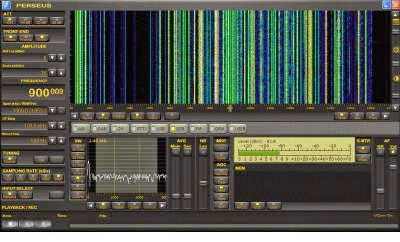
With a very quiet sun for the entire week, this past weekend's CLE proved to have much better conditions than normally experienced.
Conditions were 'good' but not 'great'. Really 'great' nights are few and far between but with the rapidly declining solar cycle, we should see more and more of these over the next few winters.
Most listeners around the world reported good conditions, with the nod going to Friday night as being the best. I thought that all three nights were good, but heard nothing new on night number three.
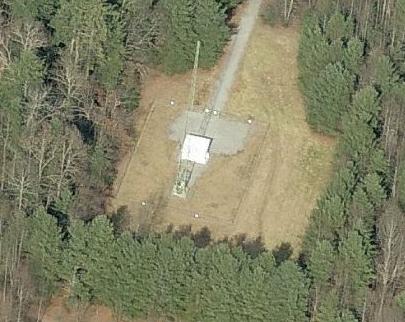
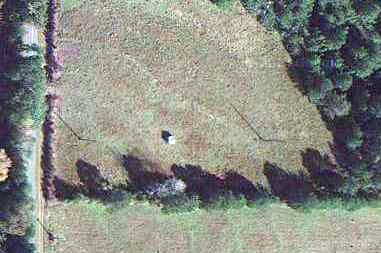
A surprise catch, with a good signal, was 'BRA -379' in Asheville, North Carolina. It's classified as an 'H-class' NDB and is an outer marker locator. I believe the H-class indicates a 400W transmitter and with the large vertical antenna, seems to get out very well.
 |
| courtesy: http://www.bing.com/maps |
 |
| courtesy: http://www.bing.com/maps |
Fortunately, Perseus has an extremely effective 'notch' filter, and this, along with putting 'AP' in my LF loop's null, allowed me to hear two other NDB's beneath it ... 'ZFA' (Faro, Yukon) and 'UX' (Hall Beach, Nunavut).
The following 44 stations were heard on the Perseus SDR while using either the LF loop or my inverted 'L', tuned to 370 kHz.
27 06:00 370.0 YBV Berens River, MB, CAN
27 06:00 370.0 PAI Whiteman, CA, USA
27 06:00 371.0 YK Yakima, WA, USA
27 11:00 371.0 UK Laughlin, CA, USA
27 06:00 371.0 PUR Marshall, MO, USA
27 06:00 371.0 ITU Great Falls, MT, USA
27 05:00 371.0 GW Kuujjuarapik, QC, CAN
27 06:00 372.0 ZPA Prince Albert, SK, CAN
27 08:00 372.0 YCO Kugluktuk, NU, CAN
27 05:00 373.0 MF Table Rock, OR, USA
27 06:00 374.0 LV Livermore, CA, USA
28 09:00 374.0 HY Hays, KS, USA
27 05:00 374.0 EX Kelowna, BC, CAN
27 08:00 374.0 EE Forada, MN, USA
28 09:30 375.0 SPH Springhill, LA, USA
27 05:00 375.0 FS Fort Simpson, NT, CAN
27 07:00 375.0 CP Casper, WY, USA
27 08:00 375.0 BM Balmoral, MB, CAN
27 08:00 375.0 BD Moose Jaw, SK, CAN
27 08:30 376.0 ZIN Matthew Town, BAH
27 07:00 376.0 YAG Fort Frances, ON, CAN
27 05:00 376.0 PVQ Deadhorse, ALS
27 07:00 376.0 LC Columbus, OH, USA
27 09:00 377.0 EHA Elkhart, KS, USA
27 08:00 377.0 BUB Burwell, NE, USA
27 08:00 378.0 ZFA Faro, YT, CAN
27 05:00 378.0 UX Hall Beach, NU, CAN
27 07:00 378.0 OT North Bend, OR, USA
27 05:00 378.0 AP Mayne Island, BC, CAN
27 08:00 379.0 ZEG Edmonton, AB, CAN
28 11:00 379.0 IWW Kenai, ALS
27 07:00 379.0 DL Duluth, MN, USA
27 08:00 379.0 BRA Asheville, NC, USA
27 10:00 380.0 OEL Oakley, KS, USA
27 08:00 380.0 GC Gillette, WY, USA
27 05:00 380.0 BBD Brady, TX, USA
27 08:00 381.5 SJX St James, MI, USA
27 10:00 382.0 YPW Powell River, BC, CAN
27 10:00 382.0 YE Fort Nelson, BC, CAN
27 06:00 382.0 SP Springfield, IL, USA
27 08:00 382.0 JNR Unalakleet, ALS
27 08:00 382.0 AW Marysville, WA, USA
27 10:00 383.0 PI Pocatello, ID, USA
27 07:00 383.0 CNP Chappell, NE, USA
27 10:00 384.0 3F Ile-a-la-crosse, SK, CAN
The listening results for all North American listeners and those outside of Europe can be found here.
Hunting For NDBs In CLE 204
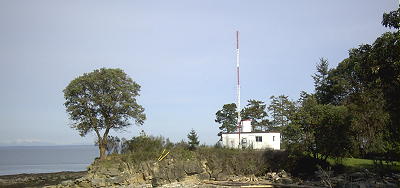 |
| 'AP - 378' - Mayne Island, BC |
This coming weekend will see another CLE challenge, this time in the 15 kHz slice from 370.0 - 384.9 kHz.
'CLE's are 'Co-ordinated Listening Events, and NDB DXers around the world focus their listening time on one small slice of the NDB spectrum.
This is a somewhat dreaded range for me since my local blowtorch NDB, 'AP' (378 kHz), sits right in the middle of the range. 'AP' is located at the entrance to Active Pass, the main ferry route to Vancouver Island, and the antenna is about 3/4 of a mile from my location. Needless to say, the beacon is about 40db over S9! With careful loop nulling, I can reduce this by about 25db but it's still an enormous signal to deal with.
Hopefully you can put 'AP' in your own log this weekend but its 25-watt signal will be much weaker for you. It's been logged as far east as Illinois and with your receiver in the CW mode, can be found on 378.399 kHz.
From CLE coordinator Brian Keyte (G3SIA), comes the following reminder:
Hi all,
Please join us in our 204th Co-ordinated Listening Event which starts
this Friday. All are very welcome.
CLEs are not contests - if you enjoy taking part you will be a winner!
51 of us from 31 radio countries joined in CLE188 back in Nov. 2014
when we listened on these same frequencies.
Days: Friday 26th - Monday 29th February
Times: Start and end at midday, your LOCAL TIME
Range: 370 - 384.9 kHz
Just log all the NDBs that you can identify with their nominal (listed)
frequencies in the range (it includes 370 kHz, but not 385 kHz)
plus any UNIDs that you come across there.
Please send your CLE log to the List in a plain text email if possible
(not in an attachment) with 'CLE204' at the start of its title.
Show on each log line:
# The date (e.g. 2016-02-26, etc., or just 26) and UTC.
(the date changes at 00:00 UTC)
# kHz (the nominal published frequency, if known)
# The Call Ident.
Show those main items FIRST - other optional details such as Location
and Distance go LATER in the same line.
If you send interim logs, please also send a 'Final' (complete) log.
As always, tell us your own location and brief details of the equipment
that you were using during the weekend.
I'll send the usual 'Any More Logs?' email at about 18:00 UTC on
Tuesday - you can check from it that your log has been found OK.
All logs must arrive on the list by 09:00 UTC on Wednesday 2nd
March at the very latest.
I hope the combined results will be completed on that day.
To help your listening, seeklists are available via the CLE page
http://www.ndblist.info/cle.htm
Good listening - enjoy the CLE
Brian
----------------------------------------------------------
From: Brian Keyte G3SIA ndbcle'at'gmail.com
Location: Surrey, SE England (CLE co-ordinator)
----------------------------------------------------------
(If you wish you could use any one remote receiver for your loggings,
stating the location and owner - with their permission if required.
A remote listener may NOT also use another receiver, local or remote,
to make further loggings for the same CLE).
These listening events serve several purposes. They:
- determine, worldwide, which beacons are actually in service and on-the-air so the online database can be kept up-to-date
- determine, worldwide, which beacons are out-of-service or have gone silent since the last CLE covering this range
- will indicate the state of propagation conditions at the various participant locations
- will give you an indication of how well your LF/MF receiving system is working
- give participants a fun yet challenging activity to keep their listening skills honed
Final details can be found at the NDB List website, and worldwide results, for every participant, will be posted there a few days after the event. If you are a member of the ndblist Group, results will also be e-mailed and posted there.
The very active Yahoo ndblist Group is a great place to learn more about the 'Art of NDB DXing' or to meet other listeners in your region. There is a lot of good information available there and new members are always very welcome.
If you are contemplating getting started on 630m, listening for NDBs is an excellent way to test out your receive capabilities as there are several NDBs located near this part of the spectrum.
You need not be an ndblist member to participate in the CLEs and all reports, no matter how small, are of much value to the organizers. 'First-time' logs are always VERY welcome!
Reports may be sent to the ndblist or e-mailed to either myself or CLE co- ordinator, Brian Keyte (G3SIA), whose address appears above.
Please ... give the CLE a try ... then let us know what NDB's can be heard from your location! Your report can then be added to the worldwide database to help keep it up-to-date.
PAØRDT Miniwhip Shakedown

A recent posting to Yahoo's 'NDB List Group' by Mike, an ardent NDB DXer in the UK (Sussex), announced the recent completion of his four-part video series describing the installation and testing of a new PAØRDT active antenna.
If you may be contemplating the installation of an active antenna such as this, or perhaps making a start at DXing the NDB band or listening on 630m, then you might enjoy following Mike's journey as he demonstrates that living in the noisy suburbs need not keep you from enjoying the LF/MF bands. Mike includes some interesting tests involving his grounding system versus noise ingress and the results of keeping the electrical main's ground isolated (or not) from the antenna cable's ground.
The PAØRDT active whip is available from PAØRDT himself or if you are handy with a soldering iron, you might choose to build the same antenna in your workshop. These simple yet highly effective receiving antennas are being used successfully by hundreds of listeners all over the world and for their size provide some pretty amazing performance.
Much more information on the PAØRDT e-probe antenna may be found here in a previous blog posting. To see more of Mike's videos, you can visit his interesting Youtube Channel here.
CLE 203 Results
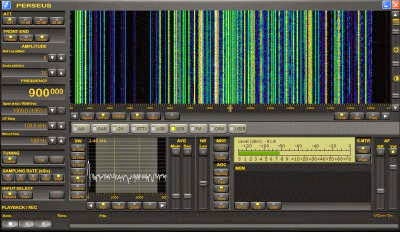
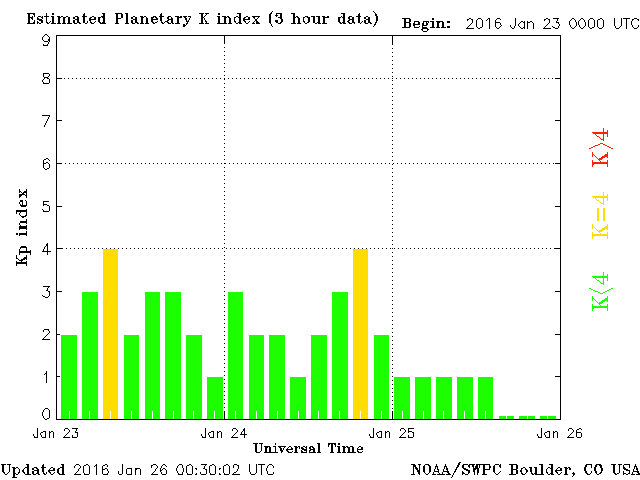
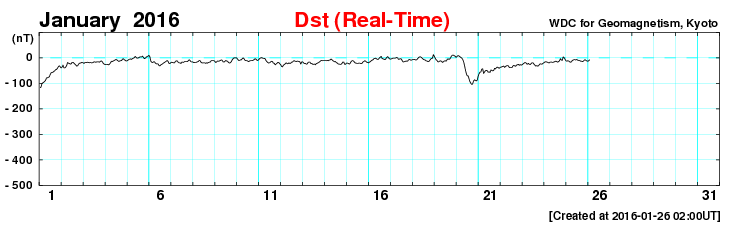
As has been the case for much of this winter's DX season, LF conditions were very erratic during this past weekend's CLE NDB-listening event.
Geomagnetic activity fluctuated wildly from hour to hour, gradually settling down for Sunday night's last opportunity, with K-indices dropping to 1's or Ø's.
 |
| courtesy: http://www.solarham.net/planetk.htm |
 |
| courtesy: http://wdc.kugi.kyoto-u.ac.jp/dst_realtime/presentmonth/index.html |
Participants in the central and southern states noted excellent conditions and were not as badly affected as listeners to the north, where the effects of any auroral activity are sudden and much more severe ... I'm always surprised at just how much difference one or two hundred miles further to the south can make.
The following NDB's were heard over the course of the weekend, all using the Perseus SDR to record two-minute grabs, every hour, from dusk through dawn. Going over the recordings takes some time but being able to, in effect, listen all night, readilly illustrates how much the band conditions on LF can change so drastically from hour-to-hour ... sometimes for better and sometimes for worse.
25 11:00 350 VTR McGrath, ALS
23 05:00 350 SWU Id Falls, ID, USA
23 05:00 350 RG Oklahoma City, OK, USA
25 10:00 350 RB Resolute Bay, NU, CAN
23 05:00 350 ON Agate, OR, USA
23 05:00 350 NY Enderby, BC, CAN
24 13:00 350 DNS Denison, IA, USA
24 10:00 351 YKQ Waskaganish, QC, CAN
23 05:00 351 AE Paradise Hills, NM, USA
23 09:00 352 RG Rarotonga, CKS
25 10:00 353 ZXY Whitehorse, YT, CAN
23 05:00 353 RNT Renton, WA, USA
23 04:00 353 PG Portage La Prairie, MB, CAN
23 08:00 353 LLD Lanai, HWA
24 09:00 353 IN Ericsburg, MN, USA
23 08:00 353 DI Dickinson, ND, USA
23 05:00 353 CY Cheyenne, WY, USA
23 05:00 353 AL Dixie, WA, USA
23 08:00 353 5F Chevron, AB, CAN
24 07:00 355 YWP Webequie, ON, CAN
25 14:30 355 AUB King Salmon, ALS
23 08:00 356 ZXE Saskatoon, SK, CAN
23 08:00 356 ZF Yellowknife, NT, CAN
23 11:00 356 PND Portland, OR, USA
23 08:00 356 ON Penticton, BC, CAN
25 11:00 356 ODX Ord, NE, USA
23 08:00 356 MEF Medford, OR, USA
24 11:00 358 YKG Kangiqsujuaq, QC, CAN
23 05:00 359 YQZ Quesnel, BC, CAN
23 05:00 359 YAZ Tofino, BC, CAN
23 05:00 359 SDY Sidney, MT, USA
24 13:00 359 GGF Grant, NE, USA
23 05:00 359 BO Ustick, ID, USA
24 11:00 360 SW Warroad, MN, USA
25 13:00 361 HI Holman, NT, CAN
23 08:00 361 E3 Wabasca, AB, CAN
25 10:30 362 YZS Coral Harbour, NU, CAN
23 08:00 362 RPX Roundup, MT, USA
23 09:00 362 OWP Sand Springs, OK, USA
23 08:00 362 BF Seattle, WA, USA
23 08:00 362 6T Foremost, AB, CAN
23 10:00 364 4D Helmet, BC, CAN
25 07:00 365 PAL Palma, EQA
23 05:00 365 MA Mayo, YT, CAN
23 05:00 365 HQG Hugoton, KS, USA
23 05:00 365 DPY Deer Park, WA, USA
23 06:00 365 AA Harwood, MN, USA
25 10:00 366 YMW Maniwaki, QC, CAN
25 11:00 366 PNI Pohnpei, FSM
25 10:00 366 EOK Keokuk, IA, USA
25 11:30 367 R5 Pukatawagan, MB, CAN
23 08:00 368 ZP Sandspit, BC, CAN
23 08:00 368 VX Dafoe, SK, CAN
23 08:00 368 SX Cranbrook, BC, CAN
25 11:00 368 SOY Sioux, IA, USA
It will be nice to see a 'quiet sun' once again, hopefully sooner than later. For such a wimpy solar cycle, this one is not going down without a valiant fight, as it continues to mess-up LF and MF propagation, with an almost non-stop bombardment of coronal hole streams.
Chasing NDB’s In The Haida Gwaii
Over the past two weeks, I have spent some time reviewing several Perseus SDR recordings sent to me by Walter Salminaw in Victoria, B.C.
Walter is a hard core, mainly BCB DXer, who has a winterized vacation home in the remote Haida Gwaii Archipelago region of north west British Columbia, formerly known as the Queen Charlotte Islands.
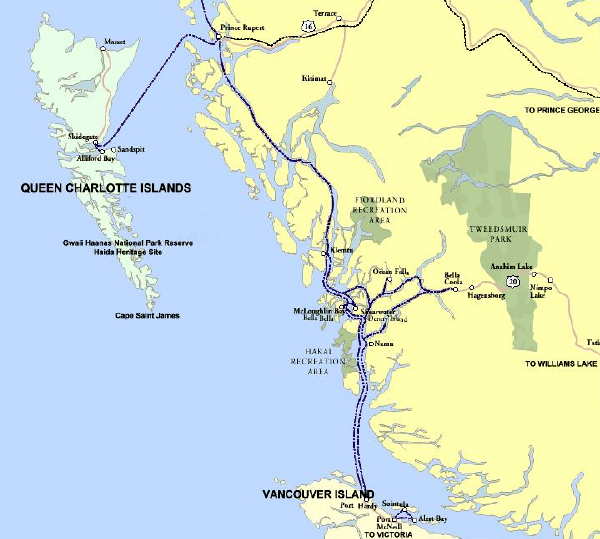
He has built several permanent antennas, including loops and various beverages, mainly favoring Asia, the Pacific and over-the-pole. Some of his BCB recordings reveal mind-numbing signals from all parts of Asia ... not S9, but S9+++ and simply amazing.
I had asked Walter for some of his files that covered the NDB band, during periods of good propagation, so that I might be able to determine if my selected list of Alaskan beacons were actually on-the-air or not. There are several NDBs in Alaska that seem to be active, according to FAA information, but have never been heard by NDB DXers. Using Walt's recordings, along with his NW-pointed beverage, allowed my to have a deep listen into Alaska and finally get some answers.
It was exciting to tune through the very quiet band, from a northern perspective, and to hear many of the more 'difficult' (normally weak here) Alaskan targets at S9 levels. Unfortunately, going through my list of suspects, turned-up no sign of activity from any of them and explains why I have never been able to hear them from here! Like so many regions around the world, it seems that the once huge network of Alaskan NDBs is quickly being phased out up there as well.
An unexpected side benefit of going through Walt's files, turned up several instances of beacons in the Canadian north, that had been reported shut down, several years ago. It was surprising to hear them still as active as ever. Additionally, one NDB in Alaska, unheard here for two years and thought to be gone for some time, was found to be still happily keying away.
I've sent these findings to the RNA database for updating ... but it would have been nice to hear some of my long-sought after Alaskan 'ghosts', which seem likely to have been off-the-air for several years.
I would like to thank Walter for taking the time to share his Perseus files with me and for his unexpected contribution to the RNA database. Here are a few of the log's highlights:
DD UTC kHz Call mi New Location
--------------------------------------------------------------------------------------------------
22 14:07 214 DA Dawson, YT, CAN ... RNA shows QRT as of 2008 ...0 deg bev best
22 14:07 214 DA Dawson, YT, CAN ... RNA shows QRT as of 2008 ...0 deg bev best
22 14:07 236 JB 'Laberge' Whitehorse, YT, CAN ... RNA shows QRT in 2011 ... 0 deg bev
22 14:07 245 CB Cambridge Bay, NU, CAN ... 0 deg bev best but betterr on ALA on 19th
22 14:07 245 CB Cambridge Bay, NU, CAN ... 0 deg bev best but betterr on ALA on 19th
22 05:35 266 GH Fort Good Hope, YT, CAN ... RNA shows QRT in 2006 ... 0 deg bev
22 05:35 269 ZW Teslin, YT, CAN ... RNA show QRT early 2015 ... 0 deg bev
22 14:07 277 YLC Kimmirut, NU, CAN ... 0 deg bev
22 05:35 284 YOC Old Crow, YT, CAN ... only heard in AK, YT and Scandinavia ... 0 deg bev
22 14:07 287 WJ Deline, NT, CAN ... RNA shows QRT as of 2011 ... 0 deg bev
22 05:35 290 YYH Taloyoak, NU, CAN ... 0 deg bev
22 05:35 326 VQ Norman Wells, NT, CAN ... RNA shows QRT as of 2012 ... 0 deg bev
22 05:35 338 YPX Puvirnituq, QC, CAN ... the only PQ heard on your files ... 0 deg bev
22 14:57 346 N9 Tumbler Ridge Municipal Apt, BC, CAN ... RNA shows QRT as of 2014 ... nw bog
22 05:35 350 RB Resolute Bay, NU, CAN ... 0 deg bev
21 13:56 352 RG Nikau - Rarotonga IAP, CKS ... nw bog
19 13:47 359 NDJ Bucholz AAF - Kwajalein, MHL ... nw bog but ALA NE/SW best
21 13:56 360 OX Iwo Jima, VOI ... nw bog
22 05:35 362 YZS Coral Harbour, NU, CAN ... 0 deg bev
22 05:35 378 UX Hall Beach, NU, CAN ... 0 deg bev
22 05:35 417 GBH Galbraith Lake, ALS ... RNA shows QRT as of 2013 ... 0 deg bev
--------------------------------------------------------------------------------------------------
--------------------------------------------------------------------------------------------------
 |
| courtesy: http://www.noaa.gov/ |
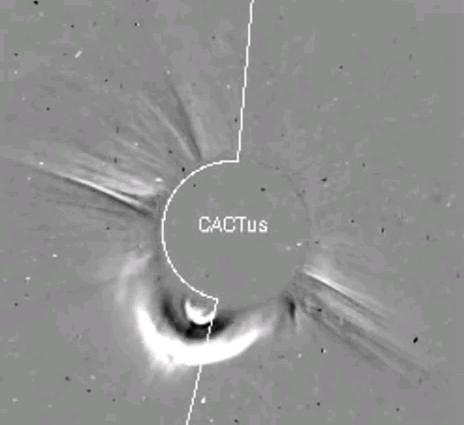
In the meantime, it looks like our planet is due for two more CME hits later tonight or early Saturday morning and the relatively quiet conditions of the past few nights will likely be badly disturbed on LF for the next few days ... something that has been happening far too much this winter as it seems that most of the prime time DX season has been one continual blast from the sun after another.
CLE 200 Results
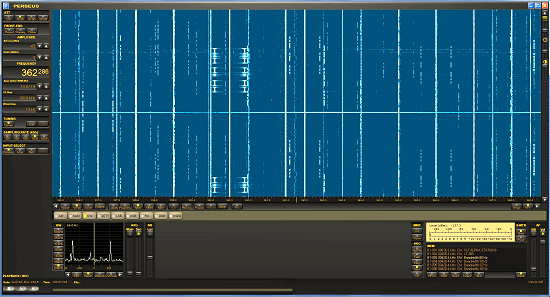
The CLE 200 event this past weekend once again delivered mediocre propagation on all three evenings. In spite of Sunday night's G1-class geomagnetic storm and high K values, Sunday's overnight period proved to be the best of the weekend's generally 'below average' conditions ... this is the time of the year that LF propagation is usually at its best. Thankfully, there are still several months ahead that could offer some really great mid-winter prop.
The following NDBs were logged using the Perseus SDR along with my LF inverted L, resonated at 300kHz:
28 09:00 335 CC Concord, CA, USA
28 09:00 335 CVP Helena, MT, USA
28 08:00 335 YUT Repulse Bay, NU, CAN
28 06:00 335 YLD Chapleau, ON, CAN
28 09:00 336 LF La Salle, MB, CAN
28 13:00 337 FF Fergus Falls, MN, USA
28 09:00 337 7D Hudson Bay, SK, CAN
28 12:00 338 CMQ Campbell Lake, ALS
28 09:00 338 ZU Whitecourt, AB, CAN
28 12:00 338 RYN Tucson, AZ, USA
30 08:00 338 SHL Sheldon, IA, USA
28 07:00 338 TU Tulsa, OK, USA
28 12:00 338 YPX Puvirnituq, QC, CAN
28 12:00 338 K Port Angeles, WA, USA
28 10:00 339 6X York Landing, MB, CAN
28 10:00 339 MKR Glasgow, MT, USA
29 06:00 340 YY Mont Joli, QC, CAN
28 13:00 341 ELF Cold Bay, ALS
28 10:00 341 OIN Oberlin, KS, USA
29 06:00 341 YYU Kapuskasing, ON, CAN
28 09:00 341 DB Burwash, YT, CAN
28 09:00 342 PFT Pinecreek, MN, USA
28 09:00 343 YZH Slave Lake, AB, CAN
28 09:00 344 YOP Rainbow Lake, AB, CAN
28 09:00 344 XX Abbotsford, BC, CAN
28 09:00 344 FCH Fresno, CA, USA
28 09:00 344 BKU Baker, MT, USA
28 09:00 344 POY Powell, WY, USA
30 08:00 345 GF Grand Forks, ND, USA
30 08:00 346 OLT Soldotna, ALS
28 09:00 346 YXL Sioux Lookout, ON, CAN
28 15:00 347 TNC Tin City, ALS
28 13:30 347 DJN Delta Junction, ALS
28 06:00 347 LEN Leeny, ID, USA
28 15:00 347 SBX Shelby, MT, USA
30 08:00 347 YK Yankton, SD, USA
28 09:00 347 PA Prince Albert, SK, CAN
30 08:00 348 MC Mason City, IA, USA
28 07:00 348 MNC Shelton, WA, USA
Hunting For NDBs IN CLE 200
 |
| XX - 344 Abbotsford, BC |
This month's frequency range covers 335.0 - 349.9 kHz.
Conditions have been very good this week ... hopefully this will continue.
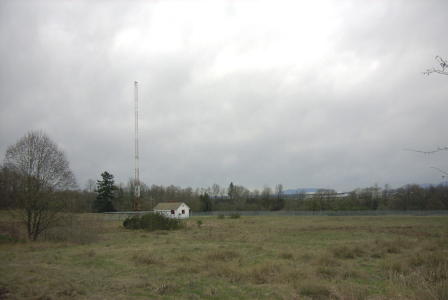
A good CLE target this time is 'XX' on 344 kHz near Abbotsford, B.C. It has been heard throughout North America and can be a good prop-indicator for eastern listeners.
From CLE coordinator Brian Keyte (G3SIA), comes the following reminder:
Hi all:
Our 200th Co-ordinated Listening Event is only a few days away.
Just a normal CLE using a busy range of frequencies which usually
attracts a lot of interest.
First-timers' CLE logs will also be very welcome, as always.
Days: Friday 27 November - Monday 30 November
Times: Start and end at midday, your LOCAL time
Range: 335.0 - 349.9 kHz
Please join us wherever you are - just log the NDBs you can identify
having their nominal frequencies in the range (it includes 335 kHz
but not 350 kHz) and any UNIDs that you come across there too.
(A good way for some of us to unwind after Thanksgiving?)
We last concentrated on these frequencies in CLE185 in Aug. 2014.
Please send your CLE log to the List (no attachments and ideally in a
plain text email) with CLE200 at the start of its title. Show on each line:
# The Date (or Day No: 27 to 30)
# The Time in UTC
# kHz - the nominal published frequency, if known.
# The Call Ident.
Please show those main items FIRST. Any other optional details such
as Location and Distance go LATER in the same line.
If you send any interim logs, please also send a 'Final' (complete) one.
And, of course, tell us your own location and brief details of the
equipment that you were using during the Event.
You can find full details about current and past CLEs from the CLE page
http://www.ndblist.info/cle.htm including access to the CLE200 seeklists
for your part of the World prepared from the loggings on Rxx.
Good listening - enjoy the CLE.
Brian
----------------------------------------------------------
From: Brian Keyte G3SIA: <ndbcle'at'gmail.com>
Location: Surrey, SE England (CLE co-ordinator)
----------------------------------------------------------
(If you would like to listen remotely you could use any one remote
receiver such as http://websdr.ewi.utwente.nl:8901/ for your
loggings, stating its location and owner and with their permission
if required. A remote listener may NOT also use another receiver,
local or remote, to make further loggings for the same CLE)"
__._,_.___
These listening events serve several purposes. They:
- determine, worldwide, which beacons are actually in service and on-the-air so the online database can be kept up-to-date
- determine, worldwide, which beacons are out-of-service or have gone silent since the last CLE covering this range
- will indicate the state of propagation conditions at the various participant locations
- will give you an indication of how well your LF/MF receiving system is working
- give participants a fun yet challenging activity to keep their listening skills honed
Final details can be found at the NDB List website, and worldwide results, for every participant, will be posted there a few days after the event. If you are a member of the ndblist Group, results will also be e-mailed and posted there.
The very active Yahoo ndblist Group is a great place to learn more about the 'Art of NDB DXing' or to meet other listeners in your region. There is a lot of good information available there and new members are always very welcome.
If you are contemplating getting started on 630m, listening for NDBs is an excellent way to test out your receive capabilities as there are several NDBs located near this part of the spectrum.
You need not be an ndblist member to participate in the CLEs and all reports, no matter how small, are of much value to the organizers. 'First-time' logs are always VERY welcome!
Reports may be sent to the ndblist or e-mailed to either myself or CLE co- ordinator, Brian Keyte (G3SIA), whose address appears above.
Please ... do give the CLE a try ... then let us know what NDB's can be heard from your location! Your report can then be added to the worldwide database to help keep it up-to-date.
__._,_.___













