Posts Tagged ‘couragecenter’
 Handiham World for 09 November 2011
 November 9th, 2011 |
  Author:
 Welcome to Handiham World.

Photo: Pat, WA0TDA, poses in front of the Honda Driving Simulator at the Mazda car rental agency in Chitose, Japan. Note the Handiham baseball cap! In Japan one drives on the left side of the road.
I’m back from Japan, and have some awesome jet lag, so this will be a short one! Today is the day of the big FEMA emergency test, so you might drop me a line and let me know if your radio club or ARES group did anything special to participate, or if you even heard any alerts.
My XYL and I had a nice visit with son Will, KC0LJL, on the northern Japanese island of Hokkaido. Although I had hoped to check into some Handiham nets from there, I just could not make the time shift work for me so that I could stay awake to make that schedule. It sure was hard to flip days and nights for 10 days, then do it all over again. One of the oddest things to wrap my brain around was that one can leave Tokyo on Tuesday afternoon and arrive back in Minnesota on Tuesday morning, thanks to crossing the International Date Line while flying east. It reminded me of that book by Jules Verne, “Around the World in 80 Days” in which the protagonist, Phileas Fogg, wins a bet by circumnavigating the globe in 80 days. At first he thinks he lost the bet, but because he traveled east around the world, he actually gains a day and is able to win the bet after all. It’s been a long time since I read that story as a boy who hoped someday to see the world! In the novel, Phileas Fogg traveled from Yokohama to San Francisco in 22 days by steamship. Thanks to amateur radio, I can travel the world via DX any day.
Japan is known for its amateur radio manufacturers and enthusiasm for amateur radio in general. While on the road with XYL Susie driving, I spotted plenty of HF beam antennas, but who knows how many wire or VHF/UHF antennas that I missed? One day we visited the city Tomakomai, a port city south of Sapporo. There was one city block where I saw a real cluster of ham radio antennas, and I’m estimating a half-dozen beams or rotary dipoles in that single city block! That’s just amazing!
While in Japan, I was not able to get on the air using an HT because I did not apply in advance for a JA license. I did, however, enjoy getting on HF using the Handiham Remote Base station W0ZSW and checked into the PICONET on 3.925 MHz. If you are a remote base user, please consider checking into PICONET, which has a long-time association with the Handihams.
For Handiham World, I’m…
Patrick Tice
[email protected]
Handiham Manager
[email protected]
Handiham Manager

Handiham World for 26 October 2011
Welcome to Handiham World.

Experiencing a CME
Remember last week’s praise of the 10 meter band and the great DX conditions? Well, it’s way different this week as the HF communications conditions have been tanked by a CME, or “Coronal Mass Ejection” from the sun.
I subscribe to a service from Spaceweather.com that provides me with a timely email about such solar events. On Monday, the day of the solar event, I was able to communicate on most of the HF bands quite well early in the day, but by mid-afternoon it was clear that something was happening. Sure enough, the email had arrived in my inbox, alerting me to the fact that a CME event had occurred:
“A coronal mass ejection (CME) hit Earth’s magnetic field on Oct. 24th around 1800 UT (2 pm EDT). The impact strongly compressed our planet’s magnetosphere and may have exposed geosynchronous satellites to solar wind plasma. Mild to moderate geomagnetic storms are possible in the hours ahead as Earth’s magnetic field continues to reverberate from the hit.”
Later in the evening on Monday I checked in with a group of friends on 1.902 MHz. It was 20:00 Central Daylight Time, and after sunset. Normally the 160 meter band would be really starting to open up that time of the evening, but conditions were so bad that sky wave communications were almost non-existent. Ground wave contacts were possible, and because several of us live within the range of ground wave communications, we were able to carry on a conversation. It was clear that not everyone knew what was happening, but by this morning the news had hit the popular media, with stories about the Northern Lights being observed even in the southern United States, a rare occurrence. Displays of the Northern Lights are common in the far north, as you might expect, when matter and radiation are ejected from the sun in the direction of Earth reach and disrupt the planet’s magnetosphere. CME events are actually quite common as the sunspot cycle climbs to maximum, and there may be several each day. However, not all of them are as strong as this week’s, nor are they all directed toward Earth. You can find out much more about CME events on Wikipedia or Spaceweather.com, but for our purposes we simply need to know that solar weather can bring a temporary halt to effective sky wave propagation.
It is tempting for those of us who have experienced multiple solar cycles as amateur radio operators to assume that most everyone will know why they turn on their HF radios and find comparative silence. There may be odd swishing sounds or hissing. Tuning around can yield more “birdies” (mixer products generated within the radio) than actual signals. We now have lots of new Technicians and Generals who have never been in this situation. That reminds me of the time when I was a new General and had never experienced the effects of a CME. It was a time of many sunspots, good DX, plenty of activity on the bands, and contacts with low power were “easy pickings”. Imagine my thought processes when I switched on the receiver (we had separate transmitters and receivers in the late 1960’s unless we had lots of money) and there was nothing but a gentle hiss. I immediately assumed that the antenna was disconnected – that’s exactly what it sounded like, so it was a reasonable thing to check. When that idea fizzled, I actually took a hike out into the back yard to look at the antenna. It was till up there in the air, feedline connected, looking fit as ever.
This was a real head-scratcher!
Back inside I went to sit down and puzzle it out. RF gain, check. Antenna switch, check. All vacuum tubes in the receiver lit up, check. Broadcast stations coming in on medium wave, check. Eventually I must have talked with a fellow radio club member and gotten the lowdown on solar weather events like that one, but it always stuck with me that I felt that the antenna must not have been connected – that’s how bad it was. You can well imagine a new ham today experiencing the same thing with this week’s solar weather and thinking that they are either doing something wrong or they have some kind of an equipment or antenna problem.
So what do you do about it?
This is simple, and the method preferred by lazy operators: Just wait and do nothing. Band conditions will slowly improve, though it may take several days. You can have fun keeping an informal log of stations you hear on the various bands, perhaps even charting the return to normal conditions band by band, starting with 160 or 80 meters, where sky wave will return quickly, often within 24 hours. It will probably take longer for activity to return on bands like 10 meters. By yesterday 75 meters had cleared up pretty well and regional nets were back in operation.
For Handiham World, I’m…

Handiham World for 19 October 2011
Welcome to Handiham World.
The 10 meter band is back!
We are starting to hear excited reports from amateurs on the regular VHF and HF nets about how the 10 m band is really hot, and that stations from all over the place are being heard really well. You know there is something going on when you start hearing people sing the praises of 10 m while they are checked into a 75 m phone net. Most of us have gotten out of the habit of tuning around 10 m unless there happens to be a local HF net that meets there, operating in a small geographic area by the use of ground wave propagation. We have had such nets here in the Twin Cities area off and on for many years. During a sunspot minimum there is very little activity on 10 m most of the time because the ionosphere is not sufficiently energized to allow for worldwide propagation conditions. As the sunspot maximum approaches, conditions change and long distance contacts on 10 m are not only possible, they are very common and can be completed with simple antennas and low power.
This creates a a wonderful opportunity for amateur radio operators who have never experienced a sunspot maximum and the excellent band conditions that come along with it. Technician class operators now have lots of privileges on the 10 m band, and this is a perfect time to start using HF, especially for those operators who have never tried single side band or who have never operated anything but FM repeaters. This is a whole new ballgame!
Consider these facts about 10 m operation:
- Novice and Technician licensees may operate using single side band: between 28.300 and 28.500 MHz using up to 200 W.
- When the 10 m band is open as it is lately, high power is not necessary. Excellent contacts can be made even using very low power. Many stations will be using 100 W or less – in fact, I will amend that to say that MOST stations will be using 100 W or less. High power is simply not necessary, which puts Novice and Technician operators on a level playing field with other operators. Experience tells those of us who have been in amateur radio a long time that we are not going to bother turning on a linear amplifier to operate on the 10 m band.
- 10 m antennas are small and almost everyone can fit this kind of antenna into the space that they have available. Using our formula for a half wave dipole, 468 divided by 28.4 MHz (the middle of the Novice/Tech segment of the band), yields an antenna about 16 and one half feet long. That is a pretty manageable length! You would make each leg of a dipole 8 feet three inches long and feed it with 50 Ohm coax, such as RG-8X low loss if you must use a thinner cable or the standard size cable RG-213. Keep the coax run as short as possible in any case, because loss in the feedline increases as the operating frequency goes up. There is more loss per foot on 10 meters than on 75 meters. A quarter wave vertical antenna for 10 m is only a little over 8 feet high. If you want to construct a quad or Yagi antenna for 10 m, they are much smaller than 20 m directional antennas and thus have a smaller turning radius. A 10 m antenna is lighter and easier to handle, too.
- For our Technician Class Handiham members who have already purchased HF transceivers but who have never used them for anything but receiving, this is your chance to press that push to talk switch and enjoy operating SSB. Yes, I know that you have CW privileges on other HF bands, but this is PHONE, and conditions are so good that it is easy to make contacts. Of course Morse code contacts are easier and better during good band conditions, but the window for SSB is open right now.
- RF safety is a concern if you use indoor antennas on the 10 m band. Be sure to perform an RF safety evaluation and locate the antenna as far away from people as possible. Adjust the power level to achieve compliance. For more on how to do this, visit the ARRL website and check the TIS, or Technical Information Service. If you are a Technician Class operator who is studying for General, there is information both in your study materials and in the question pool.
Okay, so that brings us up to speed on 10 meters. There is another important thing that I would like to discuss with our readers and listeners: Access to the Handiham Internet Remote Base stations. In general (and that’s not meant as a pun), we have restricted the access to our stations to General, Advanced, and Extra Class licensees. However, now that the 10 meter band is open, perhaps it is time to consider opening the stations to our Novice and Technician licensees as well. There is no need to worry about RF safety, antennas, or transceivers since all of that equipment resides far from the control point, your computer. There are pros and cons to this idea.
On the pro side:
 | It would be nice to extend these excellent Handiham resources to more members at a time when band conditions are so good. |
| Getting a taste of HF operation would surely make Techs excited about earning their General tickets. |
| The 10 m band is also a good place to learn more about HF operation because it is not as crowded and competitive a place to operate as bands like 20 m. |
| We are now hosting the software downloads for the W4MQ software. |
On the con side:
| The HF remote base stations do require some additional technical expertise to operate. Novice and Technician operators are usually the least experienced and need the most help getting things to work. Lyle, K0LR, and I don’t do much, if any, “tech support” on these stations because we simply do not have the time and most of the problems are located at the user’s own home computer anyway. My biggest fear is opening up a floodgate of emails and phone calls about how to install the software and get it to work. This is not an insignificant problem. An installation requires opening a free Skype account, getting audio settings correct, and then installing the W4MQ software and a required W4MQ update. After that, the software must be configured with the IP address of each station and the log in credentials. This is not a problem for a computer user with at least an intermediate skill level, but it is quite challenging for a user who does not know their way around a computer. |
| Technician users may get frustrated by operating practices on HF, which are much different than what they have experienced on FM repeaters. Of course you have to learn somewhere, but are we really ready to do a “sink or swim” exercise here? Maybe we need some training ahead of time, but we have none set up. |
So what do you think? Is this a topic for discussion on the Handiham Radio Club list, or do we need a specialized list set up for Remote Base discussions only? When Bob, N2JEU, became a silent key last summer his discussion board went away. A discussion board on a website or a mailing list might be the best way to provide a forum for users to get their questions answered.
For Handiham World, I’m…
Patrick Tice
[email protected]
Handiham Manager
[email protected]
Handiham Manager

Handiham World for 12 October 2011
Welcome to Handiham World.
The temptation of power!

What is it about power that makes some people crazy for it? Once they have a taste of power, they want still more.
Of course in ham radio, the idea of more power is usually associated with operating with higher power output by adding RF amplifiers. If 100 watts is good, 1,000 must be better, right?
Wrong!
What does the FCC say? It’s §97.313, Transmitter power standards. Section (a) says, “An amateur station must use the minimum transmitter power necessary to carry out the desired communications.”
There are good reasons for using lower power levels most of the time. If the other station can hear you when you are using 100 watts, you are only wasting electricity to run more power than that. We are more conscious about waste these days, since power costs are going up and the generation of that wasted power wastes resources and causes pollution. Furthermore, that unnecessary power can cause your signal to be heard on adjacent frequencies and at long distances. A high-power station can easily cause interference to other users on the band, but there is also a much greater chance of RF getting into nearby conductors where it causes bad things to happen.
I remember a Handiham member who moved into an apartment and was lucky enough to be able to have a wire antenna installed on the roof of the building. Back in those days, we were able to field volunteers to help members with such projects, and our volunteer was able to install and connect the antenna. The fellow had moved from a private single-family house where he had owned and operated a complete, well-equipped station that included a linear amplifier for the HF bands. Our volunteer explained to him that the amplifier would not be practical in the new QTH, since there was not enough real estate to get the wire antenna well away from the building. The linear was stored in a closet, and the station was tested on the air with good results.
Well, you can probably guess what happened. The station’s owner was used to operating with high power. (Remember: the thinking was, “If some is good, more is better.) So out came the linear from the closet and back into the ham shack it went. It wasn’t long before we got a call with the bad news that the poor fellow had lost his ham radio privileges at his new QTH after setting off all the fire alarms in the building. I don’t know if he was ever able to get on the air after that. It was before the days of remote base internet operation, so he was probably stuck on whatever VHF repeaters he could work from his apartment.
Adding a linear can put enough RF energy into the area surrounding your shack to affect your neighbors, too, even if you live in a detached single-family home. Devices like audio amplifiers can be connected to speakers systems in home theaters by long lengths of unshielded wire. The final output ICs in these devices can act as rectifiers to demodulate the RF and cause loud thumping noises in the speakers. Other devices that may be connected to long lengths of wire are alarm systems, intercoms, and smoke detectors. The relatively weak field from a 100 watt station might occasionally affect something in one’s own home, but is seldom a problem next door. Bump the power up to 1,000 watts and you are asking for trouble.
Another consideration is the need for an RF safety audit. Generally speaking, you don’t have too much to worry about when using the typical transceiver without an amplifier. When you increase power levels beyond that 100 watts you are going to need to “run the numbers” to make sure that you are in compliance with RF safety rules. For example, if you are using 100 watts on 29 MHz with a dipole antenna, you will be in full compliance at a distance of 25 feet from the antenna for both controlled and uncontrolled space. However, if you use 1,000 watts and the same antenna, you are out of compliance for uncontrolled space. If a neighbor’s property is within that 25 feet, you are now operating outside regulations and exceeding safe power levels. It is even worse if you have a beam antenna for 10 meters because of the antenna gain, which could increase the RF exposure even more in the uncontrolled space. It goes without saying that you want to keep RF exposure to yourself, your family, and your neighbors to safe levels. It is much easier to do this at lower power levels.
My favorite reason to stick to lower power levels is that linear amplifiers only give your transmitted signal a boost. They do nothing at all to help you receive weak signals. In fact, calling CQ with your linear turned on can lead to responses from stations that are too weak to copy. You can get more bang for your buck by installing a better antenna system. Once I learned this for myself, I have advised new hams to concentrate on good, effective antennas instead of amplifiers. After all, the antenna system will help pull in those weak signals, helping you both on receive and transmit.
There is a time and a place for turning on the amplifier. It is when band conditions are deteriorating and more power might help you complete the QSO. It might be when you are the net control station on an HF net and it is necessary to use high power to make sure that you are heard throughout the geographic area of the net. It is probably going to be helpful in the summer when there is thunderstorm static and you are operating on 75 meters. But more often than not high power is really not necessary. Let’s not use it if we don’t need it.
For Handiham World, I’m…

Handiham World for 05 October 2011
Welcome to Handiham World.

A broken water pipe gets me thinking…
What sort of things might cause a disaster in my ham radio shack? I started thinking about this recently after dealing with a minor disaster caused by a leaking water pipe in the ceiling of the basement. As usual, I was sitting in my home office, which also serves as my ham shack, when I heard a faint drip, drip, drip. Since I spend an awful lot of time in my office, I know and recognize all of the usual sounds of the house around me. In fact, I don’t really notice if the compressor in the freezer comes on and my brain rarely even registers sound of the washing machine or dryer in the adjacent laundry room. The furnace or air conditioner can come on and go off without interrupting me. Jasper, my dog, wanders the house and occasionally growls at a squirrel that he sees through the window. None of this stuff bothers me or particularly gets my attention. But the brain is a marvelous thing; it can ignore the common and expected while immediately picking up on something unusual.
The sound of dripping water, even though barely audible, got my attention!
Sure enough, an inspection of the recreation room around the corner from my office revealed a drip from the ceiling. Several of the tiles in the suspended ceiling had gotten waterlogged and collapsed onto the floor, and I hadn’t heard that sound because I had only just a few minutes before come into the office to sit down and do some more work. The leak must have occurred in the afternoon shortly after I had finished my usual office day and had taken the dog out for a walk. When I returned to the office after dinner, that’s when I heard the dripping sound that was so out of place. It turns out that a 90° copper connecting joint in the cold water pipe going to the outdoor irrigation system developed a tiny pinhole leak on the inside of the bend. The tiny, almost invisible spray was enough to create quite a mess given a few hours. The soaked ceiling tiles collapsed onto an easy chair, soaking it and ruining the cushion. The carpet on the floor was soaked in an area of about a yard square. A few other items stored in the room got wet on the outside, but were not ruined because I heard the drip and responded in time to shut off the water. Fortunately, we have a carpet cleaning machine that vacuums up water and we had a spare cushion for the chair. I haven’t replaced the ceiling tiles yet, but they are standard 2′ x 2′ squares that are commonly available at any big box building store. As we are so fond of saying in Minnesota, “it could’ve been worse!”
Of course I called the plumber, and he was able to fix the problem the next day. Fortunately, we have a shut off valve for that particular leg of the water system in our house, so there was no need to keep the main valve turned off. It’s heck to be without water when you need to wash, cook, and flush! But what got me to thinking about the ham shack in relation to this broken pipe was that the shutoff valve is located directly above the ceiling in my office. In fact, several water pipes converge in the ceiling above the ham shack and it is sobering to think that the copper pipe carrying all of that water is exactly the same age as the pipe fitting that failed in the next room, which is about 20 years old. So, as I sit here talking into the microphone and enjoying a nice session on my radio, will I one day feel a drip, drip, drip on my head? I guess it could happen, and I have to admit that when I finished the basement and built the ham shack I never gave a second thought to the water pipes running through the ceiling joists overhead. I had grown up with copper water pipe in my parents’ house, and I cannot remember a single time that there had ever been a leak. I guess I would not have been too surprised if a leak had occurred where pipes were joined in the soldered connection, but to have a piece of copper simply spring a leak in the body of the pipe? It did seem pretty unlikely, but like all such things it is not something to worry about unless it happens to you – and it happened to me!
So I am forced to assess the probability of another leak, perhaps occurring over the critical electronic and computing equipment I have in the ham shack. Some of this equipment runs for hours or days at a time without being turned off. One can only imagine the damage that would be caused by water pouring onto the energized equipment. When I wired the ham shack, everything was put on ground fault interrupters. Given a good soaking, the equipment would probably short and trip the interrupters, but by then of course the station and computers would be ruined. This is not something I care to think about, but it is nonetheless a possibility. I had considered the possibility of a leak like the one we had to be extremely remote, and perhaps I was right. Nonetheless, had the leak occurred over the ham shack it would’ve meant many thousands of dollars of damage instead of a soaked chair cushion and a few feet of wet carpet.
What to do? Well, moving the ham shack and home office would be a major undertaking and a huge disruption in my work schedule. It wouldn’t be impossible, but it would be expensive and difficult. For now, the best I can do is to turn the main water valve for the entire house to the “off” position whenever we leave on vacation or for any kind of extended multi-day trip. This is something I have always done anyway, and while it is not a perfect solution, it does prevent damage from leaks that might occur when no one is home and when damage can be severe due to the fact that no one is around to discover the leak. Long ago, when I worked in an appliance store, we recommended that our customers who were leaving on vacation turn off the water supply to their washing machines because the hoses that fed the washing machine might burst and cause flooding in the basement. Turning off the whole house valve takes care of that problem. Keeping equipment off the floor is another good idea.
We are used to thinking about protecting our amateur radio equipment and its associated computer equipment from lightning damage, but we cannot ignore the threat posed by water!
For Handiham World, I’m…

Handiham World for 28 September 2011
Welcome to Handiham World.
What got you started in radio?
When I think about that question, I recall a little crystal radio kit that my dad bought for me. It had a plastic housing to make it look like a real table radio, except that it was smaller and had only a single earpiece. And of course it “magically” took a radio signal right out of the airwaves and turned it into music without any electricity at all! It was one of several crystal diode radios that I had as a kid. Another memorable one was made up in a round plastic ball that was supposed to be a satellite. There was a tuning control that consisted of a slug-tuned coil. The brass screw from the ferrite slug extended out of the top of the “satellite” like some sort of antenna. It had a little rubber cap on it to serve as a grip, so that the coil could be tuned more easily. The real antenna was a piece of bell wire with an alligator clip at the end. That allowed you to connect the radio to something conductive that might hopefully act as a better antenna and bring in a local AM station. Of course today the term “satellite radio” means something completely different!
When I was a teenager, dad bought me a Knight-Kit Span Master two tube regenerative receiver. It was not my brightest moment in radio when the kit manual called for putting “spaghetti” over some of the bare wire leads during assembly and I went down to the kitchen cabinet to find this apparently necessary but odd ingredient for a radio. Dad straightened me out on that and we ended up using the insulating tubing that was actually already provided by Knight-Kit.

Image: Here is the Knight-Kit Span Master as shown in a 1962 Allied Radio catalog. You could get the outdoor antenna kit for only 1 cent more, but the radio itself cost $25.95.
The Span Master worked when it was finished, so I installed it in the vinyl-covered wooden cabinet that came with it and ran a wire out of my bedroom window to serve as an antenna. The circuit might not seem like much, since it had only two vacuum tubes, but it turned out to be light-years ahead of the crystal radios. One important feature was a speaker, so I didn’t have to use headphones. The tuning knob was connected directly to a variable capacitor, but there was a helpful bandspread knob connected to a second capacitor so that fine tuning was possible without pulleys and dial strings. Furthermore, the radio had a band switch and covered not only the AM broadcast band but also several short-wave bands. In spite of the two tube design, a fair amount of gain could be had from the simple regenerative circuit. It was also possible to hear Morse code and even something that was new and mysterious back then: SSB. You had to be patient and careful tuning it in, though. It was more fun to listen to far off short-wave stations and find out what was happening all around the world.
I consider the Span Master to have been the radio that really got me interested in getting my amateur radio Novice license. Today we can still find electronic kits, and who knows? One of those kits might spark the interest of a future engineer, scientist, or teacher! Consider an electronic kit as a gift for your child, making it age-appropriate, of course. Then make it a parent-child project to assemble it and make it work. You will both have fun, and open the door to STEM: Science, Technology, Engineering, and Math.
Next week: Thoughts about a broken water pipe.
For Handiham World, I’m…

Handiham World for 21 September 2011
Welcome to Handiham World!

A week from tomorrow (on Thursday, September 29) I will have the opportunity to do what I value most in amateur radio: teach a class for my local radio club. The topic will be the rules and regulations for the General Class, so it’s not really either a “fun” or “technical” topic. As the old saying goes, “it is what it is”, and that means that:
1. There is going to be a lot of memorization involved, and…
2. It’s not the most interesting stuff in the world.
Nonetheless, I will try to keep the class awake for the two hours we will have to hit the high points related to legal and courteous operation. I plan to take advantage of the LCD projector and use PowerPoint to make sure that I stay on subject and on time. If you have endured really boring PowerPoint presentations, you are probably stifling the urge to yawn even thinking about the prospect. As a teacher, I can use some amusing graphics and tell a few stories to break the tedium. Some instructors bring along small bags of candy – wrapped hard candies are great – and toss them out to the students as a reward for answering a question. When I talk about the rules, especially the frequency allocations, I like to emphasize the fun my students are going to have when they get on HF and start working those distant stations. Remember, most of the students will be Technician Class operators whose only experience is getting on repeater systems. Most will never have tried EchoLink or IRLP operation, either. The prospect of a new, more complicated radio and larger antenna might seem daunting, but why not present it instead as an exciting opportunity? As marketing people know, it is all in how you tell the story. It can pay off to tell a few stories about your first DX contact or your Field Day operations. The best one are the memorable ones where you were surprised by really great band conditions and worked some amazing DX or when you were able to pass a message that made a difference to a disaster victim.
Everyone has an interference story. When you talk about that part of the regulations, personalize it by saying a few words about what happened to you. My story is that I was a young operator, living with my parents, when I passed my own General exam and was finally able to get on the phone bands. All I had was a really basic transmitter, a Knight-Kit T-60. It used a really lame circuit that they called “screen grid modulation”, and it more or less (but mostly less) allowed for AM phone operation. My antenna was a vertical mounted in the back yard, fed by 50 ohm coax with a tapped coil at the feedpoint. It was pretty basic, to say the least.
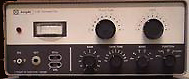
Image: Knight-Kit T-60 transmitter
Anyway, I had my new General ticket taped to the wall in my bedroom and was really excited to get on the air. I found an open frequency and called CQ. Now that I have been a ham for decades I know that it would have been better to listen and join a QSO in progress or listen for someone else’s CQ, but I was really a newbie back then and didn’t know any better. Imagine my surprise when one day I was out fiddling with the tapped coil at the base of the vertical antenna, when our neighbor lady across the back fence got my attention and asked me if I was a ham radio operator. She explained that she was hearing my transmissions on top on her favorite AM broadcast station, WCCO. I was apologizing for the interference, but she stopped me and told me that it was perfectly all right and that she was interested in learning about ham radio herself! It didn’t take her long to get her ticket and for many years afterward she enjoyed getting on the air herself. Not every interference complaint is bad, it seems! Telling a story like that can add a bit of interest to an otherwise dull topic. Use your imagination and keep your students engaged!
For Handiham World, I’m…














