Posts Tagged ‘Contesting’
 2010 ARRL CW Sweepstakes
 November 15th, 2010 |
  Author:
 Last weekend I spent about 13 hours or so participating in the ARRL CW Sweepstakes contest. The last time I participated in this contest was in 2008, and although I started out slowly, I managed to finish with a final score just a bit higher than the 2008 effort. In 2008, I had 333 QSOs in about 15 1/2 hours with 79 out of the 80 possible multipliers, missing only NT (Northwest Territories in Canada) for a score of 52,614 points. This year, in 13 hours, I had 376 QSOs missing 3 multipliers (Nebraska, which I heard, but couldn’t work, South Bay, which I heard once, and didn’t work, and Newfoundland/Labrador, which I never heard), giving me a total of 57,904 points. Considering that I had fewer multipliers and a higher score in a shorter amount of time, I was pretty happy.
I didn’t try to “run” stations at all for the first day of the contest, there was just too much competition, but later on when things quieted down I was able to get run frequencies on 40m and 80m from time to time and really enjoyed working the stations calling. I did have a couple of things happen while running on 80m that I thought were noteworthy. First, in the middle of my run I got called by W1AW, the Hiram Percy Maxim Memorial station located at ARRL Headquarters. Although I’ve had contact with W1AW many times (they are not very far from here so are very easy to work on the lower bands), and have even operated from that station myself, it’s always fun to make contact with them, and even more special when they call me (rather than the other way around). The other thing that happened was that a bit later I was running on another 80m frequency at the bottom of the band (3.505mhz) and a station called and asked if I would QSY (change frequencies) because a DX station (5R8Z, I believe) was about to come on the air and that was the frequency that he’d announced he’d be moving to. I moved right away, because even though legally, since I was there first I could stay, it was in the “ham spirit” to move so that others could contact that DX station. (Frankly, I would have been very happy to make that contact myself, but I never heard him.) In any case, it was the right thing to do, and I was happy to do it.

A little contesting this weekend
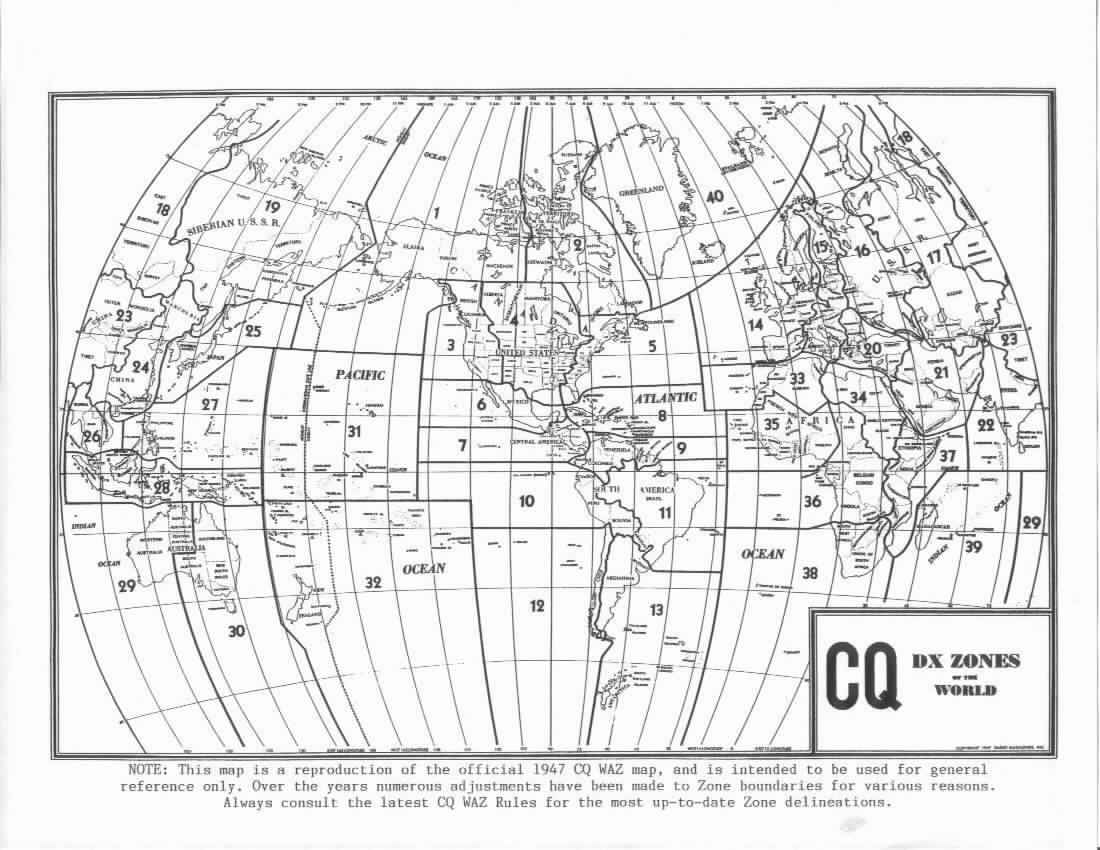
I spent about 10 hours Saturday and Sunday making some contacts in the CQ WW SSB contest. This is one of the biggest contests, where the goal is to work stations, for the most part, outside of your own country. You get two points for working a station on your own continent (if you’re in North America, one point elsewhere) and three points for working stations on another continent. There are also multipliers for each different country and CQ Zone that you contact. As with other contests, your score is computed by multiplying the number of points by the multipliers. World-class competition stations typically have scores in the millions or even tens of millions for the high-power multi-operator stations. My score was quite a bit more modest, just a bit under 115,000 points. That beats my score from last year, though I’ve done better in the past. (Though I’ve also spent more time in the past.)
This isn’t one of my favorite contests specifically because it is so popular. Because it is so popular, there are almost always a lot of stations calling, which makes it harder for a small station like mine to be heard. As a result, stations that I’m hearing very well just can’t hear me, and it often took several minutes to work stations that under non-contest conditions could be very easy. In a lot of cases, I’d just give up and move on, sometimes coming back to try to work the stations again later.
Partway into the contest, I came up with a technique that made things a little less frustrating: I intentionally made my station “hard of hearing”. Normally, although I’ve got a very modest antenna (my G5RV), my radio is quite good at pulling in relatively weak stations. However, in this case, there was little point in trying to work very weak stations because they weren’t going to hear me. What I did was to turn off any pre-amplification (kind of like a “hearing aid”) for all bands, and on some bands (particularly 40m and 80m), I put in 8db or more of attenuation. (Kind of like putting in earplugs.) There were still plenty of stations to hear, and with my self-imposed handicap, I found that I was a lot more likely to work these stations.
This technique isn’t something that I’d normally recommend, but for this particular contest, it kept me from wasting time on stations that I really had no chance of working.
Here’s my score breakdown for the contest. One interesting thing is that this is one of a very few contests where I’ve actually worked stations on all six possible HF bands.
Band QSOs Pts Cty ZN
1.8 2 2 2 2
3.5 22 50 17 11
7 62 172 39 12
14 87 223 45 18
21 45 113 25 16
28 8 22 7 3
Total 226 582 135 62
My total score was 114, 654 points, which, as always, is subject to adjustment for any errors that I (probably) made.

A little contesting this weekend
I spent about 10 hours Saturday and Sunday making some contacts in the CQ WW SSB contest. This is one of the biggest contests, where the goal is to work stations, for the most part, outside of your own country. You get two points for working a station on your own continent (if you’re in North America, one point elsewhere) and three points for working stations on another continent. There are also multipliers for each different country and CQ Zone that you contact. As with other contests, your score is computed by multiplying the number of points by the multipliers. World-class competition stations typically have scores in the millions or even tens of millions for the high-power multi-operator stations. My score was quite a bit more modest, just a bit under 115,000 points. That beats my score from last year, though I’ve done better in the past. (Though I’ve also spent more time in the past.)
This isn’t one of my favorite contests specifically because it is so popular. Because it is so popular, there are almost always a lot of stations calling, which makes it harder for a small station like mine to be heard. As a result, stations that I’m hearing very well just can’t hear me, and it often took several minutes to work stations that under non-contest conditions could be very easy. In a lot of cases, I’d just give up and move on, sometimes coming back to try to work the stations again later.
Partway into the contest, I came up with a technique that made things a little less frustrating: I intentionally made my station “hard of hearing”. Normally, although I’ve got a very modest antenna (my G5RV), my radio is quite good at pulling in relatively weak stations. However, in this case, there was little point in trying to work very weak stations because they weren’t going to hear me. What I did was to turn off any pre-amplification (kind of like a “hearing aid”) for all bands, and on some bands (particularly 40m and 80m), I put in 8db or more of attenuation. (Kind of like putting in earplugs.) There were still plenty of stations to hear, and with my self-imposed handicap, I found that I was a lot more likely to work these stations.
This technique isn’t something that I’d normally recommend, but for this particular contest, it kept me from wasting time on stations that I really had no chance of working.
Here’s my score breakdown for the contest. One interesting thing is that this is one of a very few contests where I’ve actually worked stations on all six possible HF bands.
Band QSOs Pts Cty ZN
1.8 2 2 2 2
3.5 22 50 17 11
7 62 172 39 12
14 87 223 45 18
21 45 113 25 16
28 8 22 7 3
Total 226 582 135 62
My total score was 114, 654 points, which, as always, is subject to adjustment for any errors that I (probably) made.
You should be ashamed of yourself
The title of this entry is a phrase that I recall hearing numerous times, probably from a grandparent, when I was growing up. It was usually in response to me doing something that I shouldn’t have done, and it was a form of punishment that relied on my own sense of guilt for doing something that I knew was wrong.
As adults, we learn about things as we go through life, and part of what we learn is to distinguish between things that are right and things that are wrong. We also learn that life is complex, and that sometimes the distinction between right and wrong isn’t very clear. The philosophical implications of that ambiguity are beyond me and something better left to the professionals (such as my uncle and cousin, both of whom have chaired the philosophy department at a major university). However, there are some fairly well-defined things that we all agree are wrong. One thing that we all know is wrong is cheating. Cheating can be defined as “Acting dishonestly or unfairly in order to gain an advantage, especially in a game or examination”.
Recently, the sponsors of the CQ World Wide DX contests have begun to do something that should have been done long ago. They are publicly identifying and punishing those who cheat in their contests. A recent article on the Radio-Sport blog discusses how a number of well-known contesters have been either disqualified or moved into different categories because they were caught cheating. In a very few cases, the operators involved accidentally broke the rules, but it appears now that the majority of them knew what they were doing was wrong, and didn’t expect to get caught. In the past, when such things happened, they weren’t well-publicized, and often the only way anyone ever found out was by noticing that a well-known station was missing from the final results. Even then, the contest sponsor would not comment on the reason for the disqualification. It just “happened”.
From the information published in the Radio-Sport blog, it would appear that most amateurs are pleased with CQ’s new policy of naming and publicly punishing the offenders. I am certainly among them, and I’d like to congratulate CQ for this new policy. Just like in “real life”, if you cheat and get caught, you will have to suffer the consequences. CQ has done a good job of shaming those involved in cheating, which I think is warranted. In ham radio contests, we aren’t competing for multi-million dollar prizes, we’re competing for the right to be proud of our accomplishments. If you cheat, removing that pride is pretty much all that can be done.
I would like to encourage the ARRL and other contest sponsors to follow CQ’s lead. The technology exists today to catch cheaters, and it should be used wherever possible to do so. Quietly disqualifying someone is a disservice and an insult to the vast majority of operators who contest honestly and with integrity.

2010 SCC RTTY Contest
It seems that I’ve been doing more RTTY contesting lately, and on Saturday, I spent about 8 1/2 hours participating in the SCC (Slovenia Contest Club) RTTY Championship contest. This was a 24 hour contest, running from 8AM Saturday to 8AM Sunday (local time), and it’s one of the contests where anybody can work anybody. I like those, because even if propagation isn’t cooperating, I can usually work someone in the US. This is a good thing, because propagation wasn’t all that great, and as it turns out, just about 50% of my contacts were with US stations.
There are some interesting scoring rules in this contest that I haven’t seen before. In many DX contests, you get more points for working DX which favors certain parts of the world where there are literally dozens of countries in an area the size of the US. However, for this contest the rules are set up so that within “big” counties (like the US, Canada, Australia, Japan, Argentina, and others) you get extra points for working stations within that country but who are in different call areas, provinces, or oblasts. I wish that some of the other DX contests would use this system which seems to level the playing field a bit. One other scoring rule that is fun is that the multipliers are the year that you were first licensed. I worked a few stations who were first licensed in 2010 (all of which were, I believe, specially issued callsigns), but it was fun working stations who were licensed in the 1940s and even in the 1930s. I worked a couple of stations who were licensed in the 40s, but both of them turned out to be using club callsigns, which of course were issued when the club was originally founded. (Still quite impressive to be sure). The oldest non-club call that I worked was Charles, W0HW, who was first licensed in 1937. According to the information on qrz.com, he was born in 1922, so Charles, who is now 88 (and obviously still active on the air) got his first license at age 15. I’m sure he’s got a lot of interesting stories to tell.
As with a lot of my contesting, I tend to fit it into the “space available” on a weekend. For this contest, I didn’t get started until around 3:30PM (local time), at which point I configured my contest logging program for this contest and got on the air. I listened briefly on 15m but since I only heard one very weak signal, I decided to start off on 20m. For about the first half hour, I ran in Search & Pounce (S&P) mode, working just under 20 stations. As I was tuning, I found an open frequency right at the lower end of the 20m RTTY sub-band (14.084Mhz), and I figured that I’d try to see if I could switch to Run mode. As I’ve mentioned previously, being able to run stations really improves you rate and it’s also a lot more fun. It’s usually difficult for a low-power station like mine to hold a run frequency for long (because usually a higher-power station will just sort of take over, despite the fact that it’s poor operating practice, at best, so do so; it’s arguably illegal as well), but I was thrilled to be able to stay on that same frequency for around 4 hours. I can’t say that I had huge numbers of stations calling me the entire time, but there were periods where I was working about 2 stations per minute continuously for several minutes. For this contest, it seems that 2 per minute was about the maximum achievable because the rate of information exchanged is fixed (a characteristic of RTTY), and the amount of information that had to be exchanged was of a certain length. Unlike a CW or Phone contest, you simply can’t go much faster. (Yes, there are some shortcuts, but they don’t make that much difference, especially when you don’t have a continuous pileup.) I was very pleased to be able to continue my run for that amount of time.
I took a break and went out to dinner with Sharon (who, as usual, was being very understanding about the contest), and got back to the radio at around 9:30PM, worked a few stations on 20m, then moved down to 40m. The conditions on 40m seemed to be surprisingly good, and I was able to work a good number of European stations first running S&P and then later when I had a run frequency. (That run wasn’t nearly as good as the 20m run, but it was still quite productive). After a while, I seemed to have run out of stations on 40m, so I moved down to 80m to see what I could find. During the summer, 80m isn’t great for DX because it’s noisy due to the thunderstorms that are common during that time of the year. After a while, including a period where I had a rather unsuccessful attempt and running station (plenty of frequencies were available, but apparently nobody could hear me), I moved back to 40m again. Somewhat to my surprise, the propagation had improved, and by that time, some of the early-risers in Europe were awake to work the night-owls in North America. (It was around 1AM at that point.) I continued to work stations on 40m, but at 2AM, I finally threw in the towel and finished up with 207 (non-duplicate) QSOs in the log. As it turns out, I was up for over an hour after that acting as the family “IT guy”, fixing a problem with Sharon’s BlackBerry. Needless to say, I didn’t get up early enough to put a few more QSOs in the log the next morning, so that was my final total.
Here’s my detailed score summary for the contest:
Band QSOs Pts Sec
3.5 29 57 25
7 67 168 42
14 111 268 50Total 207 493 117
Score : 57,681
This was my first effort in this contest, so I don’t have anything to compare it to, but I was very happy with the results.

2010 IOTA Contest
I operated a contest yesterday that I’d only ever done before as as DX, The RSGB IOTA contest. In this contest, any station can work any other station, but if you work an island (as defined by the organizers [note that the link goes to a PDF file]) it is worth more points (15, instead of 3 for a non-island contact) and each island you work counts as a multiplier, increasing your score. The contest has some interesting rules regarding hours of operations (you can submit as a “12 hour” or “24 hour” contestant) and some categories that are different from many other contests. (e.g., “Island DXpedition”). I decided that I’d try to operate in the 12-hour, low-power assisted mixed category as “world” station. That means that my operating time was 12 hours or less, I used 100 watts to transmit, I used the packet cluster to help locate stations, operated both phone and CW, and I was not located on a island.
Unlike many other contests which typically start either in the evening or mid-afternoon for me, this one started at 8AM local (Eastern Daylight Time), and, not being a “morning person”, I didn’t get on the air until around 11:30 AM, and was a little disappointed to find out that the band conditions didn’t seem to be as good as I’d hoped. I started off on 20m phone and made a handful of contacts in the first 20 minutes. I realized that if 15m was open, if I wanted to work anyone outside the US it would have to be early in the afternoon. I switched over to 15m and found … nothing. Well, almost nothing. I did manage to work two stations in about 10 minutes, one on phone and one on CW. Clearly 15m was not going to be a productive band.
I moved back to 20m and worked stations steadily, thought not terribly quickly using Search & Pounce to find stations. I worked a few dozen stations on phone, then another dozen or so on CW and moved back to phone. After another hour of S&P, I was lucky enough to find a clear frequency to call CQ to try to “run” stations. (During most contests, it’s pretty tough to find and keep a frequency, especially for a small station like mine.) I called CQ for a couple of minutes and got one reply from a station in Poland, then about a minute later got a reply from my friend David, K2DSL, who is located nearby. We chatted briefly, then I moved on to work other stations. All of a sudden, a number of stations all started calling me. It turned out that David had “spotted” me on the packet cluster. When that happens many stations will tune to the spot frequency to work whoever is there. For someone like me being spotted is terrific because it significantly increases the rate at which I can work stations. Prior to being spotted, I’d operated for around 4 hours and had made around 100 contacts, for a rate of around 25/hr. One hour after being spotted I’d worked an additional 65 stations, almost tripling my rate. I finally gave up the frequency after about 90 minutes, making 75 QSOs during that time which comes to around 50/hr. (The final 20 minutes or so of that period was considerably slower). In any case I had a great time and it was a lot of fun being the person that was being called, rather than having to hunt.
After time out for dinner (we were out with friends), I got back on the air at around 11:30PM. The only band that was open at the time was 40m, and because of atmospheric noise due to all the thunderstorms in and around the east coast, the band was very noisy. It was very slow going making contacts, and I suspect that some of the ones that I made then will turn out to be incorrect, since I had a particularly difficult time getting the details of the contest exchange. (For this contest, you gave a serial number, starting at one, and, if located on an island, the island identifier). I gave up after about 90 minutes, with a total of 210 contacts in my log. I thought that it was a pretty decent effort for the seven hours that I operated. Here’s my score summary:
Band Mode QSOs Pts Sec
7 CW 10 138 9
7 LSB 22 246 13
14 CW 45 399 13
14 USB 130 990 27
21 CW 2 18 1
21 USB 1 3 0
Total Both 210 1794 63
Score : 113,022

March 2010 Wrap-Up
All | 80m | 40m | 30m | 20m | 17m | 15m | Ph | CW | Dig | |
DXCC | 83 | 2 | 43 | 10 | 67 | 13 | 38 | 59 | 5 | 63 |
WAS | 50 | 28 | 49 | 7 | 48 | 19 | 21 | 43 | 1 | 50 |
WAZ | 26 | 3 | 21 | 8 | 23 | 9 | 18 | 22 | 5 | 22 |