Posts Tagged ‘amateur radio’
 July 24th, 2013 |
  Author:
  Upcoming Colorado on-air activities of interest
Even with a busy schedule, I am trying to make time for a few on-air activities and these might also interest others.

On Sunday, 4 August listen for Amateur Radio Fun in the Colorado Mountains or perhaps better known as the Colorado 14’er Event. Hams from all around Colorado will climb many of the 14,000 foot mountains (known as 14’ers) as well as other SOTA summits to setup amateur radio stations and get on the air from the top of the world (or at least the top of Colorado). This event started in 1991 by Bob Witte, KØNR and 20+ years later it is still a popular activity.
2012 was the first year this 14’er event incorporated the over 1700 SOTA qualified summits in the state. For those who want to chase from the comfort of their home ham shack, keep in mind that not all stations operating during this event will be doing so under the guidelines of SOTA.
As for me, I plan to activate Genessee Mountain, W0/FR-194 and make it a combined amateur radio outing and picnic with my wife. Genessee Mountain is an “two pointer” SOTA summit with easy access to the top and will be a nice, relaxing morning in the Rocky Mountains.
Just a few days after the 14’er event, my wife and I leave for an almost 3 week vacation in her home country of Belgium and England. It’s been a long, rough and difficult first half of 2013 and we are both looking forward to our vacation.
Once we return from vacation I’ll have less than 36 hours to prepare for the Colorado QSO Party. You might remember last summer I was working at a feverish pace to get the new basement ham shack finished for the 2012 Colorado QSO party. Last year I made 281 contacts and my goal for 2013 is to try to break that number while having fun doing it.

The Colorado QSO party takes place starting 12oo UTC 31 August until 0400 UTC 1 September (Saturday 6 AM – 10 PM MDT) and is sponsored by the Pikes Peak Radio Amateur Association.
Keep your ears open towards Colorado and I hope to work you in either or both events.
Until next time…
73 de KDØBIK (Jerry)
The blog post 7 months late…
Or better late than never. Yes, Jerry KD0BIK is still alive. You might remember I was shooting to complete at least one QSO per day in 2012. I’m very pleased to report that I accomplished my goal. However, I regret I am just now blogging about it.
Those who followed my blogs and podcast may have thought I was abducted by aliens. I suppose if I could refer to a few work projects as alien, then that would probably fit. Long story short, I was assigned a fairly large project at work which required some traveling and many long hours. I pretty much put my blogging and podcasting efforts on hold and tried just to keep everything else pointing in the right direction.
Also, I hadn’t been feeling well in late 2012 early 2013. Much of what I was feeling was being caused by seven years on statin drugs to lower cholesterol. This stuff is pure evil in a pill. However, without taking the pills I would have to deal with the high cholesterol levels through diet and exercise. Again to try to shorten this story and not get too far off in the weeds….I’m feeling great and I’m losing weight through diet and exercise. Since April, I’ve lost over 25 pounds and on target to accomplish my first goal of less than 200 lbs by mid August. Just a few more pounds to go.
I provided a little more detail in PARP episode 61 (released just today) if you are interested. By the way, I’m planning to revive PARP on a limited release plan of one episode each month. Of course, I’m also hoping to get back into writing the occasional blog post. I certainly appreciate all the emails and messages regarding my long hiatus.
OK…so back on track. Again, yes…I started 2012 with a QSO on 1 January and 366 days later, completed the goal with a final QSO on 31 December. It was a fun goal, fun project and through it all I managed to work many new DX entities and certainly got on the air each day. Unfortunately, I can’t say the same thing happened in 2013.
Would I tackle this again? I think I may try again in 2014. I didn’t attempt it again in 2013 because I knew I would be traveling and it would be difficult. But perhaps 2014 I’ll try again. Do I recommend others try it? You bet! As I’ve stated before, setting this goal of getting on the air each and every day helped earn many new DX entities and just kept me focused on the hobby.

The QSO breakdown for December is as follows:
Mode
Number QSO’s
JT65
36
SSB
0
PSK31
0
2m FM
0
Additional notes of interest:
DX Stations Worked in November – 2
New DX Entities in November – 0
Total QSO’s for 2012 – 1428
Total consecutive QSO days – 366
Days left in 2012 – 0
Until next time…
73 de KD0BIK
Repeater work on Sandia Crest
I had the opportunity of a lifetime to traverse through the nation’s most RF dense mountaintop towersite, and possibly reduce my chances of having children by a large amount…in any case, today’s work was bucket loads of fun.
 |
| Towers lining the crest. [Wikimedia user Skoch3, Photo] |
The work at the site was simple — some regular maintenance to the W5MPZ D-STAR repeater and gateway.
So, I got up early and headed off to Ed’s (KA8JMW) place to pick up the caravan to the peak. We packed the truck with some server rack shelves and tools, and headed to pick up Brian (N5ZGT), then Chris (NB5T).
And then, the 10,768 ft (3,255m) summit.
The road was blocked by the Forest Service since the park was closed due to fire danger. Thanks to some prior planning, we had no trouble getting past.
And not two turns in to the curvy mountain road, we meet our first deer, head on. Thanks to Ed’s quick foot on the break (maybe he was practicing for QLF?) the deer zipped across the road, perhaps only with a bruised tail.
We were warned that with the lack of humans, nature tends to take over a bit
The one thing I though of going up the road is, what if you had this road all to yourself (like we did then) with a nice, fast rally car?
I think deer would have a problem with that.
Anyway, we got to the top, and met the first obstacle:

Chris dispatched the lock on the well-signed gate and we were in. At that point, we had entered the danger zone; the steel forest. With at least 26 FM stations, almost half being over 20 kilowatts, 33 TV stations, more than half over 100 kW, and an uncountable number of microwave dishes, log periodics, yagis, verticals, radomes, funny looking phased arrays and dipoles supported on dozens of massive towers, I swear I could hear KOB in my teeth.


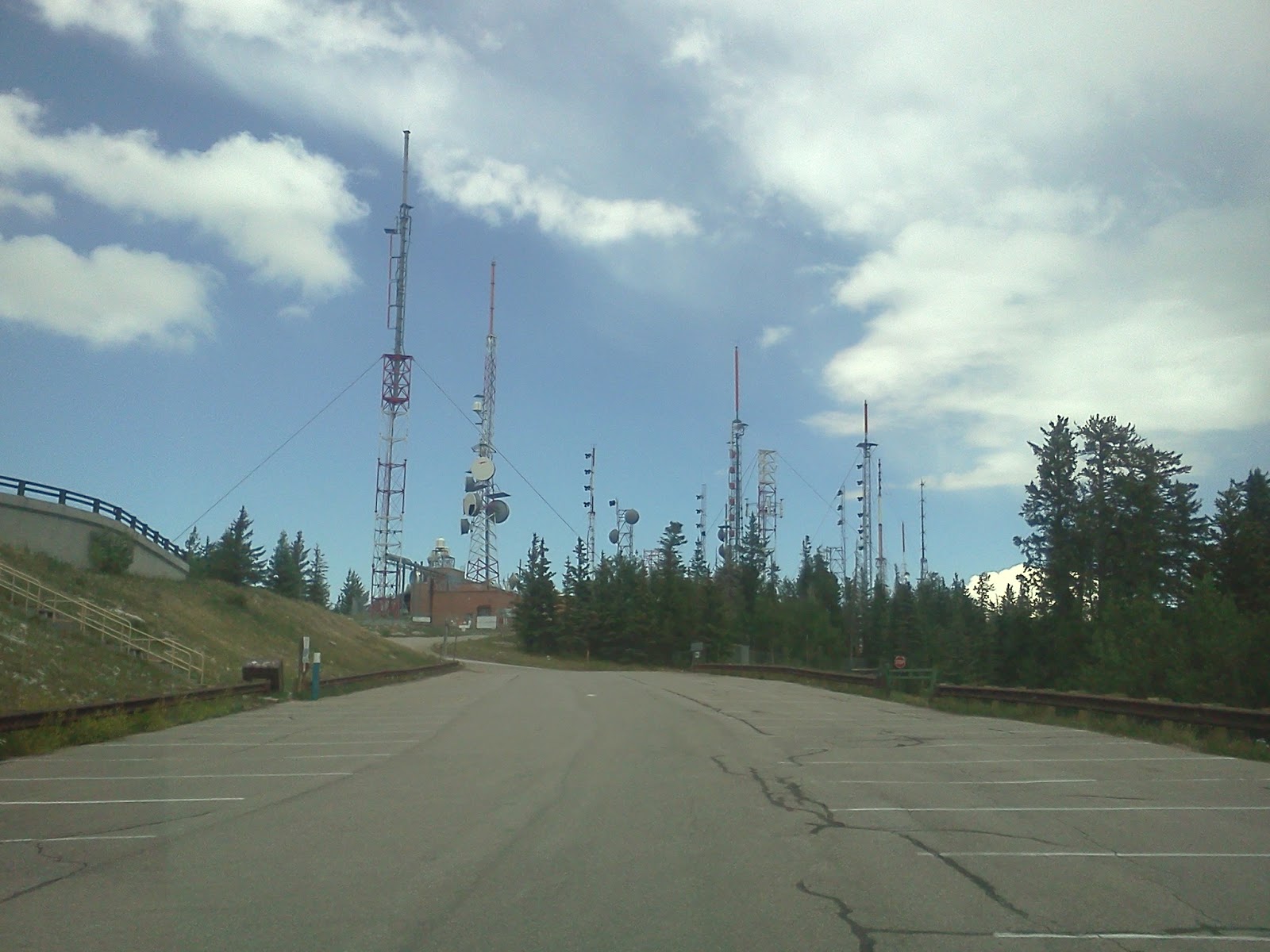
After driving through the entire site, we arrived at our final destination: the Sandia Nat’l Lab’s personal radio playhouse.

The guys began working on equipment, while I snapped photos and gazed in awe of the city of Albuquerque all within my field of view.
 |
| Chris, Ed, and Brian “working.” |

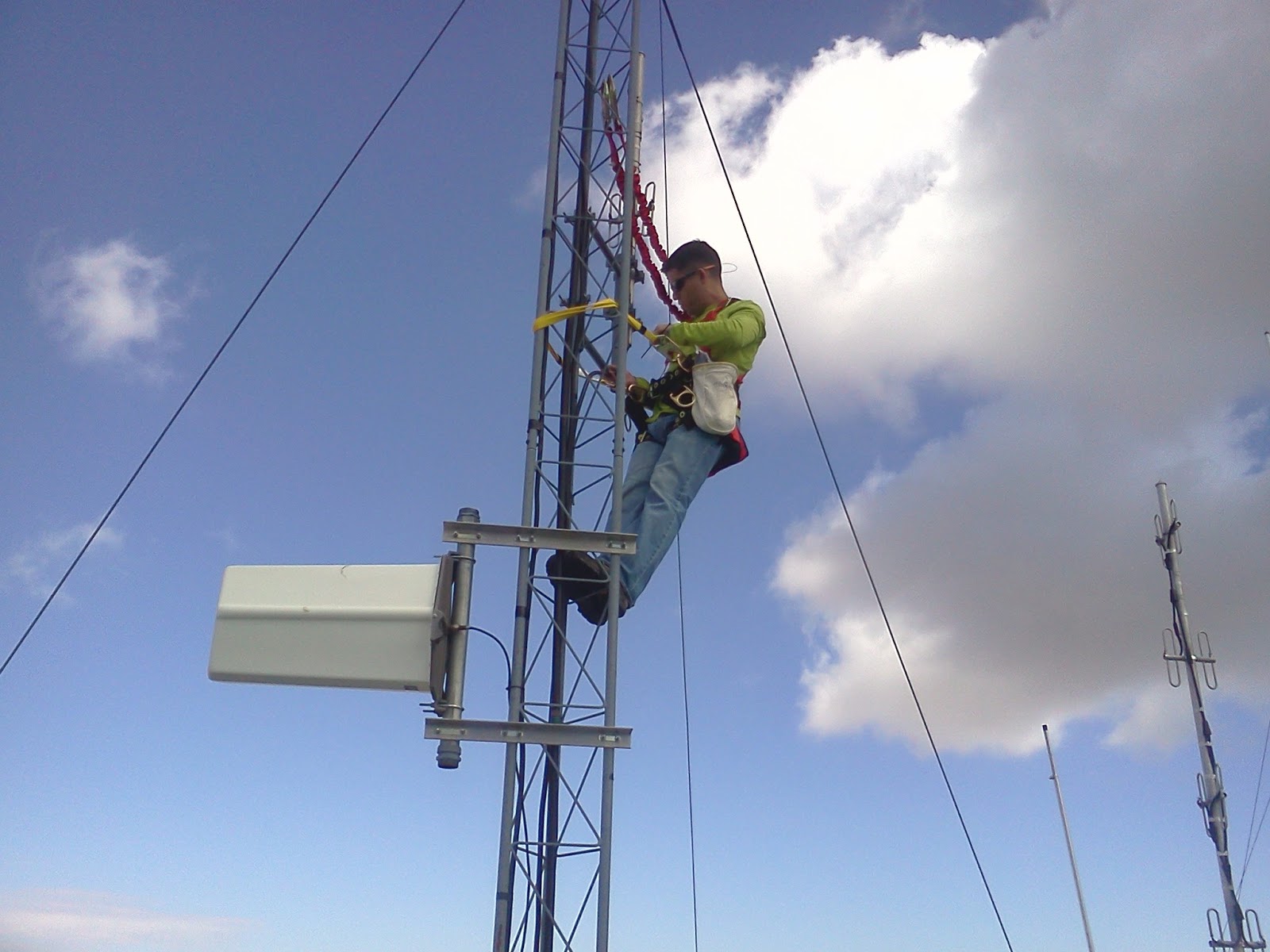
Brian took the job of tightening the D-STAR antenna, which he did adamantly, without falling, thanks to his fancy harness. It’s funny how dinky that antenna seems, but being over 3,000 ft ( 914m) above the rest of the world, it can see almost 100 radio miles (150km). With my 40w mobile radio, it comes in full signal in Socorro, NM, 75 miles (50km) away.
The team was successful of getting things done, cleaning up the shelves of an obtrusive monitor, keyboard and mouse (by going SSH only) and installing a NetIO internet-controlled AC power killswitch.
 |
| Before… |
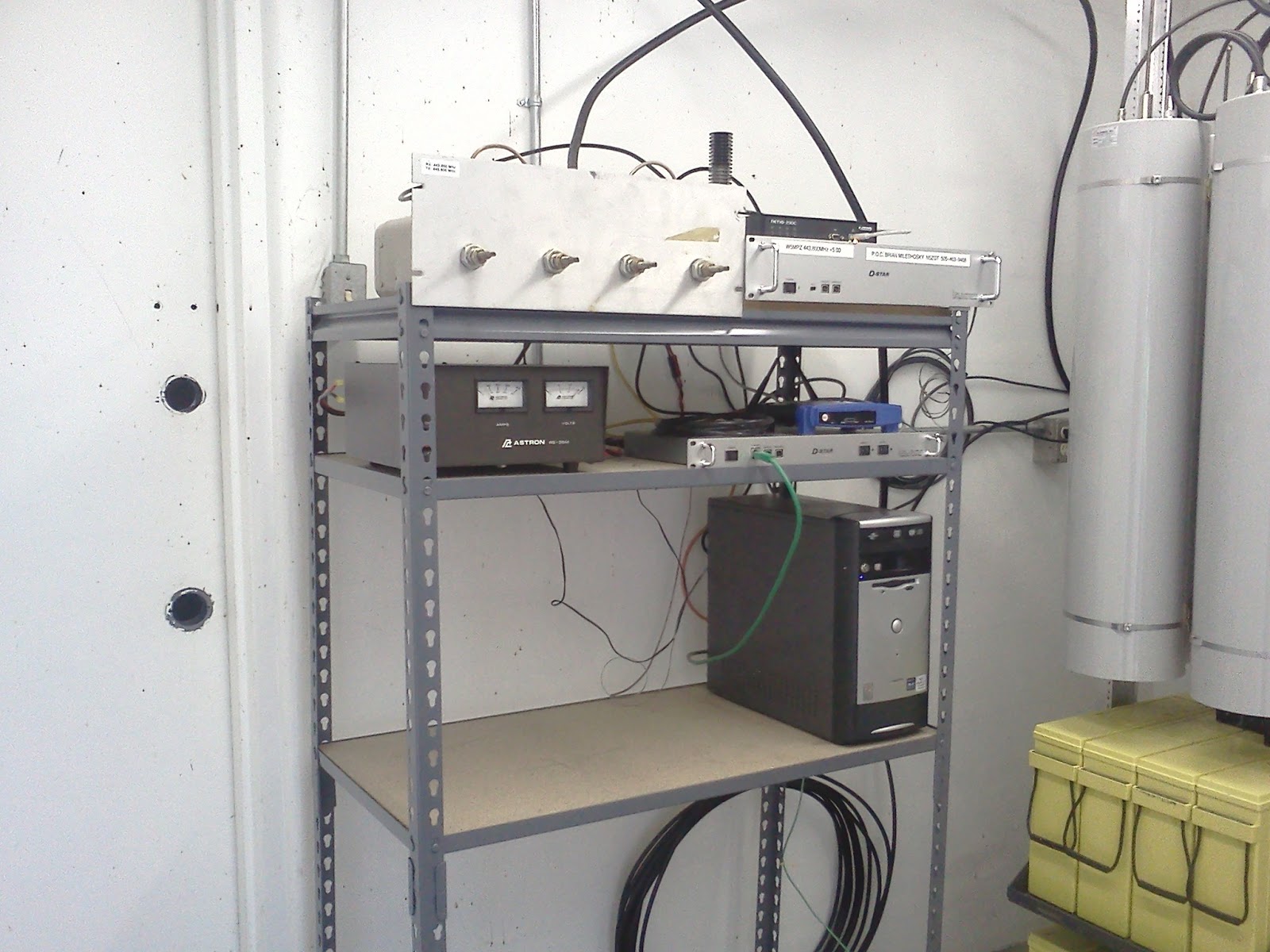 |
| After. Notice the new black box on the top right. That controls power for the whole thing via the web. |
The work was complete right on the dong of noon, and we had ribs for lunch. YUM! After that, Chris’s wife treated us to some homemade ice cream at his place, and we toured his shack, nestled on the edge of a HOA-restricted subdivision. That doesn’t stop him from loving ham radio!
Next on the list is to move this stuff to its permanent home on server racks. Sadly, I won’t be here, with only two weeks left in my VLA internship. I don’t wanna leave! 🙁
I would like to thank Ed James KA8JMW, Chris Aas NB5T and last but not least, Brian Mileshosky N5ZGT for taking me on this mighty heighty outing. Perfect timing for knocking another thing off my New Mexico to-do list.
The only part I forgot on that list was to bring a spectrum analyzer up there. It would have probably blown up in my hands.
 |
| Me, Ed, Chris and Brian on the edge of the crest. |
Upcoming SOTA Activation of W5N/BA-005 on 20 July
If you’re coming from sotawatch.org, welcome!
—Details—
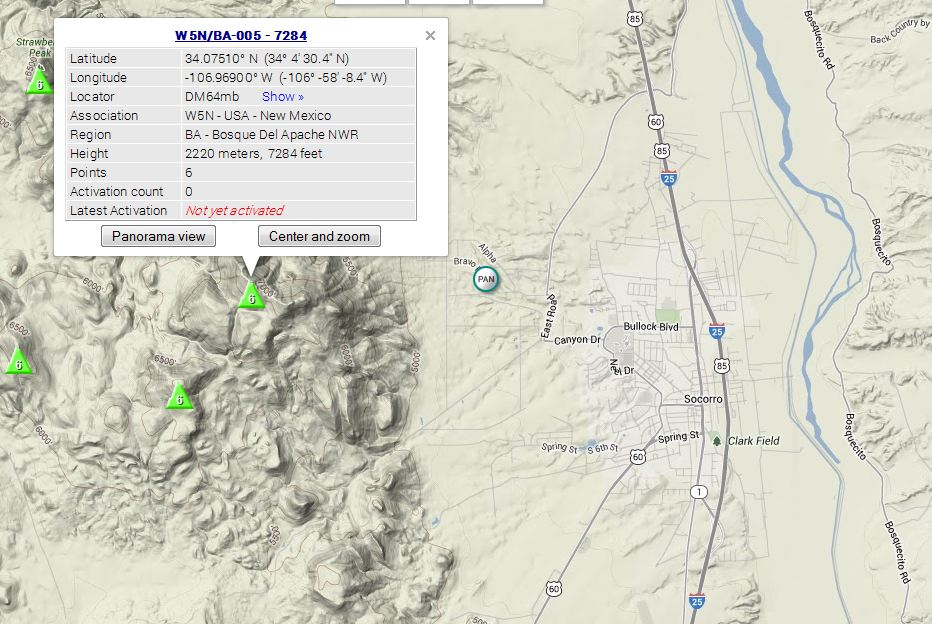
Peak: W5N/BA-005 – 7284 [Socorro Peak]
Location: Socorro, NM, DM64mb
Time: 20 July 2013, 1700 UTC
Bands: anything I can manage. Likely 20m and up, and 2m
Mode: SSB preferred, but I want to try to muddle through some CW. I’ve never done CW without a computer (shame on me) so PSE QRS!
On 20 July, I plan to activate a nearby mountain for SOTA. This isn’t any regular mountain – the some parts of the road up to the peak is owned by EMRTC, or, simply speaking, its a bombing range. Therefore access is permit-only and this plan is tentative at the moment [edit — It’s a go!!]. However, at last night’s Socorro ham club meeting, I met a guy willing to be my escort, so I don’t get blown up, and to make sure I don’t steal anything, I suppose.
 |
| Map of the area and the Summit. [http://sotamaps.wsstvc.org/] |
BA-005 is known as 7284 on the SOTA map, but the peak is commonly referred to as M-Mountain or Socorro Peak. A nearby peak which has a large, limestone M on it isn’t included in the database because it’s too near the taller peak.They only differ in elevation by about 60 feet.
This shorter peak is the home of the famous Elfego Baca Golf Shoot, where participants tee off at about 1500ft above and 2 miles awaythe hole. I think it’s a par 36 😀
Instead of golf, we’re going to shoot for some QSOs.
I’ll be using my new fangled End Fed Half Wave coupler and some conveniently placed towers. If those don’t work, then I’ll revert to some hamsticks. Stay tuned for more on the antenna project, and the summaryof the activation!
W5MPZ Field Day!
Our station was active for almost 24 hours, minus a lull at about 1:10 am Sunday morning. Our backup arrived at around 2 am, which included Brian (N5ZGT, Rocky Mtn Division Director), who just got back from a Turks and Caicos island vacation (or DXPedition, you might say), and Scott (N5SQR) who worked PSK and SSB.
Setup and Operation
Beam
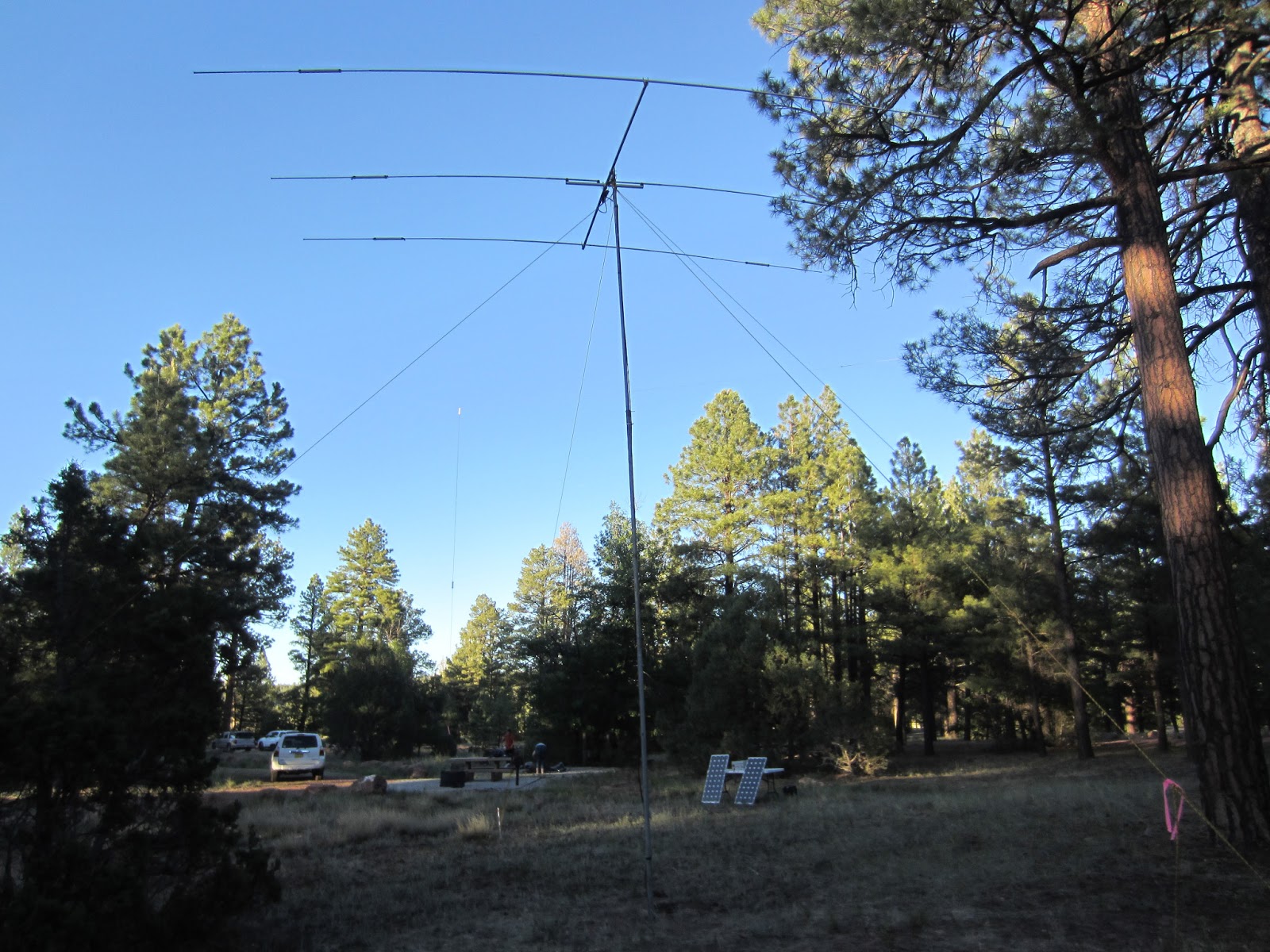 |
| TA-33 with the 80m windom in the background |
Dipoles
On my first shot, I got over this tree and the line sat perfectly on the brown number post.
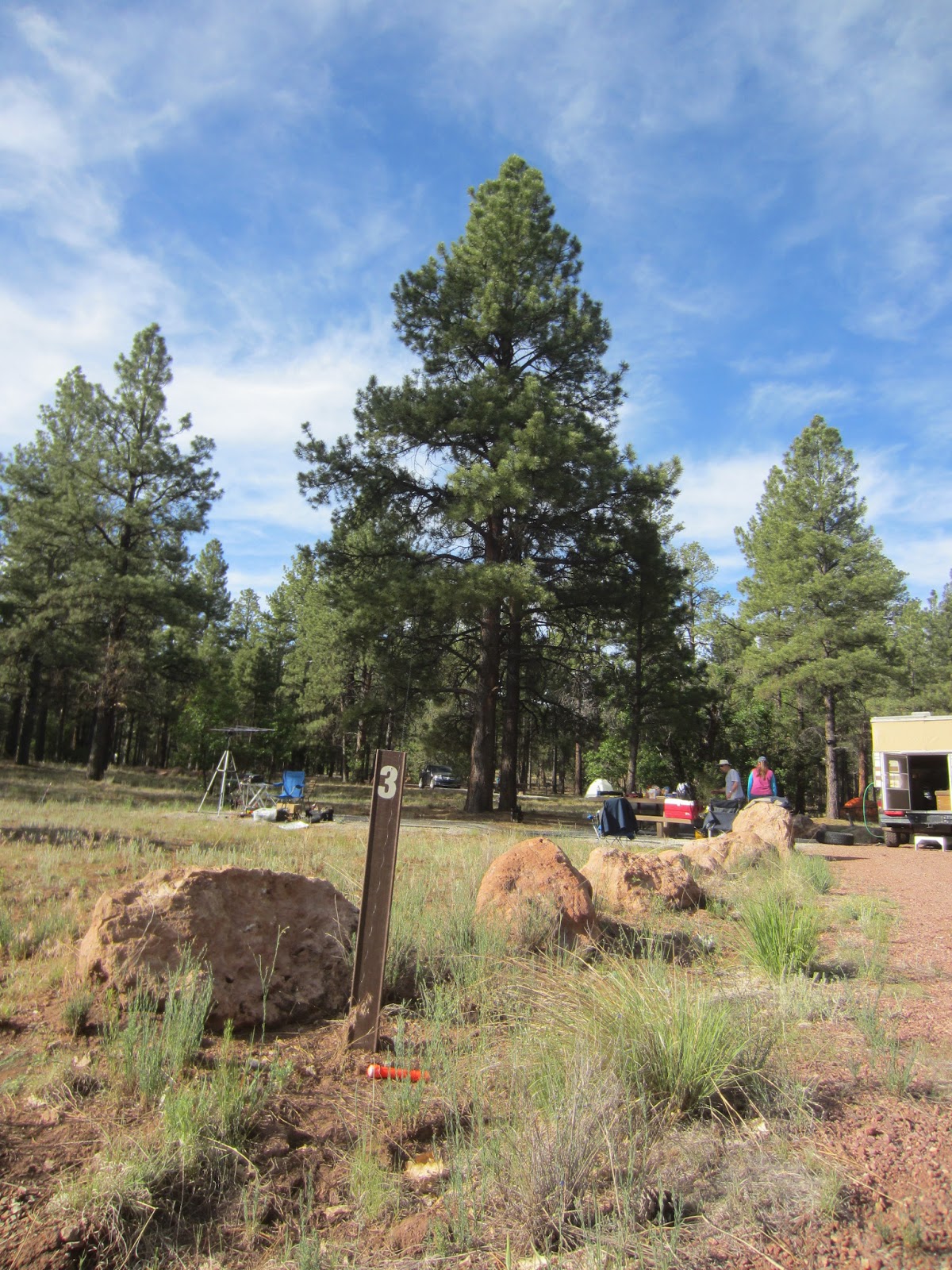 |
| The perfect shot. |
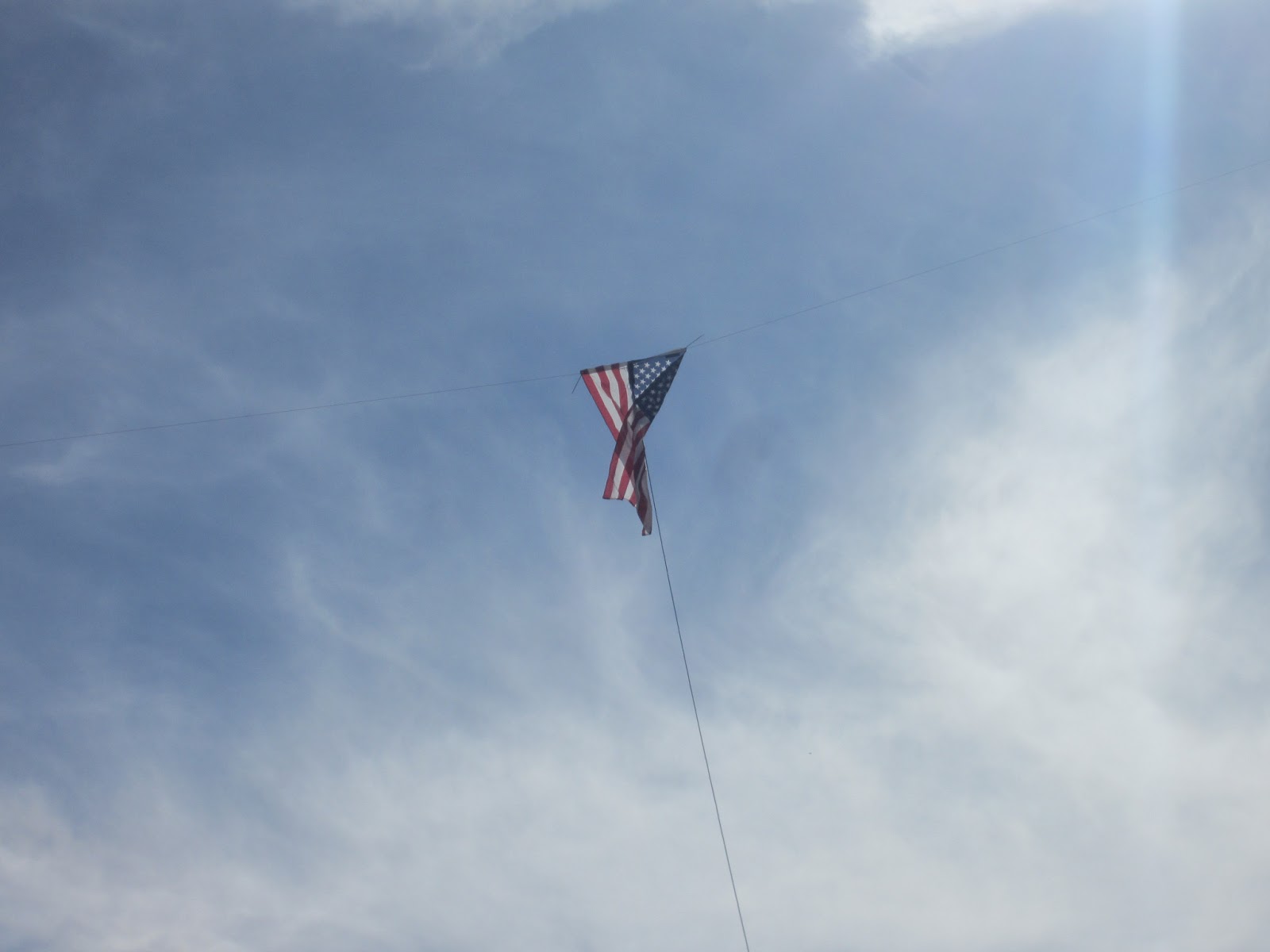 | ||
| Old Glory on our 80/40 trap dipole |
RPi camera
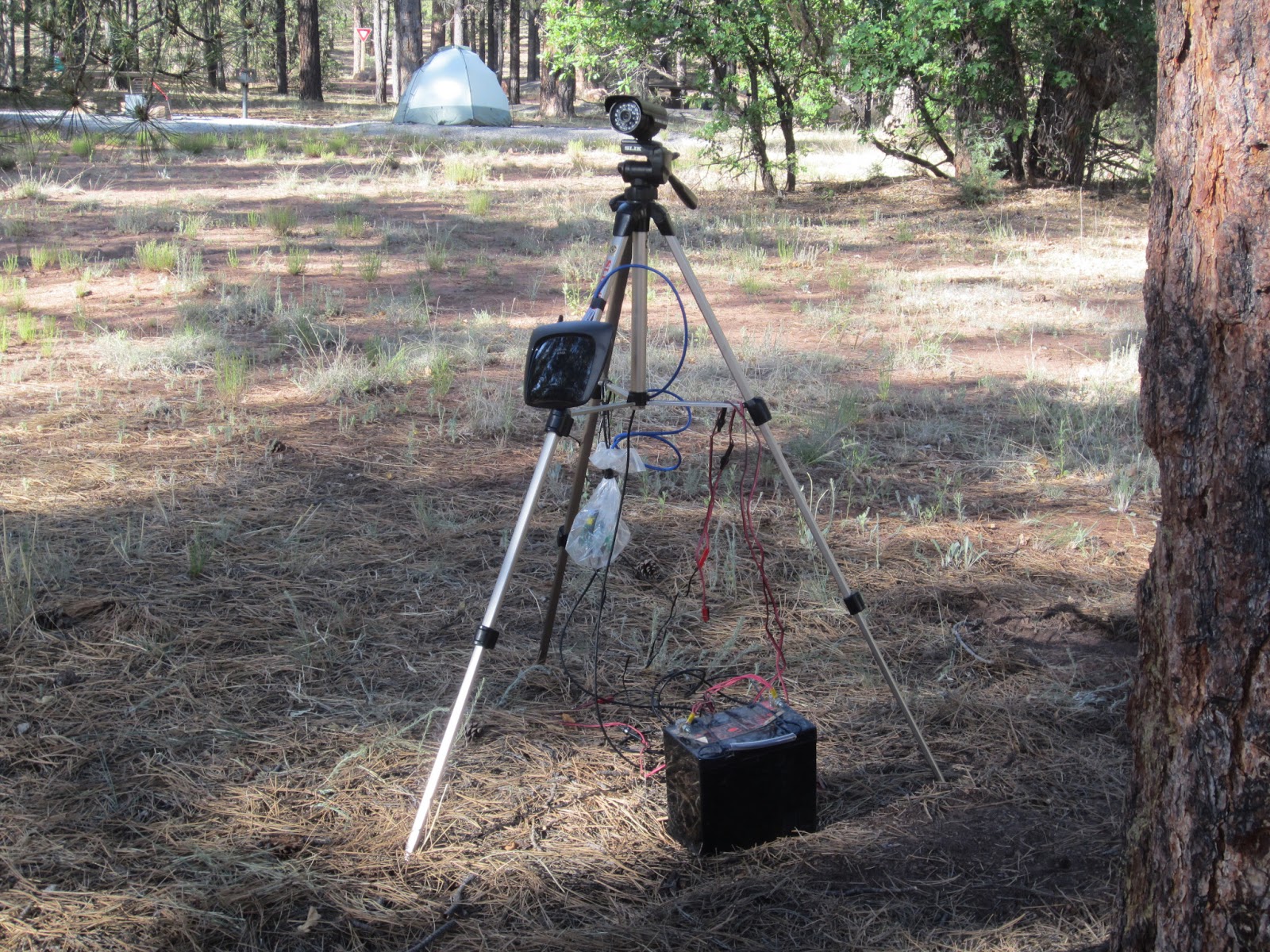
Operation
We were 2A, so we had 2 stations on the air, all supported by batteries. We operated SSB, CW and PSK31.
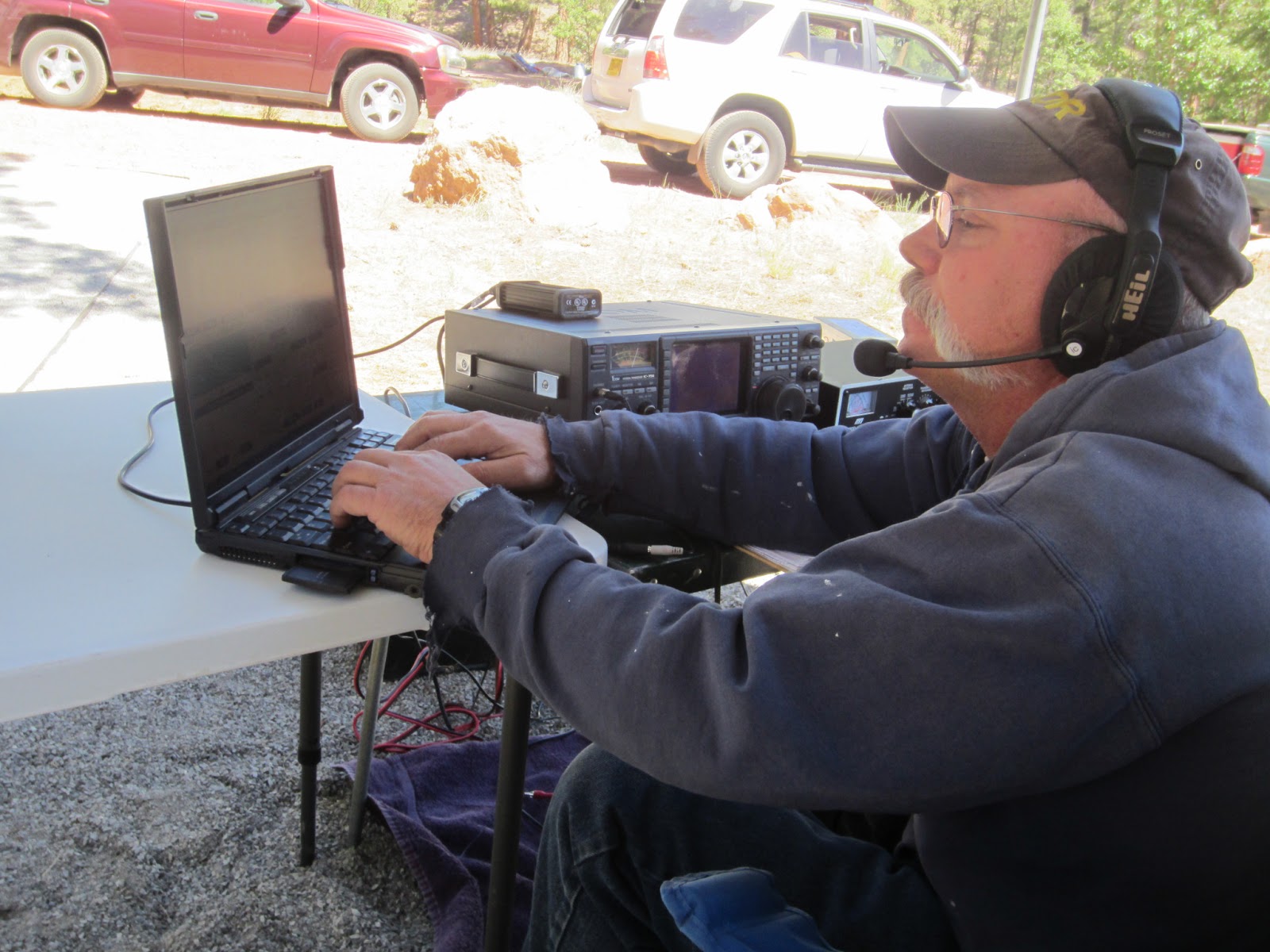 |
| Scott, N5SQR working SSB |
No field day station is without its problems. We were lucky to only have minor issues, like the logs not syncing or the digital station computer interface not working. These were easily and promptly fixed. Everything else (except for the band conditions) was perfect.
Our ops came from all areas of the hobby. Brian, for example, just got back from Turks & Caicos, and worked hordes of stations from VP5-land, while Seth never worked a contest before being a technician.
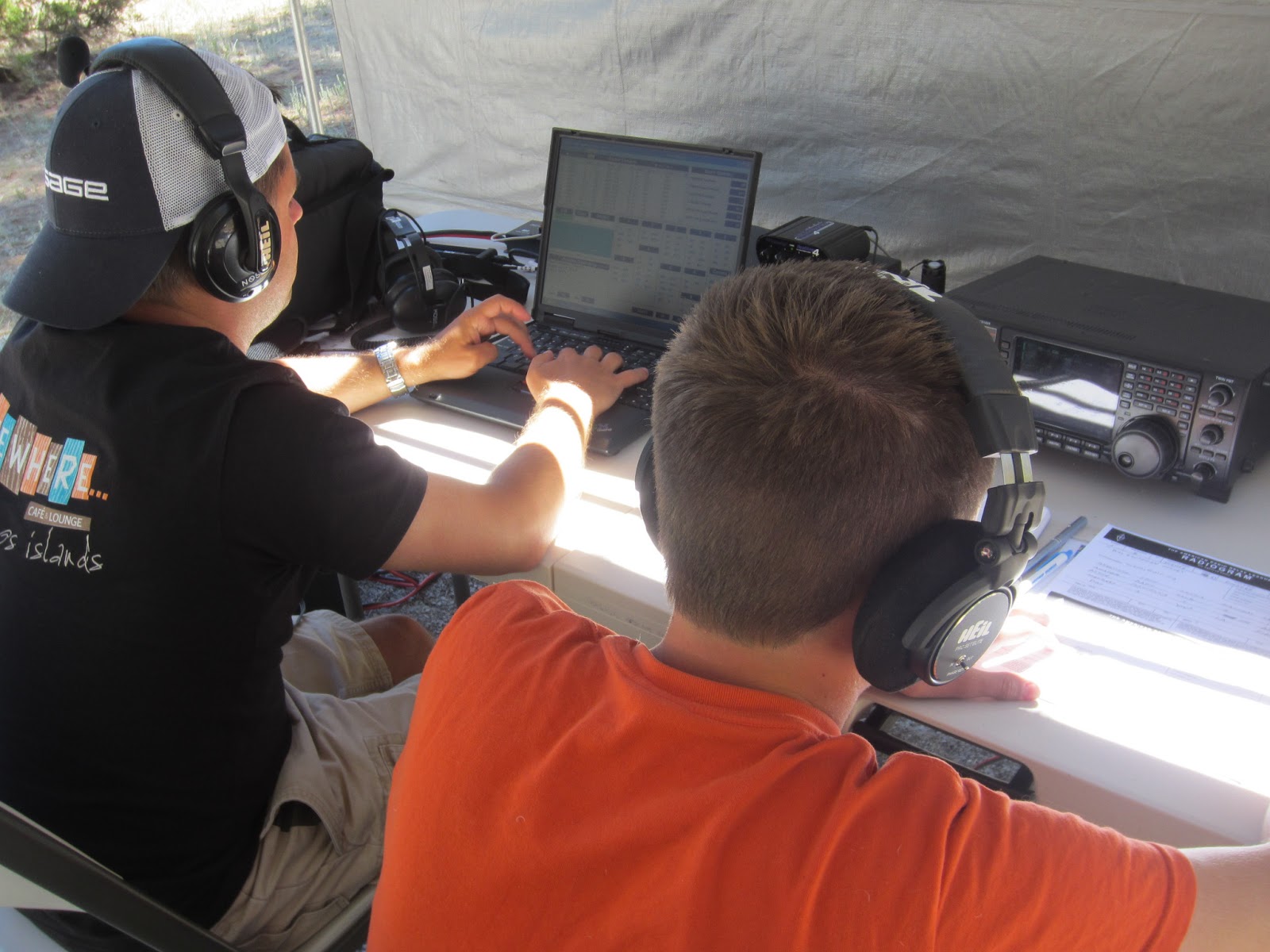 |
| Brian and Seth teaming up to send Radiograms for bonus points |
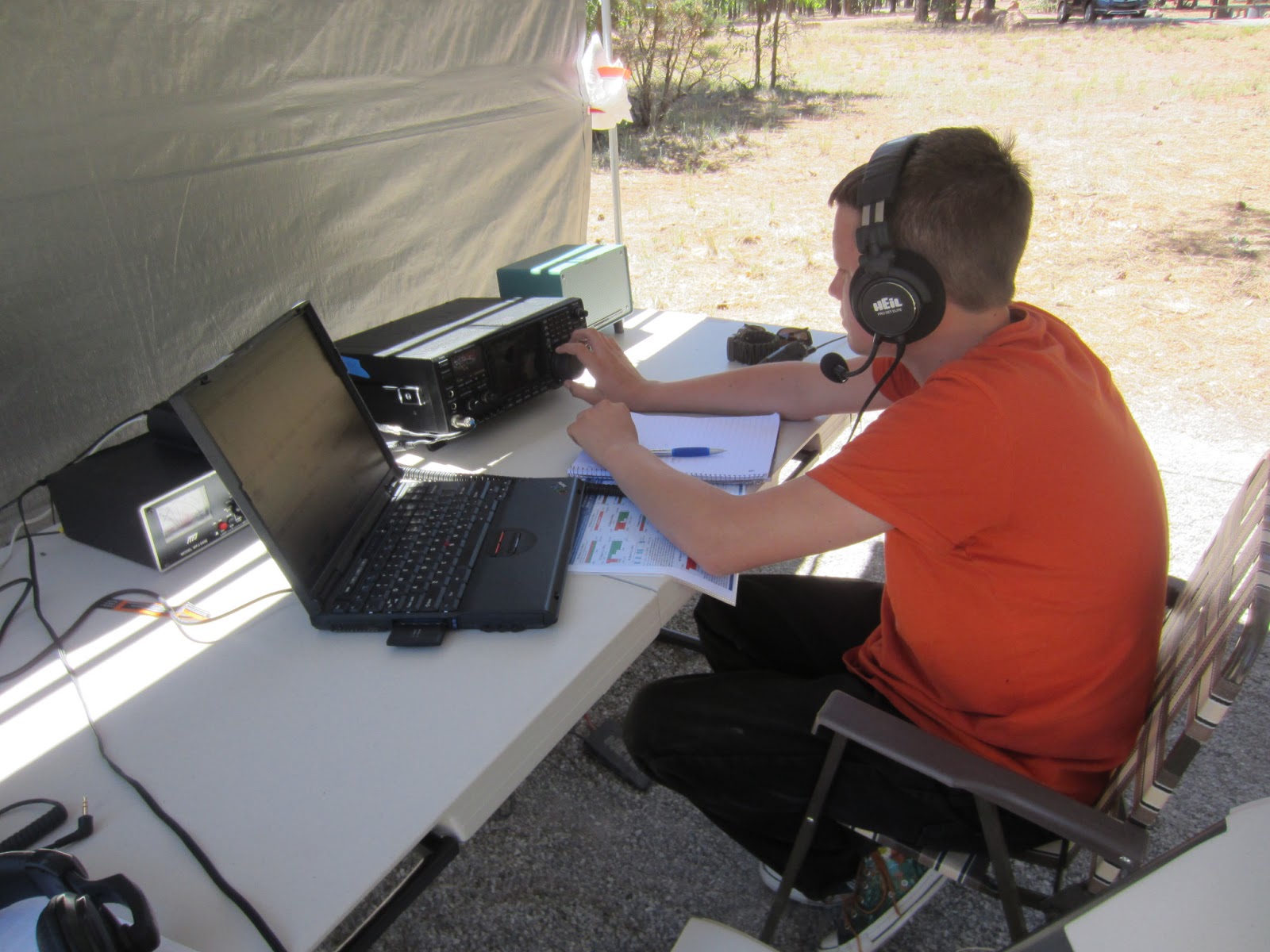 |
| Seth taking names and gettign mults on the voice station |
Seth quickly caught the Field Day bug and worked the 12-1am shift by storm, and eventually took both working and logging on the voice station on solo.
It was very cool to see him warm up to the air and get excited to work stations. It reminds me of my first Field Day, where I was thrown into the action and started racking up QSOs as fast as any other operator after only having a few hours to figure it out.
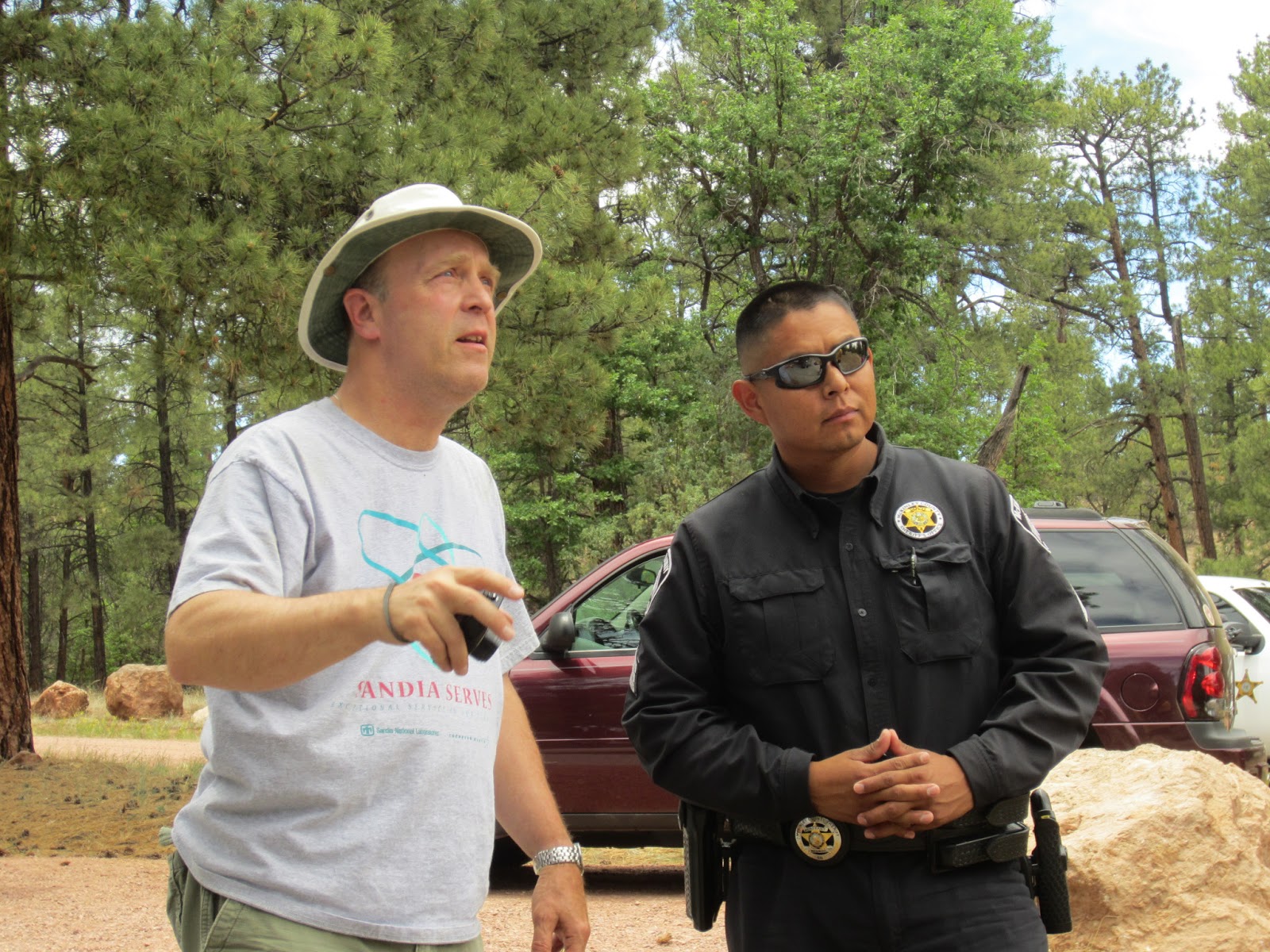 | |
| A visitation by the local sheriff |
Satellites
 |
| The Arrow LEO-SAT yagi and other antennas in the background |
 |
| Sat Station Setup — FT-817 for RX and an 897 for TX |
My job at W5MPZ was to bring a satellite QSO to the log for an extra 100 points. Unfortunately, this didn’t happen.
I had several attempts at SO-51 (the only FM satellite), VO-52, FO-29 and the zombie AO-7 (all SSB/CW transponders). I had most luck with the SSB satellites but had problems in being able to hear myself.
To work the SSB satellites (all but SO-51) you need to know where your signal ends up after it gets translated to the other band. For example, FO-29’s uplink band is 145.8-145.9 MHz, while the downlink is 435.9-436.0 MHz. One would think the 100 kHz passband would be linearly related, e.g. I transmit on 145.85, and hear myself on 435.95, but this isn’t the case. The doppler effect causes the frequency to differ by up to 500 kHz on UHF, so you need a way of calculating doppler, or simply finding yourself.
My technique was to spin a carrier through the passband until I heard it on the downlink, and switch to SSB to call CQ and tune into myself. Upon the switch, I lost myself.
I figured out the solution on the last pass of the weekend. The FT-897 has a feature in SSB mode that allows you to send CW at your tone frequency. So if I’m on 145.000 and have a 700 HZ CW pitch, it would send it at 145.000.70 MHz. Therefore, if you were tuned into 145 MHz on another rig, you’d hear that same pitch. All I had to do was zerobeat on the flipped bandpass, and call away. I finally heard myself repeated by the satellite, but didn’t have any replies within the last 5 minutes of the pass.
It was worth the effort (and in hindsight I should have just worked the ISS’s message system via packet)!
Summary
The underlying point of Field Day (aside from preparedness) is to have fun. W5MPZ did exactly that. Our support team of family members kept us well fed, watered, sheltered, and our batteries charged. One could not ask for a better place to set up and operate from, and the weather (despite being cold in the mornings) was amazing – not having wind and the 100°F temperatures to contend with was a huge relief.
I’m not sure of the final QSO count or score, but we only missed a few sections in Canada – NT, MAR, and ONN I believe — like we expected. Field Day isn’t a contest, so the score isn’t important to me or any of the operators aside from personal club goals and whatnot, so that wasn’t a worry. What matters is the coming together of like-minded people to getaway from the daily grind, have a ton of fun, share stories, and work stations.
Revitalized Jamesburg dish Now Sending Texts to…aliens?
The once famous Jamesburg dish (wikipedia link), located in Carmel Valley, California, was restored and used by hams to do EME experiments and events after its prime mission to capture and relay communications from Apollo 11, Tiananmen Square, and Intelsat came to an end.
 |
| The massive 30m wide by 100ft tall Jamesburg Dish |
A private company calling themselves Jamesburg Earth Station Technologies, LLC bought the site. This company spawned another, called Lone Signal, LLC. The executives come from diverse backgrounds — entrepreneurs, fashion design, and hospitality execs — along with a team of PhDs and engineers. No hams that I know of, though.
Anyway, the idea behind LoneSignal is to allow people to send texts and photos to star systems with potentially habitable planets. The current one is pointed at Gliese 526, a red giant star 17.6 light years away that’s believed to have a planet inside it’s habitable zone.
The first text is free, but the rest are about $1 a piece. You can buy bulk credits for a discount.
The 30m wide Jamesburg dish will be using a 2KW C-Band transmitter (6700-6875MHz) and will send the coded texts in CW and FM formats. Interestingly, in the FCC-OET Program Description, they’ll be using an Icom ID-1 to modulate the FM signal. I’m sure the aliens are going to have a tough time demodulating D-STAR. 😀
Their experimental license application is located here.
Using some quick math, the dish should provide about 64 dB of gain, and with 2 kW input, that translates into an EIRP of 5,931,547,041 watts.
That’s 6 gigawatts.
TL:DR: In 17.6 years, the Gileseans may get my CQ. I hope they QSL via the bureau.













