 |
 If You Had Radio Eyes…
 21 June 2013 | by
 It’s always been a dream of mine to put on glasses that allow you to see only waves of RF emitting, reflecting and illuminating the world around you…this would make my job so much easier too!
Well, there just so happens to be such a thing that allows you to see RF…it only requries about 3 acres and 250 antenna elements, a supercomputer and a fast internet connection.
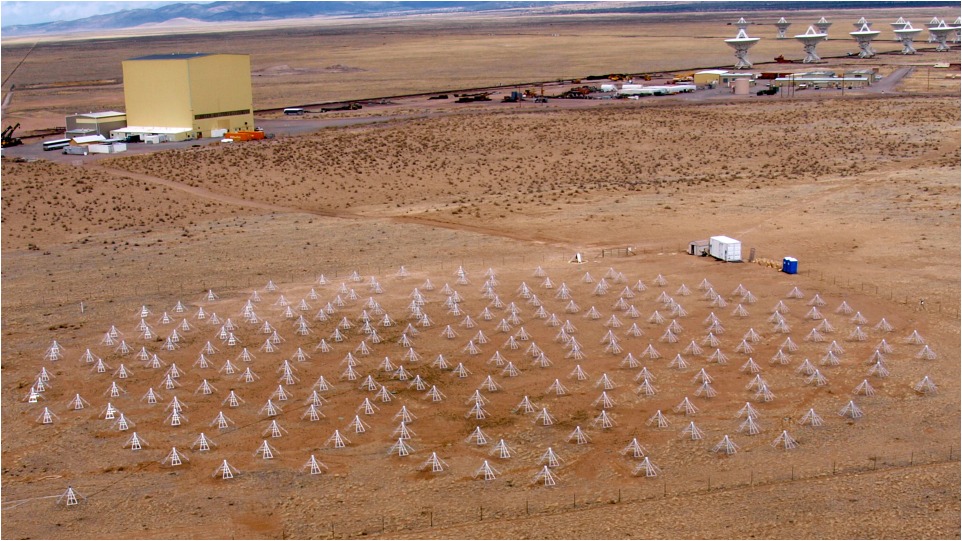 |
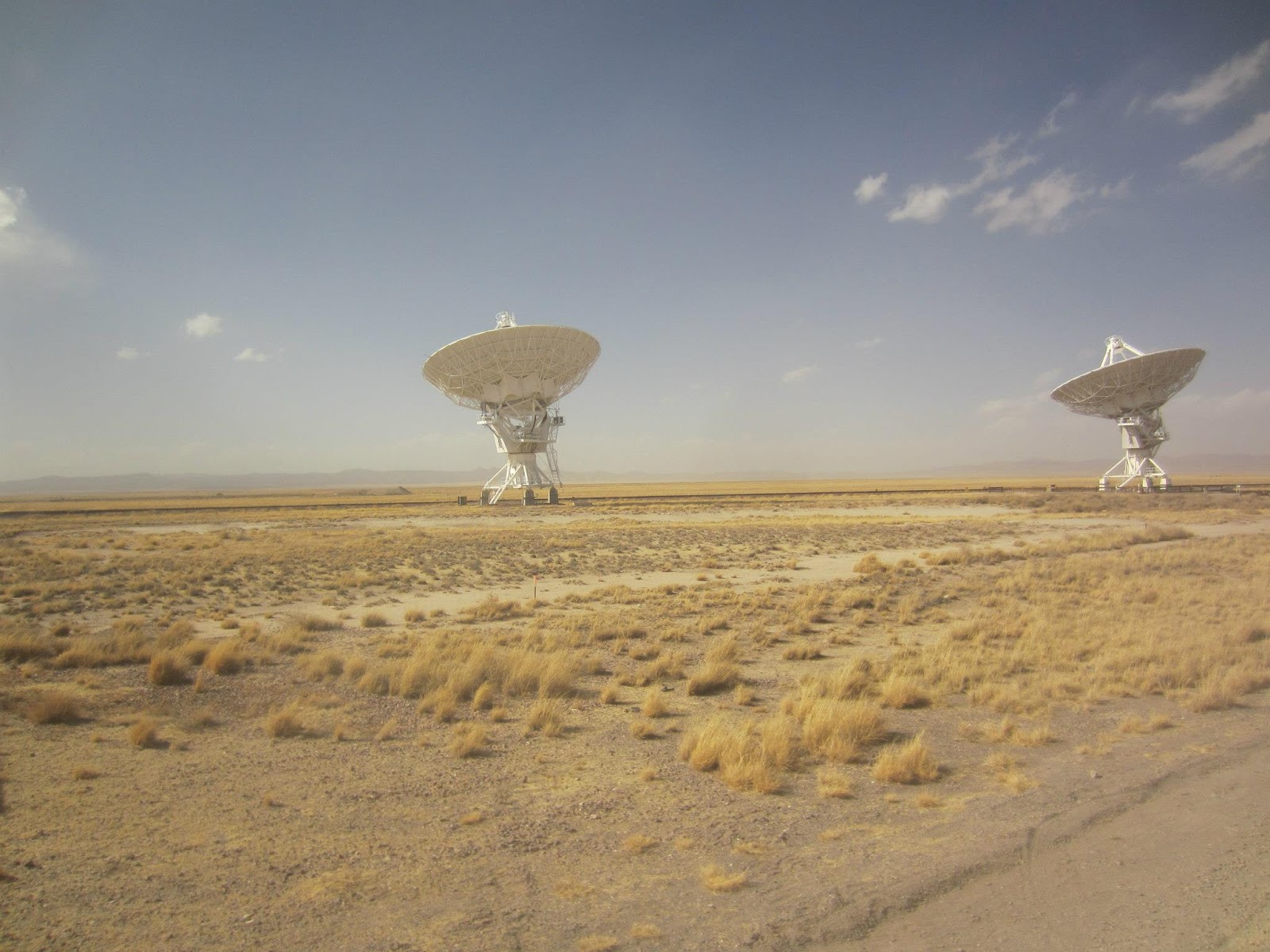
| The LWA near the VLA |
The Long Wavelength Array is a seemingly random assortment of crossed dipole pairs with a frequency response of 10-88 MHz. Every antenna is separetly fed into a giant computer that correlates and beamforms the array into a giant RF eye looking at the sky.
 |
| LWA Dipole Detail with the VLA in the background |
And by eye I really mean it sees the RF world above it in real time:
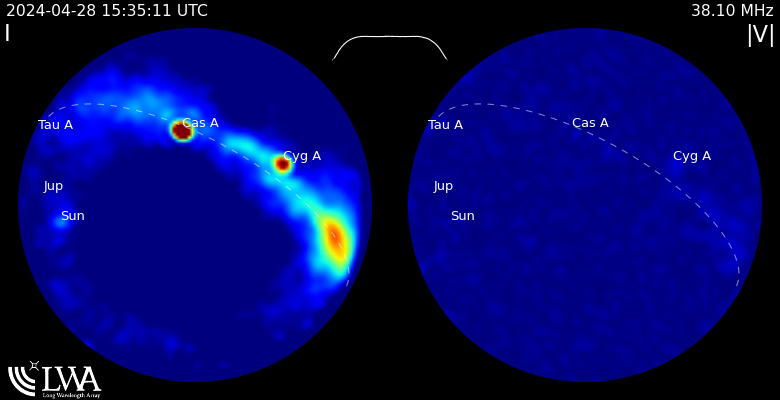 |
Above is a real time view of the sky above the LWA (hit F5 to refresh, I dare ya!). During the day you can see the sun and several radio sources like Cas A, Tau A, and Cyg A which are galaxies, pulsars, and other nebulae of ridiculously “loud” RF emitters. Also, at the top and top left, you can see RFI from the VLA site, which is one of the things we’re working to alleviate.
Another cool thing it can do is plot spectrum over the whole day:

This shows the intensity at all frequencies between 10 and 90 MHz over a 24 hour period starting at 17:00 PST 11 July 2012. You can watch the nighttime MUF drop between 00:00 and 06:00 PST, and surge again at sunrise. Other strange and interesting patterns exist as well — check out the index at http://lwalab.phys.unm.edu/lwatv/ovro and see what you can find.
Ckeck out their website at www.phys.unm.edu/~lwa/lwatv.html and read technical information about the LWA here, and an even more technical dissertation here.
73!
Sterling Coffey, NØSSC, is a regular contributor to AmateurRadio.com. He is ARRL Youth Editor and an electrical engineering student at Missouri S&T. Contact him at [email protected].
A day at the beach…….with HF……it doesn’t get any better!!
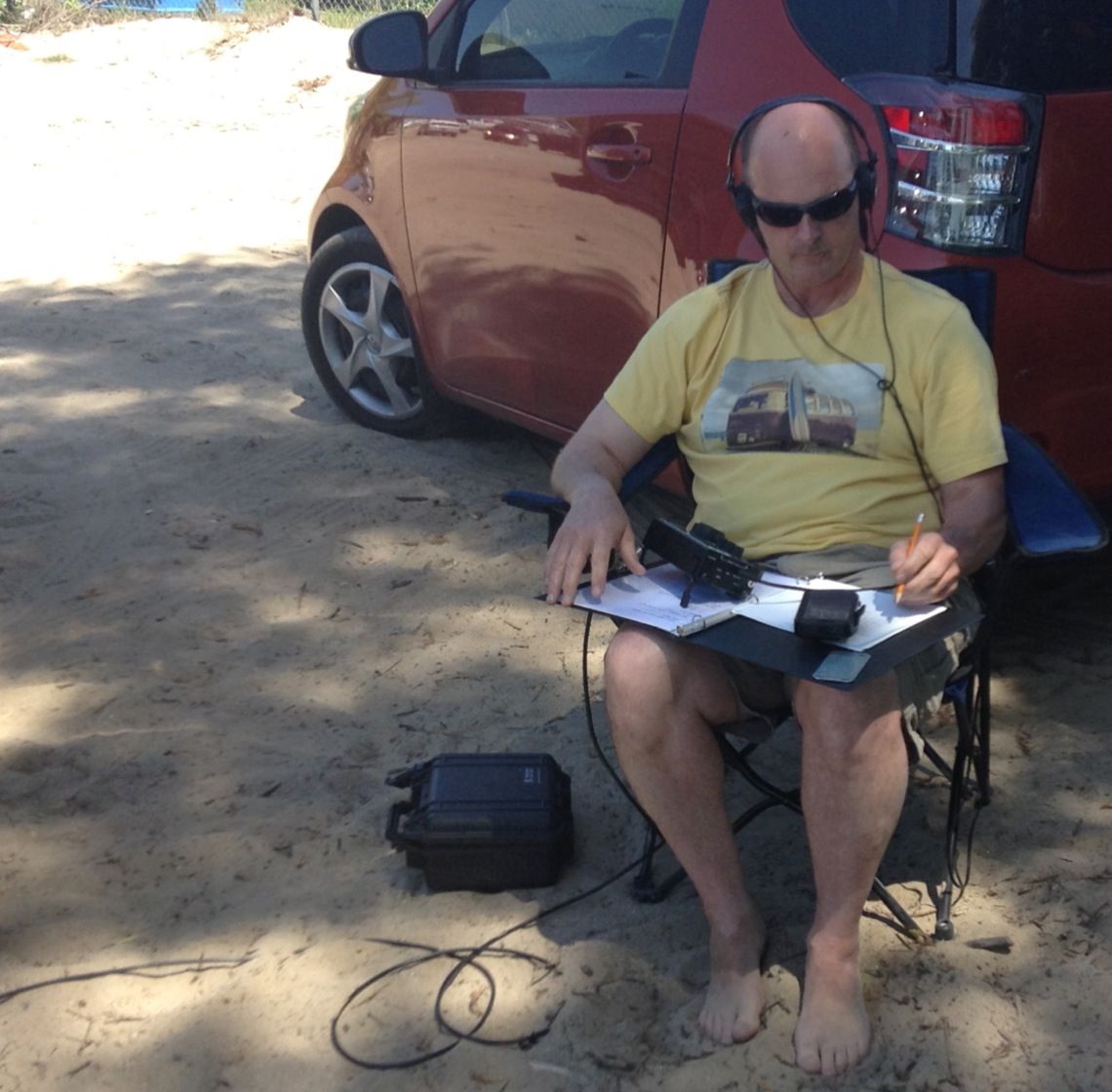 |
| Busy making contacts |
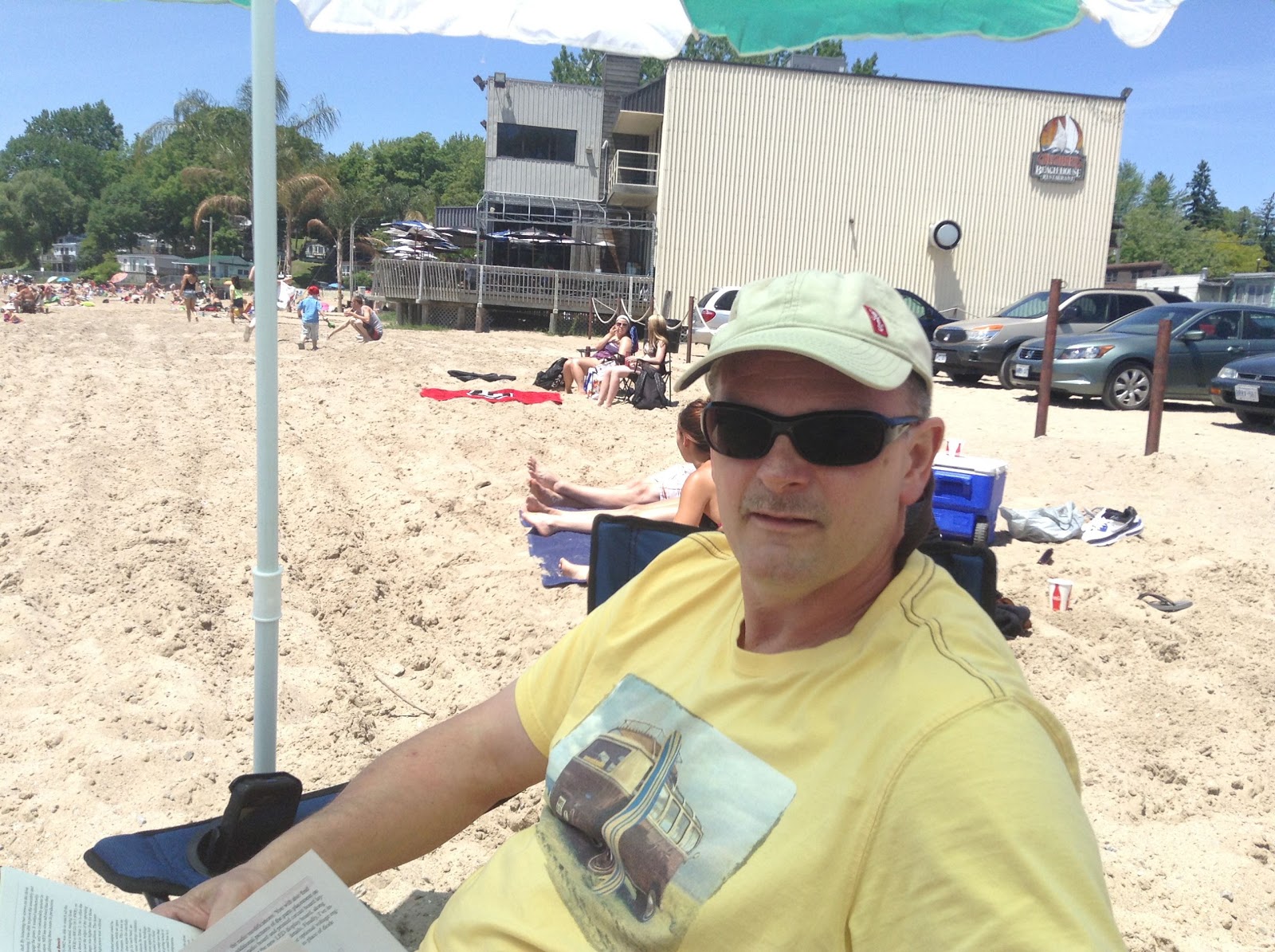 |
| back on the beach |
I was calling CQ at the 20m QRP watering hole and I first had N0FKC come back to me Piether was just outside Minneapolis I gave him a 559 report but once I gave it back to him the conditions had drastically changed. He was in at the noise floor and I must had been the same to him. He was in the process of sending me 73's. So that QSO did not last long at all.
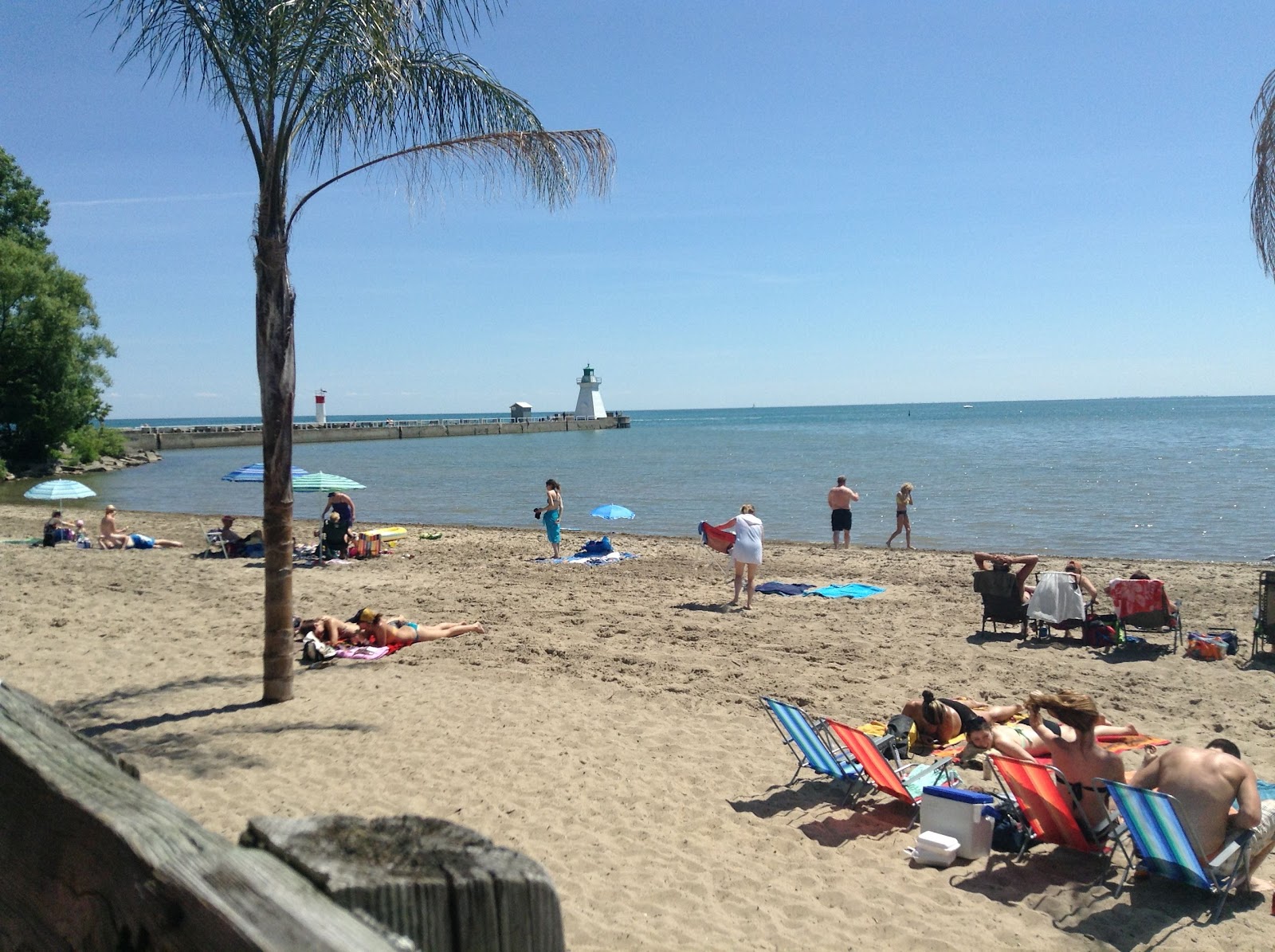 |
| View from the patio |
Mike Weir, VE9KK, is a regular contributor to AmateurRadio.com and writes from New Brunswick, Canada. Contact him at [email protected].
Miles Per Watt; Another QRP’er/DX’er Adventure
The QRP'ers looked at each other to silently elect the leader of this counter attack. One of them pulled out a Cerficate that they had been discussing prior the DX'er's arrival on the scene. "We do our part, in fact ,look at this". The DX'er looked at the piece of paper and dismissively said, " Oh, another one of those silly QRP awards, what is so special about 1,000 miles per watt?". The QRP'ers had sly smiles on the their faces as they knew he had taken the bait. "You guys should get real radios so you can be heard, I was talking to my buddy this morning, he said I was 20 over 9". "That's interesting" said the QRP'er, "how far does your friend live from here?" This a question that QRP'ers have to ask because it's in their DNA. "I don't know maybe 1,500 miles, why do you ask?" said the DX'er. "Did you work him barefoot?' asked the QRP'er putting a little honey on the bait. " Absoulutely not" said the DX'er, " I run the full legal limit". The trap had been set and the DX'er had yet to recognize it, although he sensed that danger was just ahead. "So let me calculate that..hmmm..1 mile per watt" said one of the QRP'ers acting like he really had to think hard on the calculation. The DX'er shuffled his feet, now understanding the danger was closer than he thought. There was moment of silence as the QRP'ers moved into position. "So your new car gets twice the mileage of your old car?" "Yes" said the DX'er delighted at the change of topic. "Well it looks like you don't do so well with your watts out from your station" The DXer now realized his doom,"as we QRP'ers easily get 1,000 times the mileage with our watts as you do. You should really do more to conserve with your radio as well". The DX'er pondered one of the Mysteries of the Ages, "Less is more and more is less" said the QRP'er, "the less power I use the more miles per watt I get the more power I get the less my miles per watt are".
The DX'er saw no way out," I suppose that's true" he said, but silently he thought, "isn't more, more?". "I have to get back now, I think my wife has some things for me to do" he said, The QRP'ers knew this to be false, but acknowledged his need to escape.
"Enjoy that new car" the QRP'ers shouted as he walked back down the hill in silence and they continued to admire the 1,000 Mile Per Watt certificate.
Mike Crownover, AD5A, is a regular contributor to AmateurRadio.com and writes from Texas, USA. Contact him at [email protected].
Get Ready For Field Day
 Attention all radio amateurs, this weekend is ARRL Field Day! Don’t forget to get on the air.
Field Day is a flexible event, so it can be anything you want it to be: camping weekend, stay at home, participate with your club, go mobile, whatever you desire. Remember to season to taste.
One more thing: Field Day is not a contest. But you can still keep score.
Oh, remember that the national simplex FM calling frequency of 146.52 MHz should not be used for making Field Day contacts. Like all contests…wait Field Day is not a contest. Whatever.
- 73, Bob K0NR
Bob Witte, KØNR, is a regular contributor to AmateurRadio.com and writes from Colorado, USA. Contact him at [email protected].
Plans for the weekend
A lot, if not most of you probably have Field Day plans for the weekend. Not me.
There are several clubs in the area that have operations going on, but none really super close. Marianne is working on Saturday, and I don’t want to go anyplace farther from home, while leaving the kids home alone.
So, if everything goes according to plan, I want to spend the afternoon putting down more radials for the Butternut. The goal is to get about a dozen to twenty more radials down, after mowing the lawn. That would give me a total of 36 to 46 radials total, depending on how many I get down.
The Butternut really plays well with the current 25 radials that I already have in place. Some more can only make things better.
72 de Larry W2LJ
QRP – When you care to send the very least!
Larry Makoski, W2LJ, is a regular contributor to AmateurRadio.com and writes from New Jersey, USA. Contact him at [email protected].
50MHz repeaters in Italy: 50.500 and 50.800
A couple of times in the last week, I’ve heard two Italian repeaters on 50MHz from the mobile. Most regularly I have heard one on 50.500 but I have also heard one on 50.800.
Of course, I wondered where they were. IK2ANE has a good repeater list but I can’t see either frequency mentioned.
It’s possible that the repeaters are not Italian and were just being used by Italian stations! It’s also possible they weren’t amateur stations – no call signs were heard!
Tim Kirby, G4VXE, is a regular contributor to AmateurRadio.com and writes from Oxfordshire, England. Contact him at [email protected].
Fire, Lightning, Wind and Dust: New Mexico Weather
New Mexico is dry. I was floored when it rained three days ago. But for 11 months out of the year, the air is dry, the sun is bright, the clouds are facetious, and everything’s on fire.
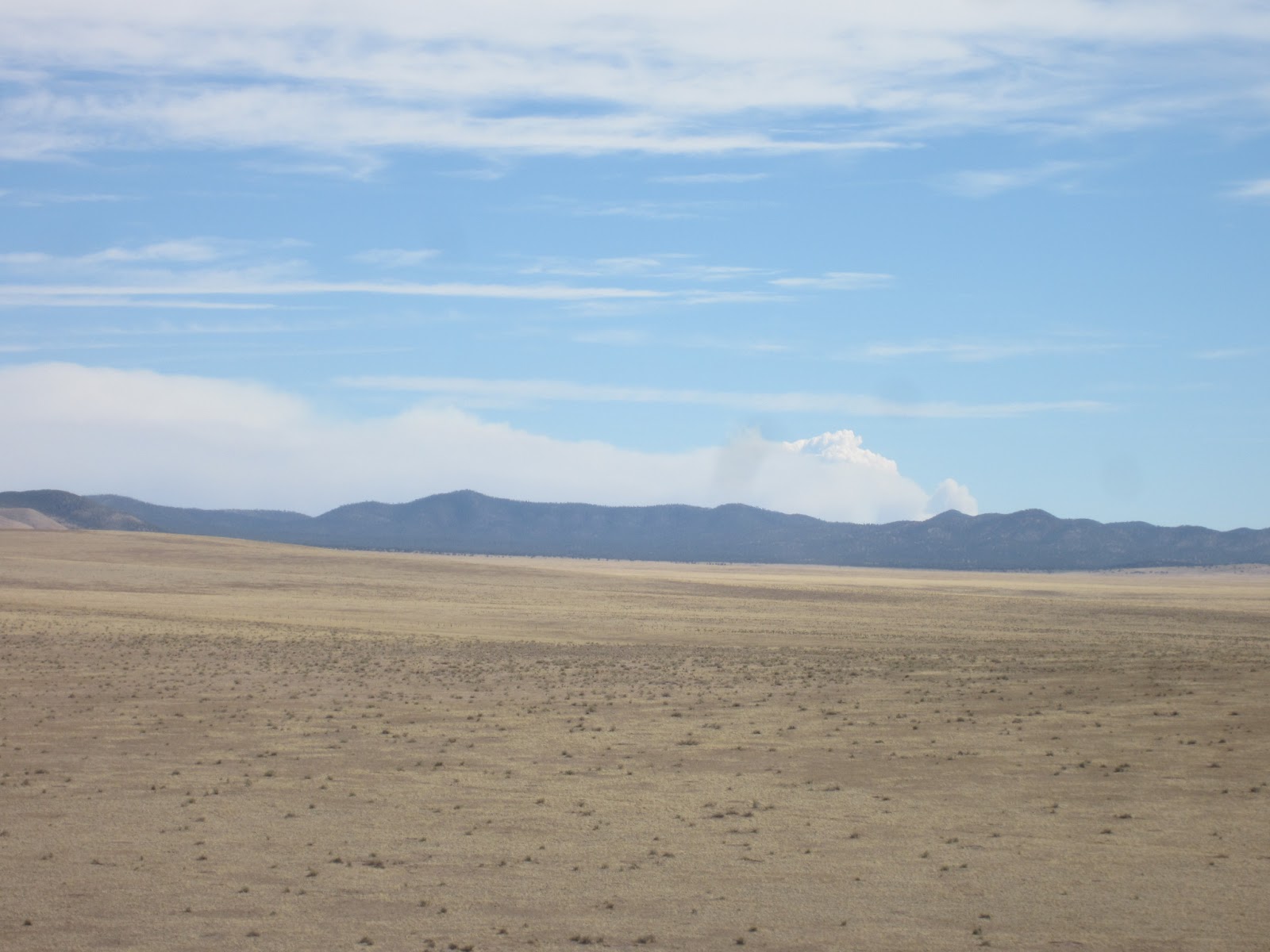 |
| Smoke plume from the 30,000 acre Silver fire |
 |
| Smoke fills the horizon |
Such is life in NM. The 10% humidity caused me some pain and suffering for a while, but I seemed to got used to it. I used a lot of normal lotion, which wasn’t the best idea for being out in the sun so much.
Currently, a large chunk of the Gila mountain range is on fire, but thankfully few people live in the area. The Silver fire (named because its near Silver City, NM) is currently at 32,000 acres, making it the biggest fire in the US. From atop a VLA dish, you can see the smoke plume and the long trail of smoke being carried by 30-40 mph surface winds. It’s quite dark in Truth or Consequences.
Aside from the fire, the plains of central New Mexico have a variety of weather, typically involving some kind of dust and lots of wind:
 |
| Dust carried aloft by 40 mph winds |
We even have tornadoes of dust! (Seriously, some of them are big enough to cause damage):
 |
| A particularly strong dust devil with a well defined center column |
Then, all of a sudden, it storms:
 |
| A snowstorm to the north…it’s a rare event to see precip actually get to the ground. |
Above, you see it’s snowing. Snowstorms in the southwest isn’t a myth after all! Just last year, a snowstorm dumped 2′ of snow on Socorro, NM.
Typically though, the air is so dry that any precipitation just evaporates before it hits the ground. This phenomena is called virga, and is the sole reason why the clouds are so facetious. What does hit the ground are tendrils of lightning, graupel — basically mini snowballs from the sky — and hail.
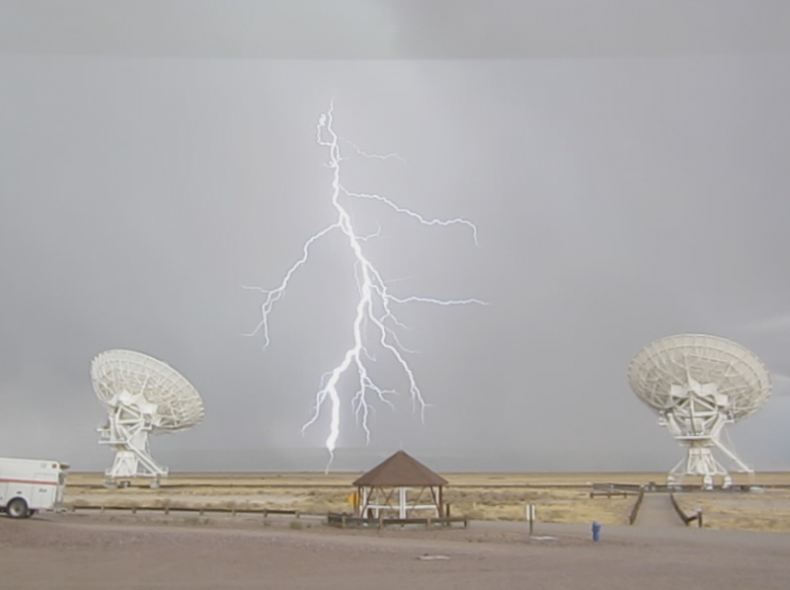 |
| A tendril of lightning betwixt two VLA dishes |
In 2004, hail fell with a vengeance:
So its dry, its dusty, windy and usually boring (minus the bits of hail, getting caught in a haboob, and waking up to lightning barrages)…but now is the season for rain. And we’re in dire need. NM has been in a 10 year drout, and wells are drying up like int he community of Magdalena, NM, just east of the VLA.
Locals believe that July 4 is the day which marks the start of the monsoon season…don’t take monsoon to seriously though, it’s not like the monsoons of India and Asia. They may dump 2″ of rain, but that gets sucked up so quickly by the dry, absorbent dust and flora of the mountain ranges that it was like it never happened the next day.
We’ll see what the skies bring.
Sterling Coffey, NØSSC, is a regular contributor to AmateurRadio.com. He is ARRL Youth Editor and an electrical engineering student at Missouri S&T. Contact him at [email protected].
 Ham Radio Deluxe |
 W5SWL Electronics |
 Ham Radio Prep |
 KB3IFH QSL Cards  Hip Ham Shirts  HamRadioAuctions HamRadioAuctions Reliance Antennas Reliance Antennas Enigma Shop Enigma Shop |  morseDX  Ni4L Antennas  R&L Electronics R&L Electronics antennas.us antennas.us QRV QRV |
- Matt W1MST, Managing Editor
