 |
 Another Android APRS client
 26 June 2013 | by
 Good news for APRS enthusiasts with Android devices. Lynn Deffenbaugh, KJ4ERJ, is embarking on a port of his popular and successful APRSISCE to the Android platform, called APRSISDR.
I use the words “embarking on” advisedly. Although there is a Yahoo group and a collection of testers (including yours truly) the software is in an embryo stage at the moment. You can see the beginnings of an APRS client starting to form but Lynn is really just testing the Android platform at the moment to see how various key things can be accomplished. I would hazard a guess that it will take several months before something usable appears, though those who were in at the start of APRSISCE development will recall that it advanced in leaps and bounds. It’s going to be a fun ride, but for most I think it will be best to wait patiently for more news to emerge. Watch this space!
Julian Moss, G4ILO, is a regular contributor to AmateurRadio.com and writes from Cumbria, England. Contact him at [email protected].
Asbotively tropical
Again today, I headed out at lunch time to the car. It was hot …. 90F again, but this time before I left the building, I checked into WeatherUnderground and saw that the humidity was at 77%. It was tropical to say the least. I had a very pleasant QSO on 20 Meters with my good friend and fellow Polar Bear Ken WA8REI. He was at home on his Mosley, so he was a solid 599+. Fortunately, the beam was able to rope in my signal and I got a 579 in return.
Ken was enduring the sogginess in Michigan too, and was telling me that he is going to head on up to his trailer “in the country” soon to escape the heat and humidity. Can’t say I blame him. When I got back to my desk, I felt a bit soggy myself.
Tomorrow, I will bring a camera along with me to snap a few quick photos of the set up in the back of the Jeep. A few have asked, curious to see exactly how I have the Buddistick set up.
With that much humidity, you know that sooner or later, something has to give. Around 4:00 PM, we had a prototypical summer afternoon thunderstorm and downpour. Sad thing is, it really hasn’t changed anything, and it feels just as soggy after, as it did before. No cool fronts will be running through for several days at least.
After dinner, I got the first two radials down. The lawn was all soggy and while that made things a bit messier than they would be otherwise, at least the gardening pins that I am using to hold down the wires went into the soil like a warm knife through butter.

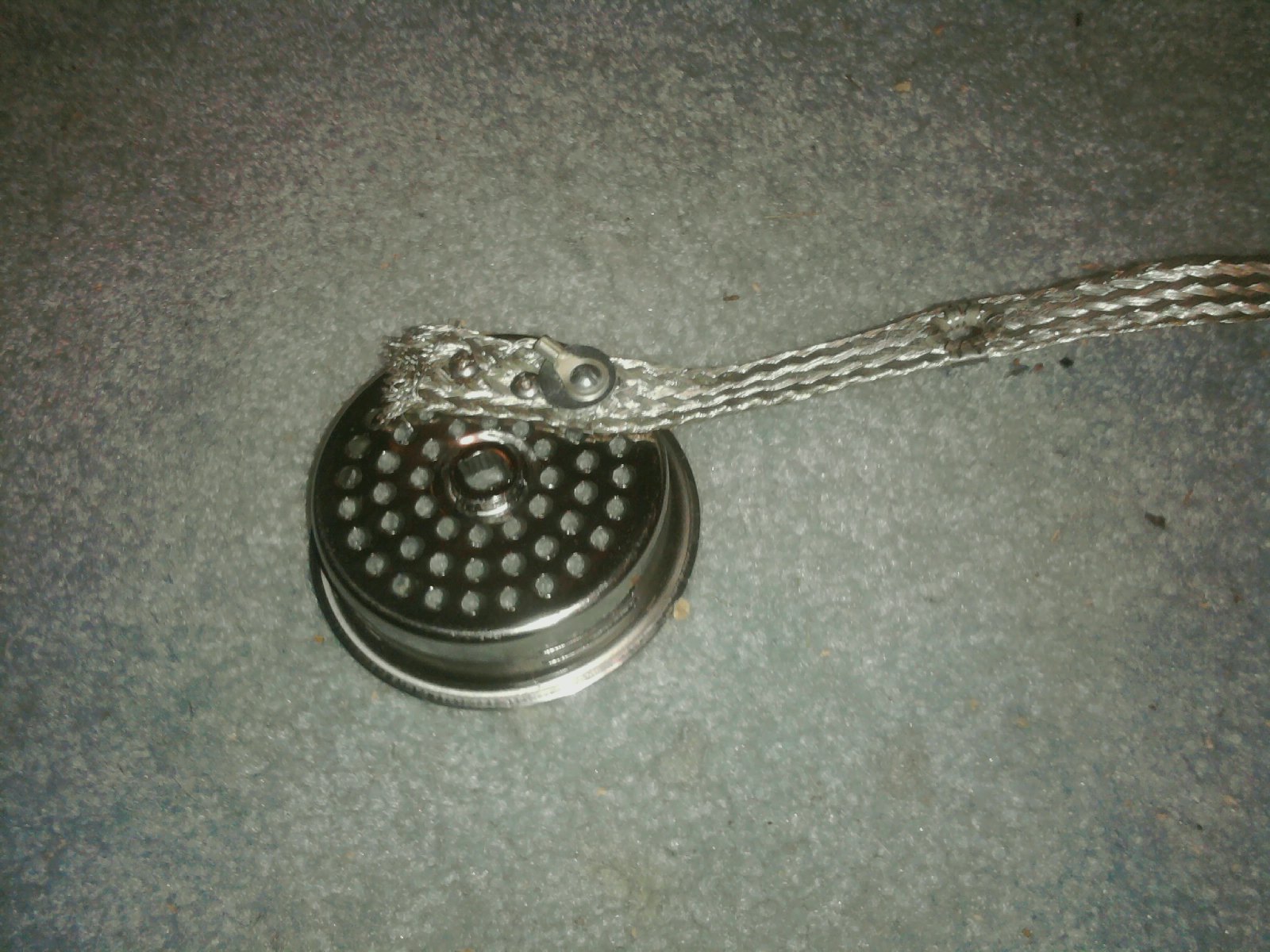
The wires are screwed down onto to the sink strainer using crimped eyelets, which have been dipped in anti-oxidant paste. I am using De-Oxit’s paste which is the same thing as Butternut’s “Butter it’s Not” as far as I can tell. Each is also secured with a star washer.
When all is said and done, I hope to have another 20 radials down which will put me very close to 50 total if count the original 25 I put down years ago.
Oh, I worked Crete for the first time in 13 years this evening. I heard SV9/SV2FPU calling CQ on 30 Meters (88′ EDZ antenna) and I threw out my call. Out of all the stations calling, I was amazed to hear him come back to me! This also makes the first time I have worked Crete via CW. Last time, all the way back in 2000, I actually used that mikeyphoney thing. Don’t tell anybody!
72 de Larry W2LJ
QRP – When you care to send the very least!
Larry Makoski, W2LJ, is a regular contributor to AmateurRadio.com and writes from New Jersey, USA. Contact him at [email protected].
Got started
Larry Makoski, W2LJ, is a regular contributor to AmateurRadio.com and writes from New Jersey, USA. Contact him at [email protected].
It’s a good thing…..
It’s a good thing that I have my lunchtime QRP opportunities, as lately, I seem to get more “on the air” time from work than I do from home! The weekends seem to be filled with nonstop chores and house responsibilities. Time for Ham Radio is scarce and at a premium.
But during the work week, I get that one hour break for lunch. If I’m lucky, I’ll get out to the parking lot to find the bands hopping. This afternoon, I got lucky again.
I started my lunchtime session on 17 Meters, as has become my custom. I was fortunate enough to work two DX stations, S573DX in Slovenia and F5NTV in France.
After finishing with those two, I headed on over to the QRP Watering hole on 20 Meters. Once there, I called CQ for a bit, to be answered by John KG9HV, in Lafayette, IN. We had a nice 2X QRP QSO. I was on the KX3 and Buddistick, while John was using his Kenwood TS-570S to a dipole at 5 Watts. Even though the QSO was plagued by QSB at both ends, we were able to have a very nice conversation. And in fact, when the QSB let up, at times John was actually as good as 589!
The one bad thing about operating from the parking lot is dealing with the weather, kind of like a mini Field Day. It was hot (close to 90F – 32C), and it was the Noon hour, so the sun was at its peak. I didn’t feel like wasting gas to run the AC, though, so I just lifted the tail gate (rear door) of the Jeep and allowed it to provide some needed shade. The nice thing was that the building’s AC provided a nice refresher …… after a nice radio session.
Hamlog for Android is perfect for my portable logging needs. It’s super easy to use and has so many neat added on tools. I don’t even bother with plain paper, anymore. I recommend it highly.
As luck would have it, there’s not much to do at home tonight. While it would seem like it would be the perfect opportunity to get on the air, unfortunately there’s also a severe thunderstorm watch on until 10:00 PM. I may get on for a bit; but I’ll have to be ready to pull “The Big Switch” at a moment’s notice.
72 de Larry W2LJ
QRP – When you care to send the very least!
Larry Makoski, W2LJ, is a regular contributor to AmateurRadio.com and writes from New Jersey, USA. Contact him at [email protected].
W5MPZ Field Day!
Our station was active for almost 24 hours, minus a lull at about 1:10 am Sunday morning. Our backup arrived at around 2 am, which included Brian (N5ZGT, Rocky Mtn Division Director), who just got back from a Turks and Caicos island vacation (or DXPedition, you might say), and Scott (N5SQR) who worked PSK and SSB.
Setup and Operation
Beam
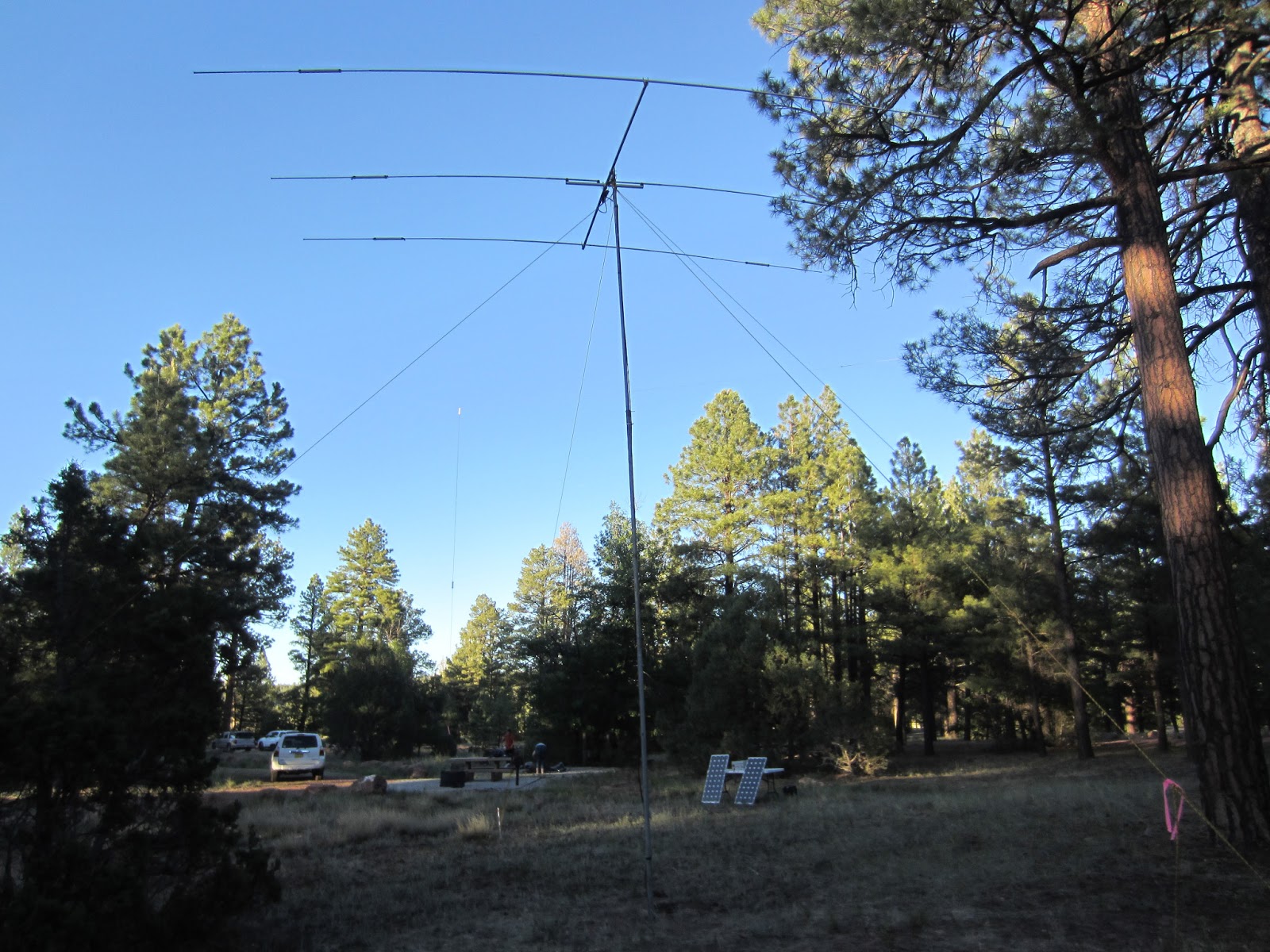 |
| TA-33 with the 80m windom in the background |
Dipoles
On my first shot, I got over this tree and the line sat perfectly on the brown number post.
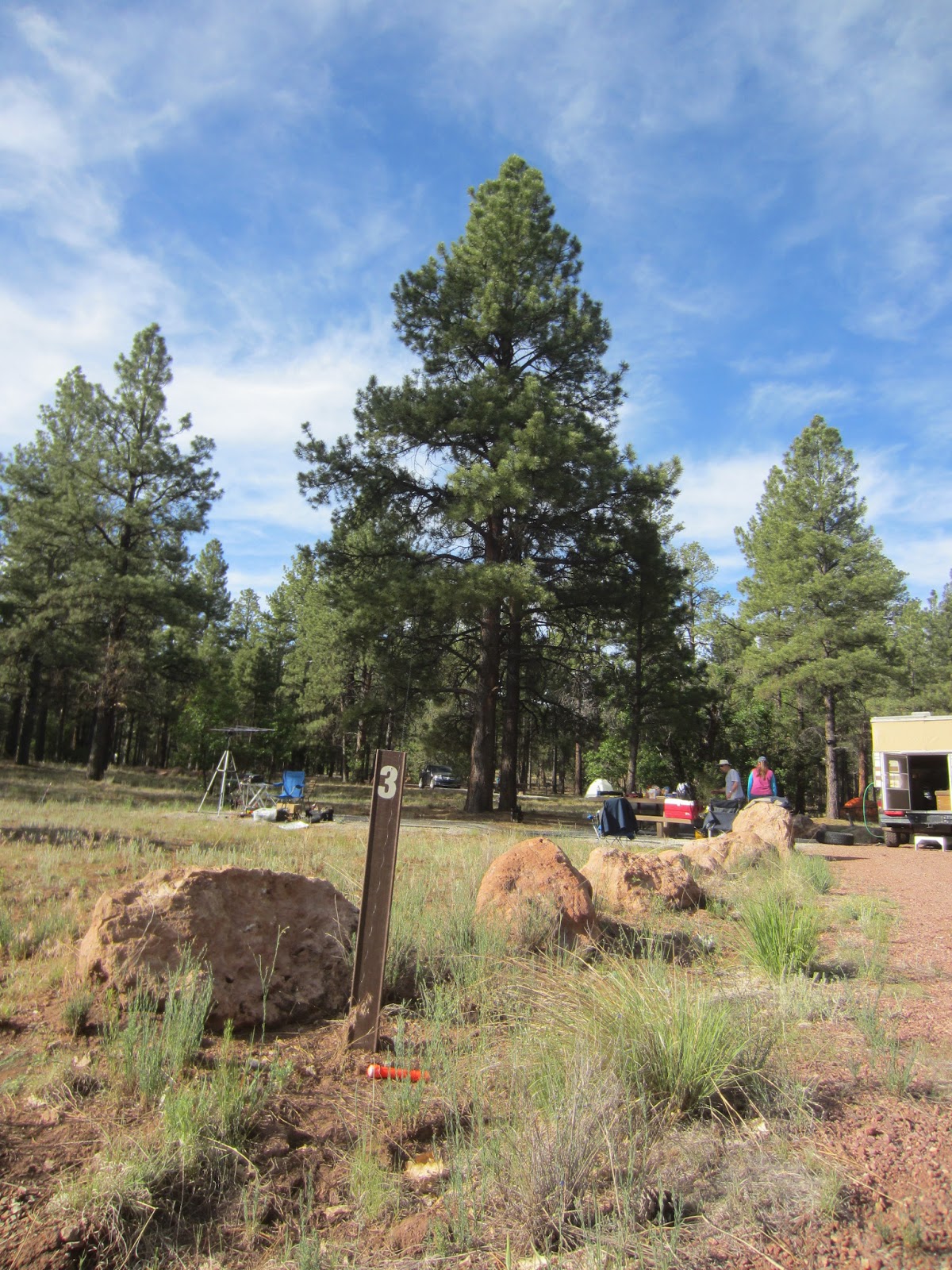 |
| The perfect shot. |
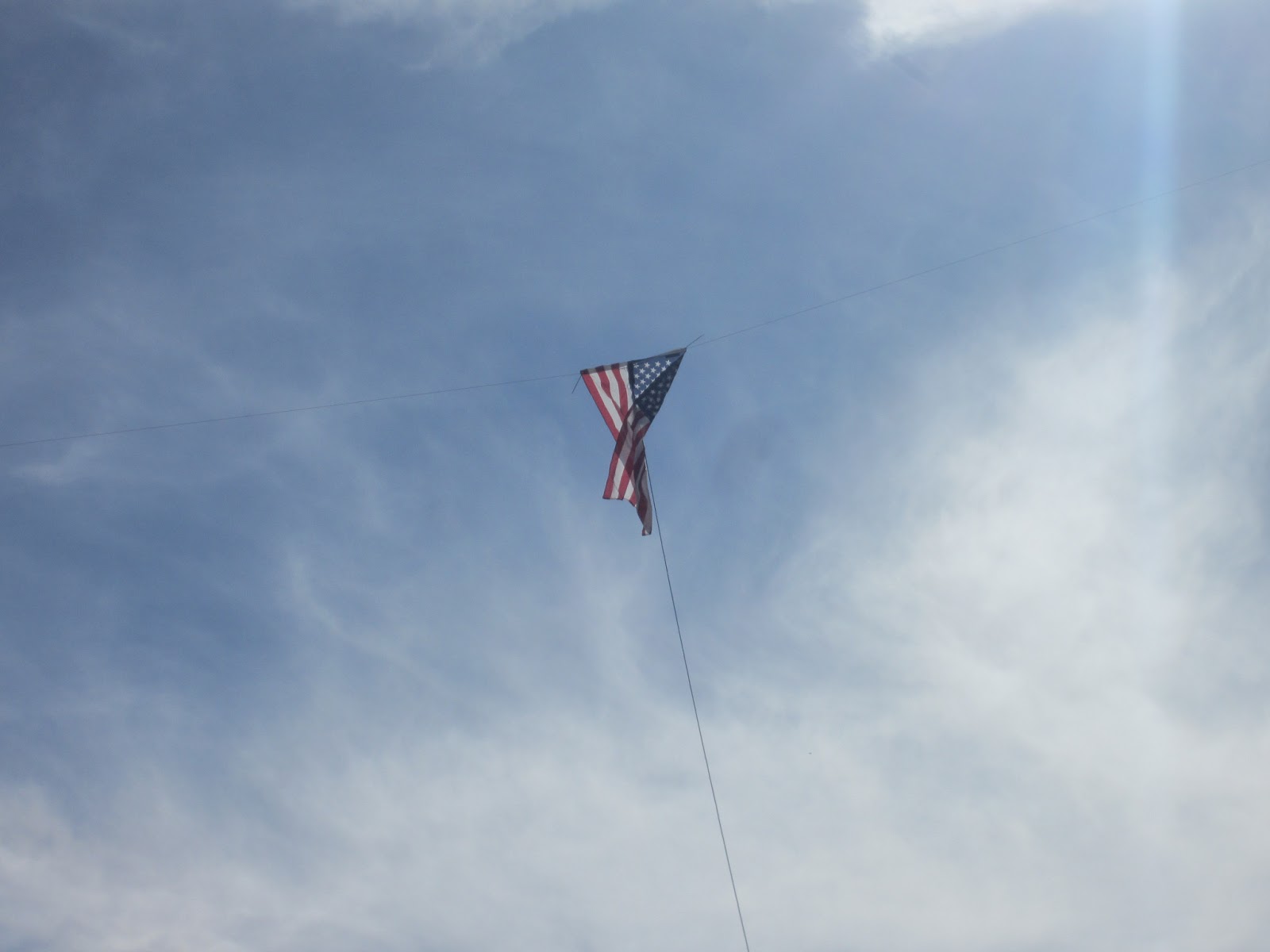 | ||
| Old Glory on our 80/40 trap dipole |
RPi camera
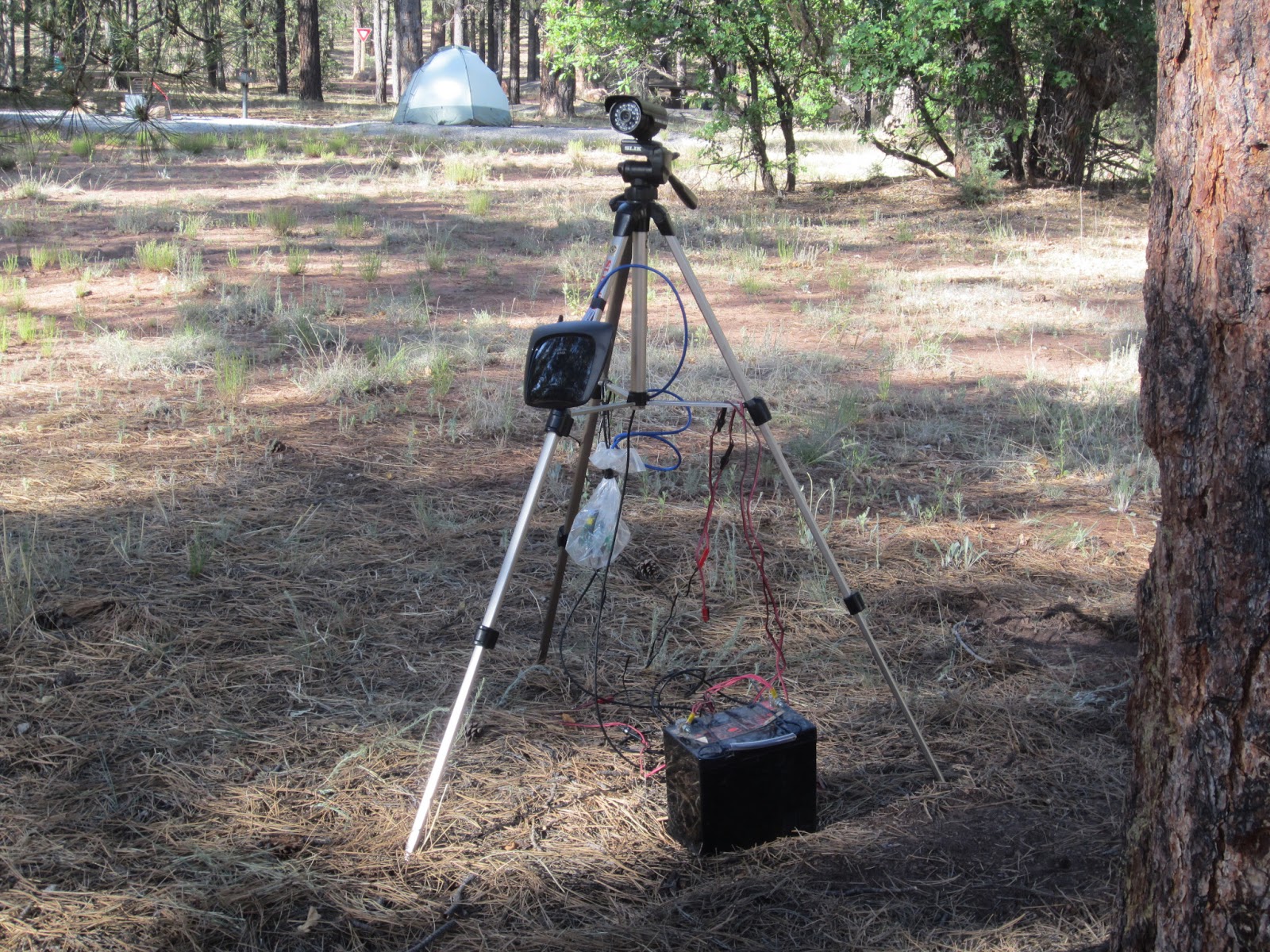
Operation
We were 2A, so we had 2 stations on the air, all supported by batteries. We operated SSB, CW and PSK31.
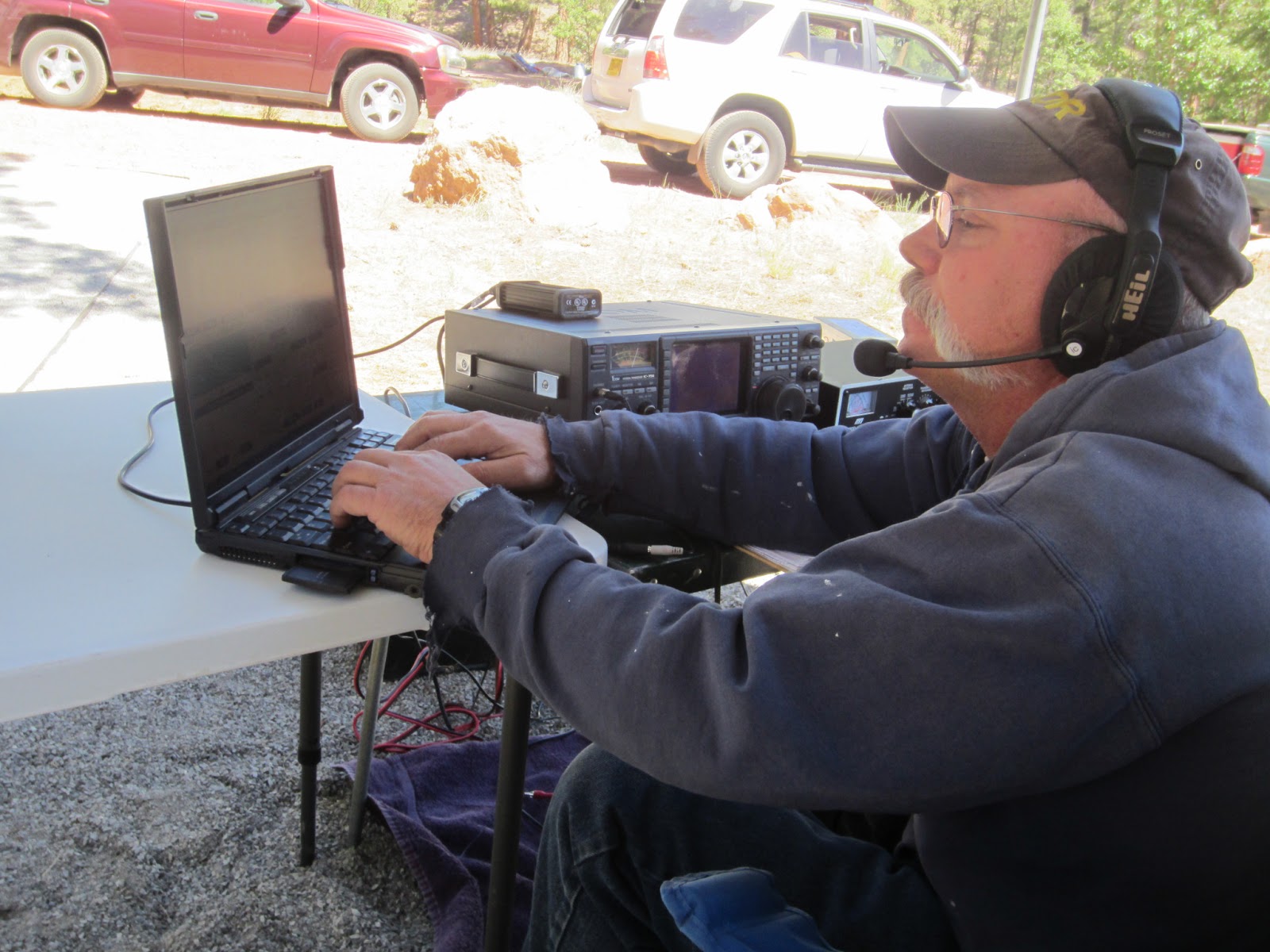 |
| Scott, N5SQR working SSB |
No field day station is without its problems. We were lucky to only have minor issues, like the logs not syncing or the digital station computer interface not working. These were easily and promptly fixed. Everything else (except for the band conditions) was perfect.
Our ops came from all areas of the hobby. Brian, for example, just got back from Turks & Caicos, and worked hordes of stations from VP5-land, while Seth never worked a contest before being a technician.
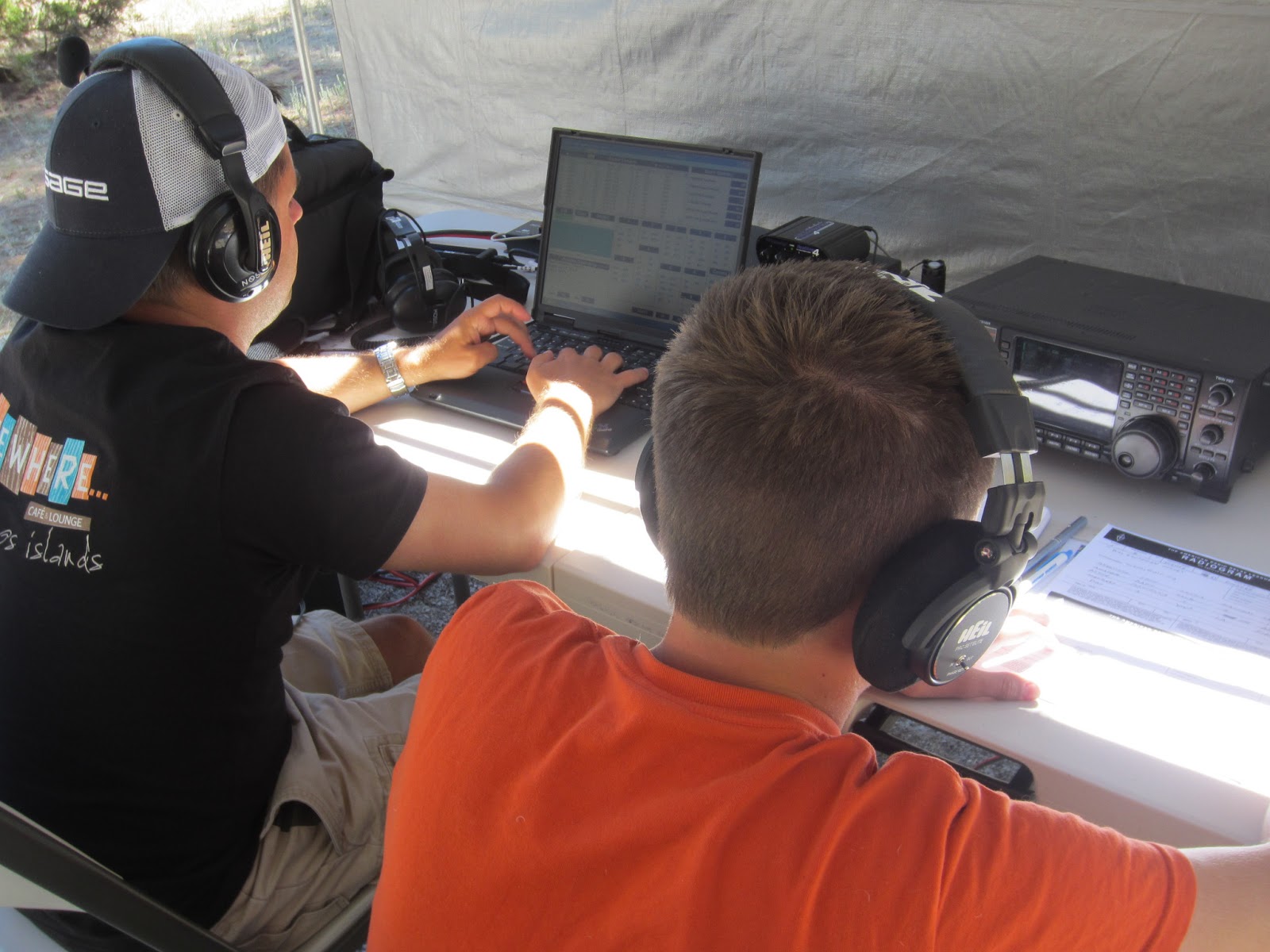 |
| Brian and Seth teaming up to send Radiograms for bonus points |
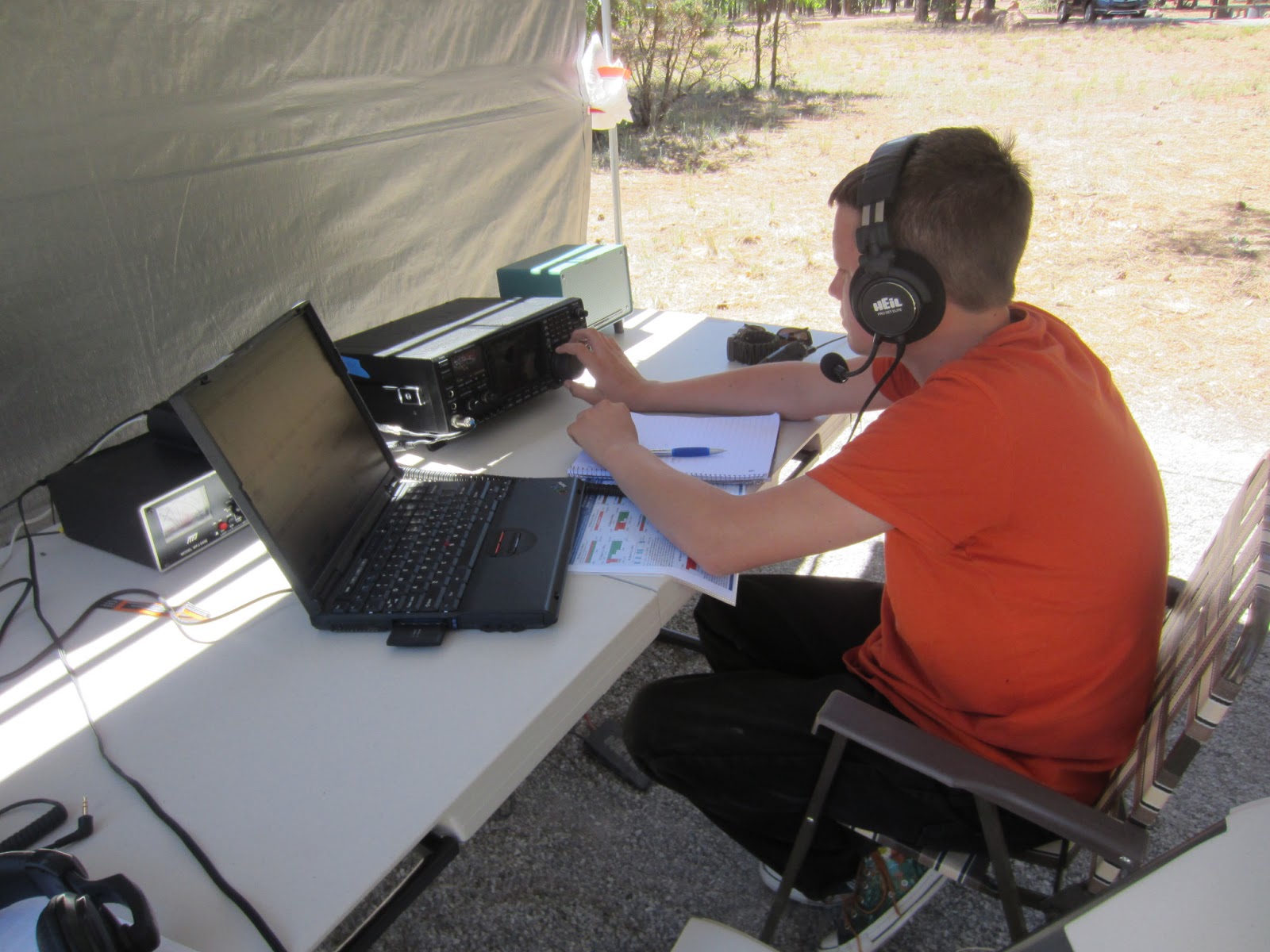 |
| Seth taking names and gettign mults on the voice station |
Seth quickly caught the Field Day bug and worked the 12-1am shift by storm, and eventually took both working and logging on the voice station on solo.
It was very cool to see him warm up to the air and get excited to work stations. It reminds me of my first Field Day, where I was thrown into the action and started racking up QSOs as fast as any other operator after only having a few hours to figure it out.
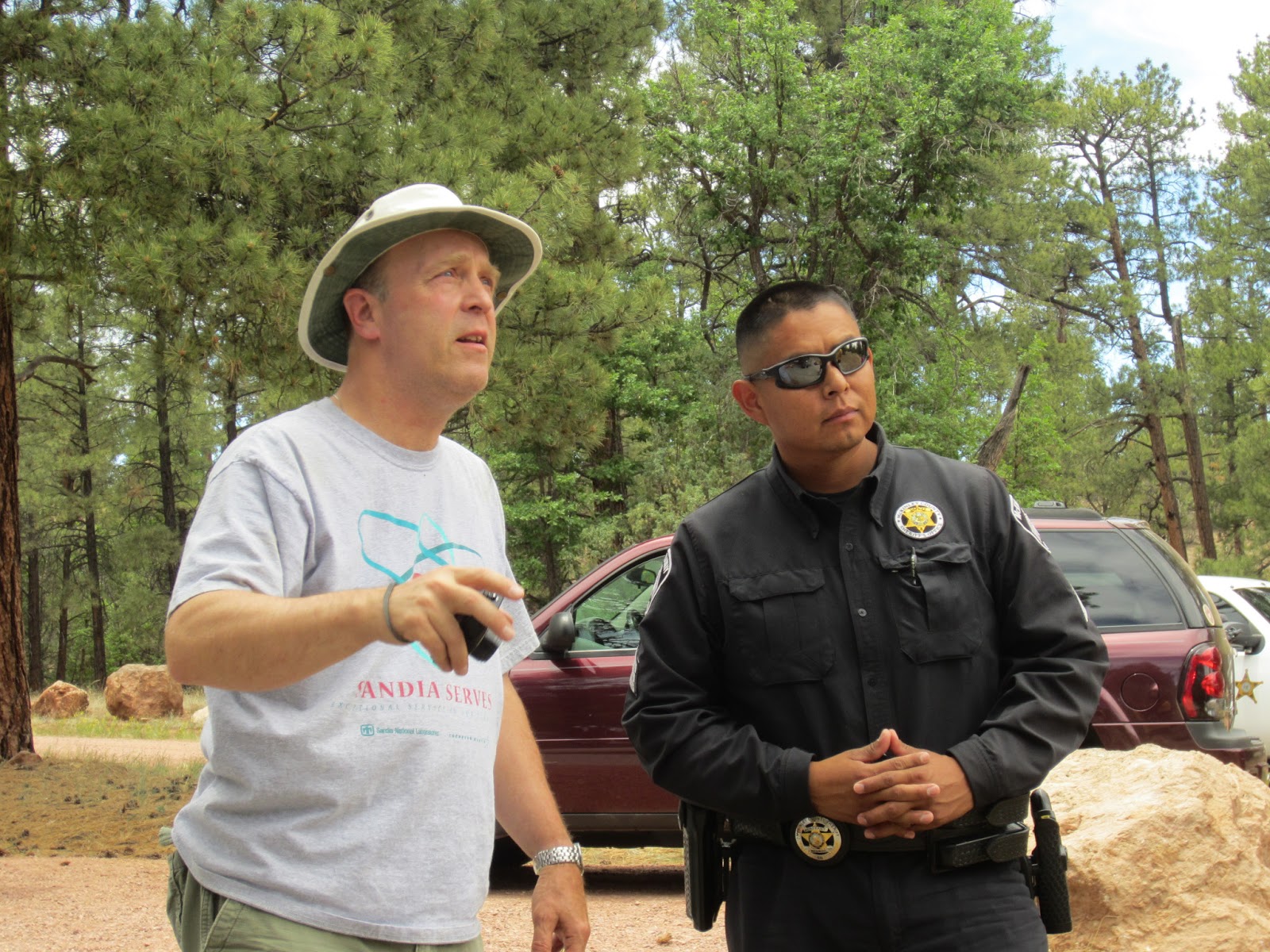 | |
| A visitation by the local sheriff |
Satellites
 |
| The Arrow LEO-SAT yagi and other antennas in the background |
 |
| Sat Station Setup — FT-817 for RX and an 897 for TX |
My job at W5MPZ was to bring a satellite QSO to the log for an extra 100 points. Unfortunately, this didn’t happen.
I had several attempts at SO-51 (the only FM satellite), VO-52, FO-29 and the zombie AO-7 (all SSB/CW transponders). I had most luck with the SSB satellites but had problems in being able to hear myself.
To work the SSB satellites (all but SO-51) you need to know where your signal ends up after it gets translated to the other band. For example, FO-29’s uplink band is 145.8-145.9 MHz, while the downlink is 435.9-436.0 MHz. One would think the 100 kHz passband would be linearly related, e.g. I transmit on 145.85, and hear myself on 435.95, but this isn’t the case. The doppler effect causes the frequency to differ by up to 500 kHz on UHF, so you need a way of calculating doppler, or simply finding yourself.
My technique was to spin a carrier through the passband until I heard it on the downlink, and switch to SSB to call CQ and tune into myself. Upon the switch, I lost myself.
I figured out the solution on the last pass of the weekend. The FT-897 has a feature in SSB mode that allows you to send CW at your tone frequency. So if I’m on 145.000 and have a 700 HZ CW pitch, it would send it at 145.000.70 MHz. Therefore, if you were tuned into 145 MHz on another rig, you’d hear that same pitch. All I had to do was zerobeat on the flipped bandpass, and call away. I finally heard myself repeated by the satellite, but didn’t have any replies within the last 5 minutes of the pass.
It was worth the effort (and in hindsight I should have just worked the ISS’s message system via packet)!
Summary
The underlying point of Field Day (aside from preparedness) is to have fun. W5MPZ did exactly that. Our support team of family members kept us well fed, watered, sheltered, and our batteries charged. One could not ask for a better place to set up and operate from, and the weather (despite being cold in the mornings) was amazing – not having wind and the 100°F temperatures to contend with was a huge relief.
I’m not sure of the final QSO count or score, but we only missed a few sections in Canada – NT, MAR, and ONN I believe — like we expected. Field Day isn’t a contest, so the score isn’t important to me or any of the operators aside from personal club goals and whatnot, so that wasn’t a worry. What matters is the coming together of like-minded people to getaway from the daily grind, have a ton of fun, share stories, and work stations.
Sterling Coffey, NØSSC, is a regular contributor to AmateurRadio.com. He is ARRL Youth Editor and an electrical engineering student at Missouri S&T. Contact him at [email protected].
An Aaargh! moment
Some of you may have received an invitation to join my LinkedIn network from me today. To those who accepted, thank you. To those who found the invitation unwelcome, I apologize.
It was not my intention to spam you in any way. Unfortunately I didn’t look carefully enough at what was displayed so that instead of emailing just those whom I had painstakingly selected from the list, the invitations went to all of the hundreds of addresses in my Gmail contacts list.
It was a real Aargh! moment, but by the time I had uttered the exclamation it was too late! Judging by all the invitations I have received in the past from people I don’t remember, I don’t think I am the first person to have done this.
Julian Moss, G4ILO, is a regular contributor to AmateurRadio.com and writes from Cumbria, England. Contact him at [email protected].
QRP Key?
So, that brings me to the term "QRP Key". We've all seen it, an advertisment or solicitation for a small morse key or paddle. Phrases like, "a nice compact morse key suitable for QRP operation" or the key is "QRP" sized. Now this brings a few questions to my mind. QRP in the technical sense means low power, so can you only sent 5 watts with this key? I suppose QRP operators are not suppose to use full sized keys or bugs as obviously you wouldn't be QRP any longer. Does using a full size key boost your signal? Does this mean that this small key cannot be used for QRO operation, will this "QRP key" degrade my high power signal? What are the specifications for a "QRP" key?
What about the QRPp operator? What are they to do for an appropriate key? Surely if you have QRP keys, QRPp keys must be even smaller and only those with very small hands can be successful, QRPp operators.
All of this is very confusing from a literal sense. If I am new to QRP must I get a new key? Dare I mix my QRO and QRP paddles or will I have problems if I do? I have this nice desk paddle that I love, but surely I couldn't use it with my KX3, or could I? Since the KX3 is larger than my KX1 maybe I could use my big paddle with it, but definitely not with the KX1. Surely you understand the dilemmas here. What to do?
Now, a few more descriptive terms for these small keys is the term "portable", "small "or the phrase "for field use". These terms, from a literal pespective, seem to make more sense. Certainly these "QRP keys" make sense for the QRO operator on an expediton who doesn't want to carry around a heavy key. Begali uses the term "adventure key", which seems to be self explanatory and doesn't invoke a QRP only use.
So, be careful and use your own judgement on when and where to use your QRP key, someone may be watching.
Mike Crownover, AD5A, is a regular contributor to AmateurRadio.com and writes from Texas, USA. Contact him at [email protected].
 Ham Radio Deluxe |
 W5SWL Electronics |
 Ham Radio Prep |
 KB3IFH QSL Cards  Hip Ham Shirts  HamRadioAuctions HamRadioAuctions Reliance Antennas Reliance Antennas Enigma Shop Enigma Shop |  morseDX  Ni4L Antennas  R&L Electronics R&L Electronics antennas.us antennas.us QRV QRV |
- Matt W1MST, Managing Editor
