 |
 New Blog
 28 June 2013 | by
 Google will close down one of my video accounts because of copyright infringement. They worse case scenario: they will sue me for that. So my blog will content no longer material of others. Only photographs and videos which I have made myself.
It was too much work to 'clean' my 5 year old blog. That's why I start with a new fresh radio blog. (Unfortunately with less photos)
Paul Stam, PC4T, is a regular contributor to AmateurRadio.com and writes from the Netherlands. Contact him at [email protected].
Amateur Radio Newsline Report 1872 June 28 2013
- Rules change sought to allow encrypted ham radio communications
- CEA is forming a standards group to reduce distracted driving
- 5 MHz privileges come to resident hams on Samoa
- ARES responds to Alberta Canada flooding
- FCC sets RF exposure comment deadline
- ARNewsline names Padraig Lysandrou KC9UUS 2013 Young Ham of the Year
Summertime and the living is easy …….
The day started out hazy, warm and humid. As I parked my car at work this morning, I was able to see the haze just hanging in the air, against the dark background of the trees. According to Google, humidity at the time was 91% – almost like being in a shower.
This is the type of summer weather that you get accustomed to if you live in New Jersey for any extended period of time. While it is expected, it can make a Ham’s life …. interesting, to say the least. Antennas are left disconnected, as you never know when a thunderstorm is going to pop up. And pop up they do, swiftly – and seemingly without a lot of warning. Just yesterday, we had two bouts – one near 4:00 PM and another around 7:00 PM, complete with lightning, thunder rumbles and heavy downpours. The National Weather Service has issued a tornado watch for just about all of New Jersey, effective until 10:00 PM tonight. Summer in NJ – you gotta love it!
This weather is also making my radial project interesting. Kneeling down on a wet lawn, in order to secure the wire to the earth is, well …. just so much fun. The bright side is that the grass will grow much quicker in these tropical conditions, and as a result, the green colored insulation will disappear into the lawn all that much faster. My wife will appreciate that.
Pickings were slim at lunchtime. There were many signals on 17 Meters. But it seemed like it was a case of either,
A) It was a new station and I wasn’t being heard, or
B) It was a station that I had already worked before.
As a personal rule, I try to avoid working the same DX stations over and over on the same band. I would much rather someone else get the chance to put that particular DX station in their log for that band.
I did snare DL6ZXG, Klaus in Derenburg, Germany, receiving a 559 report. From his QRZ page, you can tell that Klaus is quite the active Ham. Not only does he hold 5BDXCC, and the ARRL’s Triple Play WAS award, but he also has over 20,000 look ups on QRZ. That shows me that you’re on the air a lot!
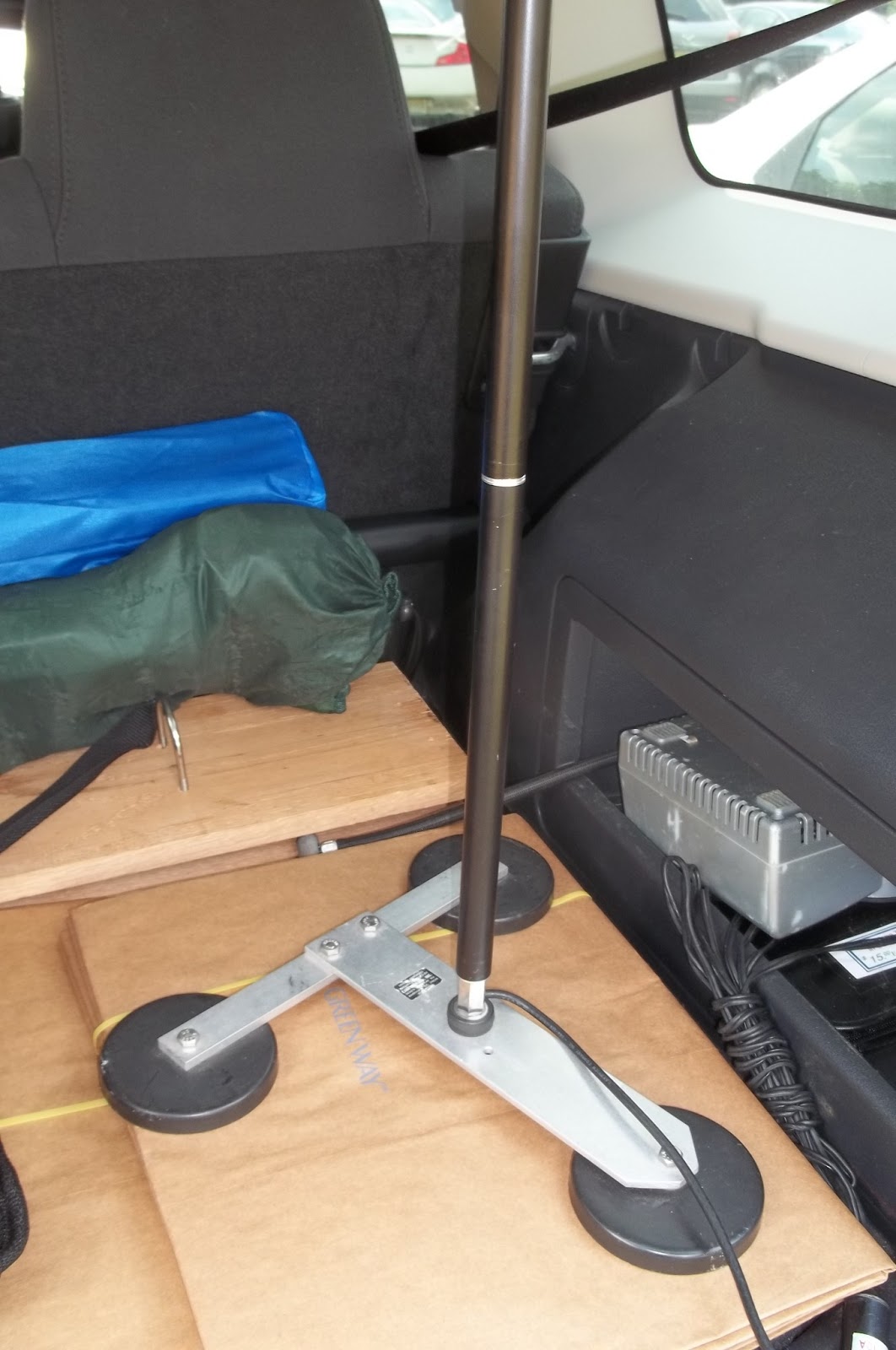
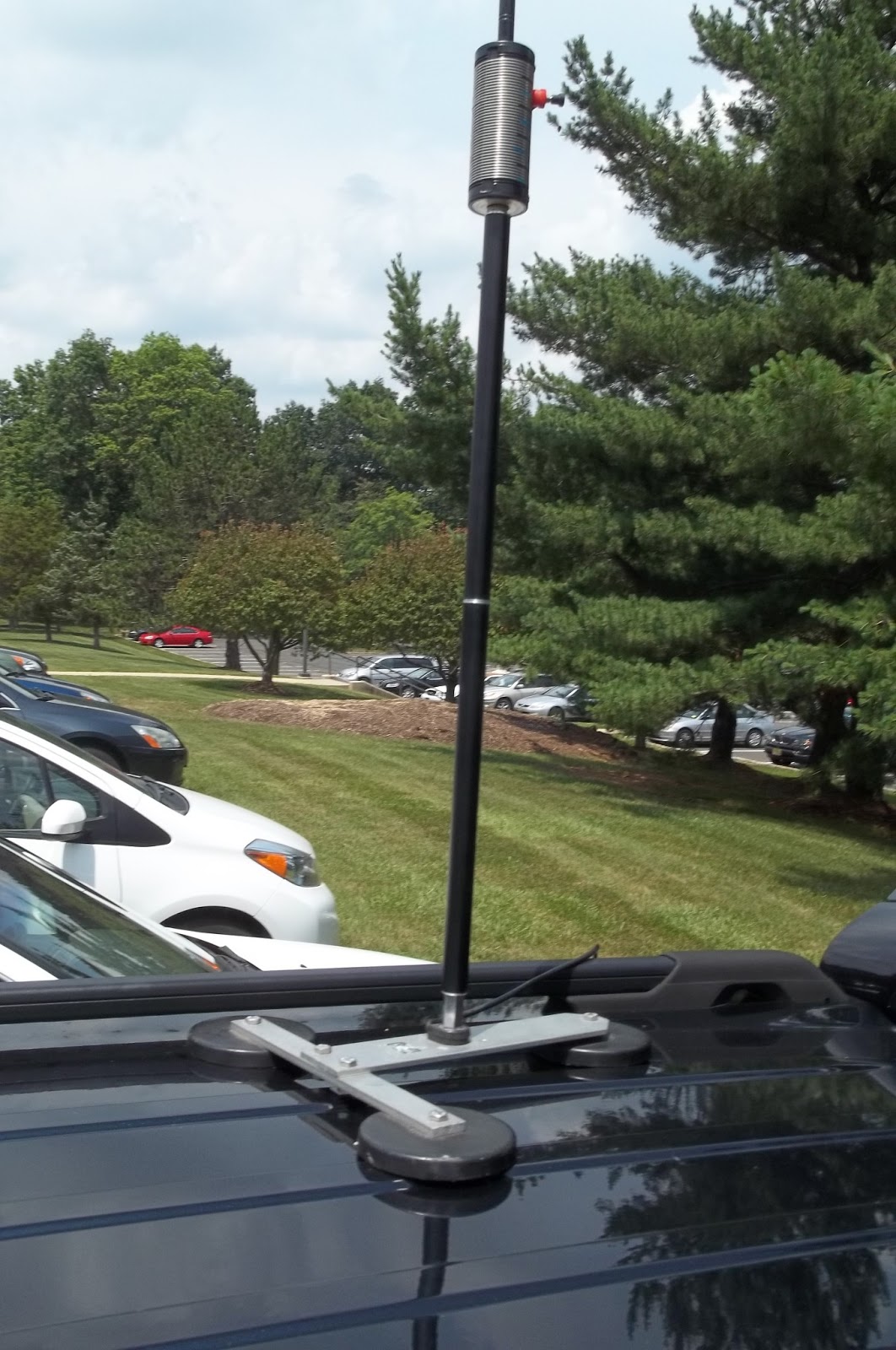
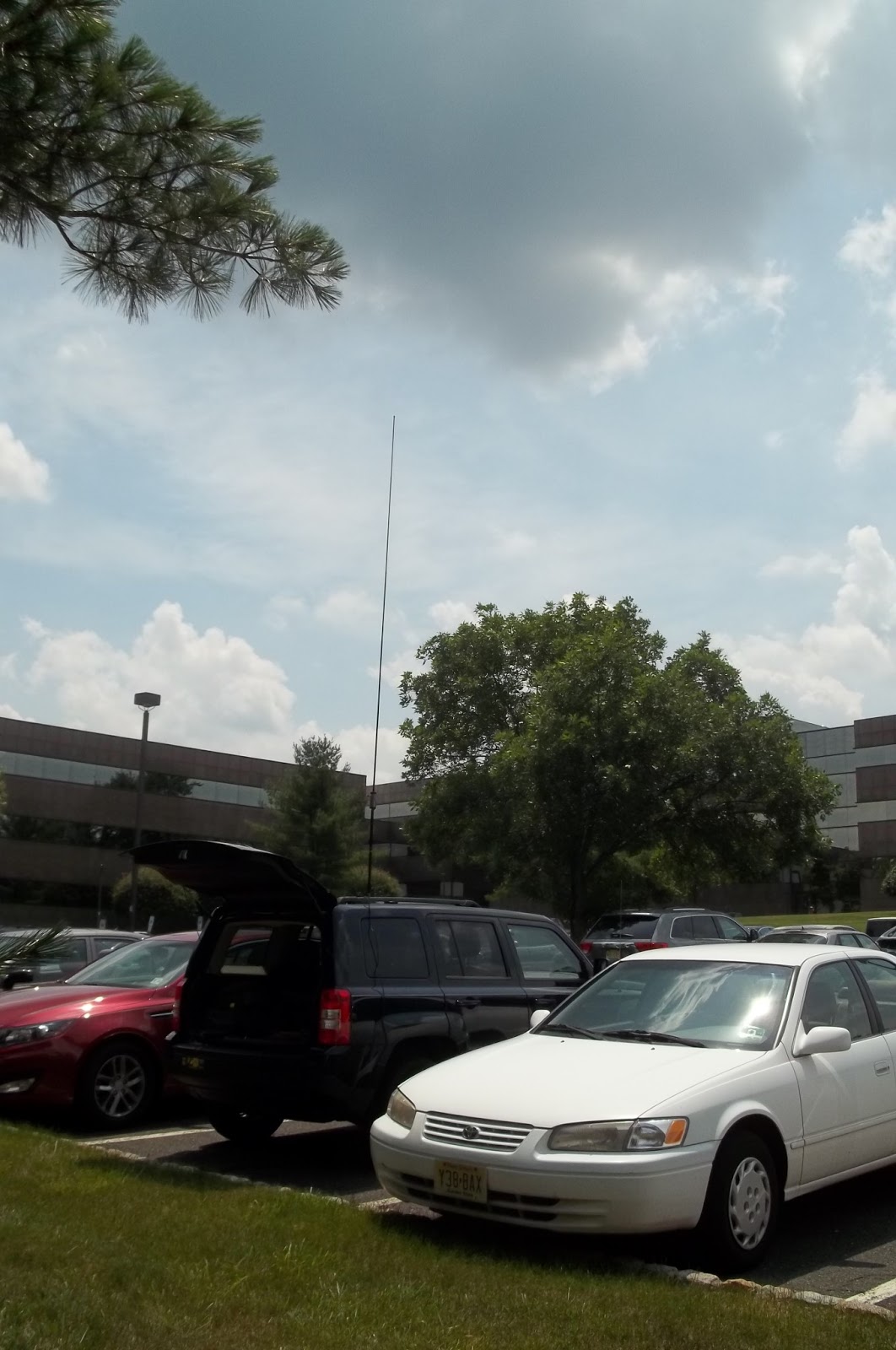
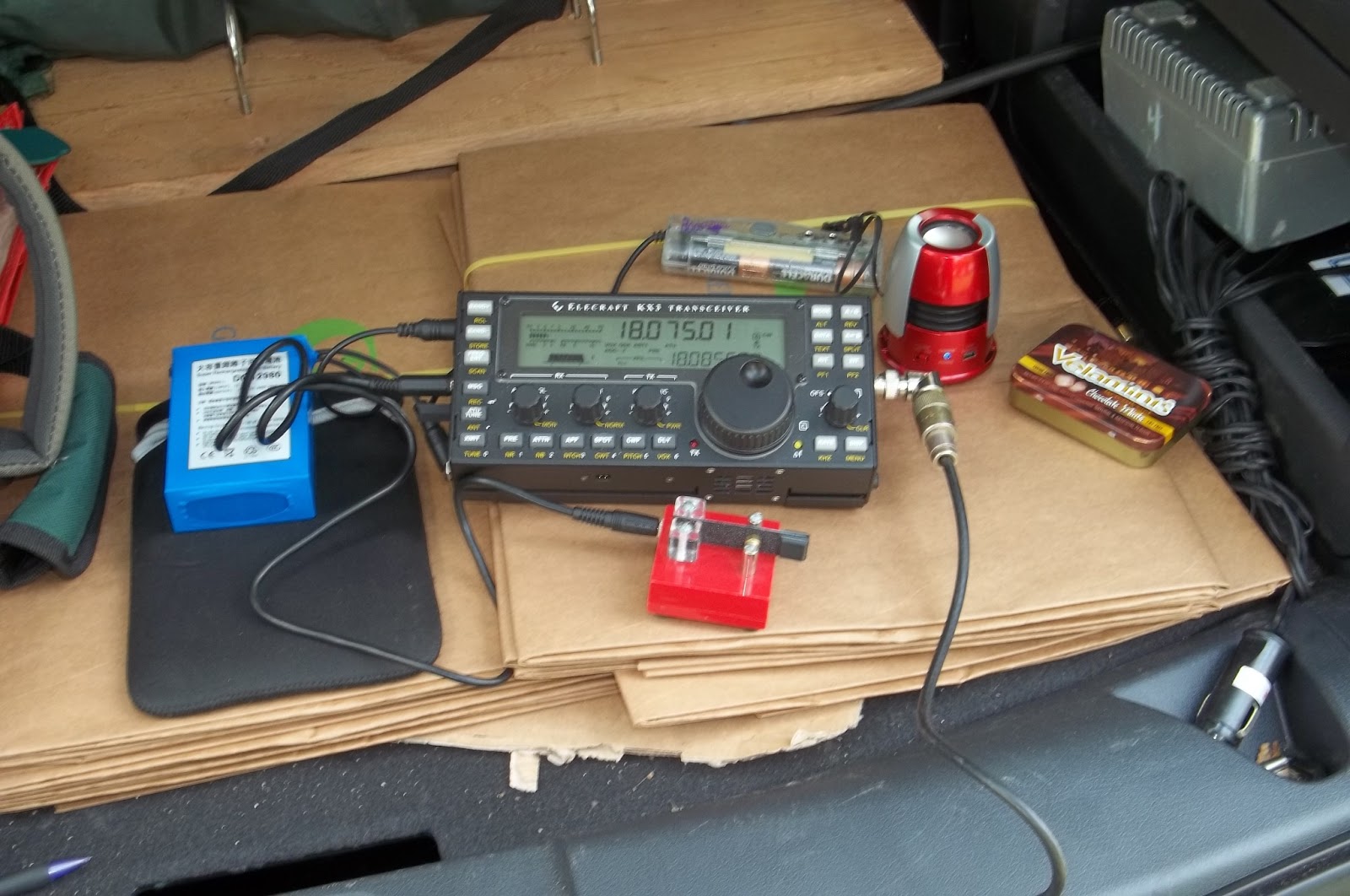
The lack of working a plethora of stations at lunch time gave me time to snap some photos of the setup, as requested. Nothing exotic or spectacular, which is a good thing. If I can have success with this arrangement, then you can too, with something similar.
Will I earn DX Honor Roll this way? No, of course not, but I will get more than my fair share of fun, and THAT’S the point, isn’t it?
I must give credit where credit is due. Bob W3BBO gave me the idea of using my Buddistick on the car this way. Up until then, I had been deploying the Buddistick in a much more “conventional” manner. Bob clued me in about using the car as an enhanced ground plane, and let me tell you – this arrangement makes the Buddistick soar! (That’s a W3FFism!) I had never thought of this on my own (duh!) and I will forever be indebted to Bob for his “out of the box” thinking. This works so much better than individual Hamsticks.
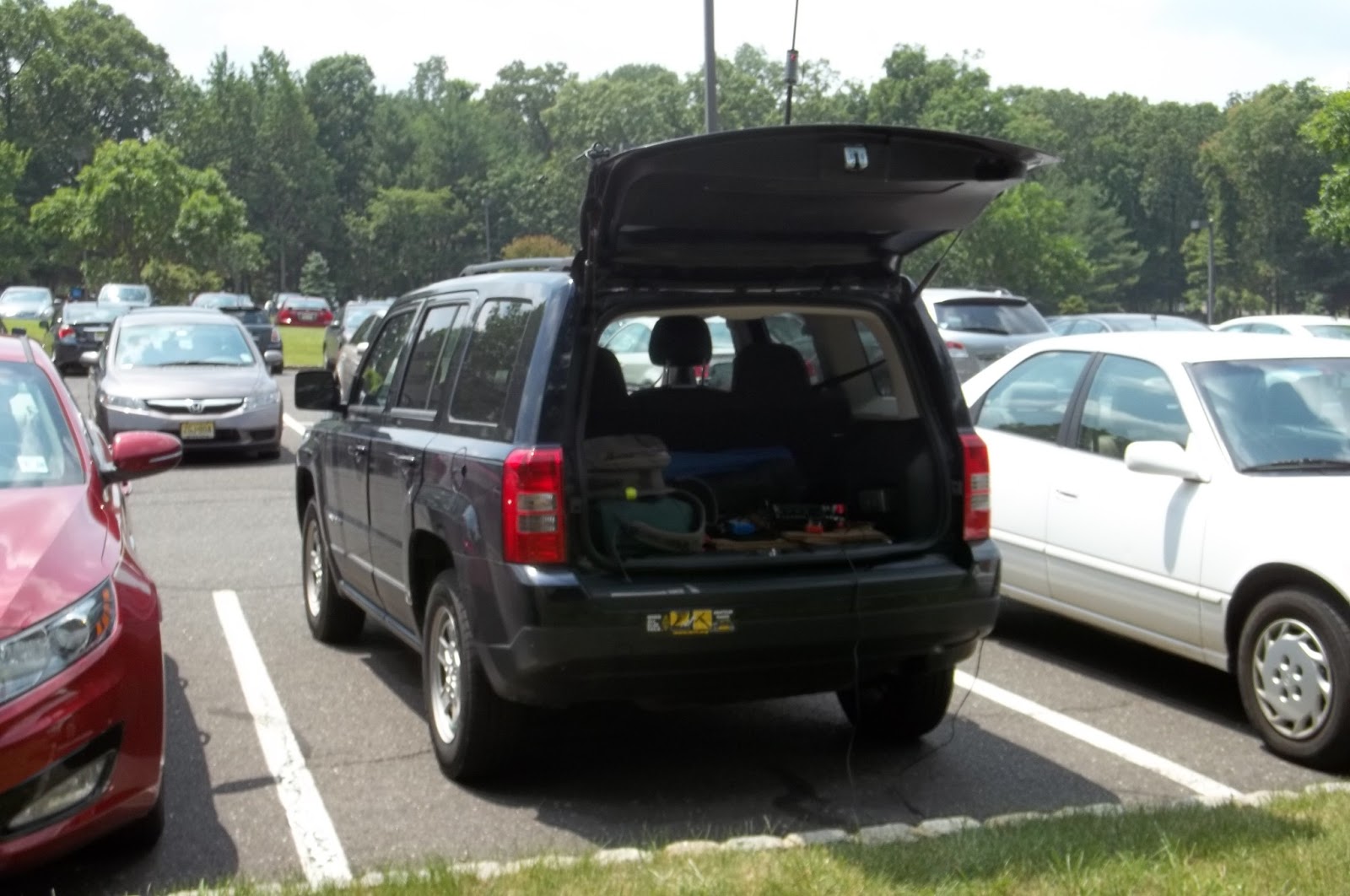
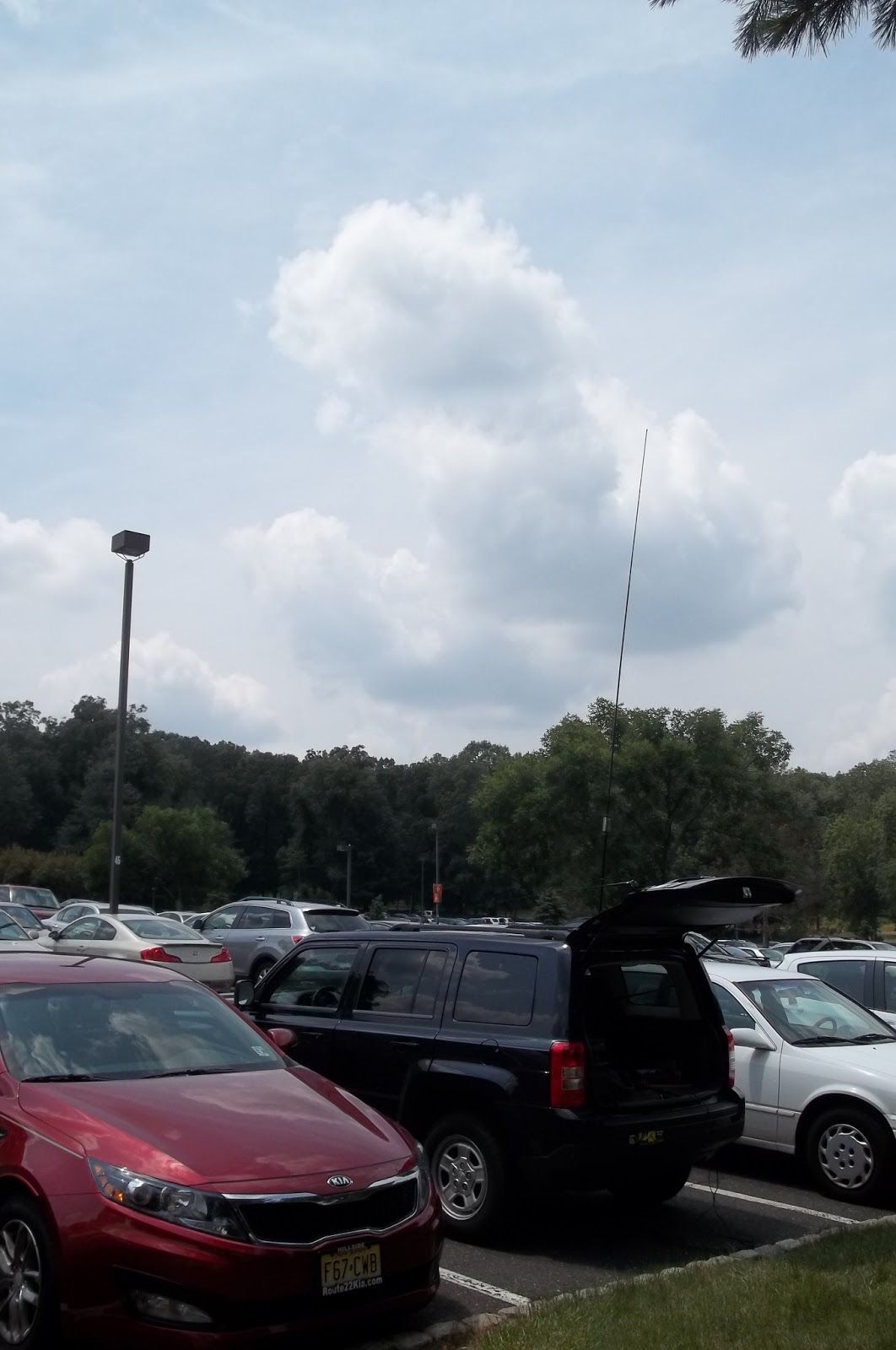
Larry Makoski, W2LJ, is a regular contributor to AmateurRadio.com and writes from New Jersey, USA. Contact him at [email protected].
Two days, three QSOs on 50MHz FM!
It’s been a while since I had many QSOs on 50MHz FM. Two or three years ago, I used to work Roger G4HZA most mornings via GB3FX, but Roger moved away.
Since then, I’ve occasionally called CQ on 51.510 FM, particularly in the Es season. As you may have read, I was rewarded with a nice contact with EA2DVT last week. Yesterday, I called CQ and was pleased to be called by Andy G6REG/M using his new second-hand AKD mobile rig. We made an easy contact over a distance of around 15 miles.
This evening a CQ had both Andy and David, M0MLN respond! David was quite close by, testing an antenna but was able to work both myself and Andy. Andy and I enjoyed a mobile to mobile QSO for some minutes. Despite some varied terrain we noticed much less mobile flutter than we would have expected on higher VHF bands, even 70MHz.
It would be fun to hear more mobiles or fixed stations on 51.510, whether on ground wave or by Es!
Down on 50.500, yesterday evening I heard Spanish. No callsigns, so whether it was a repeater or just a local contact, I couldn’t quite tell.
Tim Kirby, G4VXE, is a regular contributor to AmateurRadio.com and writes from Oxfordshire, England. Contact him at [email protected].
FCC Considers Encryption on Amateur Bands
 Just when things were terminally boring on the amateur radio regulatory front, the ARRL reports that “The FCC is inviting public comments on a proposal from a Massachusetts ham to amend the Part 97 Amateur Service rules to permit the encryption of certain amateur communications during emergency operations or related training exercises.” The FCC is seeking comments on the Petition for Rulemaking RM-11699, submitted by Don Rolph (AB1PH). My email and twitter feed started filling up with passionate pleas to either support this petition or to kill it.
This idea has been around for a while but I don’t recall the FCC considering action on it. The issue is that “messages encoded for the purpose of obscuring their meaning” are prohibited by Part 97 rules for the Amateur Radio Service. (Actually, that is not completely true since an exception exists for control of stations in space and radio-controlled models.) This rule has a very important role in enabling the “self policing nature” of the amateur radio service. That is, everyone can listen to the content of all radio communications, allowing improper use of the spectrum to be exposed. (Note to self: file a petition to require encryption when using 14.313 MHz.)
This rule can be a barrier when ham radio Emcomm organizations are providing communications for served agencies (e.g., the Red Cross, fire departments, medical response, law enforcement, etc.) These served agencies do not want sensitive information passed over the radio “in the clear.” Sensitive information includes items such as medical/patient information, location of emergency responders and supplies, damage assessments, door or gate access codes, etc.
A few weeks ago, I volunteered my time to help with communications for the Black Forest wildfire here in Colorado. So count me as someone that sees emergency communications as a key part of amateur radio. (Gosh, I think Part 97 even mentions this. See Part 97.1a) I also see that the prohibition against encryption is a does get in the way during some incidents.
But I am also worried about opening the door to significant use of encryption on the ham bands. The problem with encrypted messages is that…wait for it…you can’t decode the messages. So how do we maintain that self-policing thing? The fear seems to be that if we open the door at all to encryption, it will enable virtually anyone (amateur license or not) to transmit encrypted messages for unknown and inappropriate purposes.
The challenge is to figure out what limits could be put on encrypted operation to retain the self-policing nature of ham radio while enabling more effective emergency communications. Here are some ideas:
- Limit the use of encryption to actual emergencies and training exercises. (This is already in RM-11699.)
- Require that radio transmissions are properly identified “in the clear”, with no encryption. That way if encryption is used on a regular basis, steps can be taken to investigate further. (This may already be assumed by RM-11699 but I did not see an explicit statement.)
- Require additional information to be sent in the clear with the station ID when sending encrypted messages. For example, the name of the served agency, the nature of the emergency or drill, or anything else that would help a random listener to judge whether it is an appropriate use of encryption.
- Require archiving of encrypted messages (in unencrypted form) for some period time, available for FCC inspection.
- [Added 28 June]: Avoid international regulation issues by limiting encrypted messages to US stations only.
- <insert your idea here>
Still pondering this issue…what do you think?
73, Bob K0NR
Update 1 July 2013: See the article by Bruce Perens K6BP
Update 8 July 2013: See comments by N5FDL
The ARRL says “no”.
Bob Witte, KØNR, is a regular contributor to AmateurRadio.com and writes from Colorado, USA. Contact him at [email protected].
Some thoughts
Argh! If my head wasn’t screwed on, I would probably forget that, too!
Rem K6BBQ wanted me to mention that he has added a SOTA category to this year’s inaugural Scorch Your Butt Off contest, coming this July. If you activate a SOTA summit, you can claim an additional 100 points to your SYBO score. Please keep in mind that this has NOTHING to do with your SOTA activation points, this is for your SYBO score only.
I had my last Pastoral Council meeting tonight, so I didn’t get the chance to put any more radials down this evening. I have served on the Parish Pastoral Council for the last four years. Two meetings a month, all year around. That may not sound like much, but there are always many peripheral duties involved, as well as peripheral events where attendance was not mandatory, but desired. The normal term of service is three years, but I was asked to, and served for four. Now that these are going to be over, I will be able to attend Amateur Radio club meetings again. I hesitated to in the past, as I always tried to keep away from being out of the house multiple nights a week. To say my attendance of club meetings was sporadic is being generous. It was, for all intent and purpose, non-existant.
This Friday evening is an Electronic Testing Society of NJ meeting. Fancy name for a repeater club meeting, eh? The group is better known as the Greenbrook repeater group, and the meetings are always the last Friday of the month. Even though this would mean being out two evenings this week, I am going to make a best effort to attend, so as to get back into the swing of things.
I also hope to attend a lot more VE sessions when license exam season starts up again in earnest this September. I have always enjoyed being a VE, going back to the days when I regularly attended and volunteered at the sessions that were offered by the Raritan Bay Radio Amateurs.
I had to go to a remote site at work today, so I didn’t get in my lunchtime QRP session, so no photos today, maybe tomorrow, weather permitting (but alas, it seems there’s a 75% chance of rain for tomorrow).
72 de Larry W2LJ
QRP – When you care to send the very least!
Larry Makoski, W2LJ, is a regular contributor to AmateurRadio.com and writes from New Jersey, USA. Contact him at [email protected].
Milestone at the end of the road
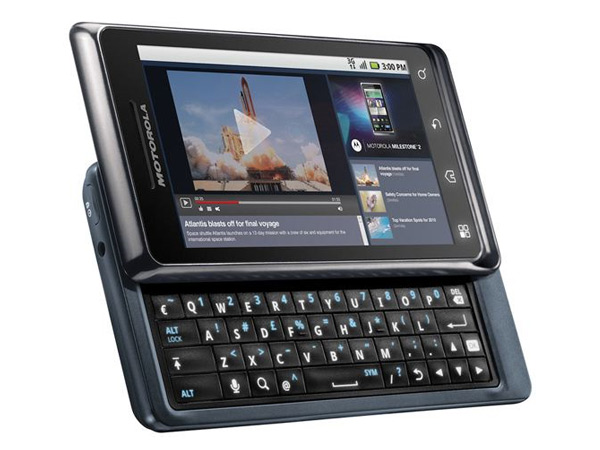
My Motorola Milestone 2 smartphone, which I bought nearly two years ago, has gone kaput. When I slide out the keyboard, the display goes blank. The device is usable, but only as an ordinary phone. I can imagine what has happened. There is probably a flexible ribbon cable like in the KX3 connecting the two halves, and a trace has broken. (A good job I’ve got the charger for the KX3 so I don’t have to keep opening it up to change the batteries.)
Of course, it is out of warranty. The question is, is it repairable at a reasonable cost? Motorola’s support site won’t give an estimated cost of repair. “Send it to us and we’ll give you a quote” they say. I’d really like a ballpark figure for what it is going to cost before doing that.
I guess I’ll just have to spring for a new phone. But there weren’t many alternatives with a real hardware keyboard and I expect there are even fewer now. I wish I could type using the software keyboard (which I’ll have to for now) but I have a 50% error rate. I don’t think my fingers are much fatter than normal. How do you guys manage? Perhaps you don’t text much and don’t do email on the phone.
Julian Moss, G4ILO, is a regular contributor to AmateurRadio.com and writes from Cumbria, England. Contact him at [email protected].
 Ham Radio Deluxe |
 W5SWL Electronics |
 Ham Radio Prep |
 KB3IFH QSL Cards  Hip Ham Shirts  HamRadioAuctions HamRadioAuctions Reliance Antennas Reliance Antennas Enigma Shop Enigma Shop |  morseDX  Ni4L Antennas  R&L Electronics R&L Electronics antennas.us antennas.us QRV QRV |
- Matt W1MST, Managing Editor
