 |
 Memphis Belle
 21 July 2013 | by
 I had mentioned that I was going to be offering the “QRP – Do More With Less” blog up to guest bloggers. Here’s the first! This post is in response to an e-mail that I received from Steve K8SAR. He had sent me an e-mail about his visit to the Memphis Belle.
I thought this was too cool to keep to myself, so I asked Steve to write something up. Here’s the story of his adventure in his own words:
Larry, I thought you’d be interested. The Memphis Bell was in our town over the weekend with a friend who was one of their volunteer pilots. I had the chance to get a tour of the fighting lady including the radio station on board. I doubt they’re functional but they are indeed very interesting!

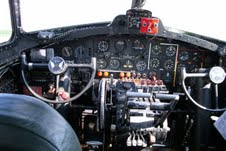
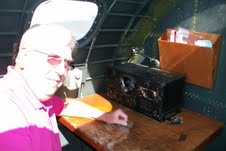
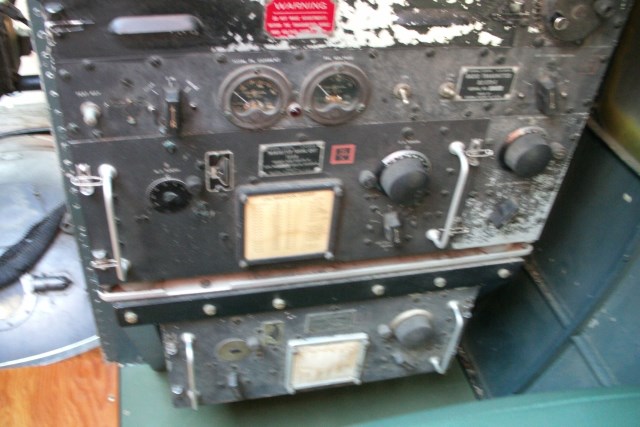


Larry Makoski, W2LJ, is a regular contributor to AmateurRadio.com and writes from New Jersey, USA. Contact him at [email protected].
X1M HF Transceiver Review and Testing

First Impressions:
Very well packed with bubble wrap for shipping. Included is information about X1M from Xiegu Technology but it is in Chinese so does little for the North American Operator. When I took the unit out of the box I was once again amazed at the size and ruggedness of the build. The green display is easy to read as is all the silk screening on the front and rear covers. The audio from the unit is also very clean and loud for a small unit. The unit is very light for an all band and all mode unit. Preamp works well and unit is very quiet on receive. Menu navigation is easy.
New Version Comments-Read last review for comparison:
- Coax connection is still an SO-239 connector. Change over to BNC would be an asset.
- Polarity is now marked and unit comes with barrel connector included.
- CW delay works wonderful on this unit now with no issues
- Adjustable cw pitch is an added bonus
- CW mode will not work if microphone is plugged into the front of the radio
- Marked KEYER on the back which is nice to see
- No Power Out or S meter indication on display
- No adjustable filtering for SSB or CW use.
- Adjustable cw side tone volume would be nice feature, too loud with headphones on
- Headphone jack should be on front of unit –BUT NOT A BIG DEAL
- Display is clear and bright, not too small and still easy to read
- CW tone is clear
- Audio is clear from unit
- Size of radio makes it very compact for portable use
- Data jack on back of unit nice feature for digital modes
- Silk screening is very pleasant to read
- Case and unit is well built
- All controls on unit feel good
- 99 memories
- General coverage receiver
RIT Button: When pressed for 2 seconds this will bring you too the SYSTEM MENU display-from here you have 2 options- YES or NO. By pressing the button directly underneath either option will make the choice. If YES is pushed this is what you may see: * indicates default setting when radio received.
- RCLK Ratio x6* x1
- DDS Clock 032768131*
- LSB BFO 08988750*
- USB BFO 09000850*
- CW BFO 09001380*
- IF OFFSET +08999830*
- KEY MODE MANUL* AUTO
- KEY SPEED A-KEY-SPEED 060* (adjustable)
- CW DELAY 1000* (adjustable from 0000-5000)
NOTE: Obviously all radios will have different default settings. Owners should be advised to write these down for future reference.
New items in menu are:
- CW TONE 800*
- MUTE NO*
- RST SETTING NO*
To make any changes to the menu values push main tuning knob in and if value can be changed you will see 2 arrows on either side of the setting, it then can be changed. Once changed quickly press main tuning button again to exit menu.
When all settings are adjusted-momentarily press and release RED BL/LOCK button- It will then ask if you want to SAVE CHANGES? YES or NO
Press the black button directly under the option you wish to choose. You will then be directed back to the VFO/MEMO setting when all is saved.
Conclusion:
After having given this small radio a good going over into various antennas and testing I have to say that it does what a 5 watt QRP rig should do. It has proven itself on cw for me as I an avid cw operator. Only draw backs on cw are that there is no adjustable cw sidetone volume or any form of cw filtering for the unit. Keeping in mind all the horsepower under the hood I would not expect there to be a whole lot of room left for such a filter. But when tested against other rigs and put on frequency counters this unit is bang on frequency from the factory. I operated the radio on all bands in cw and traces of me calling cq and the frequency were bang on according to The Reverse Beacon Network.
Audio from the internal speaker is great sounding, for a tiny speaker the unit has lots of output. Volume control is also good with full control from minimal output to full output with no gaps or problems in between; some smaller radios are either too low or too high in volume because of the lack of audio control.
A good power source is required if using a wall wart as the audio will get distorted if the power draws too much when turned up and listening.
Here are the current specifications of the radio in receive and transmit: Note volume turned down to low level for these tests, so some very slight increase in current will be there when volume is turned up.
- Receive with backlight off: 413 ma
- Receive with backlight on: 492 ma
- Transmit with backlight off: 1.15 A
- Transmit with backlight on: 1.23 A
These measurements were taken using a dummy load on transmit for a 1:1 swr and the radio showed almost a full 5 watts at 13.6 volts from the power supply.
The radio case is very rugged looking and nicely assembled, the radio does get warm when sitting after being turned on but does not affect the operation of the radio. The green display is nice to look at, a bit small but still able to navigate through it no problem. The buttons on the front appear to be a better quality than the first model that was tested and very easy to push and gain control of the radio with.
The backlight default is ON so if you turn the unit off with the backlight OFF it will come back on when radio is again turned on.
The microphone is small as well. Comments on SSB are that the microphone is very hot or sensitive and the radio can be overdriven if talking too loud or too close to the microphone. I did tests on 40 meters using the dummy load and another radio out in the backyard and was told that the audio was best when the microphone was held at chest level and talking into it. Keep in mind that this is 5 watts on SSB so not a whole lot of RF being sent out like on cw. Both USB and LSB work well on receive and even when shortwave listening it sounds great when tuning an AM station once you get used to it.
The memories are nice if you wish to program your favorite calling frequency or shortwave station. You cannot however use the memories and then tune the vfo from them; you have to go to VFO mode if you want to change frequency as the memories are locked as just that. 2 VFO’s for split operation also make the unit like the big boy toys. The RIT works too but you have to turn the knob slowly, if you tune too quick the RIT will jump some pretty big increments either to the plus or negative side. This does not appear to be an issue when doing normal tuning on the ham bands in VFO mode.
The Band Pass Filters (BPF) on the traditional ham bands really click into play when you tune into the band, you can hear the noise dissipate almost instantly. Because this radio does have full open transmit one would have to ensure that when using it on the WARC bands or out of band for other purposes that there are no spurious emissions being sent out or harmonics that might cause problems.
CAT control is not possible at this time with HRD as the cables used here for my testing would not allow communication to the radio. Using this radio with HRD would be really cool as it would make this portable unit that much more fun to control from the computer screen. This would make frequency and memory changing a snap.
If used with a small amplifier this little radio would be a powerhouse in the field for portable operations and still allow conservation of power for field use. A small snap on or strap on battery pack the same size as this radio would also make it a winner in the field.
Overall this radio is a big improvement from the first unit I tested and with some small changes I think this radio is going to give the ham market a run for its money. Filtering and adjustable sidetone volume are a few of the things that should be looked at in future revisions, the BNC connector will be an added nice change as well to this radio. As long as QC (Quality Control) and returns and repairs are dealt with in a efficient manner this will keep North American buyers happy as they seem to be the toughest market to please considering many countries still have strict radio regulations and many and much of their ham gear in other parts of the world is still built by the ham.
I give the radio a 4-4.5 rating at this time out of 5 because of the tests that it has gone through. More testing on SSB is required but band conditions have not been good to say the least. Great job all around with this radio and I look forward to the X1M MKII and testing that if it comes out in assembled version.
I might add that many of the builds that come from Asia are difficult for the North American builder because of instructions and language barriers. The other issue is lag time when exchanging parts for many of these builds and not having a supply in North America. Just my .2 cents worth on that one.
(Editor’s Note: A new version of the X1M is going to be available soon from Ed at Import Communications.)
Fred Lesnick, VE3FAL, is a regular contributor to AmateurRadio.com and writes from Thunder Bay Ontario, Canada. Contact him at [email protected].
Stung
I’ve order the Argent Data Arduino Shield Kit for a little project and been well and truly had by the post Office. £3 worth of customs duty on an £18 item and £8 for the privilege of them paying the bill. Best not choose that option again
Alex Hill, G7KSE, is a regular contributor to AmateurRadio.com and writes from Cumbria, UK. Contact him at [email protected].
Old stuff and new stuff
I just came inside from outdoors. There’s a small cell with a thunderstorm approaching. In fact, it’s just on the other side of town, according to the weather radar at weatherunderground.com. Nothing large enough to break the back of this heatwave, and will probably just make it feel steamier than it already does.
The backbreaking thunderstorms are supposed to arrive tomorrow. By Sunday afternoon, it is supposed to be at least 10 degrees cooler than it has been.
Today during lunch, I headed out to the Jeep once again, even though today has been the hottest day of the week, by far. 17 Meters yielded a QSO with OE3DXA, Werner near Vienna Austria, while 20 Meters was good for a QSO with N5URL, Bob in Oklahoma. The QSO with Bob fell victim to QSB. Like two old soldiers, we both just faded away.
I am going to be mixing things up a bit on the blog in the very near future. I will be having occasional guest posters. Every now and then, I get an e-mail from a QRPer who has had an interesting adventure or radio related experience. They don’t have blogs of their own, but yet are eager and willing to share. I will make the “Do More With Less” blog available to them. I think you’ll all love these guest posts and I am looking forward to them.
The other new item that you will see shortly is a new series that I have decided to call “Profiles in QRP”. These will appear once a month, where different QRPers will answer a set of questions, related to how they got started in Amateur Radio, what drew them to QRP, etc. Some of the profiles will hopefully be from some very prominent QRPers, while other profiles will be from people you may never even heard of. I hope to get profiles from the QRP gamut … builders, contesters, designers, everyday Joes, HOFers, etc.
I’m sure you guys have had enough of me and my situation. This blog is supposed to be about QRP and CW. Hopefully, I can bring you some interesting reading in the near future.
72 de Larry W2LJ
QRP – When you care to send the very least!
Larry Makoski, W2LJ, is a regular contributor to AmateurRadio.com and writes from New Jersey, USA. Contact him at [email protected].
SDR Touch – Android TV dongle software
I’ve had a little V dongle for a while and it works as a reasonable receiver but is let down by my puny Atom based PC. It gives me the Norman Collier effect. So I was very keen to try out some software from Martin Marinov that lets you use your Android tablet / Phone that replaces your PC. Low and behold it works and at £6 is a lot cheaper that buying a new PC.
I have a Google Nexus 7 and you’ll need a way of connecting the device to your mini USB socket on the tablet but there are plentiful from eBay or Amazon for minute sums of cash. I suspect some may be better than others but if it works it works!

There is a stinge-ware version that has a few limiting features but I would recommend trying it out and paying out. Its only the price of a couple of pints!
The software sets itself up and downloads a driver (from the same developer). My first attempts had a few issues with the software not finding the device at first but a quick reset had it all ship shape in no time. All in all a great App and a lot less hassle than the SDR set up I originally had to do.
Alex Hill, G7KSE, is a regular contributor to AmateurRadio.com and writes from Cumbria, UK. Contact him at [email protected].
K2BSA
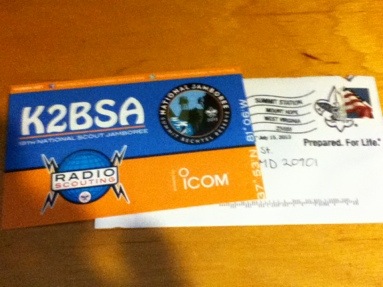
Worked my good friend and professional colleague Nathaniel, W2NAF, who is a radio instructor at the 2013 National Jamboree. Fast QSL with a special postmark. Ham radio continues to be cool.
Ethan Miller, K8GU, is a regular contributor to AmateurRadio.com and writes from Maryland, USA. Contact him at [email protected].
This Spewed Out of the Internet #25
 Here’s another update of
 interesting important stuff spewing forth from the internet.
I put my two presentations from HamCon Colorado out on the web: Practical Amateur Radio Measurements and Mountaintop VHF in the Colorado High Country . Also, check out Kelly N0VD’s blog posting on the event.
Having trouble finding a repeater to use on VHF? Check out my Shack Talk article on HamRadioSchool.com
KB5WIA provides some good tips on EME operating.
Hans PD0AC addresses the question: What’s the Best Chinese Dual-band HT? For best price/performance, he selected Baofeng UV-B5/UV-B6 (and I agree).
The Noise Blankers continue to publish their Ham Hijinks. Remember: Do Not Take These Guys Seriously. Seriously. Do not do this. Seriously.
There’s lots of great ham radio events coming up this summer. This weekend is the CQ Worldwide VHF Contest, the only “true VHF contest” out there since only the 50 MHz and 144 MHz bands are used. Then there’s the Colorado 14er Event, which includes Summits On The Air (SOTA) activations, on August 4th. (Don’t forget to check out the great new Colorado 14er Shirts!) The Colorado QSO Party is another great operating event, on August 31st.
Remember: There is no such thing as ground.
Think about it: an infinitely large electrical node with zero impedance able to sink an infinite current. Not likely.
73, Bob K0NR
Bob Witte, KØNR, is a regular contributor to AmateurRadio.com and writes from Colorado, USA. Contact him at [email protected].
 Ham Radio Deluxe |
 W5SWL Electronics |
 Ham Radio Prep |
 KB3IFH QSL Cards  Hip Ham Shirts  HamRadioAuctions HamRadioAuctions Reliance Antennas Reliance Antennas Enigma Shop Enigma Shop |  morseDX  Ni4L Antennas  R&L Electronics R&L Electronics antennas.us antennas.us QRV QRV |
- Matt W1MST, Managing Editor
