 |
 Welcome Sterling Coffey, NØSSC
 15 July 2013 | by
Sterling Coffey, NØSSC
We’re very lucky here at AmateurRadio.com to count as contributors some of the best ham radio bloggers in the world. With the recent demise of Google Reader, I’ve heard from many subscribers about how valuable they find our daily newsletter. Thank you for your kind words and support — without which this site would not be possible.
It’s with great pleasure that I announce our newest regular contributor, Sterling Coffey, NØSSC. In addition to being a full-time college student at the Missouri University of Science and Technology, Sterling serves as ARRL Youth Editor writing the popular [email protected] column. Sterling will bring his youth-focused enthusiasm for ham radio and fantastic writing style. You’ll enjoy his posts!
If you’re on Twitter, make sure to follow him (@n0ssc). Also, check out his YouTube channel (http://www.youtube.com/user/sterwing) and posts on Reddit (http://www.reddit.com/user/kawfey).
Welcome aboard, Sterling!
Matt Thomas, W1MST, is the managing editor of AmateurRadio.com. Contact him at [email protected].
What’s in a name – radio societies all over the world

Image © Freeworldmaps.net
The IARU HF Championship took place this weekend. This is the contest where every country has national stations which exchange the abbreviation of the radio amateur society. Therefore it was an opportunity to reflect on what the names of the national societies mean. Many of the names in the IARU list portray the heritage of a hundred years. It is not so strange then that this may make some of them hard to understand and even a bit old-fashioned.
Starting with the ARRL – American Radio Relay League or NRRL (Norwegian …) then this is about a network of stations relaying messages in a country with large distances. This is a bit 1920’s to me. Looking at the ARRL web page it looks as if the the ARRL agrees and really would like to modernize the name to the National Association for Amateur Radio. The Portuguese may already have modernized it a bit by the use of network instead of relay: “Rede dos Emissores Portugueses” (Network of Portuguese Transmitters), or perhaps it is just because this is the same word as “relay” in Portuguese?
Most societies have “radio amateur” in the name like the German and the French: Deutscher Amateur Radio Club, Union Francaise des Radioamateurs. My knowledge of Spanish is not so good but this one sounds better to me: Union de Radioaficionados Espanoles as “radioaficionados” gives me the impression of “radio fans”, but perhaps it is just another word for “radio amateurs”?
Just like “radio relay” is a bit old-fashioned, the Swiss also have an old name in Union Schweizerischer Kurzwellen-Amateure. It must have been coined before VHF and UHF as Kurzwelle means Shortwave.
A name which sounds more contemporary despite its age is the Radio Society of Great Britain. Many others have similar names, one example is Amateur Radio Society of India.
The word “club” is used by many and seems to emphasize the hobby aspects, e.g. Radio Club Argentino and Český radioklub (Czech Radio Club).
Contesting is in many ways like a sport, at least in the same sense as chess is called a sport today. Examples that use this word are Chinese Radio Sports Association, Belarussian Federation of Radioamateurs and Radiosportsmen, and Mongolian Radio Sports Federation.
The there’s those who value the experimental aspects, like Vereniging voor Experimenteel Radio Onderzoek in Nederland (Society for Experimental Radio Research), Experimenterende Danske Radioamatører (literary Experimenting Danish Radio Amateurs) and Federacion Mexicana de Radio Experimentadores.
A similar technical emphasis is in the word “transmitter”: Irish Radio Transmitters Society, Foreningen Sveriges Sändareamatörer (literary Society of Swedish Transmitter Amateurs) and Österreichischer Versuchssenderverband (literary Austrian Experimental Transmitter Society).
The protection from the royal family exalts the society, but it is something I could only find in Belgium: Royal Union Royale Belge des Amateurs-Emetteurs / Koninklijke Unie van de Belgische Zendamateurs / Königliche Union der Belgischen Funkamateure.
Finally, these are the most serious and ambitious names I could find: Egyptian Radio Amateurs Society for Development, Syrian Scientific Technical Amateur Radio Society, and above all the Wireless Institute of Australia.
Which words should be used in the name of a radio society today? It’s a balance between reflecting a hundred years of history and communicating with contemporary people.
Personally I don’t like to use the word “amateur”. It comes originally from the same root as “amour” and “amore” and thus means someone who loves and is passionate about something. But today it gives the impression of being unprofessional. A contemporary name should also emphasize the experimental side in my view.
Sverre Holm, LA3ZA, is a regular contributor to AmateurRadio.com and writes from Norway. Contact him at [email protected].
Weekend
We arrived home from Lake George yesterday. I went to go pick up Sandy, our cat, from the place where we took her and Jesse to be boarded while we were away. When Sandy got home, she was as upset as I was. She was looking all over the house for her “big brother”.
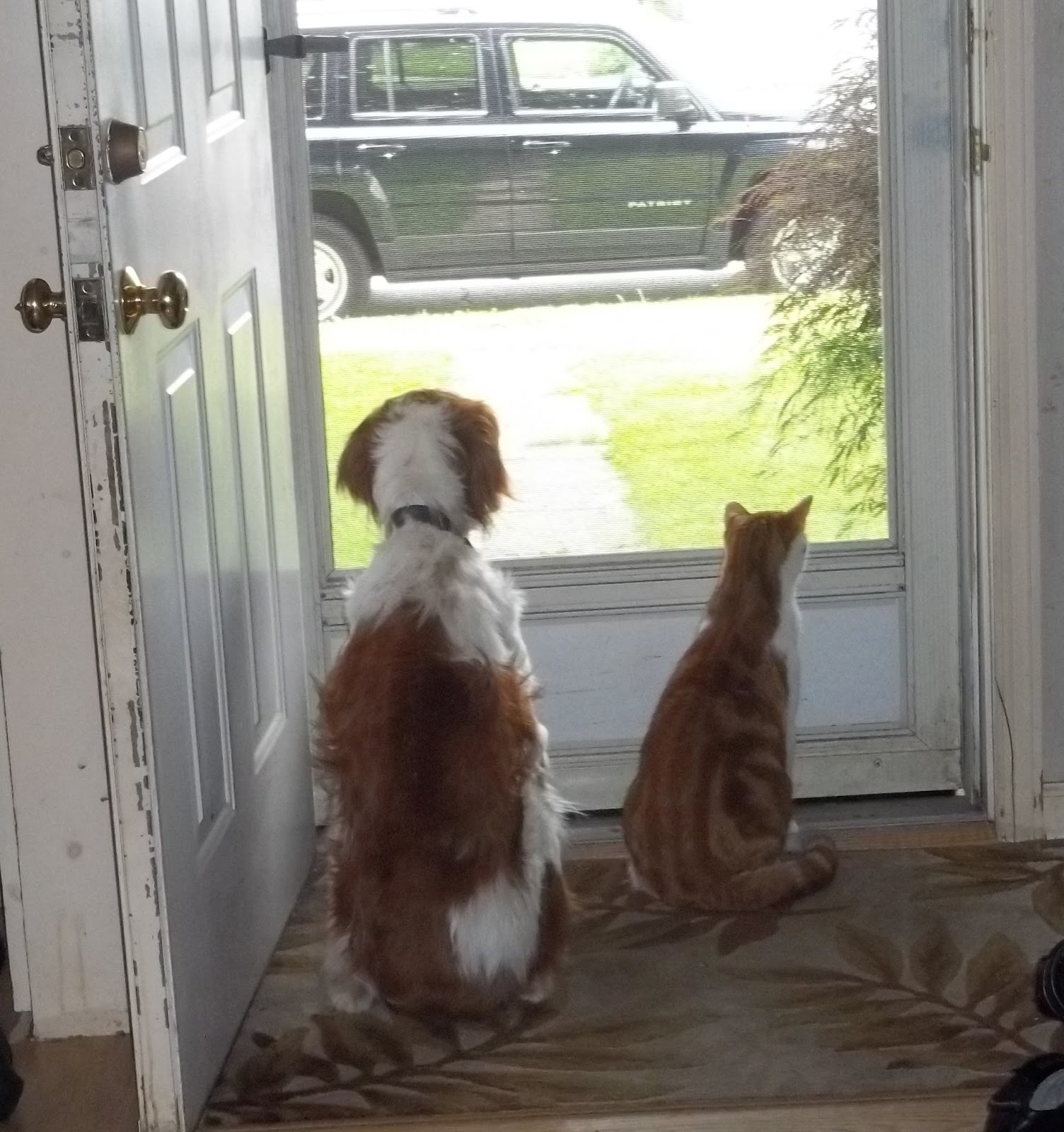
They were real good buddies and it’s quite obvious that I’m not the only one around here who has a bit of a broken heart right now.
The manager of Best Friends came over and explained to me that last Tuesday morning they found Jesse laying on his bed, which wasn’t unusual at all. He was an older dog and was no longer very active. They thought he was asleep and when they tried to wake him, well ……… he didn’t. The manager told me that one of her own dogs did the same thing. He was old and hanging on and hanging on and waited until she and her husband were away to pass. I don’t know if it has any merit or not, but she told me that some dogs do that. It’s like they want to spare their owners the hardship of seeing them pass.
This house is not the same without him, and I am definitely not the same without my pal. The sun just seems to be a little bit dimmer than it used to be. And while I am thinking of Jesse, I’d like to thank all of you who left very kind comments or sent me an e-mail with the same. I appreciate it and thank you so much – you’re all in my prayers.
But life goes on, so even though I really wasn’t in the mood, I decided to go to the Sussex Amateur Radio Club hamfest anyway – to at least take my mind off of Jesse for a while. I got there at 8:30 AM, about a half hour after the doors officially opened. I got there to a double line of cars, backed up, paying admission and waiting to get in. When was the last time you saw THAT at a hamfest that isn’t Dayton or one of the other true “biggies”?
It was sunny and hot and humid! I was sweating just walking around at a leisurely pace. I ran into Don W2JEK who I have worked so many times in various QRP Sprints. I walked up to the table where he was selling stuff and shook his hand and said “Hello”. You could tell he was taken aback for half a split second until he noticed my call sign on my cap. We talked for a bit and then I continued to meander around.
I noticed a lot of QRP stuff on the tables. There were at least two HW-8s and one HW-7 that I saw. There were at least two of the Chinese/TenTec HB-1As and there were several MFJ QRP rigs for sale. I will take it as a good sign for QRP, that when I made my last pass of the tables, all the QRP equipment seemed to have been sold and in the hands of eager, new users.
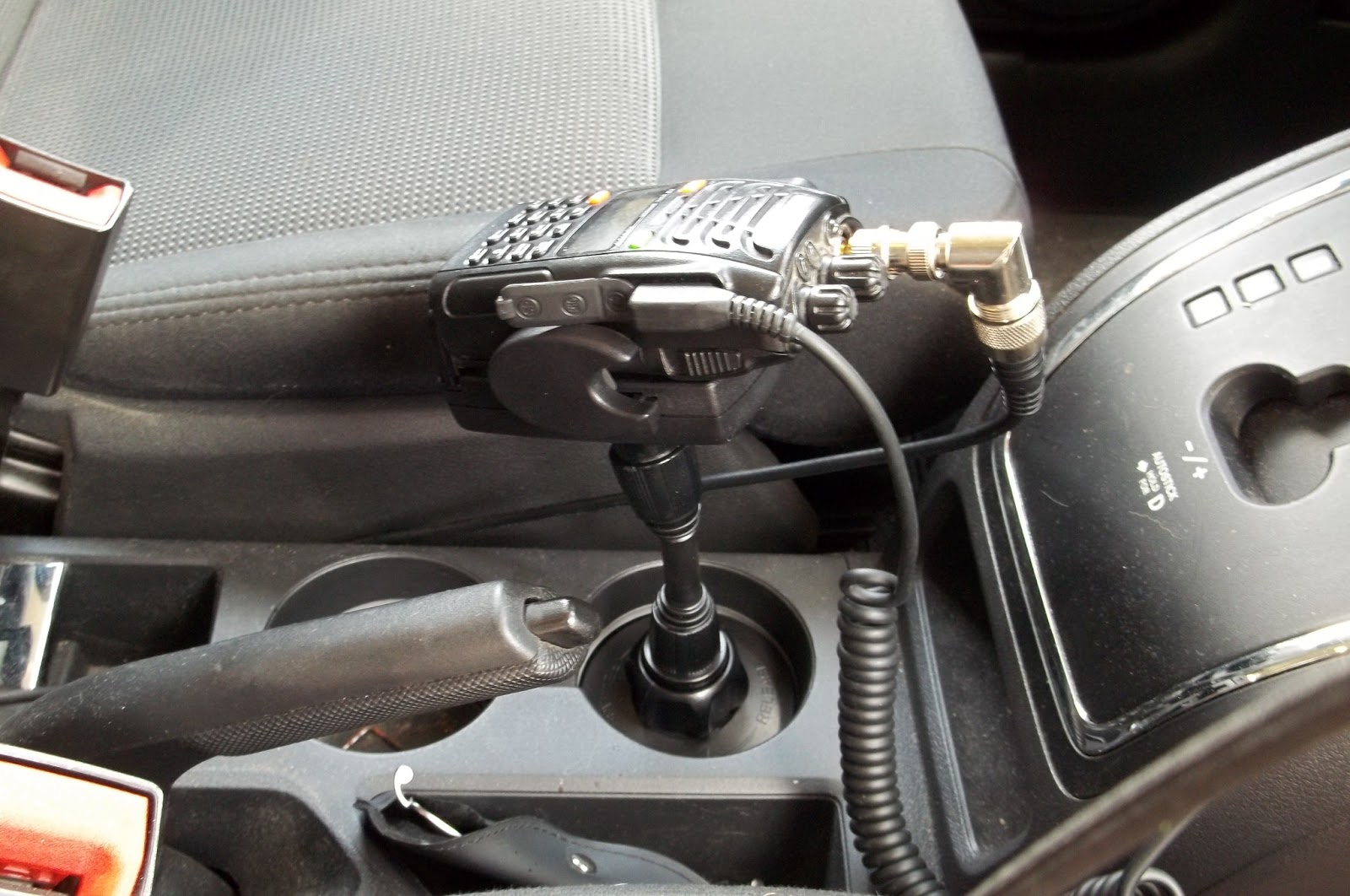
There was lots of other interesting stuff, too, including this:
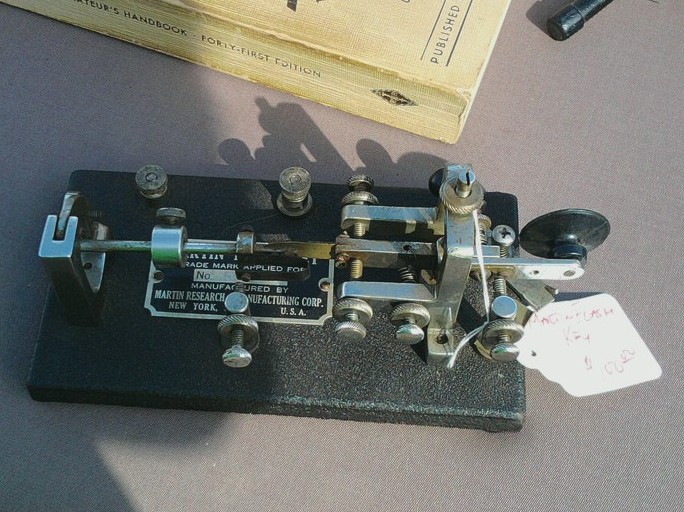
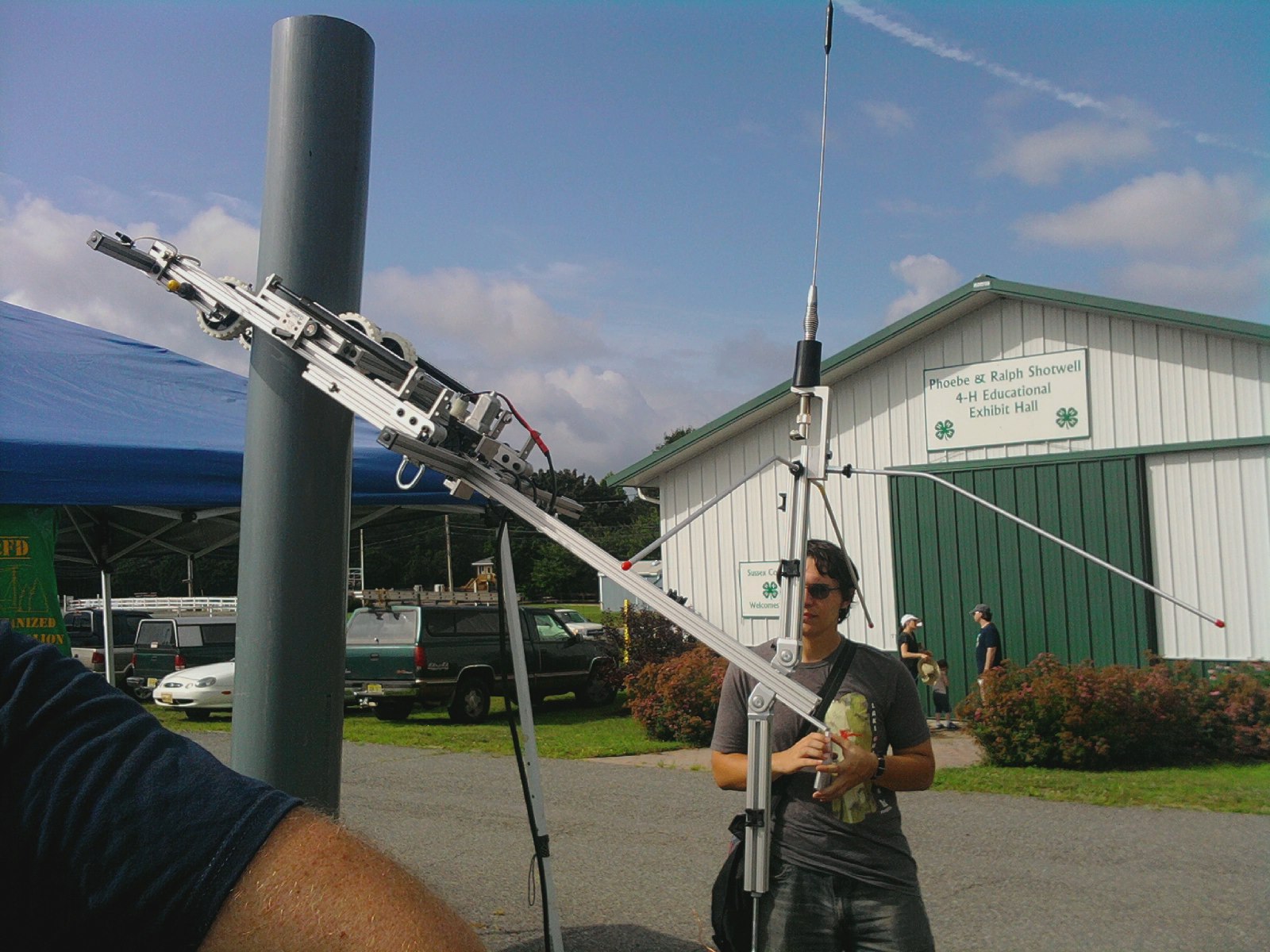
Larry Makoski, W2LJ, is a regular contributor to AmateurRadio.com and writes from New Jersey, USA. Contact him at [email protected].
DX #88 HH5/KC0W
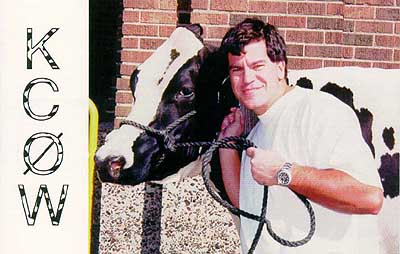
It took me several times to find the correct “split” but I was able to work another new DX country this evening. I put HH5/KC0W in the log book operating from the island of Haiti in the Caribbean.
This station marks my 88th DX entity.
I’ve made very little entries on the blog in the last few weeks. My back continues to improve and I find myself spending as much time outside as possible. Lot’s of other stuff happening too, so the entries may be a little sparse in the near future. It feels really good to move around again. It seems I’ve dodged the bullet once more concerning surgery.
John Smithson, Jr., N8ZYA, is a regular contributor to AmateurRadio.com and writes from West Virginia, USA. Contact him at [email protected].
AmateurLogic.TV 56: Field Day at Johnson Space Center

AmateurLogic.TV Episode 56 is now available for download.
George visits the NASA Johnson Space Center Amateur Radio Club and Clear Lake Texas ARC for field day. Tommy drops by the JARC. Peter searches for comets. And Tommy shows us how to set up a DVAP for D-Star.
Viewer mail, comments, a little comedy, and a special show announcement.
1:02:44 Out of this world adventure.
View in web browser: YouTube
Editors Note: There is a typo on the title of the Johnson Space Center segment. George was talking with John. John does not own a space center.
George Thomas, W5JDX, is co-host of AmateurLogic.TV, an original amateur radio video program hosted by George Thomas (W5JDX), Tommy Martin (N5ZNO), Peter Berrett (VK3PB), and Emile Diodene (KE5QKR). Contact him at [email protected].
IARU contest in the books
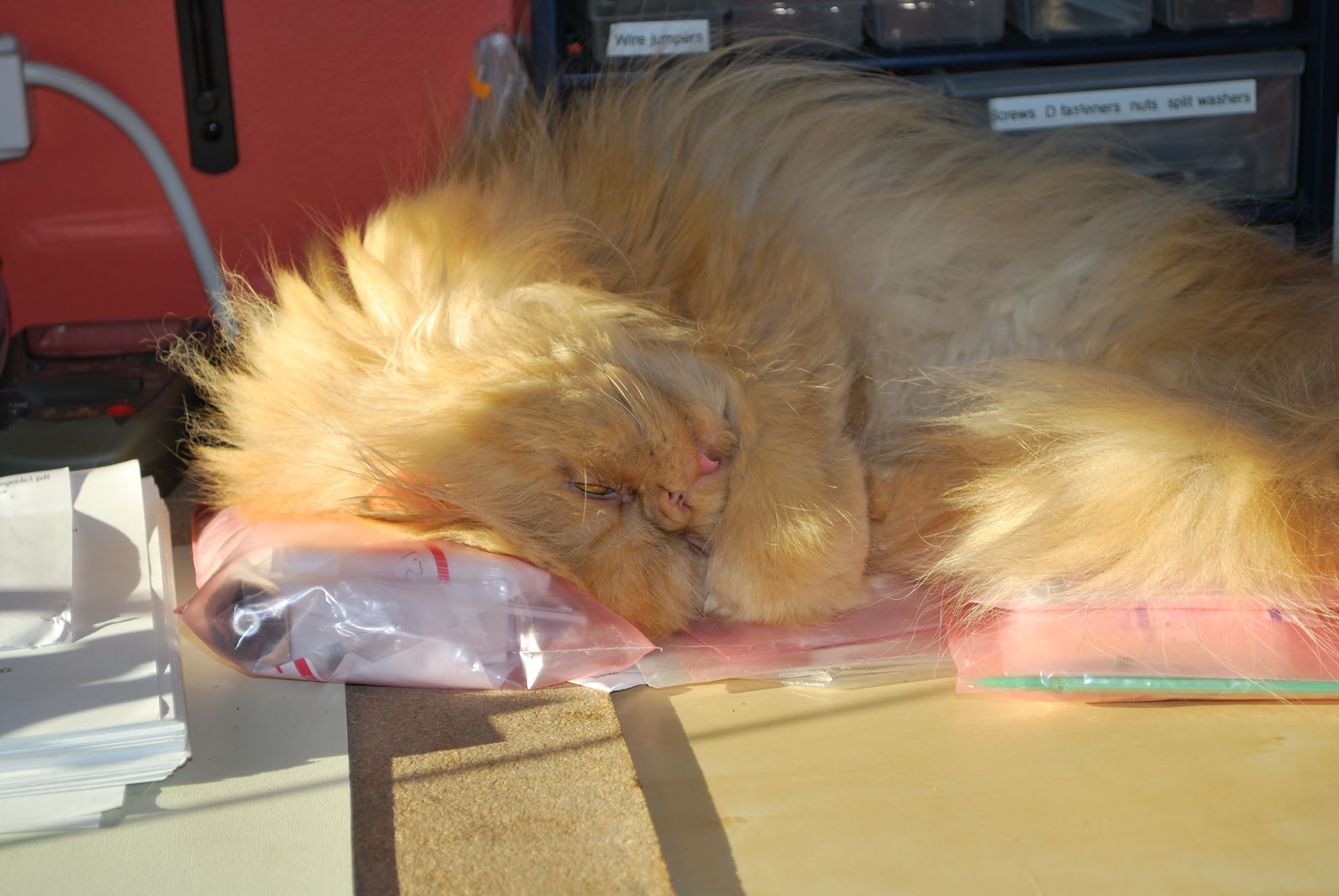 |
| I told Oliver (A.K.A RF) sleep is for after the contest |
I found the bands during Saturday morning and afternoon were really only open to the U.S. There was very occasional openings on 10m and 15m. It seemed 20m was the way to go and I found myself just checking 10 and 15m now and then . I did have what I considered a DX contact during the afternoon which was Mexico! Pretty sad for that being my early afternoon DX!!
The solar conditions were not to bad considering how the last few weeks had gone for solar flares and high K index's. As the afternoon wore on 20m started to have opening to Europe and South America. But again with only 5 watts it was a challenge. As the evening rolled around 40m was busy with lots of action. Europe was booming in but for some reason I have always had it tough on 40m. I am not sure why but the U.S has never been a problem but getting over the pond has been frustrating. Having said that I did make it into Germany, England, France and Italy. I was very surprised but did have to make many repeats and I got the feeling I was just making it over there.
My score is as follows.
144 contacts
23 HQ stations
21 ITU's
Overall I had a blast and again am looking forward to it again next year.
Mike Weir, VE9KK, is a regular contributor to AmateurRadio.com and writes from New Brunswick, Canada. Contact him at [email protected].
Receiving SO-50 satellite signals on the UV-5R and NA771 antenna
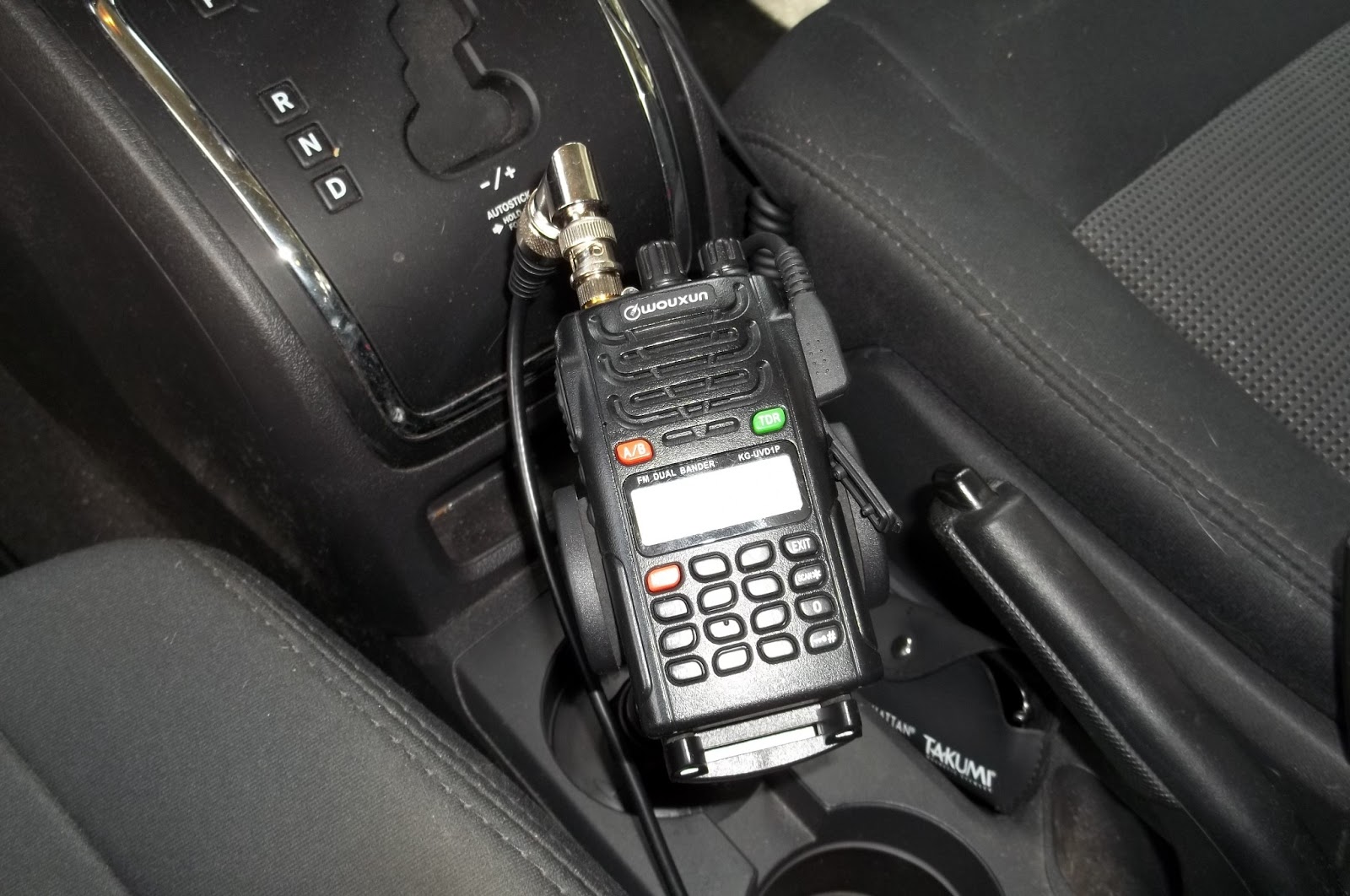
During the week, I noticed that there were some good, overhead SO-50 passes in the evenings. The weather has been so good we have often been out in the garden later on. It’s been very simple, therefore to take the UV-5R and the NA771 antenna out into the garden and have a listen for the SO-50 satellite as it passes over.
Results have been good, with a number of stations received, including ES6DO, DG0BBE, DL9ZAD (who almost heard me!) and OM0AD. I am sure it will be possible to make a QSO when the conditions are right.
The FT817 and Elk gives much better results, but of course, the advantage of the UV-5R/NA-771 combo is that it is available very quickly and does not require any setting up!
Tim Kirby, G4VXE, is a regular contributor to AmateurRadio.com and writes from Oxfordshire, England. Contact him at [email protected].
 Ham Radio Deluxe |
 W5SWL Electronics |
 Ham Radio Prep |
 KB3IFH QSL Cards  Hip Ham Shirts  HamRadioAuctions HamRadioAuctions Reliance Antennas Reliance Antennas Enigma Shop Enigma Shop |  morseDX  Ni4L Antennas  R&L Electronics R&L Electronics antennas.us antennas.us QRV QRV |
- Matt W1MST, Managing Editor
