 |
 Minor Missive
 23 July 2013 | by
 I do love my radio. I really enjoy getting on air and always like the qso’s I have, even the rubber stamp ones. But recently, I’ve started to think about other aspects. The cost of equipment is one such thing (I’ve blithered on about that before) and the other is that in general you don’t see a very diverse age group in the hobby. There are you people who get into it through a number of different means and I’m fairly sure many drop the mic / key / keyboard. I suspect that getting on air is a costly business and that the pub may be a more alluring draw. A large portion of the people I have met or are involved with Ham Radio are ‘of a certain age’ ; i.e not in the 16-24 year old bracket. A bracket that I left behind nearly 20 years ago.
So I thought I’d write to the RSGB to see what their thoughts were and they decided to publish my letter. I didn’t offer any solutions but merely an opportunity to open the debate. I think its safe to say that the door has been shut now. The response to the letter was fairly swift and I read it is ‘We’re doing alright’. I remain unconvinced. I am very disappointed that they seem reluctant to grasp the nettle.
I’m a clanky by trade and the IMechE (along with just about every other professional body no doubt) make it part of your chartership that you must spend time mentoring the next generation. I spent 2 years teaching to 6th form students and thoroughly enjoyed it. Other ways include being on the young members board, who were represented at a national level. I firmly believe that the next generation is the key to this hobby and engaging them will bring us strength, diversity, enthusiasm and energy. I don’t know how much it costs to sponsor a trophy but I’ll be looking into it as a way reward the next generation. If there are any ideas I’d love to hear about them.
Alex Hill, G7KSE, is a regular contributor to AmateurRadio.com and writes from Cumbria, UK. Contact him at [email protected].
New APRS IGate for Aberdeen
Kit Hall GM4EMX has sent details about a new unattended APRS iGate that will be located at his QTH in Aberdeen. The callsign will be MB7UAB.
Kit told me something I didn’t know about the allocation of callsigns for APRS stations in the UK.
- All APRS station callsigns start with MB7U (for Unconnected, I would guess.)
- A single letter following the U denotes a digipeater (e.g. our local digi MB7UQ)
- Two letters following the U denote an iGate.
I hope Kit’s new iGate will soon spark some activity in the Aberdeen area which up until now has been pretty much an APRS desert.
Julian Moss, G4ILO, is a regular contributor to AmateurRadio.com and writes from Cumbria, England. Contact him at [email protected].
Chromium plated

I never did find out what was causing Google Chrome to crash so much on my computer. However, after several months of using Chrome I found Firefox rather slow and clunky. So I had a look round to see if there were any other browsers. It turned out that there were more alternatives than I ever imagined.
The first alternative browser I found was one called Avant. This is a powerful browser with a lot of configurability, developed by a Chinese programmer. It boasts the ability to render web pages using your choice of the Internet Explorer, Firefox or Chrome rendering engines, which is probably handy if you’re a website developer. I set it to use Chrome and it displayed the pages that had give me trouble with nary a murmur. But I found the user interface rather heavy after the minimalist approach of Google Chrome. So I kept it on my hard drive but carried on looking.
The next candidate I stumbled across was SRWare Iron. It almost counts as two browsers in one, as it installed two shortcuts on my desktop, one named SRWare Iron and one named Chromium, both pointing to the same executable. This turns out to be a browser built from the same open source code as Google’s Chrome by a German company. Germans seem to be a bit sensitive about privacy, so the main difference with this SRWare browser is that it does not send information about your browsing habits back to Google. What, you didn’t know Google Chrome did that? Neither did I until I discovered this program, though I thought I opted out of this during Chrome’s installation.
Apparently you can opt out of all the Google tracking if you choose the appropriate settings in Chrome, but most users won’t do this. So Iron / Chromium could be said to be a better version of Chrome than Google’s, certainly from the privacy point of view. Chrome extensions like AdBlock Plus work as with the real thing. Chromium even supports the ability to log in to your Google account to save and restore your bookmarks and other settings, which was very handy. Try it, you’ll never notice the difference.
I’m happy with Chromium / Iron as my default web browser now. So far, it hasn’t crashed on me. But I also discovered another Chrome clone. It’s called Comodo Dragon and it’s made by the Comodo security company. Dragon is also built from the Chrome open source code and omits the Google tracking code, but it has some extra security features added by Comodo. So it looks like an even better option if you are really privacy-conscious.
Julian Moss, G4ILO, is a regular contributor to AmateurRadio.com and writes from Cumbria, England. Contact him at [email protected].
Neat!
A top o’ the callsign cap to Wey Walker K8EAB from the NoGa QRP group for pointing me towards this video by K7AGE:
Even if you don’t care for the subject matter, the music’s pretty catchy!
72 de Larry W2LJ
QRP – When you care to send the very least!
Larry Makoski, W2LJ, is a regular contributor to AmateurRadio.com and writes from New Jersey, USA. Contact him at [email protected].
Review: Arduino Workshop by John Boxall
The folks at No Starch Press kindly sent me a copy of John Boxall’s Arduino Workshop. I opened the box with a little reluctance as it was roughly the fifth book on Arduino I’d read and none of them were very useful. I’m not an electrical engineer or computer programmer by trade (and I’m often jealous of the many hams who are who can throw together amazing things off the top of their head).
I’m happy to report that Arduino Workshop was the first book I’ve read that helped me really make sense of the practical applications the Arduino is capable of. I spent last night really thinking about what the difference is between those books, and this one. I came up with the answer. This book is the first one which provides real-life projects that seem to make sense in a broader context. Specifically, using the Arduino to solve a real problem or add depth to more mundane projects.
OK, it’s not the first book I’ve read on the Arduino that uses project examples. The difference is, this is the first book where the examples are something more intriguing than 1) build a LED that blinks, 2) watch it blink a lot, #) Yay, you’re done! If I can’t see applicability, my mind tunes out quickly. It’s OK to build a simple flashing LED as you’re beginning to learn, but it’s certainly not the nadir of all projects.
OK, take a look at the projects in this book. They’re just fun sounding!
- Creating a Blinking LED Wave
- Controlling Traffic (building a working traffic signal — one of my favorite projects!)
- Creating a Single-Cell Battery Tester
- Creating a Quick-Read Thermometer That Blinks the Temperature
- Creating a Temperature History Monitor
- Creating a Temperature Logging Device
- Creating a Keypad-Controlled Lock
- Building and Controlling a Tank Robot
- Creating an Accurate GPS-based Clock
- Building a Remote Control Thermometer
- Creating an Arduino Tweeter
- Building an Arduino Texter
These are only just a few of the projects. The cool part is it really gives you a foundation to build, say, an Arduino project that Tweets the temperature from a remote sensor. You can see how the jump to Amateur Radio-related applications is not far at all.
Anyway, check out the book if you — like me — have been wanting to explore the Arduino but didn’t know where to start. This book gives you everything you need to go from zero to some pretty amazing projects!
If you’re looking to get started without buying the book, the author has a nice Arduino tutorial section on his website. Also, the publisher provides a sample chapter to see if the book might be for you. The book is available in both a print edition ($29.95) and ebook ($23.95). If you purchase the print edition on their website, you also get the ebook edition at no extra charge. If you haven’t had a chance, check out the official Arduino website. Another good resource is a Yahoo! group called HEAP (Hams Exploring Arduino Programming).
(Editor’s Note: Just got an e-mail from the No Starch Press. They created a coupon code for 30% off the print or ebook edition of Arduino Workshop. Enter ‘RADIO‘ in the coupon box at check-out on their website. Please note that other than receiving the book itself to review, we don’t receive a commission or other compensation.)
So, what are the coolest Amateur Radio-related projects you’ve built with Arduino? Post in the comments below!
Matt Thomas, W1MST, is the managing editor of AmateurRadio.com. Contact him at [email protected].
The blog post 7 months late…
Or better late than never. Yes, Jerry KD0BIK is still alive. You might remember I was shooting to complete at least one QSO per day in 2012. I’m very pleased to report that I accomplished my goal. However, I regret I am just now blogging about it.
Those who followed my blogs and podcast may have thought I was abducted by aliens. I suppose if I could refer to a few work projects as alien, then that would probably fit. Long story short, I was assigned a fairly large project at work which required some traveling and many long hours. I pretty much put my blogging and podcasting efforts on hold and tried just to keep everything else pointing in the right direction.
Also, I hadn’t been feeling well in late 2012 early 2013. Much of what I was feeling was being caused by seven years on statin drugs to lower cholesterol. This stuff is pure evil in a pill. However, without taking the pills I would have to deal with the high cholesterol levels through diet and exercise. Again to try to shorten this story and not get too far off in the weeds….I’m feeling great and I’m losing weight through diet and exercise. Since April, I’ve lost over 25 pounds and on target to accomplish my first goal of less than 200 lbs by mid August. Just a few more pounds to go.
I provided a little more detail in PARP episode 61 (released just today) if you are interested. By the way, I’m planning to revive PARP on a limited release plan of one episode each month. Of course, I’m also hoping to get back into writing the occasional blog post. I certainly appreciate all the emails and messages regarding my long hiatus.
OK…so back on track. Again, yes…I started 2012 with a QSO on 1 January and 366 days later, completed the goal with a final QSO on 31 December. It was a fun goal, fun project and through it all I managed to work many new DX entities and certainly got on the air each day. Unfortunately, I can’t say the same thing happened in 2013.
Would I tackle this again? I think I may try again in 2014. I didn’t attempt it again in 2013 because I knew I would be traveling and it would be difficult. But perhaps 2014 I’ll try again. Do I recommend others try it? You bet! As I’ve stated before, setting this goal of getting on the air each and every day helped earn many new DX entities and just kept me focused on the hobby.

The QSO breakdown for December is as follows:
Mode
Number QSO’s
JT65
36
SSB
0
PSK31
0
2m FM
0
Additional notes of interest:
DX Stations Worked in November – 2
New DX Entities in November – 0
Total QSO’s for 2012 – 1428
Total consecutive QSO days – 366
Days left in 2012 – 0
Until next time…
73 de KD0BIK
Jerry Taylor, KD0BIK, is a regular contributor to AmateurRadio.com and writes from Colorado, USA. He is the host of the Practical Amateur Radio Podcast. Contact him at [email protected].
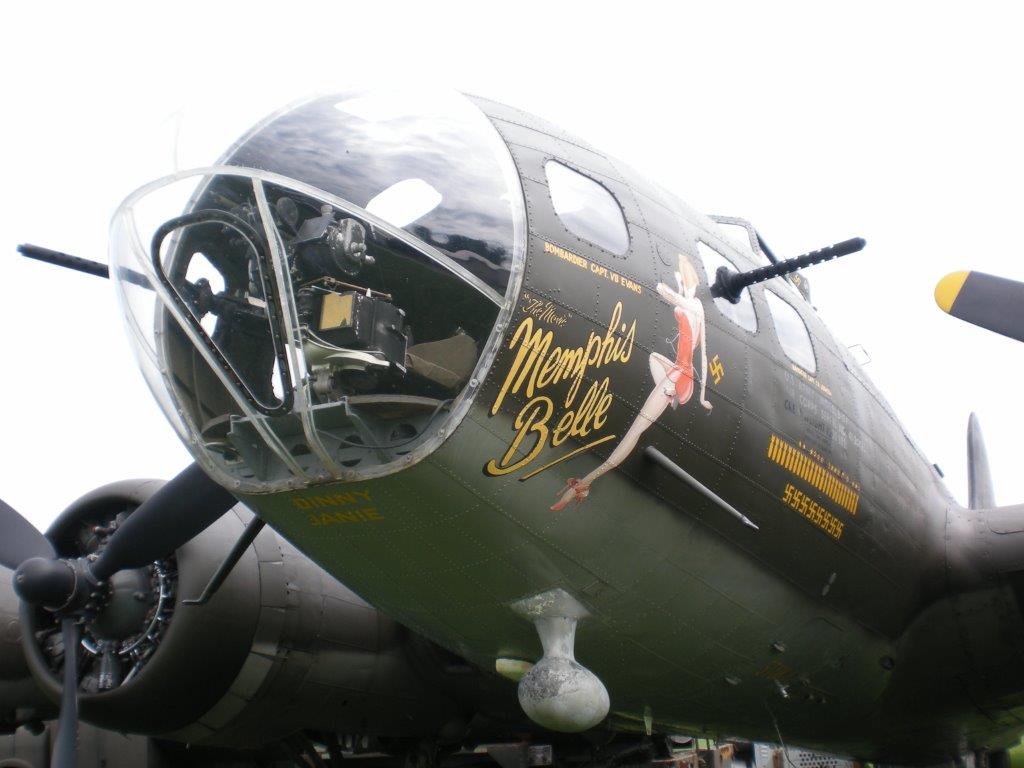
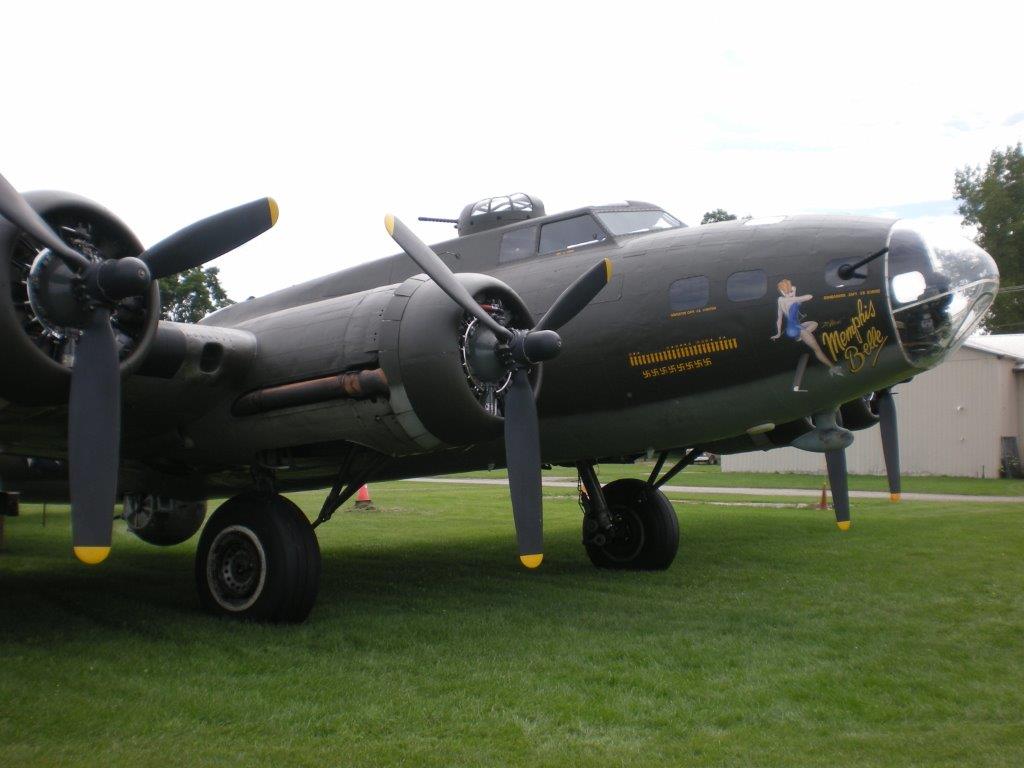
Memphis Belle
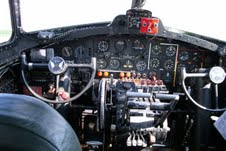
I had mentioned that I was going to be offering the “QRP – Do More With Less” blog up to guest bloggers. Here’s the first! This post is in response to an e-mail that I received from Steve K8SAR. He had sent me an e-mail about his visit to the Memphis Belle.
I thought this was too cool to keep to myself, so I asked Steve to write something up. Here’s the story of his adventure in his own words:
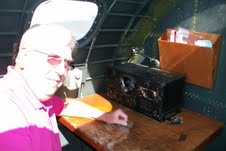
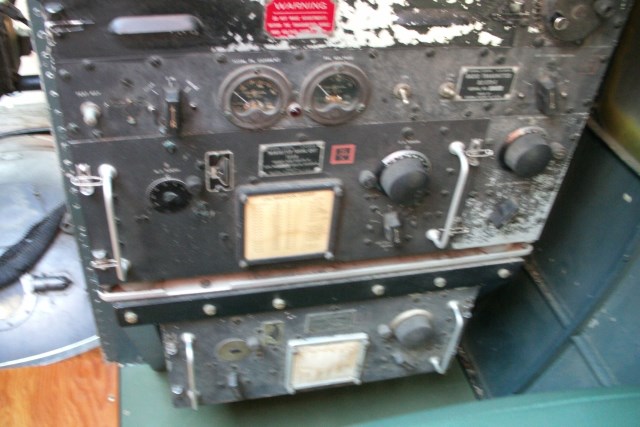
Larry, I thought you’d be interested. The Memphis Bell was in our town over the weekend with a friend who was one of their volunteer pilots. I had the chance to get a tour of the fighting lady including the radio station on board. I doubt they’re functional but they are indeed very interesting!

Larry Makoski, W2LJ, is a regular contributor to AmateurRadio.com and writes from New Jersey, USA. Contact him at [email protected].
 Ham Radio Deluxe |
 W5SWL Electronics |
 Ham Radio Prep |
 KB3IFH QSL Cards  Hip Ham Shirts  HamRadioAuctions HamRadioAuctions Reliance Antennas Reliance Antennas Enigma Shop Enigma Shop |  morseDX  Ni4L Antennas  R&L Electronics R&L Electronics antennas.us antennas.us QRV QRV |
- Matt W1MST, Managing Editor
