 |
 Series Six Episode Seventeen – QSLing
 25 August 2013 | by
 Series
Six Episode Seventeen of the ICQ Amateur / Ham Radio Podcast has been
released. The latest news, Listener Mailbag, Ed Durrant (VK2JI)
discusses Full Wave horizontal Loop Antenna, Frank Howell (K4FMH)
reports from North America and Chris Howard (2E0CTH) discusses QSLing.
- Ham Radio software is made Open Source
- MacLoggerDX Version 5.48 released
- Amateur Data Interchange Format (ADIF) Standard 3.0.4 released
- MultiScan 3B SSTV made for Mac
- Thailand’s first ham radio satellite
- Youngsters try ham radio
- Teacher helps students earn amateur radio licenses
- 80m ham radio band used for wideband video/data
Ed Durrant (VK2JI) The Full Wave horizontal Loop antenna (pdf)

Colin Butler, M6BOY, is the host of the ICQ Podcast, a weekly radio show about Amateur Radio. Contact him at [email protected].
Profiles in QRP – Volume 2 – Todd Fonstad N9NE
One of the nicest things about participating in the QRP Fox Hunts, is the people that you get to meet, get to know, and get to become friendly with. Some of the nicest folks on this blue marble that we call the Earth, participate in those Hunts.
Early on, I noticed there was always one station in particular that would ALWAYS blow my ears out – whether I was serving as Fox, or even when I was hearing him in the pack as a fellow Hound. I would think to myself, “Just who is this N9NE guy? Where the heck is he and what’s with that killer signal?!?” I also thought that Todd’s signal was the loudest QRP signal I had ever heard!. Whenever Todd came on the air, I always felt like the guy in the radio control room from that episode of the Little Rascals – “The International Silver String Submarine Band”.
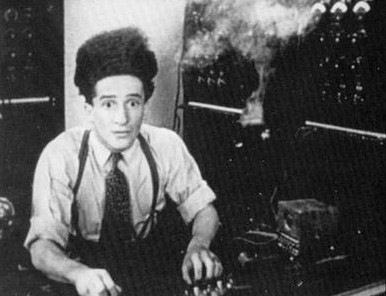
If I didn’t get the cans off my ears, I was certain to have a temporary hearing loss for at least a couple hours! I got to know Todd over the years from the Hunts, from e-mails and one-on-one QSOs on the air. Todd is one of the good people and one of the best QRPers that I know. So without further ado:
1) How did you first become interested in Amateur Radio?
My father bought me a Knight Kit ‘Ocean Hopper’ regenerative receiver for Christmas in 1957. I had to assemble it. Little did he ever imagine what a gift that would turn out to be! I had a neighbor, W9DPN, who was a ham, and he helped me along and let me listen to his conversations.There was a W0 station who used to send MCW practice on 40M, and I used to copy him, along with W1AW. The code came naturally to me. Our little city of 3500 had an active ham radio club of almost 40 members, and in 1958, there were a number of us middle and high-schoolers who got our novice and conditional licenses. No internet then! My grandfather gave me his 1928 vibroplex ‘bug’ (he had been a telegrapher on the ‘Soo Line RR’, and I started using it immediately.) I never had a hand key until years later.
2) How long have you been licensed?
March, 1958 as KN9LWV (55 years).
3) What drew you to QRP?
A friend lent me one of the first Ten-Tec QRP rigs back around 1972 or so, and I took it to the lake cottage. I was amazed at the stations I could contact. BTW, when I first got my conditional in 1959, I contacted Houston, TX with my Heathkit VF-1 VFO! I imagine there were some harmonics involved. When Heathkit came out with its HW-8, I bought and assembled it and used it portable from a number of locations as well as on some Field Days back in the 1970s. This was before there was a QRP division in contests. For me, the challenge of QRP keeps me interested: QRO (except for DX on 160M) is just too easy!
4) Who has been your biggest QRP influence?
(Hard to answer. I’m going to hve to leave a lot of deserving folks out of this 😉 Local friends (some SK now) and folks I’ve run QRP FD with in ‘exotic’ locations: K7RE in 2001 or so in a National Forest campground in NE WY (we took first place), and N0UR on his MN farm 2009 (class 2B2B which we also won). But I’d have to say Doc, K0EVZ who was my first motel-to-fixed station QSO (he was in ND, and I was vacationing in south TX). He was probably the one who interested me initially in the Fox Hunts and has been an online friend and advocate for the hunts for years. Current influences come mainly from my fellow online Fox Hunters with whom I keep in touch via e-mail and Facebook. That is real camaraderie!
5) What is your favorite QRP activity?
No problem with this one: the Fox Hunts! But I also am quite competitive in other QRP contests: 160M, ARRL SS CW and Phone, QRP-ARCI, FYBO, state QSO parties.
6) What’s your favorite piece of QRP gear (past or present)?
My QRP K2 which I built in 2000. This said, I use my K3 now in the main unless I am portable when I use my K2.
7) Describe your current QRP station.
K3 dialed down to 5W or less. I often put the Elecraft Step Attenuator inline to drop my output into the low milliwatt range if signals are strong. There’s that challenge again! I still use the K2 in the field, and have the HW-8 at the ready. Good antennas are the key to doing well with QRP: all of mine are home-brewed or modified except for my Force 12 C-4SXL 40-10M beam up 70′. (four years ago, I dug the five foot hole by hand and concreted the first 20 feet of Rohn 25 tower, also by hand … then had back surgery a year later, LOL!) I also have a 176′ doublet hanging from below the beam that really does wonders on 80M, and a 52′ high ‘vertical tee’ with 80 ground radials for 160M. It helps to have 2 acres out in the country where I have room and little noise.
8) What is your fondest QRP memory.
Three stand out:I was leading a field trip of college students to the Gulf, and we were camped on Galveston Island, TX. I had arranged a sked on 15M with my daughter (N9IJY) who was in middle school at the time. She had the use of my home station in WI, while I had a 15M dipole up 10 feet, and my HW-8 powered by a motorcycle battery. We had a near-perfect CW contact for about 20 minutes! Second, K4BAI was a fox in last summer’s 20M hunt, and the conditions were superlative. Using the Elecraft Step-attenuator, he and I hooked up with 500 microwatts of output! (the beam came in handy to say the least!). And third, I was able to complete a quick contact with Namibia (V5/DL3XX) this past winter with 5W on 160M CW just as the sun was rising on him.
9) What other hobbies/interests do you enjoy when you’re not on the radio?
Genealogy (I scan family photographs and documents), cycling, swimming, running-jogging-walking (I ‘usta’ run marathons and ultra-marathons which my disintegrating body make it impossible to do anymore!), canoeing, camping, computer use, word games, being with my son and daughter and grand kids! Am active in a small church which is my family out here in the sticks of central WI. Enjoy traveling (son lives in OR, and my late wife’s sisters and families live in OK, so I drive the 1,000 miles there quite often). I still attempt to keep up with my professional interests (I taught geography and earth sciences at a regional university) but am falling behind with all the new technology out there!.
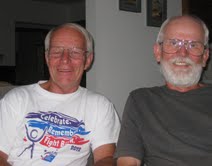
Here’s a photo of two superlative QRPers – That’s Todd N9NE on the left and Dave AB9CA on the right. Both are EXCELLENT Fox Hunters!
Todd was also kind enough to send along a post he has sent to the QRP-L e-mail reflector from back in 2005. The thread (and I remember it well!) was about “Memories of Morse Code Examinations”.
“These stories are great!
I grew up in a small community in central Wisconsin. My father (SK) bought me a Knight Ocean Hopper regenerative receiver kit for Christmas, 1957 when I was 13. I had it together in a few days and was soon getting those beautiful QSL cards from Radio Moscow and Radio Habana Cuba. There was a little ‘door’ in the top of the receiver where one would change band coils. The valves were from England. I can still remember the smell of those hot little tubes. My across-the-street neighbor was a dentist, W9DPN. I had learned the code by rote in Boy Scouts, but Doc showed me his station and how he actually communicated on CW with his Viking Ranger, HQ-129X, and a trap vertical. Within a few weeks, I passed the novice exam and had to wait about 8 weeks (forever) to get my ticket, KN9LWV, on March 19, 1958.
I then had to wait another two months before I could get the money together to buy a used Heath DX-20, sans meter! I recall stringing an 80 meter dipole and a 40 meter folded dipole above our small yard, between neighbors’ trees. My ‘TR switch’ was a DPDT ceramic hand switch, and I ‘tuned’ the transmitter by placing a light bulb between the two center contacts of the switch while holding the key down, and dipping and loading for maximum brilliance. I was probably running QRP into the antennas for the remainder of 12 months then given to Novices.
Using that Knight regenerative was a real education! Every time I would key the rig, the receiver would blank out and, of course, there was no side tone. I lost many contacts either by touching the front panel or by getting my hand too close to it, thereby changing the frequency. Later, my dad found out that a WWII veteran in town had a Hammarlund BC-779A ‘Super Pro’ receiver in his warehouse, and I was given it on permanent loan. Despite its musty smell, it served me well for several years before it died.
1958 was right at or after the greatest peak among modern solar cycles if I recall correctly. I would run home from high school, get on 15 meters (yes … the Super Pro only went up to 20 Megacycles, but I was able to ‘pull’ it up to get above 21 MCS), work several Europeans, eat, and run back to school, all in one hour. What excitement! BTW, my first DX QSL card was from G3BRA. As a 14-year old, I was so embarrassed
By the time I had finished my Novice stint, I had earned the ARRL CW Proficiency Receiving award at 20 wpm. I never had a hand key. My grandfather had been a telegrapher on the “Soo Line’ RR, and I inherited his 1928 Vibroplex bug.
Within that year, I passed my conditional exam, and some years later (in the late 1960s), I took the Chicago and Northwestern passenger train (SK!) from downtown Oshkosh to within a few blocks of the Federal Building in downtown Chicago.The train was scheduled to get there by about noon, but due to some sort of problem, it arrived at 2 pm. I had studied for the Extra, and now had less than 3 hours to pass the CW and technical exams for the General, Advanced, and Extra. I got to the Extra with 20 minutes to spare … passed the code, but had to rush the exam such that when ‘The Man’ corrected it, he stated in a loud voice “You fail!”.
I finally passed the Extra in Dallas in the early 1970s while a graduate student at the University of Oklahoma. My wife and I drove from Norman to the Federal Building there, and I took the code test in a small room. Receiving was no problem, but I hadn’t touched a hand key much, and sending at 20 wpm was a real trial. The written exam was taken in a large room, filled with thirty or forty persons. The answers were coded onto an answer sheet (no written answers or schematics by then!), and I took it to the glass-enclosed office where a young lady corrected it by hand. I was confident I had passed and was astounded to see her check one answer after another as incorrect with her red pencil! She looked at me and said “I’m sorry, but you failed.” I was so upset and said ‘what?’ so loud that most of the heads in the examining room raised to see what the ruckus was! I told her that it was possible that I had failed, but not by that many questions. She re-examined my answer sheet, then sheepishly told me that she had just used the wrong exam master! The correct one exonerated me, and rest is history.
I changed K9LWV to N9NE soon after that because it sounded nice on CW. If you ‘Google’ N9NE, you will find some real surprises!”
Thanks, Todd for taking the time to answer my questions and for providing the extra history. This is the part of Ham Radio that I love the best – the personal histories and the stories – everyone has them!
72 de Larry W2LJ
QRP – When you care to send the very least!
Larry Makoski, W2LJ, is a regular contributor to AmateurRadio.com and writes from New Jersey, USA. Contact him at [email protected].
SOTA Activity Weekend, September 7th and 8th
Participants are invited to collect points toward certificates and trophies offered by the eleven-year-old international SOTA group (SOTA.org.UK). As we learned in past years, this is a barrel of fun for both hill climbers and home operators. See you then.
The folks at NA-SOTA.org
Mike Crownover, AD5A, is a regular contributor to AmateurRadio.com and writes from Texas, USA. Contact him at [email protected].
What’s been going on around here for the past 2 weeks!!
 |
| Interference caused my AOC monitor |
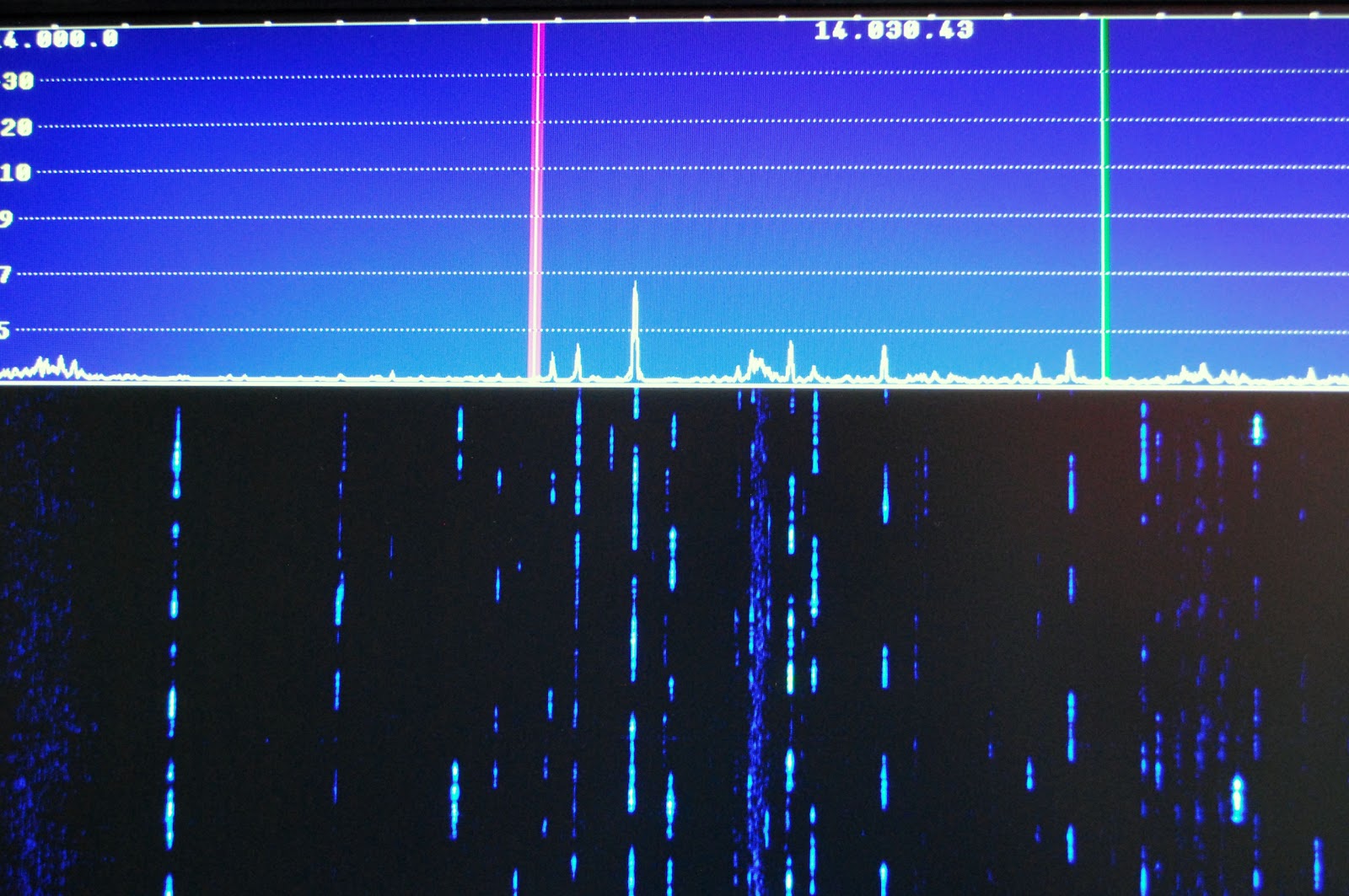 |
| Nothing from the LG monitor. |
At one time but sold the LP Pan and the Creative Labs E MU 0202 USB external sound card. This combo worked great and gave me a super pan-adapter. I was able to with the click of a mouse (using PowerSDR software) control my K3 and also click on signals on the bands scope and the rig would go there. Well I
purchased a used LP Pan and E MU 0202 device. I have not as of yet hooked it up I have gotten as far as
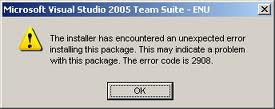
to download the software I am going to use with it which is NaP3 software. At this point when I tried to install the software (or any other SDR software) I get an error message entitled 2908. This error message and what I have tried to cure it is a whole blog post on it's own. This is still a work in progress and I hope I don't have to resort to reformatting my hard drive!
 The final happenings here have been....working on my Elecraft K2 kit and the accompanying blog where the progress is being shown.
 Mike Weir, VE9KK, is a regular contributor to AmateurRadio.com and writes from New Brunswick, Canada. Contact him at [email protected].
Thoughts on QRP
I recently read an excellent post by W2LJ on non-QRPers’ perceptions of “the frustration of QRP.” While I’m in 100% agreement with what he writes—essentially to “act loud” when you’re operating QRP—I’m guilty of the very first sin he calls out at the beginning: advising new hams not to start on HF with [a] QRP [rig].
I stand by this advice. Here’s why. The advice is often solicited in the context of saving money by buying a QRP radio (e.g., FT-817, IC-703, KX3, etc) versus a full-power unit (e.g., FT-857, IC-706/IC-7000, KX3+KXPA3, respectively). Everybody wants to save money, not everyone wants to operate QRP, whether they realize it or not. It’s a whole heck of a lot easier to crank a 100-watt radio down to 5 watts than it is to crank a 5-watt radio up to 100 watts. So why does that matter since we’re talking about why people should or shouldn’t start with QRP? If you operate QRP, look at your log. You should see a pattern. Most of your QSOs are on CW or digital and on the “core” HF bands, 40/30/20/17/15 meters.
QRP is not frustrating at all, as long as you operate CW (or digital) into decent antennas on certain bands. Knowledge and skill indeed trump power. But, if you are just acquiring knowledge and skill for the first time, a little reserve power doesn’t hurt. Just my thoughts.
Ethan Miller, K8GU, is a regular contributor to AmateurRadio.com and writes from Maryland, USA. Contact him at [email protected].
Busy Days, Fun Days, Two Summits in New Mexico
Glorieta Mesa W5N/PW-032 August 16, 2013
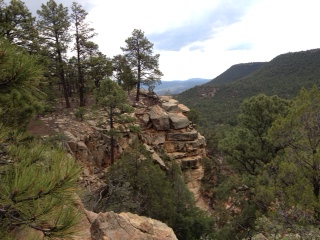
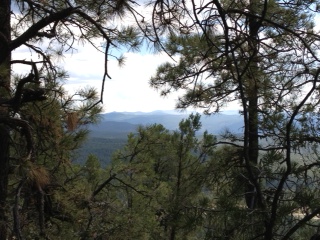
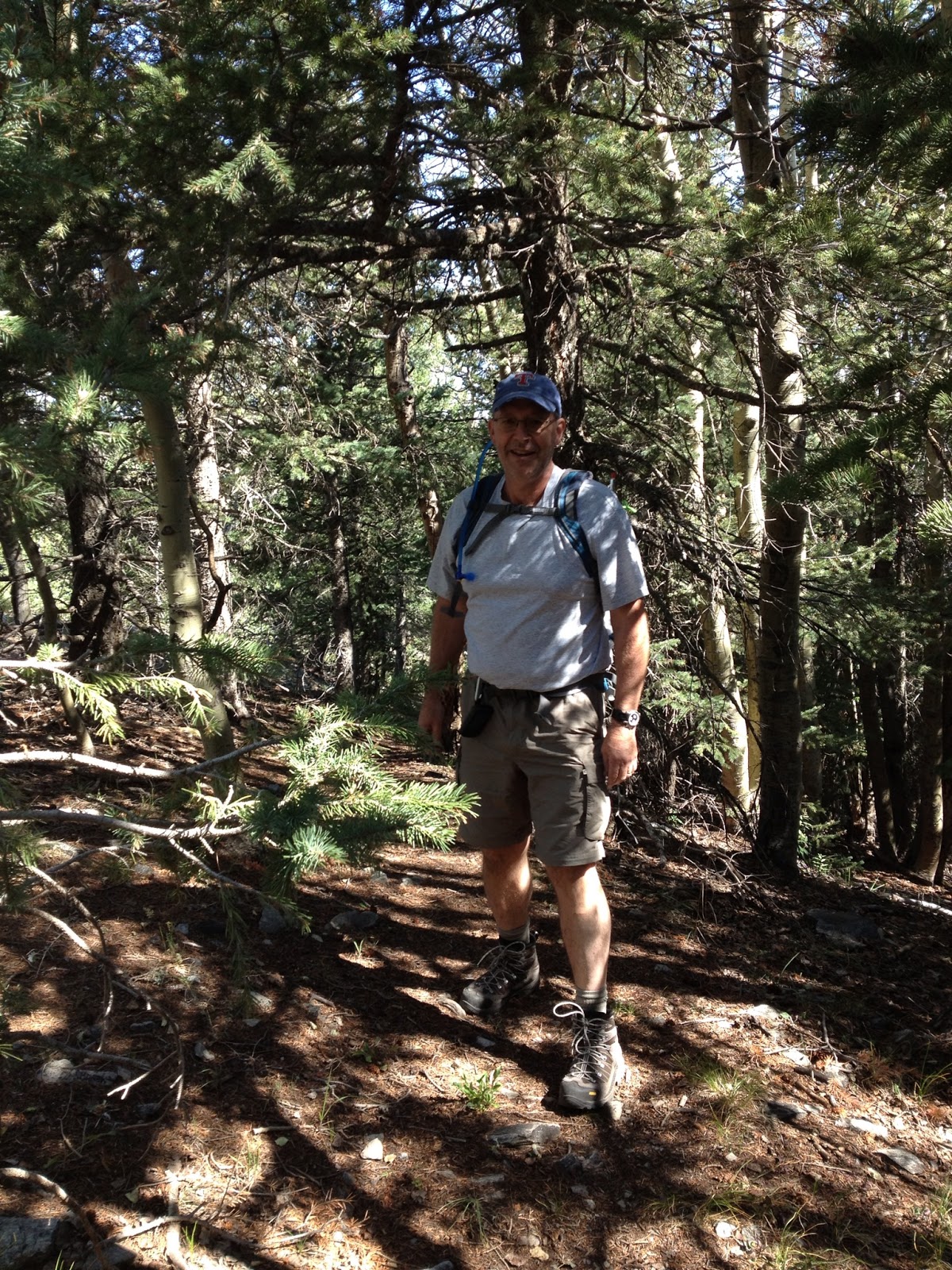
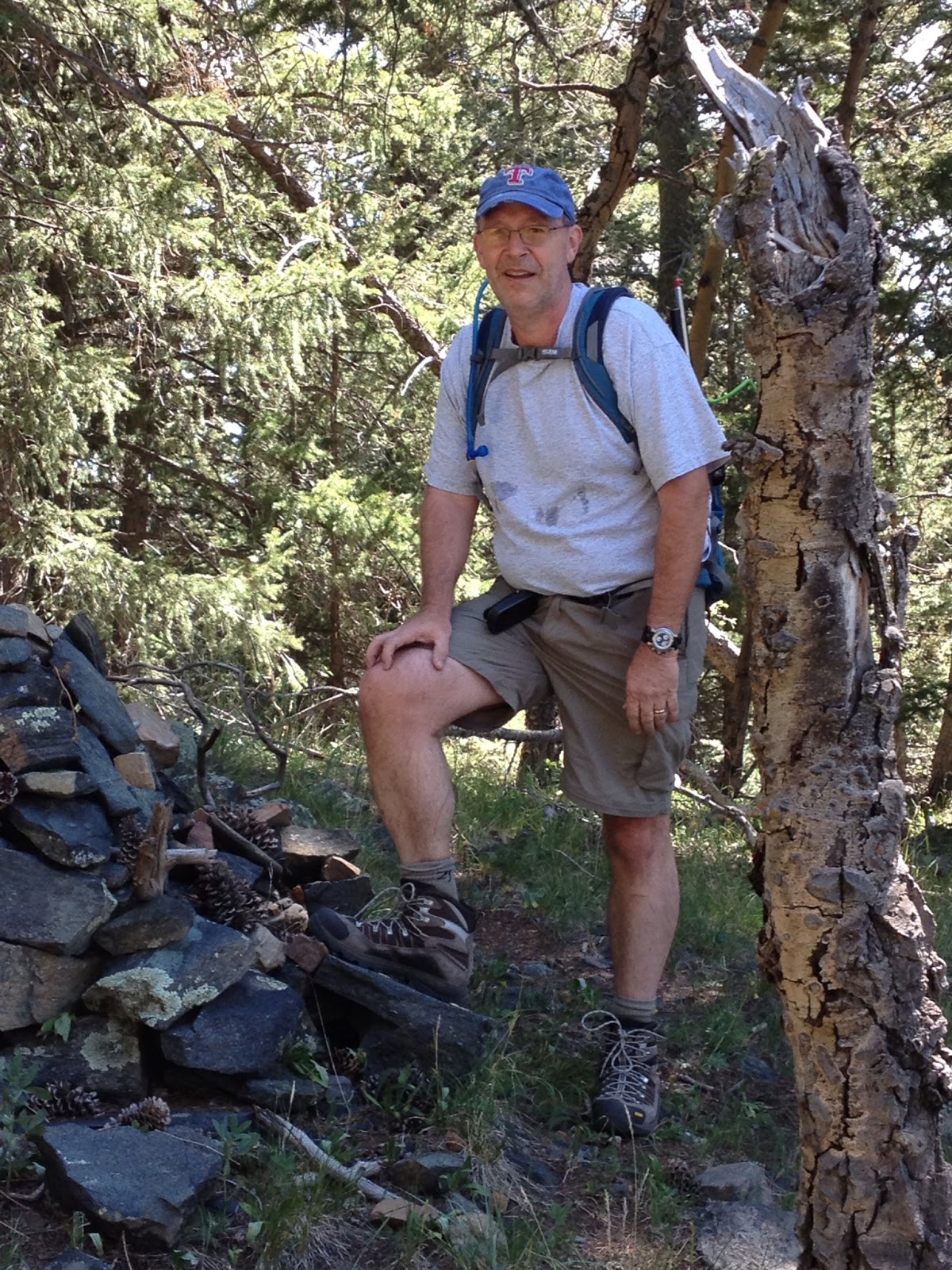
This was my first solo summit. I've done summits with other activators and my wife often does the hike with me, however this time I was on my own. Glorieta Mesa is an 8 point summit whose elevation is just over 8,000 ft. Finding the route required a little research but the SOTA website is very valuable in finding routes if previous activators have uploaded their activation notes. Such was the case here and I was able to get two sets of coordinates, the first directed me where to park and the second pinpointed the previous operating location of another activator. Given those two points the hike was fairly straight forward. Only about 300 feet elevation gain over 1.5 mile climb isn't too bad.
I used my GPS unit with it's TOPO map to navigate to the activation zone. There is no trail per se on this climb. I would classify it as a minor bushwhack. While there are no trails the forest is very walk-able with a few brushy areas that you have to walk through, but not bad.
 |
| On The Way Up |
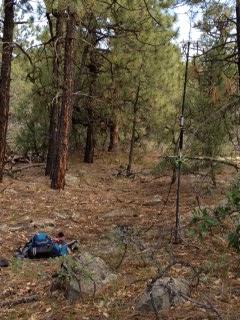
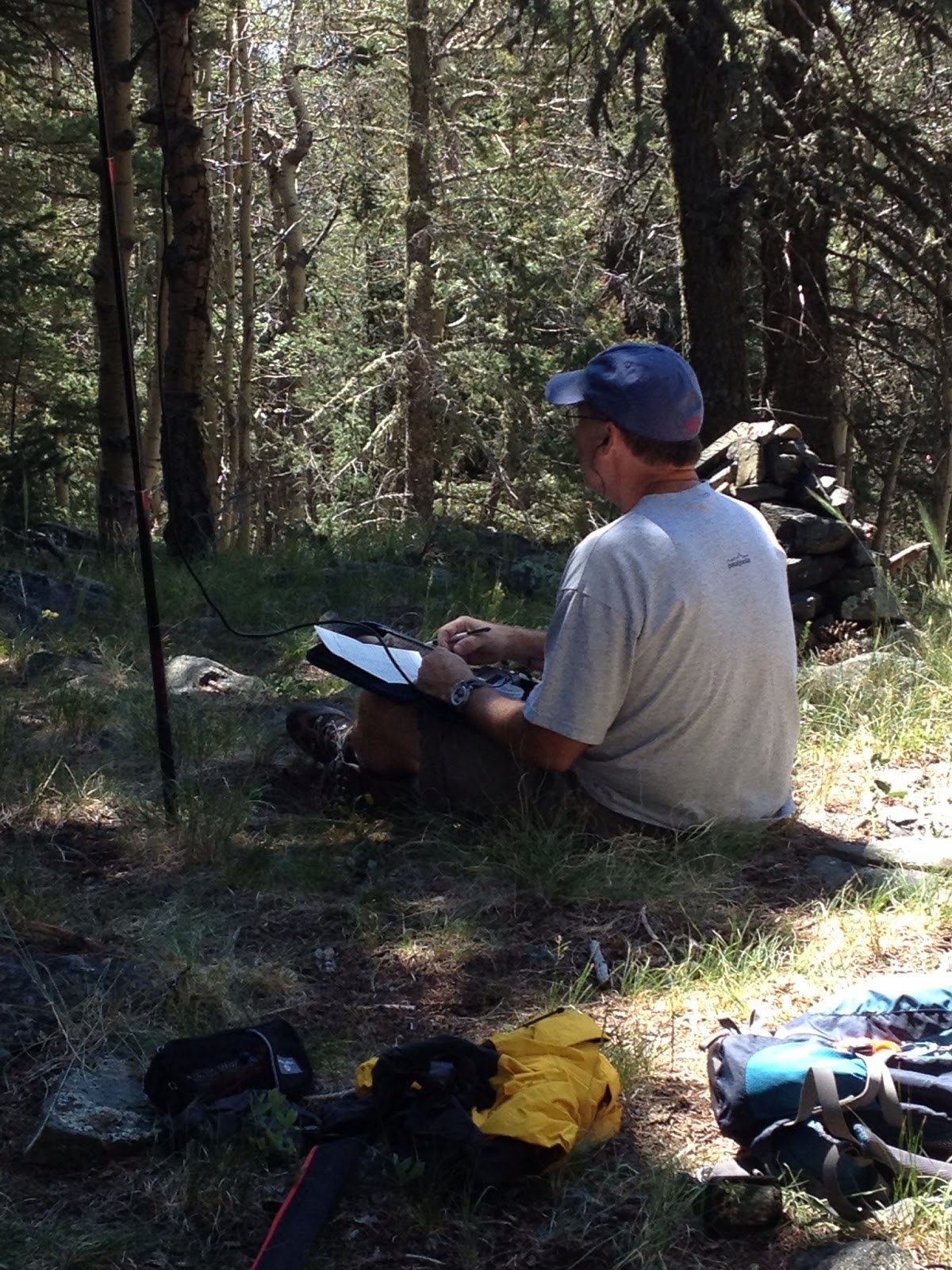
Once on the top I used my ATS-4 and my modified Buddi-Stick vertical. Conditions were decent and after couple of CQ's I had a nice SOTA Chaser pile-up. I managed to work 18 stations in a 20 minute span working stations Coast to Coast.
A Chaser pile-up is the ultimate QRP thrill in my opinion. You are operating a station that you carried up the hill on your back, using a portable antenna and other stations are actually chasing you. The signals were loud and I was getting some 569 and 579 reports.
Mike Crownover, AD5A, is a regular contributor to AmateurRadio.com and writes from Texas, USA. Contact him at [email protected].
Playing Around With Reverse Beacon Network
After parking at my usual lunch time portable operating position, and not hearing much on the bands, I decided to do something I had been wanting to do for awhile now.
I have been wanting to play around with the Reverse Beacon Network using my portable QRP antenna. When not hearing much on the bands, I wanted to see if there was just not many operators, or if the band was actually dead. The other thing is that many times when I call CQ I call at less than 15 wpm because that is where I am most comfortable. I have never seen many reports on RBN in the past when calling CQ so I wanted to see if speed made a difference.
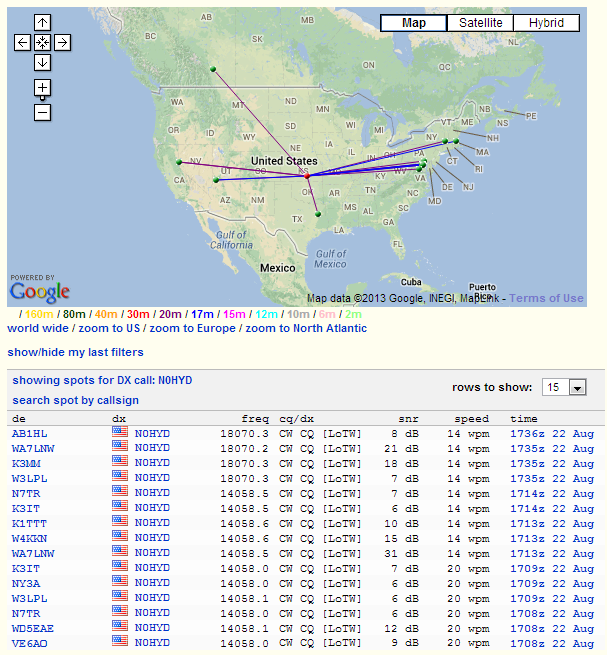
So I started off with 20 WPM and called CQ for about 3 minutes on 20 meters. You can see the spots on the photo, but I was heard mainly to the East coast and West part of the country – and one Canadian station.
Then I went down to 14 WPM and called CQ again – as you can see on the photo. At 14 WPM, my signal was still decoded and I got spotted by 5 stations. Where at 20 WPM I was spotted by 6 stations. So not really much difference. I did change frequency so that it would show the new spots.
I didn’t call as long at 14 WPM because I heard someone answering!
KO4OP – Rick was answering my CQ and had a nice sounding signal. He was in King William, VA. He was 599 and he gave me a 559. We went on to have a nice 15 minute exchange – really nice QSO Rick! Thanks for giving me a call!
As you can see in the picture I then went to 17 meters and put out a CQ at 14 WPM and was spotted by 4 stations (3 on the east coast and one out west). I did hear someone call ..__.. (?) after one of my CQ calls but I never could reach him, and they never gave a call.
After this I did hear NE1SJ very, very weakly calling from a SOTA summit on 20 meters. I gave him a call and he heard me, but when he came back he got weaker and I just could not pick him out of the noise. Sorry we couldn’t make it today – I would have liked to pick up some more points!
It seems my SOTA chasing has stalled a bit. Lately 20 meters seems to be skipping right over me here in Kansas!
So the RBN site was fun to play around with. It just tells me that even when you don’t hear anything, it doesn’t mean that you aren’t getting out! Put out some CQ’s and have some fun!
Burke Jones, NØHYD, is a regular contributor to AmateurRadio.com and writes from Kansas, USA. Contact him at [email protected].
 Ham Radio Deluxe |
 W5SWL Electronics |
 Ham Radio Prep |
 KB3IFH QSL Cards  Hip Ham Shirts  HamRadioAuctions HamRadioAuctions Reliance Antennas Reliance Antennas Enigma Shop Enigma Shop |  morseDX  Ni4L Antennas  R&L Electronics R&L Electronics antennas.us antennas.us QRV QRV |
- Matt W1MST, Managing Editor
