 |
 Digital Voice (DV) – the new FM?
 7 October 2013 | by
  |
| My home DSTAR hotspot. Comprising 2m PMR radio (underneath), GMSK modem (top) and Raspberry Pi computer (bottom). |
Rob Law, MW0DNK, is a regular contributor to AmateurRadio.com and writes from Anglesey, Wales. Contact him at [email protected].
Coronal Mass Ejection (CME) on 2013/09/29
A magnificent eruption ejected a massive cloud of solar plasma out away from the Sun, into interplanetary space on September 29th (2013/09/29). A long filament of plasma hovered above the photosphere, captured by the magnetism in the Sun’s northern hemisphere. Then, it erupted in spectacular energy as seen by the Solar Dynamics Observatory, and by Stereo and SOHO spacecraft. This plasma eruption produced a stunningly beautiful coronal mass ejection (CME).
Coronal mass ejections are often associated with solar activity such as solar flares, but a causal relationship has not been established. A coronal mass ejection is also produced when a plasma filament (or prominence) breaks away from the magnetic clutch of the Sun, escaping the gravitational pull. While many plasma ejections originate from active regions on the Sun’s surface, such as groupings of sunspots associated with frequent flares, any plasma formation could break away. Near solar maxima, the Sun produces about three CMEs every day, whereas near solar minima, there is about one CME every five days or even less frequently.
When a CME passes Earth (not all CMEs are directed toward the Earth), it could cause geomagnetic disturbances, triggering aurora and causing disruption of shortwave radio communications.
Although this CME was not aimed at Earth, it passed by the Earth with a glancing blow from the plasma cloud on October 2-3 2013. This caused a geomagnetic storm (minor level), which lowered the Maximum Usable Frequency (MUF) over many ionospheric radio-wave propagation paths on shortwave radio. This lowing of the MUF is often regarded as a
degradation of shortwave radio conditions. Some aurora is also produced, though this event did not cause much significant aurora.
Here’s a video showing the magnificent plasma eruption and CME:
Credit: SOHO/Stereo/SDO/NASA
More info: http://SunSpotWatch.com and on Facebook at
https://www.facebook.com/spacewx.hfradio
Aurora Watch: http://Aurora.SunSpotWatch.com
Visit, subscribe: NW7US Radio Communications and Propagation YouTube Channel
The West Virginia Chapter of the NAQCC Club
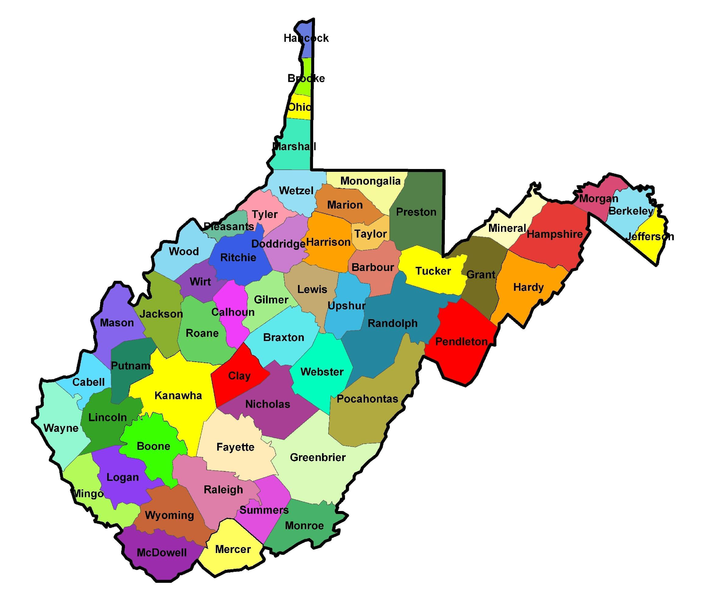
I’ve included a link to our “West Virginia Chapter” page on the right side of this blog, so be sure to check it for the latest information on activities and feel free to drop your comments and suggestions for our NAQCC WV Chapter on this site.
West Virginia is a beautiful place to live and we’re known as the “Mountain State” for good reasons. There are more than one hundred “mountain tops” at more than 4,000 ft elevation. West Virginia is also a “rural” state where electrical noise is nearly “zero” in many places. This makes an “excellent” venue for low power Morse Code radio operations.
This local chapter is for the CW QRP operators in West Virginia. I’ve discovered around 40 NAQCC members on their national membership list. I find around 20 are “radio active” in our state. I hope to hear from and meet many of them as soon as possible.
Listen for our chapter on the standard QRP frequencies of all bands. Check the NAQCC WV Chapter for our future activities.
If you’re a WV QRP CW radio operator, and not on the NAQCC membership roles; drop me a line and I’ll be more than happy to include you on their (and our) e-mail list. Membership is absolutely and unconditionally “free”.

John Smithson, Jr., N8ZYA, is a regular contributor to AmateurRadio.com and writes from West Virginia, USA. Contact him at [email protected].
ICQ Podcast S06 E20 – Using PC as test Equipment (06 October 2013)
Series Six Episode Twenty of the ICQ Amateur / Ham Radio Podcast has been released. The latest news and Martin, M1MRB & W9ICQ discusses using a PC as test equipment.
•VK amateurs win reprieve for 2300-2302 MHz
•FCC dismisses 'Encryption' petition
•YL Activity Week
•Guantanamo Bay
•School to launch 434 MHz balloon
•The question is: .... "Explain amateur radio?"
•Amateur Radio well underway in Kosovo
•Turkish Special Event
•Swedish Radio Hams on 472 kHz
•White House recognizes Radio Ham as 'Champion of Change'
Colin Butler, M6BOY, is the host of the ICQ Podcast, a weekly radio show about Amateur Radio. Contact him at [email protected].
ICQ Podcast S06 E20 – Using PC as test Equipment (06 October 2013)
Series Six Episode Twenty of the ICQ Amateur / Ham Radio Podcast has been released. The latest news and Martin, M1MRB & W9ICQ discusses using a PC as test equipment.
•VK amateurs win reprieve for 2300-2302 MHz
•FCC dismisses 'Encryption' petition
•YL Activity Week
•Guantanamo Bay
•School to launch 434 MHz balloon
•The question is: .... "Explain amateur radio?"
•Amateur Radio well underway in Kosovo
•Turkish Special Event
•Swedish Radio Hams on 472 kHz
•White House recognizes Radio Ham as 'Champion of Change'
Colin Butler, M6BOY, is the host of the ICQ Podcast, a weekly radio show about Amateur Radio. Contact him at [email protected].
Series Six Episode Twenty – Use PC as Test Equipment
Series Six Episode Twenty of the ICQ Amateur / Ham Radio Podcast has been released. The latest news and Martin, M1MRB & W9ICQ discusses using a PC as test equipment.
- VK amateurs win reprieve for 2300-2302 MHz
- FCC dismisses ‘Encryption’ petition
- YL Activity Week
- Guantanamo Bay
- School to launch 434 MHz balloon
- The question is: …. “Explain amateur radio?”
- Amateur Radio well underway in Kosovo
- Turkish Special Event
- Swedish Radio Hams on 472 kHz
- White House recognizes Radio Ham as ‘Champion of Change’

Colin Butler, M6BOY, is the host of the ICQ Podcast, a weekly radio show about Amateur Radio. Contact him at [email protected].
When the kids leave….you down size but what about the shack!!
You know what folks, me and my family have our health which is HUGE to me! Overall we are not doing bad at all so the real big picture is not what is going to happen to ham radio..... that will always be there just in a different way. Each night I watch the news and peoples lives change in ways I could never imagine or handle. As for me my little world it's just a change in ham radio and that is just plane old peanuts!
Mike Weir, VE9KK, is a regular contributor to AmateurRadio.com and writes from New Brunswick, Canada. Contact him at [email protected].
 Ham Radio Deluxe |
 W5SWL Electronics |
 Ham Radio Prep |
 KB3IFH QSL Cards  Hip Ham Shirts  HamRadioAuctions HamRadioAuctions Reliance Antennas Reliance Antennas Enigma Shop Enigma Shop |  morseDX  Ni4L Antennas  R&L Electronics R&L Electronics antennas.us antennas.us QRV QRV |
- Matt W1MST, Managing Editor
