 |
 My APRS broadcasts received by the ISS
 18 October 2013 | by
 I screen capped the evidence from the website http://ariss.net which documents Amateur Radio data digipeated by the ISS. In order to appear on the page, a position report in a valid APRS format must be received and then digipeated through the ISS system, then be heard by an internet gateway station, which then forwards it on to the APRS Internet System.
Okay it sounds a bit more impressive when put like that ;-)
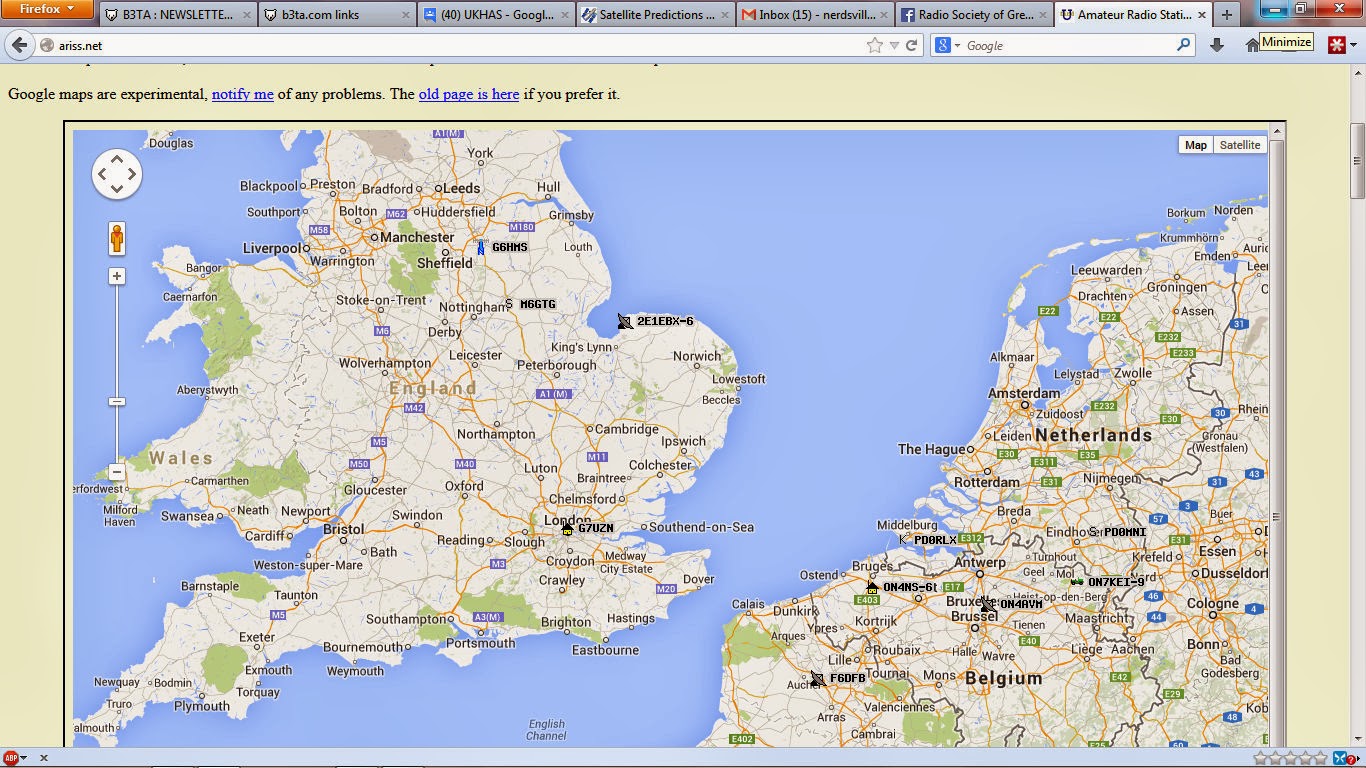 |
| The map showing received stations, M6GTG is me! |
 |
| The detail of my report |
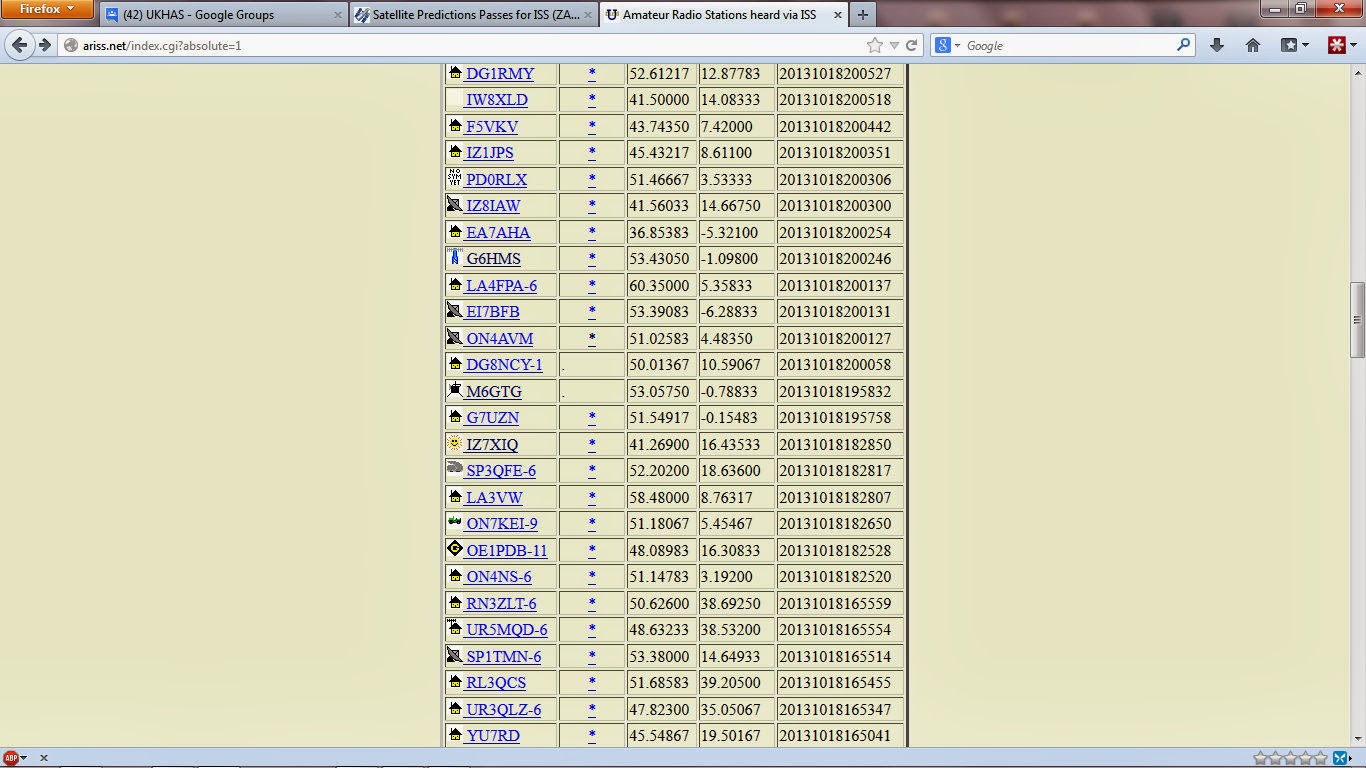 |
| List of stations with time stamps, showing me! |
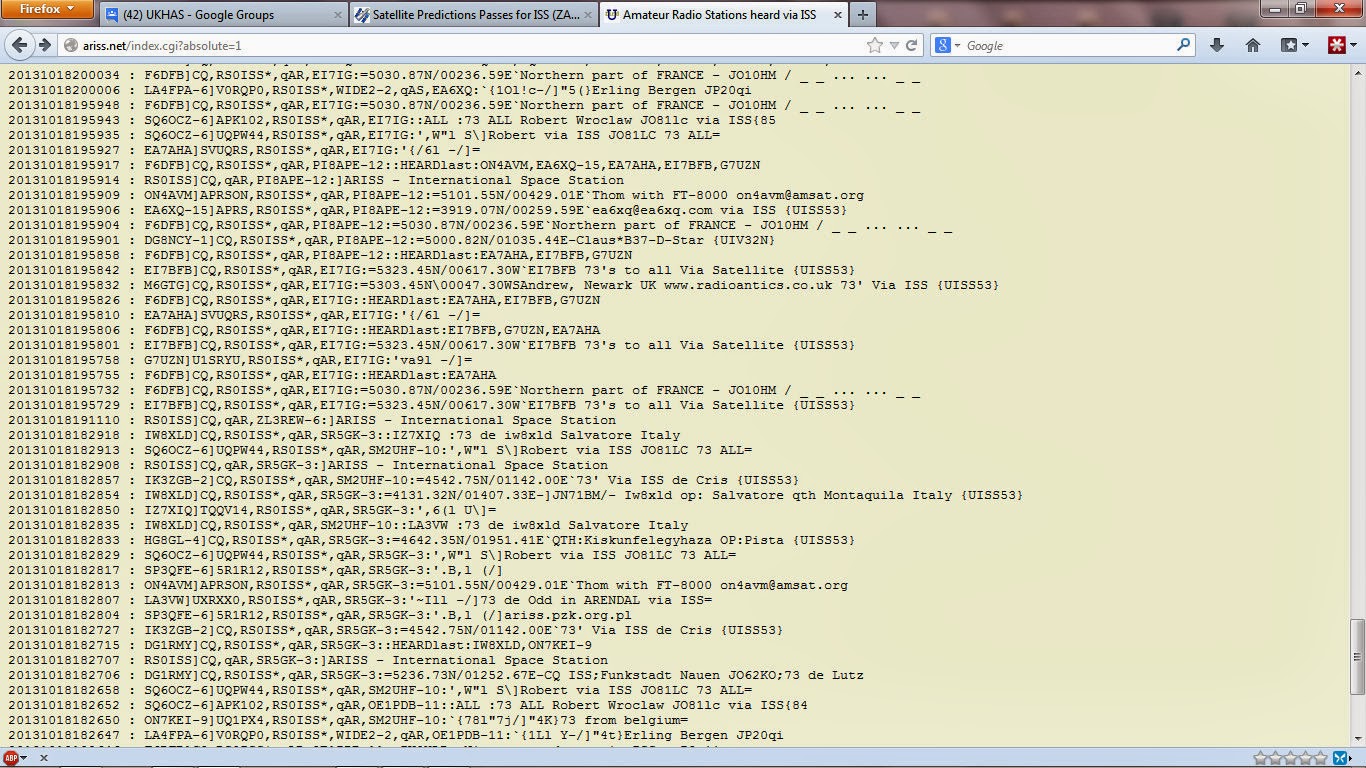 |
| List of digirepeated messages |
It consists of a small embedded PC running embedded XP, the sound card output was connected to the microphone input of my Baofeng UV-5R+ operating in VOX mode set to 145.825MHz. The radio was connected through my power/SWR meter in to the X-50 antenna. I used the UV-5R+ instead of the UV-3R since it has a little more power and better audio. I had a SWR of around 1:1.2 and outputting 4W.
The software I used was UISS from ON6MNU and the AGWPE packet engine. It has taken a little time to work out how to setup UISS into auto-beacon mode and putting in the time of the next decent pass (approx 45 degrees elevation) I set it to broadcast position and text data messages every 30 seconds.
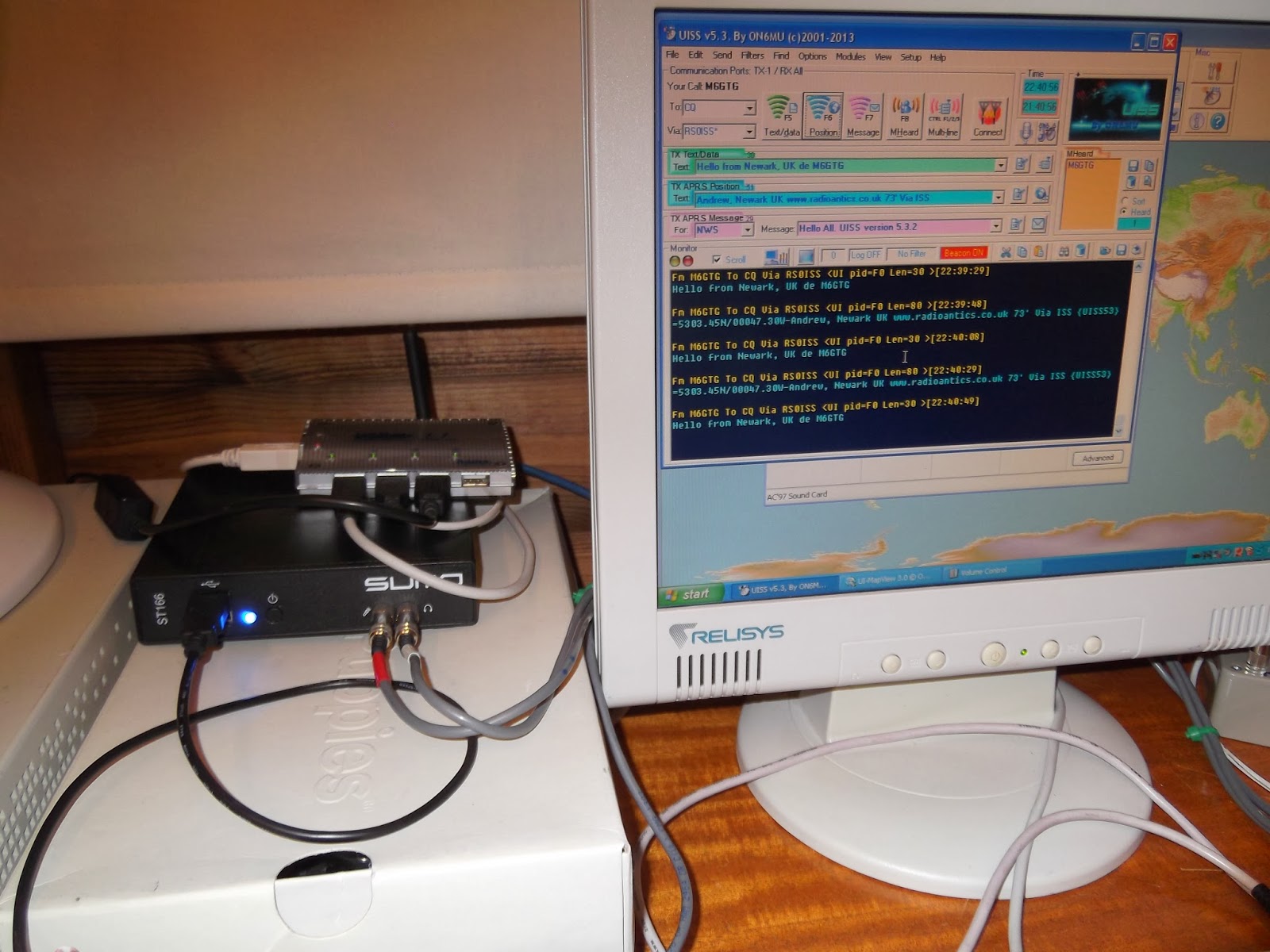 |
| The embedded PC running UISS |
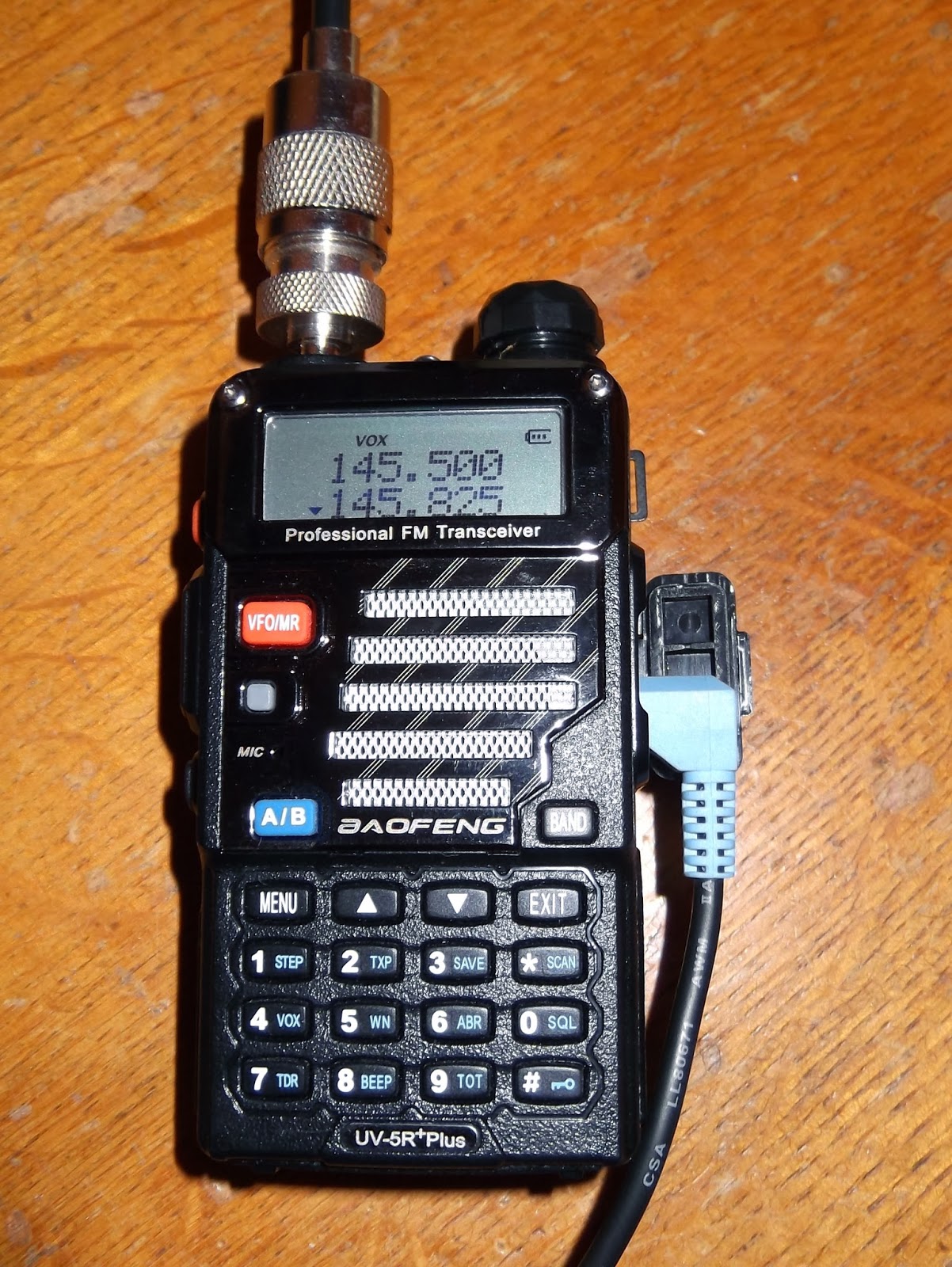 |
| UV5R+ in VOX mode on 145.825MHz |
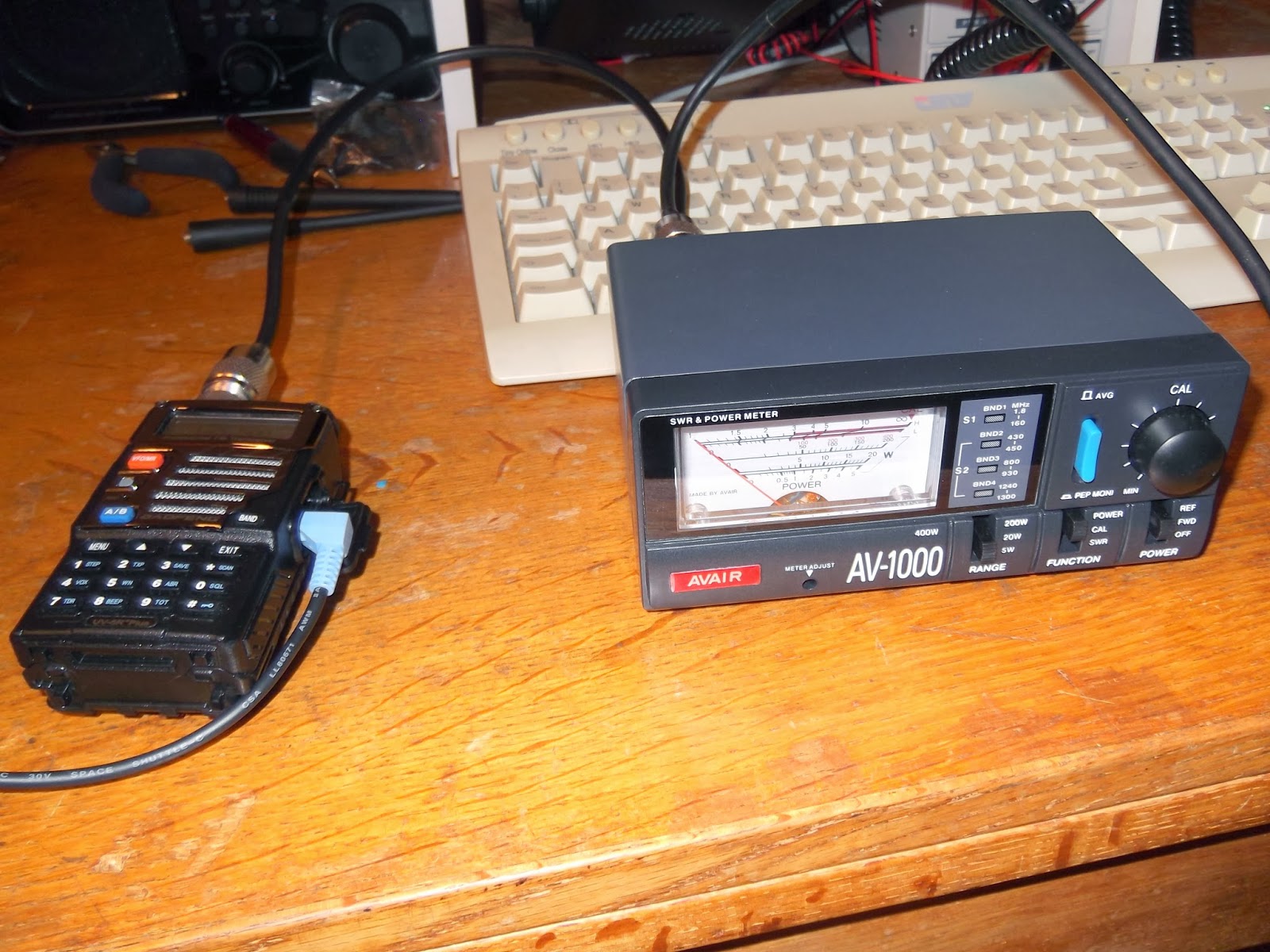 | ||
| The power meter showed 4W output, SWR about 1:1.2 |
I stood out in the dark, hoping to see the ISS pass over but the cloud cover was too thick and monitored using a handheld scanner. I heard my transmissions obviously and the ISS broadcasts as it repeated received messages, but I didn't know if any were mine till I got back to the PC.
Andrew Garratt, MØNRD, is a regular contributor to AmateurRadio.com and writes from East Midlands, England. Contact him at [email protected].
It’s 29MHz repeater season: a QSO through KQ2H!
Last night as I was driving back from the station, there was the sense on SSB that 28MHz was in good shape with some loud signals coming through from North and South America.
I tried a few CQ calls on 29.000MHz AM, but didn’t hear anyone at all. I wondered if there would be anything on the FM segment. Sure enough the KQ2H repeater from the Catskill Mountains in New York was coming through well – at times well over S9, although fading somewhat, making me think that what had probably been a good afternoon’s opening might have been coming to an end!
I listened for a few minutes before hearing KC2OBW call through a connected UHF link and decided to give him a call. Although my signals (10W or so to the whip) were not strong, it was enough to have a simple QSO. Good fun!
Remember the 29MHz repeaters have a 100khz repeater shift, so if you hear the output on 29.620, you need to transmit on 29.520. Fortunately, the ability to program the Anytone rig makes it easy to set up memories with different transmit and receive frequencies.
Maybe see you on KQ2H?
Tim Kirby, G4VXE, is a regular contributor to AmateurRadio.com and writes from Oxfordshire, England. Contact him at [email protected].
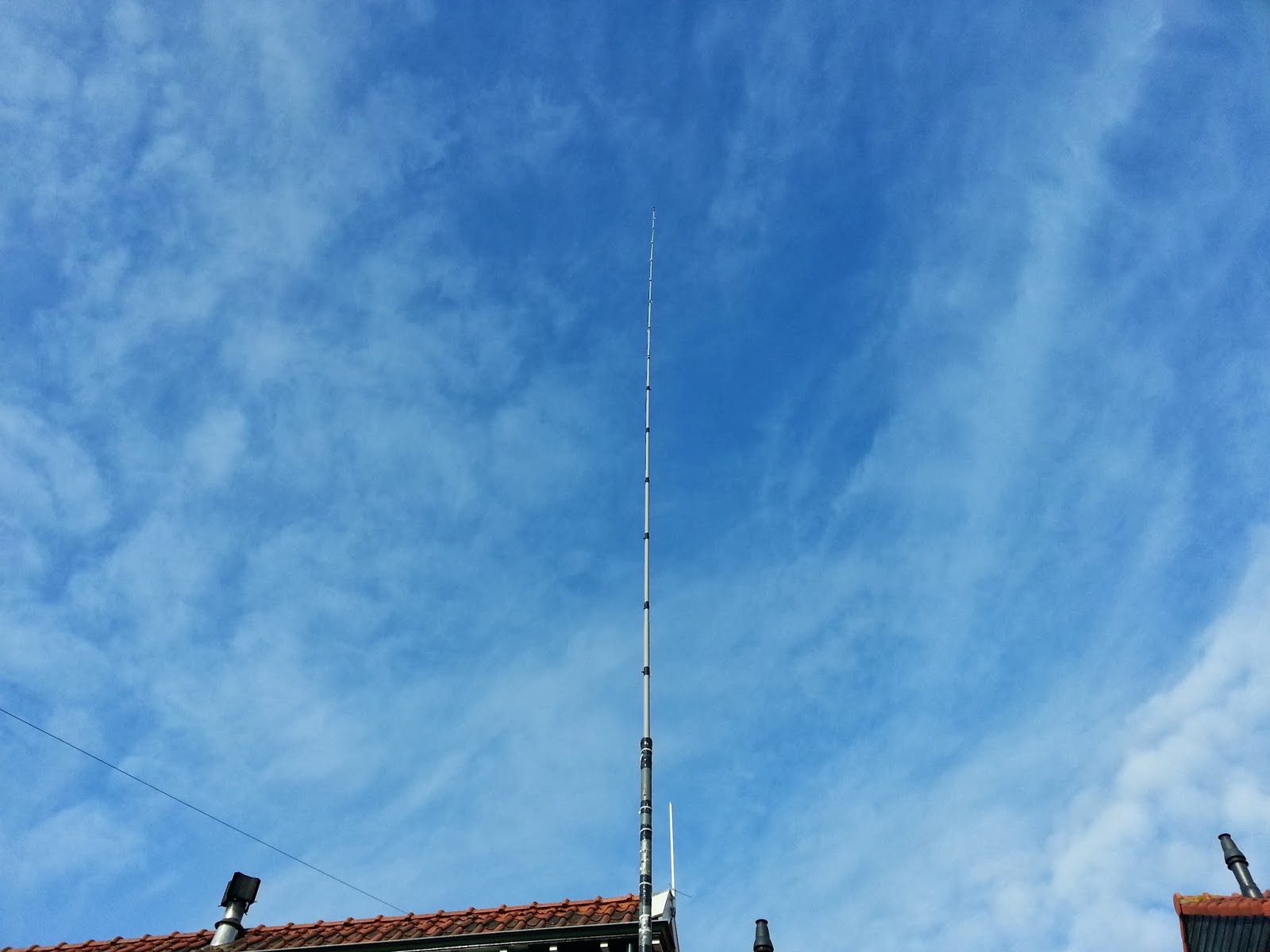
HF vertical with an end fed wire


Paul Stam, PC4T, is a regular contributor to AmateurRadio.com and writes from the Netherlands. Contact him at [email protected].
It was a good week
of lunchtime QRP sessions. I did not get skunked all week, unless you count yesterday, when I had to work through lunch and didn’t get a chance to get outside. The bands seemed decent and this is the week’s tally:
Larry Makoski, W2LJ, is a regular contributor to AmateurRadio.com and writes from New Jersey, USA. Contact him at [email protected].
Indian Summer Hike with DX
Today was Indian Summer. Judy and I walked over Shute Hill to Swain’s Farm. I worked Belgium, Netherlands, Morocco and England.

Indian Summer is what we call the last few days of extra-warm weather before the cold settles in for the winter. It was a gorgeous day. It may be the last good day with beautiful fall colors. It was 72F with a crystal blue sky.

The pathway over the hill is about 2 miles. We walked on a crunching carpet of rich colored leaves. Judy got a quick snapshot of me as we neared one of Swain’s fields.

The view from the hay field is fantastic. We gazed out on the Belknap Mountains. In the foreground the rich grass shimmered in the sunlight.

I heaved a line over a maple branch nearly 50 feet above the edge of the field, and I pulled up a 33 foot wire. I hooked up the KX3 and tuned around 10 meters. It was active, and I quickly landed a QSO with ON7DU. Johan was a 599 and gave me a 579 from Belgium. Then I worked the Netherlands. PA5WT was calling CQ and I answered. Kees gave me a 449. He was a strong 599.

Then I switched to 17 meters. Med was calling CQ from Morocco. CN8YR gave me a 339 and he was a 579. I went back to 10 meters for a final QSO with M0UNN in England. I exchanged a quick 599 with Jay and packed up the gear.

The view from the operating position was the greatest! In the past I’ve worked the QRPARCI Fall contest from here, but I couldn’t make it this year. Rain is forecast for tomorrow. I sure am glad I was able to get out today.
Jim Cluett, W1PID, is a regular contributor to AmateurRadio.com and writes from New Hampshire, USA. Contact him at [email protected].
Amateur Radio Newsline Report 1888 October 18 2013
- Ham radio responds as a major cyclone hits India
- Radio amateurs respond to an earthquake in the Philippines
- The FCC returns to work following end of government shutdown
- IARU Monitoring Service says that Russia iintruding on 15 meters
- AMSAT to celebrate 30 years of manned ham radio in space
- A bit of early DX history from down-under
LHS Episode #114: Steamed Orca Tails
 They’re coming fast and furious now! After a long period of not having the time or energy to edit episodes, we’re finally getting around to pushing out the backlog. In this action-packed installment, your intrepid hosts tackle gaming on Linux using the Steam platform, accessible computing, mention a site listing more than 50 places you can download Free Software and more. We also revisit the products of Sierra Radio Systems and Pignology, and wish Fedora a happy birthday. All THIS WEEK, on Linux in the Ham Shack!
73 de The LHS Guys
Russ Woodman, K5TUX, co-hosts the Linux in the Ham Shack podcast which is available for download in both MP3 and OGG audio format. Contact him at [email protected].
 Ham Radio Deluxe |
 W5SWL Electronics |
 Ham Radio Prep |
 KB3IFH QSL Cards  Hip Ham Shirts  HamRadioAuctions HamRadioAuctions Reliance Antennas Reliance Antennas Enigma Shop Enigma Shop |  morseDX  Ni4L Antennas  R&L Electronics R&L Electronics antennas.us antennas.us QRV QRV |
- Matt W1MST, Managing Editor
