 |
 PEARL HARBOR: PATTON VS THE SIGNAL CORPS
 7 December 2013 | by
“Getting the Message Through: A Branch History of the U.S. Army Signal Corps” by Rebecca Robbins Raines
CENTER OF MILITARY HISTORY, UNITED STATES ARMY, WASHINGTON, D.C., 1996 (pgs 242-244)
During 1940 President Roosevelt had transferred the Pacific Fleet from bases on the West Coast of the United States to Pearl Harbor on the Hawaiian island of Oahu, hoping that its presence might act as a deterrent upon Japanese ambitions. Yet the move also made the fleet more vulnerable. Despite Oahu’s strategic importance, the air warning system on the island had not become fully operational by December 1941. The Signal Corps had provided SCR-270 and 271 radar sets earlier in the year, but the construction of fixed sites had been delayed, and radar protection was limited to six mobile stations operating on a part-time basis to test the equipment and train the crews. Though aware of the dangers of war, the Army and Navy commanders on Oahu, Lt. Gen. Walter C. Short and Admiral Husband E. Kimmel, did not anticipate that Pearl Harbor would be the target; a Japanese strike against American bases in the Philippines appeared more probable. In Hawaii, sabotage and subversive acts by Japanese inhabitants seemed to pose more immediate threats, and precautions were taken. The Japanese-American population of Hawaii proved, however, to be overwhelmingly loyal to the United States.
Because the Signal Corps’ plans to modernize its strategic communications during the previous decade had been stymied, the Army had only a limited ability to communicate with the garrison in Hawaii. In 1930 the Corps had moved WAR’s transmitter to Fort Myer, Virginia, and had constructed a building to house its new, high-frequency equipment. Four years later it added a new diamond antenna, which enabled faster transmission. But in 1939, when the Corps wished to further expand its facilities at Fort Myer to include a rhombic antenna for point-to-point communication with Seattle, it ran into difficulty. The post commander, Col. George S. Patton, Jr., objected to the Signal Corps’ plans. The new antenna would encroach upon the turf he used as a polo field and the radio towers would obstruct the view. Patton held his ground and prevented the Signal Corps from installing the new equipment. At the same time, the Navy was about to abandon its Arlington radio station located adjacent to Fort Myer and offered it to the Army. Patton, wishing instead to use the Navy’s buildings to house his enlisted personnel, opposed the station’s transfer. As a result of the controversy, the Navy withdrew its offer and the Signal Corps lost the opportunity to improve its facilities.

Though a seemingly minor bureaucratic battle, the situation had serious consequences two years later. Early in the afternoon of 6 December 1941, the Signal Intelligence Service began receiving a long dispatch in fourteen parts from Tokyo addressed to the Japanese embassy in Washington. The Japanese deliberately delayed sending the final portion of the message until the next day, in which they announced that the Japanese government would sever diplomatic relations with the United States effective at one o’clock that afternoon. At that hour, it would be early morning in Pearl Harbor.
Upon receiving the decoded message on the morning of 7 December, Chief of Staff Marshall recognized its importance. Although he could have called Short directly, Marshall did not do so because the scrambler telephone was not considered secure. Instead, he decided to send a written message through the War Department Message Center. Unfortunately, the center’s radio encountered heavy static and could not get through to Honolulu. Expanded facilities at Fort Myer could perhaps have eliminated this problem. The signal officer on duty, Lt. Col. Edward F French, therefore sent the message via commercial telegraph to San Francisco, where it was relayed by radio to the RCA office in Honolulu. That office had installed a teletype connection with Fort Shafter, but the teletypewriter was not yet functional. An RCA messenger was carrying the news to Fort Shafter by motorcycle when Japanese bombs began falling; a huge traffic jam developed because of the attack, and General Short did not receive the message until that afternoon.
Scott Hedberg, NØZB, is a regular contributor to AmateurRadio.com and writes from Kansas, USA. Contact him at [email protected].
PEARL HARBOR: PATTON VS THE SIGNAL CORPS
“Getting the Message Through: A Branch History of the U.S. Army Signal Corps” by Rebecca Robbins Raines
CENTER OF MILITARY HISTORY, UNITED STATES ARMY, WASHINGTON, D.C., 1996 (pgs 242-244)
During 1940 President Roosevelt had transferred the Pacific Fleet from bases on the West Coast of the United States to Pearl Harbor on the Hawaiian island of Oahu, hoping that its presence might act as a deterrent upon Japanese ambitions. Yet the move also made the fleet more vulnerable. Despite Oahu’s strategic importance, the air warning system on the island had not become fully operational by December 1941. The Signal Corps had provided SCR-270 and 271 radar sets earlier in the year, but the construction of fixed sites had been delayed, and radar protection was limited to six mobile stations operating on a part-time basis to test the equipment and train the crews. Though aware of the dangers of war, the Army and Navy commanders on Oahu, Lt. Gen. Walter C. Short and Admiral Husband E. Kimmel, did not anticipate that Pearl Harbor would be the target; a Japanese strike against American bases in the Philippines appeared more probable. In Hawaii, sabotage and subversive acts by Japanese inhabitants seemed to pose more immediate threats, and precautions were taken. The Japanese-American population of Hawaii proved, however, to be overwhelmingly loyal to the United States.
Because the Signal Corps’ plans to modernize its strategic communications during the previous decade had been stymied, the Army had only a limited ability to communicate with the garrison in Hawaii. In 1930 the Corps had moved WAR’s transmitter to Fort Myer, Virginia, and had constructed a building to house its new, high-frequency equipment. Four years later it added a new diamond antenna, which enabled faster transmission. But in 1939, when the Corps wished to further expand its facilities at Fort Myer to include a rhombic antenna for point-to-point communication with Seattle, it ran into difficulty. The post commander, Col. George S. Patton, Jr., objected to the Signal Corps’ plans. The new antenna would encroach upon the turf he used as a polo field and the radio towers would obstruct the view. Patton held his ground and prevented the Signal Corps from installing the new equipment. At the same time, the Navy was about to abandon its Arlington radio station located adjacent to Fort Myer and offered it to the Army. Patton, wishing instead to use the Navy’s buildings to house his enlisted personnel, opposed the station’s transfer. As a result of the controversy, the Navy withdrew its offer and the Signal Corps lost the opportunity to improve its facilities.
Though a seemingly minor bureaucratic battle, the situation had serious consequences two years later. Early in the afternoon of 6 December 1941, the Signal Intelligence Service began receiving a long dispatch in fourteen parts from Tokyo addressed to the Japanese embassy in Washington. The Japanese deliberately delayed sending the final portion of the message until the next day, in which they announced that the Japanese government would sever diplomatic relations with the United States effective at one o’clock that afternoon. At that hour, it would be early morning in Pearl Harbor.
Upon receiving the decoded message on the morning of 7 December, Chief of Staff Marshall recognized its importance. Although he could have called Short directly, Marshall did not do so because the scrambler telephone was not considered secure. Instead, he decided to send a written message through the War Department Message Center. Unfortunately, the center’s radio encountered heavy static and could not get through to Honolulu. Expanded facilities at Fort Myer could perhaps have eliminated this problem. The signal officer on duty, Lt. Col. Edward F French, therefore sent the message via commercial telegraph to San Francisco, where it was relayed by radio to the RCA office in Honolulu. That office had installed a teletype connection with Fort Shafter, but the teletypewriter was not yet functional. An RCA messenger was carrying the news to Fort Shafter by motorcycle when Japanese bombs began falling; a huge traffic jam developed because of the attack, and General Short did not receive the message until that afternoon.
Scott Hedberg, NØZB, is a regular contributor to AmateurRadio.com and writes from Kansas, USA. Contact him at [email protected].
The reverse beacon network is KILLING ME!!!!!
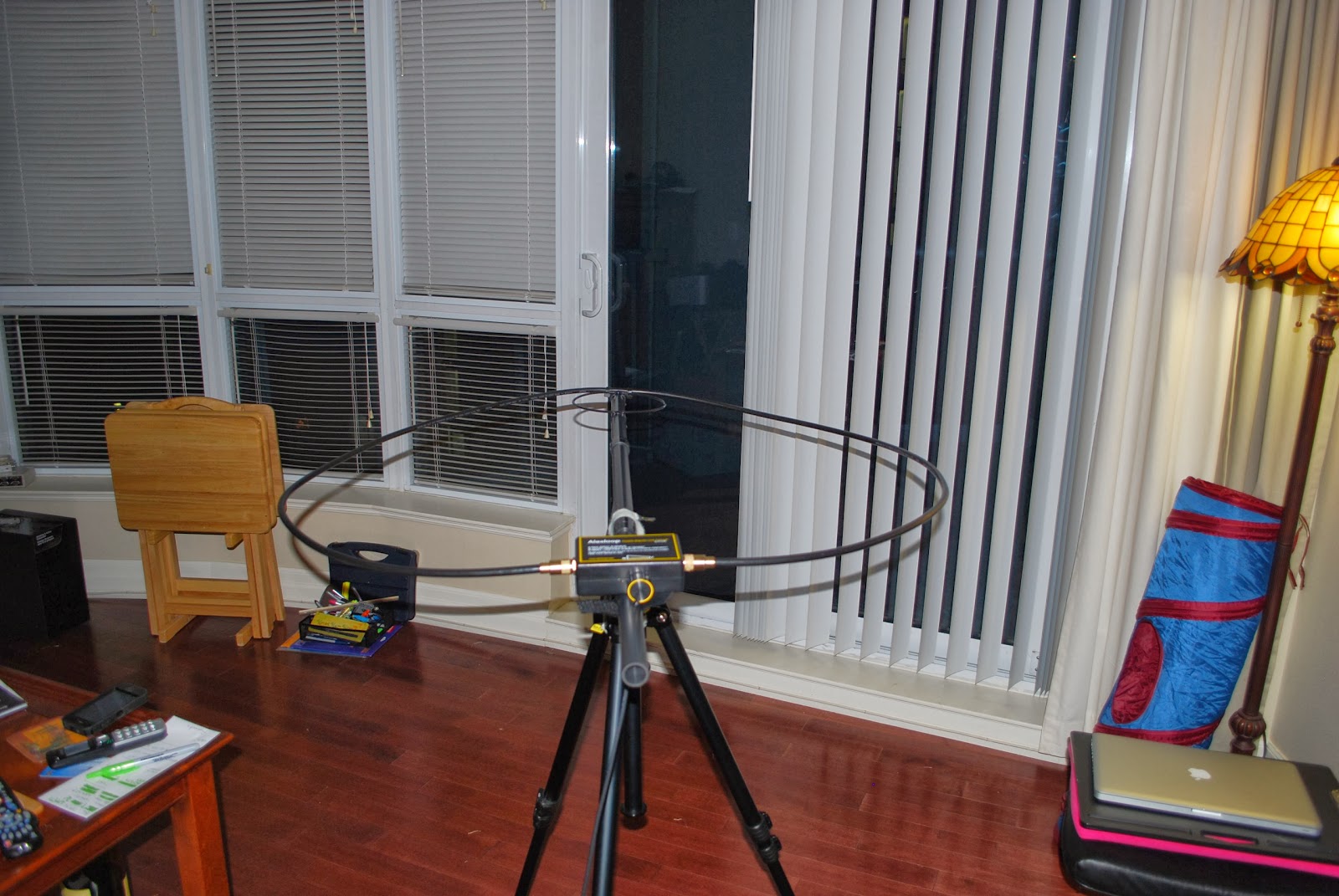 |
| The loop horizontal and nothing. |
Mike Weir, VE9KK, is a regular contributor to AmateurRadio.com and writes from New Brunswick, Canada. Contact him at [email protected].
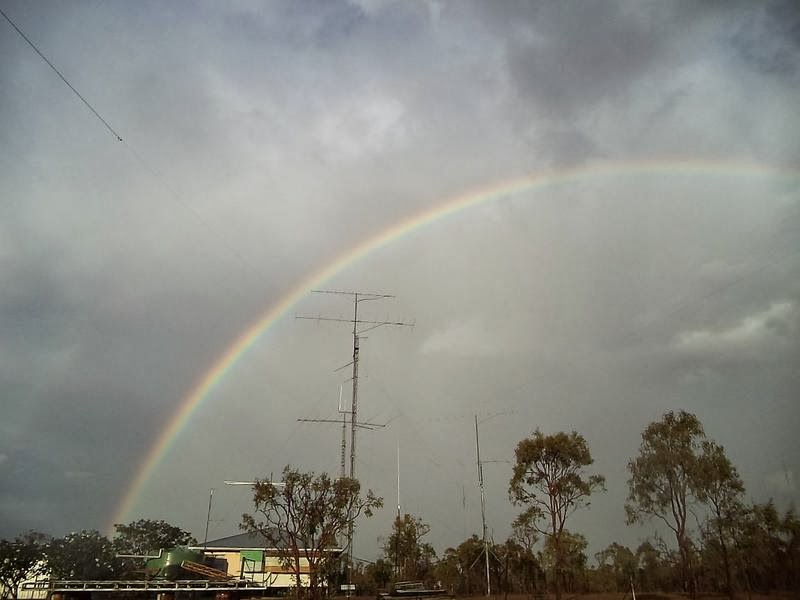
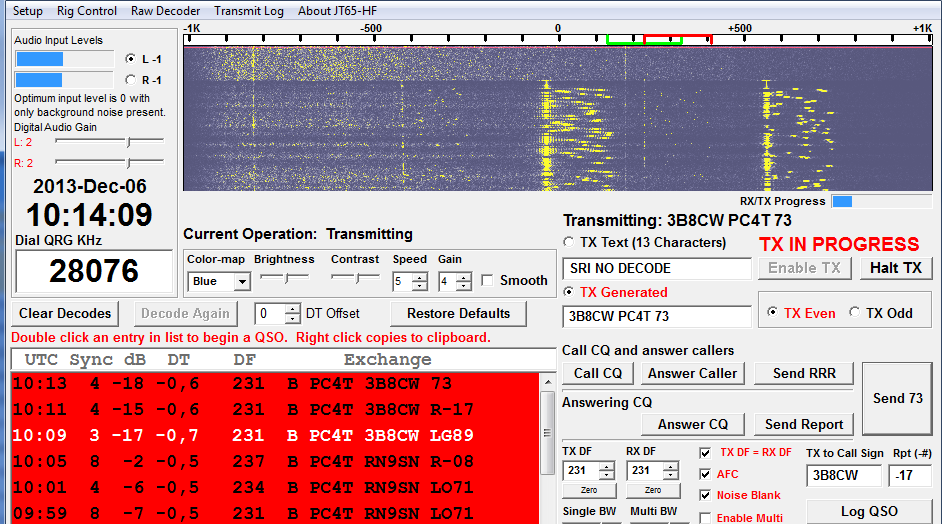
Two new DXCC today
Paul Stam, PC4T, is a regular contributor to AmateurRadio.com and writes from the Netherlands. Contact him at [email protected].
A couple of things from the mail bag.
A new video (quite well done) that you may want to keep on hand for showing to those who have or are expressing a deisre to become an Radio Amateur.
First, here’s the link to the full version (which is a bit longer than what is embedded here): http://youtu.be/ivUMIADFSDw
Next, from Jim W4QO considering the current “Buddies in the Caribbean” DXpedition to St. Lucia:
In order to step up the pace here in St. Lucia, if you (running QRP @5 cw/dig or 10 PEP SSB) work 3 of the 7 ops on the Buddies in the Caribbean DXpediton this week, you can earn the coveted BIC QRP certificate. It’s not the Buddies who have to be running QRP – it’s YOU! Many of us are running QRP
but some are not.
http://dx-world.net/2013/st-lucia-buddies-in-the-caribbean-dxpedition/
Sadly, Joe didn’t make it so you only have to work 3 of the other 7 using QRP to earn this valuable certificate.
We have worked many of you QRPers already so how hard can it be? Find 3 of us on any band, any mode.
To find us, go to this easy link:
http://www.dxwatch.com/dxsd1/dxsd1.php?f=3647
The Buddies are the ones with a J6/ in front of their calls. There are still 3.5 more days to do this, so come on, work us!
Send a #10 envelope with SASE to W4QO at qrparci.org with a list of the 3 (or more) you worked. If you work 5 or more, well, just wait and see what you get!! 🙂
If you worked J6/W4QO, then include your QSL card and get one in return.
73,
Budd, J68FF #6260
Chris, J6/W6HFP #15226
Rick, J6/AA4W #4046
Craig, J6/NM4T #8137
Jim, J6/W4QO #6515
John, J6/W5EXJ #15219
Jerry, J6/N9AW #6694
Lastly, I thought this announcement from the League regarding the Communications Act of 1934 was of interest:
SB QST @ ARL $ARLB033
ARLB033 Plans Announced to Update the Communications Act of 1934
ZCZC AG33
QST de W1AW
ARRL Bulletin 33 ARLB033
From ARRL Headquarters
Newington CT December 5, 2013
To all radio amateurs
SB QST ARL ARLB033
ARLB033 Plans Announced to Update the Communications Act of 1934
The US House Communications and Technology Subcommittee has announced plans for a multi-year effort to examine and update the Communications Act of 1934, the overarching law under which the FCC functions. The subcommittee, part of the US House Energy and Commerce Committee, is chaired by Oregon Republican Greg Walden, W7EQI. Walden and Energy and Commerce Committee Chair Fred Upton of Michigan made the announcement December 3.
“Today we are launching a multi-year effort to examine our nation’s communications laws and update them for the Internet era,” Upton said in a news release. “The United States has been the global leader in innovation and growth of the Internet, but unfortunately, our communications laws have failed to keep pace.”
ARRL CEO David Sumner, K1ZZ, noted that the most recent significant update of the Communications Act was in 1996. “Under the leadership of Greg Walden, the subcommittee and its staff are well equipped to take up the challenge,” Sumner said. “The ARRL will be monitoring the work closely as it goes forward next year and beyond.”
The plan was made public via Google Hangout, where the committee leaders were joined by former FCC Commissioner Robert McDowell, who said he was “delighted” to learn of the update plans. Upton explained that the process, to start in 2014, will involve a series of white papers and hearings focusing on what might be done “to improve the laws surrounding the communications marketplace as well as a robust conversation utilizing all platforms of digital media.” He suggested a bill would be ready by 2015.
Walden said, “A lot has happened since the last update” and that the Communications Act is “now painfully out of date.” He pointed out that the Act, drafted during the Great Depression, was last updated “when 56 kilobits per second via dial-up modem was state of the art.”
Upton said, “We must ensure that our laws make sense for today but are also ready for the innovations of tomorrow.”
Walden said he wants to open the discussion to input from everyone. Interested parties may follow the plan’s progress via Twitter. “It’s important for people to have an opportunity to weigh in,” he said. “This is really a public process to get better public policy.”
Call me a pessimist, but I hope we’re not opening Pandora’s Box here.
72 de Larry W2LJ
QRP – When you care to send the very least!
Larry Makoski, W2LJ, is a regular contributor to AmateurRadio.com and writes from New Jersey, USA. Contact him at [email protected].
Amateur Radio Newsline Report 1895 December 6 2013
- Four youngsters get their names in space thanks to ham radio
- Rewrite of the Communications Act may begin in 2014
- ARRL files erratum to its "symbol rate" rule making petition
- DHS will be giving emcomm training at the 2014 Dayton Hamvention
- VHF Communications magazine ceases publication after 45 years
- Youngsters on the Air Operating month comes to IARU Region One
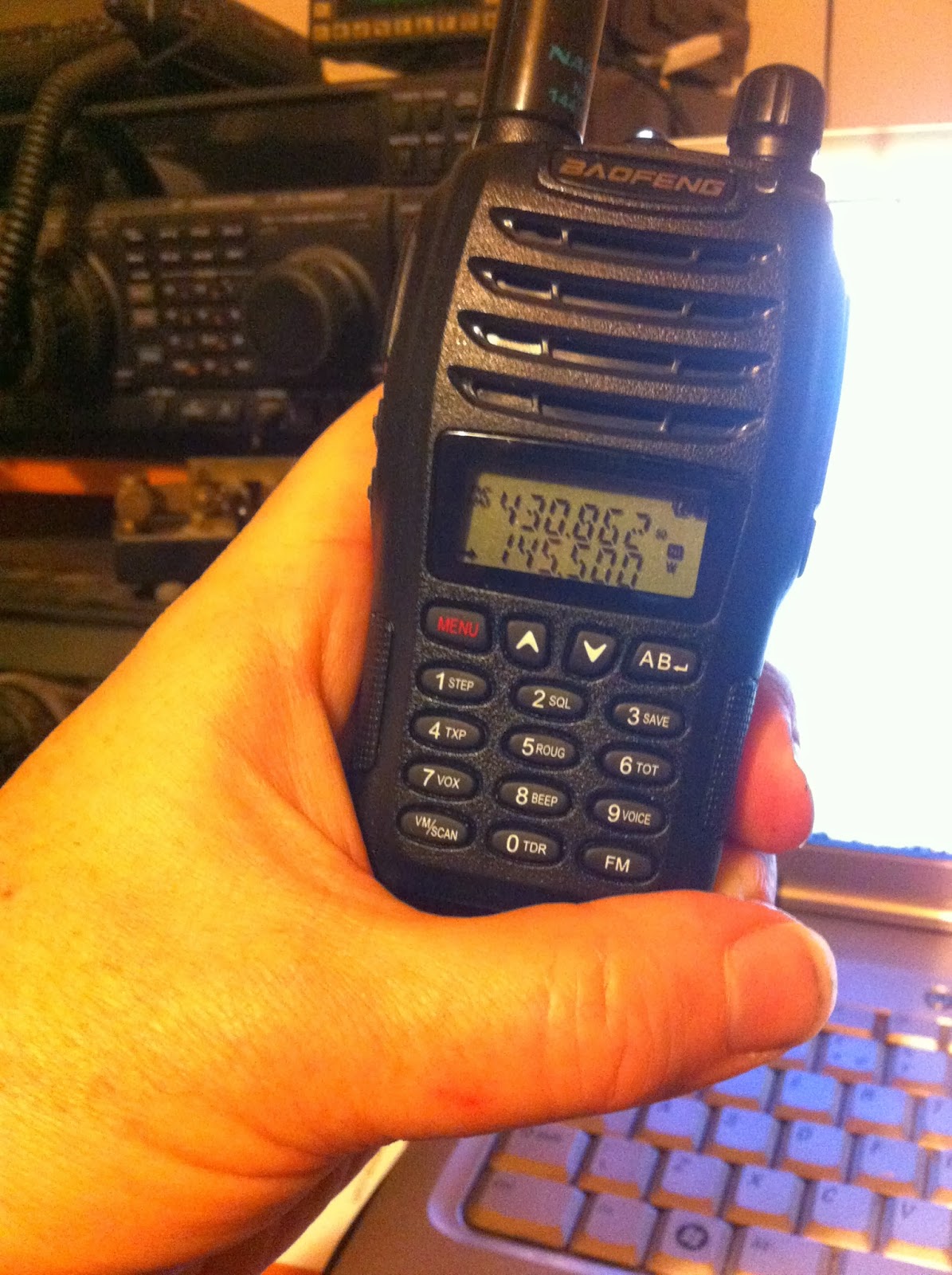
Baofeng UV-B6: 144/432MHz for under £30 – you can’t really say no!
My Baofeng UV-5R has been an unqualified success. I’ve always liked it as a simple, no-nonsense handheld. Since the summer, connected to my Elk hand held yagi, it has become my satellite transceiver of choice for making contacts on SO-50.
As I have commented before, I have enough handhelds really. However, Sunday night saw me on the Handy Radio website (a UK based vendor of Chinese handheld radios and accessories) looking around for an after market antenna to stick on my tiny Baofeng UV-3R. I couldn’t help but notice the Baofeng UV-B5 on sale at £28.99. It would have been silly not to, really.
Tim Kirby, G4VXE, is a regular contributor to AmateurRadio.com and writes from Oxfordshire, England. Contact him at [email protected].
 Ham Radio Deluxe |
 W5SWL Electronics |
 Ham Radio Prep |
 KB3IFH QSL Cards  Hip Ham Shirts  HamRadioAuctions HamRadioAuctions Reliance Antennas Reliance Antennas Enigma Shop Enigma Shop |  morseDX  Ni4L Antennas  R&L Electronics R&L Electronics antennas.us antennas.us QRV QRV |
- Matt W1MST, Managing Editor
