 |
 Thoughts
 17 January 2014 | by
 Some random thoughts before turning in.
Just when you think you have a handle on this propagation thing. The 80 Meter Fox Hunt was especially and surprisingly tough tonight. The Fox that I thought was going to be easy pickings was a lot tougher to nab than expected, Ray K9XE in Illinois.
Usually, Illinois is a cakewalk from NJ. Signals between the two states are usually decent and reliable. Not so tonight! I tried nabbing Ray for most of the first hour without success. At that point, I figured I’d better try the other Fox, John N4KV before time ran out. I didn’t want to flip the big switch with no pelts in the bag. Luckily, I was able to work John in TN after only a few calls, so I was “going home” with at least one fur.
I then switched back to Ray’s frequency to find that he had QSYed a bit up to try and end run some QRM, and he went simplex. After a few calls, I got a W2?J. So I put out my call a few times more. Finally, Ray got my call and sent my exchange. And as I was sending mine …… wouldn’t you just know it? A net barged on frequency without checking to see if anyone was there. Ray eventually copied my exchange despite the net QRM, but it took us about a good two or three minutes to get it done. Usually, a two way exchange occurs in well under a minute. In spite of it all, I brought two pelts home, but the one I thought would be easy was painful, while the one I expected to be trouble was far easier. So much for expectations and conventional wisdom.
The other thing going through my mind concerns this year’s Skeeter Hunt. Yes, it’s still seven months away, but the wheels are already turning. I am toying with the idea of changing the exchange this year. Up until now, I have gone with the conventional RST, S/P/C, Skeeter # or power output. I am thinking of ditching the RST and using the op’s first name instead. I am also thinking of seeing if I can get plaques donated for the top CW and SSB finishers.
Oh well, time to hit the sack. I am looking at a potential 12+ hour work day tomorrow. Ugh!
72 de Larry W2LJ
QRP – When you care to send the very least!
Larry Makoski, W2LJ, is a regular contributor to AmateurRadio.com and writes from New Jersey, USA. Contact him at [email protected].
Amateur Radio Newsline Report 1901 January 17 2014
- Russia’s Over The Horizon radar returns to the ham radio bands
- Appeals Court throws out the FCC’s definition of an Open Internet
- FT5ZM team interviewed just before they depart for Amsterdam Island
- Hams asked to help the widow of a radio amateur murdered in 2011
- Coweta County Georgia introduces new ham radio CERT team
- Special event station ZS9MADIBA celebrates the life of Nelson Mandela
- NYC broadcasting legand Bruce Morrow talks satellite radio and more
Pico Paddle
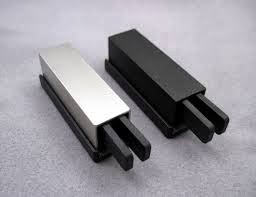
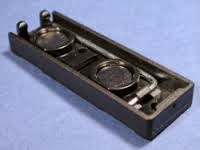
The cable used to interface with your rig is a little unique, in that it is a 2.5mm - 3.5mm and it is reversed with the tip being the dah. So it is a little different than the typical set up. If you are using the paddle with an FT-817 or a KX-3 or similar commercial transceiver, a simple adjustment in the menu will fix the reversed cable issue. If you are left handed, then it's perfect. The problem comes if you use the Pico paddle on a home-brew radio that doesn't have the ability to adjust the dits and dahs. You can do you own fix by cutting and reversing the wires and I suppose if you are using the paddle at a home station this would be sufficient, but the cable wires are thin and the solder job doesn't hold up well with portable use. There is a pre-made reverse wired cable available from MTechnologies that is a much better alternative.
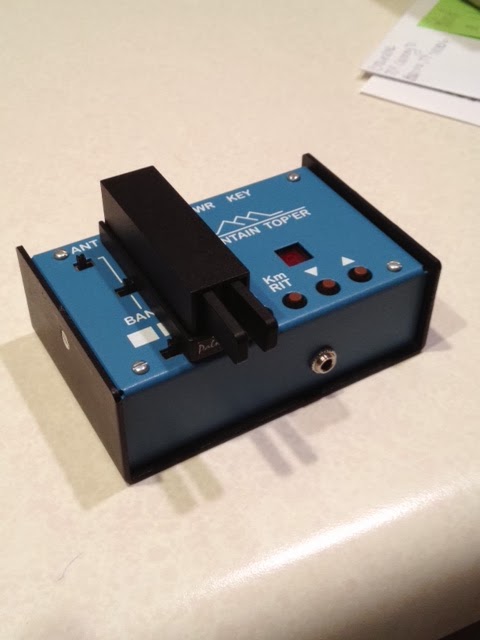
One nice feature of the paddle is the quick mount. It a very strong magnet that allows you to mount the key on the radio. In the field this is a nice feature and prevents you from having to hold a small paddle and log at the same time. I recently used it in combination with my MTR on a SOTA trip and I really liked the way the radio and paddle were integrated.
Mike Crownover, AD5A, is a regular contributor to AmateurRadio.com and writes from Texas, USA. Contact him at [email protected].
FUNCube Decode Issues
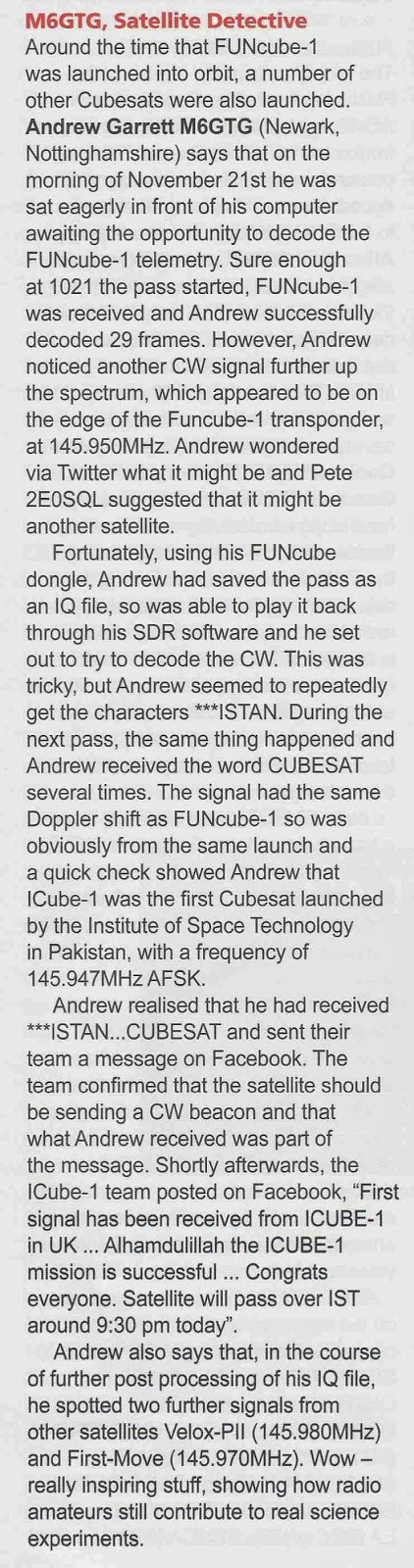
I also had a small write up in Tim Kirby's (G4VXE) VHF/UHF section of the February issue of Practical Wireless about my I-Cube1 reception which I have mentioned on here before.
I haven't progressed very far with my Arduino projects. There has been a set back in the plans to build and use an Ultimate3 QRSS kit. I had incorrectly assumed as it was a kit being sold commercially that it would satisfy my foundation conditions. However I have been advised that Foundation license holders may use radio equipment constructed using commercially available kits which satisfy IR 2028 which is all a bit vague and woolly, but I don't believe this particular kit does.
There is a simple solution, I will just have to take my intermediate assessment and exam at the first opportunity!
I have been doing a little WSPR spotting, getting some nice spots.

Over the Christmas/New Year period I have neglected the FUNCube-1(A073) satellite and was slipping down the telemetry upload rankings, sad I know!
Now I have got back the upstairs 'shack' I set up my original FUNCube Dongle on the laptop running the dashboard application continually to capture/decode the telemetry using the loft mounted discone. I took the opportunity to upgrade to the latest version 8.14 of the dashboard software, however something was amiss when checking the statistics I was only adding the odd frame here and there, sometimes not making a single decode during the high power daylight passes.
I switched back over to the newer FUNCube Dongle PRO+ running my main PC, which I had also updated to the version 8.14 dashboard and saw the same behaviour, rather than getting daylight decodes of 30+ frames I was just getting the odd 1 or 2.
My first thought it was an antenna or interference issue, but checking the SDR waterfall the signal is still very strong with little QRM. Suspecting a software issue introduced by the update I checked the FUNCube forum and found a thread which appeared to confirm my suspicions.
I have a number of discussions on twitter with various people including David Johnson (G4DPZ) an AMSAT-UK Committee Member and one of the developers of the FUNcube ground segment. David kindly performed an analysis of one of the passes yesterday where I managed just 2 frames, and from the results it does appear to be an issue at this end, rather than issue with the spacecraft.
I have uninstalled v8.14 and put back on an earlier version of the dashboard (v8.09) and thanks to a windows update last night have also performed a full reboot!
There was a good pass this morning at 62 degrees maximum elevation (to the east), followed by a lower pass at 22 degrees elevation (to the west so not so good) and it seems things have improved managing 68 and 17 frames respectively. So could this be an issue with the latest dashboard?
If anyone has suffered similar performance fall-off, or indeed not suffered any issues then please add some feedback to the FUNCube forum.
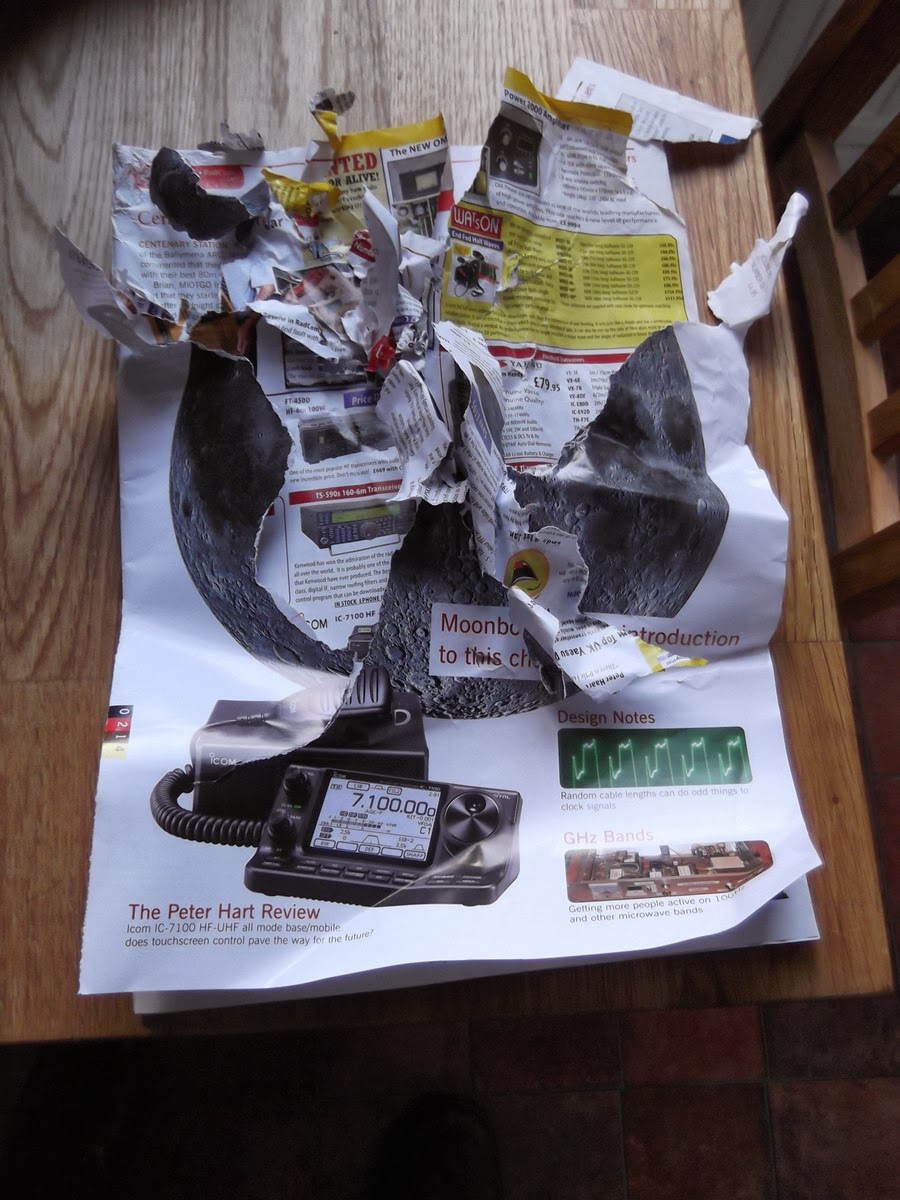
My copy of Radcom arrived but didn't have much time to read it..
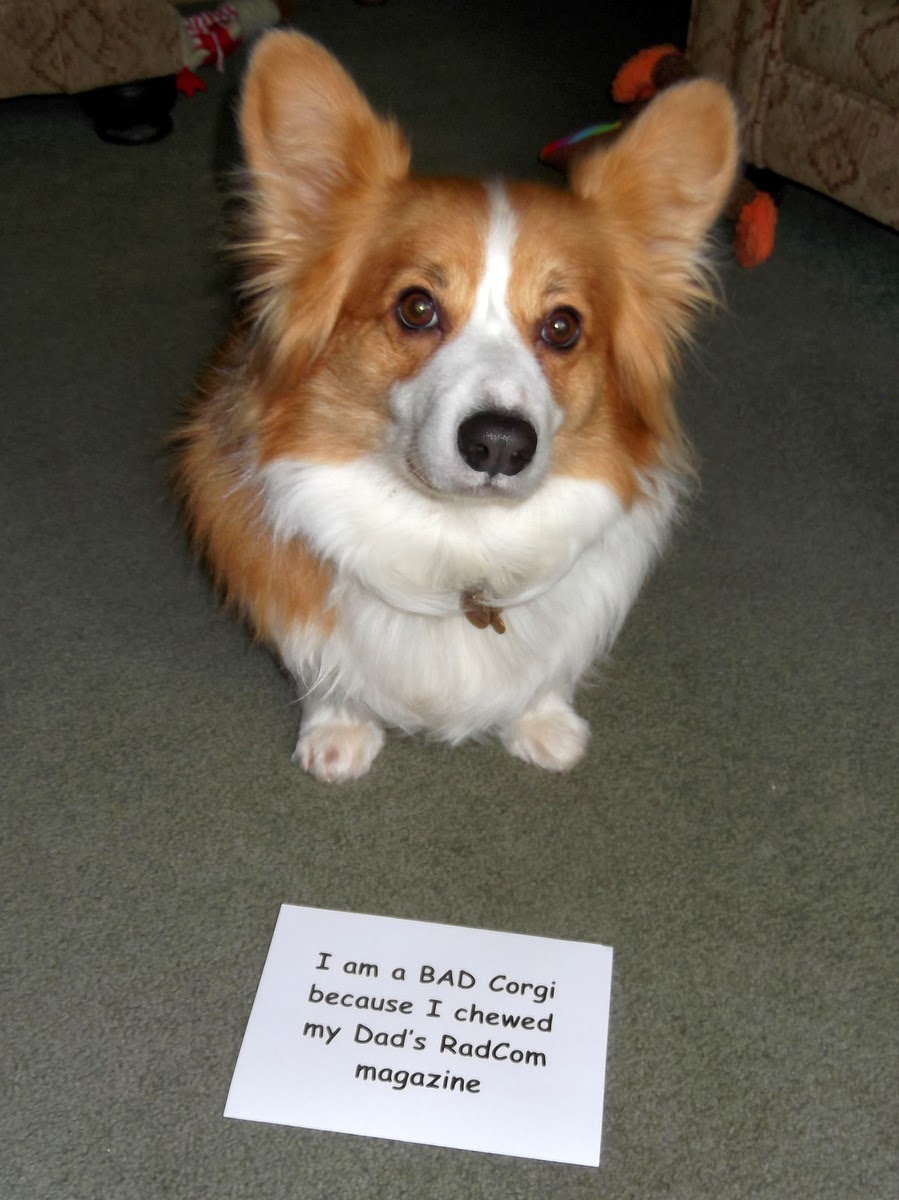 |
| The culprit! ;-) |
Andrew Garratt, MØNRD, is a regular contributor to AmateurRadio.com and writes from East Midlands, England. Contact him at [email protected].
Day Six
John Smithson, Jr., N8ZYA, is a regular contributor to AmateurRadio.com and writes from West Virginia, USA. Contact him at [email protected].
WSPR 160 & 80 meter

I saw propagation was good on the lower bands so I let WSPR run for a short time on 160 m and 80 meters. Here are the results.
Paul Stam, PC4T, is a regular contributor to AmateurRadio.com and writes from the Netherlands. Contact him at [email protected].
LHS Episode #121: Freudian Linux
 It’s the first episode of 2014, and we start the year off right: by talking about philosophy. Say what? Yep, that’s right. Trust us, it’s a lot more entertaining that it might at first sound. We have a special guest on the program, Ted (WA0EIR), who brings a through-provoking topic with him. Then we have a bunch of the usual suspects, including short topics on Linux, amateur radio, science and more. There is even feedback, info on our Indiegogo campaign for Hamvention and our Raspberry Pi giveaway. Don’t miss it!
73 de The LHS Guys
Russ Woodman, K5TUX, co-hosts the Linux in the Ham Shack podcast which is available for download in both MP3 and OGG audio format. Contact him at [email protected].
 Ham Radio Deluxe |
 W5SWL Electronics |
 Ham Radio Prep |
 KB3IFH QSL Cards  Hip Ham Shirts  HamRadioAuctions HamRadioAuctions Reliance Antennas Reliance Antennas Enigma Shop Enigma Shop |  morseDX  Ni4L Antennas  R&L Electronics R&L Electronics antennas.us antennas.us QRV QRV |
- Matt W1MST, Managing Editor
