 |
 Music from Hawaii
 1 February 2014 | by
I’ve worked a little over 700 DX stations now but only 10 of them have been on the forty meter band. Moscow (RD3A) was an exceptional 40 meter contact, but most of my 40 meter contacts have been what I consider “close” for bouncing a signal off the Ionosphere. They’ve landed in Jamaica, Barbados, Cuba, Puerto Rico, and even France, Spain, Italy, Montenegro, and Germany.
Last night I worked another “good one” on the 40 meter band. I was running my customary three watts of power and using my indoor random wire antenna.

I was astounded to hear the signal of a Straight Key Century Club member in Volcano Hawaii on 7.054 MHz. Max (KH6ZM) was running the K3Y/KH6 station and at 4,527 miles from Charleston, doing a fine job! In February and May of last year I was able to work another Hawaiian station (KH6LC) on both ten meters and 20 meters, but I never, in a million years, expected to work Hawaii on the forty meter band. This one is a real treat.
I’ve not been intentionally pursuing the K3Y stations, but now I’ve worked K3Y/1-2-4-5-8-KH6-KP4- EU and NA. I’ll be listening a little more carefully now with the addition of the Hawaiian K3Y station.
I consider both Morse Code and Music to be universal languages. When I think of Hawaii, I often think of this song and this musician. Israel Kamakawi was a gentle giant who had amazing rhythm, a creative mind, and the ability to blend a soft voice along with a very smooth touch on a Ukulele. I think a telegraph key, in the hands of a good operator, can take on the same qualities.


John Smithson, Jr., N8ZYA, is a regular contributor to AmateurRadio.com and writes from West Virginia, USA. Contact him at [email protected].
One down, Eleven to go – QSO a Day
As previously mentioned, I successfully completed a QSO a Day goal in 2012 and was brave enough (or perhaps crazy enough) to attempt it once again in 2014.
With January officially behind me, I’ve managed to get on the air and make at least one QSO each and every day for each of the 31 days in January. I’ll admit…I’m starting out slow and pacing myself. Most days its been “one and done” but a few other days I’ve managed to spend more time on the air.
For January 2014, I’ve worked 73 (great number) QSO’s and all have been using the JT65 mode. While each successful day was a high point, the greatest success was working French Polynesia and increasing my DXCC count by one more.
While my actual “on air” time has been limited, I have been spending time assisting a new startup amateur radio club and completing a few projects related to the hobby.

The QSO breakdown for January is as follows:
Mode
Number QSO’s
JT65
73
SSB
0
PSK31
0
2m FM
0
Additional notes of interest:
DX Stations Worked in January – 1
New DX Entities in January – 1
Total QSO’s for 2014 – 73
Total consecutive QSO days – 31
Days left in 2014 – 334
Until next time…
73 de KD0BIK (Jerry)
Jerry Taylor, KD0BIK, is a regular contributor to AmateurRadio.com and writes from Colorado, USA. He is the host of the Practical Amateur Radio Podcast. Contact him at [email protected].
Double Red Letter Day!
Wow! I received two of the best e-mails of the young year today!
The first was from Bruna Begali telling me that my Simplex Mono would be shipping within the next few days. From the e-mail, it became apparent that they keep a stockpile of keys located somewhere in the US, in order to keep delivery times down. Also, she asked me which aluminum finger pieces I would like as she would be sending those from Italy. I didn’t even realize that I was entitled to those! Unexpected bonus!
The second e-mail came this afternoon and it was “the” e-mail from Elecraft. My KXPA100 kit (with autotuner) is ready to ship within the next 1-5 business days. A pdf of my order was attached to review and confirm. I did that faster than you could say “Jack Robinson”. Wow, if I can get that next week, and then build it next weekend, I just might be able to have it up and running should I have to resort to QRO power to get FT5ZM in the log.
Larry Makoski, W2LJ, is a regular contributor to AmateurRadio.com and writes from New Jersey, USA. Contact him at [email protected].
Fast

I made a few QSO's today with PSK31 on 20 and 40 meter. And all of them were in a hurry. No exchange of power, antenna or any thing else. No, QSL 73 GL and gone are they. What is happening? No more time for a normal QSO? If is is an exclusive DX station, okay I can understand. But a normal range QSO... everything must be done in a hurry. I need a new thrill I guess. Most of the QSO's are boring. Sometimes I think I should stop for awhile.
Paul Stam, PC4T, is a regular contributor to AmateurRadio.com and writes from the Netherlands. Contact him at [email protected].
This happens to everyone else but not me…….
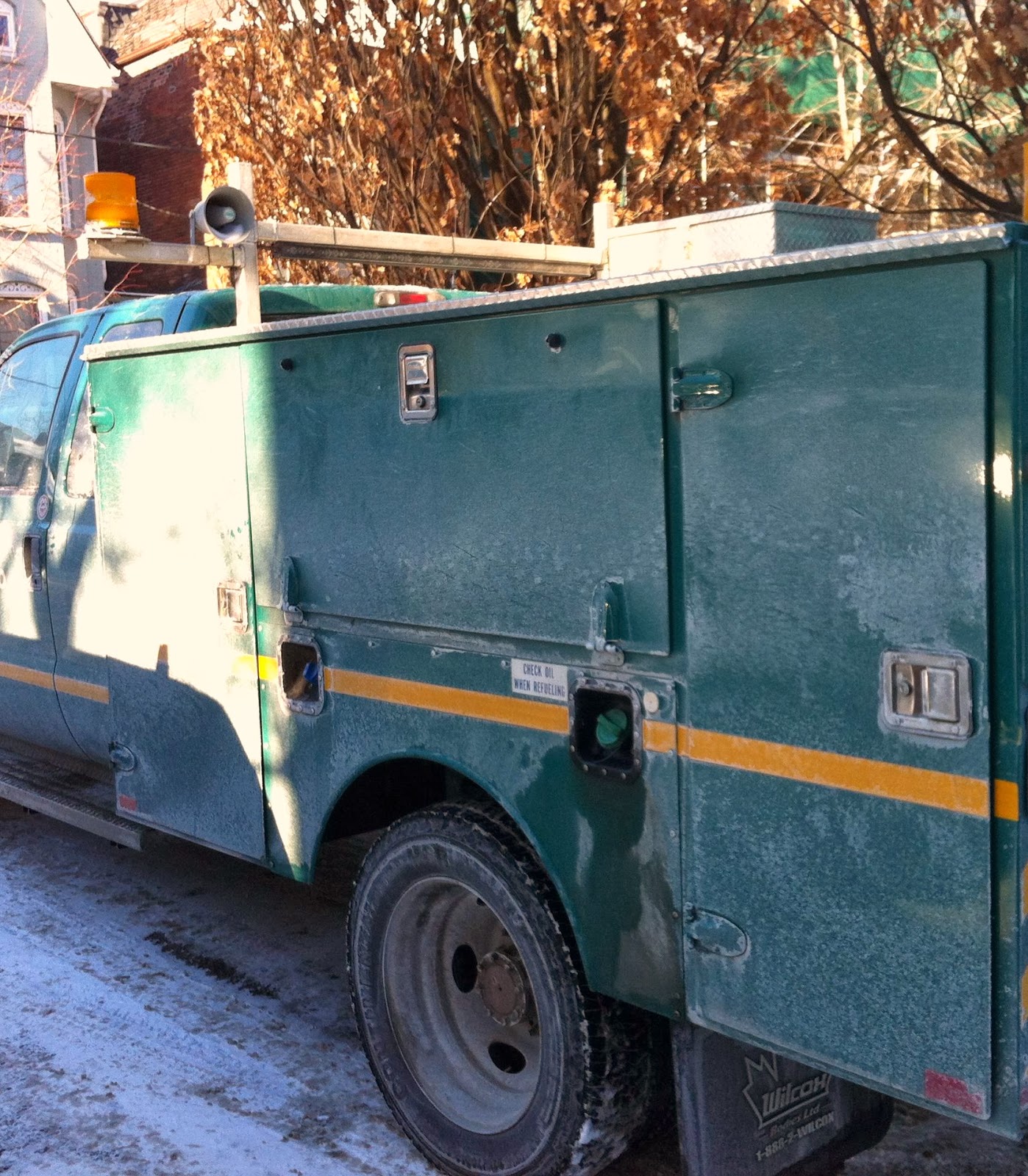 |
| Iphone meets truck |
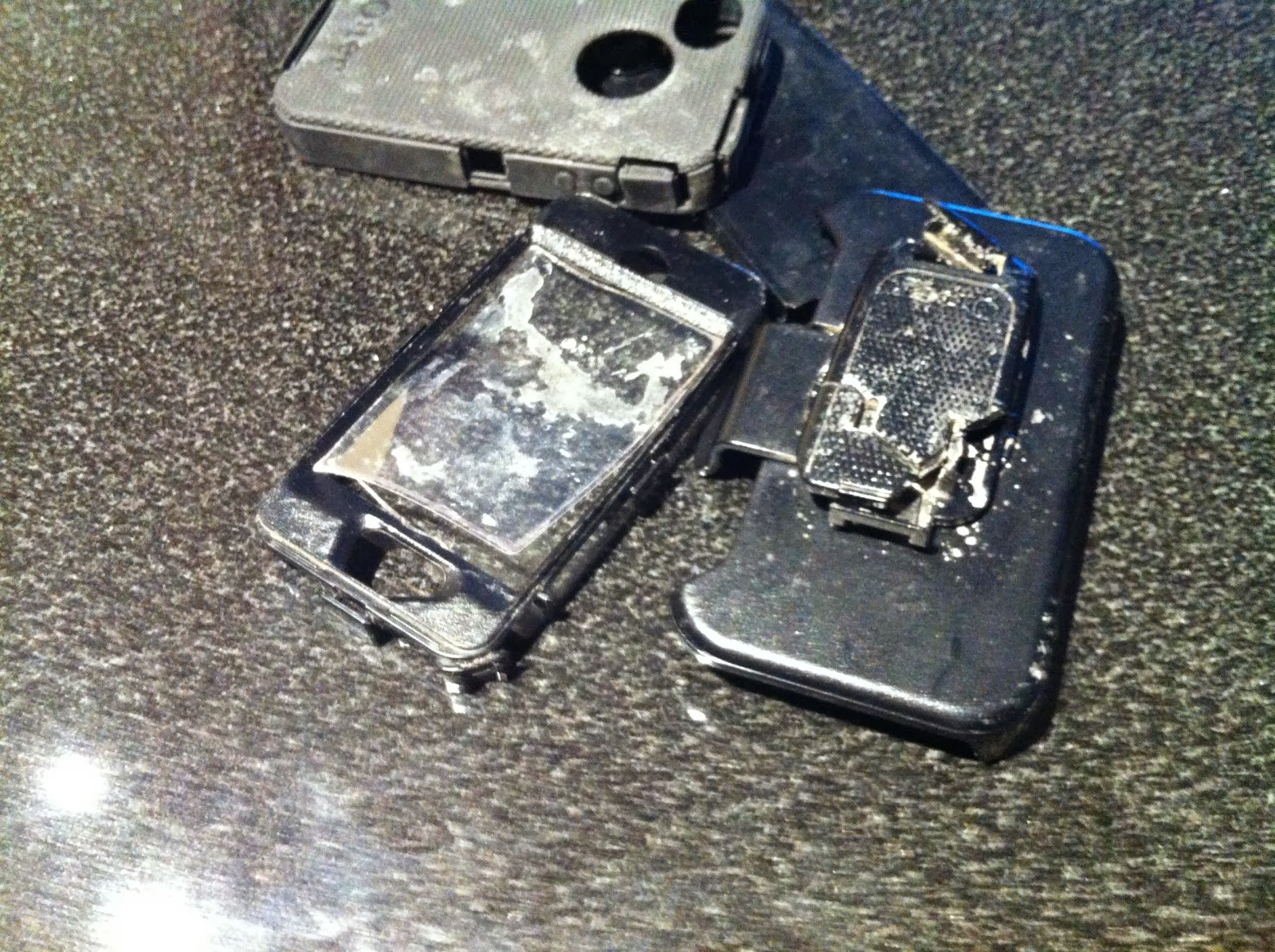 |
| Otterbox defender case |
Mike Weir, VE9KK, is a regular contributor to AmateurRadio.com and writes from New Brunswick, Canada. Contact him at [email protected].
Amateur Radio Newsline Report 1903 January 31 2014
- Two hams in Europe monitor the Rosetta spacecraft over a 500 million path
- Severe weather forces the cancellation of ARISS contact
- Some new propagation forecasts for the current solar cycle
- Cuba gives hams access to 5 MHz but with strings attached
- Ham radio and Facebook team up to find a sailor out of touch with his family
- A permanent makeover for the FCC’s home website page
Vintage J-38 telegraph key.
Its finally arrived. My Lionel J-38 Morse key from the world war 2 era.
I found the key on Ebay at a fairly reasonable price but because the auction ended in the middle of the night I decided to set a stupidly high bidding amount so I cold hopefully win the auction.
In the end I really didn’t need to bother the price never increased at the end of the auction so I won the key for $61 and $42 for shipping. So not cheap, but the condition of the key really did warrant the price.
It had been stuck in customs for 3 weeks in the UK until I got the bill from UK Customs asking for yet more money due to a calculation error on the VAT oh and this letter will cost you £8. So another £20.41 was spent unlocking the key from the customs.
Anyway. Its here now. After a very long and quite awful day of work I decided to break out the Brasso and have a go at cleaning the key. I did learn 1 thing about stripping these things down, and that is to keep the left / right parts of the key separate. That proved really useful advice and everything went back exactly in the same place with no fuss.
These keys are lovely to use. Thus far I haven’t plugged it into a radio (that happens this weekend) but just getting the gap spacing, feel and tension right really makes this key a true pleasure to get your hands on.
The first portable outing with this key will be with my newly constructed FOXX3 transceiver. I’m really looking forward to sitting outside and using the key to talk to the world. Albeit slowly and quite quietly. But that’s some of the joy or going out portable.
I did make a small video of the before and after the cleaning processes, I think you will agree the key looks a lot better.
Dan Trudgian, MØTGN, is a regular contributor to AmateurRadio.com and writes from Wiltshire, England. He's a radio nut, IT guru, general good guy and an all round good egg. Contact him him here.
 Ham Radio Deluxe |
 W5SWL Electronics |
 Ham Radio Prep |
 KB3IFH QSL Cards  Hip Ham Shirts  HamRadioAuctions HamRadioAuctions Reliance Antennas Reliance Antennas Enigma Shop Enigma Shop |  morseDX  Ni4L Antennas  R&L Electronics R&L Electronics antennas.us antennas.us QRV QRV |
- Matt W1MST, Managing Editor
