 |
 Series Seven Episode Three – Radio Codes (9 February 2014)
 9 February 2014 | by
 Series Seven Episode Three of the ICQ Amateur / Ham Radio Podcast has been released. The latest news, Martin (M1MRB) and Colin (M6BOY) discuss the 50 years of ICOM and Martin, reviews radio codes.
- Canada fully authorises 5 MHz Channels
- New Essex Ham Radio club in Thurrock
- Fatal West Virginia tower collapse
- 4m VHF Transatlantic Beacon
- K9LA to receive the 2013 Bill Orr, W6SAI, Technical Writing Award
- EuCW launches Snakes and Ladders
- First details of Icom’s New Touch screen ID-5100 Dual Band D-STAR Mobile Radio
- IC-7700 HF/50MHz Base Station firmware upgrade
- Radio Hams responding to Slovenia electricity disruption
- Icom celebrate their 50th anniversary
Colin Butler, M6BOY, is the host of the ICQ Podcast, a weekly radio show about Amateur Radio. Contact him at [email protected].
Getting to be crunch time
For working FT5ZM, and it looks like I may not get them. I spent three hours tonight, trying to work them on both 20 and 30 Meters – no dice. They QRT on Tuesday, so time is running short. I would really like to work them, as most of the QRPers that I know are in their log book. But if it turns out that I don’t ….. well, the sun will still keep shining, the Earth will still keep spinning, and come Springtime, bunnies and birdies will dance on the lawn. And come 500 years from now, no one will know who W2LJ was, or how many countries he worked and at what power. You have to keep your eye on the bigger prize.
That’s like at the VE session that I worked this morning ….. there was a Ham there who was quite disappointed about being a General Class operator. This person has tried to upgrade to Extra, but is having a hard time of it, and is getting discouraged with the whole deal.
Goals are a good thing, but you have to remember that this is a hobby. We’re not looking for a cure for cancer here. It’s high time to enjoy what you have and not worry too much about what you don’t. Once you have fun with where you are, that just may take off enough self inflicted pressure to allow you accomplish what you feel is an impossibility.
As they say, the joy is in the journey, not the destination, whether that be an Extra class license or DXCC Honor Roll.
72 de Larry W2LJ
QRP – When you care to send the very least!
Larry Makoski, W2LJ, is a regular contributor to AmateurRadio.com and writes from New Jersey, USA. Contact him at [email protected].
Solving the Baofeng Cable Problem
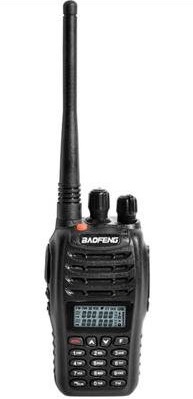 The various models of Baofeng handheld transceivers keep popping up everywhere. At prices less than $50, radio amateurs (including veterans and newbies) are scarfing up these radios. See my postings or check out PD0AC’s blog for more information.
Also very frequently, the new owner of such a radio finds that they cannot figure out how to program it. Of course, the solution is “use the programming software” which is often helpful (and often not). The really gnarly problem that usually surfaces is getting the programming cable to work.
It appears that many of the cheap Baofeng USB programming cables use a clone of the Prolific PL-2303 chip that is not supported by the latest Windows driver. This Miklor web page does a good job of explaining the driver problem and giving some helpful advice. (Actually the Miklor site has tons of information on these radios, so check it out.) I’ll also note that the same cable can be used to program a Wouxun radio, so the same remedies apply. Using the info on the Miklor site allowed me to get my Baofeng/Wouxun cable working with my old Windows XP computer. When I bought a new notebook PC, it came with Windows 8 installed, which I later “upgraded” to Win 8.1. (I will spare you the sad story of dealing with Win 8 and 8.1) Anyway, I have not gotten the Baofeng cables to work on Win 8 or 8.1, even following the Miklor advice.
I started using the Chirp programming software, an open source application that supports a wide variety of radios. (I have found the supplied Baofeng and Wouxun software to be, uh, well, crapware. It can be made to work but it is a pain.) While the Chirp software is not bug free and is in perpetual beta, it basically works well and does a great job of supporting a wide range of radios. I noticed that the Chirp Cableguide recommends the use of programming cables with an FTDI USB chip. I found this one on Amazon for $19, a little more expensive than the cheapo cables but not bad. I plugged it into my Win8.1 computer and it started working immediately. I did not load any drivers, Windows actually did its job and took care of it for me. In minutes, I was programming a variety of Baofeng and Wouxun radios. Success!!!
My strong recommendation at this point is to use the Chirp software and get a FTDI-based programming cable. You will be a much happier Baofeng or Wouxun owner.
73, Bob K0NR
Bob Witte, KØNR, is a regular contributor to AmateurRadio.com and writes from Colorado, USA. Contact him at [email protected].
The best KX3 case
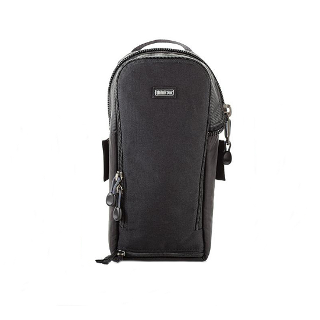
When giving the video tour of my latest QRP pack I was asked by a few fellow KX3 owners what case it was that I was using.
Ive created another YouTube clip that shows off the Think Tank Strobe Stuff Pouch. Which was recommend to me by G4ILO on his blog.
Anyway I hope the review shows you how the pack fairs up.
Dan Trudgian, MØTGN, is a regular contributor to AmateurRadio.com and writes from Wiltshire, England. He's a radio nut, IT guru, general good guy and an all round good egg. Contact him him here.
50 States
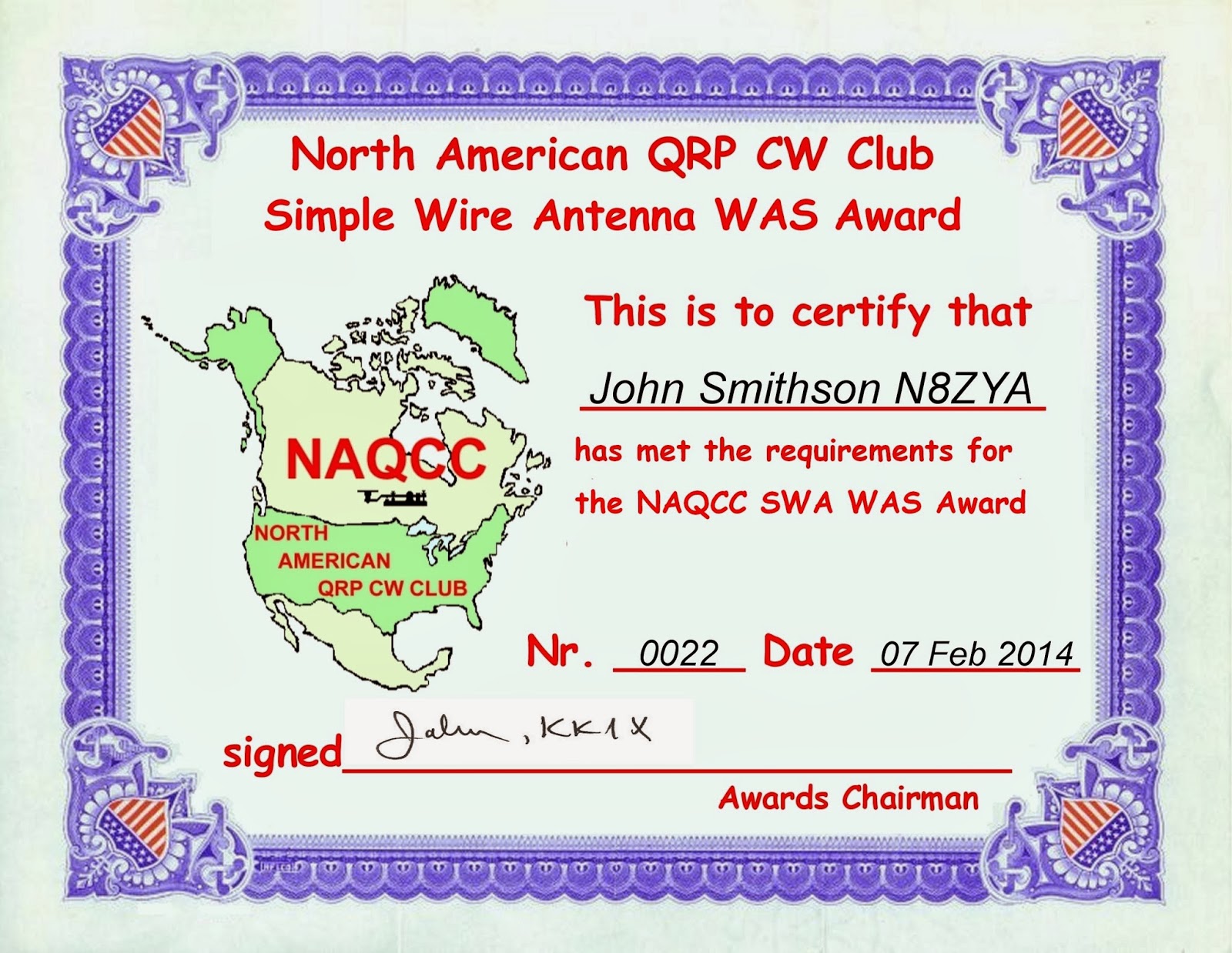
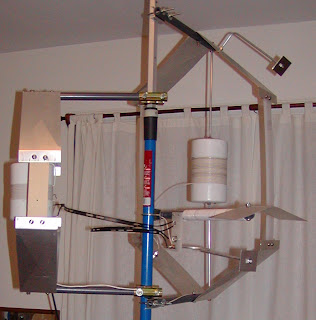
Here’s a certificate I’m very proud to add to my NAQCC folder. The majority of my 50 state contacts were made with my indoor mounted Isotron antennas on either 40 meters or 20 meters. Alaska and Hawaii were two states I had doubts of ever working from my city location considering I’m forced to operate with stealth antennas. I worked those last two states with a 50 ft indoor random wire.
I’m also within a very short distance of my DXCC award now with 95 countries showing on the QRZ.com log book. I need to count all those in my “personal” log book since I started that log book a year or so before the QRZ book.
John Smithson, Jr., N8ZYA, is a regular contributor to AmateurRadio.com and writes from West Virginia, USA. Contact him at [email protected].
Amateur Radio Newsline Report 1904 February 7 2014
- The Dayton Hamvention announces its 2014 award winners; the
- FCC opens a short window to comment on WRC 2015 preparations
- An FCC reform measure is introduced in the United States Senate
- Think-tank says its time to merge the FTC with the FCC
- Russian Special Events Station celebrates the 2014 Winter Olympics
- New ham radio video podcast will be coming soon from the UK
- CQ Editor W2VU answers questions about the future of publishing
FT5ZM with QRP
I can't say enough about the quality of this team and their operating plan. Amsterdam is antipodal to my QTH and yet these guys have been workable on most bands, I have worked them on six bands using my battleship sized station and yes, I worked them yesterday QRP with my FT-817 on 20m. Over 2,000 miles per watt! It's ironic, but there is power in QRP. There was a small pile-up, relatively speaking, covering 2-3 KC's but my 5 watt signal travelled almost exactly half way around to the world to be copied by a station almost 12,000 miles away. Very cool.
The QRP contact was the first good news of the day, the second was a bonus. The common grayline/shared darkness with FT5 and my QTH in W5 is about 30 minutes. Yesterday around 0028z, with still some faint sunlight, the FT5ZM signal came out of the mud on 3.523 listening up 2. I use only an inverted L on 80m at about 55 feet at its apex, so we aren't talking about a superior antenna. Their signal was in the 339 - 449 range. Very light copy, but solid. I was excited just to copy them. I am usually confident when I jump in a pile-up, but not this one, figuring the east coast would drown me out. However on about the fourth call I could hear faintly but solidly, AD5A 599, I went back, de AD5A 599 599 bk.......AD5A 599 599. Oh no, he didn't hear me come back.....de AD5A 599 599 599 bk.......AD5A 599 TU UP.....Yesssss! An unexpected bonus and a short victory dance and another short one when the QSO was verified in the online log today.
There are so many ways to enjoy radio and yesterday was another fun day in this wonderful hobby of ours.
Mike Crownover, AD5A, is a regular contributor to AmateurRadio.com and writes from Texas, USA. Contact him at [email protected].
 Ham Radio Deluxe |
 W5SWL Electronics |
 Ham Radio Prep |
 KB3IFH QSL Cards  Hip Ham Shirts  HamRadioAuctions HamRadioAuctions Reliance Antennas Reliance Antennas Enigma Shop Enigma Shop |  morseDX  Ni4L Antennas  R&L Electronics R&L Electronics antennas.us antennas.us QRV QRV |
- Matt W1MST, Managing Editor
