 |
 SSN data file goes AWOL
 15 February 2014 | by
 I’ve not updated the VOAProp file ssn.txt for a while as some irritating health issues kept on getting in the way. I thought I would have a try today butit seems the NOAA data file Iused to update it from has moved to a new address. Does anyone know where it has gone to?
Julian Moss, G4ILO, is a regular contributor to AmateurRadio.com and writes from Cumbria, England. Contact him at [email protected].
WARC bands
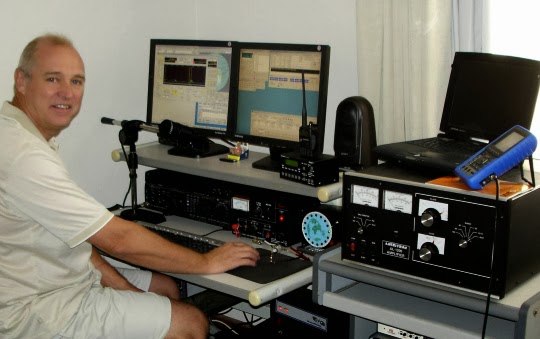
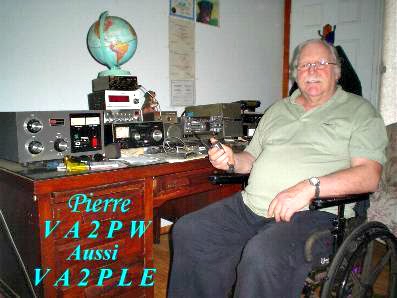
The WARC bands are nice to explore. This afternoon I worked on 12 meter A92GE from Bahrain. I did heard several stations from Bahrain. Also worked TF3JB from Reykjavik, Iceland. On 15 meter I had a nice QSO with VA2PW Peter (Pierre) from Quebec, Canada.
Paul Stam, PC4T, is a regular contributor to AmateurRadio.com and writes from the Netherlands. Contact him at [email protected].
BCD436HP Sentinel Software won’t read SD Card
BCD436HP Sentinel Software won’t read SD Card
Like many, I was excited to know that Uniden was coming out with a new line of scanners. As someone that owns many of their products as well as their HomePatrol I have really liked the direction they have been going with easy of programming (like GRE has done for some time) and the ability to use GPS to automatically update locations is another great option.
Well, you have read enough about the scanner and I will do my own review at some point, but this post is about the fact that there has been a nagging issue that I have seen others have and unfortunately, I ran into the same issue.
For some reason Uniden did not format their SD Cards in the same format so there has been some of us with both the UNIDEN BCD536HP as well as the BCD436HP that have had SD Card unreadable or not recognized by the Sentinel software. I have read many posts out there about people getting frustrated and sending theirs back as defective units which I was concerned about when I read this, but alas after trying several cables, different computers with Windows 7, Windows 8 and even Windows 8.1 I found a very simple solution.
http://nicktoday.com/bcd436hp-sentinel-software-wont-read-sd-card/
Nick Palomba, N1IC, is a regular contributor to AmateurRadio.com and writes from Florida, USA. Contact him at [email protected].
Snow bound – not quite.
Yesterday was a day spent working from home – as much as I could via my company issued laptop. We received about 14 inches of snow.
I am back at the office today and am looking forward to the upcoming three day weekend. There’s lots of Amateur Radio stuff to look forward to.
1) This weekend is the big ARRL CW DX contest.
2) This weekend is the monthly Polar Bear Moonlight Madness Event
3) This is the weekend my KXPA100 gets built and put online.
I am NOT looking forward to another 2-4″ of snow tomorrow, along with the necessary snow removal chores. BUT Spring is closer than farther away at this point, so you have to keep your eyes on the prize.
I did manage to get on the air last night for the 80 Meter QRP Fox Hunt and bagged both Foxes – Dave N1IX in NH and Rick NK9G in WI. I was able to get on between bouts of thundersnow. Yes, that’s right – thundersnow. As the big Nor’Easter rotated around, the rain that had started falling changed back to snow as the low pressure system started siphoning cold air. The warmer/colder air mix started a little battle which generated a few instances of lightning and thunder during a snow event. Not common, but not the rarest, either.
I do have to admit that I was spoiled rotten by the last few years of drier, milder Winters that we have been experiencing. This year, we have made up for that in spades, and I am more ready for Spring than I have been in a while!
72 de Larry W2LJ
QRP – When you care to send the very least!
Larry Makoski, W2LJ, is a regular contributor to AmateurRadio.com and writes from New Jersey, USA. Contact him at [email protected].
Bloody Proprietary Connectors
I came across this video rant by David L. Jones on the EEVblog concerning proprietary cables on consumer devices. I agree with him completely. Warning: some language not suitable for kids.
Unfortunately, if you look at ham radio gear, we are in even worse shape than the consumer market. Heck, even the freaking microphone connectors are unique to each manufacturer.
Bob Witte, KØNR, is a regular contributor to AmateurRadio.com and writes from Colorado, USA. Contact him at [email protected].
Amateur Radio Newsline Report 1905 February 14 2014
- Hams stand ready in Slovenia as severe weather turns electric power off
- RAC says it will protect hams from proposed cellphone tower law
- United Kingdom monitoring station traces 40 meter interference to France
- On the air party to introduce High Frequency Digital Audio to the world
- Commissioning of the new Ham Video system on the ISS postponed to March
- Twinkling the light of Morse code is alive once more from the UK
AmateurLogic 63: All About Radio

AmateurLogic.TV Episode 63 is now available for download.
Tommy and George visit the Jackson Amateur Radio Club’s 2014 Capital City Hamfest and bring back some unique stories. A special appearance by the guys from Ham Dynasty. Peter talks All About Radio. Tommy shows us simple tips to Secure Your Pi. And George brings us some Soldering Tip Tips.
1:04:52 of ALTV with the usual suspects.
View in web browser: YouTube
George Thomas, W5JDX, is co-host of AmateurLogic.TV, an original amateur radio video program hosted by George Thomas (W5JDX), Tommy Martin (N5ZNO), Peter Berrett (VK3PB), and Emile Diodene (KE5QKR). Contact him at [email protected].
 Ham Radio Deluxe |
 W5SWL Electronics |
 Ham Radio Prep |
 KB3IFH QSL Cards  Hip Ham Shirts  HamRadioAuctions HamRadioAuctions Reliance Antennas Reliance Antennas Enigma Shop Enigma Shop |  morseDX  Ni4L Antennas  R&L Electronics R&L Electronics antennas.us antennas.us QRV QRV |
- Matt W1MST, Managing Editor
