 |
 HAB Talks
 19 May 2014 | by
 Last week I gave two talks and demonstrations at local radio societies on High Altitude Ballooning in the UK and how to track them.
The first was at South Kesteven ARS (SKARS) the club I am a member of. The second was at Spalding and District ARS (SDARS)
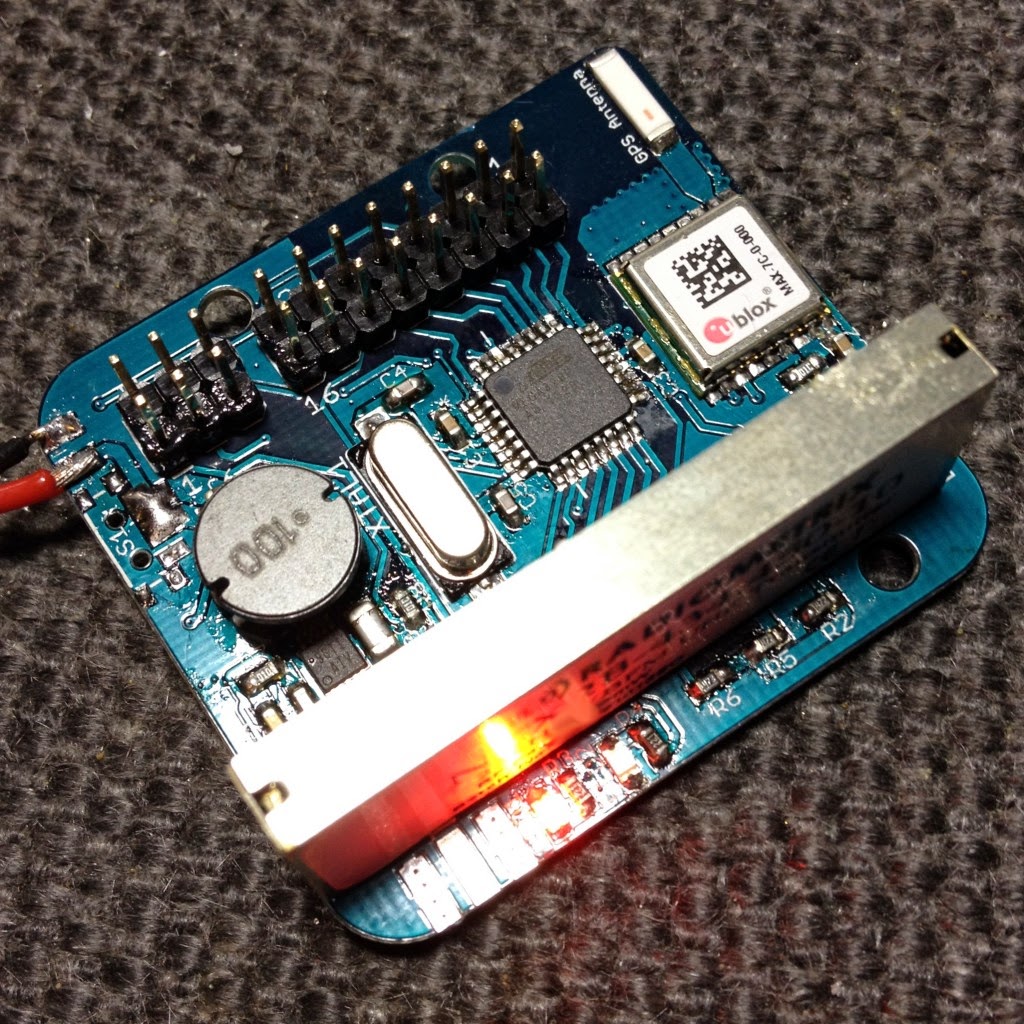
This was an updated version of the talk I gave last year at SKARS. Since then I have started work on my own tracker NERD-1. Sadly development has stalled and is still only at the prototype stage (NERDTEST) but I was able to use it to demonstrate reception and tracking using the UKHAS Habitat system spacenear.us/tracker
The SDARS venue had a projector and a decent WiFi Internet connection which allowed me to demonstrate how to set up DL-FLDIGI for a ground station and NERDTEST being received and both showing up on the map in real time.
My original PowerPoint presentation has been given a total makeover and I has included some videos of Felix Baumgartner, Dave Akerman’s Babbage Teddy Bear and wacky chef Heston Blumenthal's ‘Spud-in-space’ feature from his new television program.
To show a real tracker Steve Smith (G0TDJ) of Project Hab had been kind enough to loan me his VAYU-NTX unit.
I am not the most confident of people when it comes to public interaction and it was encouraging to see people genuinely interested in what I was talking about and keen to have a look and I have had some very nice feedback.
Thanks @nerdsville for an excellent talk on High Altitude Balloons and telemetry, look forward to your launch. pic.twitter.com/H8AevMNQ13
— Spalding DARS (@SDARS) May 16, 2014
Excellent talk at Club tonight by @nerdsville on high altitude balloons and radio data. Andrew knows his subject and enthusiasm infectious.
— Jim Scott G0HGH (@photoimagery) May 16, 2014
Giving these talks has spurred me to pull my finger out and get on with actually flying something and finishing the payload!
Another mothballed project is my Ultimate3 beacon kit, still being only a Foundation licence means I cannot use it to transmit but that may be about to change as tomorrow I am sitting my Intermediate exam which will allow me to properly experiment with transmitters. The exam was arranged through SKARS by Chairman Nigel Booth and the date came through a little sooner than I was expecting so perhaps not quite as prepared as I really should be, but with a decent electronics background and some quick revision it should be fine....
My operating has been largely limited to the UKAC VHF contests, setting aside a few hours per week is manageable and my results are gradually improving, even getting some complements on my operating.
Two weeks ago I was able to attend the local Dambusters Hamfest at Thorpe Camp and managed to pick up a decent rotator, this has proved invaluable for the UKAC as I don’t have to keep going outside the shack to turn the antenna.
Now if I hear someone calling CQ and can monitor a QSO to get the locator and the bearing a quick turn of the dial and I have a better chance. The program I use is BD_2004 from W1GHZ, running in console window it is a simple case of setting up your own locator and then entering other locators the bearing and distance are given.
As well as the weeknight UKAC there have been a couple of weekend VHF contests, I managed a couple of hours this weekend on the RSGB 144MHz May Contest and I had the best DX ever and nearly every QSO was in a new locator square!

I wasn’t able to spend more time on the contest as we took the dogs on a sponsored dog walk on Sunday in aid of the local hospice and on Saturday I attended the British Astronomical Association, Radio Astronomy Group General Meeting at the National Space Centre.
The notion of amateur Radio Astronomy is something that has fascinated me, up to now the only dabbling I have done has been with meteor detection using reflections from the Graves space radar (blog entry). This year some of the talks dealt with using RTL-SDR and Arduino/Raspberry PI in low-cost observation. Also at the meeting was a number of demonstrations and stands from other projects we I was able to garner a great deal of useful information.
Being able to detect ‘Hydrogen-Line’ emissions to map the Galactic plane using a FUNCube or RTL-SDR dongle is astonishing, not to mention low cost VLF receivers to detect Sudden Ionospheric Disturbances SIDs and magnetometers to measure the effect of the solar wind on the earth’s magnetic field!
It is all on the to do list, but it was a great day with some really fascinating talks and some exciting plans by the group. It was a shame I had to leave earlier than I wanted as I did miss some of the later presentations.
Anyway best get an early night!
Andrew Garratt, MØNRD, is a regular contributor to AmateurRadio.com and writes from East Midlands, England. Contact him at [email protected].
Nice, watery CW signals from Alaska
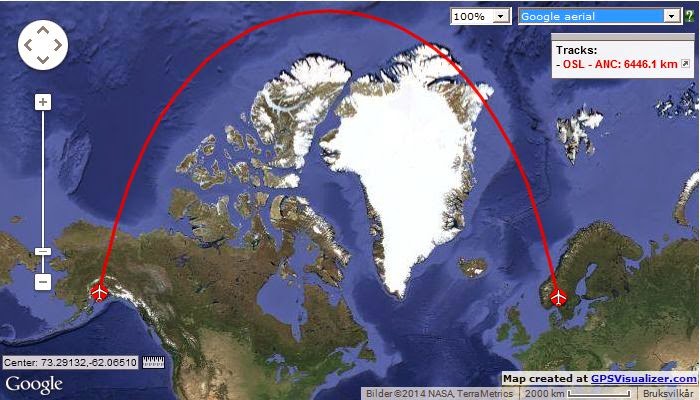 |
| Great circle path between Anchorage and Oslo |
Here’s what a transpolar signal sounds like (click here to listen) and looks like (below). This one has traveled from Anchorage, Alaska to Oslo, Norway.
The characteristic sound of a CW signal that has passed over a moderate geomagnetic disturbance (Kp = 2) isn’t too hard to recognize with a little practice. There is also some static on this short recording as we had a local thunderstorm coming in with the first summer days here.
The great circle distance between the two cities (actually their two airports) is 6446 km as illustrated by GPSVisualizer. Anchorage and Oslo are about at the same latitude, 61° N and 60° N, respectively. As they are at longitudes 149° W and 10° E, there is a difference of 159 ° – almost 180 ° – and this means that the signal almost passes directly over the North Pole, although a bit hard to see on the projection used in the map.
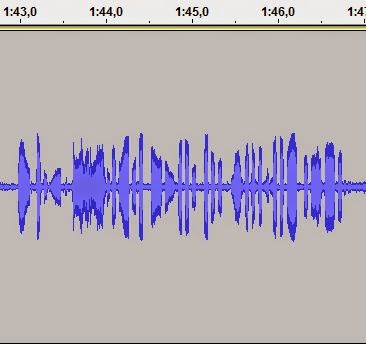 |
| “TU KL7SB UP“, 1550 UTC, 19 May 2014, 18 MHz |
There is rapid fading, or flutter, as seen e.g. from the large level difference between the two initial dots in “U”. Also the dah-dih-dah pattern of the “K” has more or less merged into each other in the image, but not in the audio, as this is caused by a static crash.
It was recorded just after my contact with KL7SB on 18 MHz today from my Elecraft K3 using Audacity® which is a free, open source, cross-platform software for recording and editing sounds.
Sverre Holm, LA3ZA, is a regular contributor to AmateurRadio.com and writes from Norway. Contact him at [email protected].
Happy Birthday, ARRL!
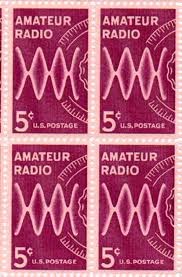
Happy 100th Birthday, ARRL! You don’t look a day over 50!
.jpg)
I wonder if there will be another special stamp issued this year?
72 de Larry W2LJ – Lifemember
QRP – When you care to send the very least!
Larry Makoski, W2LJ, is a regular contributor to AmateurRadio.com and writes from New Jersey, USA. Contact him at [email protected].
Getting off Windows XP
With the impending end-of-life of Windows XP a few weeks ago, I found myself with a bit of a predicament: My shack PC is a dual-core 64-bit system (3.0-GHz Pentium-D) so it’s not really a slouch performer. But, it had only 1 GB of RAM, which was fine for XP. I could upgrade my RAM and upgrade Windows, or I could upgrade the RAM and dispense with Windows altogether.
I opted to drop Windows.
My almost-3-year-old son helped me install 4 GB of RAM last weekend. (Actually, he spent more time asking about the capacitors on the motherboard. Kids these days.)
I’m a long-time GNU/Linux user (just over 15 years, actually) and fan. However, as I wrote once in the past, I’m also fan of getting things done. So, I kept using Windows 95 / MS-DOS for many years on my hamshack computer, with a brief several-year foray into using Windows XP when I moved to TR4W logging software. Linux finally became ready for prime time in my hamshack when Kevin, W9CF, ported TR-Log over a couple of years ago. After ensuring it wasn’t a fad, I was ready to jump. Over the past week or so, I’ve been tailoring the setup of everything to bring back the functionality I had previously.
So, what broke?
- I have an nVidia graphics card for my second monitor. Failure. Not sure how much I care. Maybe I’ll look for an old ATI card or something else with drivers? Anybody have a plain PCI video card with VGA or HDMI kicking around?
- Windows-specific software that I’ll probably just quit using: AVR Studio and SH5. Didn’t really use these much anyway.
- Now, for the truly bizarre: My Elecraft K2/100 throws an ERR 080 on power-up if I disrupt communication between it and TR-Linux (does not matter if the K2 goes off first or TRLinux quits first). I have to disconnect the RS-232 cable at the back of the K2 for a while and then it comes back OK.
- ARRL’s Trusted QSL software version 2.0.1 didn’t compile immediately without dependency problems. Further study indicated.
And, what works?
- TRLinux talks to both the K3/100 and the K2/100, as well as the YCCC SO2R+ controller.
- Made some QSOs and uploaded the signed log to LoTW.
- Pretty much everything else…
Ethan Miller, K8GU, is a regular contributor to AmateurRadio.com and writes from Maryland, USA. Contact him at [email protected].
Dayton or not? Hamvention vs. Hamcation
Dayton or not? Hamvention vs. Hamcation
I have been to Dayton http://hamvention.org/ many times and due to the fact that I live in Florida now I end up going to Orlando HamCation http://hamcation.com/ just become of the convince for me. I was just listening to a few people driving home on Dstar and started to think about why I didn’t go.
Dayton was also great because there was a new announcement of radio, great meetups with friends I have not seen in a while and I keep wondering why, is it cost. Is it just because I get the same deals in Orlando or is it because it lost its appeal?
The rest of my question:
http://nicktoday.com/dayton-hamvention-vs-hamcation/
Nick Palomba, N1IC, is a regular contributor to AmateurRadio.com and writes from Florida, USA. Contact him at [email protected].
Bike Ride to Old Hill Village
Today was magic! Everything has turned green in the last couple of days. Judy and I rode our bikes in Old Hill Village this afternoon. I brought the KX3 and worked Slovenia, Lithuania, Dominican Republic, St. Kitts, Indiana and South Dakota.
We started out at Shop Road and headed south. We could tell the Pemigewasset River was high. But we were surprised when we found the road was flooded about a mile into the trip.

We turned around and rode back to the camper. Then we headed south by car several miles and came into the flood control area from the other end. It was gorgeous. After riding for ten minutes or so, we came to a beautiful little cove.

Soon the old road leveled out through a large field not far from the river. But we were on high ground and didn’t see any more water on the road.

We stopped in front of an old butternut tree a mile or so farther on. I’ve operated here before.

You can see Judy in the background. She brought her knitting and is working on some booties for a friend’s new baby. I tossed my line over the tallest branch and set up a vertical wire. I ran the KX3 at 5 watts and started out on 17 meters. Right away I worked W1AW/0 in South Dakota. I jumped between 17, 15 and 12 meters to work six stations in about 20 minutes.
Here’s my log:
18 May-14 2026 18.085 W1AW/0 CW 599 599 SD
18 May-14 2030 24.892 HI3LFE CW 599 599 Dominican Rep
18 May-14 2034 21.035 LY10W CW 599 599 Lithuania
18 May-14 2037 18.068 S51TA CW 559 599 Slovenia
18 May-14 2043 18.076 W9FAM CW 599 599 IN
18 May-14 2044 18.077 V44KAI CW 599 599 St. Kitts

From this spot I look east across the Pemi to Sanbornton. It’s beautiful.

I packed up the gear for the ride south to the camper. Judy took a quick snapshot of me and the bike.

Jim Cluett, W1PID, is a regular contributor to AmateurRadio.com and writes from New Hampshire, USA. Contact him at [email protected].
First 6 meter contact this season
Paul Stam, PC4T, is a regular contributor to AmateurRadio.com and writes from the Netherlands. Contact him at [email protected].
 Ham Radio Deluxe |
 W5SWL Electronics |
 Ham Radio Prep |
 KB3IFH QSL Cards  Hip Ham Shirts  HamRadioAuctions HamRadioAuctions Reliance Antennas Reliance Antennas Enigma Shop Enigma Shop |  morseDX  Ni4L Antennas  R&L Electronics R&L Electronics antennas.us antennas.us QRV QRV |
- Matt W1MST, Managing Editor
