 |
 Back to 6m
 14 June 2014 | by
 After a fun day on 10m, I’ve now gone back to 6m and my 1W ERP was immediately spotted on WSPR by locals G0LRD and G4IKZ. On the lookout for more distant 6m stations now by any mode.
UPDATE 1120: G4KPX (14km) is spotting me well on 6m and the first 6m GDX today G4HBA (189km) using 10W from IO93fn square (near Barnsley, Yorkshire) is being spotted here at -25dB S/N with 3Hz Doppler, suggesting aircraft involvement.

Roger Lapthorn, G3XBM, is a regular contributor to AmateurRadio.com and writes from Cambridge, England.
10m Es and early morning MS?
LB9YE and I have been exchanging WSPR spots since 0458z this morning. In both directions there is considerable Doppler. On another signal (not currently decoding) there are clear signs of meteor reflections as the signals are strong but in short bursts. I wonder if MS was playing a part in LB9YE’s decodes?
Earier in the night PB0AIC (288km) was decoded STRONGLY at -8dB S/N . At this range I assumes this was early morning tropo or again possibly MS? At the very same time 0404z, G8VDQ (93km) , was decoded strongly at -12dB S/N.
Otherwise all quiet on the Es front.
I do wonder sometimes about Es (SPORADIC E-layer) reflections. Many signals do come into this category with fleeting, often quite localised, strong openings, but many others are anything but sporadic. Are these really Es as we know it or some other propagation?

Roger Lapthorn, G3XBM, is a regular contributor to AmateurRadio.com and writes from Cambridge, England.
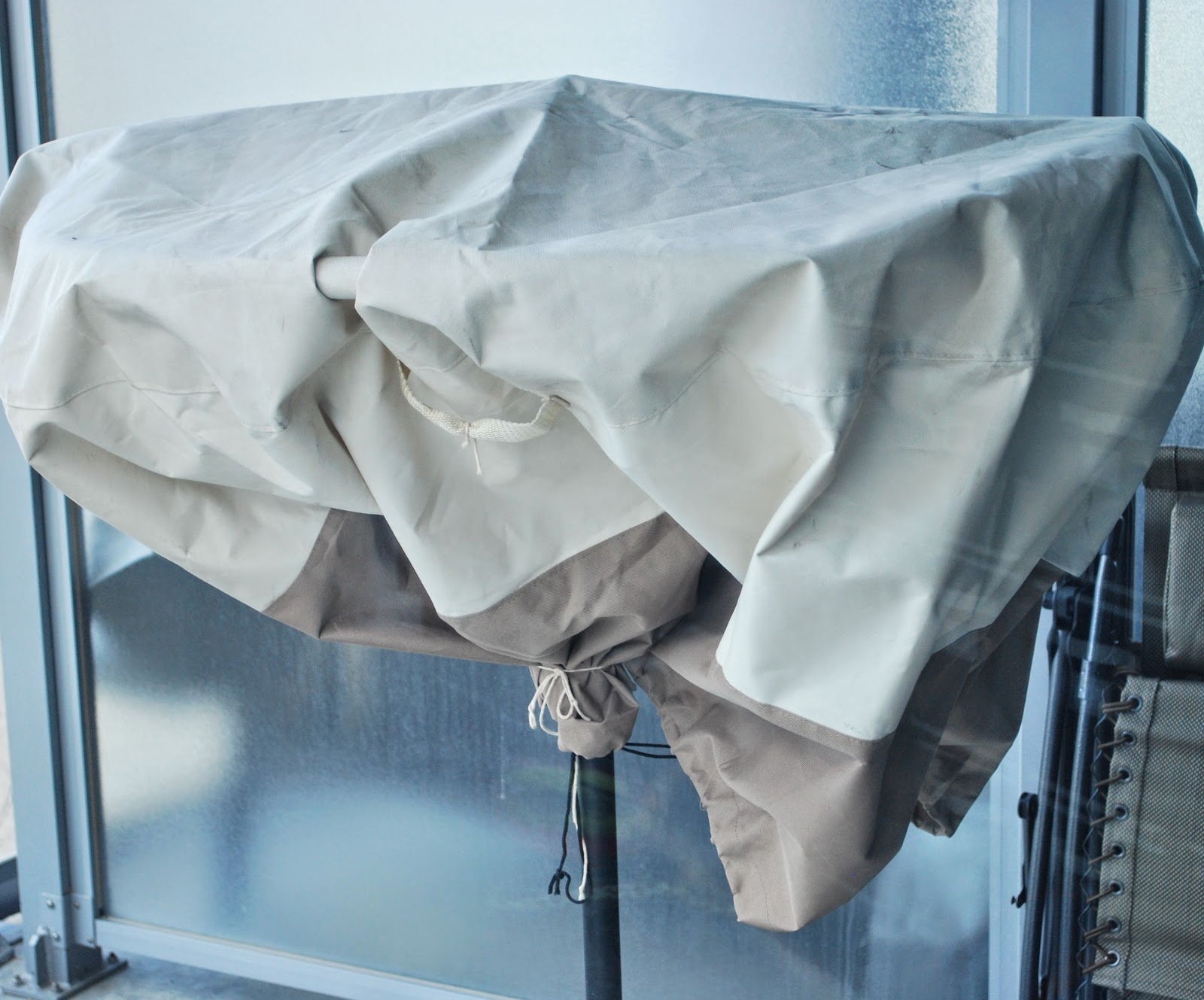
A brief overview of my MFJ 1788 loop antenna.
 |
| The antenna |
1. Very small foot print for an antenna that will give you 15m to 40m.
2. The antenna can be used mounted horizontally or vertically.
3. Once you get used to the tuning it's very fast and easy to tune.
4. I covered my antenna with as to keep it low profile and it works no problem with the cover.
5. The antenna remote control can operate either on AC or batteries.
6. Can be mounted on a simple tri-pod.
Some of the draw backs
1. The quality of the antenna is low, I had to make some adjustments to make it work as it should.
2. The band width is narrow and retuning has to be down often.
3. The SWR meter in the remote control unit is not very reliable.
4. Buzzer used to tell you the coarse tuning has finished is VERY hard to hear.
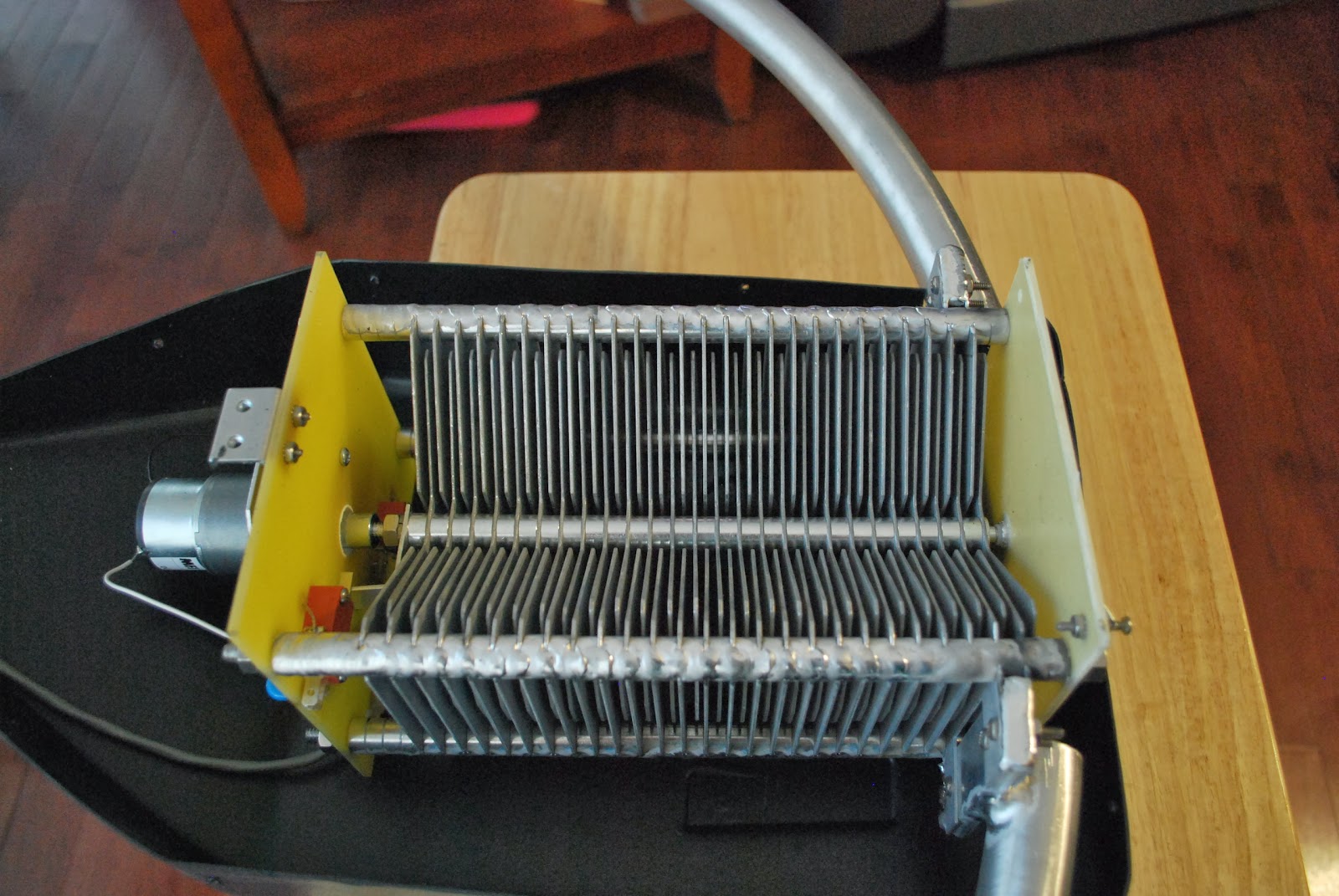 |
| Repairing Cap spacing |
On air results with this antenna have been good, with regards to receiving I have been able to hear the Middle East, South Pacific, Europe, South America and of coarse North America. Now hearing a station and contacting the station is another ball of wax. With my power restrictions I have made some very satisfying contacts. My modest signal has made it into South America, all parts of Europe, Iceland and Africa so far. There are two Loop antennas that MFJ makes and if I was to make the choice again I would had gone with the MFJ 1786 as it covers 10m to 30m. I have found with this antenna there is no way to tune it below 15m. The characteristic of the tuning capacitor will not allow it. I have read the MFJ 1788 is like a wet noodle on 40m and it's true I have not been able to make it into the U.S. The MFJ 1786 would had been a better choice with more band opportunities.
Mike Weir, VE9KK, is a regular contributor to AmateurRadio.com and writes from New Brunswick, Canada. Contact him at [email protected].
Even more 10m GDX and Es
At 1936z G8VDQ (93km) in IO91um was spotted here at -26dB S/N. When there are GDX stations they seem to be copied. G8VDQ’s signal had -3Hz Doppler, suggesting aircraft reflection was involved.
UPDATE 1950z: Es is still in evidence with DK6UG spotting me 4 times (so far) now at around -22/-23dB S/N.
UPDATE 2120z: Es again; this time IK1WVQ (1084km) spotted at -20dB S/N.

Roger Lapthorn, G3XBM, is a regular contributor to AmateurRadio.com and writes from Cambridge, England.
YOTA UK

YOTA UK is taking place over the weekend of the 19-20 July at in Wolverhampton. Most of the activities will be at the Electricity Club near the City Centre, home of the Wolverhampton Amateur Radio Society. There will also be some outdoor activities in the near-by Baggeridge Park.
- This weekend offers two exciting days of amateur radio activities where you can:
- Meet other young radio amateurs
- Learn about the Summits on the Air awards
- See how you can work through satellites
- Have a go at using digital modes
- See how easy it is to build portable antennas
- Take part in a Direction Finding competition
- Find out about the latest radio technologies
- Learn how to solder and use test meters
- Complete the Intermediate Practical Assessments
- Build a 20m PSK receiver
- Take the Intermediate exam
- Try your hand at operating the YOTA UK Special Event Station!
Tickets are only £5 per day with additional cost if you want to build the receiver or take the exam. There is even a BBQ is included on the Saturday evening.
Full details of the timings, directions to the venue and a list of items to bring, will be forwarded by email.
Bookings are limited so book now – Click here
You can also keep up to date by following @YOTA_UK on twitter
Dan Trudgian, MØTGN, is a regular contributor to AmateurRadio.com and writes from Wiltshire, England. He's a radio nut, IT guru, general good guy and an all round good egg. Contact him him here.
YOTA UK
YOTA UK is taking place over the weekend of the 19-20 July at in Wolverhampton. Most of the activities will be at the Electricity Club near the City Centre, home of the Wolverhampton Amateur Radio Society. There will also be some outdoor activities in the near-by Baggeridge Park.
- This weekend offers two exciting days of amateur radio activities where you can:
- Meet other young radio amateurs
- Learn about the Summits on the Air awards
- See how you can work through satellites
- Have a go at using digital modes
- See how easy it is to build portable antennas
- Take part in a Direction Finding competition
- Find out about the latest radio technologies
- Learn how to solder and use test meters
- Complete the Intermediate Practical Assessments
- Build a 20m PSK receiver
- Take the Intermediate exam
- Try your hand at operating the YOTA UK Special Event Station!
Tickets are only £5 per day with additional cost if you want to build the receiver or take the exam. There is even a BBQ is included on the Saturday evening.
Full details of the timings, directions to the venue and a list of items to bring, will be forwarded by email.
Bookings are limited so book now – Click here
You can also keep up to date by following @YOTA_UK on twitter
Dan Trudgian, MØTGN, is a regular contributor to AmateurRadio.com and writes from Wiltshire, England. He's a radio nut, IT guru, general good guy and an all round good egg. Contact him him here.
10m Es – all quiet for a few hours
There has been no Es here since 1714z. I shall leave 10m WSPR running as it is quite possible there will be Es later, but the last hour has been very quiet on 10m.
At 1816z just spotted G0LRD who is a semi-local at a strong -13dB S/N. A few minutes later he spotted me at -23dB S/N. This may be conditions or that my antenna could be improved or is (unintentionally) directional.
UPDATE 1906z: Still no more Es here this evening since 1714z. Intrigued why G0LRD is so much better here than me with him. Don’t imagine Dave has a very bad noise issue on 10m at his QTH so it is probably the antenna inefficiency here. I’d like to try a different antenna for 10m but this means antenna work which is very hard currently. The present antenna covers 10, 20 and 40m which is very useful and it does seem to get most of the F2 and Es stations OK. My 2W WSPR has been copied in Australia this year on 10, 20 and 40m.
UPDATE 1926z: Es still around on 10m. DK6UG (633km) spotting me at -22dB S/N at 1922z which is similar to the report he gave G0LRD. We are both running around 2W.

Roger Lapthorn, G3XBM, is a regular contributor to AmateurRadio.com and writes from Cambridge, England.
 Ham Radio Deluxe |
 W5SWL Electronics |
 Ham Radio Prep |
 KB3IFH QSL Cards  Hip Ham Shirts  HamRadioAuctions HamRadioAuctions Reliance Antennas Reliance Antennas Enigma Shop Enigma Shop |  morseDX  Ni4L Antennas  R&L Electronics R&L Electronics antennas.us antennas.us QRV QRV |
- Matt W1MST, Managing Editor
