 |
 ISS – not
 22 June 2014 | by
 It turns out my recent message purporting to have been sent for the International Space Station (ISS) was not from there at all, but from a tent in Wales! Not quite sure why people get a kick from this? It all seems a bit silly to me. Previously this person’s account was sending out dodgy links and I informed him of this. Be warned – all may not be what it seems.

Roger Lapthorn, G3XBM, is a regular contributor to AmateurRadio.com and writes from Cambridge, England.
Summer – it’s finally here!
After a long, cold Sprinter (that’s what you get when Winter seems to last endlessly into Spring), Summer is finally here! Yay! And as promised, as of today, numbers are being assigned for the 2014 NJQRP Skeeter Hunt.
The Hunt will be held on Sunday August 10th this year – and right now, the best place to see the rules is at http://w2lj.blogspot.com/p/njqrp-skeeter-hunt.html. I am trying to get the QSL.NET page updated with the new bonus points rules, but the server seems to be down right now.
Yes – bonus points this year for gathering enough letters from callsigns to spell out the word “SKEETER”. 100 extra points will be added to your score if you accomplish this feat. In any event, the NJQRP Skeeter Hunt is a grand time and folks seem to enjoy themselves a lot, so send me an email ([email protected]) and reserve your Skeeter number today.
Today was also the Raritan Valley Radio Club annual hamfest, which is held at Piscataway High School, in Piscataway, NJ. The weather was absolutely beautiful – perfect for a hamfest! It was sunny and it got up into the high 70s. Very nice, but yet not exasperatingly hot. And as you can see from the two quick photos that I snapped with my phone, there was not a cloud in the sky. Unfortunately, it was perfect sunburn weather. Reporting time for the hamfest workers was 5:00 AM and as I was driving to the hamfest site, I had realized I had forgotten to bring sunscreen. I discovered the hard way that there are NOT a lot of places open at 5:00 AM where you can buy sunscreen!
There were plenty of vendors and lots of buyers. The ARRL had a presence with the appearance of Bill Hudzik W2UDT, our section Vice Director. (Psst! It helps that he’s a club member!) We also had a VE Exam session, where three people earned their Technician licenses, and we also had one upgrade to General and one upgrade to Extra.
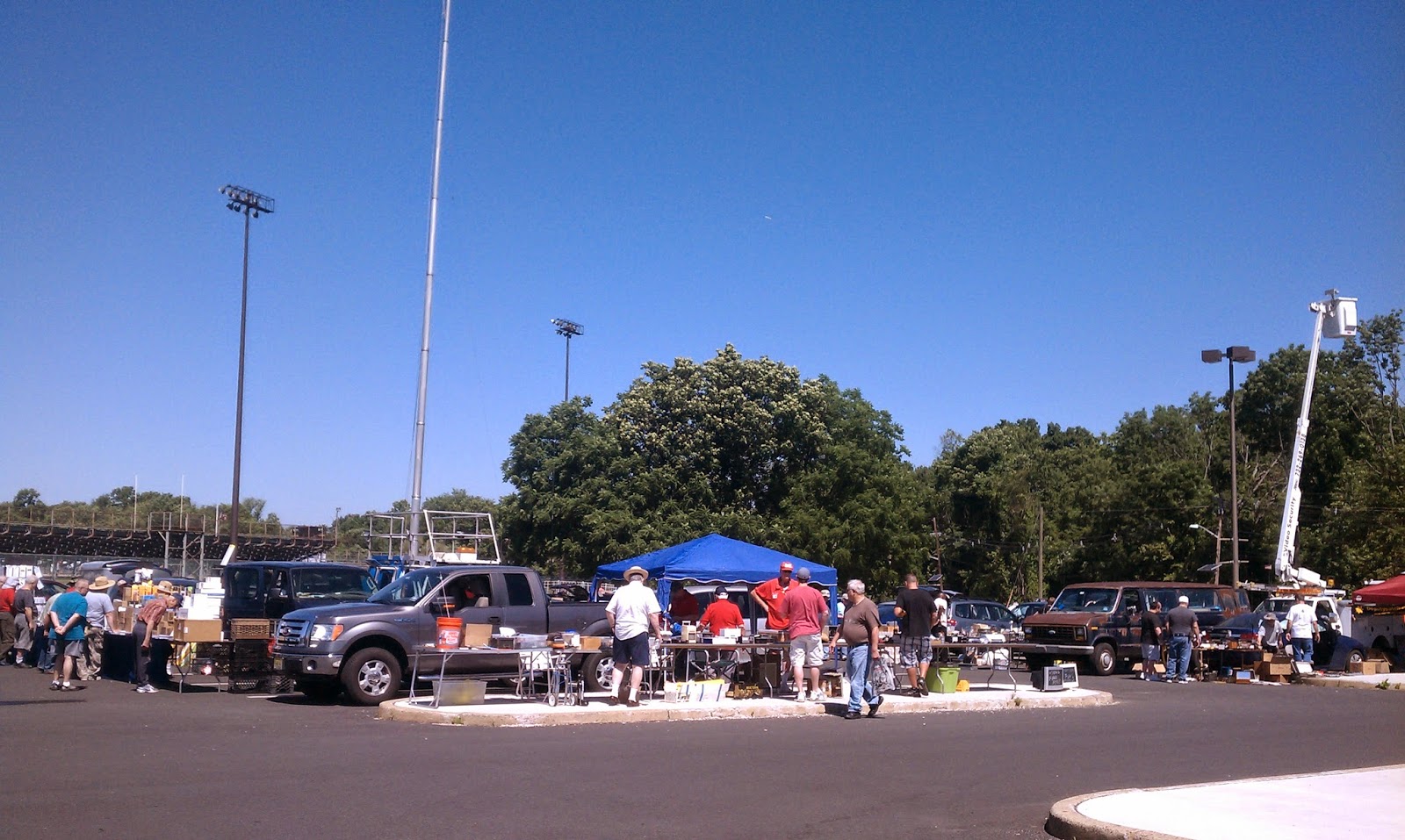
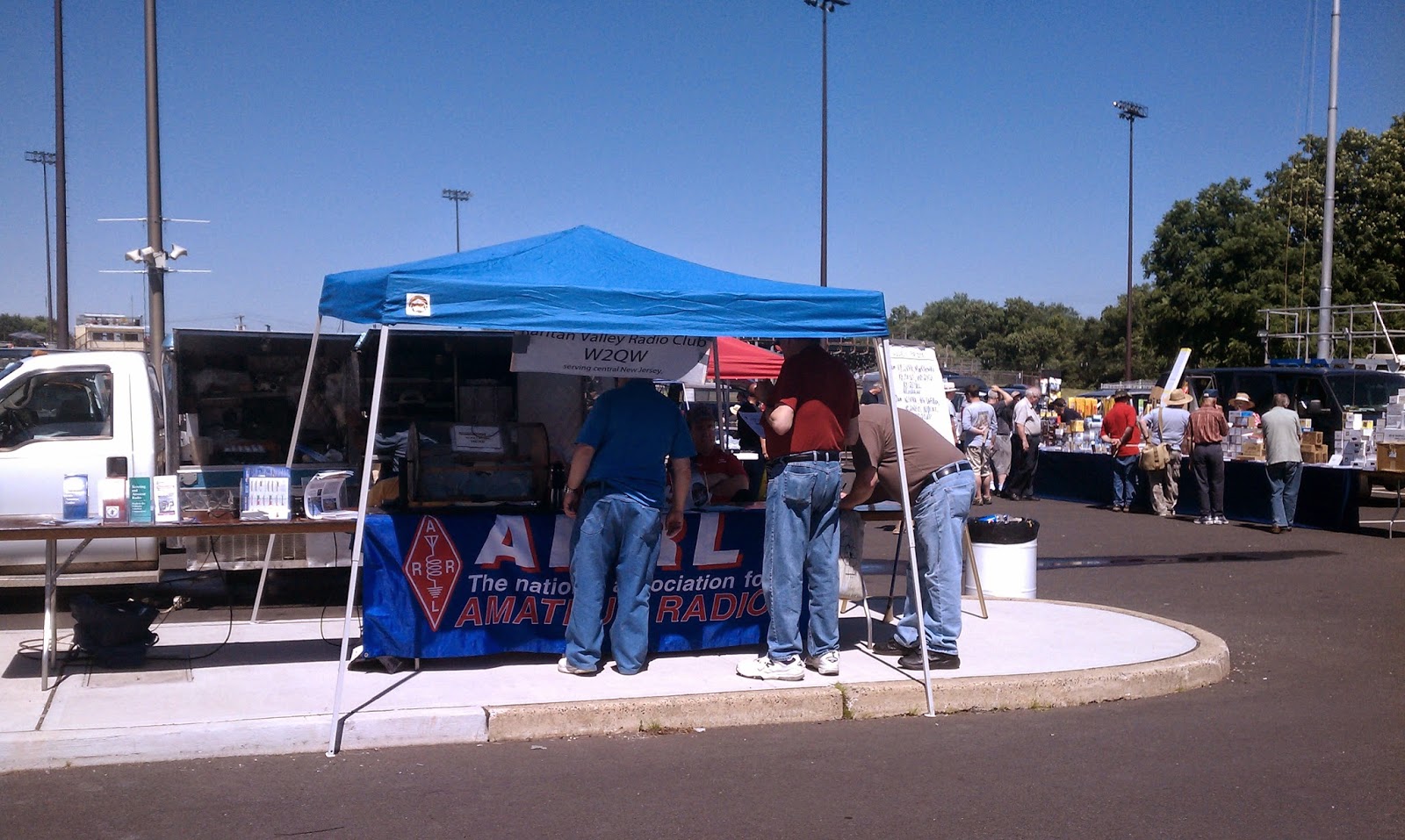
In the top photo, you can see the huge mast sticking up from an old broadcast van that Brian N2MPM had acquired. Running up the mast was a PAR END-FEDZ antenna that Alan W2AEW using to make QRP contacts. If you follow this blog, you know that I have mentioned Alan’s YouTube videos in the past. He does an excellent job producing videos on how to use test equipment and other neat technical tutorials. If you haven’t subscribed to his YouTube channel, then you are cheating yourself. After you read this go over and subscribe – it’s definitely worth it.
Here’s a video he took of today’s festivities:
Pulling off a hamfest like this is a huge undertaking. Thanks to the direction of our two Hamfest Committee Chairmen, Drew W2OU and Rich W2PQ and all the members of the RVRC, this comes off flawlessly – year after year.
In between my duties of assisting with the parking and placement of the vendors, and being the lead in administering the VE session, I did get a chance to look at the various wares on the tables. I purchased some BNC to PL259 adapters and some large alligator clips that we will to connect to batteries that we will be using next weekend during Field Day. Not a big spender much to the discontent of the vendors, but much to the delight of my wife. 😉
I’ve been up way too long and am making way too many typos – even more than I usually make, so it’s off to the sack for W2LJ. (Thank God for spellcheck.)
72 de Larry W2LJ
QRP – When you care to send the very least!
Skeeter #12 for 2014
Larry Makoski, W2LJ, is a regular contributor to AmateurRadio.com and writes from New Jersey, USA. Contact him at [email protected].
40m WSPR overnight
As you will recall, my antenna on 40m is very low and not that efficient: it is just a 10/20/40m Par end-fed with an average height above ground of 4-5m at most. Last night I was on 2W. I hate to think how low the ERP would have been on 40m!
Overnight 17 unique stations spotted me with best DX AE2EA (5654km). Even with a low and inefficient 40m antenna, WSPR still works well!
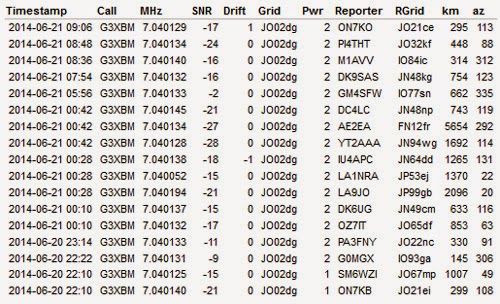 |
| 40m unique spots of my 2W WSPR last night |

Roger Lapthorn, G3XBM, is a regular contributor to AmateurRadio.com and writes from Cambridge, England.
An alternative to the LM-386

As a (now-retired) broadcast engineer, I grew to hate the LM-386. It always seemed to me to be difficult to control and to be prone to oscillation.
My own solution was to switch to another chip for audio amps. My own choice was the TDA2822. It’s inexpensive and easily available from Mouser, Digikey and others. It’s a dual amp, which is handy for stereo, but I use it in bridge mode even when I design mono amps. My choice is the SOIC-8 package, which is large enough to be easy to use, but also saves pc board space over the DIP-8 that’s usually used on LM-386 chips.
My general tips are to carefully bypass the power supply for whatever chip you use. I’ve often used 4.7 ohms or so in the supply line, and tried to bypass it close to the chip with an electrolytic, a .1 uF and a 20-100 pf chip capacitor.
But the MOST important tip for taming IC audio amps is to connect a small capacitor (I’ve usually used 33 pf chip caps) between the inverting and non-inverting inputs. It tamed lots of otherwise-troublesome amps for me.
Andrew Ellis, NO6E, is a special contributor to AmateurRadio.com and writes from Oregon, USA. Contact him at [email protected].
E-Bay, China, and Free Shipping!
I recently had the choice of buying from Chinese suppliers when shopping around for a new Rigol oscilloscope but must admit that I whimped-out when it came time to buy and chose to buy from a U.S. dealer who would also honour the warranty. I did end up paying slightly more, considering shipping and exchange rates but I do not regret my choice.
I have however made some smaller purchases from China, in an attempt to 'test the water'. I have seen some very attractive pricing on many homebrew-related goodies that would cost much more if purchased in North America and I reasoned that buying a few lower priced items would be a good way to test the quality. Politics aside and with a tiny bit of guilt, over the past few months I have purchased:
2 packages of HSS 1mm drill bits for PC work @ 25 cents each from
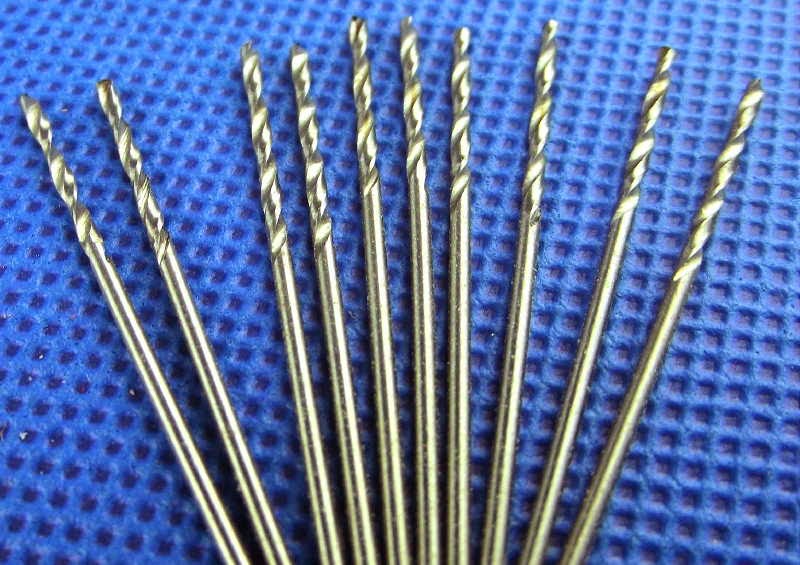
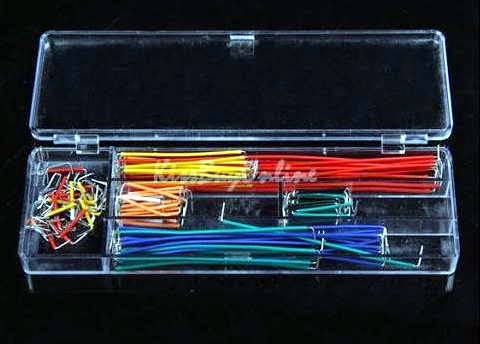
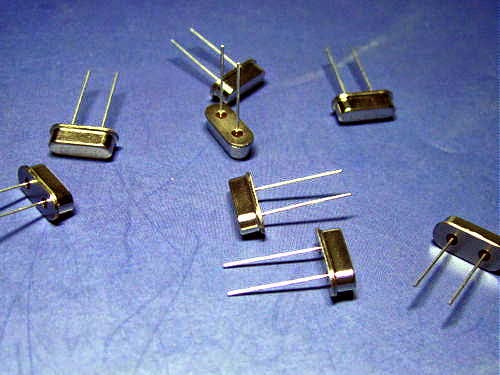
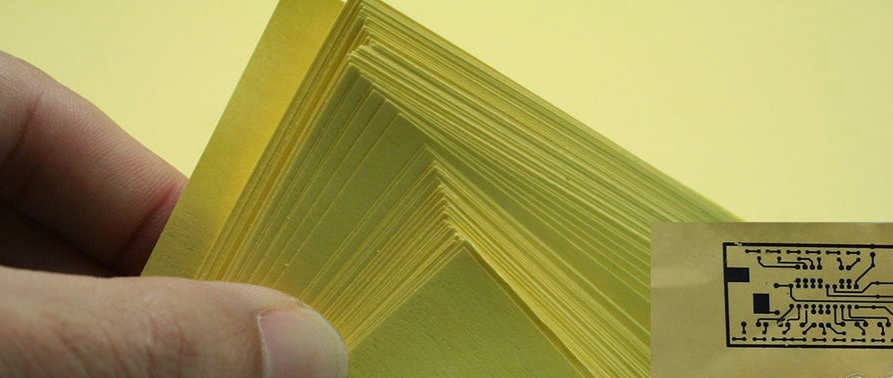
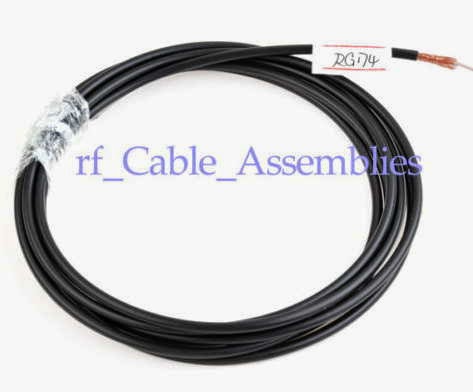
I happily admit that in all cases, I have been very pleased with not only the quality of the items received but also in the service. With the high cost of shipping anything to Canada, I find the 'free shipping' for all of these items to be particularly attractive.
Although all of these items are available from many e-Bay sellers in China, I think it pays to carefully search feedback records before purchasing. In many cases, a high rating does not always tell the story. I look for high volume dealers that have very few complaints within the past year. Check what complaints are being made...if it is the quality of what is being sold, then go elsewhere, as some dealers do a high volume of selling junk while others have only single-digit or even zero negative feedback.
It will still be some time, if ever, before I feel comfortable buying any high priced items from China but if you were brought up in the 50's, you will probably recall when buying from Japan was an invitation for disaster and look how that turned out!
Steve McDonald, VE7SL, is a regular contributor to AmateurRadio.com and writes from British Columbia, Canada. Contact him at [email protected].
Yes – I changed my callsign
73 to AD7MI and welcome to NI0L…

…. and a no frills QSL card.
My retirement from the Army is both official and complete as of May 1st. The XYL and I have decided the land of Ø is where we are putting down our roots. Therefore it was high time that my callsign reflect my geographic location.
Scott Hedberg, NØZB, is a regular contributor to AmateurRadio.com and writes from Kansas, USA. Contact him at [email protected].
Native Americans
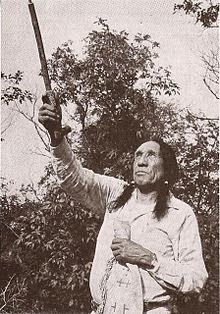
Several weeks ago, I worked KF7YRL in the state of Montana. One of the great things about ham radio is learning about the people and places they live in the world. I love this aspect of the hobby. It’s absolutely amazing to me that folks, over a thousand miles away, can communicate in “real time” with simple “dots and dashes”. Often times I wonder what life was like before the modern conveniences we’ve learned to take for granted in the complex world of today.
While talking to Steve, it became apparent that, like myself, he was a guitar player. Much of the conversation revolved around acoustic music. He uses an “Aspen” guitar. I use an Italian made “EKO” guitar which I bought in Naples Italy in 1970.
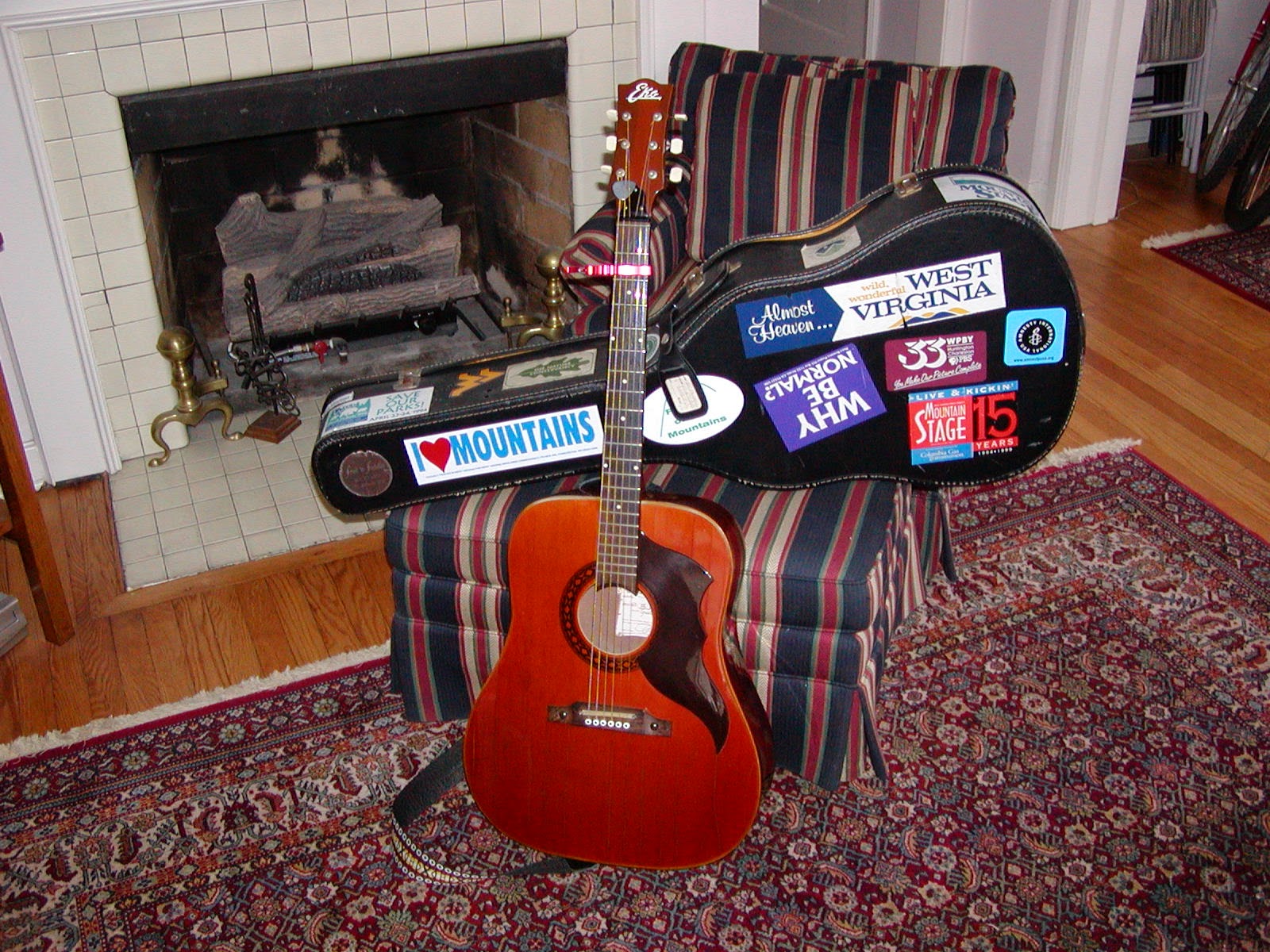
Guitars are “special” things which “fit” the hands of different people in unusual ways. Over the years, I’ve discovered there isn’t a “right” guitar for every musician. Every guitar has a different “neck” and this part of the instrument is “critical” to every player and every guitar plays differently. We’re both happy with our choice of guitars. That’s part of the joy of music….the universal language.
Steve lives on a ranch in Montana (Sonntag Ranch and Wildlife Preserve) and is an “emergency physician” on a “Cheyenne Indian Reservation” in that state. He lives in a town which is named after the Miniconjou Lakota Chief “Lame Deer” who was killed by the United States Army in 1877, by the way, under a flag of truce just South of this town.
Not too long ago, I had the privilege of seeing the “northern” part of Montana and experiencing the rolling prairies which seem to extend forever, rolling along endlessly in a sea of golden grass. It’s breathtakingly beautiful in the summer months but brutally harsh in the winter time.

The Native Americans have always inspired me due to their relationship and respect for nature. Being active in the Boy Scouts during the days when I worked on heavy equipment in the coal fields here in West Virginia, the American Indians (slang) were looked upon with great respect for their skills in outdoor living. I also hold that value and respect for “true” Native Americans.
Lets face it folks, the American Indians were here long before us, and they used the land a lot more wisely than we do now. It’s becoming more and more difficult each day to find a “quite” place where the relationship with the earth, it’s wildlife, and it’s people are viewed as harmonious and not a commodity.
I chuckle every time I hear complaints about immigration in America these days– all those complaining about being invaded by foreigners, free-loading, and being just plain “Un – American”. Yes…. it is laughable and probable to use much harsher words.
I think living independently and “off the grid” is an admirable characteristic. Although I’m too old now for traveling long distances by foot, horseback, or even bicycle; in past years I’ve actually “lived’ out of a backpack, or the panniers carried on a bicycle, and I loved every minute of it.
Society at large should experience this humbling experience. It makes a person realize the really important things in life; like food, shelter, and clothing. The rest of life is what you make it and I’ve found that keeping life as simple as possible is a good way to live life.
QRP radio, in many ways, has these qualities. A simple radio, with a simple battery, with a simple wire in the trees for an antenna, sitting under the stars, around a campfire, with a set of earphones, so as not to disturb the neighbors.
I look forward to more conversations with Steve (KF7YRL) in the future. He provides an extremely valuable service to this part of Montana. I can visualize this part of the country easily and I like what I see.
John Smithson, Jr., N8ZYA, is a regular contributor to AmateurRadio.com and writes from West Virginia, USA. Contact him at [email protected].
 Ham Radio Deluxe |
 W5SWL Electronics |
 Ham Radio Prep |
 KB3IFH QSL Cards  Hip Ham Shirts  HamRadioAuctions HamRadioAuctions Reliance Antennas Reliance Antennas Enigma Shop Enigma Shop |  morseDX  Ni4L Antennas  R&L Electronics R&L Electronics antennas.us antennas.us QRV QRV |
- Matt W1MST, Managing Editor
