 |
 LHS Episode #543: Retro Gaming Deep Dive
 12 May 2024 | by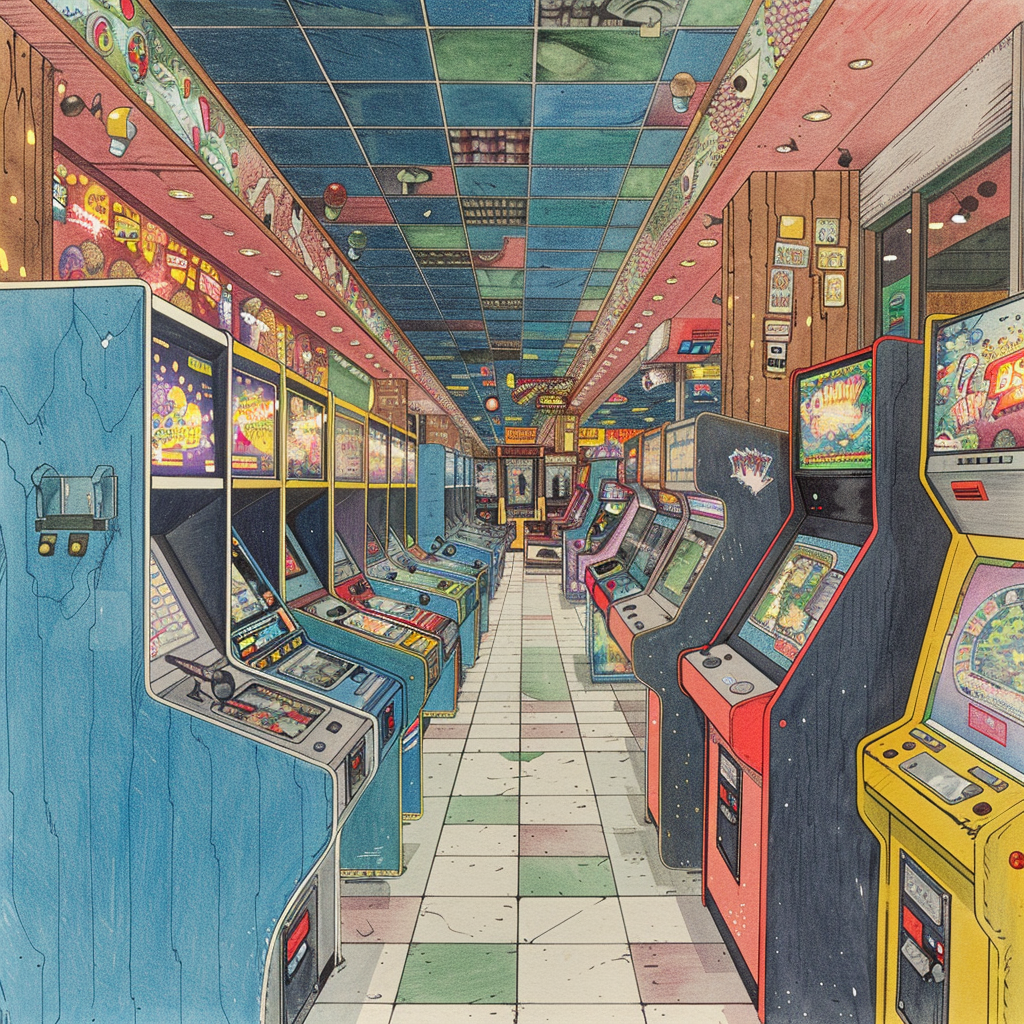
Hello and welcome to the 543rd episode of Linux in the Ham Shack. In this episode, the hosts discuss open-source retro gaming. Topics include operating systems for retro games, emulators, hardware options, building game cabinets, retro game hardware, handheld retro game consoles and much more. Thanks for listening and have a great week.
73 de The LHS Crew
Russ Woodman, K5TUX, co-hosts the Linux in the Ham Shack podcast which is available for download in both MP3 and OGG audio format. Contact him at [email protected].
Amateur Radio Weekly – Issue 330

The CME has arrived, and it is a big one
The biggest geomagnetic storm in almost 20 years is underway now. It has reached category G5–an extreme event.
SpaceWeather.com
2024 Amateur Radio Software Award announced
OpenWebRX, a project led by Jakob Ketterl DD5JFK, and OpenWebRX+, a project led by Marat Fayzullin KC1TXE, have been selected as the winners.
Amateur Radio Software Award
The Communicator May-June
Articles, projects, profiles, news, tips and how-tos for all levels of the hobby.
Surrey Amateur Radio Communications
First episodes of Prep Comms Podcast
Prep Comms offers real world insight for those in the prepper-sphere regarding communication solutions and best practices.
Ham Radio Network
Allstar Linked Repeaters On The Air
Providing a powerful AllStarLink hub for our Amateur Radio friends to connect each other for nets and emergency communications.
ALROTANETS
My wish list for a perfect HT
What features would make up a 70cm/2m dual-band handheld radio that leaves nothing to be desired?
DK1MI
Comparing transceivers
A personal journey from Yaesu FT-817 to Elecraft KX2 and beyond.
K0PIR
Newfoundland on QO-100?
Newfoundland is just outside the coverage area of QO-100, the elevation at Signal Hill at St. Johns is -0.9°, however, contacts have been made from Indonesia at an elevation as low as -1.3° so there is a chance of success.
AMSAT UK
Digital archive of QSL Cards
Setting up QSL galleries on the Internet Archive in order to help preserve radio history.
SWLing Post
Beyond the social: There is room for us all in Amateur Radio
Why are you getting back into Ham Radio? You dont like talking to people.
QRPer
Video
Unlocking the power of fractal antennas
Diving into the mysterious world of fractals and the Hilberts Curve.
HamJazz
Packet radio BBS node with LinBPQ
After digging into the world of packet radio BBSs over the past few weeks, I’m ready to show you how to setup your own.
ModernHam
Get Amateur Radio Weekly in your inbox.
Sign-up here
Amateur Radio Weekly is curated by Cale Mooth K4HCK. Sign up free to receive ham radio's most relevant news, projects, technology and events by e-mail each week at http://www.hamweekly.com.
W3HC SK
Unfortunately, a few days after Carl W3HC (ex-W3HCW) celebrated his 100th birthday, he fell ill, declined rapidly, and passed away. We can’t complain as he lived a full life and got to enjoy a beer at his birthday party.

Photo credit: Karen Vibert-Kennedy, Williamsport Sun Gazette
Carl was an avid photographer all his life. The Williamsport Sun Gazette featured an article and video on his time in Berlin during World War II, taking photographs. While in a bombed out home, he found a roll of film which he took home and later developed. He was shocked to discover the photos were taken by a German photographer and even included pictures of Himler, who was the #2 in Germany at the time. Many of his photos are featured on his Flickr site.
I owe my grandfather a lot of gratitude as he’s the one who got me into amateur radio which led to me getting my first two jobs in wireless and communications, and laid the foundation for a rather successful career. I continue to be active in amateur radio, with QRP, field operation, circuit design, open source software development, and homebrewing equipment being my favorite activities.
Carl was first licensed in 1956 as WN3HCW, back when Novice calls had the WN prefix. After upgrading to Technician, the FCC dropped the N and he became W3HCW. Later in the 90s when he upgraded to Extra he shortened his call to W3HC. During my time with him as a youngster and teenager, he operated nearly all HF phone and enjoyed DXing, but he also did a lot of 6 meter AM work in the 60s. He operated theW3HCW QSL Fund which funded QSL cards for DX stations, and he was a QSL manager for about 130 stations over the years.
Carl McDaniel, W3HC, SK at 100 years and 6 days. dit dit
This article was originally published on Radio Artisan.
Anthony, K3NG, is a regular contributor to AmateurRadio.com.
ICQ Podcast Episode 429 – Marconi Day Fun
In this episode, we join Martin Butler M1MRB, Chris Howard (M0TCH), Martin Rothwell (M0SGL), Frank Howell (K4FMH), Bill Barnes (WC3B) and Leslie Butterfields (G0CIB) to discuss the latest Amateur / Ham Radio news. Colin Butler (M6BOY) rounds up the news in brief and the episode's feature is Marconi Day Fun.
We would like to thank our monthly and annual subscription donors for keeping the podcast advert free. To donate, please visit - http://www.icqpodcast.com/donate
- MFJ Ceasing On-Site Production
- California Radio Club Faces Homelessness
- Debate Reopens Over AM Radio's Future In Cars
- Hams Prepare for SOS Radio Week
- Updated Spectrum Analyser Software for SDRplay RSPs
- UK Radio Syllabus v1.6 Published
Colin Butler, M6BOY, is the host of the ICQ Podcast, a weekly radio show about Amateur Radio. Contact him at [email protected].
LHS Episode #542: The Weekender CXVI
Spin the Random Topic Wheel (Segment 1)
- Practical Antennas for Top Band Operation
This Weekend in Hedonism (Segment 2)
Cheryl’s Recipe Corner!
Skillet Chicken Bulgogi
Description
This bulgogi chicken is a quick-and-easy, but very tasty, meal. You can substitute the chicken with beef or pork for variety. It only takes 30 minutes with very few dirty dishes! Serve over rice.
Ingredients
1/4 cup chopped onion
5 tablespoons soy sauce
2 ½ tablespoons brown sugar
2 tablespoons minced garlic
2 tablespoons sesame oil
1 tablespoon sesame seeds
1/2 teaspoon cayenne
salt and ground black pepper to taste
1 pound skinless, boneless chicken breasts, cut into thin strips
Directions
Whisk onion, soy sauce, brown sugar, garlic, sesame oil, sesame seeds, cayenne pepper, salt, and black pepper together in a bowl until marinade is smooth. Cook and stir chicken and marinade together in a large skillet over medium-high heat until chicken is cooked through, about 15 minutes. Notes: You can substitute peanut oil for the sesame oil if desired. Add vegetables if you wish; carrot straws and sliced mushrooms are delicious add-ins. For a little more bite, use a peppercorn medley grinder instead of black pepper.
Cheryl’s Mixed Drink Corner
Key Lime Mojitos
Description
If you have an abundance of Key limes after making a classic Key lime pie, use some up to make this refreshing summer cocktail. The tart juice of Key limes makes the mojito a bit sharper and more citrusy, and the cream makes it taste like a creamy slice of Key lime pie. You’ll need a simple syrup for this cocktail, which is super-easy to make if you don’t want to buy one. You can even add some mint leaves in with it to make the mint flavor stronger.
Ingredients
1/4 c. crushed graham crackers
3 tbsp. simple syrup, plus more for glass
1/4 c. fresh mint leaves, plus more for serving
3 tbsp. fresh Key lime juice
4 oz. white rum
1 tbsp. heavy cream
Key lime rounds, for serving
Directions
Place crackers on a plate. Pour simple syrup onto another plate. Dip rims of glasses into simple syrup, then into crackers. In a cocktail shaker, muddle mint and lime juice. Fill shaker with ice and add rum, cream, and simple syrup. Vigorously shake until outside of shaker is very frosty, about 20 seconds. Fill glasses with ice and strain mojito into prepared glasses. Garnish with more mint and a Key lime round.
Russ’s Drink Corner
Laphroaig Cairdeas Single Malt Scotch
Description
Bottled at a fixed strength of 52.3%, Laphroaig® Càirdeas 2023 is aged in White Port and Madeira casks. Created exclusively for Friends of Laphroaig. Our Càirdeas expression for 2023 brings together the best of much loved Càirdeas releases over recent years. The limited-edition single malt is a combination of Madeira and White Port casks. Three quarters of the whisky is matured in second-fill Madeira casks, releasing smoky, spicy, and sweet fruit flavours. The final quarter has been finished in first-fill Port casks; the majority of these are white port, adding a hint of crisp fruit and deep woodiness to the flavour. It’s a new take on Laphroaig that plays to our strengths – welcoming friends old and new.
Details
Mashbill: 100% malted barley
Region: Islay, Scotland
Proof: 52.3% (104.6 Proof)
Color: Soft burnished gold
Nose: Cinnamon, freshly ground ginger, crisp green apple with notes of toasted peaches, charred orange peel, and caramelized sugar, smoky embers
Taste: Honey sweetness paired with juicy citrus flavors, notes of hazelnut, tannic oak, dark chocolate and slightly bitter caramel with iodine-rich smoke
Finish: Sweet and smooth with a lingering earthy peat and creosote character, slightly sea salty at the very last
Price: $100 (750ml)
Rating: 98
Bill’s Whatever Corner
Hoptimization - Brothers Craft Brewing - Harrisonburg, VA
What’s a craft brewery to do when all the “typical” IPA hops are gone? Innovate of course, just like craft breweries always have. Hoptimization uses big, bold, bitter hops to get a clean citrusy flavor you’ll love and the bitter bite that you crave. Step away from typical and try something new.
7.1% ABV
71 IBU
Segment 3 (Announcements & Feedback)
Mastodon message from Johan, PD1JMB
Please don’t use AI image crap…
Segment 4 (New Subscribers, New Supporters & Live Participants)
Facebook
Scott Shelhart
Brian Holub
Hamdy Abou al Anein
Mark Cohen
Hermann Sprogles
Andy Reinhart
Jim Browder
33 others…
Twitter
@Fro_of_Norfolk
@fawazehy
Instagram
dsc.carlos.silva
Mastodon
@Charims
Discord
Vortac
Kady / Keoki / Upinsmoke
fjord
77ScoutSS2
Live Chat
Dan, KB6NU
Tony, K4XSS
Joel, KC0YEW
Jill, K1TTZ
Ted, WA0EIR
Mike, K6GTE
Dr_Volt_Iceland
Russ Woodman, K5TUX, co-hosts the Linux in the Ham Shack podcast which is available for download in both MP3 and OGG audio format. Contact him at [email protected].
3G0YA in the log on 20m CW.

The other day I joined the 21st century loaded Ham Alert on my iPhone and set up Easter Island. On the first attempt to enter 3G0YA into HamAlert, I did not add a CW only and was flooded with digi and SSB spots. I managed to check out some YouTube videos and got that organized. Up to this point, I have been hit and miss using the DXheat cluster with no luck. I have never been able to hear them just the pileup they were working. Well, yesterday morning Ham Alert told me to head over the 20m, I did that and there they were but only at S1. I waited and then they bumped up to S4 and away my call went out onto the waves of opportunity.
In the past, I have been hoping so badly for a DXpedition station to hear me so felt I somehow heard part or all of my call. To only let down that I was not actually in the log once I checked. Hearing my call was only my ambitious imagination. This time when I dropped my call I was not sure if I heard or maybe imagined I heard my call. As Murphy would have it they went from S4 to S1 with their comeback to me. I listened and maybe heard again VE9KK 5NN.....so what the heck I tossed out my 5NN TU.
I continued to listen and wow for a few moments they were S6 or more so I tried again and this time I was sure I made it in the log. They called back "VE9", I tossed my call again and they came back "VE9KK 5NN" The funny thing was when I checked Clublog I found I was in the log the first time and it was not Murphy playing with me.
Mike Weir, VE9KK, is a regular contributor to AmateurRadio.com and writes from New Brunswick, Canada. Contact him at [email protected].
So your a chatty Kathy………..Part 2
Mike Weir, VE9KK, is a regular contributor to AmateurRadio.com and writes from New Brunswick, Canada. Contact him at [email protected].
 Ham Radio Deluxe |
 W5SWL Electronics |
 Ham Radio Prep |
 KB3IFH QSL Cards  Hip Ham Shirts  HamRadioAuctions HamRadioAuctions Reliance Antennas Reliance Antennas Enigma Shop Enigma Shop |  morseDX  Ni4L Antennas  R&L Electronics R&L Electronics antennas.us antennas.us QRV QRV |
- Matt W1MST, Managing Editor
