 |
 Build a Zork Teletype Machine
 10 July 2014 | by
 I thought this linux teletype project was pretty amazing. If you have not heard of Zork, read up here.
Are there any amateurs still running old teletype equipment for regular RTTY QSOs?
Scott Hedberg, NØZB, is a regular contributor to AmateurRadio.com and writes from Kansas, USA. Contact him at [email protected].
University of Liverpool on-line courses
Very many years ago (1967-1970) I was an undergraduate student studying Electronics at the University of Liverpool. Since those days, the Department has become heavily involved with on-line learning as reported by the Southgate Amateur Radio News page. This course could suit someone needing a grounding in electronics. I think there is some (easy-ish) maths. To do the honours degree course we had to do maths to degree level. I found this very hard.
Proving how small the world is, one of our close friends in the village is the brother of my personal tutor at university. The brother is now a visiting professor at Liverpool. I believe my old tutor still works at the university as an emeritus professor.
A new Massive Open On-line Course (MOOC) covers Analogue/Digital Electronics, AC/DC Circuits, Electromechanics and an introduction to C programming.
Over the last few months here at Liverpool we have been putting together a MOOC (Massive Open On-line Course) which introduces aspects of electrical engineering. The course starts in September, but you can sign up now. It’s free and there are no gimmicks.
The link to the MOOC info is here: https://www.futurelearn.com/courses/electrify
Any ideas on how to make this course better are welcome.
Matt O’Rourke
MOOC developer
Liverpool University On-line Electrical Engineering Course

Roger Lapthorn, G3XBM, is a regular contributor to AmateurRadio.com and writes from Cambridge, England.
The Wouff Hong

One of the most interesting and unique artifacts from the early days of radio was not powered by batteries nor did it have any electronic components. I far as I can tell, Radio Shack never stocked it on their shelves and you can’t order it from Ham Radio Outlet.
From the 1969 ARRL “Radio Amateur’s Operating Manual”:
Every amateur should know and tremble at the history and origins of this fearsome instrument for punishment of amateurs who cultivate bad operating habits and who nourish and culture their meaner instincts on the air…
This is the Wouff Hong.
It was invented -or at any rate, discovered- by “The Old Man” himself, just as amateurs were getting back on the air after World War One. “The Old Man” (who later turned out to be Hiram Percy Maxim, W1AW, Co-founder and first president of ARRL) first heard the Wouff Hong described amid the howls and garble of QRM as he tuned across a band filled with signals which exemplified all the rotten operating practices then available to amateurs, considering the state of the art as they knew it. As amateur technology and ingenuity have advanced, we have discovered new and improved techniques of rotten operating, but we’re ahead of our story.

As The Old Man heard it, the Wouff Hong was being used on some hapless offender so effectively that he investigated. After further effort, “T.O.M.” was able to locate and identify a Wouff Hong. He wrote a number of QST articles about contemporary rotten operating practices and the use of the Wouff Hong to discipline the offenders.
Early in 1919, The Old Man wrote in QST “I am sending you a specimen of a real live Wouff Hong which came to light out here . . . Keep it in the editorial sanctum where you can lay hands on it quickly in an emergency.” The “specimen of a real live Wouff Hong” was presented to a meeting of the ARRL Board and QST reported later that “each face noticeably blanched when the awful Wouff Hong was . . . laid upon the table.” The Board voted that the Wouff Hong be framed and hung in the office of the Secretary of the League and there it remains to this day, a sobering influence on every visitor to League Headquarters who has ever swooshed a carrier across a crowded band.
The Old Man never prescribed the exact manner in which the Wouff Hong was to be used, but amateurs need only a little i
imagination to surmise how painful punishments were inflicted on those who stoop to liddish behavior on the air.
Read more about the Wouff Hong:
http://amfone.net/WouffHong/wouff.htm
http://www.netcore.us/wh/
http://everything2.com/title/Wouff+Hong
… and you can buy your very own miniature replica of the Wouff Hong in the form of a pin from ARRL. Now how cool is that?

Scott Hedberg, NØZB, is a regular contributor to AmateurRadio.com and writes from Kansas, USA. Contact him at [email protected].
Wireless Headphone Hell
 For the past several years I have been aware of a very loud wideband FM signal just below the 6m band....about 49.8 MHz. Any time I listened to it, it seemed to be rebroadcasting TV audio so I assumed that it was a set of wireless headphones somewhere in the neighbourhood. I was thankful that it did not cause any problems to my 6m reception, being far enough down the band.
 Two days ago I decided that it was not drifting any higher and had happily entrenched itself on 50.090. It needed to be eliminated.
I constructed a 6m dipole (106") from some scrap aluminum tubing and dug out my Icom IC-R20 handheld scanner.

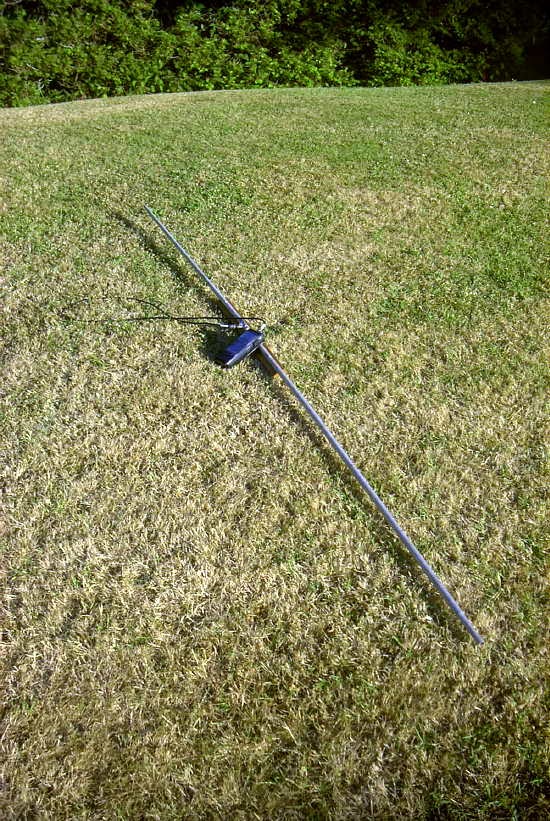
The next day I set about walking around the neighbourhood, taking bearings at various locations, as the signal was easily heard with the dipole. I had earlier determined the rough direction of the signal using my main 6m antenna, a 4 element homebrew Yagi at 55'.
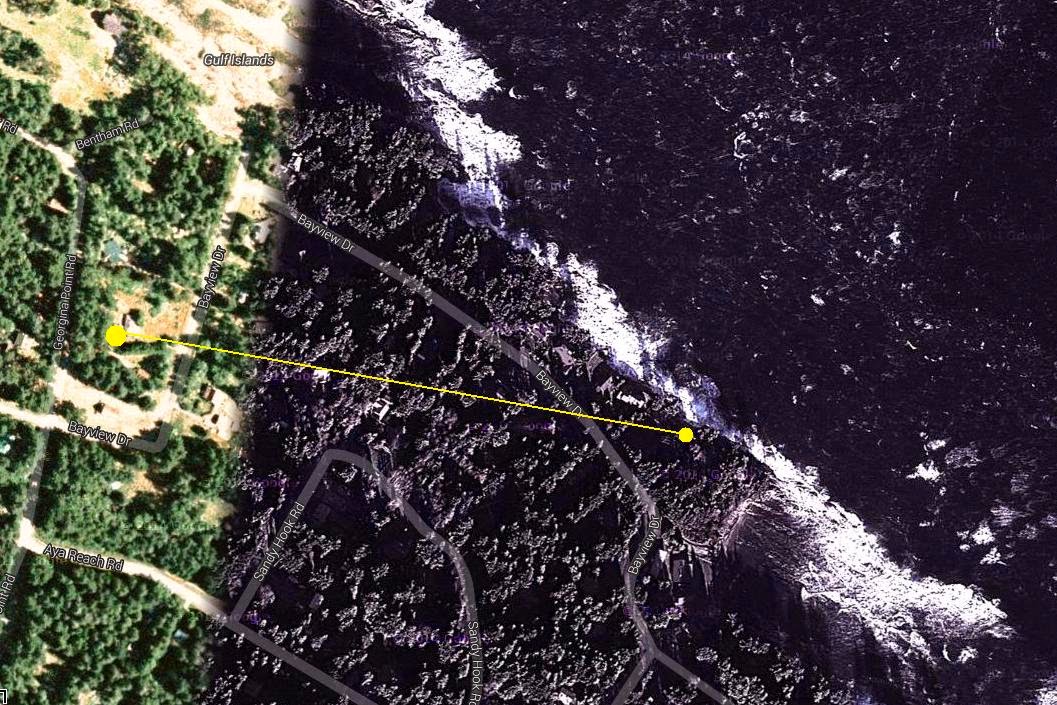 |
| Courtesy: Google Maps |
The band is wonderfully peaceful once again (except when the power lines start arcing at about noon) and within minutes of the headphone system shut down I was able to work a loud BV2DQ in Taiwan and several JA's, shortly before dinner time.
These amazing early July conditions continue on the magicband.
Steve McDonald, VE7SL, is a regular contributor to AmateurRadio.com and writes from British Columbia, Canada. Contact him at [email protected].
Antenna Update
I have now got a coax run through the wall into the shack, with another to follow soon. To facilitate 'switching' between multiple aerials I have fitted each aerial with a length of coax running down the pole, terminating in an in-line N-type socket near the base. It is a simple case of connecting the appropriate shack coax, fitted with a n-type plug, to the appropriate socket.
To keep everything water and weatherproof I have opted for a DRi-BOX. These are inexpensive plastic boxes sold as waterproof housings for outdoor electrical installations such as garden or Christmas lights.
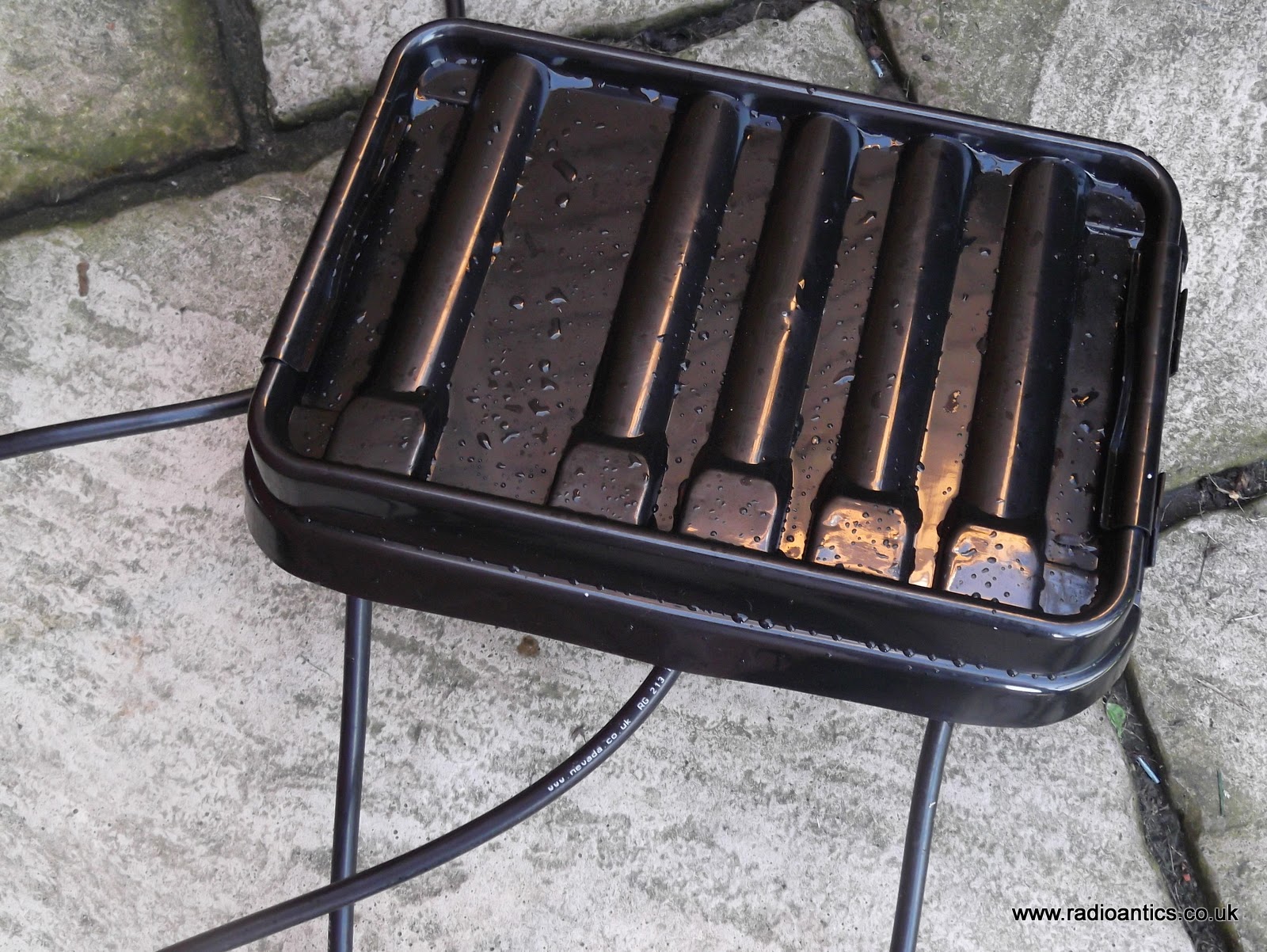
The lid has a silicon seal and there are a number of cable entry points with a flexible seal. When the lid is firmly clamped securely in place the box is effectivly watertight.
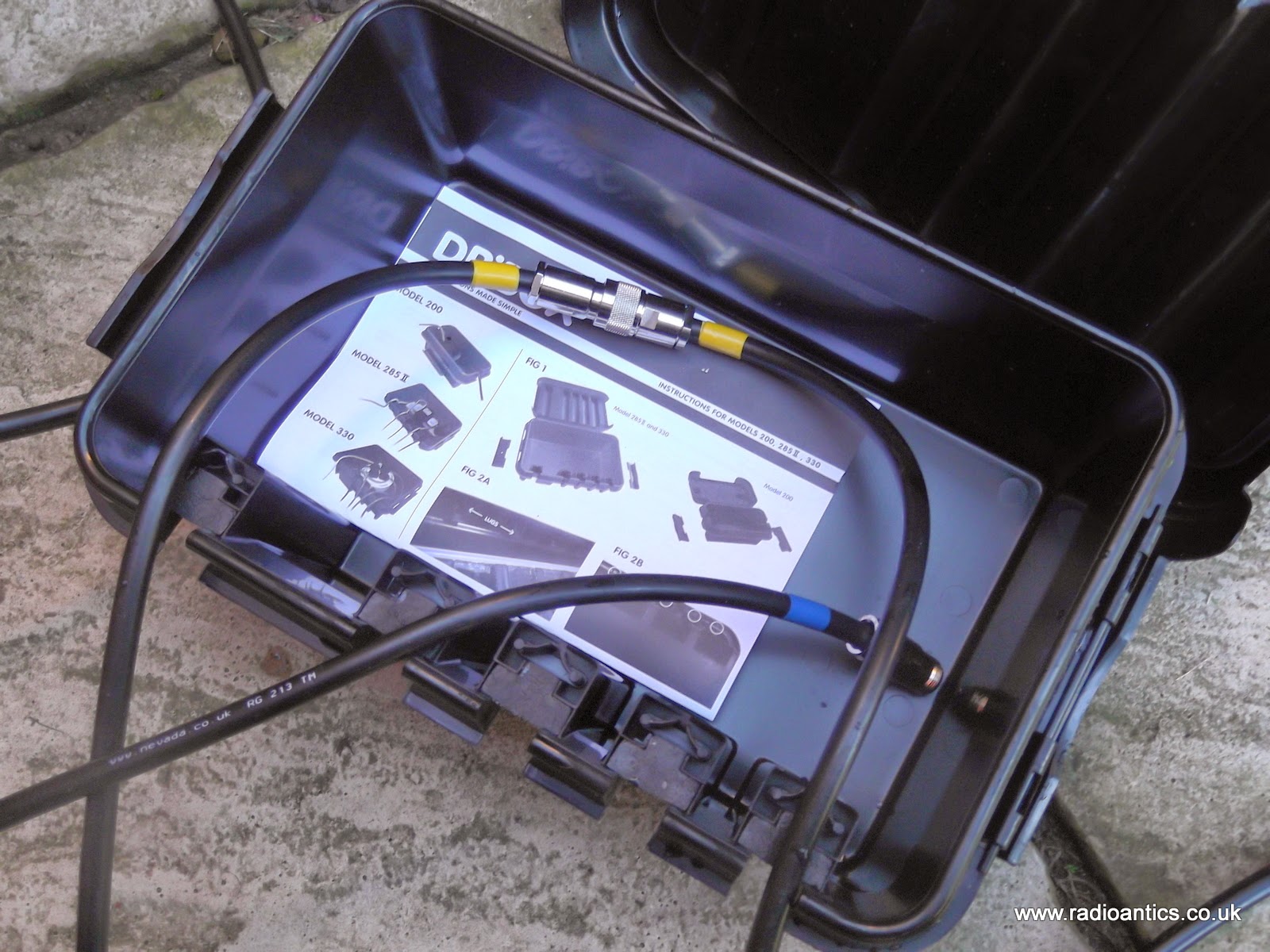
It is a bit of a fiddle with the thick RG213 but it seems to work well. There was a vicious thunderstorm and downpour yesterday afternoon and the Dribox lived up to its claims after sitting in a few inches of water.
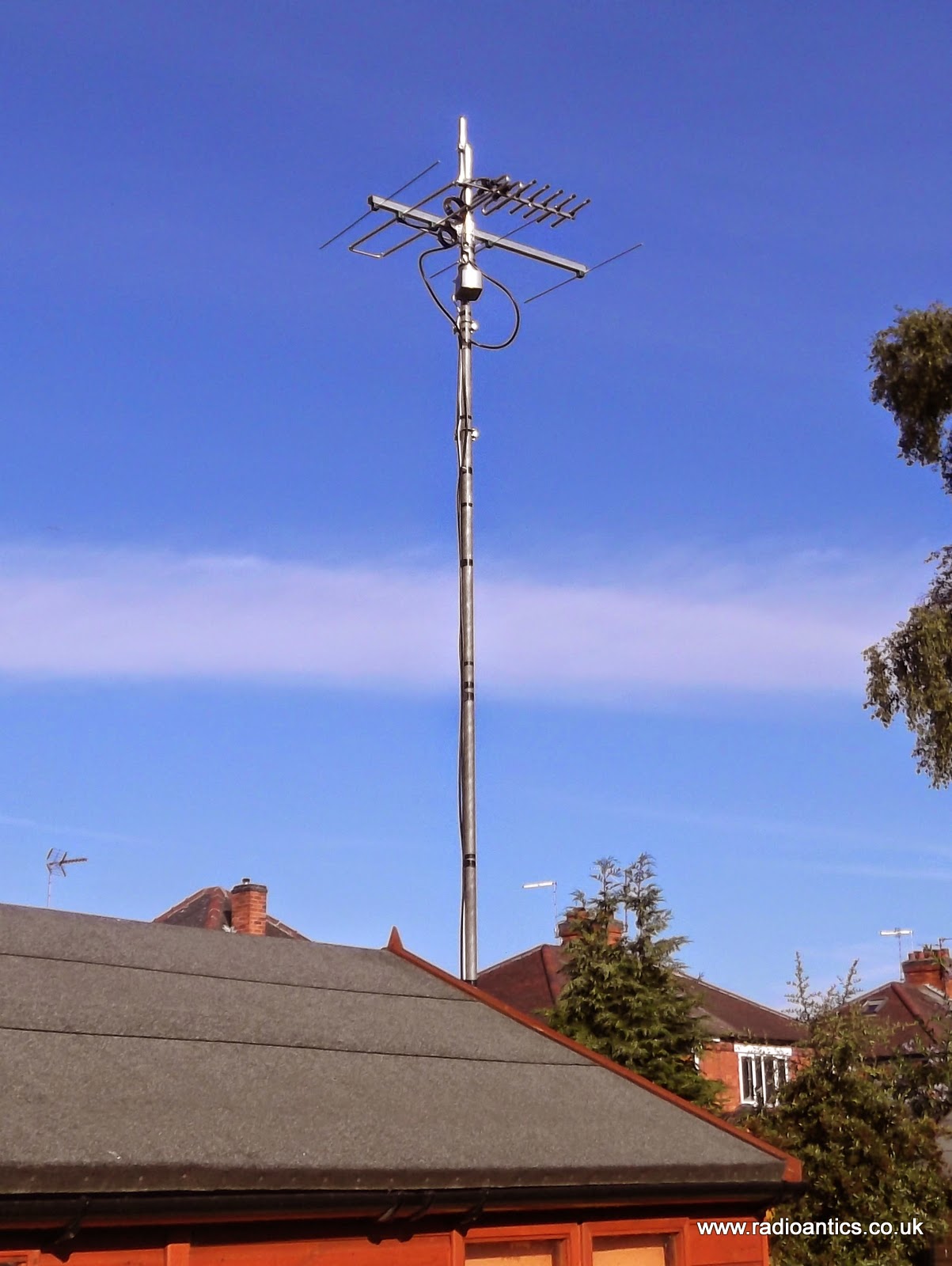 |
| Still awaiting the X-50 collinear on the top! |
Tuning around prior to the start of the contest and the band seemed quiet, hearing just a strong local operator. The contest start time passed and I was met with a wall of static only hearing the occasional very weak signal. I tried unplugging and reconnecting plugs, new patch lead, took the VSWR/Power meter out with no effect after 20 minutes I gave up. I decided something was obviously wrong with my new installation at the top of the pole.
I went back into the house where the wife was watching some dreadful house/diy/makeover program on TV which I could only manage for about 15 minutes. Grumpily I went upstairs and fired up the FUNCube Dongle and twitter and realised I'd forgotten and completely missed the first pass of the newly launched UKube-1, unlike some lucky ones. Idly I tuned to 70cm using the discone in the loft and could see a waterfall of signals! Including that local operator with a lot of splatter considering he was running just 10W
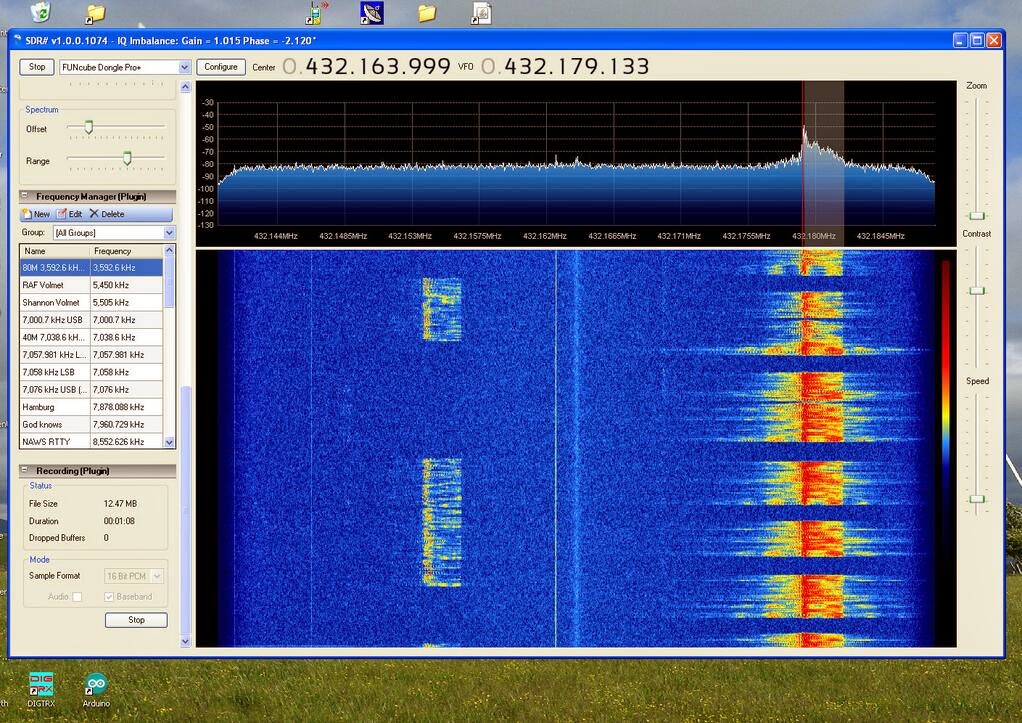
Going back into the shack and things had improved, so perhaps it wasn't my setup! After missing nearly a hour I searched and pounced again, just making 14 contacts but achieved my highest score so far for a 432MHz UKAC contest, still operating as M6GTG in the low power section.
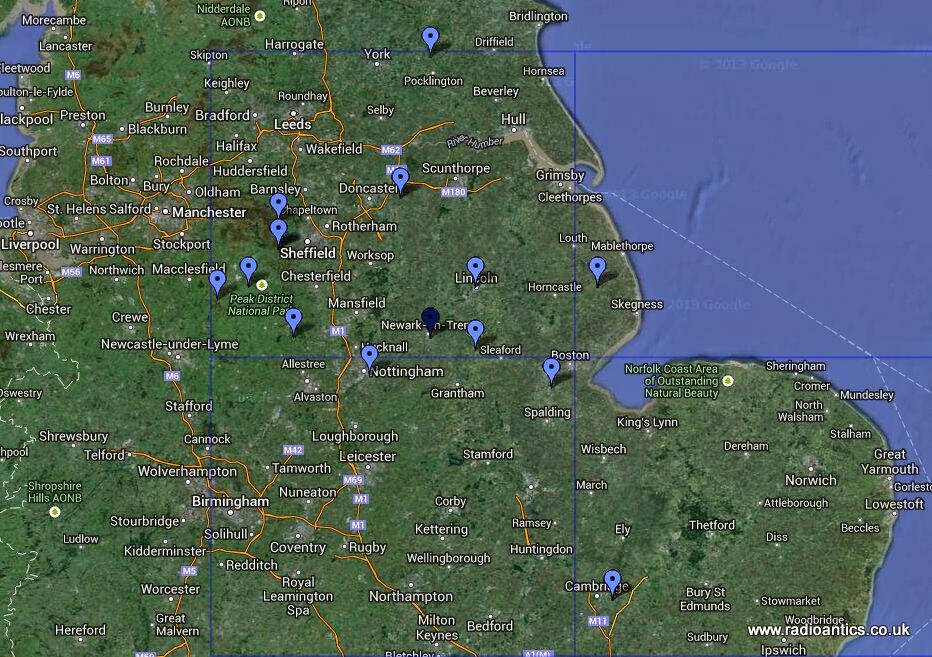
Various operators have commented on the weird/poor/flat conditions last night, so perhaps I shouldn't have been so dismissive of my ability to put up a decent antenna!
Andrew Garratt, MØNRD, is a regular contributor to AmateurRadio.com and writes from East Midlands, England. Contact him at [email protected].
On the Road With D-STAR
Part 1 of 2
I’m traveling this week with a DHAP and the Icom ID-51A dual-band handheld. This combination of hardware permits me to stay connected with my friends on the D-STAR network from wherever I happen to roam – no local digital repeater required. The DHAP is a custom-built enclosure and battery supply for a Raspberry Pi and DV Access Point – a DVAP.
If all this sounds like too much alphabet soup (it is!) let’s first break it down in pieces.
The DVAP is a small USB powered D-STAR transceiver that runs about 10mW of power on UHF. VHF is also available. It’s manufactured by Internet Labs. The concept here is that you plug the DVAP into a USB port on your Windows, Mac or Linux computer, running the proper software and connected to the Internet, and it looks a lot like a D-STAR repeater to your radio — albeit a micro-repeater with only about 100 yards of coverage.
With this arrangement, a user can connect to other repeaters and reflectors on the network. While it’s an effective solution, it’s not elegant or efficient to keep a desktop or laptop computer running all the time just to maintain that connection.
Enter the Raspberry Pi, a single board computer that’s smaller than a pack of cigarettes, costs $35, supports networking, and runs Linux. It didn’t take long for users to see the advantages of this arrangement over the desktop PC and the rapid migration was underway.
You can put all this together for the price of the DVAP and another $50-100 for a Raspberry Pi, memory, associated cables, power brick, and all that jazz. It will work perfectly well setting on your desk or workbench like that, but if you want to take it outside with you, an enclosure to house and organize it all is a really good idea.
Which gets us to the DHAP. Manufactured by Hardened Power Systems, this contraption is a robust enclosure for the DVAP and the Pi that conveniently brings all of the on-board connections out to the front and back panels. NiMH batteries run the show for several hours between charges while a front panel display shows the battery level.
It’s not waterproof, and I suppose you could break it if you tried. But it is a hardened, machined case that’s slightly smaller than a football. Once it’s configured and charged, you just pick it up and carry it with you wherever you go.
Of course, it requires a network connection that can be provided from a hardwired Ethernet cable or via a Wi-Fi network. That Wi-Fi link means it can be easily tethered to your cell phone, which is how I use it on the road, when I bring it home, it automatically connects to my home Wi-Fi.
It’s the ultimate in convenience and portability for the D-STAR enthusiast though it’s not cheap. $300 [US] for the unit with a Raspberry Pi, a little less if you’re bringing your own Pi. And that doesn’t include the DVAP…
More about how I use all this on the road, and a few tips about the DHAP in the next post.
Filed under: Ham Radio Tagged: dhap, dstar, dvap, hr, icom, id51a


Jeff Davis, KE9V, is a regular contributor to AmateurRadio.com and writes from Indiana, USA.
VC1T copied in the UK on 144MHz
I’m indebted to Roger, G3XBM for pointing me at the news that the VC1T expedition was heard in the UK on 144MHz by G4SWX, but unfortunately no 2 way QSO was made, despite trying for 4 hours to make a two way contact. It is also reported that a station in Ireland heard portions of the VC1T transmission.
See the news from the ARRL site
See a screenshot from G4SWX at G4CQM’s site
Tim Kirby, G4VXE, is a regular contributor to AmateurRadio.com and writes from Oxfordshire, England. Contact him at [email protected].
 Ham Radio Deluxe |
 W5SWL Electronics |
 Ham Radio Prep |
 KB3IFH QSL Cards  Hip Ham Shirts  HamRadioAuctions HamRadioAuctions Reliance Antennas Reliance Antennas Enigma Shop Enigma Shop |  morseDX  Ni4L Antennas  R&L Electronics R&L Electronics antennas.us antennas.us QRV QRV |
- Matt W1MST, Managing Editor
