 |
 Who Needs Sunspots
 19 July 2014 | by
 Just in case, let's hope a few show up:-)
Mike Crownover, AD5A, is a regular contributor to AmateurRadio.com and writes from Texas, USA. Contact him at [email protected].
HFI gates QRT
I have taken down my HFAPRS gates. The reason is they all use my MFJ magnetic loop antenna. At this time of the year it needs constant retuning due to temperature variations in the loft. So it is not practical to use it when I can not be in the shack to tweak the turning .
Julian Moss, G4ILO, is a regular contributor to AmateurRadio.com and writes from Cumbria, England. Contact him at [email protected].
SMD Kits

I've been intrigued for some months now by the proliferation of SMD parts kits widely available from Asian manufacturers being sold on E-Bay. Resistor, capacitor and inductor kits, containing significant numbers of standard-value parts and in various sizes are being offered at attractive prices. With many sellers throwing in free-shipping, I find myself being tempted more and more to press the "Buy Now" key and fear that I will not be able to hold out much longer.
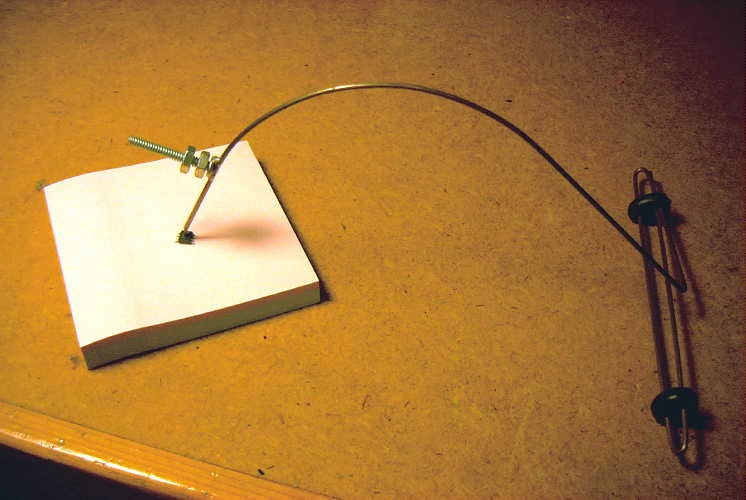
I have had limited experience with SMD parts, when building a small 40m QRP transceiver several years ago called the SMK-1. As I recall, it had 72 SMD parts....the bigger ones, 1206 size. I recall finding the assembly and soldering of these SMD parts to be somewhat tedious and less than enjoyable. I usually only soldered a half dozen parts at one sitting. After a few weeks of periodic assembly, I was delighted to see the circuit come to life once power was applied as I was definitely not looking forward to trouble shooting the board! Perhaps my technique of fluxing and the method of holding the component in place with a homebrew 'third-hand' device was not ideal or maybe my soldering iron was not properly sized for the job but I do have a desire to try it again.
A 630m transverter, now planned out, would really lend itself nicely to SMD construction but realistically, the only size I would consider is 1206 at the smallest.
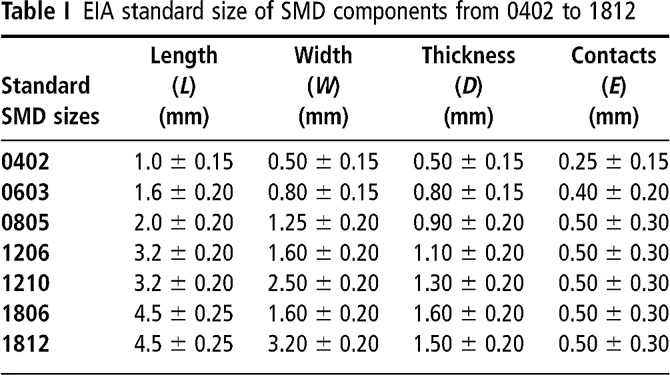 |
| Courtesy: www.emeraldinsight.com |
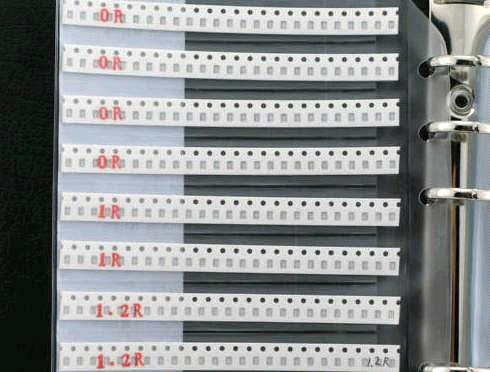 Why I am really contemplating the purchase of more SMD parts is somewhat vexing to me....perhaps it is simply my 'concrete-sequential' thinking style making me lust after all of these tiny parts, with all of them so neatly organized in their holders, begging to be brought to life by my own hands. Or maybe I just want to prove that my 66-year-old eyes and hands are still capable of working with these things.
Steve McDonald, VE7SL, is a regular contributor to AmateurRadio.com and writes from British Columbia, Canada. Contact him at [email protected].
Lightweight portable VHF antennas
One of my favourite sites is Martin DK7ZB’s collection of pages detailing the construction of practical antennas for VHF and UHF.
I first visited the site following a link to designs for lightweight portable yagis that would be suitable for SOTA VHF activations. Under the link ‘2m/70cm-Yagis ultralight’, Martin describes a number of yagis for 2m and 70cm that use thin metre long aluminium welding rods mounted on PVC booms.
“These Yagis are constructed with cheap lightweight materials for electric installations and you can mount and dismantle them without any tools. The boom is made of PVC-tubes with 16mm, 20mm or 25mm diameter, the element holders are the clamps for these tubes.” DK7ZB
What makes the designs particularly attractive is that they can be quickly assembled from a compact (admittedly metre long for 2m) pack you can carry on your ascent, even designs using a 2 metre long boom.

The welding rods – used for TIG welding – are available in Australia in 2.8mm and 3.2mm diameters from welding supplies shops. I’m still on the lookout for 4mm diameter rods. PVC conduit and the mounting clamps are readily available in VK from hardware stores.
I’ve managed to cut a suitable slot in the end of a 3.2mm aluminium welding rod using a Dremel with a thin cutting wheel. One suggested way of attaching the feedline to the driven element is to crimp the lines into thin slots like this.
Also of interest to the portable operator are the J Pole designs based on Wireman 450Ω window feedline. There are dimensions for bands from 2m down to 40m. The J pole is essentially a half wavelength dipole where the high feed impedance is transformed by a quarter-wave length matching section (the tail of the J) tapped at a suitable distance to yield a 50Ω match. Follow the ‘Wireman-J-Pole’ link in the left navigation. These pages remind you that the J-pole can be configured in any way so a 40m J pole in a Zepp arrangement starts to look quite practical if you have just under 10m of 450Ω feedline available. I want to start with the 6m design and see if I can make it robust enough with heat shrink etc for portable work.
Kits for the DK7ZB yagi designs are also available from nuxcom.de, Attila Kocis DL1NUX’s website. Both sites are in German and English.
Wonderwand loop on HF

http://www.wonder-wand.co.uk/WonderWand/WW_Photos_files/TCL-ad01.jpg
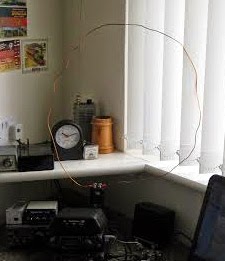
Rather than go QRT because of the approaching storms, I decided to try my Wonder Wand Tunable Compact Loop antenna indoors on 20m WSPR. The loop is about 0.5m diameter. In my case, more for convenience, it goes to the rig via my Z817 ATU. SWR is perfect 1:1 on the tuned frequency. No TX spots seen yet at 2W, but no shortage of RX spots across Europe so far. The loop is just above the rigs in a far from ideal, indoors location.
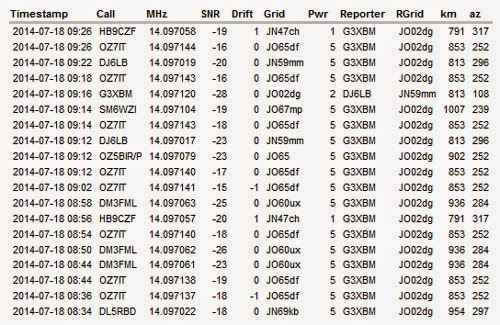 |
| WSPR spots so far today on 20m with the indoor Wonder Wand Compact Loop |
UPDATE 0916z: My first TX spot on the indoor Wander Wand Compact Loop came from DJ6LB at -28dB S/N.
UPDATE 0944z: Second TX spot was by DJ7KA at -26dB S/N.
UPDATE 1010z: I QSYed to 15m and am getting lots of spots on TX at just 2W. Best DX report on 15m is from SM6WZI (1007km) at -6dB/-9dB S/N (i.e. strong) – it is amazing this tiny indoor antenna works so nicely. So far 6 TX spots of my 2W in just 8 minutes on 15m. Incredible. Sorry about the poor photo of the loop, but you get an idea of the set-up. It will work even better on 10m and 6m as the loop is larger electrically. Set-up is totally un-optimised: the loop just happens to be where it is.
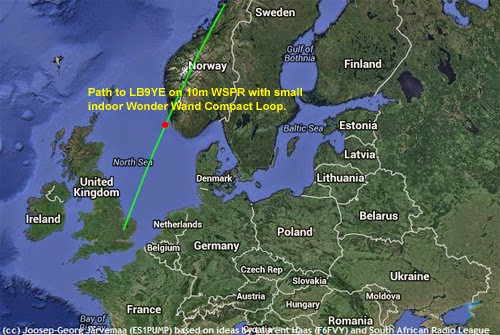
UPDATE 1230z: Now QSYed to 10m and the best DX on the Wonder Wand Compact Loop indoors is now LB9YE (1489km) at -25dB S/N with 2W.
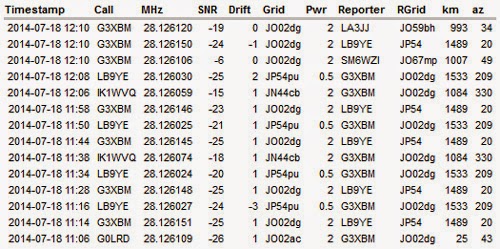 | |
| 10m WSPR spots with 2W today with indoor loop |

Roger Lapthorn, G3XBM, is a regular contributor to AmateurRadio.com and writes from Cambridge, England.
When All Else Failed
Tonight is the fourth and final night of this week’s road trip and I’ll be back home tomorrow evening. The weather has been outstanding these last few days with below average temperatures and low humidity. I’ve taken advantage of it by spending a lot of time on long walks in the neighborhoods around the hotel. Tonight, I wanted to do something a little different so I decided to take in a movie.
It’s at this point that I should back up a little, and tell you that a few days ago a friend and co-worker who knows I’m a radio amateur, told me about seeing Dawn of the Planet of the Apes and he made a point of telling me that ham radio plays a small role in the movie.
That was a good enough for me, so after work I headed directly to the Regal 16, a mammoth “cave” of sixteen theaters with enough entertainment and air conditioning under one roof to qualify as one of the many wonders of the world. Tickets for the non-3D early show at 5pm were $10.50 a pop although flashing my AARP card got me in the door for eight bucks.
It pays to get old and I’ve started taking advantage every chance I get.
The movie was a little better than just “okay” and I enjoyed it though, this isn’t a review or a spoiler. What I found most interesting was watching, and waiting, for that part that included ham radio. As the movie portrayed civilization descending into a dystopian nightmare, it wasn’t hard to see what was probably coming – ham radio as the only communications link with the “outside” world. And sure enough, that’s precisely how it played out.
In case you’re wondering, we briefly saw what appeared to be an older Kenwood transceiver, maybe a TS-820, setting on a shelf with a lot of other gear, all somehow magically connected to a computer with a display that looked like it might be running some sort of digital communication – though every call for help in the movie was done via phone.
Ham radio finds itself wrapped up in mainstream productions and attractions more often than you might think. But almost every time it’s in this same vein. Total breakdown of society that creates a world that suddenly needs ham radio. And often, though not in this particular movie, the radio operator is portrayed as some oddball nerd who couldn’t get laid with a fistful of pardons in a women’s prison.
Hollywood’s view of us is rarely, if ever, accurate. But let’s face it, we’ve spent the last several decades vociferously proclaiming ourselves to be the last link in a breaking chain when things come unglued. “When all else fails” is our mantra but I’m convinced that every time we say that, the rest of the world hears “hams are pathetic nerds who only have value in the event of Armageddon”.
If we want to be portrayed in a better light, perhaps it’s time we modify our message?
Filed under: Ham Radio Tagged: aarp, hr, movies


Jeff Davis, KE9V, is a regular contributor to AmateurRadio.com and writes from Indiana, USA.
DX from Cannon Mountain
I made a quick trip to Cannon Mountain in Franconia Notch with the family today. I only operated for 10 minutes, but worked two German stations. The view was extraordinary.

We took the tramway to the top with my daughter who is visiting from Hawaii. Judy made a picnic lunch for us and we sat on the east side of the mountain. I put up a 14 foot crappie pole that supported 15 feet of wire. I ran the KX3 at five watts.

DL2DX, Joe was calling CQ on 17M and I answered him. He was 599 and gave me a 569. I told him I was QRP and he sent, “FB with 5W.” We signed, and I was thrilled.

Next I switched to 15 meters and I heard another strong German station. DL5ANT, Ben was just finishing up a QSO and I called him. My signal wasn’t quite as strong to him, but he gave me a 559 and he was 579.

A large black cloud appeared, and we were sure it was about to rain. We packed up and got ready to leave, but the cloud passed to our north. We had a leisurely walk back to the cable car. I’m definitely coming back this summer. It’s a gorgeous spot to operate.

Jim Cluett, W1PID, is a regular contributor to AmateurRadio.com and writes from New Hampshire, USA. Contact him at [email protected].
 Ham Radio Deluxe |
 W5SWL Electronics |
 Ham Radio Prep |
 KB3IFH QSL Cards  Hip Ham Shirts  HamRadioAuctions HamRadioAuctions Reliance Antennas Reliance Antennas Enigma Shop Enigma Shop |  morseDX  Ni4L Antennas  R&L Electronics R&L Electronics antennas.us antennas.us QRV QRV |
- Matt W1MST, Managing Editor
