 |
 Nice radio-related stamp
 2 August 2014 | by
A few weeks ago I had one of my rare visits to the post office. As I was waiting, I saw a display of a new series of stamps and I just had to buy the one shown here. What caught my attention was not really the artist, but rather the Kurér portable radio.
The stamp was of course not about the radio but was issued in commemoration of the 100 year anniversary of the birth of Alf Prøysen. The English Wikipedia page has this to say about him:
Alf Prøysen (23 July 1914 – 23 November 1970), was a writer and musician from Norway. Prøysen was one of the most important Norwegian cultural personalities in the second half of the twentieth century, and he made significant contributions to literature, music, TV, and radio.

One of his main characters was “Teskjekjerringa” called Mrs. Pepperpot in English. She is shown here in the second stamp in the series. I remember this story very well from my own childhood in the 60’s as told in the characteristic calm and soothing voice of Prøysen himself. The character eventually appeared in 23 different languages. The radio is of course here because this and others of his plays were very popular on radio in the 50’s and 60’s.
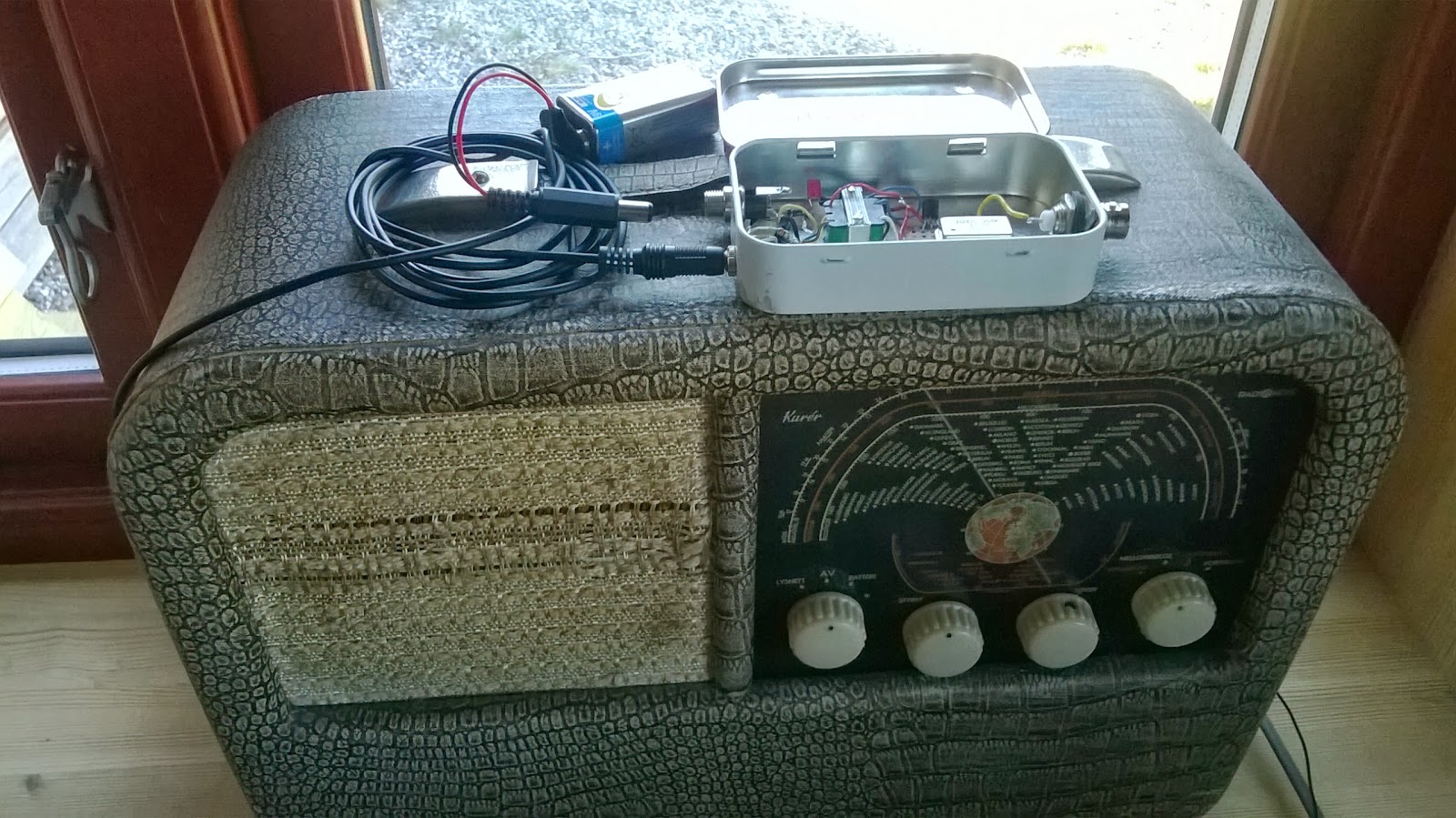
And it was this radio, the Kurér (= Courier), that made me buy the stamp. It was a highly successful portable radio from the Radionette factory in Oslo from 1950 to 1958. It has four valves and covers long wave, medium wave, ‘ the trawler band’, and short wave. It has room for batteries (90 Volts and 1.5 Volts). But luckily it also has a built-in mains supply – the 90 Volt battery is hard to find these days. A total of 224 000 were produced and it was exported to many countries especially in the Middle East. It is very easy to repair even today.
I would think the most popular version today among collectors is the dark red one shown in the stamp. I have a grey one shown here with a simple medium wave transmitter that I have described before on top.
- Alf Prøysen honored with stamps
- Kurér radio. This radio could could need an English language Wikipedia page as well as a better Norwegian one.
- The Radionette factory 1927-1972
Sverre Holm, LA3ZA, is a regular contributor to AmateurRadio.com and writes from Norway. Contact him at [email protected].
Five Ways IRLP is Better Than D-STAR
The history of the Internet Radio Linking Project (IRLP) goes all the way back to the last century when David Cameron, VE7LTD created it. His was an effort to link repeater systems across Canada using the Internet. Since then, the system has evolved, matured and grown. And it’s still growing. Today, there are nearly 1700 active nodes around the globe.
I built an IRLP node (4212) way back in 2003 and have operated it as a simplex UHF node in my home ever since. With it and my handheld transceiver, I’m only ever just a few touch-tone presses from linking my system to repeaters and other simplex nodes around the planet.
These days, much attention is heaped on D-STAR, the growing digital network promoted by ICOM. Digital systems have some advantages that might be very useful going forward in the amateur service. I use and support the continued deployment of D-STAR, but if you’re thinking about diving into linked systems, I can think of five good reasons why IRLP should be considered before taking the digital plunge:
- IRLP uses standard FM. There are few radio amateurs who don’t already have a standard two meter or 440 transceiver at their disposal. D-STAR equipment is generally more expensive, and it obsoletes perfectly good hardware.
- D-STAR systems usually require all new repeater hardware. IRLP can make use of existing, standard FM repeater installations with the addition of some simple equipment. Clubs don’t have to chuck their previous investment in their repeater system to deploy IRLP.
- If you can push-to-talk and press a few touch-tone keys, you can link your local IRLP system to others. D-STAR equipment is much more complex to use. Programming software is generally employed to make the task of setting the new D-STAR radio up a bit easier but despite ICOM’s best efforts to make it simple, it remains a steep learning curve.
- The D-STAR system can be accessed directly via the Internet via the DV-Dongle. While this could be seen as an advantage, radio purists will blanch at the notion of operators “getting on the air” directly via the Internet. Sure, the Internet provides the backbone for IRLP, but it’s a system design requirement that real radios are required on both ends of an IRLP link. That’s why VE7LTD used the “keeping the radio in ham radio” motto.
- And then there’s the audio. Listening to an FM transmission from a properly adjusted ham radio repeater is a joy. D-STAR audio on the other hand is compressed, tinny-sounding. It’s not a showstopper and most D-STAR fans will tell you they have grown to prefer the pinched audio. Still, the first impression of many is that the audio is painfully compressed.
I might also add that IRLP is available over a wider geographic region than D-STAR. That’s probably due to its ease of deployment, lower investment, and the five year head start it has on digital systems.
Linked VHF/UHF repeater systems aren’t for everyone, but I see plenty of utility in amateur radio having its own “intercom” system that provides reliable, stable, enjoyable communications — when the Internet is up and all systems are “go”.
Filed under: Ham Radio Tagged: dstar, irlp 


Jeff Davis, KE9V, is a regular contributor to AmateurRadio.com and writes from Indiana, USA.
The ‘Snowman’ Pays A Summer Visit – VYØSNO That Is!

If it seems like I'm talking a lot these days about 6m, that's probably because it's my main operating interest during the summer sporadic-e (Es) season, which is already starting to wind down. In a couple of weeks it will all be over for another year, allowing me to focus on other radio activities.
But, should you plan to venture forth into the magicband's world, proceed with every caution....there are powerful forces at work there!
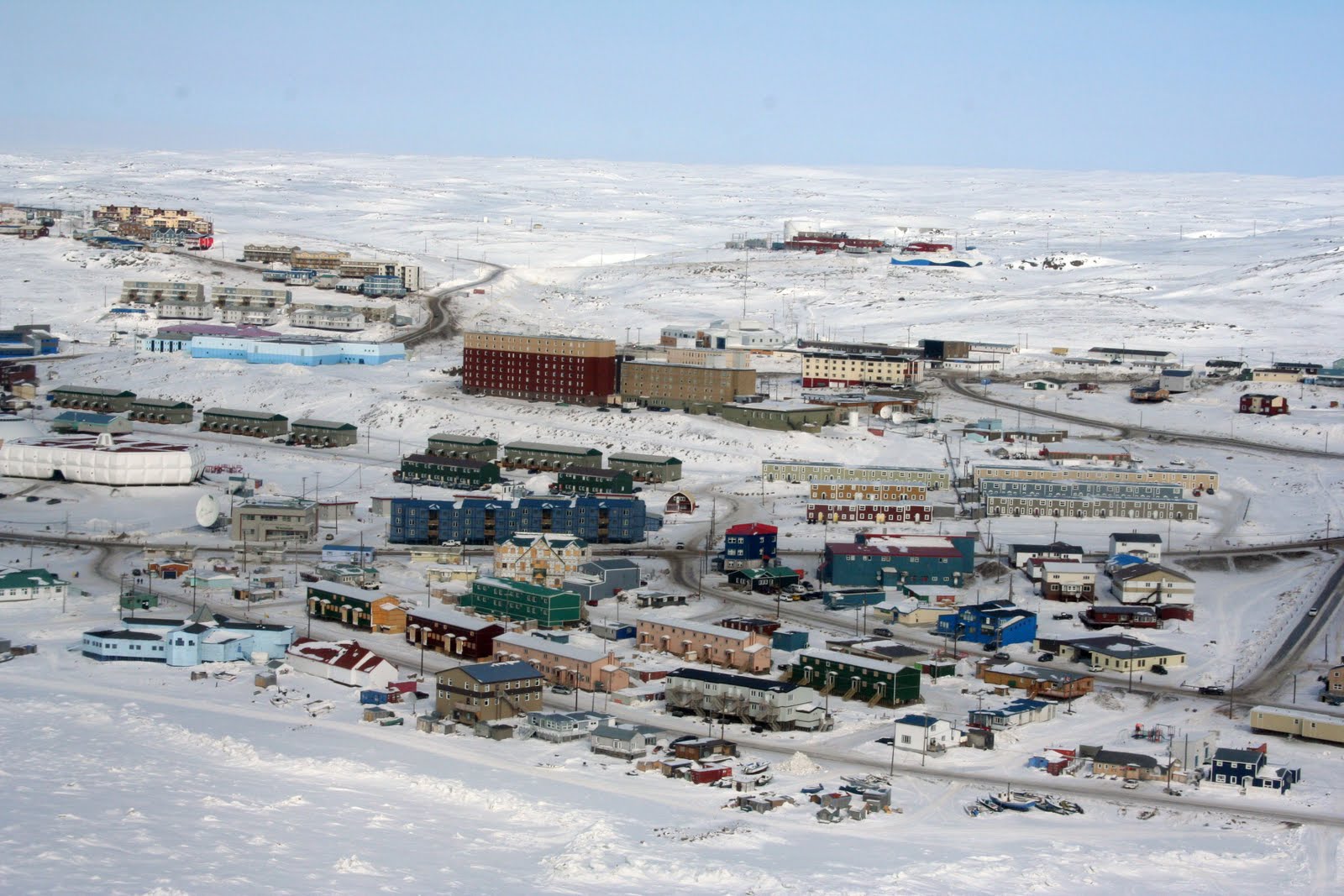
Before this week I had never heard the VYØSNO 25 watt 6m beacon. The 'snowman' is 2,250 miles away and located in the Canadian Arctic town of Iqaluit, Nunavut, the coldest city in Canada....talk about the ideal call!
 | |
| Courtesy: Google Maps |
The beacon has shown up briefly here, twice this week, with both events in the evening and lasting for only 10-15 minutes. Although there are no longer any active 6m hams in VYØ, it is still thrilling to hear these summertime signals from the Arctic....and in this case, directly in line with Europe and better than halfway there!
At one time the beacon had a different call, VE8BY, which I usually heard once or twice each summer. Since the change to a new transmitter and to a new call, for some reason it remained unheard for several seasons...until this week.
The old VE8BY beacon was unique in that its transmitter was frequency-shift-keyed (FSK mode). The dots and dashes were a few hertz higher than the actual carrier frequency. Hearing the melodious keying in combination with the typical Arctic flutter always made the arrival of VE8BY something very special as can be heard in this capture by Kevin, VE3EN....
Unfortunately, Larry (VYØHL), the owner and operator of VYØSNO/b, has moved from Iqaluit and will no longer be able to maintain or repair the beacon should it have a future break down. Hopefully it will continue to run reliably for many more years as E-season would just never be the same without a summer visit from the 'snowman'.
Steve McDonald, VE7SL, is a regular contributor to AmateurRadio.com and writes from British Columbia, Canada. Contact him at [email protected].
What a blockhead!
I totally screwed up big time in the QRP Fox hunt tonight. After corresponding with Don NK6A, I agreed to be the lower Fox. So what did I do? I set up in the upper half.
And I didn’t realize it even when someone notified me that we were both in the same half – I went up even higher!
Rookie mistake – totally my fault. My apologies to anyone I messed up.
I am going to go find a hole to crawl into, I feel like a moron.
72 de Larry W2LJ
QRP – When you care to send the very least!
Larry Makoski, W2LJ, is a regular contributor to AmateurRadio.com and writes from New Jersey, USA. Contact him at [email protected].
Replacement rechargeable battery for Elecraft KX3
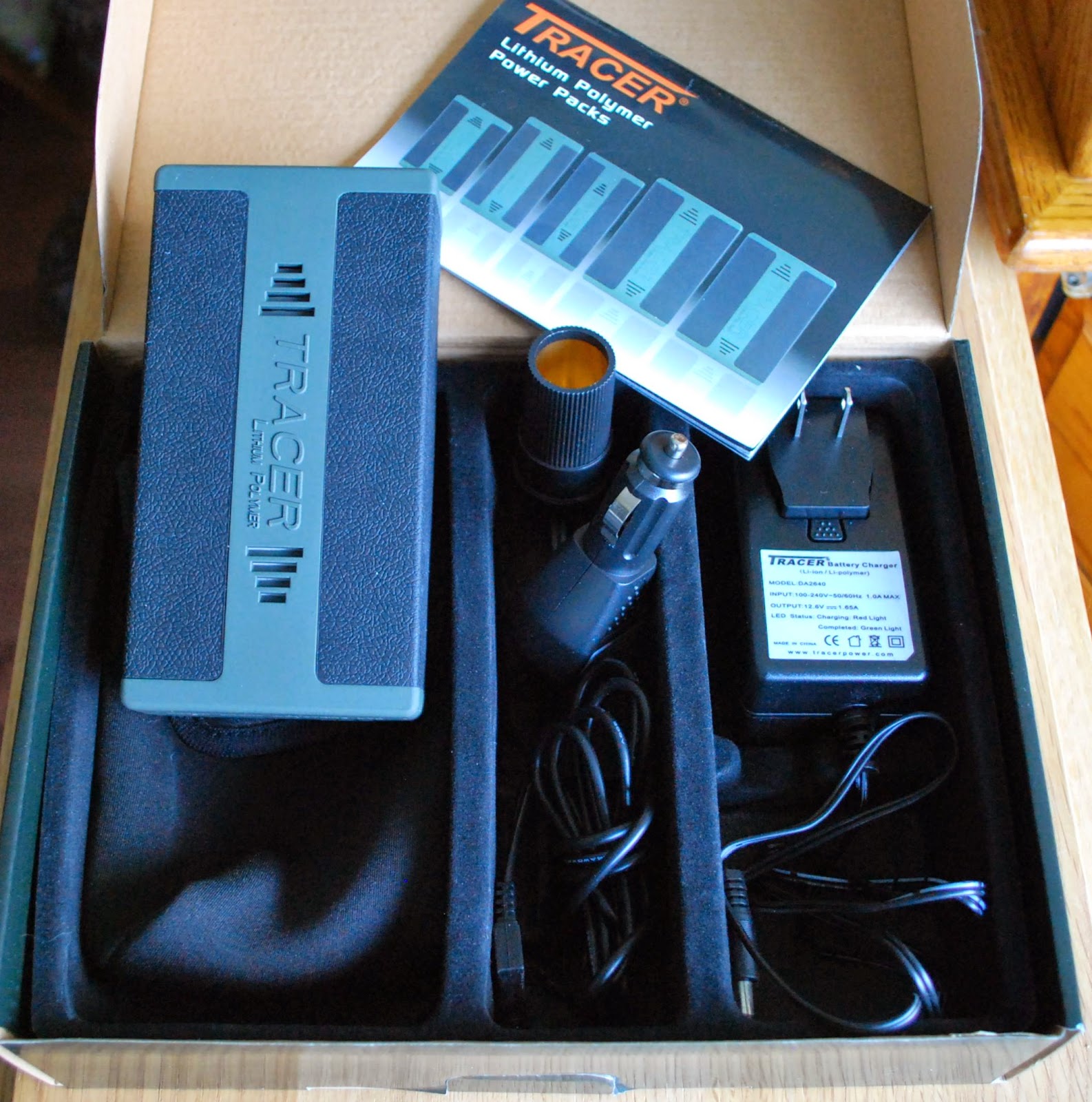 |
| Tracer Battery kit |
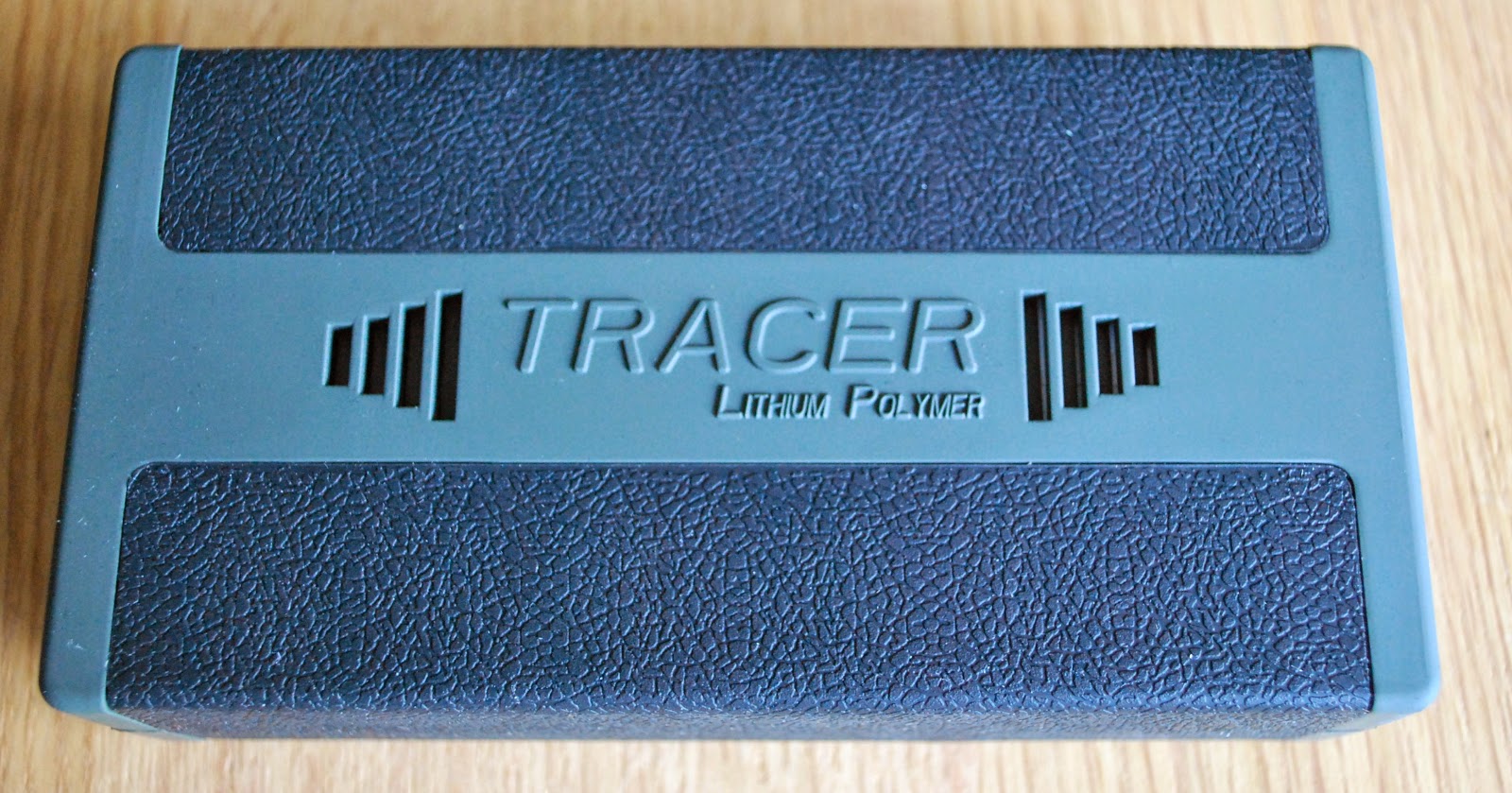 |
| Closer look at the battery |
 |
| Status indicator light |
Mike Weir, VE9KK, is a regular contributor to AmateurRadio.com and writes from New Brunswick, Canada. Contact him at [email protected].
The Spectrum Monitor – August, 2014

Here are the featured stories from our August, 2014 issue:
The Military Auxiliary Radio System: A Partner in the Nation’s Emergency Preparedness
by David J. Trachtenberg N4WWL, AFA3TR, AFN3PL (National Planning Coordinator), AFN3NE (Northeast Division MARS Director)
In an age where anyone with a cell phone can contact anyone else halfway around the world instantaneously, we seldom think of how we would communicate if traditional means were not available. The U.S. Department of Defense (DoD) understands this reality. For 89 years it has authorized and sponsored a group of volunteer amateur radio operators to provide a backup communications capability for the U.S. military and other agencies in the event of a natural or man-made disaster. But, with the military relying on satellites and digital Web-based communications, is MARS still useful today?
BBG and Technology Today: The Struggle for Global Relevance
by Ken Reitz KS4ZR
The Broadcasting Board of Governors (BBG) is a top-heavy, sprawling, federal bureaucracy, with an annual budget in excess of $700 million. It oversees the Voice of America, Radio Liberty/Radio Free Europe, Radio Free Asia and the Office of Cuba Broadcasting (OCB). But, times have changed and more listeners are tuning in via smartphone than shortwave radio. With an ever-decreasing budget, can BBG deliver its message and stay globally relevant?
Returning to the Carrier: The YE-ZB Radio System
by Rich Post KB8TAD
It was July 30, 1935. Navy Lieutenant Frank Akers had been given a unique and hazardous assignment. As the Flight Test and Project Officer for Instrument Flying Development at the Naval Air Station in San Diego, he had been told that the Navy’s first aircraft carrier, the USS Langley, was somewhere at sea about 150 miles from San Diego. He was to find the carrier and attempt to land on it while completely covered by a hood. This would be the ultimate test for an experimental, radio-based instrument landing system. With directional radio beacons, locating the carrier to the point of visual sighting was one thing, but a blind landing on that relatively small moving flat-top was another matter.
Putting the “Radio” in Radio Shack
by Mark Haverstock K8MSH
Radio Shack started in 1921 as a one-store retail and mail-order operation in downtown Boston run by brothers. Theodore and Milton Deutschmann. They chose the name Radio Shack, a term used to describe small wooden shelters that housed a ship’s radio equipment. By 1968 they were the “McDonalds of electronics,” the “Walmart of high tech.” When they moved into Mark Haverstock’s corner of the world—the north suburbs of Pittsburgh—opening what was to become one of more than 7,300 company and franchise stores worldwide, it didn’t matter that there was an already established Lafayette Radio store less than a mile away, or an Olson’s on the other side of town. There couldn’t be enough radio stores for him and his ham/hobbyist friends.
The Spectrum Monitor is available in PDF format which can be read on any desktop, laptop, iPad®, Kindle® Fire, or other device capable of opening a PDF file. Annual subscription (12 issues, beginning with the January 2014 issue) is $24. Individual monthly issues are available for $3 each.
Ken Reitz, KS4ZR, is publisher and managing editor of The Spectrum Monitor. Contact him at [email protected].
Feeling “Fox-ish”
Tonight is my turn to serve as one of the two Foxes in the 20 Meter QRP Fox hunt. If you have absolutely no idea what I’m talking about – they say a picture is worth a thousand words:


Larry Makoski, W2LJ, is a regular contributor to AmateurRadio.com and writes from New Jersey, USA. Contact him at [email protected].
 Ham Radio Deluxe |
 W5SWL Electronics |
 Ham Radio Prep |
 KB3IFH QSL Cards  Hip Ham Shirts  HamRadioAuctions HamRadioAuctions Reliance Antennas Reliance Antennas Enigma Shop Enigma Shop |  morseDX  Ni4L Antennas  R&L Electronics R&L Electronics antennas.us antennas.us QRV QRV |
- Matt W1MST, Managing Editor
